Created by the Kawaii Vibe editorial team. Our named style desks are editorial personas. Product details and availability can change.
Styling seventies pieces often feels overwhelming when you try to wear oversized sunglasses, drop earrings, layered chains, a wide belt, and a patterned bag all at the same time. While the era celebrated expressive self-expression, wearing every signature item at once tends to cancel out the visual impact of each piece. The most successful retro outfits rely on picking one distinct focal accent and letting the rest of your clothing and secondary items play supporting roles.
When you give one accessory the spotlight, getting dressed becomes faster and looks much more deliberate. You can focus your energy on balancing proportions, choosing complementary textures, and keeping your silhouetteThe overall shape an outfit creates, from fitted to loose and layered. clean. Whether you are drawn to chunky resin pendants, wide belts, or tortoiseshell eyewear, establishing a clear visual hierarchy makes the entire outfit feel cohesive rather than chaotic.
In this guide, we break down how to establish that central focal point using items from our curated collections. We will examine how different jewelry pieces sit against common seventies necklines, how to balance proportions across your frame, and how to avoid the common styling mistakes that make retro-inspired outfits feel cluttered.
The Core Rule: Defining Your Dominant Accent
The secret to balancing bold retro fashion is choosing where you want people's eyes to land first. If you decide that an oversized piece of jewelry is your hero piece, every other item you put on should whisper rather than shout. When you pair loud earrings, an equally bold necklace, and a graphic belt buckle together, they fight for visual dominance in a small area, making the outfit look crowded instead of thoughtful.
Begin by checking your reflection and deciding which area of your outfit should carry the drama: your neckline, your ears, your waist, or your hands. If your main accent sits near your face, keep your clothing neckline simple and skip competing necklaces. If you want a wide bag or waist cincher to be the centerpiece, clear the visual clutter above your chest by selecting minimalist studs or skipping jewelry entirely.
Building around a single focal point also simplifies your morning routine. Instead of trying to coordinate five different bold patterns or finishes, you match your clothing colors and subtle secondary pieces back to that single standout accessory, which immediately creates an intentional, pulled-together feel.
- Pick your hero item before choosing secondary jewelry.
- Keep adjacent zones free of heavy visual weight.
- Match subtle secondary hardware finishes to your primary piece.
Choosing Neckwear as the Star Accent
Pendants and chains carry significant weight when chosen as the centerpiece of an ensemble. A heavy retro pendant needs an open canvas to shine, which means your choice of top dictates whether the piece looks balanced. V-necks, wide collars, and modest scoop necklines offer the negative spaceAn uncluttered area that gives the rest of a design room to stand out. necessary for substantial metalwork or carved pendants to rest cleanly against your skin or a flat knit.
When styling around statement pieces from our 70s necklaces collection, look for garments that do not have busy chest details. For example, pairing a long chain or bold pendant with a piece like the 70s Vibes Top creates a clean, graphic base that allows the jewelry to serve as the genuine highlight of your top half.
If your necklace is wide, thick, or colorful, avoid wearing drop earrings or high-standing collars. Let the chain hang naturally without catching on seams, zippers, or chunky trims. Keeping your ears bare or wearing tiny, understated studs ensures that your necklace remains the unquestioned focal point of your look.
Styling Around Statement Earrings
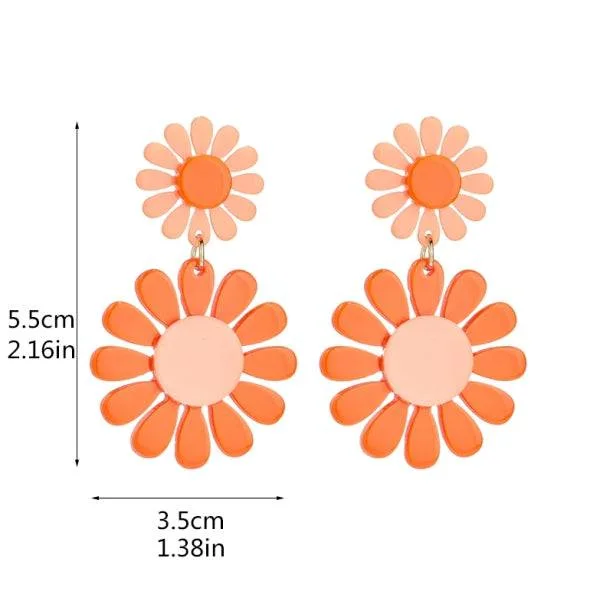
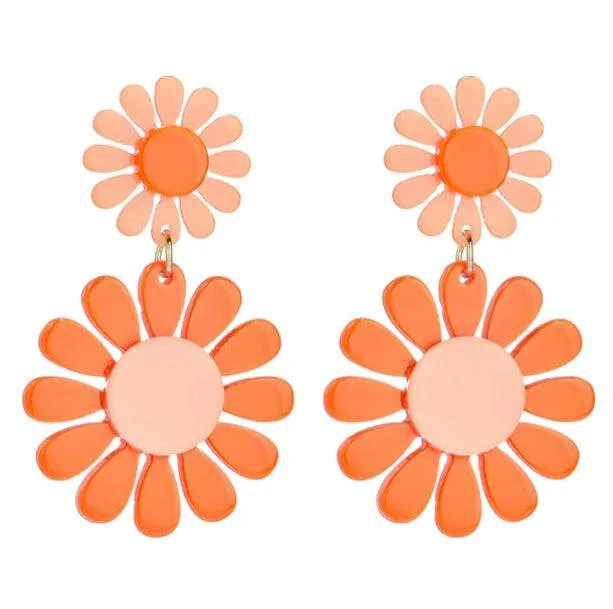
Bold drop earrings, large resin hoops, and enameled geometric shapes bring immediate warmth and personality to your face. Because they draw attention upward, your hairstyle and collar shape matter just as much as your clothing colors. If you wear your hair down in voluminous waves, large earrings can become tangled or visually lost; pinning hair back or pulling it into a soft updo lets the earrings stand out crisp and clear.
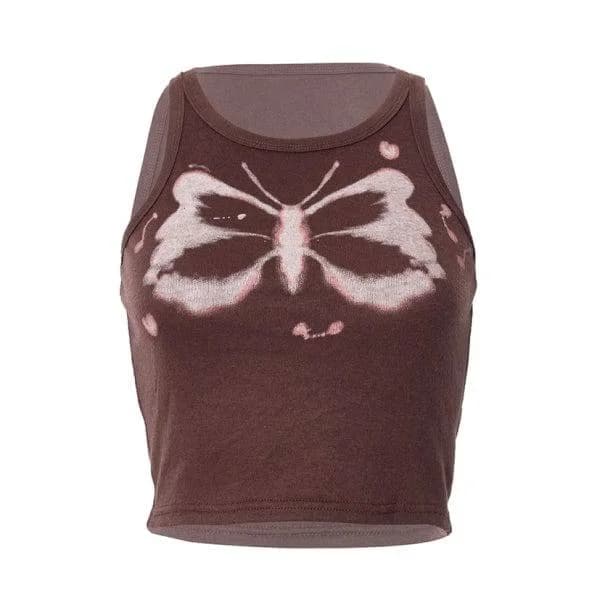
When you browse our selection of 70s earrings, consider the shape of your collar. Tops with clean open necklines work exceptionally well because they give large earrings room to dangle without tapping against stiff fabric. The Indie Butterfly Sleeveless Top provides an open silhouetteThe overall shape an outfit creates, from fitted to loose and layered. around the neck and shoulders, making it an ideal companion when you want long drop earrings to be the star.
Because bold earrings sit close to the neck, wearing a necklace alongside them almost always creates visual competition. Leave your neck bare and instead add a simple ring or a low-profile bracelet to balance the lower half of your arms.
Selecting a Hero Handbag or Belt
Not every focal point needs to live near your face. Structuring an outfit around a structured saddle bag, a patchwork tote, or a broad waist cincher grounds your silhouetteThe overall shape an outfit creates, from fitted to loose and layered. and directs attention toward your natural waistline. This technique is especially useful if you prefer to keep your hair and jewelry routines quick and minimal while still embracing retro style.
When a belt or bag is your primary accent, use solid, texture-rich garments to give it definition. The Aesthetic Corduroy Skirt offers rich, ribbed fabric depth that contrasts cleanly with smooth leather-look accessories or brassy hardware. Because the skirt features clean lines, a wide belt or a crossbody strap can sit over it without clashing against fussy tailoring.
Keep your upper body free of distracting embellishments. If your bag features fringing, heavy stitching, or bright contrasting panels, avoid patterned tops or busy sleeve details. Let the rich texture of your bag provide the interest while your top and bottom form an understated frame around it.

Balancing Knits and Textures with Retro Accents
Crochet, pointelle, and ribbed knits bring immense vintage charm, but their dimensional textures introduce visual complexity of their own. When wearing a knit garment, your chosen accessory needs to contrast with the fabric rather than sink into it. Polished metals, smooth resins, and sleek leather finishes sit cleanly against textured wool or cotton without snagging.
For instance, the Vintage Flower Sleeveless Sweater already has distinct visual character through its knit pattern. If you decide to add accents from our 70s accessories catalog, choose smooth, flat pieces like wide-brimmed hats or simple polished bangles. Adding textured, fiber-based accessories to an already detailed knit tends to create a chaotic, bulky look.
Pay close attention to hardware snags as well. Avoid long chains with intricate claw clasps or textured charms that might catch on open-weave tops. Instead, pair knits with rigid cuffs, smooth hoop earrings, or structured bags that touch the fabric without pulling its loops.

Navigating Prints Without Accessory Clutter
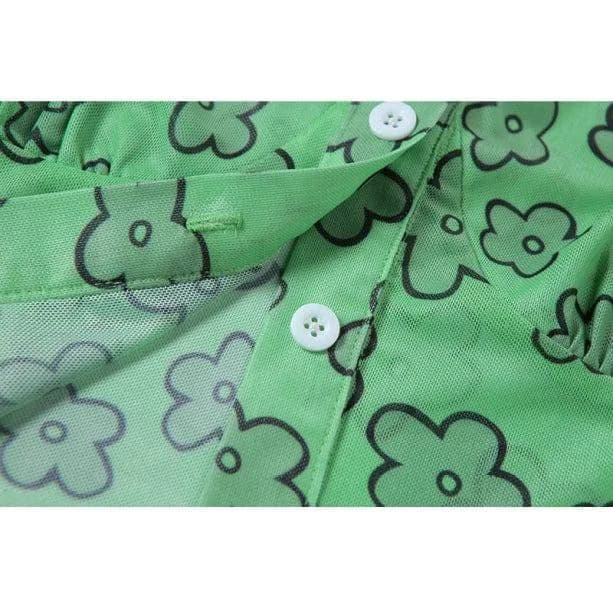
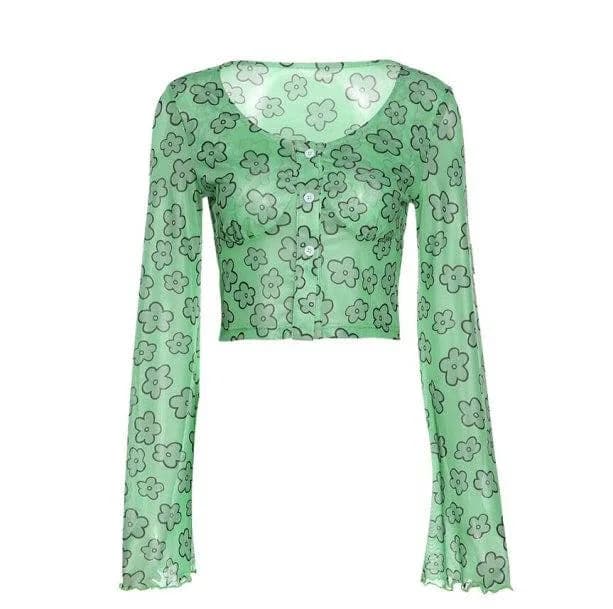
Bold prints are synonymous with vintage styling, but combining loud patterns with equally loud accessories is where many outfits go astray. When your top features multi-colored florals or graphic stripes, your accessory should pull a single quiet shade from the print rather than adding a brand new color to the mix.
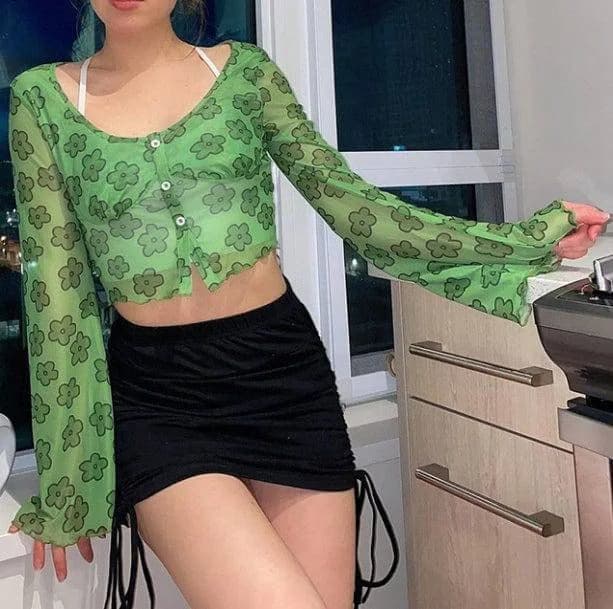
Consider styling the Floral Crop Top. Because the pattern already provides movement and color, any accessory you add must act as a visual anchor. Instead of wearing bright novelty jewelry, select a clean piece from our 70s jewelry collection in a warm gold tone or a neutral resin that echoes the background tone of the fabric.
If you prefer your accessories to be the main event, switch the formula: wear a solid top and let your jewelry or scarf supply the graphic impact. But when the garment itself is loud, treat your accessories as grounding elements that hold the outfit together rather than secondary focal points.
Managing Proportions with Flared Silhouettes
The iconic flare silhouetteThe overall shape an outfit creates, from fitted to loose and layered. changes how visual weight is distributed across your entire body. Wide hems draw the eye straight downward, creating an elongated line from the hip to the floor. To keep your outfit looking intentional from head to toe, your accessories must correspond to this wider base without making your top half appear visually pinched.
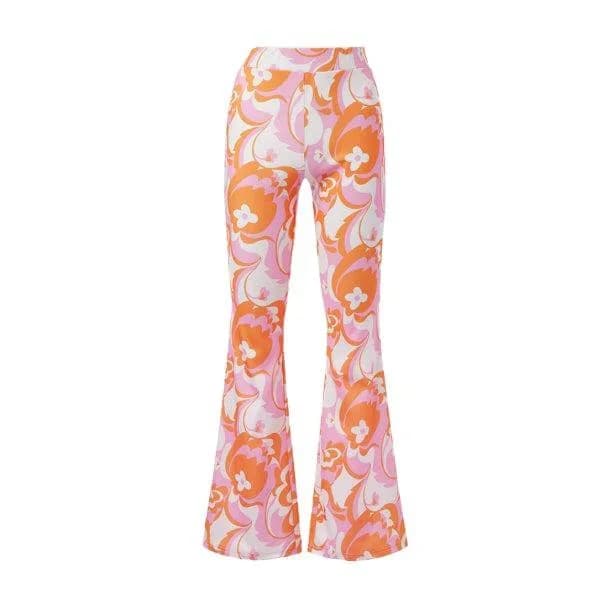
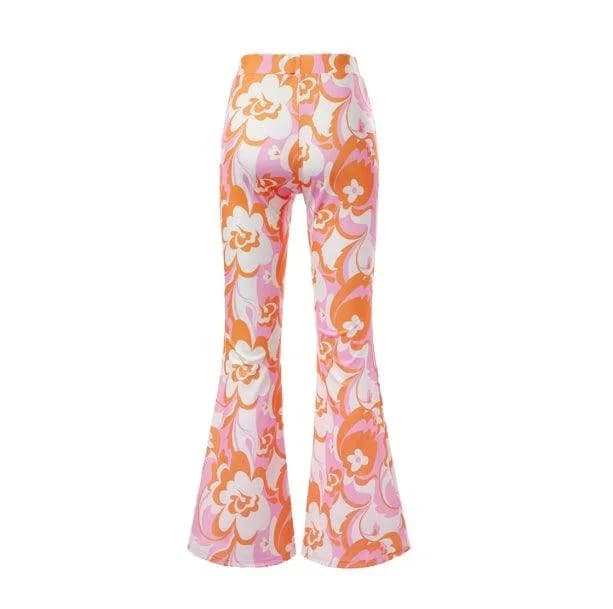
When wearing the 70s Aesthetic Flare Pants, small, dainty jewelry can look lost against the dramatic flare of the trousers. A wider cuff bracelet, a medium-weight pendant, or a structured shoulder bag helps establish balance between the upper and lower halves of your body. You want your accessories to have enough substance to anchor the flared hem below.
Keep your waistline clean when styling flare bottoms. If your flares have a high rise, pairing them with a medium-width belt helps mark your natural proportions, creating a balanced frame for whichever upper-body accent you choose to highlight.
Warm vs. Cool Hardware and Color Anchors
Seventies fashion often leans heavily into warm palettes: mustard, terracotta, olive, and chocolate brown. As a result, warm-toned metals like yellow gold, antique brass, and copper naturally integrate with these shades. However, cool tones and silver hardware also have a firm place in seventies styling, especially when paired with saturated blues, emeralds, and monochromatic bases.
The easiest way to make your focal accessory pop is to choose metal hardware that contrasts slightly with your base garment. Shiny gold jewelry stands out against deep chocolate or forest green tops, while burnished silver looks striking against plum and midnight blue. Consistency in your hardware finish helps unify your outfit, even if you wear multiple items across different categories.
Take a look across the broader 70s aesthetic category to notice how color paletteA small group of colors you repeat to make an outfit feel connected.s interact with hardware. Selecting a consistent metal tone across your zipper pulls, buckle, and jewelry prevents your outfit from looking like a mismatched collection of random pieces.
Transitional Styling and Layering Accessories
Weather shifts require adaptable layers, which changes how your focal accessories interact with your clothing. When transitioning between warm afternoons and cooler evenings, your statement accessory needs to function comfortably whether your outerwear is buttoned up or open. A heavy necklace hidden under a high-collared jacket loses its purpose entirely.
For cooler days, layeringWearing pieces over or under one another to add depth, warmth or contrast. lightweight knitwear like the Cottagecore Knitted Crop Top allows you to maintain clean lines around your collarbones. If you need a jacket, choose drop earrings or an external crossbody bag as your primary focal point rather than a delicate chest piece that will be concealed the moment you step outside into a breeze.
In warmer climates, choose accessories that tolerate heat and humidity. Heavy metal cuffs can become uncomfortable during hot summer days, making lightweight resin earrings or a woven shoulder bag a much more practical choice for your hero accent.
When a coat covers the neckline, drop earrings can remain visible as the outfit’s focal point. If you would rather make clothing the focus, Dolly Kei clothes bring vintage-inspired patterns, embroidery, and rich textures for layeringWearing pieces over or under one another to add depth, warmth or contrast.; choose one detailed collar, then keep your bag and jewelry simple.
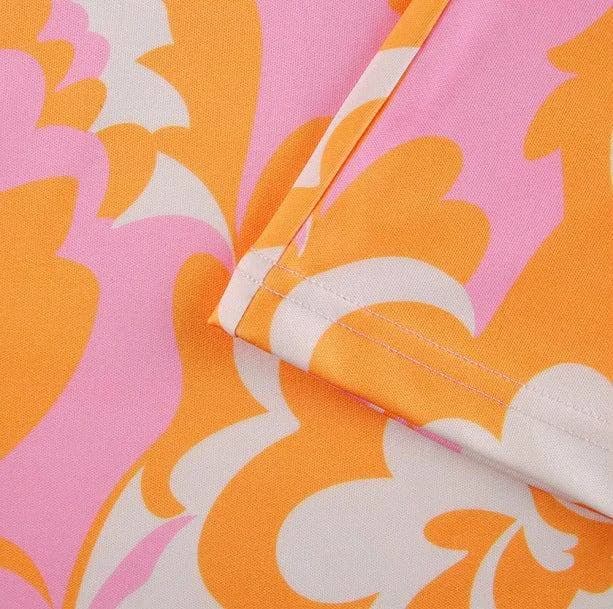
Graphic Tops and Retro Accents
Graphic and striped tops present a unique styling puzzle because their bold horizontal or vertical lines naturally pull the eye across your torso. If you place a heavy accessory directly over a dynamic graphic, both pieces end up competing for attention, diluting the impact of the entire outfit.
A piece like the Rainbow Zipper Up Top already provides clear focal energy through its vibrant striping and center zipper detail. In this case, adding a necklace would simply clutter the collar. The best way to accessorize this top is to shift the focal point away from the chest entirely by choosing statement rings, retro platform footwear, or dramatic oversized sunglasses.
When styling around high-contrast garments, remember that negative spaceAn uncluttered area that gives the rest of a design room to stand out. is your greatest asset. Leaving the area immediately surrounding a graphic print free of jewelry lets the pattern breathe, keeping your silhouetteThe overall shape an outfit creates, from fitted to loose and layered. modern, crisp, and uncluttered.
Practical Evaluation: Assessing Quality and Fit
Before committing to an accessory as your signature statement piece, it is worth evaluating how comfortably it wears throughout a long day. An accessory that is physically uncomfortable or awkward to carry will quickly end up forgotten in a drawer, no matter how authentic or cute it looks in photos.
When choosing earrings, check their weight and backing style to make sure they will not drag on your earlobes over several hours. For necklaces, pay attention to the chain length and whether the pendant lies flat against your chest or flips over as you walk. Belts should fit comfortably around your natural waist without pinching, and bags need handles that sit securely over your shoulder.
You can explore the full range of 70s Aesthetic Clothes to find garments that match the exact scale and weight of your accessories. Looking at proportions holistically ensures that your accessories feel like a seamless extension of your outfit rather than awkward add-ons.
Common Pitfalls to Avoid
The single most frequent mistake in vintage styling is treating every category as an opportunity to wear a statement piece. Wearing dramatic earrings, a heavy necklace, a wide buckle belt, and patterned sunglasses simultaneously creates a costume-like effect rather than an effortless everyday outfit. Pick one item to lead, and let the rest support it.
Another common error is pairing competing finishes together. Mixing high-shine chrome with distressed brass, neon acrylic, and carved wood can easily look disjointed. Sticking to a unified family of materials—such as warm polished metals or earthy natural tones—keeps your look harmonious even when individual items are bold.
Lastly, watch out for scale mismatch. Tiny, fragile jewelry paired with thick winter knits or wide flare trousers often looks out of place, while enormous jewelry on ultra-delicate fabrics can physically pull down the neckline. Make sure the visual weight of your accessory matches the weight of your garment.
The Focal Point Decision Checklist
To make selecting your daily accessories fast and effortless, run through this practical checklist before you head out the door. It takes only a few seconds and guarantees that your outfit looks balanced, comfortable, and intentional every single time.
First, identify your primary piece: is it sitting at your ears, your neck, your waist, or over your shoulder? Second, verify that the zone immediately surrounding your hero item is free from competing textures, high collars, or busy patterns. Third, check your hardware finishes to ensure that buckles, clasps, and jewelry share a similar tonal warmth.
Finally, assess your physical comfort. Ensure your earrings are light enough for your plans, your bag strap sits comfortably over your layers, and your necklaces will not catch on any knit loops. If your outfit passes all four checks, your seventies-inspired look is ready to wear.
Styling Combinations Summary
Putting these guidelines into practice is simple once you see how different focal points pair with classic garments. For an earring-focused look, pair the Indie Butterfly Sleeveless Top with bold drop earrings and clean flares, leaving your neck completely bare. This draws the eye straight to your face and keeps your shoulders looking sleek.
For a waist-focused outfit, tuck the 70s Vibes Top into the Aesthetic Corduroy Skirt and secure it with a wide buckle belt. Keep your jewelry down to tiny studs and a simple ring so the waistline remains the true star of your silhouetteThe overall shape an outfit creates, from fitted to loose and layered..
For a texture-rich daytime ensemble, wear the Vintage Flower Sleeveless Sweater with 70s Aesthetic Flare Pants and a smooth, unadorned shoulder bag. By pairing textured knits with sleek, minimal accessories, you create a sophisticated seventies outfit that feels balanced, modern, and completely your own.