Created by the Kawaii Vibe editorial team. Our named style desks are editorial personas. Product details and availability can change.
Wearing seventies-inspired jewelry often feels like a balancing act between rich texture and outright visual clutter. The decade was known for bold shapes, long pendant drops, textured yellow gold, polished silver, and carved accents. When you bring those statement pieces into modern street style, the secret lies in reading your neckline accurately and matching the weight of your metal chains to the fabric beneath them.
Rather than throwing multiple chunky chains together and hoping they settle into place, this guide breaks down the geometry of layeringWearing pieces over or under one another to add depth, warmth or contrast.. We will look at how different shirt collars interact with chain drops, how to select your metal finish based on outfit warmth, and how to distribute jewelry across your body so your pieces complement rather than fight one another.
Whether you are styling knit tanks, dagger-collared zip sweaters, or high-cut jersey basics, you will find direct combinations below. We map out specific lengths, focal points, and easy-to-correct mistakes so you can build layered sets that hold their shape and frame your clothes cleanly all day.
The Core Architecture of 70s Jewelry Layering
When you build a seventies-inspired jewelry stack, every chain needs an assigned lane. If you wear three necklaces of identical chain gauge and length, they will bunch up, cross lines, and create an indistinct knot against your chest. To avoid this, think of your stack in vertical thirds: a high base layer, a mid-tier statement piece, and an optional low anchor chain.
Your high layer typically rests on the collarbone, between 14 and 16 inches. This layer works best as a simple, flexible chain—such as a fine snake chain, a small liquid-metal link, or subtle beaded choker. It establishes a horizontal frame right at the base of the neck. The mid-tier sits between 18 and 20 inches and carries the primary textural element, such as a coin pendant, an open wireform medallion, or a carved natural stone piece.
The low drop extends to 24 or 30 inches. In seventies fashion, this long chain often carried an elongated pendant, an amulet, or a substantial locket. When each chain has at least two to three inches of separation from the next, each link style remains visible, and the overall arrangement stays organized as you walk.
- Upper level (14–16 inches): fine link or flat snake chain acting as the border
- Middle level (18–20 inches): small to mid-sized pendant establishing your central motif
- Lower level (24–30 inches): heavy rope chain or low-hanging talisman giving vertical pull
- Spacing rule: keep at least 2 inches between every hanging pendant to avoid collisions
Deep V-Necks and Wide Collars: Directing the Drop
Deep V-necks and exaggerated lapels are foundational seventies silhouetteThe overall shape an outfit creates, from fitted to loose and layered.s, offering an open chest panel that naturally invites vertical jewelry. When you have this much exposed skin or unbuttoned space, the goal is to echo the angular slope of the neckline without dropping past the point where fabric meets fabric.
Start with an open-collar top, such as unbuttoning a collared shirt or wearing a plunging jersey cut. If you pair this with a single high choker, the stark negative spaceAn uncluttered area that gives the rest of a design room to stand out. beneath it can make the chest area look empty. Instead, choose a graduated pendant stack that narrows down toward the bottom of the V-cut. A delicate 16-inch chain establishes the top boundary, while a 20-inch pendant drops directly down the center channel, guiding the eye straight down the garment's central line.
If your shirt features wide, dramatic pointed collars, keep the earrings streamlined. Long, swinging fringe earrings paired with broad lapels and a multi-layered pendant can make the collarbone area feel congested. A pair of flat architectural studs or medium hoops leaves sufficient breathing room around the collar points while letting the vertical chest stack do the heavy lifting.
- Match the necklace contour to the slope of your shirt's V-cut
- End the lowest pendant at least 1 inch above the base of your neckline opening
- Pair wide-point lapels with flat earrings to prevent snagging on collar corners
High Crew Necks and Mock Necks: Over-Fabric Stacking
High necklines present the opposite styling challenge: you have an uninterrupted plane of solid fabric with zero exposed collarbone. LayeringWearing pieces over or under one another to add depth, warmth or contrast. jewelry over fabric requires heavier chain links and distinct metal weights, as delicate thread-like chains tend to get lost, flip sideways, or catch on textured knits.
When styling a tight mock neck or ribbed crew neck, treat the shirt like an artist's canvas. A 16-inch thick flat omega chain or a dense twisted rope chain provides a bold, metallic collar that sits right at the neckline seam. From there, suspend a 22-inch or 24-inch pendant chain with a substantial weight. The heavier pendant pulls the chain taut, preventing the jewelry from shifting off-center against the friction of the fabric.
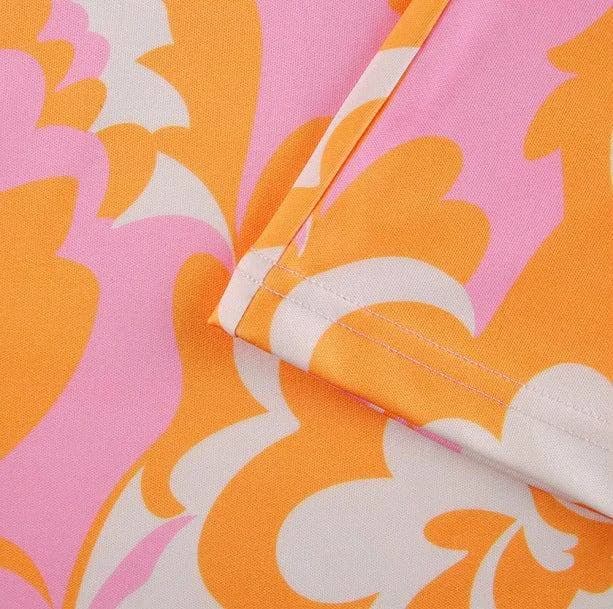
A solid ribbed top pairs well with high-contrast, polished metal. If you are wearing our Vintage Flower Sleeveless Sweater in black, apricot, or red, the high-sitting knit neckline creates a cozy, textured base. To style this sleeveless sweater, run a single structured chain over the crew neck and add a long talisman drop that hangs cleanly over the floral knit pattern without getting caught in the weave.
- Opt for heavier gauges like twisted rope, chunky curb links, or flat omega bands
- Use weighted pendants to keep long chains taut against knit fabric
- Check back closures to ensure clasps do not snag woven yarns

Sweetheart and Square Cuts: Framing Open Angles
Square and sweetheart necklines feature distinct horizontal lines and sharp right angles. Because these cuts emphasize the width of the shoulders and the horizontal span of the chest, dropping a long, wandering pendant into the middle can look discordant and break the architectural lines of the garment.
For these structured, open cuts, short and wide jewelry arrangements look most intentional. A curved 15-inch collar necklace, a row of rounded beads, or a smooth choker softens the angular corners of a square neckline. If you prefer to layer, keep both chains short—for example, pairing a 14-inch flat herringbone chain with a 16-inch petite medallion that rests high in the center of the chest.
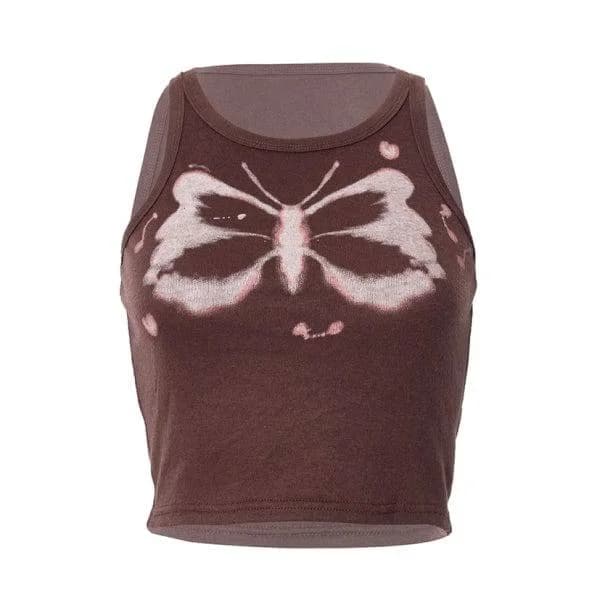
If you are styling a piece like the Indie Butterfly Sleeveless Top, the low, wide open cut leaves ample space across the upper chest. You can browse our dedicated 70s necklaces collection to pick a curved choker and a mid-length locket that mimic the soft contours of the top rather than cutting across the neckline's structural edge.
- Soft chokers and curved collars counteract the harshness of square neck cuts
- Keep all chain drops inside the top half of the exposed chest area
- Avoid pendants that dangle lower than the neckline's lowest fabric edge
Warm Metals: Yellow Gold, Antique Brass, and Copper Tones
Seventies styling is famous for its warm, sun-drenched palette, and metal selection plays an active role in how those colors read in person. Yellow gold, brushed brass, raw copper, and tortoiseshell accents reflect natural amber light, blending seamlessly with earth tones like mustard, rust, tobacco brown, and olive green.
Polished bright yellow gold offers high shine and retro glam, working especially well with saturated disco-inspired silhouetteThe overall shape an outfit creates, from fitted to loose and layered.s or dark, solid bases. Antique brass and brushed gold, on the other hand, deliver an understated, vintage feel. Their matte, slightly aged finish softens the contrast, making them ideal companions for casual cottons, frayed denim, and textured corduroy separates.
When you wear earthy separates like our Aesthetic Corduroy Skirt, warm metals pick up the natural texture of the fabric. A chunky brass cuff or a series of brushed gold pendants complements the brown and tan pigments in corduroy, creating a cohesive visual tone throughout the entire outfit.
- Brushed brass and antique gold soften high-contrast earth tones
- Polished yellow gold stands out cleanly against deep browns, olives, and blacks
- Pair warm metals with warm accessories like amber resin or tortoiseshell cuffs

Cool Metals: Chrome, Polished Silver, and Pewter Accents
While warm tones are a classic seventies marker, high-shine silver, chrome, and pewter played a major role in late-seventies space-age style, early punk, and streamlined urban casualwear. Silver delivers a sharp, clean contrast that grounds vibrant jewel tones and high-contrast color-blocking.
If your wardrobe leans into deep navy, crisp white, cherry red, or bright multi-color stripes, cool silver jewelry provides a modern, graphic finish. A heavy silver curb chain or polished chrome disc earrings inject an industrial, street-ready attitude into retro shapes without feeling costume-like.
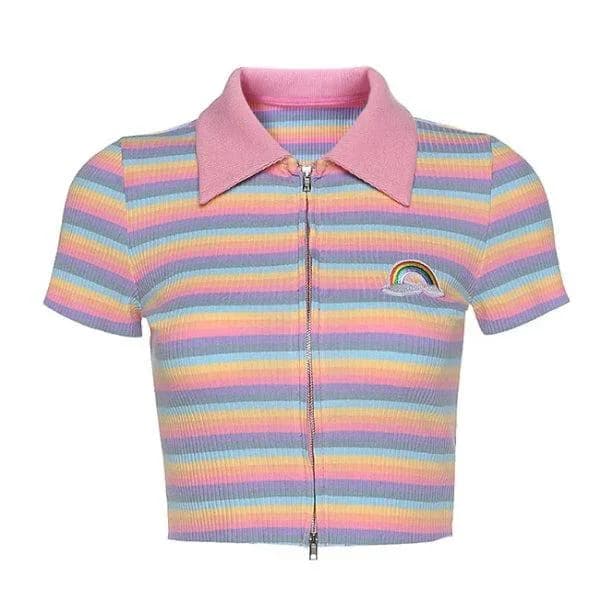
Consider pairing silver hardware with bold, graphic separates. If you wear our Rainbow Zipper Up Top, the silver-toned front zipper pull already establishes a cool metallic point on the chest. LayeringWearing pieces over or under one another to add depth, warmth or contrast. additional silver chains alongside that functional zipper creates a balanced look, allowing the bright rainbow stripes to remain the focal point while the metals coordinate effortlessly.
- Polished silver coordinates with chrome hardware like zippers and metal grommets
- Cool metals temper bright primary colors, purples, and high-contrast stripes
- Oxidized pewter offers a grounded, utilitarian alternative to shiny chrome
Mixing Gold and Silver: Intentional Two-Tone Balance
A common misconception is that seventies styling requires committing exclusively to either gold or silver. In reality, mixed-metal jewelry was widely used to blend different hardware elements and add depth to an outfit. The key to mixing metals without looking disorganized is intentional repetition.
If you wear a yellow gold chain alongside a silver chain, the pairing works best when the two pieces share a similar link thickness or weight. Alternatively, choose a two-tone bridge piece—such as a ring, pendant, or watch that incorporates both gold and silver within its design. This single item acts as visual justification, tying your mismatched earrings, rings, and necklace layers into a deliberate set.
Another reliable formula is zoning your metals by body area or purpose. You might choose to wear an entirely silver necklace stack across your chest, but ground your hands with warm brass rings and a gold-tone belt buckle. You can explore our broad 70s accessories catalog to find mixed-tone belts, sunglasses with metallic rims, and wristwear that tie distinct metals into a unified palette.
- Include at least one two-tone piece to connect gold and silver elements
- Keep chain gauges relatively consistent when combining contrasting metals on one neck
- Distribute mixed metals evenly rather than isolating a single odd piece on one hand
Balancing Hoop Earrings with Heavy Neck Stacks
Large hoop earrings are synonymous with seventies style, from thin wire hoops that brush the shoulder to thick, tubular bamboo shapes. Because statement hoops draw significant attention to the sides of the head and jawline, you need to manage how they interact with whatever you wear around your neck.
When your earrings are broad, thick, or deeply textured, wearing a dense three-tier necklace stack creates visual competition around the neck. The eye does not know where to land, and dangling earrings can easily catch on clasps or chain strands when you turn your head. A reliable styling guideline: if your hoops have a diameter larger than two inches, strip your necklace down to a single delicate chain or skip it altogether.
Conversely, if you love building complex, four-piece necklace layers with medallions and chokers, swap the oversized hoops for small huggie earrings, thick ear cuffs, or flat geometric studs. You can view our 70s earrings collection to compare slim wire silhouetteThe overall shape an outfit creates, from fitted to loose and layered.s against chunkier resin or metal studs, helping you choose the right earring weight for your planned necklace stack.
- Oversized hoops (2+ inches) pair best with bare collarbones or a single thin chain
- Chunky necklace stacks require smaller, flush ear jewelry to avoid clutter
- Check earring clearance above jacket collars to prevent physical friction
Styling Halter Tops and Sunburst Silhouettes
Halter tops naturally narrow upward toward the throat, drawing the eyes inward toward the neck and shoulders. Because the fabric straps wrap around the back of the neck, standard necklaces often fight the garment's straps, shifting awkwardly under the halter bands or sliding completely out of alignment.
Instead of fighting the halter lines with a loose hanging chain, lean into back-drop necklaces or high-fitting chokers that sit entirely above the collar of the top. A simple velvet, leather, or rigid metal wire choker rests comfortably above the halter straps without slipping beneath the fabric. This placement leaves the open triangular chest patch clear, emphasizing the garment's sharp retro cut.
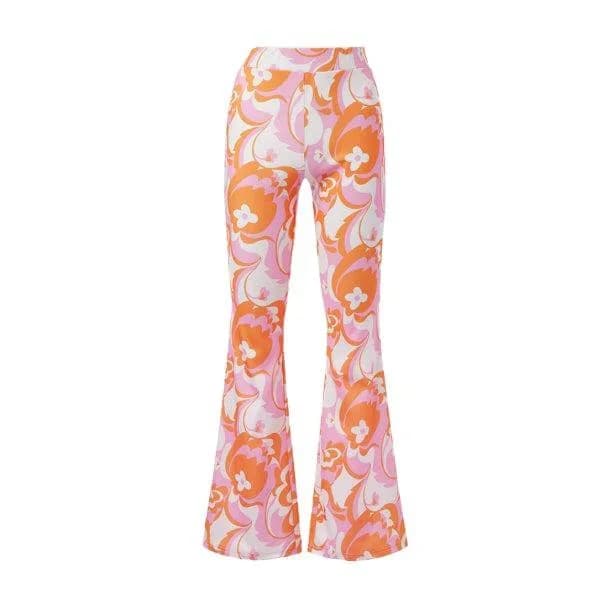
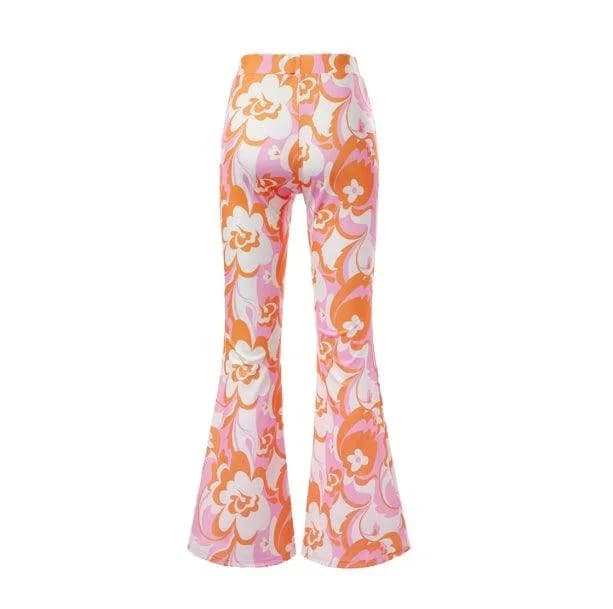
If you prefer to leave your neck entirely unadorned, transfer all your metal accents to the wrists and ears. Pairing a bare neck halter with our 70s Aesthetic Flare Pants creates a clean, elongated line down the body. Adding layered thin metal bangles or a wide arm cuff introduces seventies shine without cluttering the halter straps.
- Stick to high chokers that sit above the halter strap lines
- Shift jewelry volume to wide cuffs, bangles, and hoop earrings when wearing narrow straps
- Keep pendants away from deep halter necklines to avoid chain tangling beneath the fabric
Texture Play: Pairing Metals with Knits, Cottons, and Denim
A successful retro outfit relies on friction between different textures. Smooth, reflective metal looks completely different resting against rugged denim than it does over fine-gauge knitwear, and matching these surface textures helps prevent your jewelry from feeling disconnected from your clothes.
High-gloss, reflective metal creates an intentional contrast against coarse materials. If you are wearing our Cottagecore Knitted Crop Top, the open yarn loops, scalloped edges, and soft texture create a relaxed, tactile foundation. Adding a polished gold medallion or smooth liquid-metal choker contrasts the matte yarn, giving the entire outfit a deliberate, styled finish.
When dressing in utility fabrics like heavy denim, twill, or corduroy, oxidized and matte metals feel right at home. A textured curb chain or an engraved brass pendant shares the rugged quality of denim jeans and trucker jackets, allowing the pieces to sit harmoniously together without looking overly dressy or delicate.
- Pair high-shine polished chains with soft open knits to create dimensional contrast
- Use oxidized, brushed, or hammered metals over heavy denim and twill garments
- Keep fragile hollow chains away from rough outerwear fabrics to prevent dents
Preventing Necklace Clutter and Physical Tangling
LayeringWearing pieces over or under one another to add depth, warmth or contrast. multiple necklaces creates a distinct look, but dealing with tangled chains halfway through your day is frustrating. Tangling happens when chains of identical weights and flexible link designs twist around each other as your body moves.
To build a tangle-resistant stack, deliberately vary chain textures. Do not layer two identical cable chains together. Instead, pair a flat, rigid herringbone chain with an open box link and a heavier twisted rope chain. Because a herringbone chain resists twisting and lies flat against the skin, it serves as a stabilizing barrier that prevents looser, rounder links from winding around it.
Another practical option is a multi-strand necklace spacer clasp, which anchors two or three chain ends at fixed widths behind your neck. When choosing items from our broader 70s jewelry range, keep an eye on total clasp weights. Balancing light pendants with slightly heavier chain links helps keep each piece centered directly where you positioned it in the morning.
- Never stack two identical chain styles of the same thickness and length
- Mix link shapes: combine flat herringbone, round rope, and open cable chains
- Use a tiered multi-strand spacer clasp to hold spacing constant throughout the day

Curating One Central Focal Point Across Your Entire Silhouette
One of the easiest traps to fall into when dressing in seventies street style is over-accessorizing every area at once. A complete look does not require statement earrings, three layered necklaces, a forearm full of bangles, an oversized belt buckle, and platform rings all in a single outfit.
Select one primary focal zone before getting dressed. If your main statement is an elaborate, multi-strand coin and talisman necklace stack, keep your ears, wrists, and waist relatively minimal. Let the chest stack command attention against a clean top like the 70s Vibes Top. The clean neckline of the top gives your jewelry plenty of room to shine without background interference.
If your outfit already features striking garments—such as patterned jackets, wide lapels, or decorative buckle belts—pull back on your necklace volume. In those outfits, a pair of sculptural earrings or a single substantial signet ring is usually all you need to frame the retro pieces without overwhelming your silhouetteThe overall shape an outfit creates, from fitted to loose and layered..
If a pendant stack is your focal point, keep the neckline and nearby layers simple. For a different focal point, Dolly Kei clothes bring vintage-inspired patterns, embroidery, and rich textures for layeringWearing pieces over or under one another to add depth, warmth or contrast.; try one detailed cardigan with small, simple earrings instead of adding a statement necklace.
- Select a single focal point: chest, ears, or wrists
- If wearing complex patterned tops, reduce your necklace count to one simple piece
- Balance large belt buckles by keeping your necklace drops short and well above the waist
Seasonal Adjustments: Managing Weather, Sweaters, and Coats
Your jewelry choices naturally shift depending on climate and outerwear. In cold weather, thick wool scarves, high coat collars, and heavy knitwear introduce surfaces that easily catch, pull, and snap delicate jewelry.
During cooler months, move away from thin, prong-set gemstone pendants or delicate chains that can catch on woven scarves. Instead, choose smooth, bezel-set stones, heavy curb chains, and solid metal cuffs that sit over the sleeves of fitted long-sleeve tops. Long 30-inch rope chains also sit comfortably outside wool cardigans and heavy denim jackets, hanging past bulky lapels without getting trapped inside your layers.
In warm weather, sweat and humidity can cause heavy, flat chains like wide herringbones to stick uncomfortably to the chest. Switch to airy, open-link cable chains, lightweight wireform hoops, and natural accents like wood, carved bone, or amber beads that breathe easily against bare skin and require minimal readjustment.
- Cold seasons: choose smooth bezel settings and heavy links that will not pull scarf yarns
- Wear solid metal cuffs pushed over the cuffs of snug knit sleeves
- Warm seasons: favor open-link chains and lightweight earrings that allow airflow
Buyer Checklist: Selecting the Right 70s Jewelry for Your Wardrobe
Before purchasing new vintage-inspired pieces, review your current wardrobe staples to ensure your new accessories will pair naturally with the tops and necklines you wear most. A carefully chosen two-piece stack you wear weekly is far more valuable than an uncoordinated collection of chains that tangle in your drawer.
Take inventory of your everyday necklines: do you wear mostly high crew knits, open V-collars, or graphic square tops? Are your wardrobe colors predominantly warm earth tones or crisp, saturated cool tones? Answering these fundamental questions first will clarify whether you need long pendants or chokers, and whether yellow brass or polished chrome should be your primary metal.
To plan your next full outfit, compare pieces across our 70s aesthetic clothes to see how tops, trousers, and skirts coordinate with different metallic accents. By matching collar shapes to chain drops, you can shop with confidence, knowing each piece will integrate seamlessly into your everyday style.
- Measure your preferred chain drop lengths (14, 18, 22, or 28 inches) before buying
- Identify your primary wardrobe metal tone: warm brass/gold or cool silver/pewter
- Audit your everyday tops to choose chain weights that balance your dominant fabrics
- Check that all statement pieces have a designated open zone to avoid visual clutter