
Created by the Kawaii Vibe editorial team. Our named style desks are editorial personas. Product details and availability can change.
LayeringWearing pieces over or under one another to add depth, warmth or contrast. knitwear should feel intuitive rather than bulky or awkward. When building outfits around art hoe aesthetics, the key challenge is balancing slouchy cuts, bold vintage colors, and graphic details without losing your preferred silhouetteThe overall shape an outfit creates, from fitted to loose and layered.. Whether you prefer a loose drop-shoulder fit or a tidy cropped outline, layeringWearing pieces over or under one another to add depth, warmth or contrast. gives you control over comfort and warmth while letting expressive graphics show through.
Instead of throwing a heavy pullover over random layers, successful outfits rely on deliberate weights, collar placements, and hem lengths. A thinner base layer keeps your upper body mobile, while the outer knit dictates the overall geometry of your look. By looking at how knit pieces interact with various necklines, bottoms, and weather transitions, you can create functional outfits that suit your everyday routine without overthinking it.
1. The Core Layering Equation: Weight, Length, and Collar Spacing
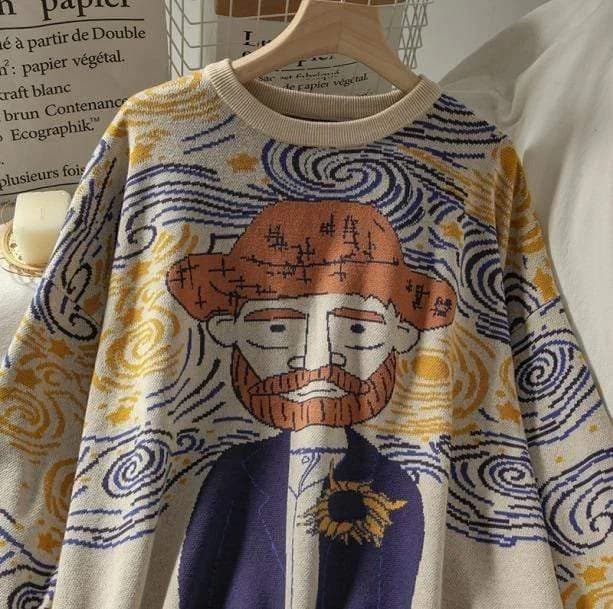
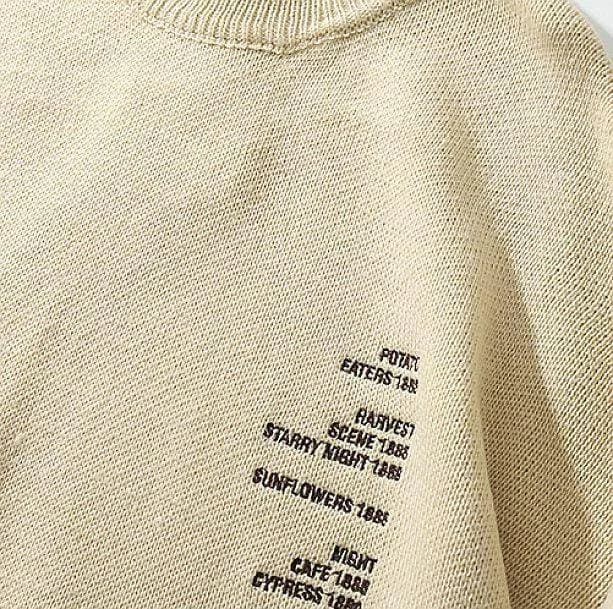
Every dependable knitwear outfit starts with three variables: the thickness of each fabric, the line where hems hit, and how necklines sit against each other. When you put a thick, textured pullover over a stiff high-neck shirt, fabric bunches up around the armpits and collarbones. To keep things comfortable, pair a relaxed piece like the Artistic Soul Sweater with lightweight inner layers that lie flat against your skin.
Length placement also dictates how balanced your silhouetteThe overall shape an outfit creates, from fitted to loose and layered. feels. If your knit reaches past mid-hip, pairing it with wide trousers can create a completely tubular column. Tucking a front corner of the hem or rolling an inch inward lets your natural waistline peek through, preventing the heavier upper half from overwhelming your frame.
Pay attention to collar spacing as well. A wide crewneck knit leaves plenty of room for an open point collar or a delicate jewelry stack, whereas tighter mock necks look cleaner over plain round-neck tees that stay hidden underneath.
- Keep base layers lightweight so your outer knit retains its intended drape.
- Stagger collar heights so inner garments frame the neck without pinching.
- Adjust long hems with a gentle half-tuck to show waistband details.


2. Layering for Warmer Days and Sunny Afternoons
Mild temperatures and sunny days do not mean knitwear is out of the question. The trick is choosing breathable base tops that can be displayed on their own if the afternoon warms up. Wearing a knit loosely slung across your shoulders or tied across the chest provides easy utility when you are on the move.
For early spring or breezy summer evenings, start with a light base like the Floral Crop Top. LayeringWearing pieces over or under one another to add depth, warmth or contrast. an unbuttoned cardigan or a roomy knit over a cropped base lets cool air circulate freely around your midriff while keeping your arms shielded from brisk winds.
If the temperature spikes, you can slip the sweater off and drape it diagonally across your torso, tying the sleeves across one shoulder. This approach adds an artistic, asymmetric line to your outfit while keeping your hands completely free.
- Pick lightweight base pieces so you can shed the outer knit comfortably.
- Leave cardigans open over cropped hems to maximize cross-breeze.
- Tie sleeves diagonally across your chest as a functional styling accent.

3. Dressing for Freezing Weather Without Stiff Bulk
Deep winter conditions require deliberate thermal management rather than piling on random thick clothes. Stacking two heavyweight knits together will quickly restrict arm movement and cause unpleasant bunching under jackets. Instead, focus on thin, moisture-wicking base layers covered by a substantial focal knit.
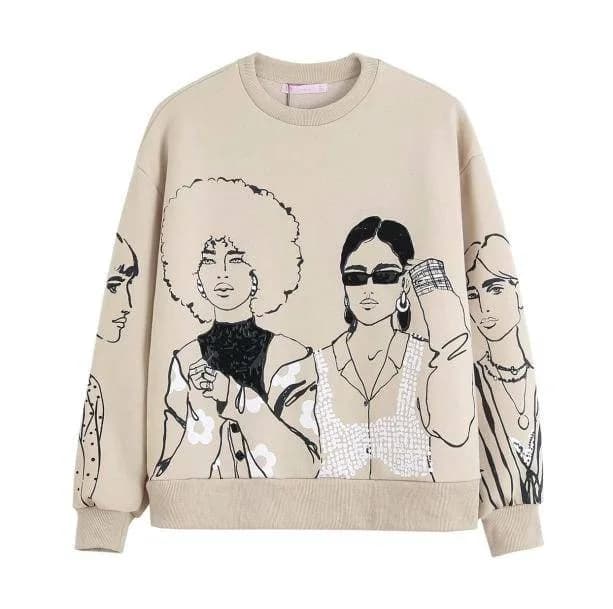
A roomy pullover such as the Girls From The 90s Jumper works well as an insulating mid-layer because its cut leaves ample room for close-fitting long-sleeve tees beneath it without straining the seams. When stepping outside, top it with an oversized wool coat or chore jacket with wide armholes.
Bottoms also require thermal consideration during frosty months. LayeringWearing pieces over or under one another to add depth, warmth or contrast. thermal tights or soft leggings underneath roomy choices from the Art Hoe Pants range provides hidden insulation while preserving a relaxed drape on the outside.
4. Styling Loose Sweaters on Petite Frames
Shorter torsos and smaller frames can easily feel submerged beneath oversized knits. The objective here is not to avoid relaxed fits altogether, but to establish intentional reference points for your height through strategic contrasts and visible leg lines.
Pairing a generous knit from the broader Art Hoe Sweaters collection with straight or slightly tapered bottoms keeps your lower half distinct. You can also create vertical flow by matching your pants color closely to your footwear, which elongates the lower body visually.
Another reliable trick is exposing the wrists and collar. Pushing roomy sleeves up toward your elbows breaks up the continuous fabric mass, making an oversized silhouetteThe overall shape an outfit creates, from fitted to loose and layered. feel intentional rather than simply too large.
- Expose wrists to reduce the visual weight of wide knit sleeves.
- Match shoes to pant tones to keep vertical leg lines uninterrupted.
- Use high-waisted cuts beneath the knit to anchor your visual proportions.
5. Balancing Fuller Torsos and Broader Shoulders
If you have broad shoulders or a fuller chest, stiff or heavily gathered knit fabrics can sit rigidly across the upper body and add unwanted tension. Softly draping fibers with drop-shoulder seams are generally more forgiving, following your natural contours without pulling horizontally across your chest.
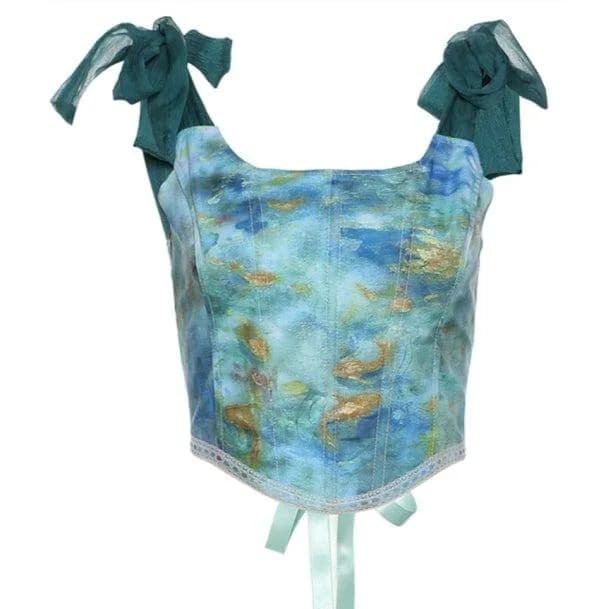
Instead of crewnecks that sit high on the throat, look for open cuts, gentle scoops, or zip cardigans that create an open vertical break down the center. You can wear a supportive piece like the Art Hoe Corset Top underneath an unfastened knit to gently define your midsection while leaving the knit open as a relaxed outer frame.
When styling the lower half, opt for bottoms with structure and clean front pleats. This establishes balanced symmetry between your upper and lower silhouetteThe overall shape an outfit creates, from fitted to loose and layered., preventing outfits from feeling top-heavy.
6. Highlighting the Waist with Knitwear and Bottoms
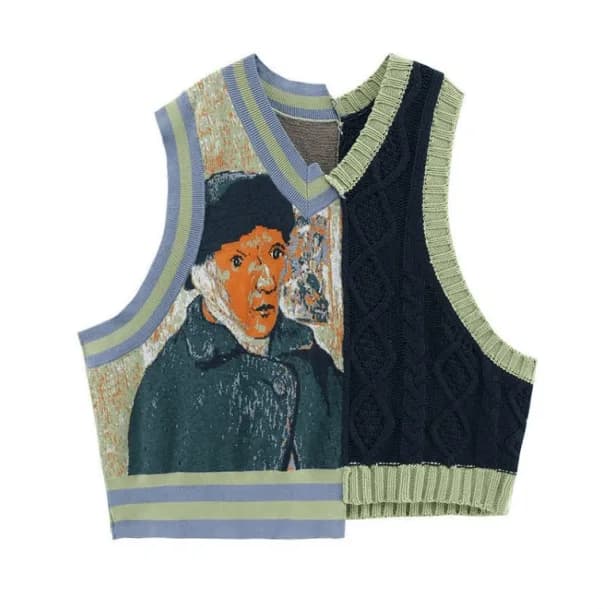
Art hoe styling frequently embraces slouchy shapes, but you do not have to sacrifice waist definition to wear the aesthetic. Creating definition comes down to where layers end and where contrast begins. A boxy knit can be easily shaped with gentle styling tweaks.
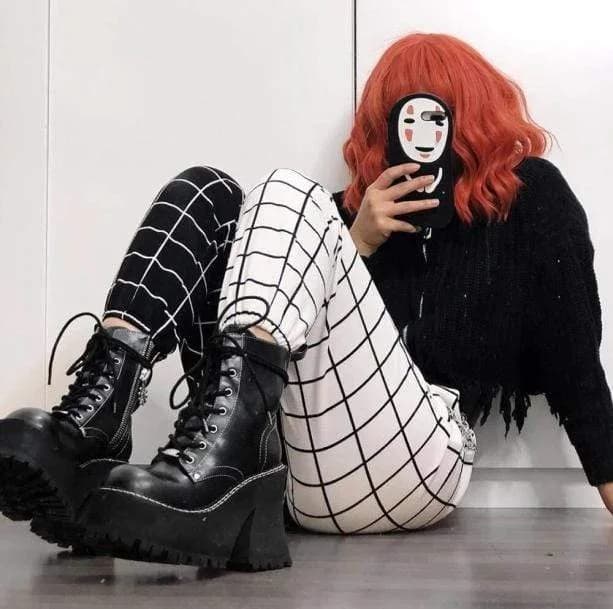
Pairing high-rise trousers like the Black and White Pants with a shorter, boxy knit highlights your natural waistline directly at the waistband closure. If your knit is on the longer side, use the waistband itself: tuck the front hem securely behind your belt or button while allowing the back to fall freely.
Alternatively, you can layer a knit over a close-fitting graphic piece and leave the sweater unfastened or draped. This gives you the comfort of knitwear while showing the contoured waistline of your underlying top throughout the day.
- Tuck only the front center of your sweater to reveal the trouser button.
- Rely on high-rise trousers to anchor waist placement under boxy cuts.
- Leave outer layers open over fitted inner layers for built-in definition.
7. Collar Layering: Pointed, Turtleneck, and Scoop Combinations
Necklines act as the visual frame for your face, making collar combinations one of the most expressive parts of layeringWearing pieces over or under one another to add depth, warmth or contrast.. Combining the right base neckline with your sweater turns a plain pullover into a thoughtfully composed look.
LayeringWearing pieces over or under one another to add depth, warmth or contrast. a classic pointed woven shirt beneath a crewneck sweater gives a timeless, studio-ready touch. Let the collar points sit neatly over the sweater neckline, and consider popping the woven shirt cuffs out past the sweater wrists to create balanced color accents at both ends of the garment.
Mock necks and turtlenecks offer another strong combination when worn under looser V-neck or scoop-neck sweaters. Exploring the curated Art Hoe Tops catalog will reveal fitted long-sleeve basics that slide effortlessly beneath mid-weight knits, providing visual contrast without adding uncomfortable volume around the neck.
- Pull woven shirt cuffs an inch past sweater wrists for balanced framing.
- Pair high turtlenecks with deeper V-neck knits to elongate your neck.
- Ensure inner collars sit flat against the chest to avoid uneven lumping.
8. Graphic Base Layers: Showing Prints Through Open Knits
Wearing knitwear does not mean hiding your favorite graphic tees and illustrative prints. Cardigans, loose weaves, and zip-front tops are built to showcase the artwork sitting on your base layer.
A statement tee such as the Do You Think Of Me Top pairs naturally under neutral, open-knit cardigans. Keeping the cardigan unbuttoned highlights the graphic print centrally while framing it with soft knit texture on either side.
You can also explore subtle reveal methods, such as letting a printed hem hang two inches below a slightly shorter boxy knit. This breaks up monotone styling and adds visual depth to straightforward everyday outfits.
- Center bold text and prints by wearing unbuttoned front knits.
- Allow patterned base hems to drop slightly below shorter pullovers.
- Balance busy base graphics with quiet, solid-toned sweaters.
9. Choosing Bottoms: Wide-Leg vs Structured Trousers
The shape of your pants determines how your sweater silhouetteThe overall shape an outfit creates, from fitted to loose and layered. is perceived. A heavy knit paired with skinny bottoms can create a top-heavy lollipop effect, whereas paired with excessively baggy pants, it can feel overly shapeless. Striking the right balance depends on intentional volume distribution.
Pairing a casual sweater with illustrative choices like the Anime Girl Pants creates an expressive streetwear feel that balances oversized upper volumes. The wider leg cut carries the casual energy of the knit down to your shoes, creating a relaxed, continuous line.
For a more grounded, classic feel, choose structured corduroy trousers or heavy cotton chinos. The natural rigidity of twill or corduroy contrasts pleasingly against soft, fuzzy wool or acrylic knits, grounding your outfit in varied tactile textures.
10. Color Blocking and Palette Balancing with Knitwear
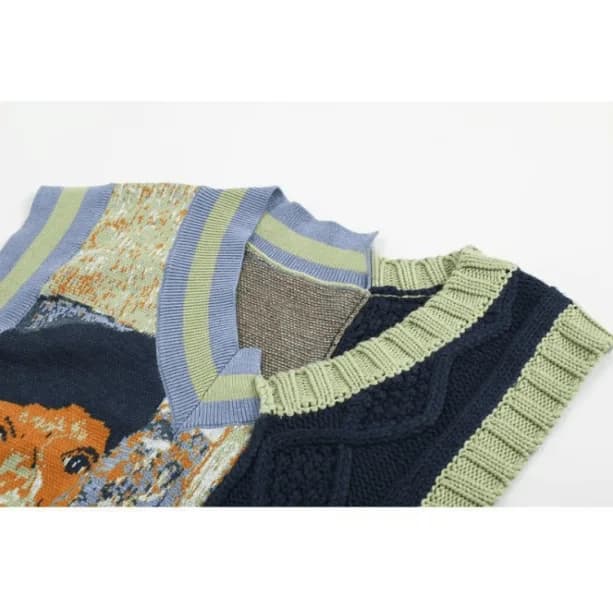
Art hoe palettes traditionally favor earthy tones, sunflower yellows, forest greens, muted terracotta, and vintage wash neutrals. When layeringWearing pieces over or under one another to add depth, warmth or contrast. multiple garments, managing how these colors intersect prevents outfits from looking chaotic.
The three-color rule is an easy method to follow: select one dominant base tone, one supportive knit color, and one minor accent shade. For example, if you wear a mustard yellow knit, pair it with muted olive trousers and a simple cream inner tee. This grounds the brightness of the yellow while maintaining an earthy mood.
Alternatively, tonal layeringWearing pieces over or under one another to add depth, warmth or contrast. offers a refined, low-effort approach. Wearing varying depths of the same color family, such as a beige inner tee under an oatmeal sweater paired with warm khaki trousers, creates a cohesive outfit with minimal contrast.
- Limit primary outfit colors to three complementary shades.
- Use cream, off-white, or heather gray to buffer two vibrant tones.
- Experiment with monochrome shades to let textural knit patterns shine.
11. Transitional Layering for Unpredictable Weather
Spring and autumn frequently bring shifting conditions where morning frost turns into afternoon warmth. Surviving these temperature swings comfortably requires a modular outfit structure built around easy-to-remove layers.
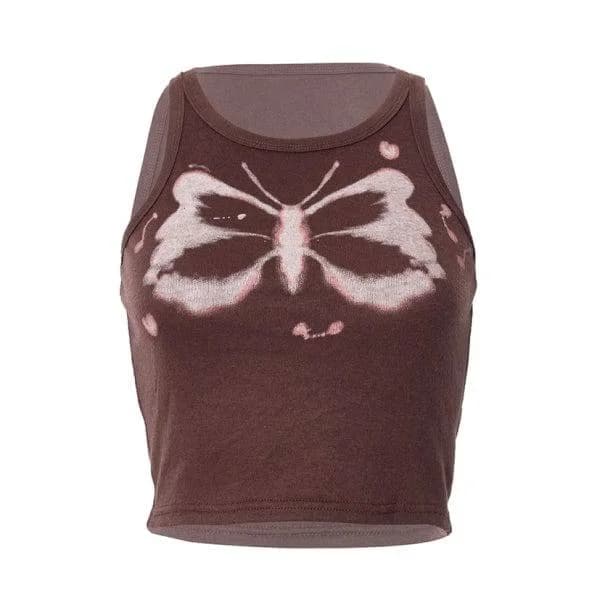
Start with a light sleeveless piece like the Indie Butterfly Sleeveless Top as your foundational layer. Over this, add an open-weave or medium-weight knit that keeps you cozy during chilly morning commutes. If the afternoon heats up, removing the sweater leaves you in a comfortable warm-weather top.
A lightweight tote bag or canvas satchel is a practical companion on these days, offering a clean space to stash your knit without stretching its sleeves or fabric by carrying it in your hands.
12. Styling Knitwear Under Coats, Vests, and Overalls
Sweaters can also act as middle insulating layers rather than outer statement pieces. Fitting a knit under dungarees, utility vests, or denim jackets requires attention to armhole size and shoulder construction.
Pairing a snug knit under classic denim overalls is a quintessential art hoe uniform. The bib cleanly frames the sweater's chest design or knit texture while keeping the sides neatly anchored to your body. Make sure the sweater fabric is soft against the skin, as it will rub gently against the inner denim.
When wearing knits under coats, choose outerwear with dropped shoulders or raglan sleeves. Standard fitted coat shoulders will squeeze loose sweater sleeves, restricting your range of motion and pulling the knit out of shape.
13. Common Layering Mistakes and How to Fix Them
One frequent mistake is mixing incompatible fabric weights, such as wearing a coarse, abrasive outer knit over a flimsy inner top that allows itchy yarn to irritate your skin. Always make sure your base layer fabric is soft enough for all-day comfort.
Another misstep is disregarding proportions at the hemline. When a long undershirt, a mid-length sweater, and low-rise pants all terminate at slightly different points across the hips, it creates horizontal clutter. Streamline your silhouetteThe overall shape an outfit creates, from fitted to loose and layered. by either tucking the base shirt entirely or ensuring the sweater hem completely covers it.
Finally, avoid overcrowding the neck area. Combining a chunky knit scarf with an equally bulky cowl neck or high turtleneck sweater swallows your throat and limits head movement. Choose one focal point around the neck and keep adjacent layers light and minimal.
- Never wear scratchy knits over thin base layers without adequate coverage.
- Avoid random hanging hem steps by tucking inner tees into trousers.
- Keep the neck area balanced by pairing heavy scarves only with low collars.
14. The Practical Art Hoe Layering Checklist
Before stepping out the door, running through a quick mental checklist guarantees that your layered knitwear look balances comfort, visual interest, and weather readiness. It takes only a few seconds to verify your outfit works functionally and aesthetically.
Confirm that you can move your arms comfortably in all directions without the knit pulling uncomfortably tight across your upper back. Check that collar layers sit smoothly against each other and that any intentional prints or colors are clearly visible.
To discover fresh combinations and explore complementary garments across the broader aesthetic, browse the full range of Art Hoe Clothes alongside graphic Art Hoe T-Shirts to keep your seasonal layeringWearing pieces over or under one another to add depth, warmth or contrast. rotations practical, colorful, and comfortable.
- Comfort check: Can you comfortably cross your arms and reach forward?
- Collar alignment: Are inner shirt collars lying flat and neat under the knit?
- Temperature plan: Can you easily remove and carry outer layers if needed?