Created by the Kawaii Vibe editorial team. Our named style desks are editorial personas. Product details and availability can change.
Balletcore sweaters are defined by dance-studio practicality: wrap fronts, off-shoulder necklines, shrug sleeves, and lightweight knit textures designed to layer without bulk. Getting them to work outside a rehearsal room comes down to managing contrasting volumes. Because traditional dance warm-ups sit close to the ribs while staying loose around the shoulders or collarbones, your secondary layers dictate whether an outfit looks intentionally composed or cluttered.
This guide breaks down specific layeringWearing pieces over or under one another to add depth, warmth or contrast. tactics using wrap knitwear, slouchy pullovers, and cropped shrugs across different body types, seasonal temperatures, and bottom silhouetteThe overall shape an outfit creates, from fitted to loose and layered.s. Rather than treating this look like a costume, we focus on repeatable formulas that let you balance thermal comfort, waist definition, and personal shape without fuss.
The Anatomy of a Balletcore Knit
To style balletcore knitwear effectively, it helps to understand what sets it apart from standard casual knitwear. A typical studio-inspired sweater features wide boat necks, open wrap ties, ribbed cuffs, or cut-out shrug sleeves. These elements originate from genuine rehearsal warm-ups where dancers need to shed layers quickly while keeping shoulders, wrists, and core muscles warm. In everyday street style, those same cuts give you unusual anchor points for base layers and accessories.
Standard crewneck jumpers often hide whatever sits beneath them, but pieces found in our Balletcore Sweaters collection are cut to reveal inner garments. A wrap cardigan, for instance, creates an open diagonal line that frames camisoles, lace trimmings, or collared base tops. A cropped knit shrug provides arm coverage while keeping your chest and waist fully exposed. Recognizing these open construction zones is the first step in planning which pieces should peek out and which should stay hidden.
- Wrap ties: Allow customized waist cinching and variable overlap depth.
- Bolero sleeves and shrugs: Add upper-arm warmth without covering your torso.
- Wide necklines: Showcase collarbones, square-neck basics, or delicate straps.
Balancing Proportions Across Different Body Shapes
LayeringWearing pieces over or under one another to add depth, warmth or contrast. knitwear can quickly overwhelm your frame if you combine oversized tops with voluminous bottoms without an anchor point. For petite individuals or those with shorter torsos, longline chunky knits tend to swallow vertical lines. A cropped wrap sweater paired with high-waisted bottoms maintains your natural waistline and keeps legs looking elongated. Tucking or tying the sweater precisely at the narrowest part of your ribcage prevents the fabric from bunching awkwardly.
For broad shoulders or larger busts, off-shoulder boatnecks and thick cowl collars can add unwanted bulk across the chest. Instead, opt for deep V-shaped wrap cuts that create vertical breaks down the center of your torso. Long, fluid sleeves that taper at the wrists help draw attention outward and downward, balancing upper-body volume.
If you have an athletic or rectangular silhouetteThe overall shape an outfit creates, from fitted to loose and layered., building visual dimension is straightforward with asymmetrical ties and layered hems. Wearing a relaxed shrug over a fitted base creates the illusion of broader shoulders, while a crossover front defines the waist. Experimenting with how tightly you knot the side ties changes how soft or structured the entire silhouetteThe overall shape an outfit creates, from fitted to loose and layered. feels.
Selecting the Right Base Layer Underneath Your Knit
A ballet sweater rarely sits directly against bare skin in cooler weather, making your base layer both a comfort choice and a visual frame. The thickness of your base fabric determines how smoothly the sweater rests on top. Smooth cotton-blend knits, fine modal ribs, or sheer mesh prevent bunching under tightly fitted sleeves and crossover fronts. Bulky cotton tees or stiff shirts will cause the delicate knit of a ballet wrap to twist out of alignment.
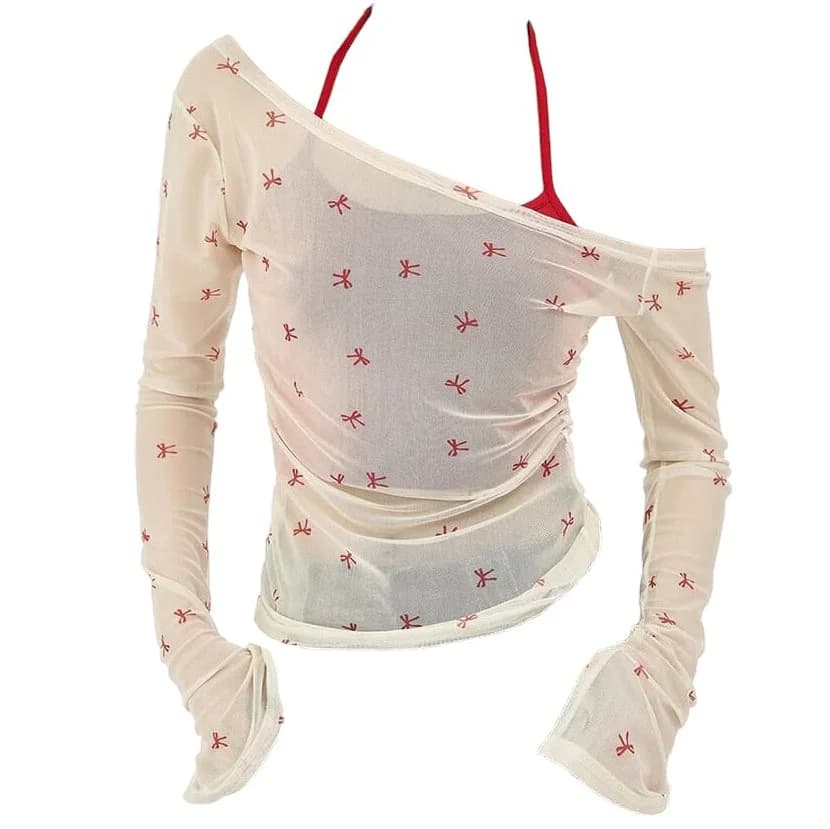
The neckline of your base piece should either nest cleanly inside the sweater or contrast intentionally. A square or scoop neckline sits neatly beneath wrap ties, framing the collarbones without competing with the cardigan's edges. For subtle texture, the Balletcore Aesthetic Bow Mesh Top (made of polyester in white/red) works well under an open-stitch knit shrug or a relaxed cardigan, giving you a sheer graphic detail at the chest while keeping the arms comfortable.
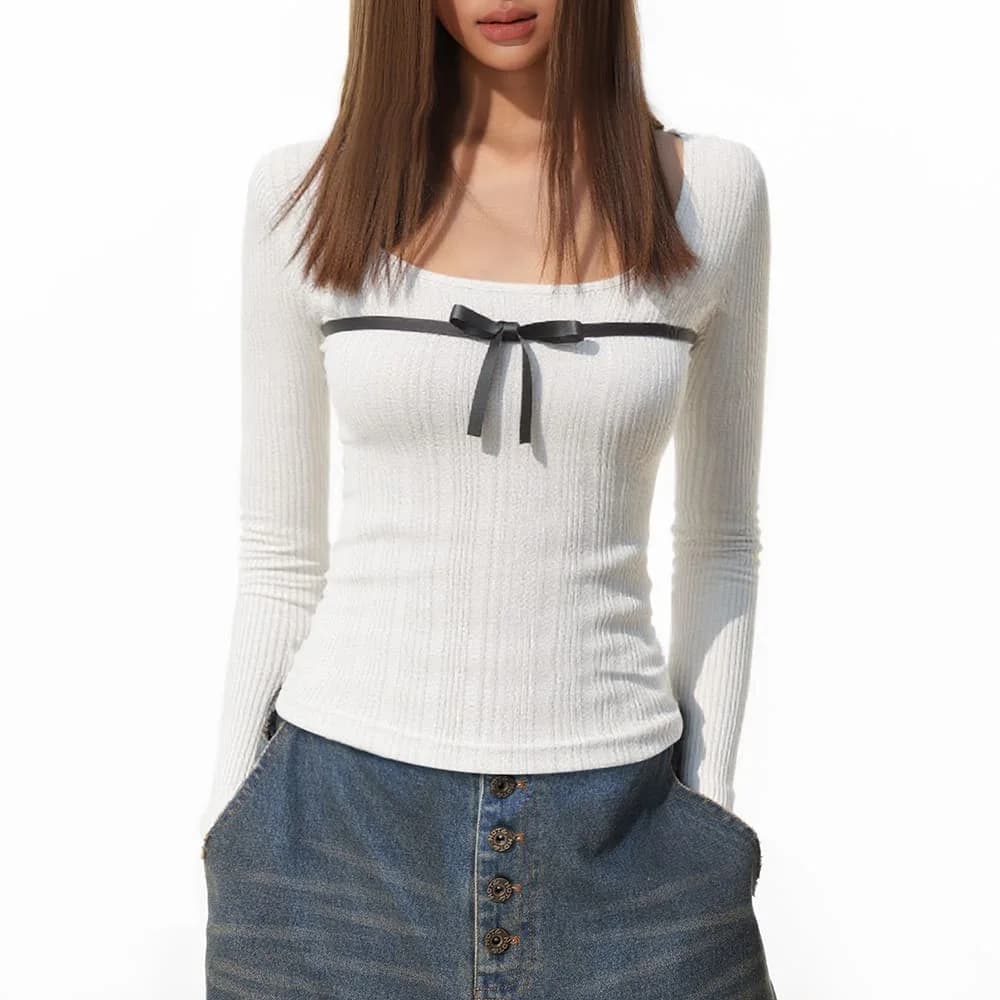
If you prefer a cleaner, romantic base layer with delicate edge detailing, look for soft ribbing that hugs the torso. The Coquette Bow Long Sleeve Top (cotton and polyester in white) provides a snug underlayer that slides easily beneath looser jumpers and open shrugs, preventing the scratchiness that sometimes comes with mohair or wool blends.
The Classic Wrap Sweater and Skirt Equation
The combination of a crossover knit and a flowing skirt is the cornerstone of dance-inspired dressing. The goal here is balancing the snug, sculpted hold of the wrap top with the airy sweep of the lower half. When your sweater sits fitted against the ribs, you can wear skirts with substantial volume, pleating, or tiers without drowning your figure.
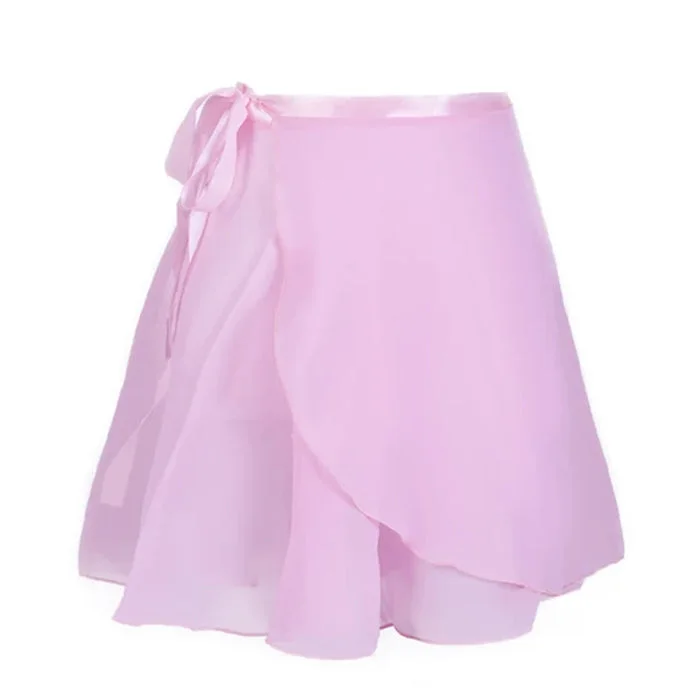
For an authentic practice-room line, pairing a knit wrap with the Balletcore Wrap Skirt (polyester, available in pink, black, baby blue, navy blue, white, purple, red, green, and brown) creates fluid, matching movement. Because this skirt ties around the waist, place the sweater tie slightly higher or tuck the sweater hem underneath the skirt waistband to prevent a bulky knot stack at your side hip.
When exploring wider apparel combinations across our complete Balletcore Clothes line, matching the texture of your skirt to the season keeps the outfit believable. Gossamer chiffons and mesh suit summer and spring, while heavier pleated fabrics or brushed wool blends anchor your wrap sweaters during autumn transitions.
- Offset side knots so the skirt closure and sweater ties don't sit on the exact same hip point.
- Keep the skirt waistband clean by tucking thin knit tails beneath the wrap band.
- Match opaque tights to your skirt or footwear to create an unbroken vertical leg line.

Layering Knits Over Dresses for Everyday Wear
Transforming summer dresses into cold-weather outfits is simple when you use ballet knitwear as a layeringWearing pieces over or under one another to add depth, warmth or contrast. tool. Instead of hiding a dress beneath a rigid coat, slipping a cropped knit shrug or open wrap cardigan over the bodice keeps the movement of the dress visible while providing genuine thermal protection. The key is monitoring where the sweater hem lands relative to the dress waistline.
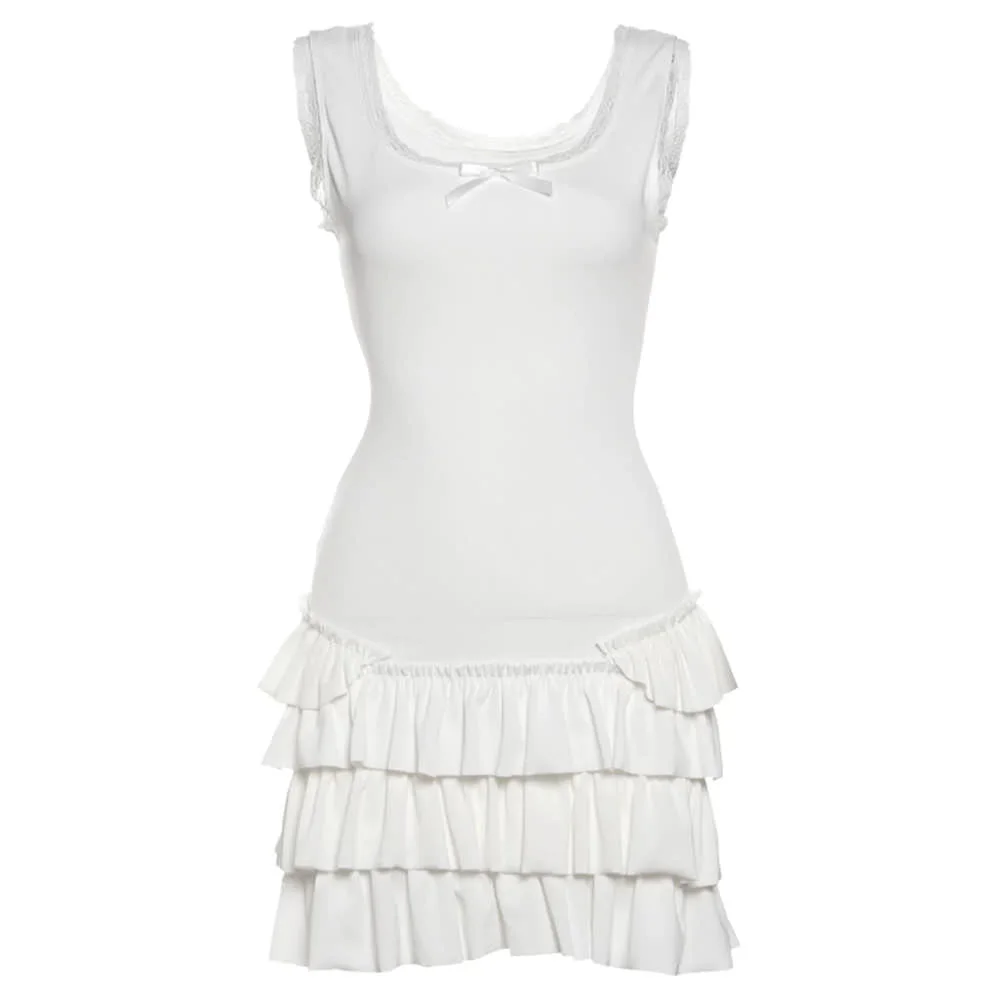
A dropped-waist or empire-cut dress requires a very short knit, such as a bolero, so you do not break the garment's designed silhouetteThe overall shape an outfit creates, from fitted to loose and layered. into strange fractions. For a fit-and-flare silhouetteThe overall shape an outfit creates, from fitted to loose and layered. like the Swan Balletcore Mini Dress (polyester in white), a wrap knit tied tightly at the natural waist mimics the look of a two-piece ensemble. The structured bust and flared skirt of the dress anchor the soft, pliable knitwear draped over your shoulders.
Browse our wider selection of Balletcore Dresses to find cuts that can double as underslips for chunkier cold-weather pullovers. When placing an oversized sweater over a dress, use a thin belt around your waist, pull the sweater down over it, and fold the excess knit upward to crop the jumper without bulky tucking.
For a daytime look with a floral dress, choose a short, light cardigan that ends near the waist so the dress shape remains visible. Leave a bow or print unobscured, and keep the shoes simple to avoid adding competing details. For an everyday direction centered on soft florals, bows, and light layers, browse the Himekaji Clothes collection.
Asymmetrical and Midi Lengths: Casual Street Proportions
While classic dance styling leans heavily on thigh-skimming skirts, bringing balletcore into casual urban settings often calls for longer, more utilitarian hemlines. Midi skirts offer coverage and wind resistance while maintaining a graceful silhouetteThe overall shape an outfit creates, from fitted to loose and layered.. The challenge lies in pairing a relaxed sweater with a longer skirt without looking dowdy or bottom-heavy.
An asymmetrical hemline solves this problem by breaking up the horizontal line at the calves. The Balletcore Asymmetrical Mid Skirt (cotton and polyester in white or black) adds architectural interest that contrasts nicely with soft knitwear. Wearing a slouchy, off-shoulder sweater tucked loosely on one side echoes the angular hemline of the skirt, creating an effortless, dynamic line.
To keep the overall look modern rather than vintage, ground these longer pairings with substantial footwear. Chunky loafers with knit leg warmers, leather Chelsea boots, or clean minimalist sneakers pull the romantic drape of the knit and midi skirt into sharp, street-ready territory.
- Half-tuck oversized sweaters into asymmetrical skirts to maintain hip definition.
- Pair midi lengths with ankle-height boots or leg warmers bunched over low shoes.
- Choose monochromatic tones to keep the layered textures looking sleek and intentional.
Off-Shoulder Knits and Romantic Detailing
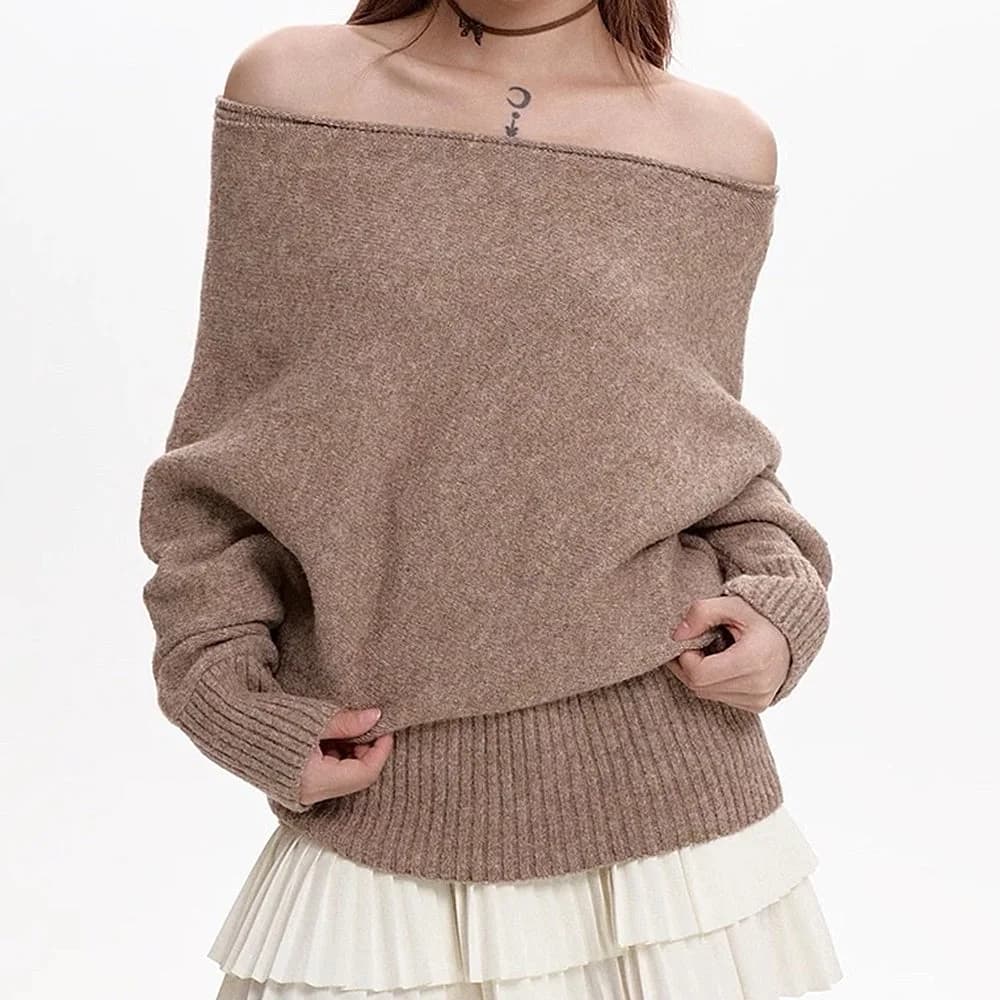
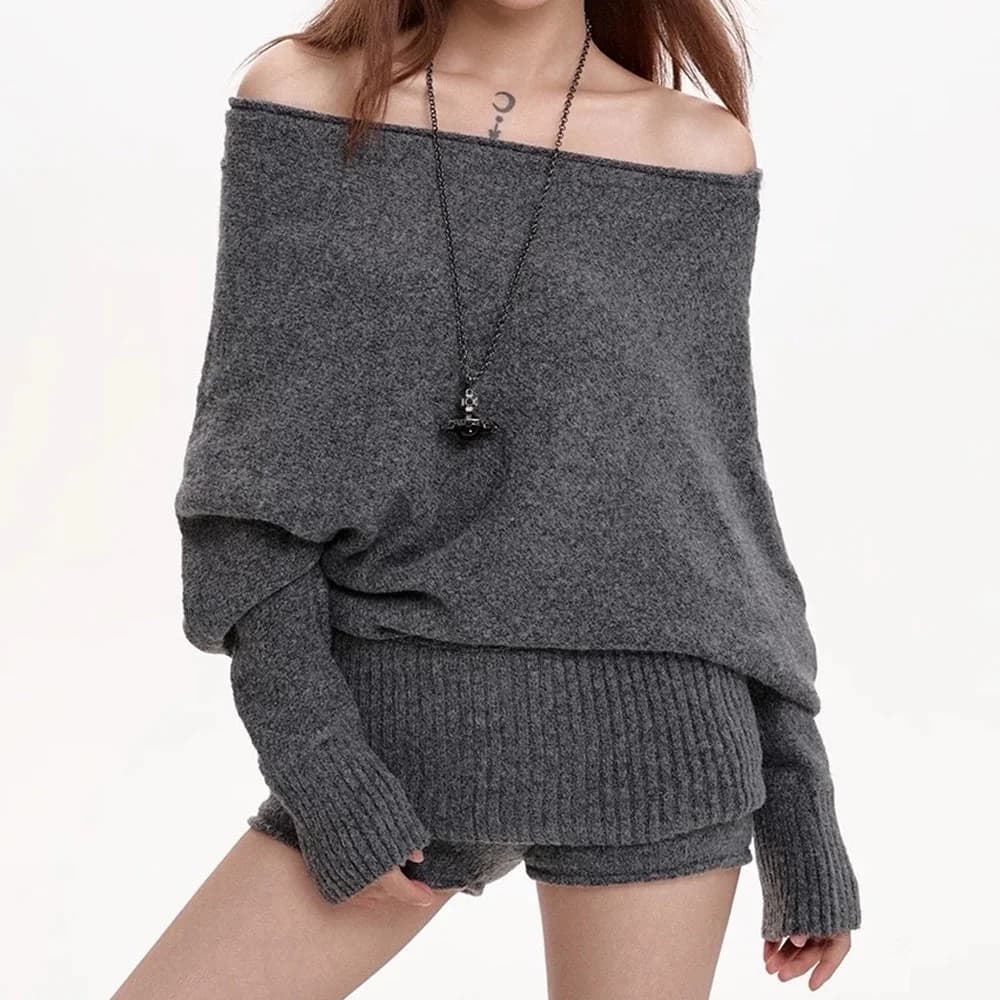
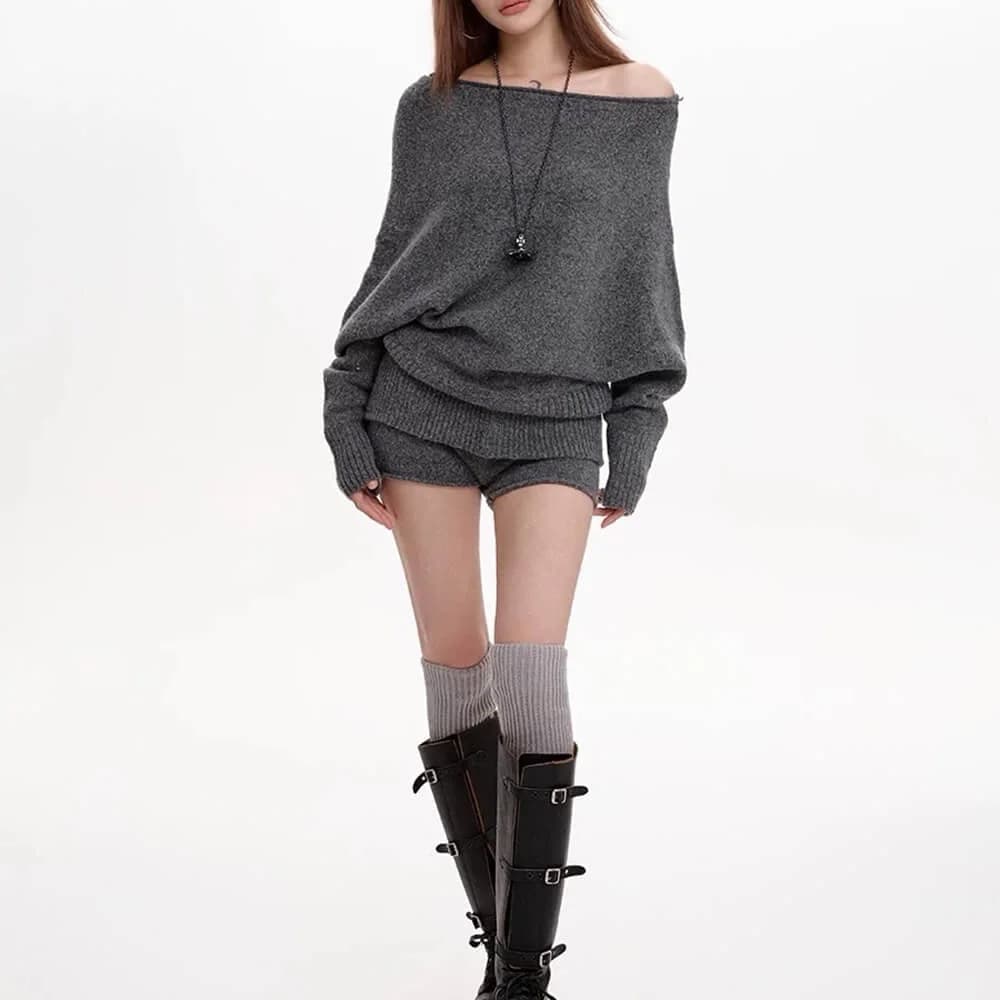
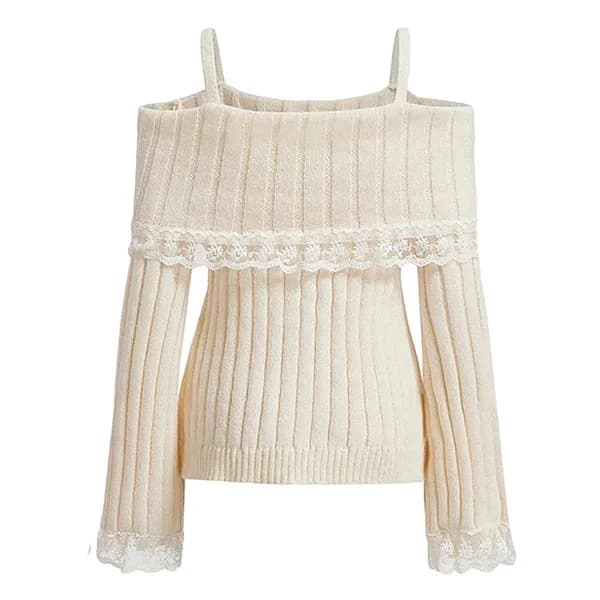
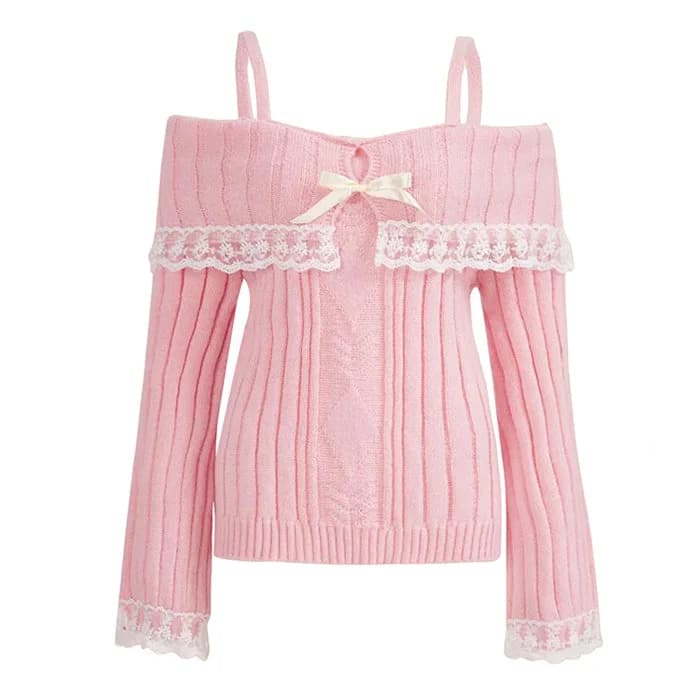
Off-shoulder sweaters are an easy way to play with neckline layeringWearing pieces over or under one another to add depth, warmth or contrast.. They highlight the collarbones while providing a relaxed, cozy drape across the arms. However, keeping an off-shoulder knit from sliding up around your neck or pulling uncomfortably requires careful attention to the underlayers and the sweater's neckline construction.
Wide neckline tops look best when paired with intricate underpinnings rather than basic bra straps. LayeringWearing pieces over or under one another to add depth, warmth or contrast. an off-shoulder jumper over the Diva Y2K Lace Top (polyester in white or black) lets delicate lace peek out at the shoulders and chest, adding depth to an otherwise simple knit. This combination keeps your chest covered from cold drafts while showcasing textured borders.
If your sweater has a foldover collar, ensure the fabric beneath is completely flat against your shoulders. Base layers with puffy sleeves or thick seams will create lumps under the foldover band. Smooth, sleeveless camisoles or fitted long sleeves are the most reliable companions for wide-neck knits.
- Foldover boatnecks stay put better when layered over textured fabrics than slick satins.
- Lace or mesh shoulder straps make visible undergarments look deliberate.
- Use silicone shoulder grips inside wide knits if the neckline tends to shift while walking.
Warm-Weather Layering: Spring and Summer Studio Knits
Balletcore knitwear is not reserved solely for cold snaps. Lightweight open-gauge knits, fine linen blends, and cropped shrugs are ideal for mild spring mornings and cool summer evenings. In warm weather, the purpose of layeringWearing pieces over or under one another to add depth, warmth or contrast. shifts from heat retention to sun coverage, air-conditioned office comfort, and visual depth.
During transitional months, an open-stitch sweater functions like an airy cover-up. Layer it over breezy cotton basics from our curated Balletcore Tops range. The Balletcore Ruffle Long Sleeve Top (cotton and polyester in white) can be worn beneath a sleeveless knit vest or loose cropped shrug, allowing the ruffled hem and cuffs to spill out while your arms stay comfortably ventilated.
For peak summer days, tie your knit wrap sweater around your shoulders or diagonally across your torso like a sash over a tank top. This keeps the studio aesthetic present in your outfit without adding unwanted heat, and gives you a functional layer ready when indoor temperatures dip.
- Choose open-mesh weaves and fine-gauge cottons over dense brushed wools.
- Let ruffled cuffs and collars extend beyond the sweater sleeves for effortless contrast.
- Drape lightweight wraps over your shoulders as a practical sun or draft shield.
Cold-Weather Layering: Autumn and Winter Insulation
When temperatures drop, ballet styling requires a tactical approach to thermal retention. The delicate, open cuts typical of dance knits can let in cold air if you do not build a discreet insulating foundation. The trick is to hide high-efficiency thermal layers beneath your visible studio pieces.
Start with a snug, heat-retaining thermal base layer in a tone that matches your skin or your sweater. Over this, place your ballet wrap or chunky knit jumper. For added warmth without restricting movement, use a tailored wool coat over top, but ensure the coat sleeves are wide enough to accommodate the batwing or dolman cuts often found on dance sweaters. Narrow coat arms will crush the knitwear and feel uncomfortably tight.
Leg warmers become essential during winter street styling. Rather than wearing them purely as an accessory, pull ribbed knit leg warmers over fleece-lined tights and high socks. LayeringWearing pieces over or under one another to add depth, warmth or contrast. them over boots or scrunching them above Mary Janes creates the classic dancer silhouetteThe overall shape an outfit creates, from fitted to loose and layered. while protecting your ankles from freezing gusts. You can find versatile bottom pieces across our Balletcore Skirts collection to pair over heavy winter tights.
- Wear skin-toned thermal undershirts with low-cut necklines beneath open wrap sweaters.
- Pair thick knit leg warmers over fleece tights to keep ankles warm in sub-zero weather.
- Check coat armholes: dolman ballet sleeves need oversized or raglan outerwear cuts.
Playing with Tailored and Masculine Contrast
One of the most effective street-style styling techniques is introducing structured, menswear-inspired pieces to balance the ultra-soft, feminine drape of ballet knits. Wearing a wrap sweater solely with pastel ribbons, tulle, and soft flats can feel overly theatrical for everyday errands. Grounding the knit with sharp tailoring creates a sophisticated, balanced outfit.
Try styling a pale pink or cream wrap sweater with wide-leg pleated trousers or structured straight-leg denim. The tailored waist and clean vertical drape of tailored trousers provide a crisp counterpoint to the soft crossover knot of the knit. A boxy, oversized blazer worn unbuttoned over a fitted wrap top also frames the waist while tempering the sweetness of the dancewear silhouetteThe overall shape an outfit creates, from fitted to loose and layered..
You can also layer a casual button-up under an open-front knit. The Aesthetic Loose Fit Button V-Neck Top (cotton and polyester in beige or navy) offers a relaxed, casual collar structure that works wonderfully when layered beneath a slouchy wrap or shrug. Rolling the cuffs of the top back over the sweater sleeves gives your wrists a structured, practical finish.

Footwear and Accessory Proportions for Layered Knits
Footwear grounds the proportions of any layered knitwear look. Because balletcore sweaters tend to have soft, flowing, or rounded silhouetteThe overall shape an outfit creates, from fitted to loose and layered.s, wearing shoes that are too delicate can leave an outfit looking top-heavy, particularly if you are wearing an oversized knit shrug or chunky wrap.
Traditional ballet flats and pointe-inspired shoes work best when your sweater layer is cropped and fitted, mimicking the sleek discipline of a studio rehearsal. If you are wearing a long, slouchy knit or a layered midi skirt, reach for shoes with a thicker sole profile. Lug-sole Mary Janes, platform loafers, or riding boots provide the visual weight needed to counterbalance thick knitwear textures.
Keep neck and hair accessories minimal when layeringWearing pieces over or under one another to add depth, warmth or contrast. bulky sweaters. Chunky scarves often collide with wide wrap collars, resulting in a cluttered neckline. Instead, rely on satin ribbons tied in your hair, minimalist stud earrings, or small pendant necklaces that nest inside the V-neck opening of your cardigan. Allow the textures of the knitwear, lace, and ribbon ties to serve as the outfit's primary ornamentation.
Common Styling Mistakes to Avoid
When layeringWearing pieces over or under one another to add depth, warmth or contrast. balletcore knits, small errors in proportion and styling can disrupt the entire aesthetic. The most frequent misstep is knotting wrap sweaters directly in the center of your stomach. Studio wrap knits are designed to cross cleanly across the ribs and fasten securely at the side or slightly around the back. Tying them in the dead center creates an awkward bulge beneath the chest and ruins the garment's diagonal visual line.
Another common problem is mixing too many competing focal textures simultaneously. Combining a thick cable-knit sweater, a heavily ruffled base top, a tulle tutu, and patterned lace tights creates visual noise rather than effortless layeringWearing pieces over or under one another to add depth, warmth or contrast.. Aim for one rich texture, one smooth bridge layer, and one fluid bottom layer. Let a single hero piece take center stage.
Lastly, watch out for drooping shoulder seams. Off-shoulder knits that lack internal elasticity or structured ribbing will constantly slip down to your elbows or ride up toward your ears as you walk. Choose knits that fit snugly around the biceps or use double-sided fashion tape to secure wider necklines to your undergarments for comfortable all-day wear.
- Never tie wrap sweaters dead center; fasten ties firmly at the side hip or back.
- Do not stack multiple bulky textures; balance ribbed knits with smooth, fine fabrics.
- Avoid ill-fitting off-shoulder knits that require constant pulling and readjusting.
Comparing Knitwear Silhouettes: Quick Reference
Choosing between the diverse knit shapes available in the ballet aesthetic depends on how you plan to layer and what weather you are dressing for. Each cut serves a distinct styling function and requires specific bottom garments to balance the overall frame.
A classic side-tie wrap cardigan is the most versatile silhouetteThe overall shape an outfit creates, from fitted to loose and layered.. It allows you to adjust the fit across your chest and natural waist, pairing seamlessly with both high-waisted skirts and casual jeans. It functions equally well as a top on its own or layered over fitted tanks and lace camisoles.
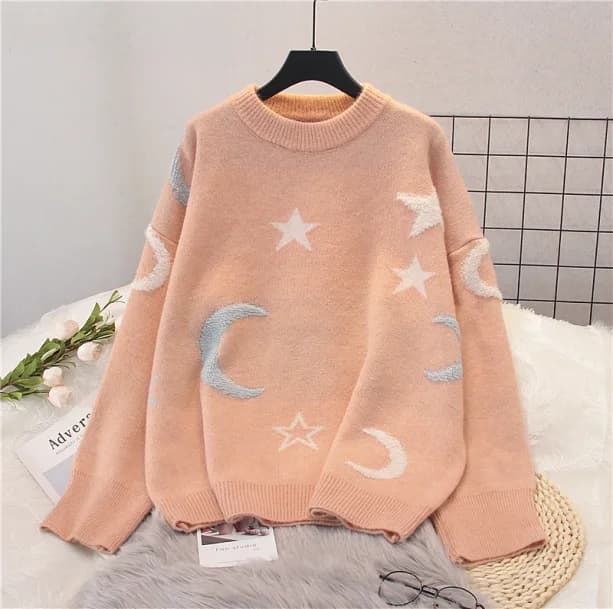
Cropped boleros and knit shrugs, on the other hand, provide zero torso insulation, making them strictly styling accents or upper-arm covers. They excel when layered over mini dresses, corsets, or high-necked graphic base layers. Oversized open-stitch pullovers provide maximum coziness and a slouchy, off-duty aesthetic, but they require fitted bottoms like bicycle shorts, leggings, or structured minis to keep the outfit from losing its shape.
- Wrap Cardigans: Best for waist definition, adjustable fits, and pairing with A-line skirts.
- Cropped Shrugs: Ideal for layeringWearing pieces over or under one another to add depth, warmth or contrast. over dresses and highlighting detailed base tops.
- Slouchy Pullovers: Best for relaxed, casual looks paired with slim-cut bottoms.
Practical Layering Checklist for Everyday Outfits
Before heading out the door in your layered knit look, a quick mental run-through ensures your outfit is practical, comfortable, and visually cohesive. Balletcore is fundamentally about graceful, effortless movement; if you feel constrained, constantly tugged, or over-bundled, the proportions likely need adjustment.
Check the balance between your upper and lower halves. If your sweater is thick, loose, or textured, keep your bottoms streamlined or smoothly draping. Ensure your base layer is securely tucked in so it does not ride up beneath the knitwear during movement. Finally, confirm that your shoes provide enough visual anchor to ground the softness of your studio pieces.
By treating balletcore knitwear as an adaptable layeringWearing pieces over or under one another to add depth, warmth or contrast. system rather than a strict uniform, you can effortlessly incorporate wrap fronts, shrugs, and delicate bases into your regular wardrobe rotation across any season.
- Base layer lies flat without twisting beneath the sweater sleeves.
- Wrap ties are fastened securely at the side seam, not bunched at the center front.
- Proportions are balanced: volume on top is countered by streamlined or fluid bottoms.
- Footwear matches the visual weight and warmth level of the overall knitwear layeringWearing pieces over or under one another to add depth, warmth or contrast..