Created by the Kawaii Vibe editorial team. Our named style desks are editorial personas. Product details and availability can change.
Balancing pink trousers comes down to intentional volume control and clean breaks in your silhouetteThe overall shape an outfit creates, from fitted to loose and layered.. Because bright pink tones draw immediate visual focus to the lower half of the body, ordinary issues with fabric pooling, waistband placement, and hem sweeps become much more noticeable than they would with dark denim or neutral slacks. Getting the look right is not about toning down the pink; it is about calibrating the horizontal width of your legs against the vertical length of your torso and layeringWearing pieces over or under one another to add depth, warmth or contrast. pieces.
When you plan Barbiecore pants outfits, the primary challenge is preventing wide, bright cuts from swallowing your frame or making your outfit feel disjointed. Whether you are working with roomy skate cuts, structured straight legs, or tailored flares, each silhouetteThe overall shape an outfit creates, from fitted to loose and layered. demands a specific relationship with your hemline, footwear sole, and top hem. Understanding where your layers stop and where your waistband sits allows you to build striking, high-impact looks that feel grounded, comfortable, and easy to wear throughout the day.
The Core Ratio: Counterbalancing Leg Sweep and Torso Length
The golden rule for styling statement trousers is horizontal counterbalancing. When your pants feature an expansive leg sweep—such as a puddle-hem cargo, an ultra-wide skate pant, or a fluid trouser—the top portion of your outfit needs to offer visual definition. If both your top and bottoms expand horizontally without an anchor point, your silhouetteThe overall shape an outfit creates, from fitted to loose and layered. loses its structure entirely. Achieving balance starts with locating your natural waist or your preferred waistband resting point and building outward from there.
To make wide trousers look effortless rather than overwhelming, shorten the visual length of your upper layer. This does not mean you are forced to wear tiny tops; it simply means your top layer should either end near the waistband or be tucked cleanly inside. Pairing an expansive lower block with a neat, closer-fitting top directs the eye smoothly down the body, letting the dramatic cut of the pants stand out as the deliberate centerpiece of the outfit.
If you prefer low-slung waistlines, the counterbalance shifts to the vertical plane. A low-rise wide pant lengthens your torso, which means your upper layer should avoid cutting across the widest point of your hips. Instead, aim for tops that finish either above the pelvic bone or extend into a straight, streamlined duster-style layer that creates continuous vertical lines along the sides of your body.
- Pair dramatic wide-leg hems with tops that finish cleanly at or above your trouser waistband.
- Tuck medium-weight tops directly into high-rise bands to keep the hip line crisp and defined.
- Keep low-rise waistbands paired with cropped or closely skimming upper layers to prevent mid-torso bunching.
Wide-Leg and Skate Silhouettes: Managing Hem Stacking
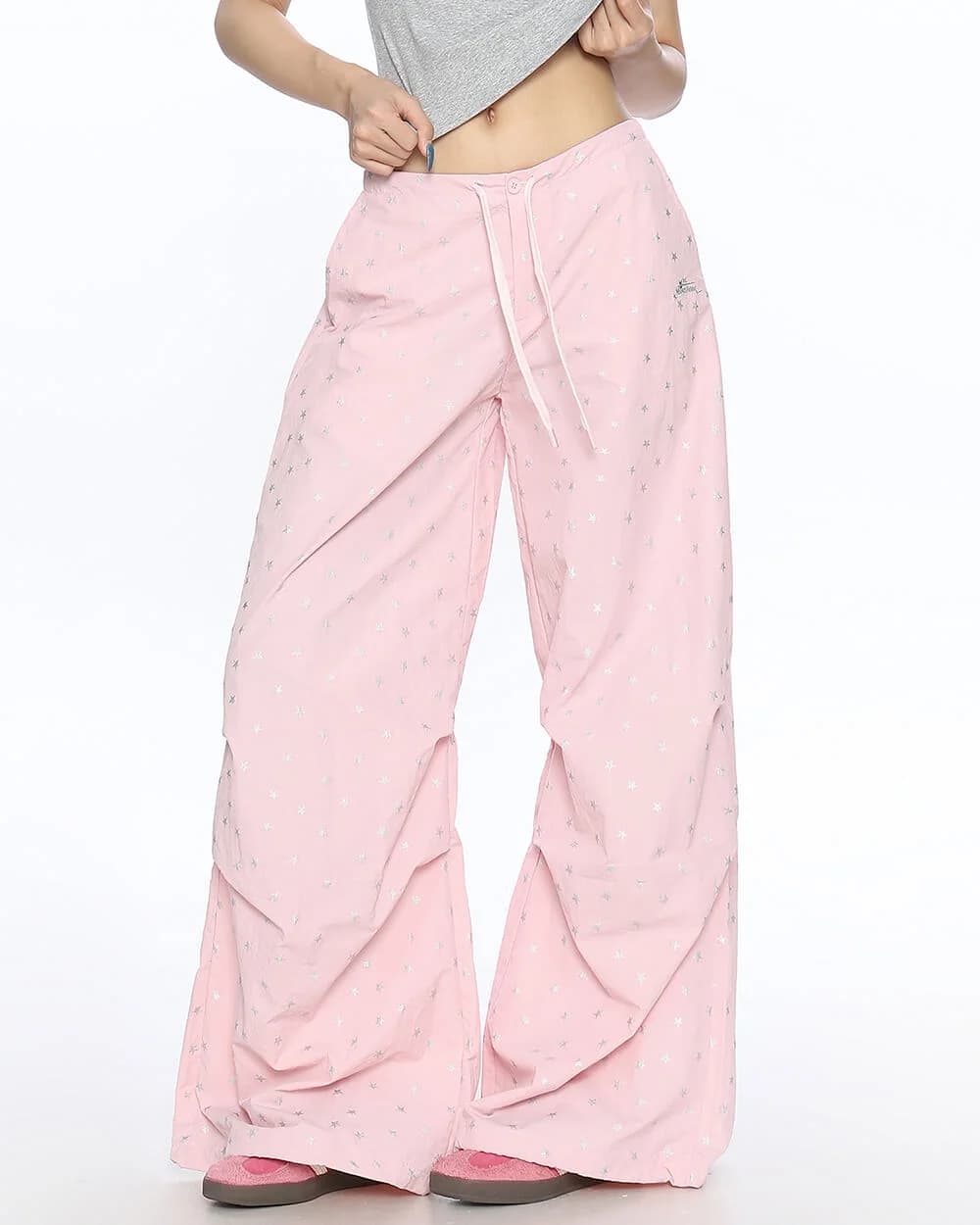
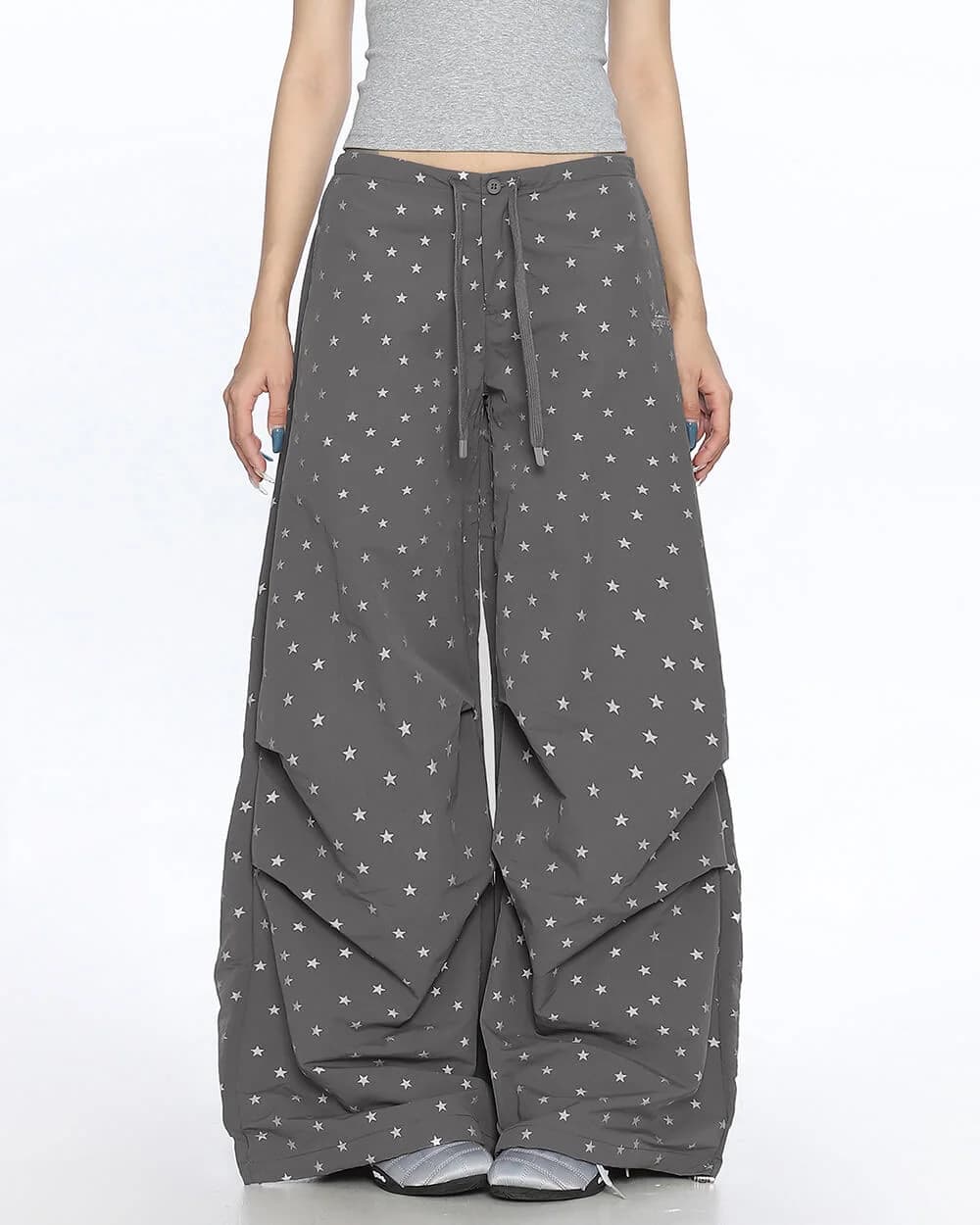
Skate-inspired and loose-cut pants bring a relaxed, streetwear-influenced energy to bright palettes, but fabric pooling can quickly look messy if your shoes do not support the hem. When working with pieces like the Star Print Baggy Pants, which feature a roomy polyester cut available in Pink or Grey, the key is controlling how the fabric falls over your instep. You want a controlled break—where the cloth folds gently once across the top of your shoe—rather than excessive bunching that drags along the pavement.
Platform sneakers, chunky retro runners, and thick lug-soled boots are the best tools for managing wide hem sweeps. The extra height keeps your cuffs elevated away from wet sidewalks, while the wider sole footprint creates a solid visual base that matches the width of the trouser cuffs. A flimsy, ultra-slim canvas shoe often disappears beneath an expansive cuff, causing the hem to collapse awkwardly over your toes.
When browsing the wider selection of Barbiecore pants, examine how each cut tapers or flares near the hem. For looser cuts that do not have an ankle toggle, your shoe choice is your primary tailoring tool. Selecting a shoe with a sole width that matches or slightly exceeds the width of your ankle opening ensures the fabric drapes in clean, intentional folds.
- Choose platform soles or chunky runners to give loose polyester pants a sturdy base to rest on.
- Avoid paper-thin flats beneath heavy skate sweeps to prevent hem dragging and fraying.
- Let the fabric break just once across your shoe laces for a sharp, relaxed profile.

Patterned Trousers: Grounding Checks, Plaids, and Stars
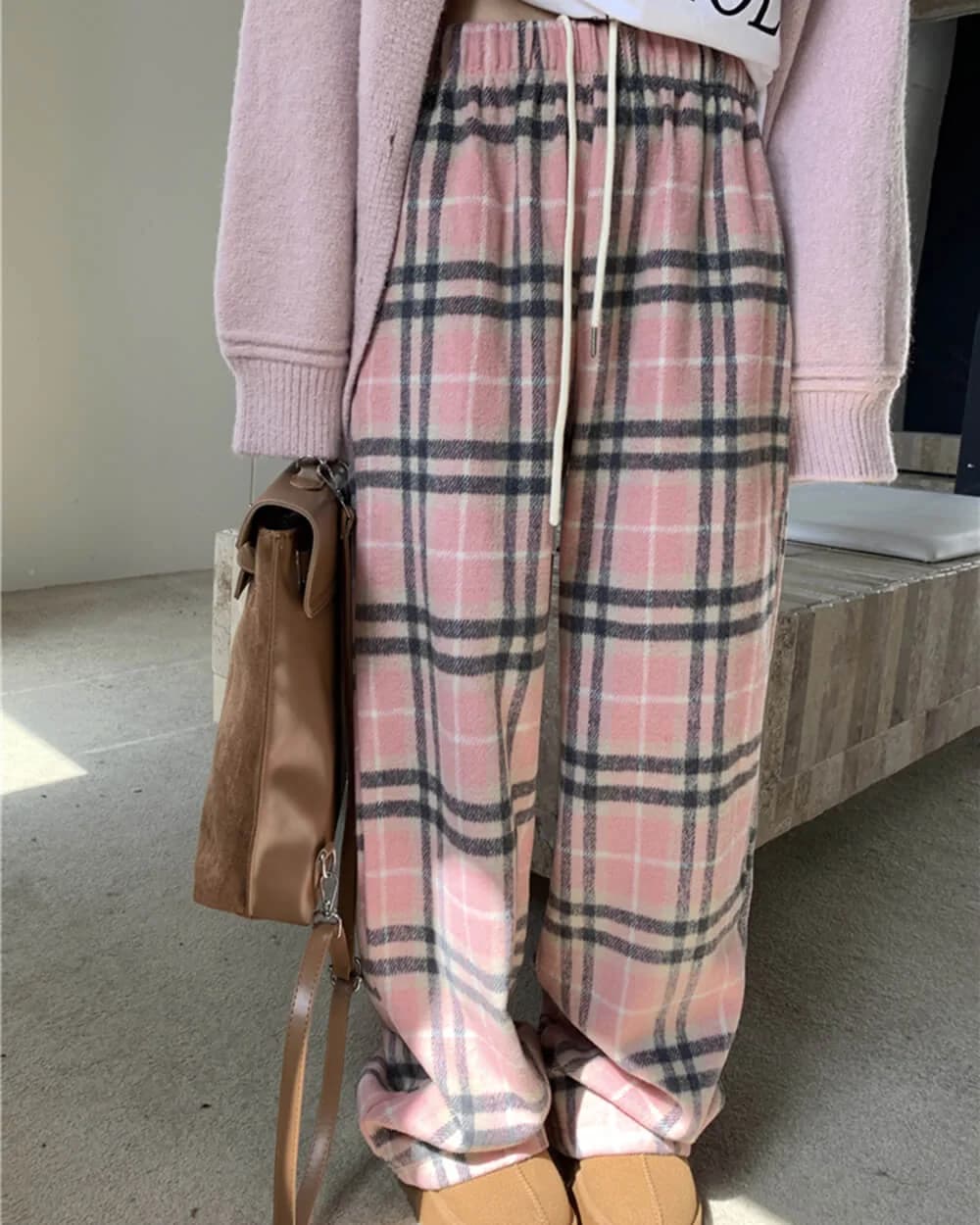
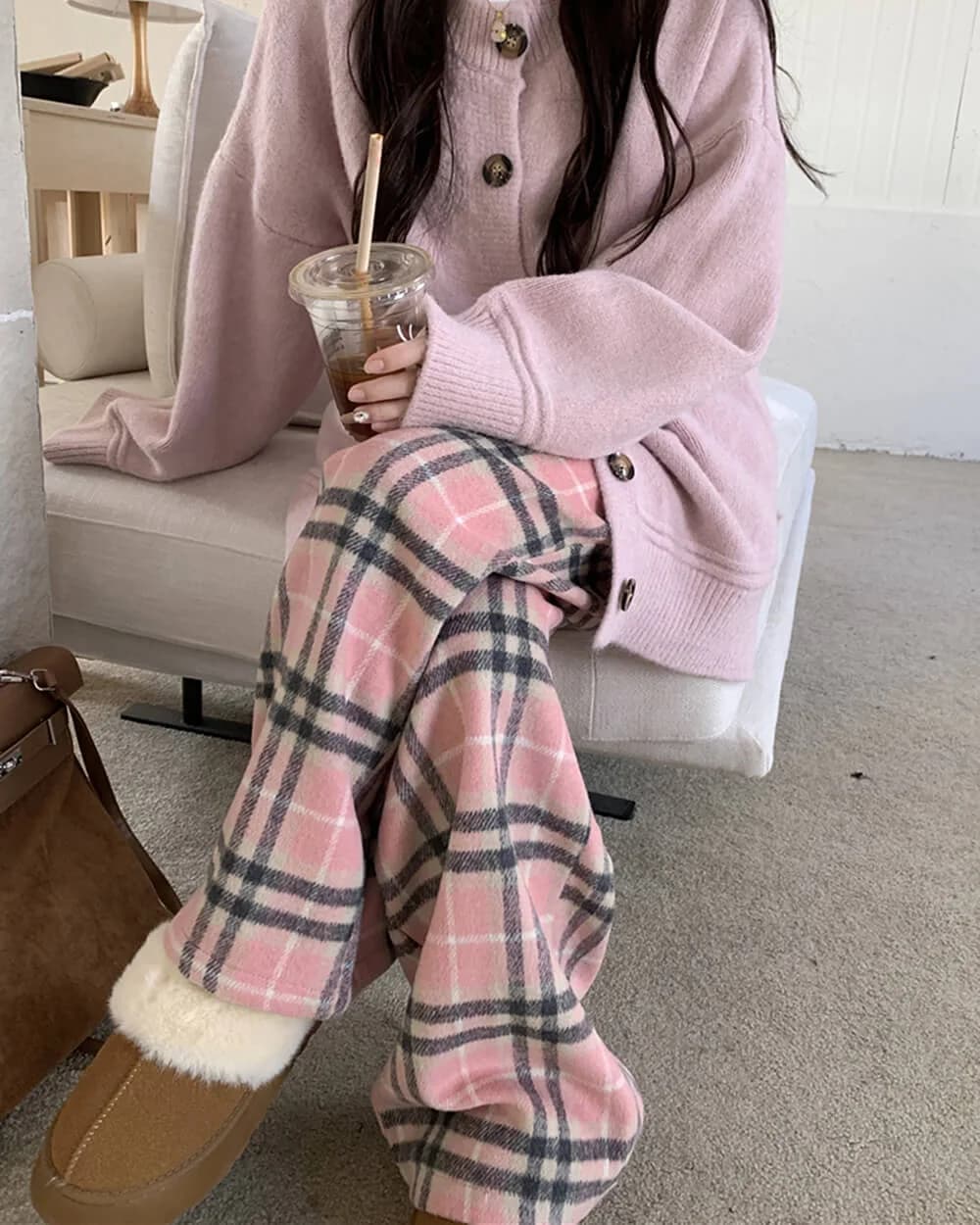
Patterned statement pants double down on visual interest, combining eye-catching color with geometric shapes. The Pink Plaid Wide Leg Pants, offered in polyester in sizes up to 4XL, demonstrate why print scale matters so much. A prominent plaid pattern naturally expands the visual field of the legs. To keep your outfit looking cohesive rather than chaotic, let the pattern lead the conversation while keeping your supporting layers clean and minimal.
The most reliable way to anchor patterned trousers is by echoing one specific tone from the print into your upper layer. If your pants feature a pink and white windowpane check, styling them with a plain white baby tee or a crisp cotton shirt establishes instant harmony. Introducing conflicting prints—like pairing bright animal prints with geometric tartans—can quickly overwhelm the eye unless the scale of the two prints differs drastically.
Structure is equally vital when wearing print. Because printed fabrics draw immediate attention, soft or unironed creases will show up easily in daylight. Treat your patterned pieces to clean lines up top: look through structured Barbiecore tops for tailored square-neck cuts, clean ribbed finishes, or minimalist button-downs that give the playful print a crisp, deliberate framework.
With patterned trousers, let one color from the print lead and keep the top uncluttered. A plain black fitted top can pick up dark lines in pink plaid pants; choose one lace detail or piece of jewelry rather than introducing another pattern. For a dressier pink-and-black direction with glamorous accessories, see the Agejo Gyaru Clothes collection.
A clean upper layer helps patterned trousers stay in focus, so keep decoration near the face restrained too. For a more romantic outfit, choose a plain solid-color top and add one statement bow; Hime Gyaru Clothes offers ornate-detail inspiration while the plaid remains the main print.
- Pull a single secondary neutral from the plaid or check pattern to determine your top color.
- Keep upper-body textures smooth and simple so they do not compete with geometric lower halves.
- Ensure wide patterned cuffs break evenly across both shoes to keep horizontal lines straight.

Statement Denim: Heart Accents, Gradients, and Washes
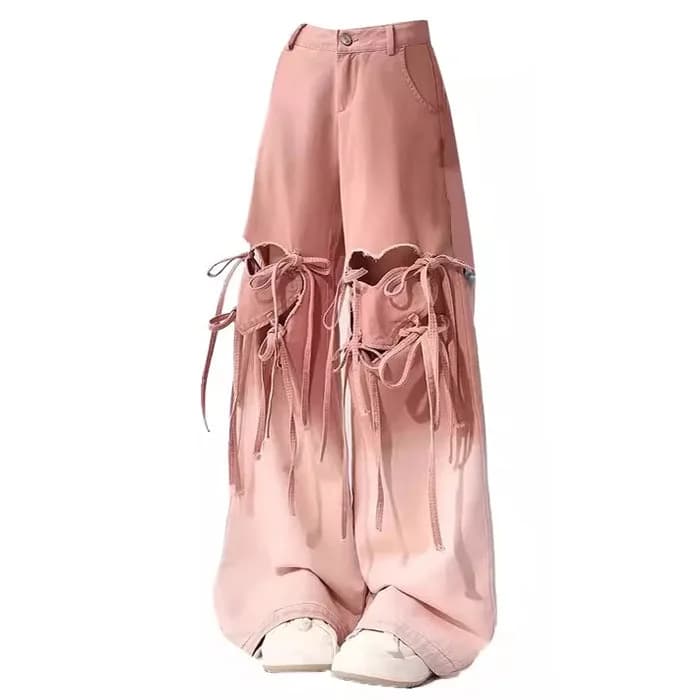
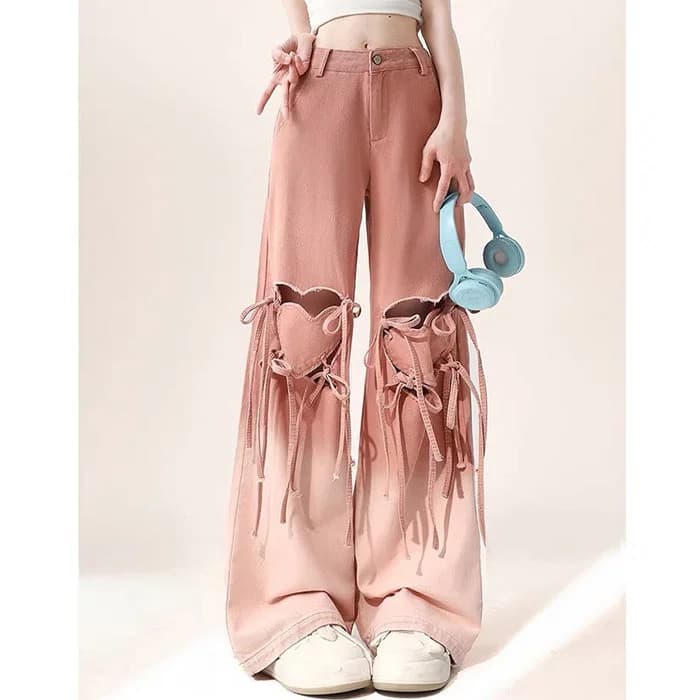
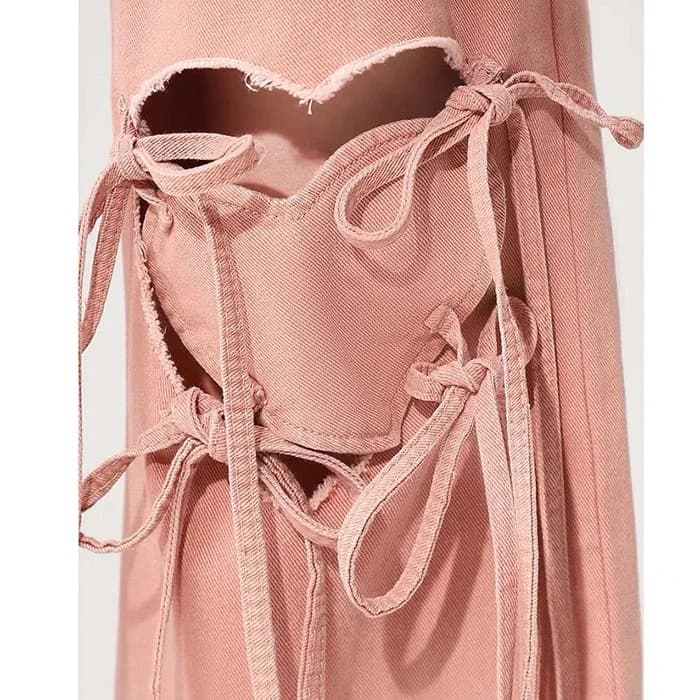
Denim provides structural weight that lighter synthetics cannot replicate, making it an essential foundation for bright pink wardrobes. Pieces like the Knee-Heart Gradient Pants, constructed from classic denim with pink and green options up to XL, introduce distinct vertical focal points. With gradient washes and knee embellishments, the design draws the eye to the mid-leg, which means your upper layers need to stay quiet to avoid visual clutter.
When styling gradient or wash-treated denim from our Barbiecore jeans range, consider the visual weight of the denim itself. Heavy cotton twill has a natural stiffness that holds its own shape, standing away from the body more than drapy polyester. To counterbalance that density, opt for tops that offer some skin exposure or texture contrast—such as a fine-gauge knit, an off-the-shoulder neckline, or a sleek fitted tank.
Belt choice also plays a decisive role when styling two-tone or decorative jeans. A wide, heavily studded belt can fight with knee details and waist gradients, cluttering the midsection. Instead, choose a slim leather strap in white, baby pink, or silver hardware. This defines your waistline without interrupting the smooth vertical transition from your torso into the wash of the jeans.
Winter Proportions: Puffer Pants and Quilted Textures
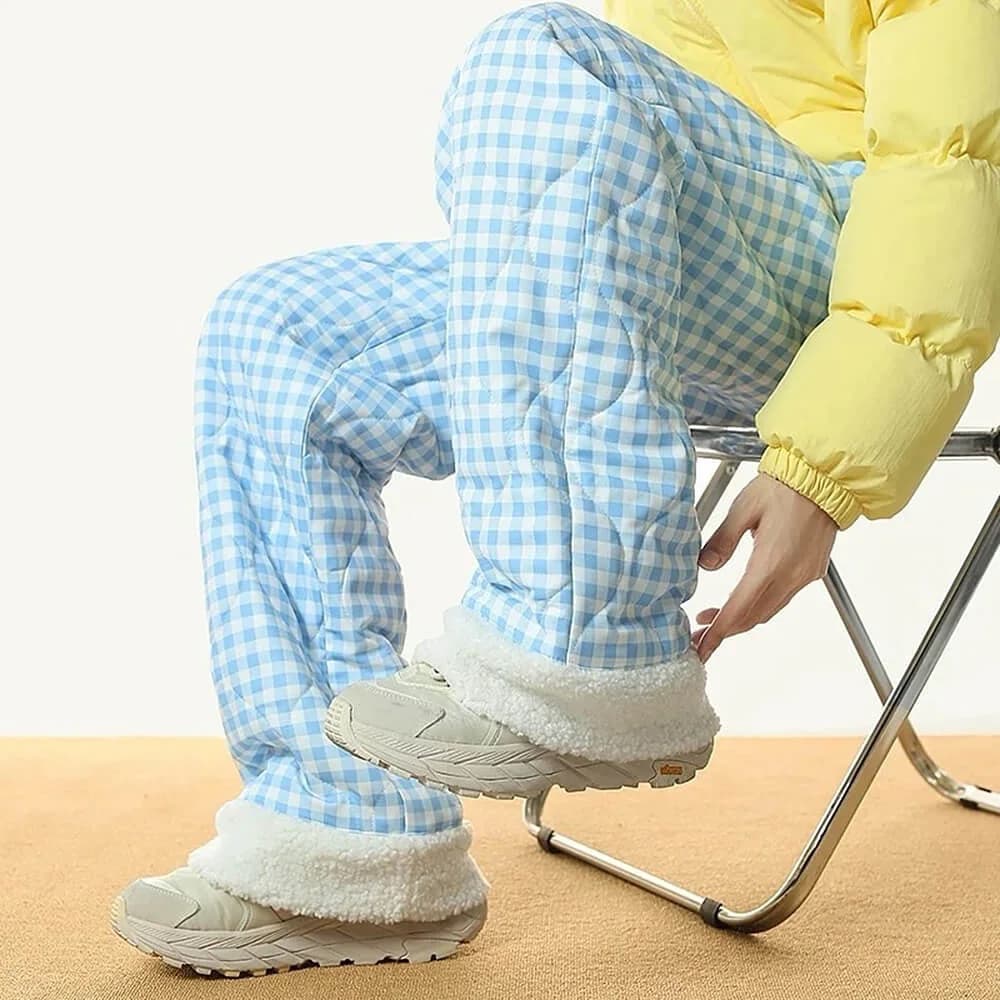
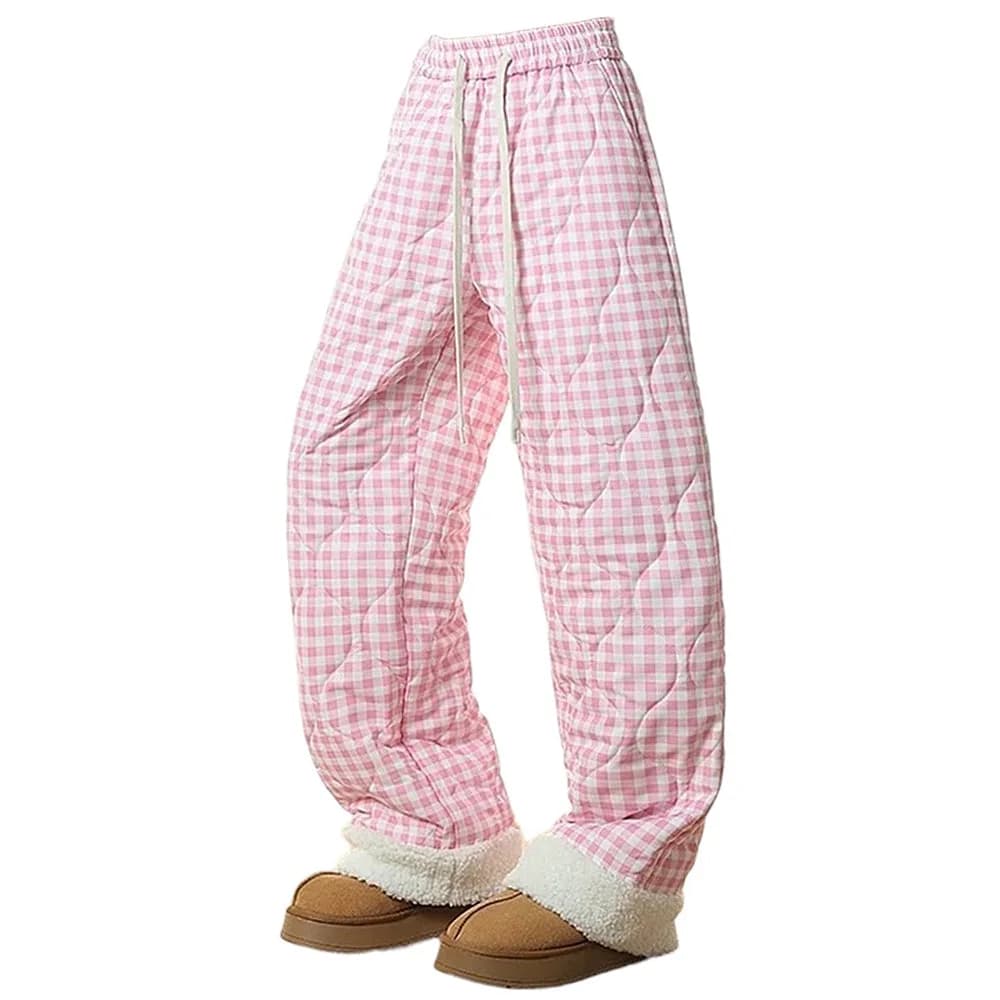
Cold-weather styling introduces unique bulk challenges, especially when moving into insulated lower halves. The Pastel Checkered Puffer Pants, crafted from quilted polyester in Pink and Blue options up to 5XL, showcase how quilting adds three-dimensional volume to your bottom half. When your pants are literally padded, balancing width requires strict attention to your upper layers to avoid looking swallowed by your clothes.
With quilted trousers, avoid pairing them with an equally oversized longline down jacket unless you are dressing purely for extreme arctic conditions. For streetwear balance, pair padded pants with a cropped fleece, a shrunken shearling jacket, or a fitted thermal top layered under an unzipped utility vest. Keeping your upper waist visible prevents the quilted fabric from creating a continuous, boxy block from shoulder to ankle.
Footwear must also hold up to quilted textures. Delicate sneakers will look completely out of scale beneath the thickness of quilted polyester cuffs. Anchor winter weights with substantial winter boots, heavy lug-sole platform shoes, or insulated slip-ons that provide enough visual density to balance the padded legs cleanly.
- Contrast three-dimensional quilted trousers with cropped or form-skimming outerwear.
- Choose footwear with heavy, lugged outsoles to anchor the volume of padded fabrics.
- Avoid mid-thigh coats that cut across the widest sweep of puffer pants.
Two-Piece Sets: Streamlining Flares and Off-the-Shoulder Cuts
Co-ordinated sets take the guesswork out of color matching, but they still require attention to silhouetteThe overall shape an outfit creates, from fitted to loose and layered. and posture. The Soft Girl Bardot Top & Flare Pants Co-Ord, a polyester two-piece set in pink, pairs an expansive off-the-shoulder neckline with a leg that hugs the thigh before opening outward below the knee. This pairing works because the wide horizontal neckline directly mirrors the flare of the bell-bottom hem, creating a balanced hourglass frame.
Flare silhouetteThe overall shape an outfit creates, from fitted to loose and layered.s differ fundamentally from wide-leg skate pants because they hold close to the knee before spreading out. This means your shoe height directly impacts your leg line. If a flare pant is too long, the bell hem folds awkwardly inward at the ankle rather than draping outward in a smooth bell curve. Always check that the knee break of the flare hits your actual knee joint, and select heel heights that allow the hem to skim just above the floor.
A coordinated set also gives you versatile styling pieces to mix back into broader Barbiecore clothes. You can separate the Bardot top to pair with high-waisted neutral denim, or wear the pink flare pants with an oversized vintage graphic tee tucked in tightly at the front for a casual retro twist.
- Mirror wide horizontal necklines with flared lower cuffs for an effortlessly balanced silhouetteThe overall shape an outfit creates, from fitted to loose and layered..
- Ensure flare hems hover half an inch above the floor to preserve the clean bell shape.
- Break apart co-ord sets across your weekly rotation to get maximum styling versatility.
Crop Tops and Baby Tees: Nailing the Hem-to-Waistline Gap
The vertical space between the bottom hem of your shirt and the top edge of your waistband is one of the most critical styling levers in your wardrobe. When pairing relaxed trousers with pieces from our Barbiecore t-shirts collection, deciding how much midriff to reveal determines the formality and proportion of your look. A gap of one to two inches creates a crisp, intentional break that visually shortens your torso and elongates your legs.
If you prefer full coverage, you can still achieve this balanced ratio without exposing your midriff. The secret lies in the 'french tuck' or using a fitted baby tee that finishes exactly at the top button of your pants. By letting the fabric meet the waistband without bunching up or tumbling down over your hips, you retain the visual elongation that cropped tops provide while staying completely covered.
When pairing baby tees with baggy streetwear cuts, pay close attention to the sleeve length. A shrunken cap sleeve or high-cut armhole complements wide, relaxed legs by keeping the shoulders looking neat and compact. Conversely, a boxy, elbow-length skater tee paired with loose trousers can drag down your proportions unless the shirt is firmly tucked in to clearly define your waistline.
- Aim for a one- to two-inch gap between crop hem and waistband for an elongating effect.
- Select capped or shrunken sleeves to keep the upper body compact against wide pants.
- Tuck full-length baby tees securely at the front to avoid fabric pooling around your belt loops.
Outerwear and Mid-Layers: Cropped Jackets vs Long Dusters
LayeringWearing pieces over or under one another to add depth, warmth or contrast. over pink pants requires making a deliberate choice between extremes: either go decidedly cropped or commit to an elongated floor-skimming duster. The danger zone is outerwear that ends directly at the mid-thigh or the widest part of your hips. Jackets that hit this intermediate zone divide your body into equal, boxy halves, neutralizing the leg-lengthening benefits of high-waisted trousers.
A cropped denim jacket, structured moto, or boxy bomber jacket that stops right at the waistband provides an instant frame for statement trousers. For chilly days, layeringWearing pieces over or under one another to add depth, warmth or contrast. a plush mid-layer like the Bubblegum Crush Fleece Pullover, an easy-wearing polyester top available in sizes S to L, gives you cozy warmth without unneeded bulk if you choose a size that finishes near the hips. Tucking the front hem slightly upward or folding the waistband inward helps maintain your proportion.
On the opposite end of the spectrum, an unbuttoned maxi trench coat or lightweight duster cardigan creates strong vertical framing. Leaving a long coat completely open down the front reveals the high waistband of your pink trousers, using vertical exterior lines to slim your silhouetteThe overall shape an outfit creates, from fitted to loose and layered. while allowing the vibrant color of your pants to pop through the center.
- Choose outerwear that finishes precisely at the waistband or extends past the mid-calf.
- Avoid mid-thigh jackets that visually split your frame into equal, unflattering blocks.
- Wear long coats unbuttoned down the front to create a continuous, slimming vertical line.
Footwear Pairing: Choosing Sole Heights and Toe Shapes
The shoes you wear beneath pink pants do more than just match colors; they dictate how the fabric moves, folds, and drapes. A wide leg requires a shoe with sufficient visual weight and forward presence. Pointed-toe boots, chunky square-toe loafers, and platform sneakers are ideal candidates because their distinct front profiles extend out past the hemline, preventing your feet from looking tiny or hidden under wide fabric sweeps.
With tapered or straight-leg pink pants, footwear flexibility increases. You can comfortably wear lower-profile sneakers, ballet flats, or strappy sandals without losing your silhouetteThe overall shape an outfit creates, from fitted to loose and layered.. However, as the cuff width widens toward a full flare or palazzo sweep, rounded, low-profile canvas shoes lose their effectiveness. The fabric tends to engulf the front of the shoe, making the bottom of your legs look like unbroken fabric columns.
Sole height also determines whether your pants fall in a clean vertical line or bunch awkwardly around your ankles. When shopping for trousers, keep your preferred daily footwear height in mind. If you primarily walk in flat runners, tailor or cuff your pants to break cleanly across the laces rather than dragging along dirty pavement surfaces.
- Use pointed or distinct square toe shapes to extend visibly past wide trouser hems.
- Reserve low-profile sneakers and slim flats for straight, tapered, or cropped ankle cuts.
- Test pants with your thickest platform soles to ensure the back hem stays off the ground.
Monochrome Pink Outfits: Shifting Tone, Texture, and Weight
Wearing pink from head to toe is a signature styling move, but doing it successfully requires varying your textures and shades. Wearing identical flat cotton in the exact same shade across both your top and bottom can end up looking like medical scrubs or standard sleepwear. To make a monochromatic pink outfit feel high-fashion and intentional, combine distinctly different fabric textures across your layers.
Pair matte denim bottoms with shiny, smooth satin camisoles, or combine fuzzy polyester fleeces with structured twill trousers. Mixing textures creates depth and shadow, allowing each individual piece of the outfit to be recognized on its own. For instance, wearing the Knee-Heart Gradient Pants with a fluffy knit or a sleek ribbed top breaks up the colorway into interesting, tactile components that catch the light differently.
Varying the saturation of pink is another essential trick. Anchor your lower half with a deep bubblegum, magenta, or dusty rose pant, and top it with a very pale pastel or blush pink blouse. This subtle shift in tonal value prevents the look from becoming visually flat and overwhelming, giving your eyes a natural, comfortable gradient to follow from head to toe.
Trouser Alternatives: Incorporating Midi and Knee-Length Skirts
While wide trousers and jeans are wardrobe workhorses, there are occasions where structured skirts provide a cleaner, more breathable silhouetteThe overall shape an outfit creates, from fitted to loose and layered. while keeping your aesthetic intact. Exploring skirts helps you understand how different hemlines alter your proportions compared to trousers. When transitioning away from pants, knee-length cuts offer an entirely different balance point that highlights your footwear and lower calves.
The French Kiss Polka Dot Knee-Length Skirt, made from lightweight polyester in a striking pink and red print, provides an airy, retro alternative to tailored trousers. Its mid-calf break pairs beautifully with fitted baby tees or cropped cardigans, eliminating the hem-dragging worries that often accompany ultra-wide skate pants in wet weather.
For a more grounded, durable skirt option, the Secret Crush Knee-Length Skirt delivers a structured denim cut available in Pink, Beige, and Black up to 4XL. Unlike drapey polyester, structured denim skirts hold an A-line shape that stands away from the hips, serving as an easy, low-maintenance substitute for pink jeans while offering the exact same styling options for sneakers, boots, and casual graphic tees.
- Swap wide skate pants for knee-length denim skirts on wet or unpredictable weather days.
- Pair A-line skirts with fitted tops to preserve the same hourglass proportions as flare pants.
- Style polka dots and bold skirt patterns with neutral sneakers for an easy weekend balance.
Adapting to Weather: Layering for Warm and Cool Climates
Proportion needs change drastically as seasons shift, requiring practical adjustments to your layeringWearing pieces over or under one another to add depth, warmth or contrast. habits. In hot, humid weather, wide-leg trousers are naturally practical because their loose cut allows airflow. Pair lightweight polyester or linen-blend trousers with minimal halter tops, backless camisoles, or square-neck crop tops to keep your skin exposed up top, compensating for the broad fabric coverage on your legs.
In cold, damp climates, the strategy flips to heat retention without excessive bulk. Wearing thermal base layers beneath wide jeans or skate pants allows you to stay warm without changing the exterior silhouetteThe overall shape an outfit creates, from fitted to loose and layered. of your trousers. However, avoid wearing thick, fuzzy leggings under tight-fitting pants, as this creates uncomfortable bunching, restricts knee movement, and creates visible fabric pulling across the thighs.
Rainy days require careful attention to hem management. Wearing wide-leg pink pants that puddle on wet ground will ruin your hems with mud and water splatters. On damp days, swap dragging hems for cropped straight-leg pink denim, or use discreet pant cuffs rolled upward to clear the wet ground, paired with high-shaft Chelsea or platform rain boots to protect your clothes.
- Choose breezy, wide polyester cuts with minimal tops for warm, humid summer days.
- Add thin thermal base layers under denim rather than thick leggings to prevent bunching.
- Keep hems strictly above the ankle joint during rainy days to prevent water absorption.
Common Proportion Pitfalls and Quick Mirror Fixes
Even well-planned outfits can sometimes look slightly off when you see them in the mirror. The most frequent culprit is the 'unintentional sag'—when a mid-rise pant slides an inch or two lower than planned, causing the crotch to drop and shortening the visual line of your legs. If your trousers are sitting lower than intended, add a structured belt to secure the waistband firmly where it flatters you best.
Another common styling mistake is the 'floating hem.' This happens when straight-leg or flare trousers are slightly too short for your shoes, hovering awkwardly an inch above the ground without breaking cleanly across the instep. If your pants are too short for chunky platform sneakers, do not force the pairing. Swap them for low-top retro runners or ankle-strap heels that celebrate your exposed ankle rather than making the pants look accidentally shrunk.
Finally, watch out for fabric bunching caused by over-tucking thick tops into tight waistbands. Shoving a heavy knit or oversized fleece directly into tailored trousers creates lumps across your stomach and hips. Instead, fold the excess hem of your sweater up into your bra band, or use a thin clear elastic hair tie to gather the top at the side and fold it under seamlessly.
- Add a belt if the trouser crotch drops lower than intended throughout the day.
- Switch to lower-profile shoes if your pant cuffs hover awkwardly without touching the shoe.
- Use the bra-tuck trick for thick sweaters instead of stuffing heavy knits into your waistband.

Buyer’s Proportions Checklist: What to Measure Before You Buy
Before adding new statement trousers to your collection, take a few minutes to check your physical measurements against the garment dimensions. Never rely solely on generic alpha sizing (S, M, L), as sizing charts vary significantly across different cuts and fabrications. Knowing your exact numbers ensures that the proportions you envision match the reality of how the piece sits on your frame.
Start by measuring your rise—the distance from your crotch seam up to your natural waist or preferred waistband height. A high rise (typically 11 inches or more) pulls the visual start of your legs upward, pairing naturally with cropped cuts. A lower rise requires tops that hit lower down the torso to maintain balanced bodily thirds. Next, measure your inseam using the shoes you plan to wear most often with those specific trousers.
Finally, check the leg opening measurement. A 20-inch or greater leg opening indicates a true wide-leg or skater cut that will require chunkier footwear like platform sneakers or lug-sole boots to stay off the ground. If the leg opening is under 15 inches, you are looking at a straight or tapered cut that pairs best with slim sneakers, loafers, or flat sandals.
- Measure your front rise to know exactly where the waistband will sit on your torso.
- Measure your inseam while wearing your intended platform or flat shoes to verify hem break.
- Check the cuff opening width to determine whether you need chunky or slim footwear.