Created by the Kawaii Vibe editorial team. Our named style desks are editorial personas. Product details and availability can change.
Finding a cute beanie that looks effortless instead of squished or disproportionate comes down to two quiet details: where the brim sits against your forehead and how your hair frames your jawline. Many people pull a knit cap straight down over their ears, look in the mirror, and wonder why the silhouetteThe overall shape an outfit creates, from fitted to loose and layered. feels bottom-heavy or overly rounded. In reality, a few quick adjustments to your fold depth and part line completely shift how the knit balances your features.
Whether you have an angular jaw, a round face, long beachy waves, or a closely cropped pixie cut, knit headwear is remarkably flexible. You do not need a custom size to get a balanced look; you just need to know how to manipulate the fabric volume and position your bangs or tendrils. Once you understand how angles and crown heights interact with your facial structure, you can pick colors, motifs, and textures with complete confidence.
This guide breaks down practical styling formulas for every common head shape and hair length. We will explore how to roll, slant, and set your knitwear, while pairing it seamlessly with bulky cold-weather outerwear so you stay warm without losing your personal aesthetic.
Understanding Beanie Proportions: Crown Height and Fold Depth
Every knit cap has two working measurements that decide its overall shape: total crown height and the depth of the cuff. A single-fold cuff offers a neat, tailored baseline that holds the knit close to your scalp, which helps prevent sliding when you walk against strong gusts. A double-fold cuff, on the other hand, creates a thicker band of fabric around your temples, building horizontal width that can either emphasize your cheekbones or balance out a taller forehead.
If you prefer a relaxed silhouetteThe overall shape an outfit creates, from fitted to loose and layered. with slight slouch behind the head, leave the knit unfolded or fold it just once along the hem. When you want structural height to lengthen your facial line, rolling a firm double fold gives the crown enough rigidity to stand slightly pointed. Adjusting these folds before putting the hat on lets you customize the shape to your specific day, whether you are styling a bulky winter scarf or wearing an unzipped fleece.
When browsing through different kawaii beanies, pay attention to whether the knit is tightly ribbed or softer and more relaxed. Tighter ribbing allows crisp cuff adjustments that stay put all day, whereas looser knits settle softly against the crown, giving you an easy, lived-in profile.
- Single cuff: cleanest profile, keeps the cap securely anchored across your forehead.
- Double cuff: adds structural thickness around the brow, ideal for building temple volume.
- Unfolded or rolled hem: provides natural slouch and extra room for tucking up longer hair.
Round Face Shapes: Creating Vertical Lines and Crown Lift
Round facial shapes naturally feature soft curves and roughly equal distance from hairline to chin and cheek to cheek. The primary styling goal here is to introduce soft vertical length rather than wrapping a heavy horizontal line directly across the widest point of your face. Pulling a hat straight down to the eyebrows cuts the face in half, which exaggerates roundness.
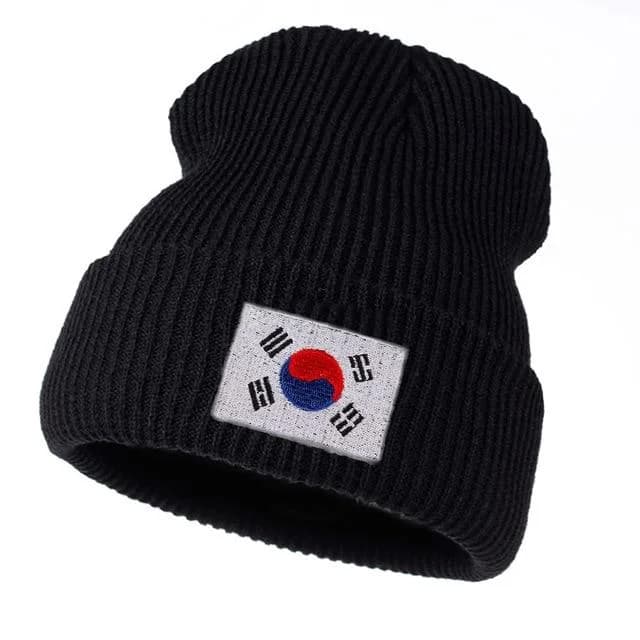
Instead, position the brim about an inch or two above your eyebrows, exposing more of your forehead to create vertical balance. Angling the cap slightly back on the head gives your crown visual lift. Pairing this positioning with a clean, centered graphic like the South Korean Flag Beanie draws the eye upward and toward the center, instantly creating the illusion of a longer, leaner facial profile.
Another effective method is to let side tendrils or longer face-framing strands fall freely around your jawline. This softens the transition between the knit edge and your neck, breaking up horizontal width while keeping your ears warm underneath the relaxed side sections of the cuff.

Oval and Long Face Shapes: Balancing Forehead Space and Slouch
An oval face shape is naturally balanced with slightly tapering cheekbones, making it receptive to almost any placement. However, if your face leans noticeably long or oblong, the goal shifts toward shortening the perceived vertical span. Avoid tall, stiff crown heights that stick straight up, as they stretch your features even further upward.
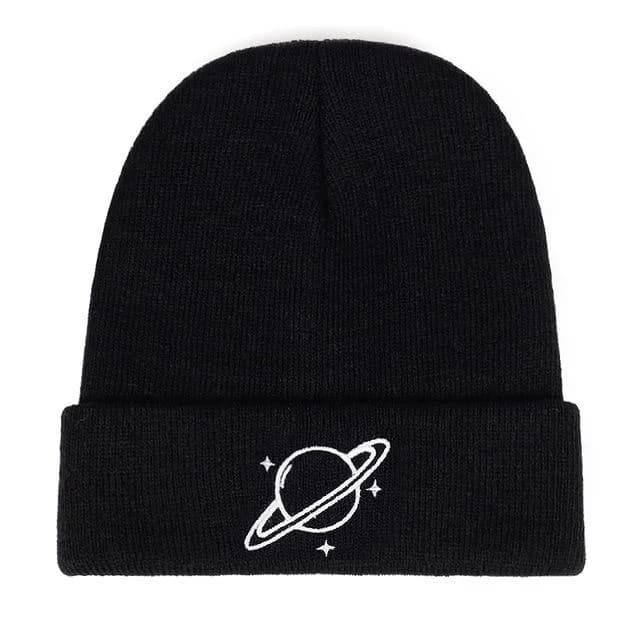
To create harmony, pull your brim slightly lower, resting it just above the eyebrows or mid-forehead. A gentle single cuff helps ground the look by adding horizontal weight across your brow. Choosing an embroidered graphic with a relaxed vibe, such as the Planet Beanie, introduces a focal point that keeps attention centered rather than traveling up to the peak of the cap.
Opting for a soft drape at the back of the head also prevents excess vertical height. By gently pulling extra fabric back toward the crown rather than letting it stand upright, you maintain cozy coverage without adding unwanted inches to your profile.


Square and Rectangular Faces: Softening Angles with Rounded Folds
Square and rectangular facial structures are defined by strong, distinct jawlines and matching temple widths. When styling knitwear, the key is using fluid, rounded lines to gently counter sharp bone structure. Sharp, rigid double folds with square corners can make your facial features look overly severe, so aim for soft curves instead.
Wearing your knit pushed back slightly so the front edge curves smoothly across your hairline softens angular brows. Leaving your hair down with loose, natural waves also creates a buffered boundary against a strong jaw. A fun accent like the Senpai Beanie in pink adds an approachable, playful tone that balances structured facial lines with sweet, lighthearted streetwear energy.
Avoid tucking all your hair behind your ears when wearing a tight fold, as this exposes the broadest points of your jaw without softening layers. Instead, loosen a few strands in front of your ears to frame your cheeks before pulling the cap into place.

Heart and Diamond Shapes: Harmonizing the Forehead and Chin
Heart and diamond face shapes feature wider foreheads or prominent high cheekbones paired with narrower, pointed chins. Wearing an overly thick, heavily rolled cuff directly across the temples can emphasize forehead width and make the lower jaw appear overly delicate or tapered.
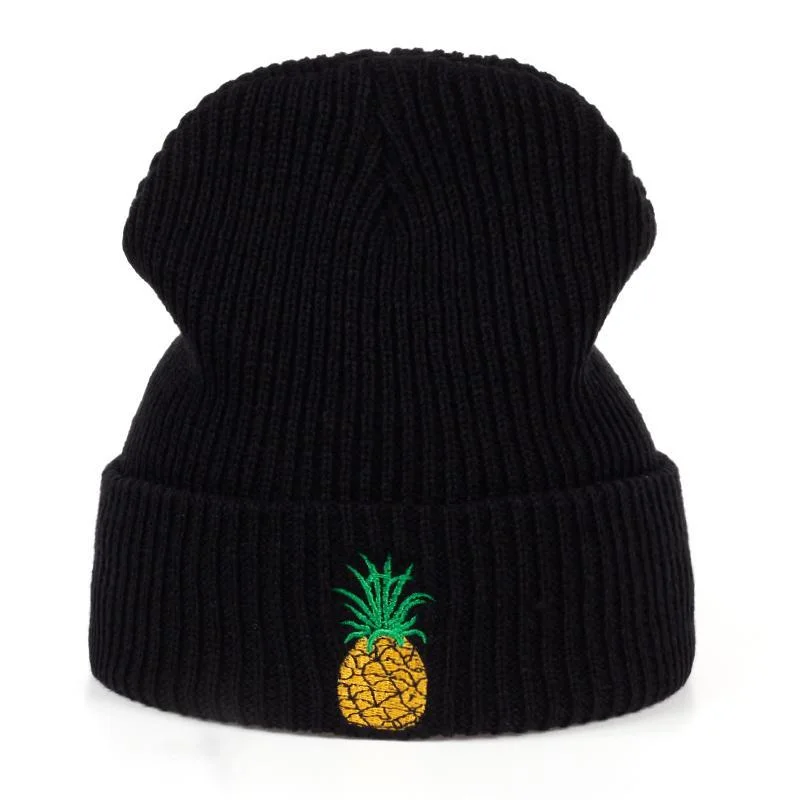
The easiest way to style around this is by using a medium or thin fold that hugs the head without bulging outward at the sides. Pull the knit down so it covers the upper third of your forehead, which gently narrows the brow area. A quirky, centered motif like the Pineapple Beanie in black grounds the styling, focusing the eye on the center line rather than the outer temples.
If you have shoulder-length or longer hair, style it with volume around your collarbone or chin. Wearing a chunky infinity scarf alongside your knit cap also fills the negative spaceAn uncluttered area that gives the rest of a design room to stand out. around a delicate jaw, balancing the broader upper half of your face seamlessly.
Short Hair and Pixie Cuts: Avoiding the Hidden Hair Effect
One common frustration for people with cropped hair or pixie cuts is the swallowed hair look, where pulling on a cap completely hides your hairstyle and leaves you looking bald from the front. The solution lies entirely in the angle of wear and showing intentional texture around the edges.
Tilt the cap back onto the crown of your head, exposing your entire hairline and letting your front fringe or textured sideburns peek out clearly. This frames your eyes while letting your natural haircut contribute to the overall outfit. If you prefer a subtle, minimalist streetwear aesthetic that complements sharp cuts, try the Spaceman Beanie in gray, positioned comfortably back on the scalp.
If you have very short sides with a longer top, push your bangs forward or sweep them across your brow beneath a loose single-cuffed edge. This keeps the look dynamic and prevents your haircut from flattening completely under the tension of the knit.
Medium and Shoulder-Length Hair: Bobs, Lobs, and Tendrils
Shoulder-length cuts, including bobs and lobs, offer the ideal length for effortless winter framing. However, the back of a beanie can easily cause the bottom edge of a bob to kick outward awkwardly if the cuff presses down hard on the nape of your neck.
To prevent this strange flared effect, lift the back of your cap slightly higher on your head, or choose a design with a softer slouch that rests gently on your hair rather than pinching it against your neck. Allowing front layers to hang straight down along your jaw creates a neat, polished frame. For a sweet, casual day look, the Love Beanie pairs easily with a straight bob, adding a cheerful touch to clean ends.
You can also tuck one side of your bob loosely behind an ear while keeping the other side forward. This asymmetrical framing breaks up heavy knit silhouetteThe overall shape an outfit creates, from fitted to loose and layered.s and looks intentional and relaxed when worn with everyday casual pieces.
Long Hair Styling: Braids, Low Ponytails, and Face-Framing Waves
Long hair gives you endless styling options under knitwear, but leaving long locks entirely loose can sometimes lead to static tangles and friction against heavy coat collars. Braids and low gathering techniques keep your hair neat while looking thoroughly put together.
Twin low bubble braids or loose three-strand plaits pulled over each shoulder are classic ways to maintain order on blustery days. They distribute hair volume evenly on either side of your chest, which balances out a structured hat. If you enjoy urban, graphic themes, pair your braids with the Tokyo Beanie to bring an effortless street-style edge to an otherwise cozy, cottage-leaning braid routine.
Low, loose ponytails secured at the very base of your skull also work well under relaxed knits. Pull out a few shorter strands around your temples and jawline before putting on your hat to maintain soft framing around your face without feeling rigid.
Working with Bangs: Blunt, Curtain, and Side-Swept Options
Wearing knitwear with bangs requires deliberate placement so you do not crush your fringe flat against your forehead or end up with unruly cowlicks. The key is never pulling the brim down directly over wet or unstyled fringe.
For blunt bangs, slide the hat on from back to front, gently settling the cuff right at the root line where your bangs begin. This keeps the brim from pushing down on the ends of your hair, allowing your blunt cut to frame your brows smoothly. If you wear curtain or side-swept bangs, part them intentionally, letting the longer wings flare out beneath the sides of the cuff while keeping the center brow clear.
If your bangs feel compressed after a long commute, flip your head upside down for a few seconds when removing your hat and shake your roots gently with your fingertips. Choosing items from wider kawaii hats categories with looser ribbing ensures lower surface tension on delicate hair.
Color and Motif Balance: Matching Hats to Your Aesthetic
A cute knit cap is more than just practical warmth; it serves as the color anchor for your upper body. When deciding between subtle tones and bright pastel shades, consider how the hue interacts with your natural hair color and your daily coat selection.
Darker hair tones often contrast vividly with soft pastels, while lighter blonde or silver hair pairs strikingly with deep charcoal, navy, or jet black. If your outerwear rotation consists mainly of dark wool coats or black parkas, selecting an accent piece like the Alpaca Beanie adds gentle charm without overwhelming your minimalist layers.
Motifs and embroidered icons should echo the overall tone of your personal style. Minimalist line drawings offer versatility for everyday work and school, while bold lettering or vibrant emblems lean heavily into expressive anime or Harajuku street fashion. Take time to explore different shapes across broad hats collections to find the artwork that best complements your aesthetic.
Layering Beanies with Outerwear: Collars, Hoods, and Scarves
Winter styling works best when every piece of your outfit complements the others without competing for physical space. One of the most common styling mistakes is pairing a bulky, slouchy knit cap with a massive, structured puffer hood, which pushes the hat forward into your eyes every time you turn your head.
When wearing oversized parkas or dramatic lapels, select a more fitted beanie that stays seated securely on your head. For a clean, cohesive silhouetteThe overall shape an outfit creates, from fitted to loose and layered., pair your cap with complementary pieces from our outerwear selection, matching the volume of your knitwear to the cut of your coat. Flat wool overcoats accommodate slouchier hats with ease, while thick puffy collars demand a low-profile cap with a tidy fold.
Scarves also play a vital role in positioning. Tuck long scarf ends neatly beneath the coat lapels before setting your hat in place. This prevents your scarf from nudging the back of your hat upward every time you look down or adjust your shoulder bag.
Indoor to Outdoor Transitions: Managing Hat Hair and Static
Transitioning between crisp outdoor air and dry, heated indoor spaces can wreak havoc on your hairstyle, creating unwanted static, flyaways, and flattened roots. Preventing static starts with how you treat your hair before slipping your cap on.
Applying a tiny drop of lightweight hair oil or leave-in conditioner to your mid-lengths and ends helps combat the dry friction caused by knit fibers. When you arrive indoors, resist the urge to vigorously rub your scalp, which only increases frizz. Instead, slide the hat up and off from the back of your head forward to keep from roughing up the hair cuticle.
A quick comb-through with your fingers while flipping your hair gently from side to side restores root volume within seconds. Carrying a small wooden or anti-static pocket comb in your bag provides an easy midday reset without requiring extra styling products.
Common Beanie Pitfalls and How to Fix Them
Even the most stylish cold-weather accessories can look awkward if basic fit issues are overlooked. The most common pitfall is the cone-head look, which happens when a stiff hat is pulled halfway down your head, leaving an empty, upright peak of fabric sticking straight into the air.
To fix this, push the hat down fully so the crown sits close to your scalp, then fold the brim upward until the fold meets your forehead at a flattering angle. Another frequent issue is ear fatigue, caused by folding an overly thick cuff directly over sensitive cartilage. If your ears feel sore after an hour, unfold the cuff by half an inch to soften the pressure point, or slant the hat back so it rests gently over the upper ear tips rather than crushing them flat.
Finally, avoid matching your knit cap to your scarf and gloves in the exact same shade and fabric weight. Matching identical pieces can look stiff and outdated; instead, mix complementary textures like a fine ribbed knit with a brushed fringe scarf to build depth and visual interest across your outfit.
The Beanie Styling Checklist: Your Quick Reference Guide
Before stepping out the door in your favorite cold-weather gear, run through this simple checklist to guarantee your proportions, hair texture, and outfit flow smoothly together. Taking ten seconds to adjust your brim can completely elevate your aesthetic from rushed to intentional.
First, check your brow line: is the cuff sitting comfortably above your eyebrows, framing your eyes without crowding your lids? Second, inspect your hair balance: did you leave enough face-framing strands, bangs, or braids showing to balance out the knit volume? Finally, check how the hat interacts with your coat collar: can you turn your neck comfortably without your outerwear shoving the back brim upward?
Keeping these simple checks in mind ensures you always feel confident and comfortable in your knitwear. A thoughtful fold and intentional placement turn a basic winter warm layer into a charming, expressive statement piece that brightens any chilly day.
- Brow Check: Brim sits 1 to 2 inches above the brow line for lift, or mid-forehead for balancing length.
- Hair Framing: Ensure bangs, side tendrils, or braids are visibly framing the jawline rather than trapped inside.
- Collar Clearance: Turn your head side to side to confirm the coat collar does not bump the back cuff.
- Volume Balance: Pair chunky knits with streamlined coats, and slouchy crowns with tailored lapels.