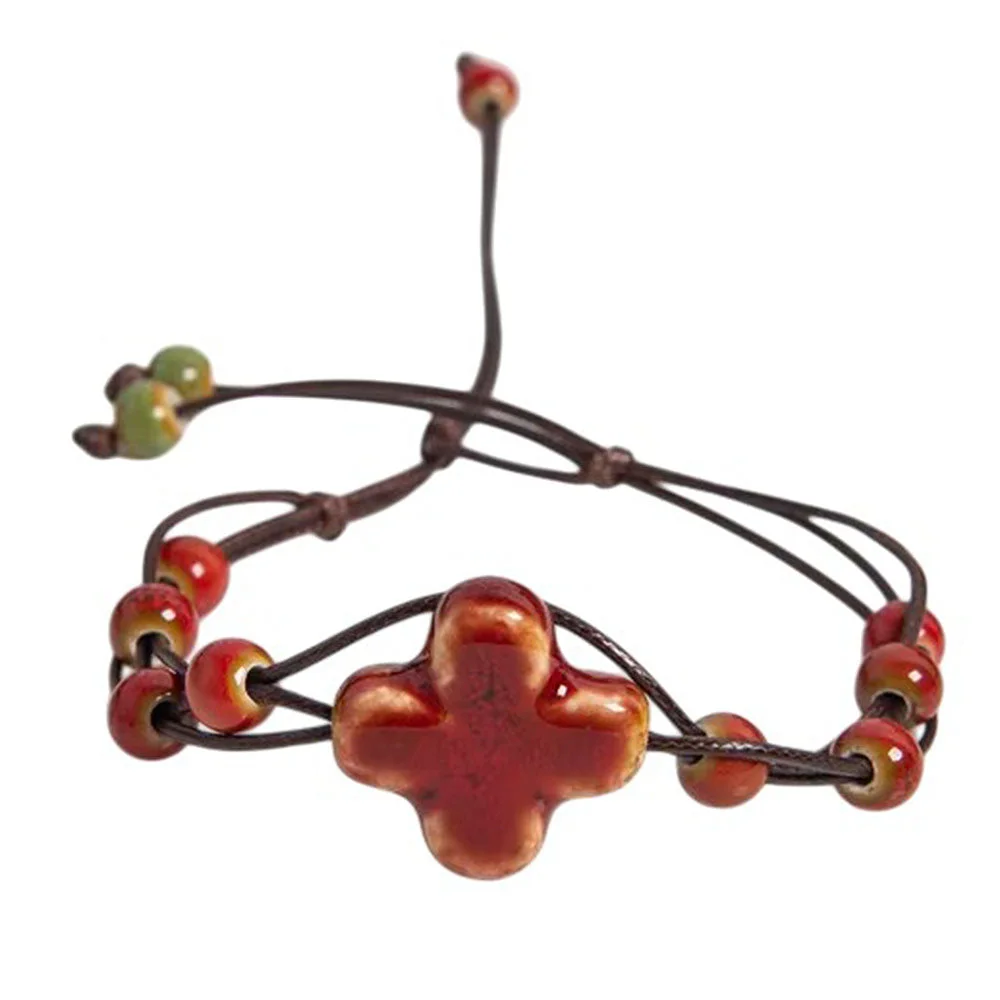
Created by the Kawaii Vibe editorial team. Our named style desks are editorial personas. Product details and availability can change.
A charm bracelet stack looks intentional when it follows one rule: one thing is the star, and everything else supports it. Pick a single focal charm bracelet, add one wider piece and one textured piece, then fill in with something thin and quiet. That is the whole formula, and the rest of this guide shows you how to bend it to your wrist, your outfits and your budget.
Most messy stacks fail for the same reasons. Every bracelet is the same weight, every charm is shouting, or the pieces fight over the same patch of wrist. None of that is about taste. It is about proportion, and proportion is easy to fix once you know what to look for.
Below you will find a build order, sample stacks you can copy, sizing and layeringWearing pieces over or under one another to add depth, warmth or contrast. notes, pitfalls, and a checklist. Product suggestions are optional ideas, not a shopping list. We are a retailer, not a manufacturer, so we stick to the details shown on each product page and skip anything we can't confirm.
The formula in one minute
Here it is: one focal charm, one wide piece, one textured piece, one thin filler. Four bracelets is a full stack. Three is a clean one. Five or more is a maximal look and needs more care. If you only remember one thing, remember that only one bracelet gets to be the loud one.
The focal piece is the one with the most detail: a charm with a story, a pop of colour, or a shape people lean in to look at. The wide piece gives the eye somewhere to rest, like a bangle or a chunky band. The textured piece adds contrast, such as beads next to smooth metal. The thin filler ties the colours together and takes up the gaps.
Why does this work? Your eye needs a hierarchy. When four pieces compete, the stack reads as clutter. When one leads and three follow, it reads as a decision, even if you assembled it in two minutes on the way out the door.
You can scale it. For a small everyday stack, drop the wide piece. For a party stack, double the textured layer. The focal charm stays at one either way.
- One focal charm, always
- One wider piece for visual weight
- One different texture for contrast
- One thin filler to bridge colours
Choosing your focal charm
Start here, because everything else is chosen around it. A good focal charm has a clear shape you can read from arm's length. A fish, a star, a fruit, a heart: simple silhouetteThe overall shape an outfit creates, from fitted to loose and layered.s carry further than fussy ones. If you have to squint to see what it is, it won't anchor a stack.
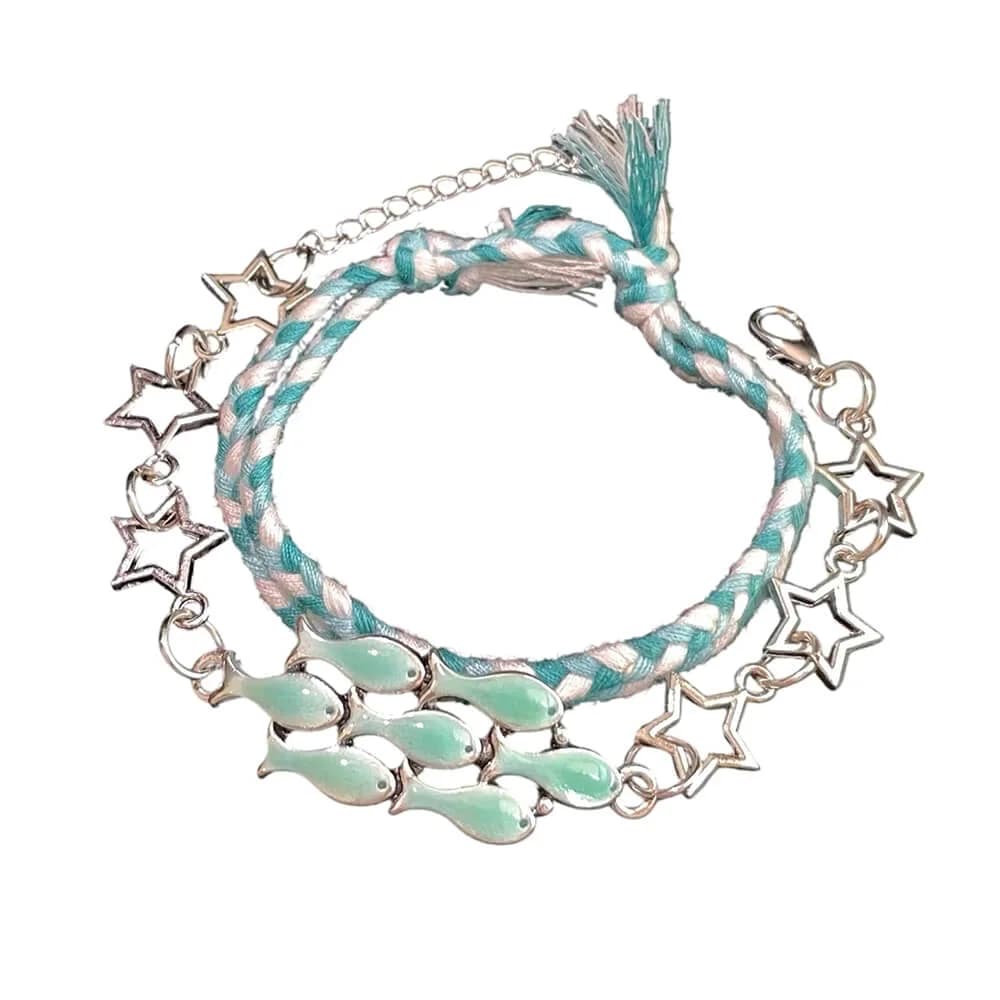
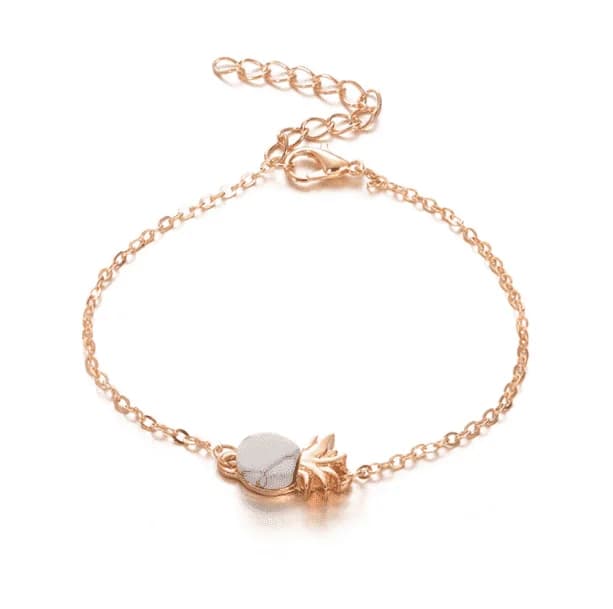
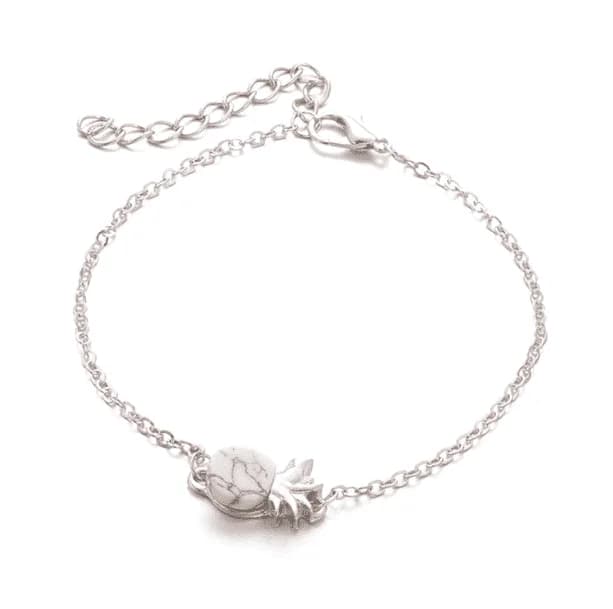
The Fish and Star Charm Bracelet is a good example of a bracelet with a lot going on, in a silver/blue colourway, so it works best as the leader with quieter pieces beside it. The Pineapple Charm Bracelet comes in gold or silver, which makes it easy to match to what you already wear, and the fruit shape is instantly readable. The Star Child Charm Bracelet in silver is another option if you like a softer, dreamier lead.
Compare focal options by asking three questions. Does the metal tone match your other jewellery? Does the colour sit well with your usual wardrobe? Does the charm have enough personality that you would not mind it being the first thing people notice? If all three are yes, you have your star.
Avoid choosing two focal pieces just because you love both. Save one for a different day. Rotating your lead keeps the same supporting cast feeling fresh.

Mixing widths without chaos
Width is the quickest way to make a stack look planned. Think in three sizes: thin (a fine chain or single strand), medium (a charm bracelet or beaded strand), and wide (a bangle or chunky band). A stack that uses at least two of those sizes always looks more deliberate than one that sticks to a single size.
A simple ratio helps: roughly one wide, two medium, one or two thin. The wide piece sits at one end so it acts like a bookend. Thin pieces go between bigger ones to stop them from crashing into each other. If you want a visual shortcut, picture a staircase of sizes rather than a random scatter.
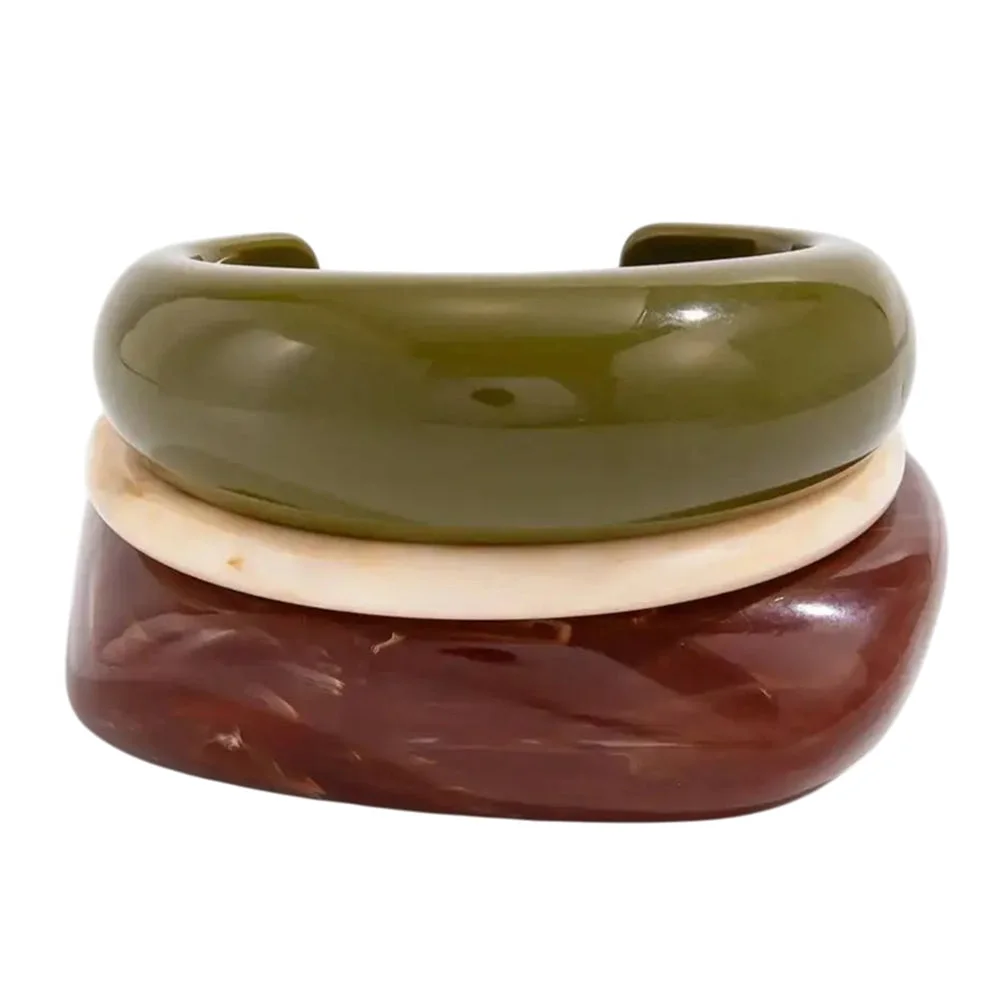
The Chunky Bangle Bracelet Set comes as three pieces, listed with the colour as pictured, which makes it a handy way to cover the wide slot in one go. You could wear all three together for a bold base, or split them, one on each wrist or one with the rest of the stack, and save the others for another day.
One pitfall: two wide pieces side by side flatten the look and eat the wrist. If you love chunky, give it breathing room with a thin piece between.
Adding texture that actually reads
Texture is what makes a stack feel layered instead of flat. The easiest contrast is beads against smooth metal or plastic. Beads are soft and rounded, a charm chain is linear and shiny, a bangle is solid and still. Put those three next to each other and your eye keeps finding something new.
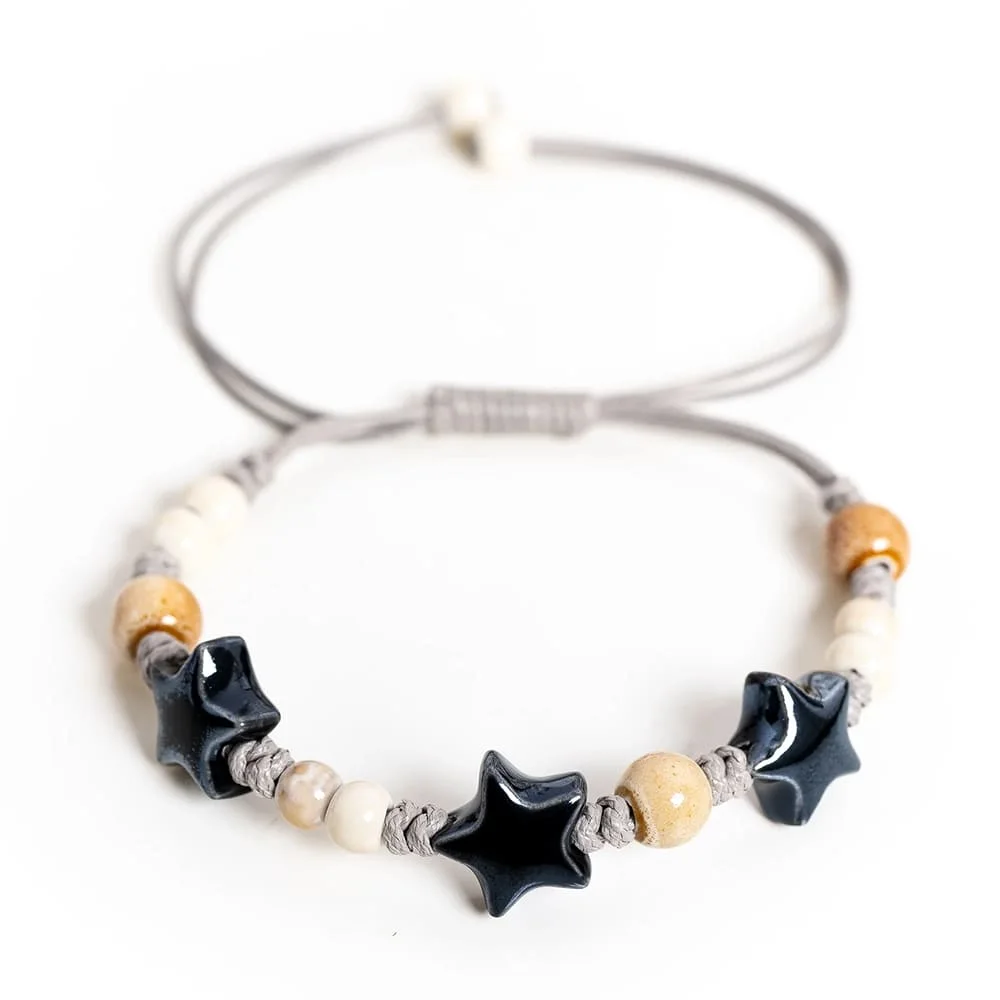
Colour can act as texture too. A matte black beaded strand next to a shiny silver charm piece looks different from two shiny ones. The Black Star Beaded Bracelet is a neat grounding layer: black is easy to pair, and the star gives it a small playful detail without competing with a bigger charm. The Lavender Star Beaded Bracelet does the same job in purple if you want a softer feel.
Keep your texture pieces simple. If the beaded bracelet has its own motif, make sure the focal charm is still clearly bigger or more detailed. Two busy pieces in the same stack need one calm layer between them.
A quick test: take a photo of your stack and look at it small. If you can still tell what the lead is, the texture is supporting it. If it all blends into one blob, swap one beaded piece for a smooth one.
Colour rules that keep it cohesive
You do not need to match colours exactly. You need a repeat. Pick one colour to appear in at least two bracelets, and the stack will feel connected even if the rest is wild. Silver and blue repeated twice reads as a palette. Silver, blue, orange, green and pink once each reads as a pile.
There are three easy routes. Monochrome: all one colour family, varied by shade and texture. Metal-led: everything shares a metal tone, with one colour accent. Candy: lots of colours, but kept in one saturation level, all bright or all soft. Mixing soft pastels with deep jewel tones is where stacks tend to fall apart.
For a colourful route, the Candy Hearts Bracelet in multicolor can be the lead and give you a palette to pull from. Choose your other pieces from the colours already in it and the whole stack will look coordinated without much effort. The Lucky Charm Beaded Bracelet comes in green, red, mint green or purple, so you can pick the colour that echoes your lead.
When in doubt, add a neutral. Black, white or a metal tone settles a lot of colour noise.
Wrist size and how many bracelets fit
Wrist size changes how many pieces look good, not what you are allowed to wear. On a smaller wrist, three pieces with one wide often looks better than five thin ones, which can swallow the whole area. On a larger wrist, you have more room for layers and can go bolder with width without it looking crowded.
Many of our listed bracelets show sizes like Standart or One size; while some product listings like the Candy Hearts Bracelet mention measurements to check, others provide none to quote here, so review each product page for what is provided before you buy. If you are unsure, compare to a bracelet you already own that fits well: does it sit snug, slide over the hand, or hang loose?
Fit matters for how a stack behaves. Pieces that are too loose will slide and tangle, and tight ones can bunch up against each other. A good stack has a mix: one slightly looser piece that moves, and one or two that sit closer to the wrist and stay put.
Leave a little skin showing. A finger's width of space between your hand and the first bracelet, or between clusters, keeps the stack from looking like a cuff of jewellery.
- Smaller wrist: 3 pieces, one wide at most
- Average wrist: 3 to 5 pieces with a clear lead
- Larger wrist: more layers, bolder widths
- Always check the product page for sizing details
Layering order from wrist to hand
Order matters more than people think. A reliable placement: put the wide piece nearest the hand, the focal charm in the middle, and the thin filler toward the forearm. This puts weight where the eye lands and lets the charm dangle freely without getting trapped under a bangle.
Charms need space to swing. If your lead has dangling pieces, do not wedge it between two tight bracelets. Place it on the outside edge of a cluster, or with a thin piece on either side. Otherwise the charms flip and hide.
Another approach is to split the stack. Put the focal charm bracelet on one wrist with a thin filler, and the beads and bangles on the other. This feels less heavy and works well if you wear a watch. A watch can act as your wide piece, and then a charm bracelet and a beaded strand beside it make a stack that looks intentional without trying.
Whatever order you pick, stay consistent. Your stack will look planned when the arrangement repeats day to day, even as you swap individual pieces.
Three stacks you can copy
Stack one, the everyday: the Pineapple Charm Bracelet in gold as the lead, the Black Star Beaded Bracelet as a texture layer, and one thin chain of your own as filler. With a plain tee and jeans, the pineapple becomes the one cheerful detail. It works because the black beads calm the gold and the thin chain adds shine without weight.
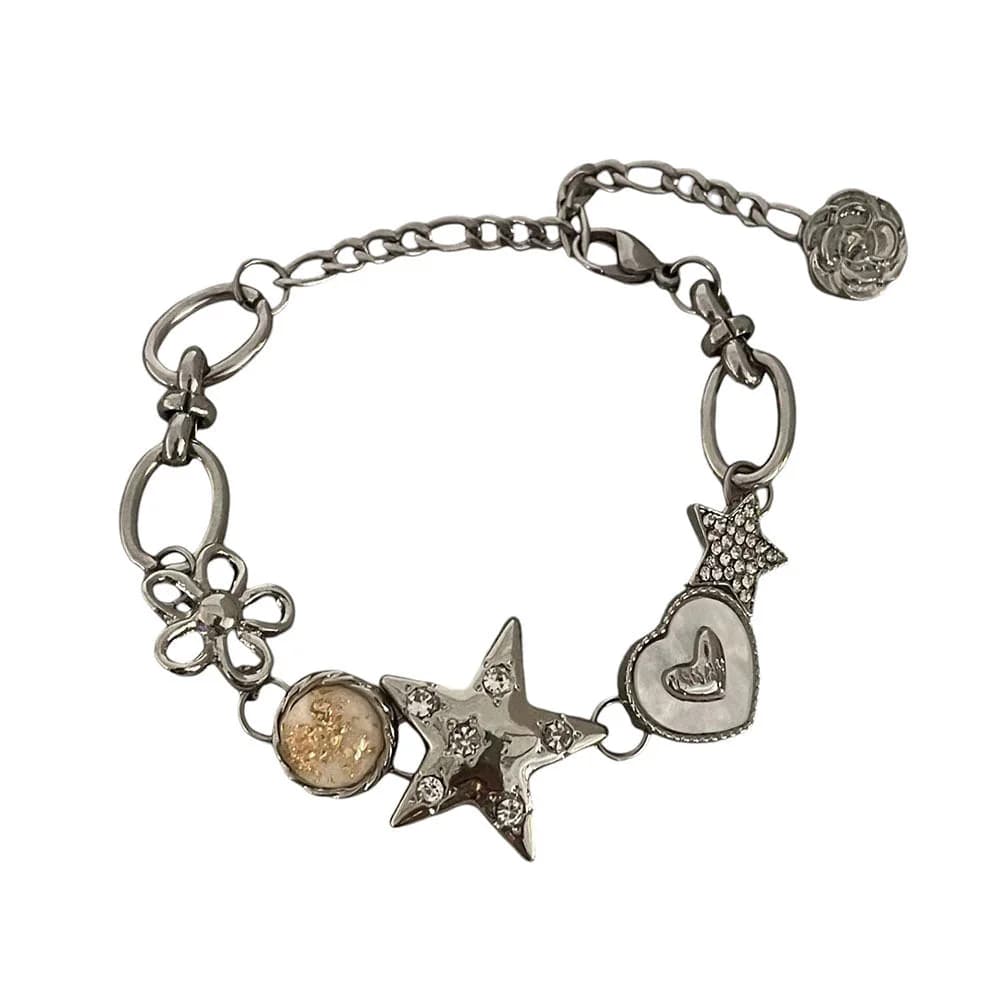
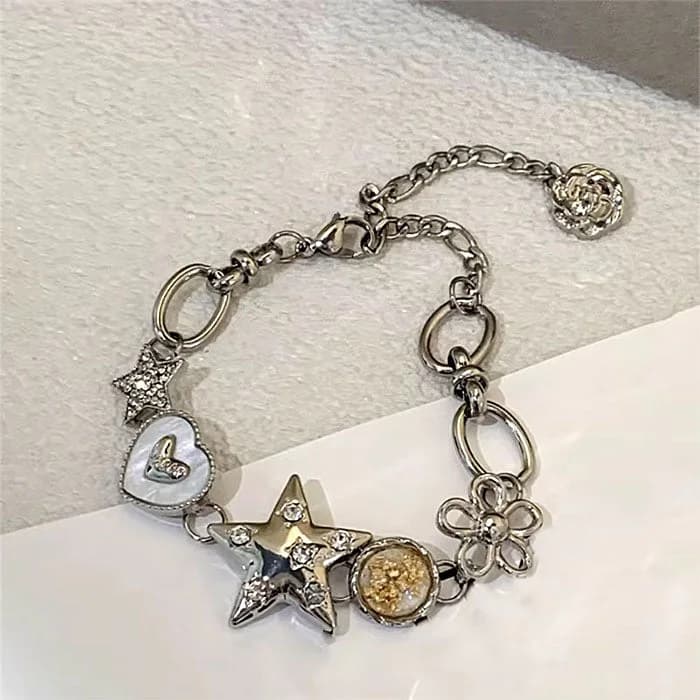
Stack two, the cool-toned dreamy one: the Fish and Star Charm Bracelet as the lead, the Lavender Star Beaded Bracelet for texture and a soft colour echo, and one piece from the Chunky Bangle Bracelet Set as the wide anchor. Wear it with a pale knit or a white shirt so the silver and blue stand out. The star motif repeats, which makes the mix feel linked.
Stack three, the bright party stack: the Candy Hearts Bracelet leading, the Lucky Charm Beaded Bracelet in a colour picked from the hearts, and two bangles from the set. Keep the outfit simple, a solid top in white or black, and let the wrist do the talking.
Each of these follows the same formula, just dressed differently. Swap one piece and you get a new look without breaking the logic.
Matching your stack to an outfit
Think of the stack as an accessory with its own volume. A plain, fitted sleeve shows it off. A very busy patterned sleeve competes with it, so if your outfit is loud, reduce the stack to two or three pieces and keep the colours within the outfit's palette.
For a neutral outfit like a white tee, grey hoodie or denim jacket, go bolder with colour and let the focal charm shine. For a bright or patterned outfit, choose a monochrome stack, silver or black, so the wrist stays calm. For a dressy outfit, thin pieces plus one charm bracelet look polished rather than playful.
Sleeve length matters too. Long sleeves with wide cuffs will bunch against chunky bangles, so choose slimmer pieces or push the stack up the arm. Short sleeves and bare arms give you the most freedom. If you wear a jacket in cooler weather, remember that a lot of hard pieces can knock against a sleeve or desk, so keep the very chunky layers for days you are not typing all day.
For a bit more range, browse Cute Bracelets and match shapes and colours to your most-worn tops first.
Budget building and where to start
You do not need to buy a whole stack at once. Start with the focal charm, since it sets the palette, then add one supporting piece at a time. Two pieces that work together are better than six that do not. Over a few weeks you can build up to a full stack at your own pace.
If you want to keep spending low, the Little Accessories collection is a handy place to find small add-ons that suit the filler or texture slots. Fillers are the best place to save, because they are meant to be quiet. Spend a little more on the lead if you have to choose.
To compare options, line up the candidates and check four things: metal or colour tone, size of the main motif, how many pieces you already own that match, and how the sizing is described on the page. A piece that matches three things you own is worth more than one you love in isolation.
For the wider picture, the full Bracelets collection shows everything in one view, which helps when you want to spot gaps, like whether you need a wide piece or a thin one.
Common mistakes and quick fixes
Mistake one: too many leads. If your stack feels messy, take off the second most detailed piece. Nine times out of ten that solves it. Mistake two: every piece the same width. Swap one for something thinner or wider and the rhythm returns.
Mistake three: clashing metals with no plan. Mixing gold and silver is fine when it is deliberate, like one gold piece surrounded by silver, or a beaded piece bridging the two. It looks accidental when it is half and half. Mistake four: ignoring movement. Charms that tangle with each other will drive you mad, so keep two dangly pieces apart.
Mistake five: forgetting your day. A stack that looks great on the sofa may be annoying at a keyboard. If you type a lot, keep wide hard pieces off the typing wrist, or wear them on the other arm. Beaded and softer pieces are usually more comfortable for desk days, though that depends on the individual bracelet, so check the product page.
If something feels off and you can't say why, remove one piece and look again. Subtraction fixes more stacks than addition does.
Care and everyday wear basics
We do not have detailed material information for these bracelets, so we will not make promises about water, sweat or tarnish. As a general habit, take bracelets off before showers, swimming, workouts and cleaning, and store them so charms do not tangle. Check each product page for any care details provided.
Storing a stack as a stack can cause tangling, so it helps to unclasp pieces and lay them flat, or hang them on a hook or small dish tray. Keep beaded pieces away from sharp edges so strings do not snag, and put chunky bangles where they will not scratch smoother pieces.
If a bracelet feels uncomfortable, pinches skin or irritates, stop wearing it. Everyone's skin is different, and we can't make claims about how any piece will feel on yours.
A quick habit: when you take off your stack at night, check each clasp and charm. Catching a loose bit early is easier than hunting for a lost charm later. It takes ten seconds and keeps your favourites in rotation longer.
Extending the look beyond the wrist
Once your stack is sorted, you can echo it elsewhere, lightly. If your lead is a star charm, a small star somewhere else, like a ring or earring, ties the look together. Do not match everything, though. One echo is enough, otherwise it starts to look like a themed costume.
The Kawaii Jewelry collection is useful for finding that single echo piece. Choose something small and in the same metal tone or one repeated colour. If your stack is busy, keep the rest of your jewellery minimal, and if the stack is minimal, you have room for a statement earring.
You can also use the same formula for a flatter-lay or gift: one focal piece, one wide, one textured, one thin. Gifting a small set that follows the formula makes it feel curated rather than random, and the recipient can add their own pieces.
The idea carries over to bags and desks too: one star item, a couple of supporting ones, and quiet fillers. That is the same logic, just on a different surface.

Your final checklist
Before you head out, run through this list. It takes under a minute and catches almost every common problem. If you can tick each line, your stack will look planned, whatever mood you are in.
Then keep it flexible. The formula is a starting point, not a rulebook. Swap the lead on Monday, change the texture on Friday, and keep the structure the same. That repeatable structure is what makes a stack look intentional over time, even as the pieces change.
If you are shopping for the first piece, start with the lead, then use the Bracelets and Cute Bracelets collections to fill the supporting roles when you are ready. Take your time, and enjoy building it.
- One clear focal charm
- At least two different widths
- At least two textures
- One colour or metal repeated twice
- Charms have room to swing
- Wide piece near the hand, thin toward the forearm
- A little bare wrist showing
- Comfortable for what your day involves
- Checked product page for sizing and care details