Created by the Kawaii Vibe editorial team. Our named style desks are editorial personas. Product details and availability can change.
Matching winged charms to shirt collars often goes wrong when delicate chains tangle against busy fabrics or get swallowed by deep cuts. Wing silhouetteThe overall shape an outfit creates, from fitted to loose and layered.s feature pointed wingtips and organic contours that catch on loose knits or compete directly with sharp lapels. When you add mixed metals and multiple pendant drops, a fun Y2K or streetwear concept quickly turns into visual static around your clavicle.
This guide breaks down exact chain placements against common top cuts, how to select your metal finish without clashing with your undertones, and how to space individual layers so each charm retains its shape. Rather than treating winged motifs as delicate afterthoughts, you can build balanced silhouetteThe overall shape an outfit creates, from fitted to loose and layered.s that frame your collarbones naturally across warm or cool days.
We combine clean jewelry math with real top pairings, contrasting delicate hardware against sheer layers, asymmetric cuts, and high collars. Whether you favor reflective chrome or softer accents, these structural formulas will keep your daily stacks sharp, comfortable, and tangle-free.
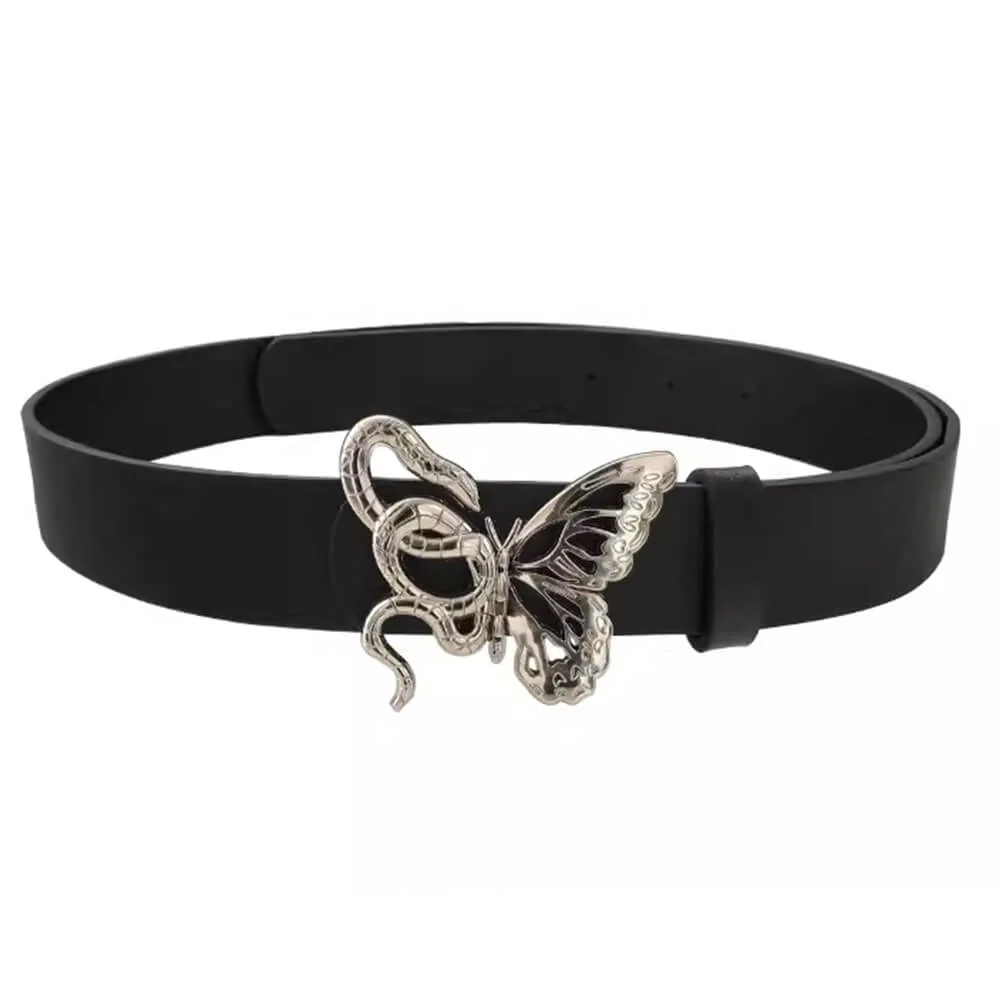
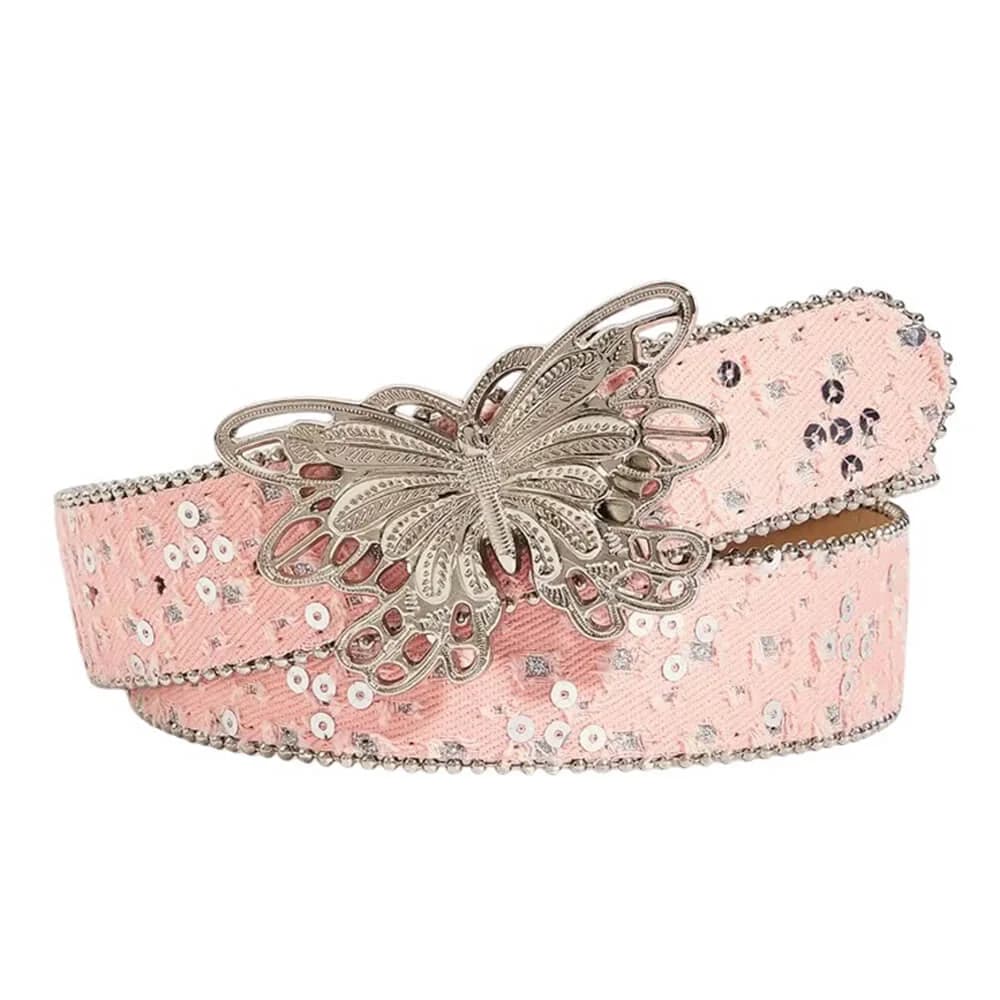
If your outfit already has a butterfly motif, decide whether your jewelry should repeat it or stay quieter. The butterfly clothes edit can help you compare the scale and placement of clothing details before adding another focal point.
The Core Problem: Why Winged Charms Tangle and Clash
Winged motifs present unique structural challenges compared to smooth coins, circular lockets, or flat bars. A butterfly pendant typically features four protruding wing tips, openwork cutouts, and central bail attachments that tilt forward whenever you move. When placed on light cable chains, the wings act like small anchors, catching onto adjacent links, loose sweater yarns, or the edge of a neckline hem. This leads to twisted pendants and chains that bunch into a single knot within an hour of wear.
Beyond physical tangling, butterfly pendants create complex visual silhouetteThe overall shape an outfit creates, from fitted to loose and layered.s. Their contours introduce diagonal lines and negative spaceAn uncluttered area that gives the rest of a design room to stand out., which immediately compete with graphic prints or structured garment seams. If you wear an intricate charm against a heavily textured rib or an ornate neckline border, the wing edges blur into the background fabric. Successful styling requires creating an open zone of clear skin or smooth fabric that lets the pendant silhouetteThe overall shape an outfit creates, from fitted to loose and layered. stand out cleanly.
- Pendants with pointed lower wings pivot and snag on loose-knit fabrics faster than rounded drops.
- Chains placed within two inches of each other share the same swing radius, causing immediate midpoint knots.
- Graphic prints directly behind openwork charms erase the wing outline and clutter your chest profile.
Crew Necks and Baby Tees: Nailing Pendant Drop Lengths
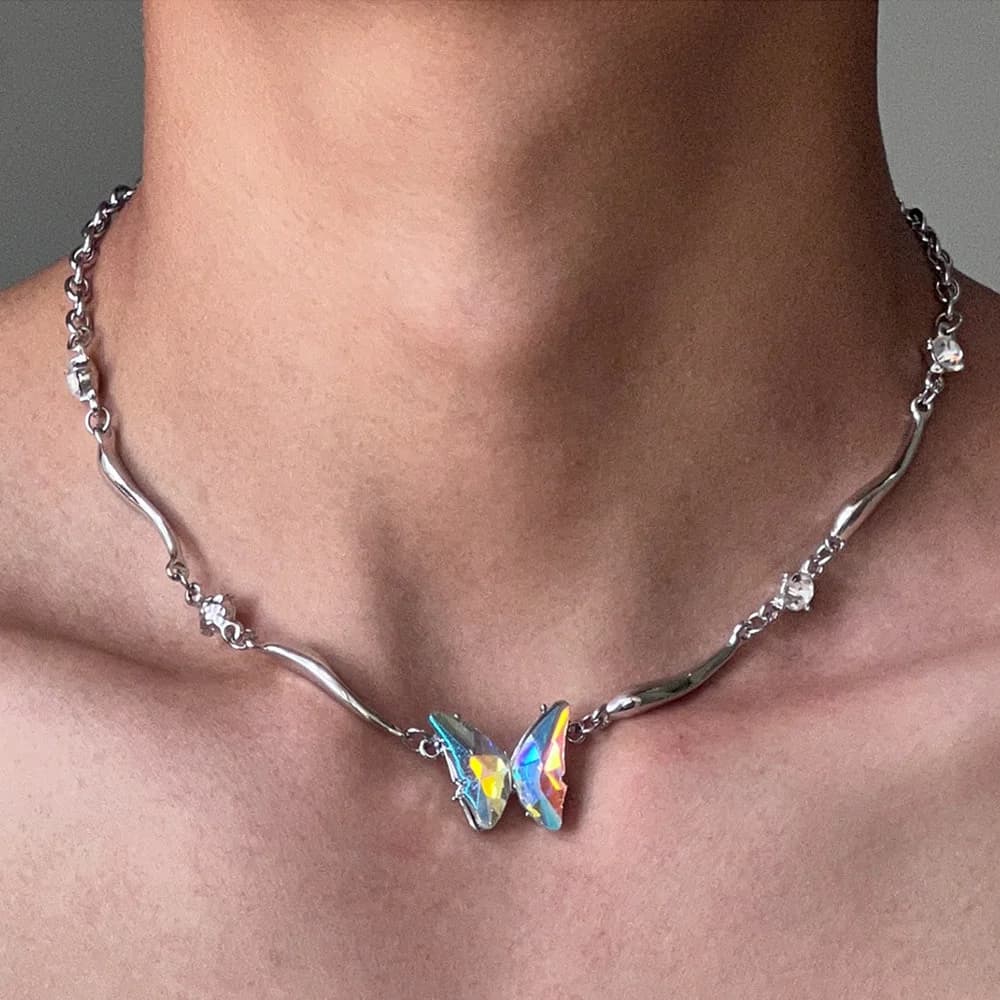
Crew necks and fitted baby tees create a high horizontal boundary right at the base of the throat. Wearing a standard 16-inch chain with this collar usually places the pendant directly on top of the stitched ribbed collar band. The charm bounces awkwardly over the seam, flips upside down, and distracts from your outfit lines. To wear winged pieces cleanly with a crew neck, you need to commit to resting entirely above the seam on bare skin or falling noticeably below the collar band onto the chest fabric.
For a cropped baby tee or relaxed graphic tee, an 18 to 20-inch chain creates an inverted triangle that elongates the torso and allows the winged charm to settle flat against the cotton. A substantial silver piece like the Holographic Butterfly Metal Necklace works naturally here because its solid metal presence holds its ground over flat fabrics without sliding under the seam. If you prefer high-collar placement, pick a snug 14-inch choker that clears the collar band by at least an inch of visible skin.
- Drop length 14 inches: Clears the upper collar band on bare skin for a balanced frame.
- Drop length 18–20 inches: Suspends the pendant comfortably below the ribbed neckband on flat jersey.
- Avoid 16-inch lengths on tight crew tops, as pendants ride directly across thick neckline hems.
V-Necks and Unbuttoned Collars: Mirroring Angles Without Crowding
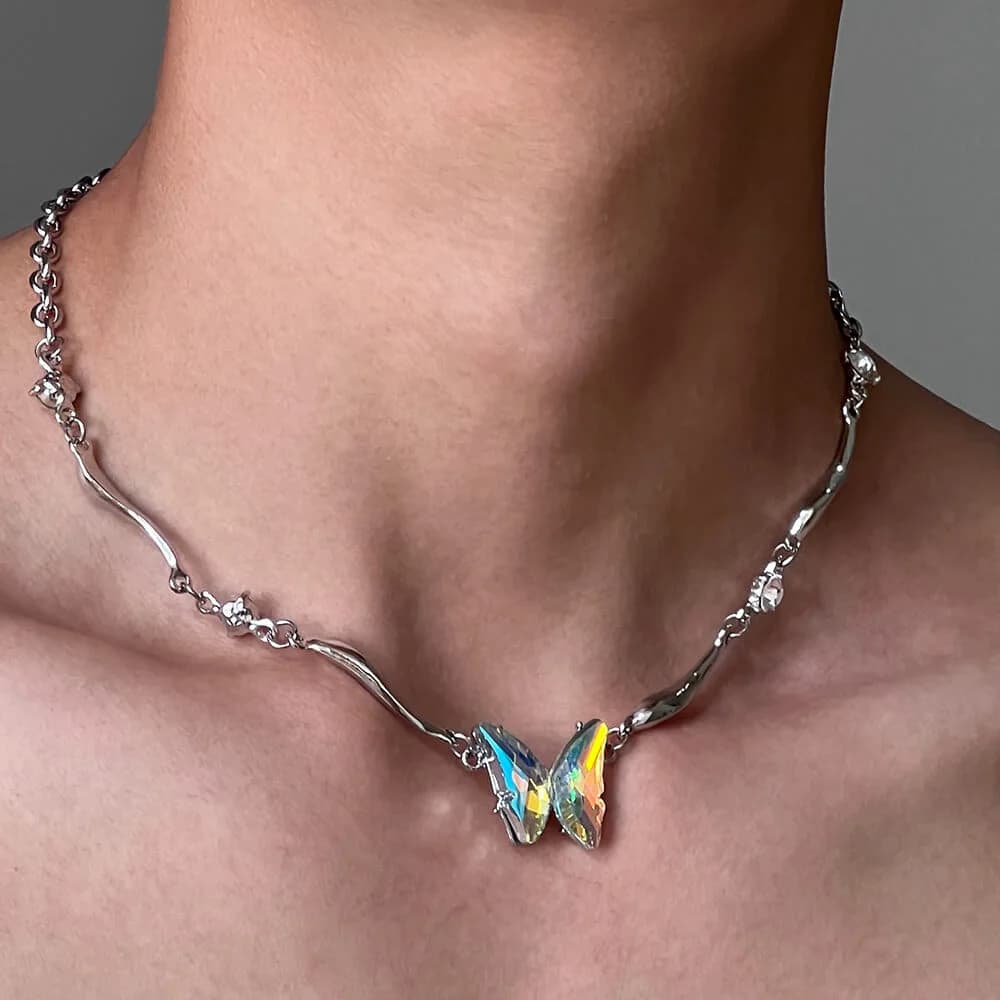
V-necklines and open button-down shirts naturally guide the eye downward toward the center of your torso. When you add a butterfly pendant, you are placing an expansive, horizontal shape inside a narrowing triangular corridor. If the pendant is too wide, the outer wingtips overlap the collar edges, creating a cramped look. The goal is to match the downward point of the lower wings to the natural plunge of the V-cut while preserving open space on both sides.
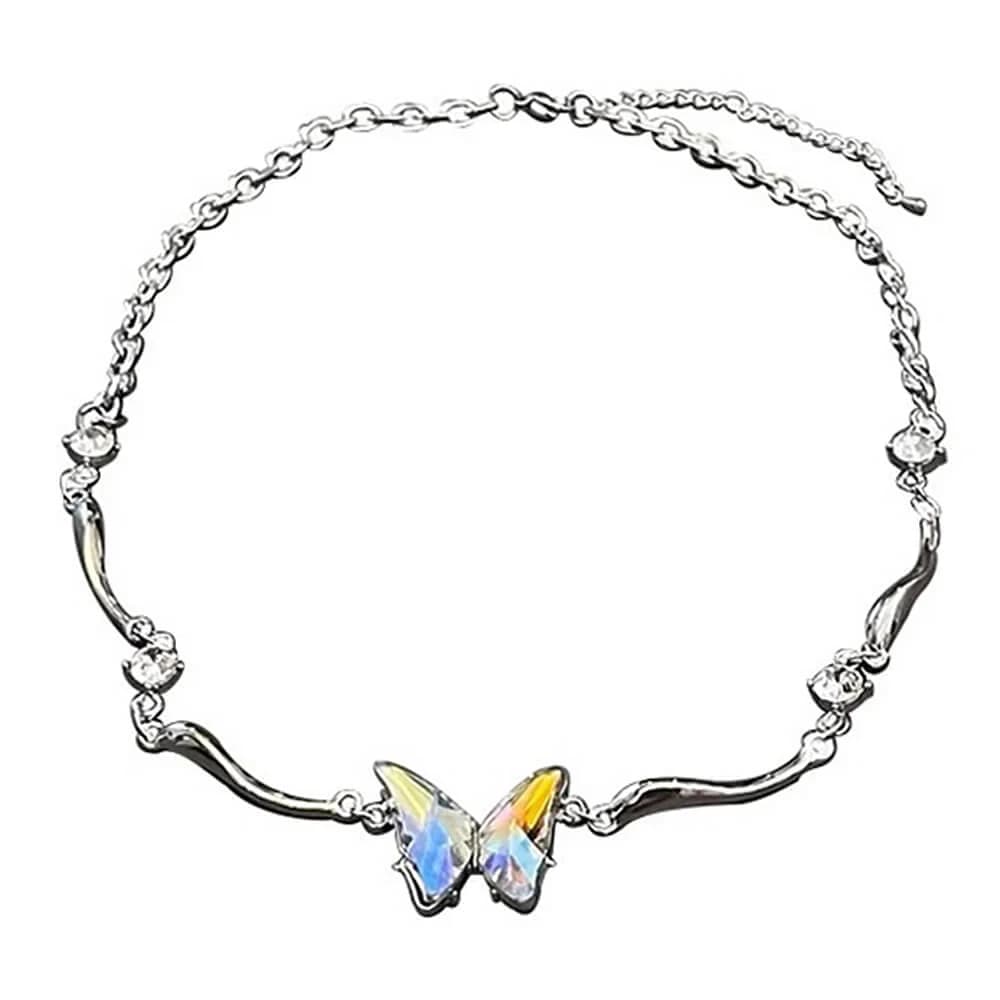
To balance an open collar, anchor your stack with a mid-length chain from the curated butterfly necklaces range that sits roughly one to two inches above where the fabric joins. This gap lets the pendant exist in its own pocket of skin. If you are layeringWearing pieces over or under one another to add depth, warmth or contrast. multiple items, start with a dainty collar-hugging chain at the throat, followed by your main winged charm sitting precisely in the center of the V. Avoid adding wide horizontal bars or chunky chokers that cut straight across the V, which ruins the streamlined effect.
- Maintain at least one inch of bare skin between your lowest charm and the base of the V-neck plunge.
- Keep charm width under 2.5 centimeters to prevent wingtips from slipping under lapels or folded collars.
- Pair narrow V-cuts with vertically oriented butterfly pendants rather than wide, horizontal wing spans.
Square, Sweetheart, and Asymmetrical Cuts: Framing Asymmetry
Square and sweetheart necklines expose a wide, horizontal swath of chest and collarbone, giving you ample room to experiment with layered heights. Because these cuts have sharp geometric corners, a fluid, winged charm softens the stern framing. Place a short chain just above the clavicle to anchor the look, then let a secondary pendant float centrally in the open negative spaceAn uncluttered area that gives the rest of a design room to stand out.. Keep the chain lengths compact enough that the charm never dips below the horizontal bust seam, which would break the visual boundary.
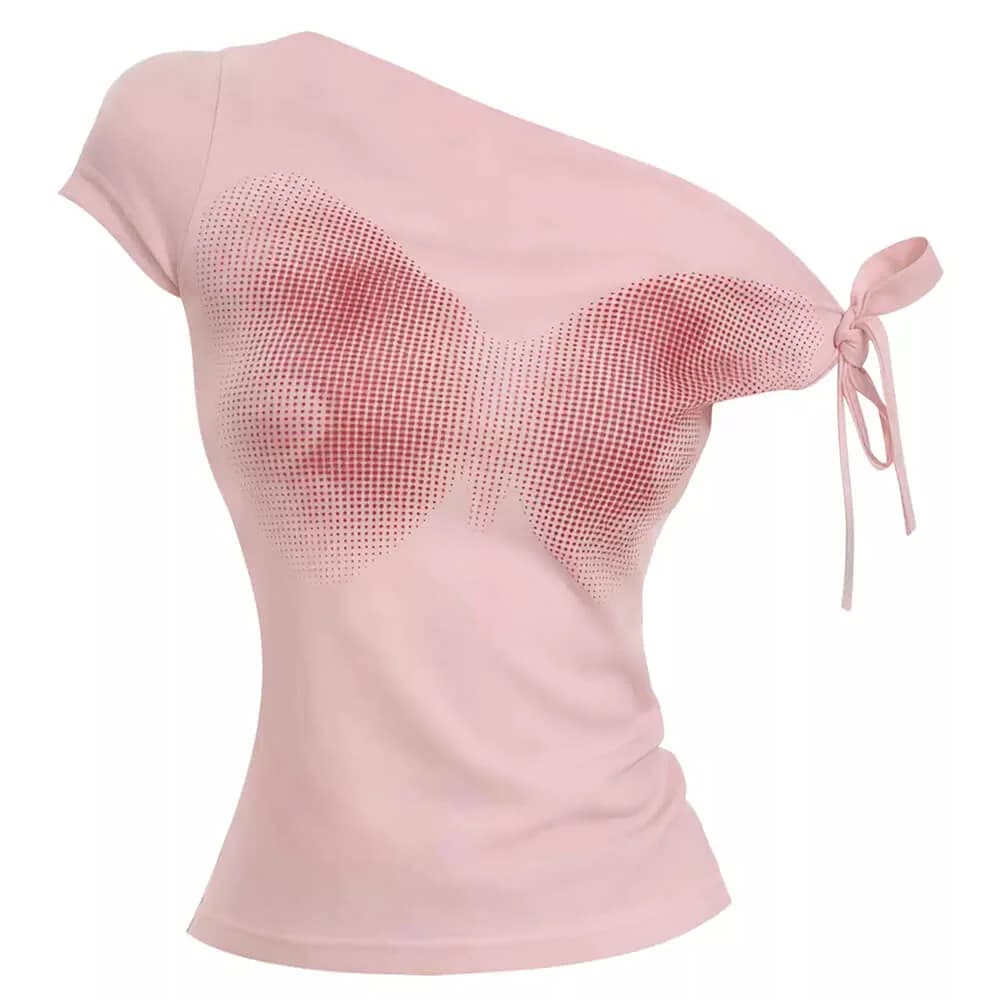
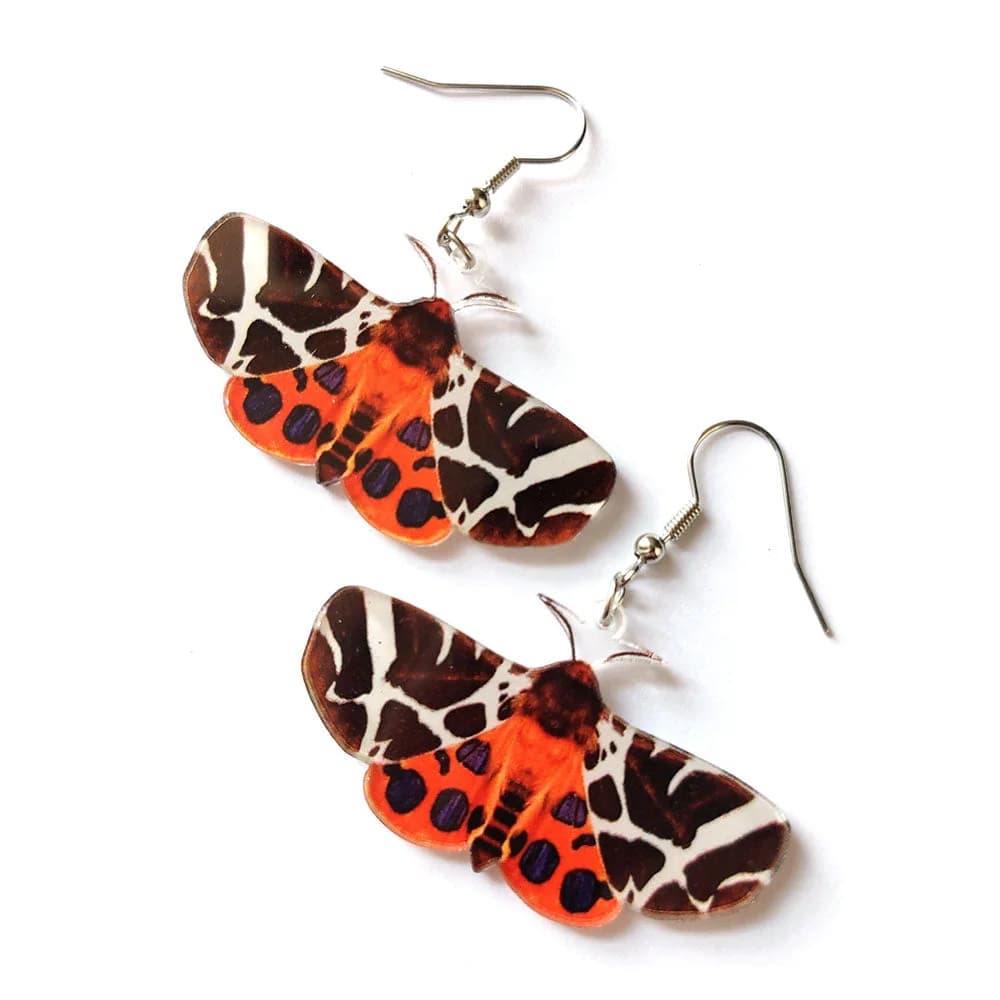
Asymmetrical necklines present an entirely different challenge because one shoulder is exposed while the other is covered. A centered pendant often looks displaced against an off-kilter strap. Pairing an irregular silhouetteThe overall shape an outfit creates, from fitted to loose and layered. like the Pink Butterfly Asymmetrical Top with neck jewelry can feel crowded around the single shoulder line. In these cases, moving your statement pieces upward by exploring coordinated butterfly earrings keeps your silhouetteThe overall shape an outfit creates, from fitted to loose and layered. balanced without tangling chains against slanted shoulder straps.
- Square cuts benefit from dual layers: a 14-inch base chain paired with a 16-inch winged centerpiece.
- Keep pendants floating in bare skin space; never let wings brush against the straight horizontal neckline.
- For one-shoulder or slanted tops, skip multi-row necklaces entirely and balance the bare shoulder with drop earrings.
High Necks and Turtlenecks: Exterior Hardware Placement
Wearing jewelry over high collars flips typical styling rules, as you are styling directly against fabric rather than bare skin. Fine, featherweight chains disappear against knits, and delicate prong settings easily pull threads from textured yarns. For a high neck, select chains with heavier gauge links, like curb, wheat, or medium rope styles, which hold their form and slide smoothly over fabric without grabbing fibers.
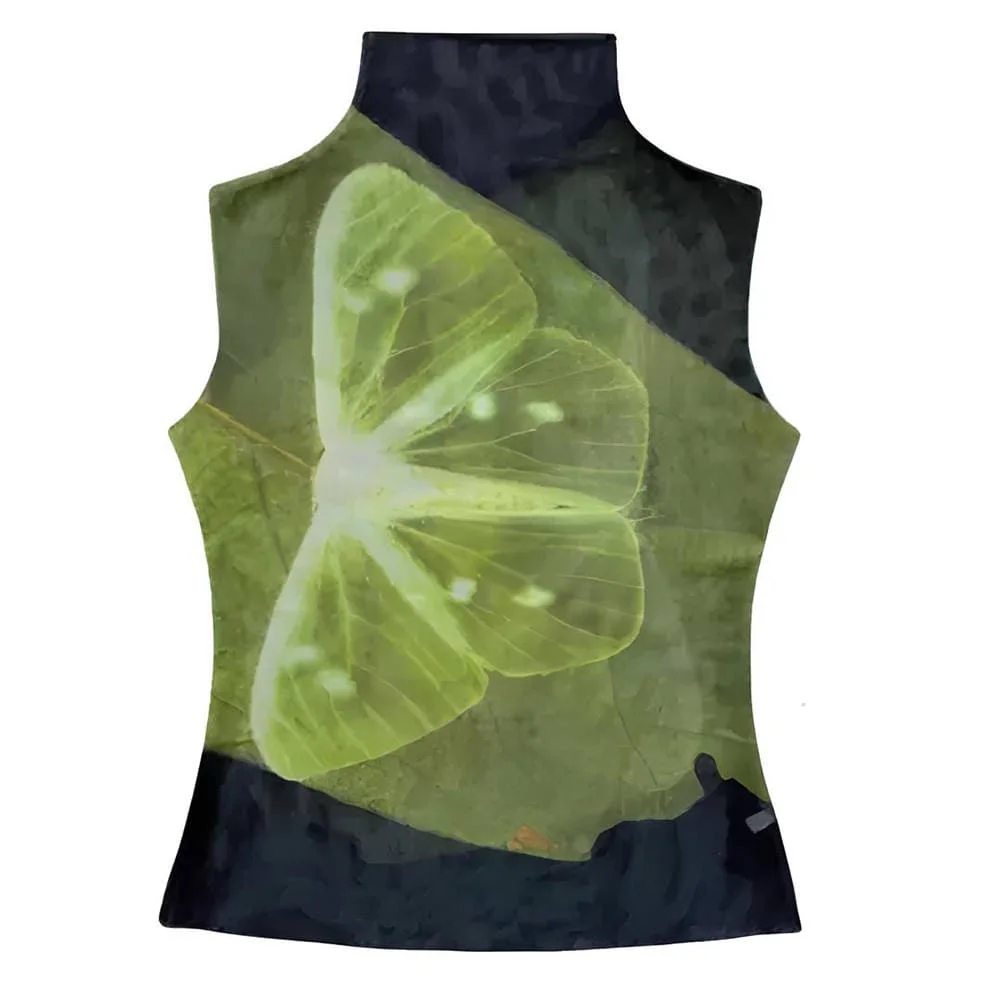
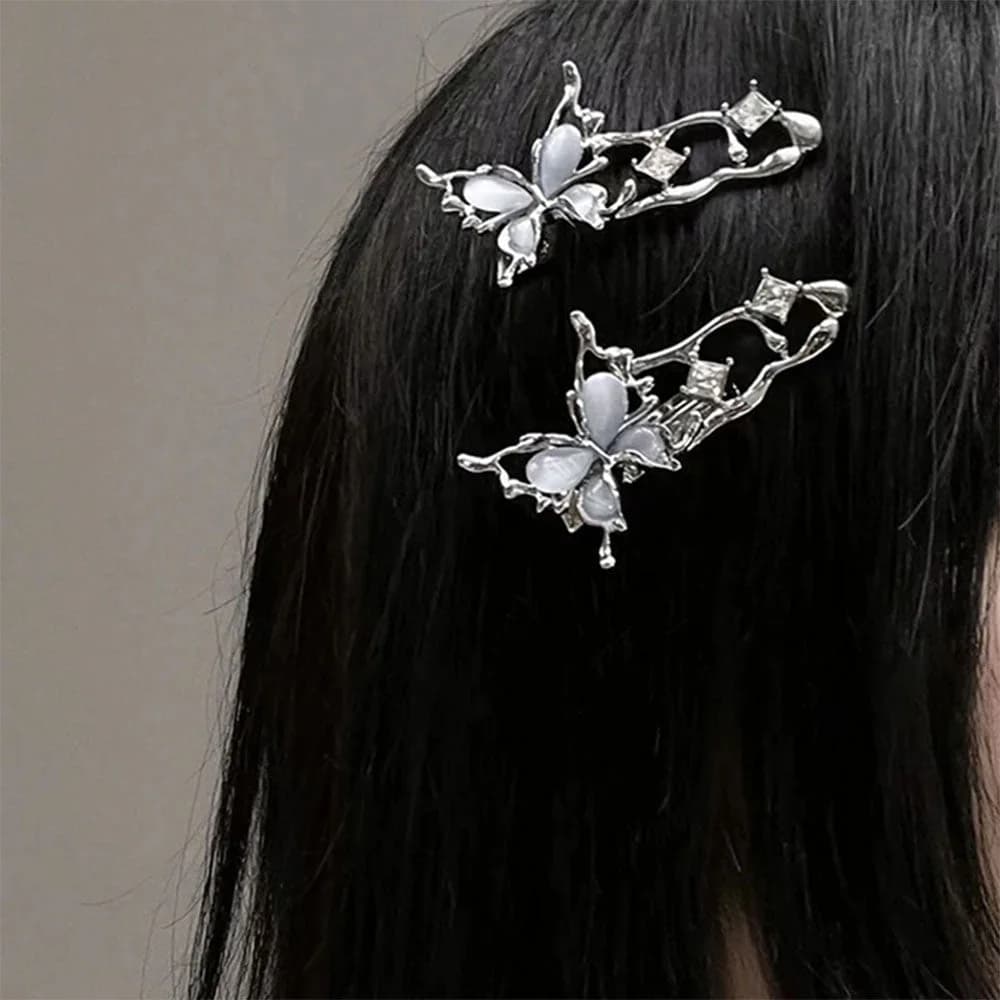
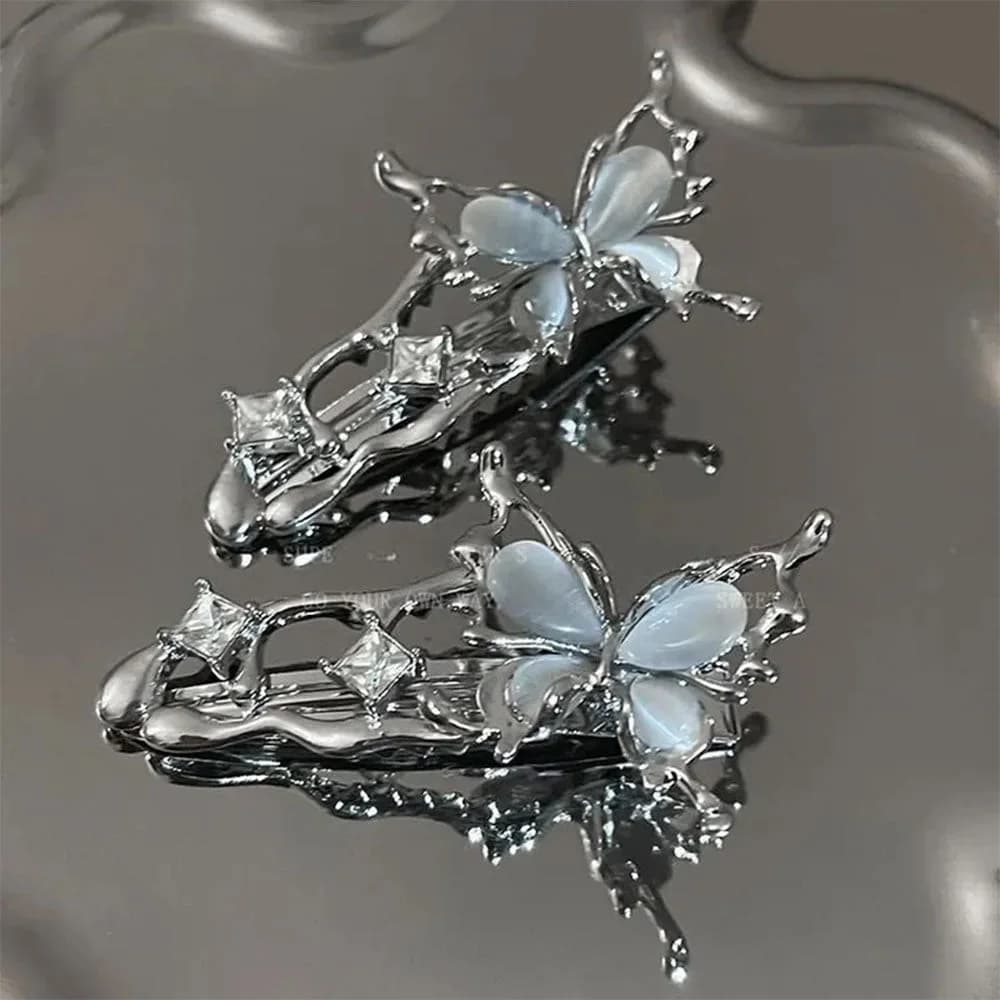
When styling a fitted piece like the Butterfly Print Mesh Turtleneck Top, the base garment already features an active pattern. Placing fine neck chains over printed mesh results in total visual clutter. Instead, either choose a solid-toned turtleneck to let silver wings shine, or keep the printed mesh top clean and shift your metal accents elsewhere. You can pin structural hair hardware like the Y2K Liquid Metal Butterfly Hair Clips into an updo, pulling hair away from the neck so the turtleneck collar stays distinct and sharp.
- Choose link styles with smooth outer profiles, such as snake or box chains, to stop fabric snagging.
- Increase chain lengths to 20–24 inches so the pendant weights the chain downward against the chest.
- Omit chest pendants when wearing allover butterfly prints; divert metallic accents to hair or ears instead.

Metal Finishes: Cool Chrome, Antiqued Pewter, and Warm Gold
Selecting metal colors for winged motifs depends on both the aesthetic you want to project and the tones of your clothing. Polished silver and chrome convey an energetic Y2K street style, offering clean, crisp reflections that pop against dark streetwear or bright pastels. Antiqued silver and pewter, by contrast, offer darkened crevices that highlight the intricate veins of cast wings, making them a natural fit for muted fairy grunge or earth-toned outfits. Warm yellow gold brings a classic, polished mood that softens the playfulness of insect motifs.
To find your most flattering finish, compare the metal against the undertone of your skin and your everyday wardrobe staples. Cool chrome looks striking against black, icy blue, and stark white fabrics, emphasizing sharp wing contours. Warm gold harmonizes with ivory, olive, and rich browns, but can sometimes overpower tiny openwork pendants. If you prefer muted styling, inspect the wider butterfly accessories catalog to see how antiqued finishes reduce harsh glare, giving the wings an understated, grounded appearance across different lights.
- Bright silver/chrome: Reflects cool light, pairs cleanly with neon accents, black denim, and Y2K baby tees.
- Antiqued pewter: Emphasizes wing vein textures through dark oxidation, matching distressed or earthy fabrics.
- Yellow gold: Softens sharp wing silhouetteThe overall shape an outfit creates, from fitted to loose and layered.s, pairing best with creamy knits, warm tans, and rich forest tones.
Mixed Metals Without Chaos: The 70/30 Rule
Mixing metals is a great way to add depth to an outfit, but it requires deliberate planning so it looks intentional rather than accidental. When combining silver and gold butterfly charms, apply a strict 70/30 balance. Designate one metal as your dominant foundation covering 70 percent of your visible hardware—such as your main chain, rings, and belt hardware—while the secondary metal claims the remaining 30 percent in small charm accents or alternating chain links.
The cleanest way to anchor mixed metals is to include one hybrid piece that intentionally combines both tones, such as a pendant with a silver wing frame and a gold central body. This creates an immediate visual bridge between your other accessories. Avoid wearing equal amounts of gold and silver in identical chain weights, as split 50/50 ratios look accidental. Keep the finishes consistent across both colors; do not combine highly polished, mirror-shine yellow gold with heavily tarnished, rustic pewter.
- Establish one primary metal tone for your chains and assign the contrasting tone to charms or ear accents.
- Use a multi-tone pendant or split-link chain to visibly tie the two metal families together.
- Match surface textures: pair high-polish gold with high-polish silver, and matte metals with matte metals.
The Three-Tier Rule: Spacing Chains for Clean Layering
Building a three-chain stack that includes a butterfly pendant requires precise mathematical spacing to prevent the items from tangling into a ball. Tier one should be your shortest base: a 14 to 15-inch simple choker, such as a plain herringbone or thin box chain with zero pendants. This creates a neat horizontal frame right at the collarbone hollow and sets the upper limit for the stack.
Tier two acts as your featured focal level, resting at 16 to 18 inches. This is the ideal spot for a primary pendant from the butterfly jewelry range, allowing the wings to sit flat against your sternum without hitting the choker above it. Tier three should hang at 20 to 22 inches, featuring a vertical bar, a crystal drop, or an unadorned, heavier-gauge chain. This lowest layer anchors the entire arrangement downward, pulling the stack taut and maintaining clear air gaps between all three tiers throughout the day.
- Tier 1 (14–15 inches): Smooth choker without charms to establish an upper visual border.
- Tier 2 (16–18 inches): Central butterfly pendant floating freely in the middle zone.
- Tier 3 (20–22 inches): Elongated drop or heavier chain that stabilizes the vertical stack.
- Leave a gap of at least two inches between chain tiers to keep pendants from tangling together.
Texture Matching: Solid Castings vs. Filigree and Resin
Butterfly charms come in a variety of fabrications, from solid cast metals to delicate wire filigree and colored resin wings. Heavy, solid-cast pendants carry enough weight to stay centered on your chest, making them resilient against wind and brisk movement. However, solid metal wings can appear heavy when layered over sheer fabrics. Filigree wings, which use open wire designs, are lightweight and airy, but their fine edges easily snag on open-weave sweaters or textured knit collars.
Resin, enamel, and iridescent inserts add vibrant color, but they alter how light bounces off your jewelry. If you wear an iridescent piece like the Holographic Butterfly Metal Necklace, let its color-shifting surface be the solitary star of your neckline. Pairing a holographic charm alongside bright enamel pendants and multi-color beads results in a cluttered look. Balance translucent, colorful charms by surrounding them with simple, plain metal links that provide visual breathing room.
- Solid cast metal: Best for breezy conditions and thick tops; will not snag on jersey knit seams.
- Wire filigree: Needs smooth fabrics like satin or flat cotton to prevent bent wires and fabric snags.
- Iridescent and resin wings: Combine with unadorned silver or gold chains to avoid competing colors.
Coordinating Necklaces with Butterfly Tops and Skirts
When building an outfit centered around winged apparel, wearing matching jewelry requires thoughtful restraint. Wearing butterfly necklaces, earrings, hair clips, and printed tops simultaneously feels overwhelming and lacks styling focus. Instead of repeating identical motifs across every layer, balance the densities of your prints and hardware so your favorite pieces stand out.
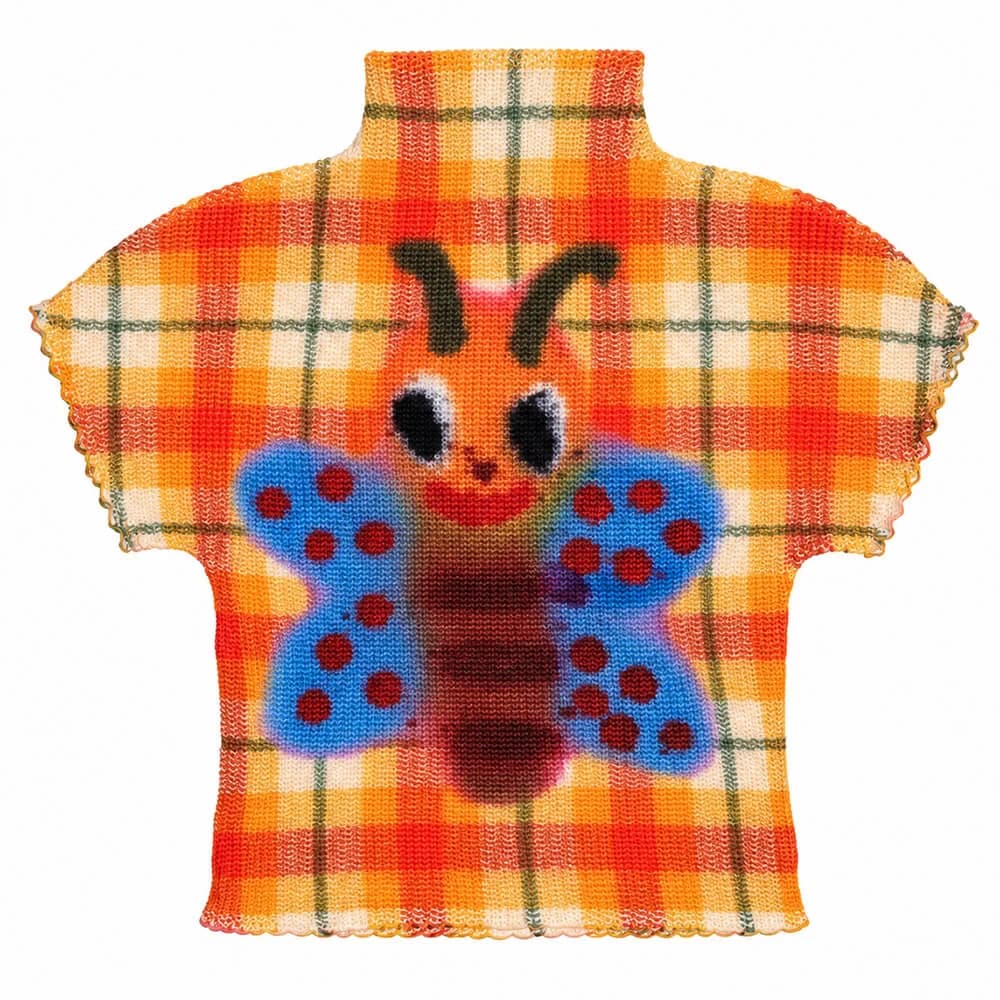
For example, pairing an earthy top like the Fairy Grunge Butterfly Patch Top with the flowing Fairy Grunge Butterfly Maxi Skirt establishes an intricate, distressed foundation. In this outfit, avoid busy winged chokers that collide with the neckline patch. Instead, select a simple chain or switch entirely to small ear accents. Similarly, a high-energy piece like the Butterfly Buzz Mesh Top carries bright orange tones and dynamic shapes, so it pairs best with a smooth, unadorned silver choker that frames your neck without competing with the vibrant mesh pattern.
- If your shirt features a large central butterfly graphic, skip pendant necklaces and choose hoop earrings instead.
- Pair patterned skirts with subtle, solid-cast silver chains to keep visual weight balanced across your frame.
- Echo garment colors through subtle metal undertones rather than matching every single graphic motif.
Distributing Motifs Across Hair, Ears, and Wrists
Distributing your accessories evenly across your body creates a cohesive outfit without cluttering your collarbones. If you choose to wear an intricate winged necklace, keep your earrings minimal—think plain studs or simple small hoops. If you want to make a statement with your earrings, leave your neck bare and wear a low scoop or off-the-shoulder shirt that lets your jawline and shoulders frame the drops naturally.
Hair accessories offer another great placement option, especially in warm weather when you want your hair up. The Y2K Liquid Metal Butterfly Hair Clips secure loose tendrils while adding liquid-metal shine around the face. When using reflective metal clips, leave your neckline completely free of chains. You can balance the metallic hair accents by stacking simple metal rings or a thin cuff on your wrist, creating a clean diagonal line of shine from your hair down to your hand.
- Rule of two: Wear butterfly motifs on a maximum of two body zones at once (such as hair and wrists, or neck and hands).
- Pair statement drop earrings with an unadorned neckline to give the dangling wings space to move.
- Use high-shine hair clips to balance plain oversized tees or casual monochrome tops without neck clutter.

Casual Streetwear vs. Layered Fairycore: Two Complete Formulas
To see how these concepts translate into complete outfits, consider two distinct aesthetics: graphic streetwear and layered fairycore. For a street-focused look, start with the relaxed Indie Butterfly Print Long Sleeve Top in black, paired with wide-leg cargo trousers and platform skate shoes. Because the long sleeve carries bold graphic prints, you want your jewelry to feel intentional and structured. Add an 18-inch polished silver curb chain bearing a solid-cast butterfly pendant, allowing it to rest below the collar band where it can cut through the dark cotton.
For a layered fairycore or grunge look, lean into earthy textures, soft fabrics, and antiqued metals. Start with the Fairy Grunge Butterfly Patch Top in beige, worn over a tiered maxi skirt or distressed denim. Here, a shiny chrome necklace would look out of place against the muted palette. Choose a 16-inch antiqued pewter pendant with open filigree wings, suspended between two thin rope chains. Finish the outfit with small stone studs and earth-toned arm warmers for a balanced, grounded style.
- Streetwear Formula: Relaxed graphic long-sleeve, 18-inch heavy silver curb chain, plain wide-leg pants.
- Fairycore Formula: Distressed neutral patch top, 16-inch antiqued pewter pendant, tiered skirt, muted accessories.
- Maintain style harmony by matching chain weight to garment fabric: heavy chains for streetwear, fine links for layered knits.
Common Butterfly Jewelry Mistakes and Quick Fixes
One common mistake when styling winged jewelry is wearing pendants that are too light on extra-long chains. A featherweight charm on a 24-inch chain will twist around, blow over your shoulder in the wind, and spend half the day facing backward. If you want to wear a longer chain, make sure the pendant has enough metal weight to hold the drop centered, or add a small drop bead just above the clasp at the back of your neck to help counterweight the chain.
Another frequent issue is mixing incompatible chain textures. LayeringWearing pieces over or under one another to add depth, warmth or contrast. a delicate, high-friction rope chain right next to an open-link cable chain almost always leads to knots, as the tiny links slip inside each other and lock up. Instead, pair flat-surfaced styles like herringbone or snake chains with open cable links; the flat metal slides easily over adjacent links without snagging. Finally, avoid stacking multiple winged charms on the exact same chain, as their wings will inevitably collide, scratch the metal, and create an untidy cluster.
- Mistake: Lightweight pendant flips constantly on a long chain. Fix: Switch to a 16-inch chain or choose a solid charm.
- Mistake: Tangled chains within an hour. Fix: Combine one flat-surface chain (snake/herringbone) with one cable chain.
- Mistake: Crowding multiple winged charms on one chain. Fix: Wear one winged centerpiece and keep adjacent layers bare.
The Outfit-Building Checklist: Quick Checks Before Leaving
Before stepping out the door, take thirty seconds to review your jewelry arrangement in a full-length mirror. Start by testing your movement: roll your shoulders forward, lean over slightly, and stand back up. If your chains immediately wrap around one another or your pendant flips upside down, your layer lengths are too close together. Adjust the chain extender to give your focal charm at least two inches of clearance from the layer above it.
Next, check how your jewelry interacts with your clothing hems and textures. Make sure your winged charm is either floating freely over clear skin or resting flat against a smooth section of fabric, completely clear of ribbed seams or graphic prints. Review your overall metal balance to confirm your silver and gold tones follow a clean 70/30 ratio. If your neck feels crowded, take off one piece and move that metallic accent to your hair, ears, or wrist to keep your outfit looking effortless.
- Do the movement test: Lean forward to ensure charms swing freely and settle back without knotting.
- Check the seams: Verify that wing tips clear neckline ribs, V-plunges, and graphic prints cleanly.
- Confirm the 70/30 metal ratio: Ensure one metal tone clearly anchors your hardware stack.
- Verify negative spaceAn uncluttered area that gives the rest of a design room to stand out.: Make sure your focal butterfly has room to breathe so its wings stay distinct.