Created by the Kawaii Vibe editorial team. Our named style desks are editorial personas. Product details and availability can change.
LayeringWearing pieces over or under one another to add depth, warmth or contrast. a statement knit can feel tricky when you want to stay warm without hiding the main graphic. Butterfly sweaters bring distinct focal points, often using large central intarsia panels, scattered wings across the shoulders, or textured knits that shift the visual balance of an outfit. The goal is to build an outfit where your base layers and outer jackets support the print instead of crowding it.
Getting the look right comes down to controlling fabric weight, neckline spacing, and hem lengths. When you understand how a sweater sits across your torso and where its motifs land, you can easily adapt it for crisp autumn mornings, chilly winter commutes, or breezy spring nights without feeling stuffed into your clothes.
This guide breaks down wearable layeringWearing pieces over or under one another to add depth, warmth or contrast. methods for different body silhouetteThe overall shape an outfit creates, from fitted to loose and layered.s and climate shifts. Whether you are pairing an oversized knit with tailored trousers or slipping a fitted mesh base underneath an open neckline, these practical styling recipes will keep your outfits functional, comfortable, and visually balanced.
Assessing Your Sweater Silhouette and Graphic Placement
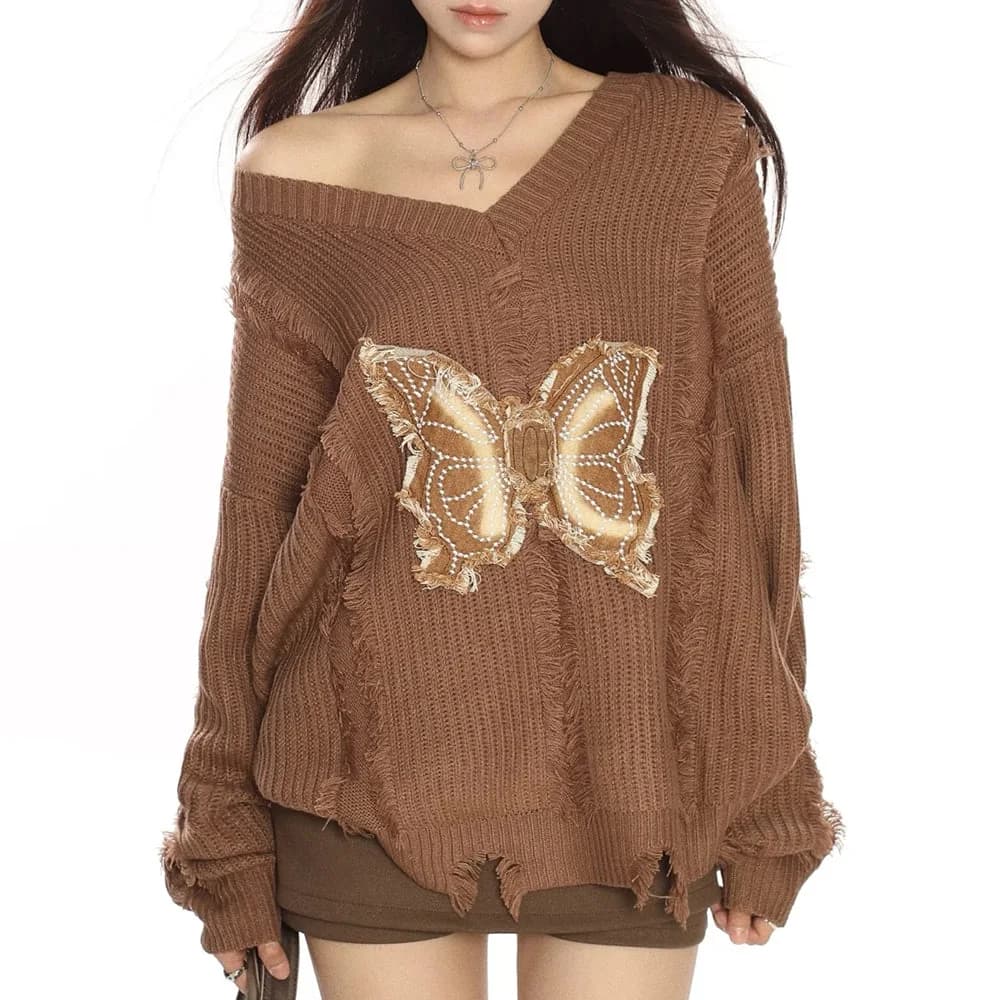
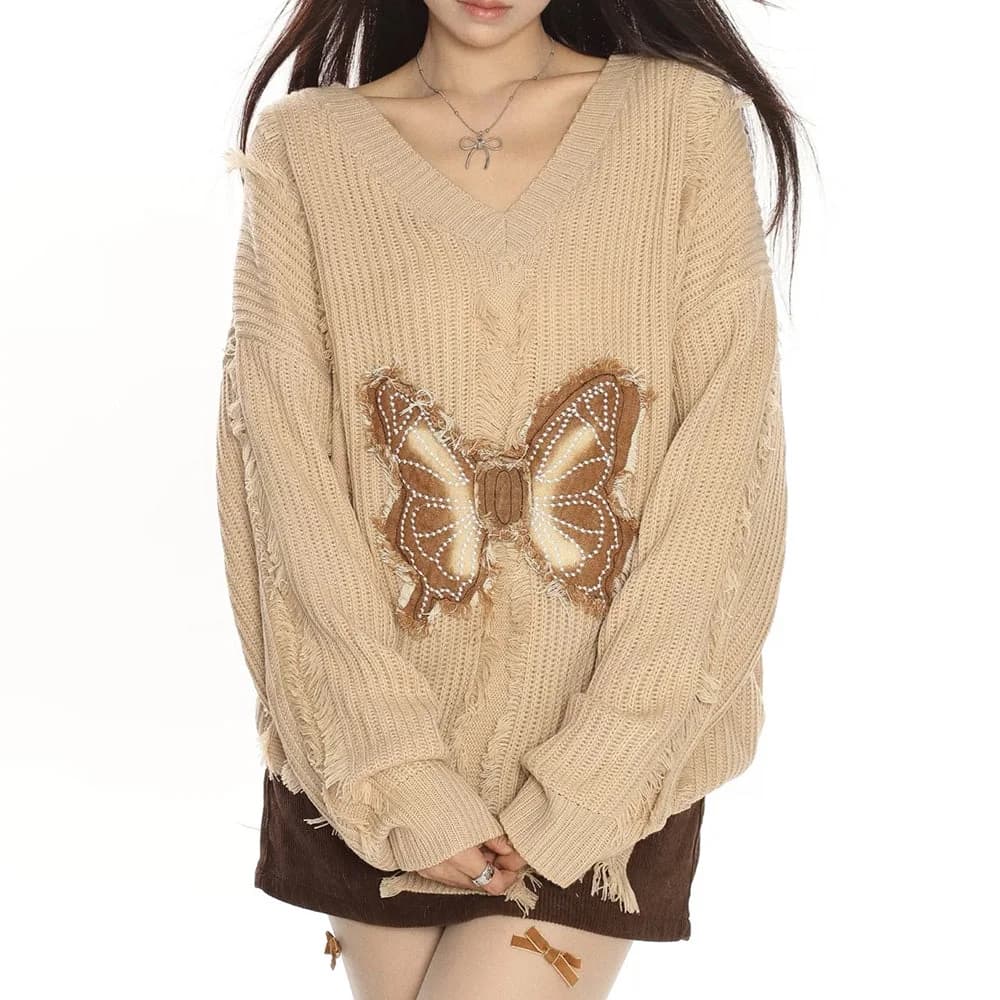
Before picking out base layers or jackets, take a close look at the physical construction and graphic spread of your sweater. Some designs place a single, prominent wing graphic directly across the chest, while others scatter smaller embroidered details along the sleeves or hem. A knit with a centered motif needs open-front coats or jackets with low gorge lines so the design stays visible when you are layered up. If the visual interest sits on the arms, you can easily pair the knit with sleeveless outerwear like vests or aprons without losing the print.
Volume also dictates how many layers you can comfortably fit underneath. A dense, thick-gauge sweater acts as an exterior shell on mild days, meaning you only need a thin base layer to protect against drafts. On the other hand, lighter, looser knits give you room to layer collared shirts or thermals beneath without pinching around the armpits or shoulders. If you are browsing through butterfly sweaters to build your weekly rotation, notice whether the shoulders are dropped or fitted, as dropped seams naturally give you more space for hidden thermal underpinnings.
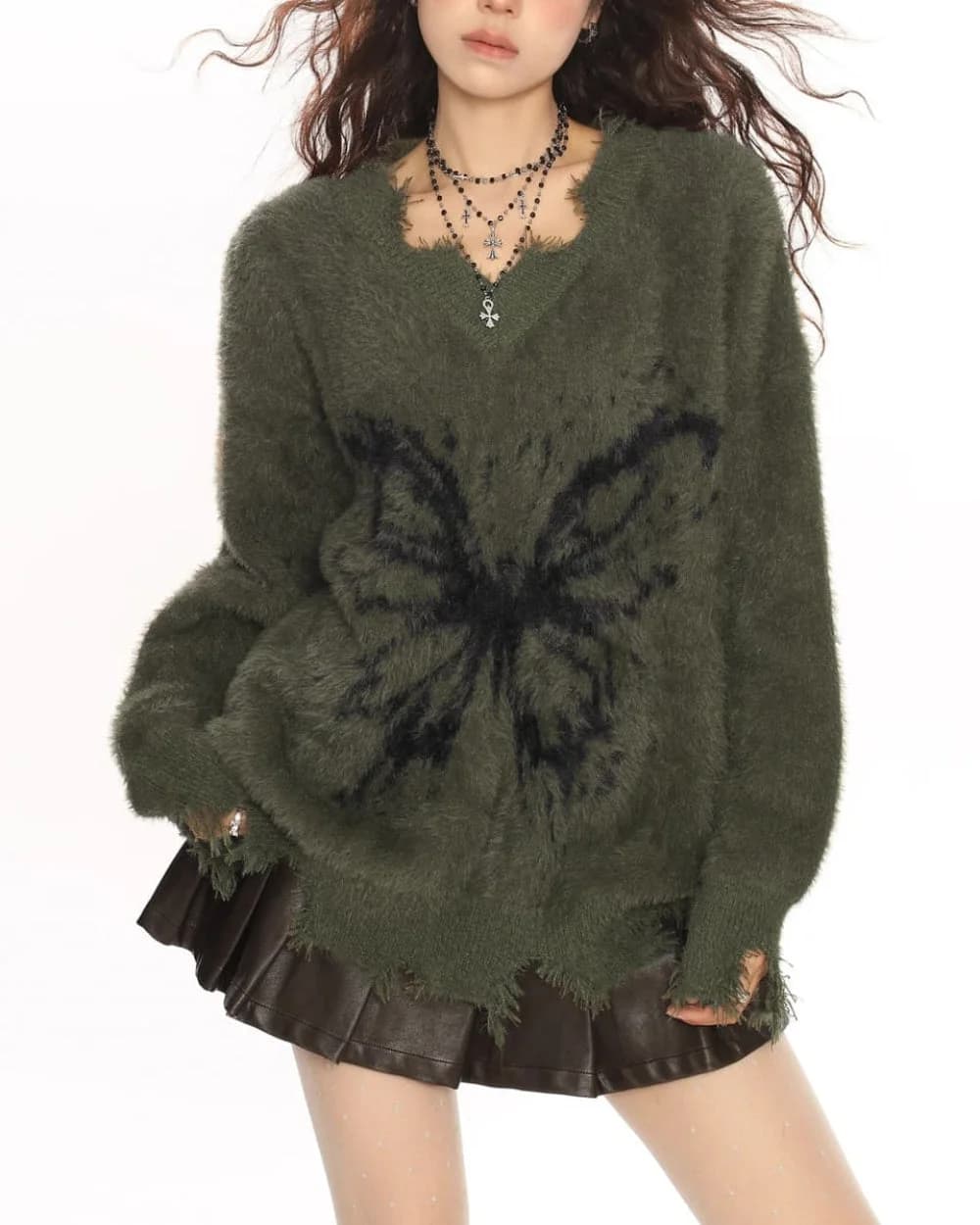
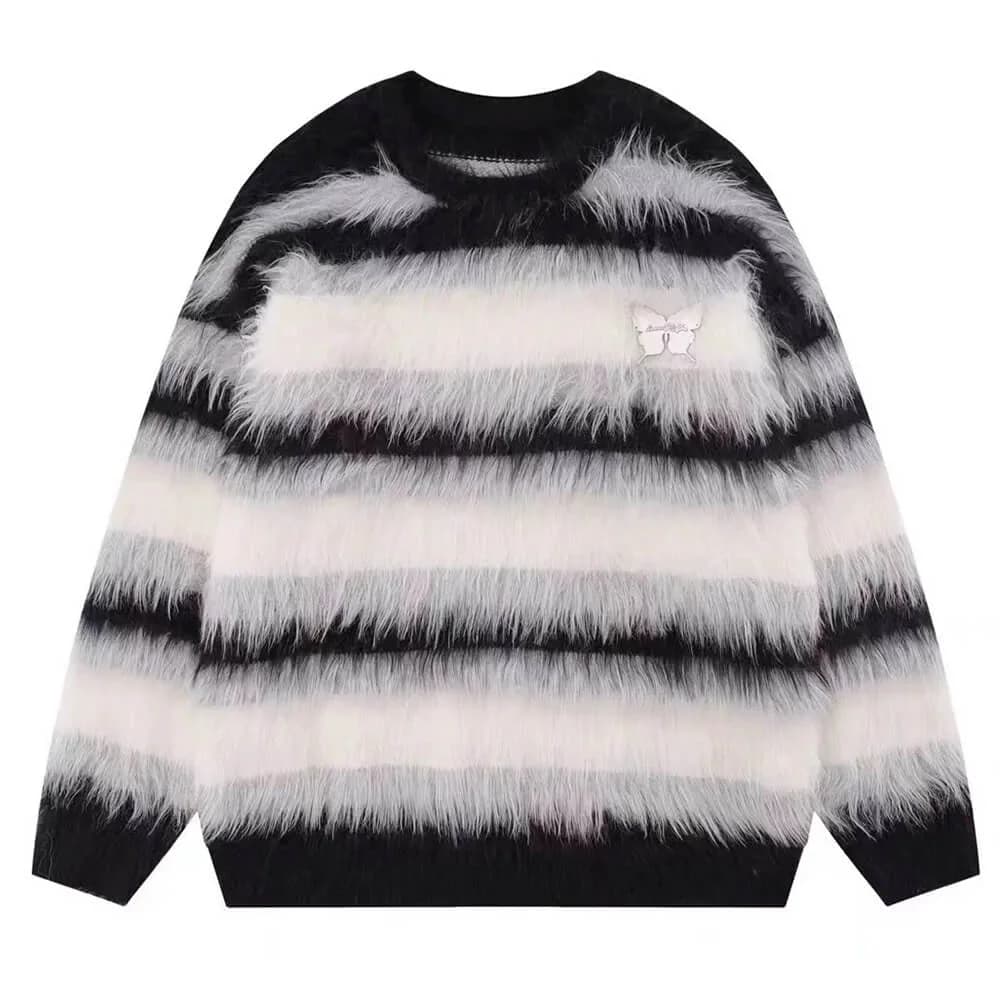
Texture alters visual weight just as much as knit gauge. Fuzzy finishes, brushed yarn, or ribbing reflect light differently than flat weaves. For instance, the Grunge Butterfly Fuzzy Knit Sweater, which comes in polyester with Green and Beige options in sizes S to L, introduces a soft brushed texture that works best when balanced against smoother fabrics like crisp cotton broadcloth, denim, or sleek faux leather so the fuzzy surface stands out cleanly.
- Check whether motifs sit on the chest, sleeves, or lower hem before choosing a jacket cut.
- Look at shoulder construction: drop shoulders allow heavier under-layers than set-in sleeves.
- Pair fuzzy or high-texture knit surfaces with sleek bottoms to prevent excess visual bulk.

Base Layer Foundations: What to Wear Underneath
A successful layered outfit starts next to your skin. The primary job of your base layer is moisture control, temperature regulation, and smoothing out friction between your body and the sweater yarn. In warmer conditions or during indoor heating transitions, lightweight cotton camisoles or fitted tank tops prevent natural skin oils from settling into your knits while letting you vent heat simply by unbuttoning or pulling up your sleeves.
When temperatures drop, tight-fitting long-sleeve tops become essential. Choose base items that sit flush against your arms so the sleeves of your sweater slide on smoothly without bunching up at the elbows. A thin crewneck or scoop neck that stays completely hidden lets your knit take center stage, while a patterned or contrasting collar peaking through the neckline can add dimension to an otherwise simple crew cut.
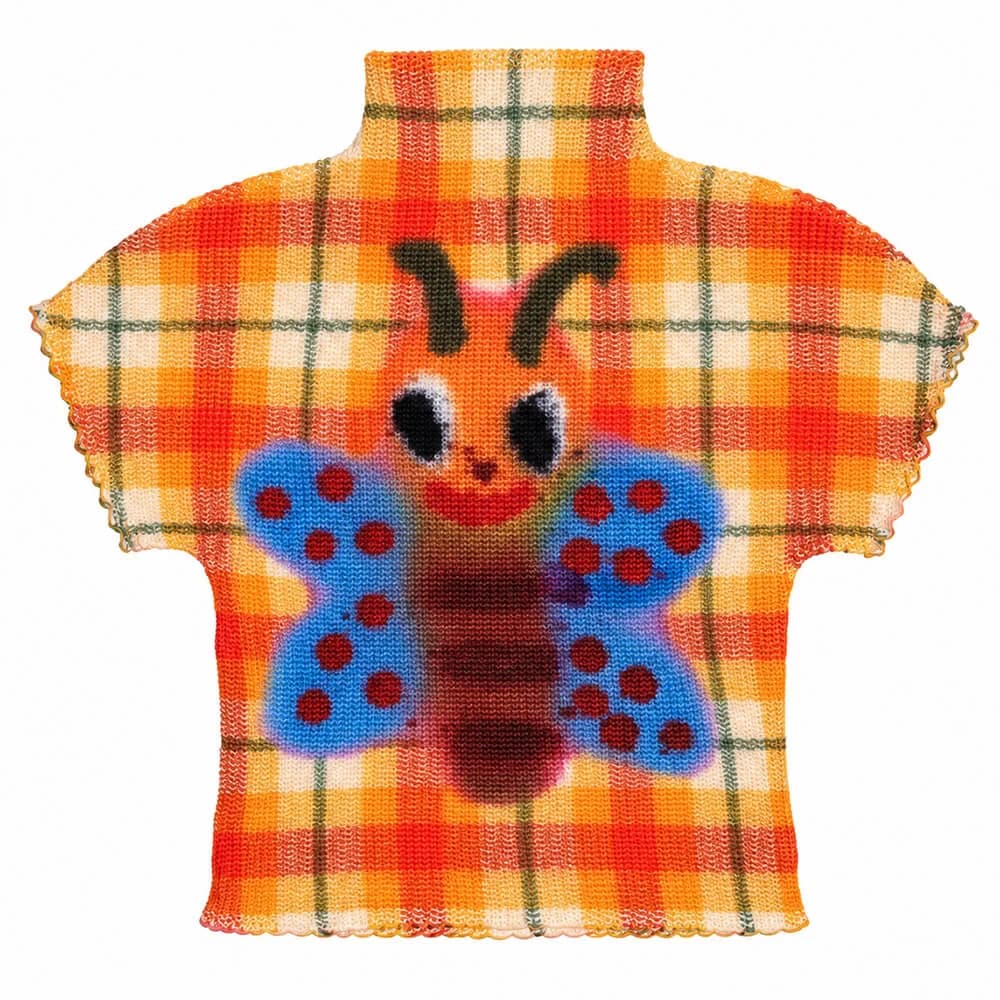
For sheer sweaters or deep V-neck cuts, your base garment is fully on display. Look to items from butterfly tops that offer clean lines and fitted silhouetteThe overall shape an outfit creates, from fitted to loose and layered.s. Incorporating a sheer underpinning like the Butterfly Buzz Mesh Top, made of polyester in vibrant Orange across sizes S to XL, lets you add a bold pop of color and sheer texture beneath a dark or neutral open-weave knit without adding any insulating thickness.

Mastering Collar and Neckline Pairings
The interaction between your sweater neckline and your under-layer collar defines the mood of your outfit. Crewneck sweaters are the most common silhouetteThe overall shape an outfit creates, from fitted to loose and layered., and they pair exceptionally well with structured pointed collars. When you pull a stiff button-down shirt collar over a round sweater neck, you frame your face neatly while giving a playful graphic knit a grounded, studious appearance. Make sure the shirt collar points stay tucked over the knit ribbing rather than curling awkwardly inside.
V-neck butterfly knits offer natural vertical space, making them ideal for framing high-neck base layers. Wearing a fitted turtleneck under a deep V-neck sweater creates crisp geometric contrast, cutting horizontal lines across the throat while the sweater draws the eye downward. This combination keeps your neck insulated in freezing weather without needing an exterior scarf that would obscure your sweater's butterfly graphic.
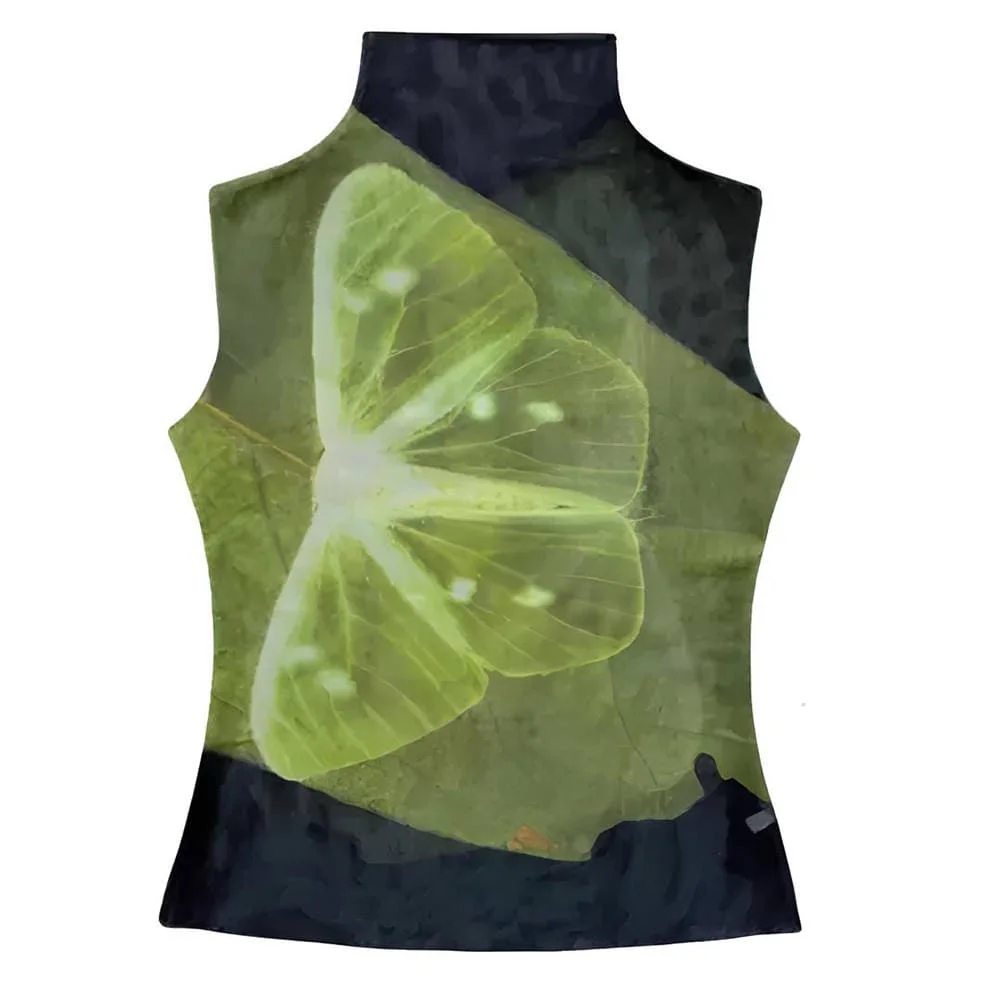
For crewneck sweaters with wider collar openings, a tall mesh neck provides warmth without bulk. The Butterfly Print Mesh Turtleneck Top, crafted in polyester in a striking Green/black option across sizes S to L, fits neatly under wider knits. Its extended neck panel rises smoothly above a scoop or crew collar, adding layered depth while repeating the wing motif in a different, semi-sheer scale.
- Tuck pointed collars over crewneck ribbing so they sit flat against your chest.
- Use turtlenecks under deep V-neck knits to lengthen your silhouetteThe overall shape an outfit creates, from fitted to loose and layered. and lock in neck warmth.
- Try semi-sheer high necks under open-collar knits for visual dimension without heavy bulk.
Balancing Proportions for Petite Frames
Petite dressers often run into the issue of oversized graphic sweaters overwhelming their frame, pulling the visual center of gravity down past the hips. When a knit hangs too low, it can shorten the appearance of your legs, especially when paired with wide-leg trousers. To solve this, pay close attention to hem management and vertical color matching.
The simplest styling technique for shorter torsos is the front tuck or side tuck into mid-to-high-rise bottoms. By tucking just a two-inch section of the sweater hem into your waistband, you reveal your natural waistline and lengthen the leg line beneath it. If your sweater is too thick to tuck cleanly without creating waist bunching, fold the hem under itself and secure it against the band of a sports bra or an elastic belt worn beneath the knit.
Another effective method is pairing your knit with slim-cut bottoms or short hemlines worn with tonal tights. Creating a streamlined silhouetteThe overall shape an outfit creates, from fitted to loose and layered. on your lower half lets an oversized sweater read as deliberate volume rather than ill-fitting fabric. You can also explore cropped cuts within the wider butterfly clothes range to find pieces where the hem naturally lands above your hip bone, eliminating the need to tuck altogether.
Flattering Layering Strategies for Curvier Silhouettes
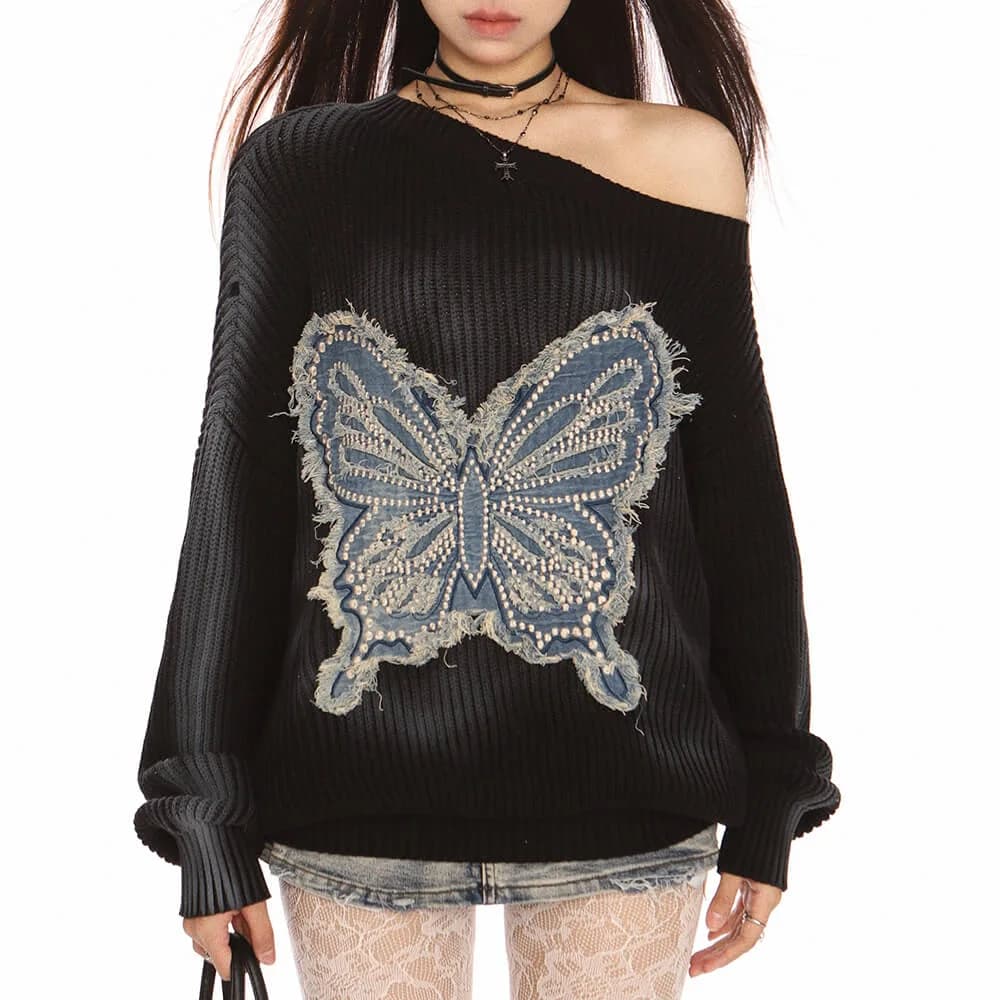
When styling fuller busts, broader hips, or hourglass curves, thick horizontal knits can sometimes feel bulky if layers are not carefully anchored. The secret is creating long vertical lines that guide the eye through the center of the body, allowing the sweater to drape comfortably over curves rather than pulling taut across them.
Look for sweaters that feature diagonal knit patterns, open cardigans, or dropped shoulder seams that soften the transition across the upper arms and chest. When layeringWearing pieces over or under one another to add depth, warmth or contrast., leave outer jackets or long coats open down the front; this forms two vertical parallel lines that slim the torso while framing the sweater's central butterfly motif. Pair this with mid-rise or high-rise bottoms that anchor your waistline, providing structure beneath the relaxed drape of the knit.
If you are wearing an oversized pullover, choose fitted base layers underneath that keep the sweater resting flat against your frame instead of ballooning out. You can also ground the look with a flowing lower layer like the Fairy Grunge Butterfly Maxi Skirt, a polyester piece in Beige/black available in Free Size. Its gentle drop and vertical silhouetteThe overall shape an outfit creates, from fitted to loose and layered. balance a relaxed knit on top without adding tight friction points around the hips.
- Wear long outer coats open to create vertical framing lines over your sweater.
- Choose drop-shoulder sweater cuts to allow relaxed drape over fuller busts and shoulders.
- Anchor relaxed top layers with flowing maxi skirts or structured trousers to balance proportions.

Styling Straight and Athletic Shapes with Texture and Volume
Straight, rectangular, and athletic body shapes provide an ideal foundation for experimenting with dramatic knit volume, exaggerated cuffs, and high-contrast textures. Since athletic frames naturally have balanced shoulder and hip widths, you can use structured layeringWearing pieces over or under one another to add depth, warmth or contrast. to create the illusion of curves or lean into modern, relaxed architectural silhouetteThe overall shape an outfit creates, from fitted to loose and layered.s.
To create waist definition, experiment with layeringWearing pieces over or under one another to add depth, warmth or contrast. a boxy butterfly sweater over a flowing collared tunic or a pleated skirt, allowing the hem of the under-layer to peek out by three to four inches. This staggered hemline breaks up straight vertical planes and adds horizontal interest around the hips. Adding a belt directly over a fine-gauge sweater can also cinch your middle while creating soft folds of fabric above the waist.
Alternatively, you can embrace an effortless straight-drape look by pairing an oversized sweater with wide-leg trousers and chunkier footwear. If your sweater has a relatively plain back or chest, layer a textured piece like the Fairy Grunge Butterfly Patch Top underneath. Available in Cotton, Polyester blends in Beige and White across sizes S to L, its tactile patch details provide layered depth that keeps straight silhouetteThe overall shape an outfit creates, from fitted to loose and layered.s from looking flat or repetitive.
Warm-Weather Transitions: Spring and Cool Summer Evenings
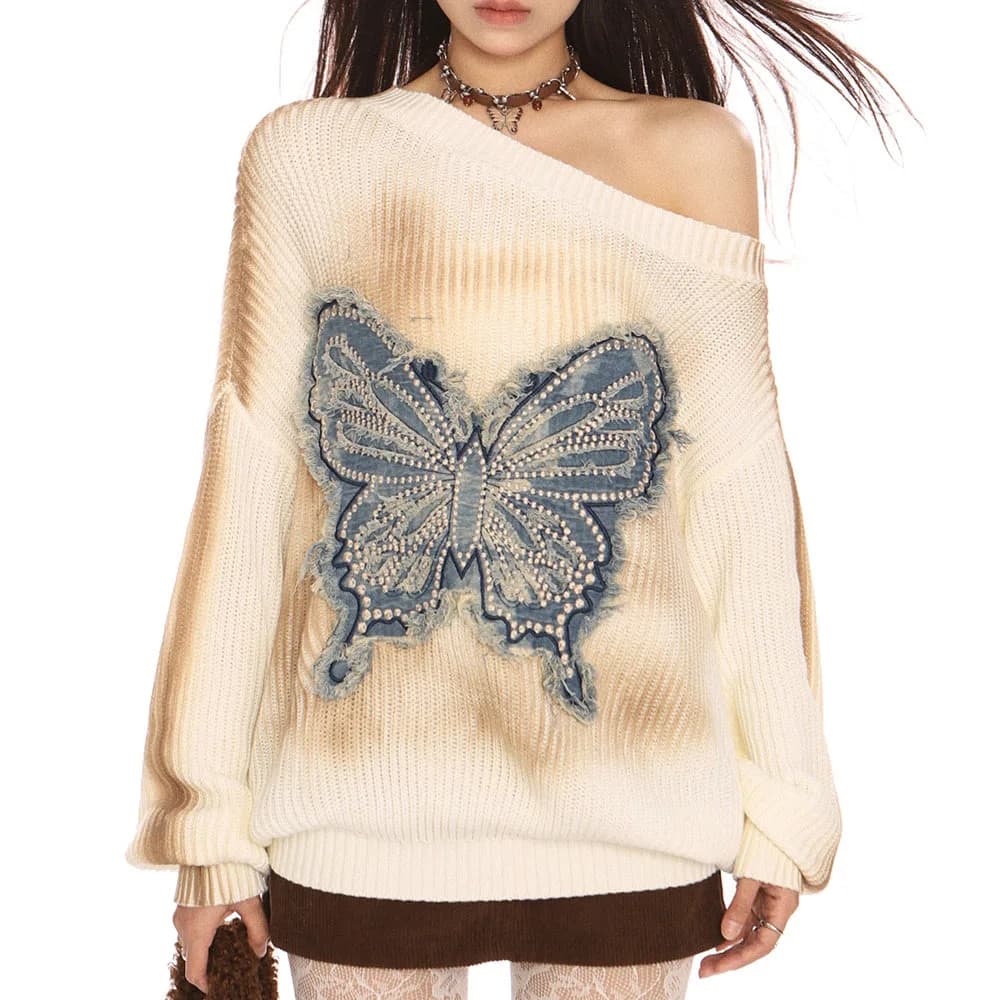
As the weather warms up, heavy winter layers give way to breathable combinations that can handle fluctuating temperatures from sunny afternoons to breezy evenings. Butterfly sweaters remain valuable transition pieces during this time, acting as light jackets that you can throw on or peel off as the temperature shifts throughout the day.
During mild spring days, pair your knit with lightweight cotton tops and unbuttoned overshirts. The Indie Butterfly Print Long Sleeve Top, constructed from Cotton and Polyester in White and Black across sizes S to L, works as an easy transitional base layer. You can wear it under a loose, open-gauge knit in the morning, and if the afternoon warms up, simply drape your sweater over your shoulders with the sleeves tied loosely across your chest.
Cool summer evenings by the coast or in air-conditioned spaces also call for light layeringWearing pieces over or under one another to add depth, warmth or contrast.. Instead of thick cardigans, reach for airy knits slipped over sleeveless staples. Combining an open-knit sweater with relaxed shorts or a breathable cotton skirt keeps your outfit summery while giving you just enough warmth once the sun goes down, ensuring you get practical year-round wear from your knitwear.
- Drape your sweater over your shoulders and knot the sleeves when midday temperatures peak.
- Use breathable cotton-blend long-sleeve tops underneath for gentle insulation that vents heat.
- Pair knits with casual shorts or linen pants for cool summer evening coastal breezes.
Cold-Weather Formats: Deep Winter and Late Autumn Warmth
When winter sets in, layeringWearing pieces over or under one another to add depth, warmth or contrast. shifts from an aesthetic choice to a thermal necessity. The trick to keeping a graphic butterfly knit functional in sub-zero winds without looking overstuffed is selecting low-profile, high-efficiency undergarments. Heavy cotton sweatshirts underneath will only restrict your movement, whereas slim thermal base layers trap body heat directly against your skin.
Start with thermal silk or micro-fleece tops that fit like a second skin, providing maximum warmth with almost zero fabric volume. Over this foundation, pull your graphic sweater, ensuring the cuffs of your thermal base are tucked securely beneath the sweater ribbing to block wind. For your bottom half, pair your knit with lined tights, corduroy trousers, or heavy denim that insulates your legs against upward drafts.
Outerwear selection requires attention to coat armhole dimensions. Traditional tailored pea coats often have high, narrow armholes that pinch when worn over thick knits. Instead, opt for cocoon coats, wrap wool jackets, or oversized parkas with dropped armholes. This gives your knit room to breathe, preventing the arms from pulling tight across your biceps while keeping the central butterfly panel neatly visible when your coat is unbuttoned indoors.
Cardigans vs. Pullovers: Layering Mechanics Compared
Choosing between a button-front cardigan and a classic crewneck pullover changes how you build the rest of your outfit. Pullovers act as a unified fabric block; they establish your outfit's primary color and silhouetteThe overall shape an outfit creates, from fitted to loose and layered. instantly, leaving only your collar, cuffs, and hem visible for secondary accent pieces. Cardigans, conversely, function as framing tools that divide your upper body into distinct vertical zones.
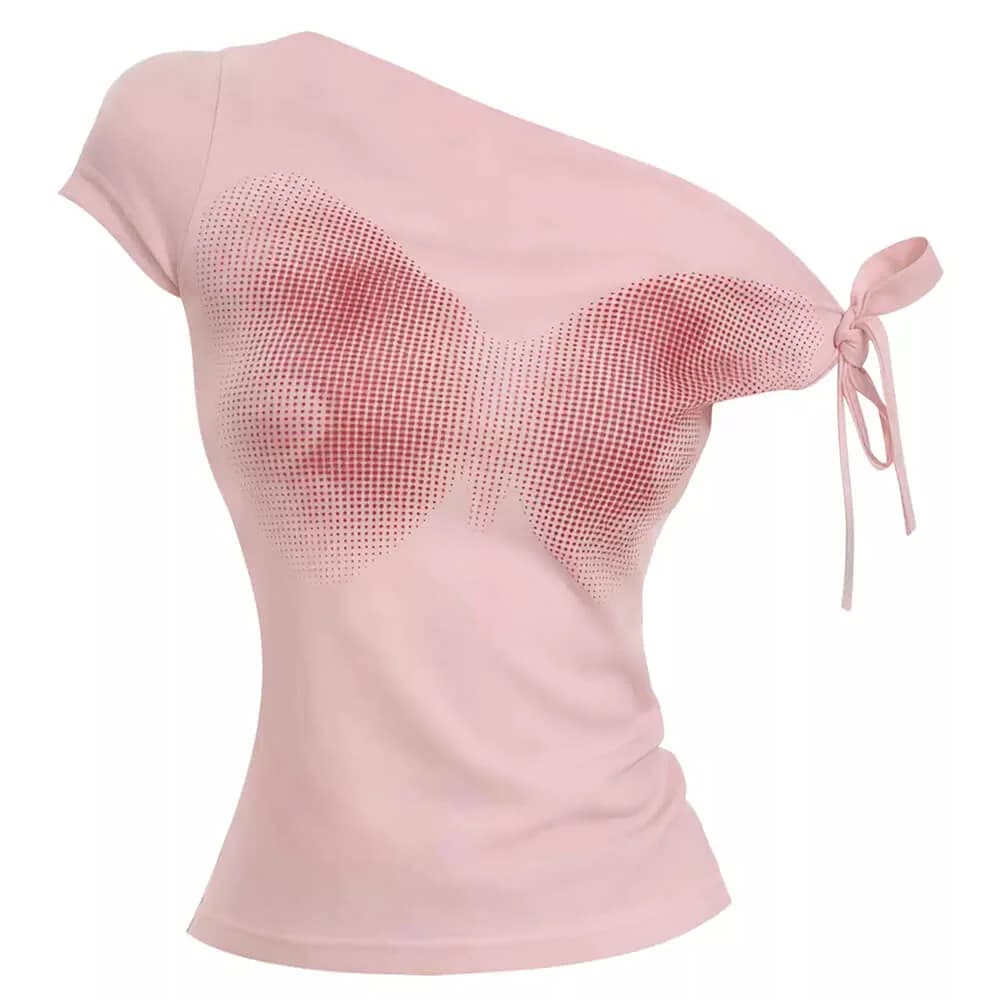
A butterfly cardigan lets you display full graphic tops underneath without competing for attention. You can button the bottom two buttons of a relaxed cardigan while leaving the chest open to reveal an asymmetrical design, such as the Pink Butterfly Asymmetrical Top, made from Cotton and Polyester in Pink across sizes S to L. The angular hemline of the top peeking through the bottom of an open knit adds sharp geometric contrast that a closed pullover cannot replicate.
Pullovers, however, offer superior wind protection and insulation because they lack button gaps where chilly air can slip through. When styling a pullover, your creative layeringWearing pieces over or under one another to add depth, warmth or contrast. happens at the edges—collar points, folded sleeves, and extending skirts. When styling a cardigan, you must consider how the inner shirt fabric interacts with the sweater knit down the entire center seam, requiring more attention to color coordination and drape.
- Choose pullovers for seamless wind protection and clean, uninterrupted graphic panels.
- Use cardigans to frame asymmetrical or detailed tops down your outfit's center line.
- Cardigans offer flexible ventilation: button only the center or hem to change your silhouetteThe overall shape an outfit creates, from fitted to loose and layered..

Footwear and Bottoms: Anchoring the Knit's Visual Weight
Because knit sweaters have substantial physical texture and volume, pairing them with the wrong bottoms or shoes can make your outfit look top-heavy. To create an aesthetically grounded outfit, choose trousers and footwear that match or intentionally counter the bulk of your upper body.
When wearing an oversized, slouchy butterfly knit, straight-leg denim, wide-leg trousers, or cargo pants create a balanced, relaxed silhouetteThe overall shape an outfit creates, from fitted to loose and layered. from head to toe. Complete this look with substantial footwear like platform derbies, lug-sole boots, or chunky retro sneakers. The physical presence of a heavier shoe provides a strong base that balances out the wide drape of the knit, keeping the entire outfit proportional.
If you prefer more fitted bottoms like tailored leggings or skinny-cut denim, avoid delicate, low-profile shoes like thin ballet flats, which can make the sweater look disproportionately massive. Instead, reach for knee-high riding boots or mid-calf combat boots. Tucking slim pants into tall boots builds lower-leg presence, creating a clean hourglass or balanced pillar shape that supports a voluminous sweater effortlessly.
- Pair oversized knits with wide-leg pants and chunky platform shoes to anchor visual weight.
- Counter slim-fit pants with knee-high or chunky combat boots to prevent a top-heavy look.
- Match texture types: pair soft fuzzy yarn with structured raw denim or twill trousers.
Comparing Sweaters to Alternative Butterfly Tops and Hoodies
Deciding whether a knit sweater is the right piece for your outfit often depends on formality, comfort preferences, and how casually you want to present your look. Sweaters occupy a sweet spot between relaxed everyday comfort and polished styling, carrying a softer, more intentional appearance than casual jersey fleece.
When you compare a knit sweater to casual options like butterfly hoodies, the primary difference lies in structure and occasion. Hoodies bring a built-in hood that can crowd coat collars, restricting your outerwear choices to casual bombers or parkas. Sweaters slip comfortably beneath tailored wool overcoats, trench coats, or leather jackets, giving you far more versatility if you are dressing for a smart-casual office or dinner.
Against lighter jersey pieces from butterfly t-shirts, sweaters naturally offer superior warmth, drape, and textural richness. However, fine-knit tops like the Fairy Grunge Butterfly Long Sleeve Top, made of polyester in Brown across sizes S to L, provide an ideal middle path. They deliver the fitted silhouetteThe overall shape an outfit creates, from fitted to loose and layered. and easy layeringWearing pieces over or under one another to add depth, warmth or contrast. of a long-sleeve tee with the muted earthy tones and butterfly graphics often sought in winter knits, making them great under-layers when a full wool sweater feels too warm.
- Sweaters fit under tailored coats more cleanly than hooded sweatshirts.
- Knit yarns offer richer textural depth than standard printed cotton t-shirts.
- Fitted long-sleeve graphic tops act as lower-bulk alternatives in moderate temperatures.
Common Layering Pitfalls and How to Avoid Them
One of the most frequent styling mistakes is fabric friction between base layers and sweaters. Wearing a rough, unlined flannel or textured thermal under a wool or acrylic knit causes the two fabrics to catch and bind against each other. This creates uncomfortable bunching around the shoulders and causes the sweater to ride up as you walk. Always choose smooth, low-friction base fabrics—such as slick modal, silk, or fine polyester blends—so your knit drapes freely.
Another common trap is overcrowding your neckline. If your butterfly sweater features a prominent print that extends up toward the collarbones, adding a bulky infinity scarf or an oversized ruffled collar can create severe visual clutter. Let the graphic breathe. If you need neck warmth, choose a sleek, fitted turtleneck base layer that sits smoothly against your throat rather than piling on exterior accessories that mask the sweater's artwork.
Finally, beware of inconsistent sleeve lengths. If your under-layer sleeves are just an inch shorter than your sweater sleeves, they will constantly ride up toward your elbows throughout the day, creating frustrating lumps under your forearms. Ensure your base sleeves either reach fully past your wrists so you can anchor them while putting your sweater on, or opt for three-quarter lengths that remain stable on your mid-arm.
- Avoid high-friction base fabrics that cause your knit sweater to bind and ride up.
- Keep external scarves minimal if your sweater has intricate graphics across the chest.
- Ensure base layer sleeves are either full wrist-length or short to stop mid-arm bunching.

Garment Care, De-Pilling, and Seasonal Storage for Knits
LayeringWearing pieces over or under one another to add depth, warmth or contrast. naturally exposes sweaters to friction, particularly under the armpits, along the side seams, and across the chest where your seatbelt or crossbody bag rubs against the yarn. Over time, this mechanical friction breaks yarn fibers and causes small fuzz balls, known as pilling. Pilling can obscure the clean lines of a butterfly graphic and make an otherwise sharp knit look tired.
To maintain your knits, invest in a fabric shaver or a manual cashmere comb. Lay your sweater flat on a hard, unyielding surface—like an ironing board or dining table—and gently sweep the tool across the pilled sections, working strictly in the direction of the knit grain. Never pull pills off with your bare hands, as this stretches the yarn and creates loose threads that will rapidly pill again.
When seasonal weather shifts and you are ready to pack your sweaters away, never hang them on coat hangers. Hanging knits puts continuous gravity stress on the shoulder seams, resulting in unsightly stretched bumps often called 'hanger horns.' Instead, fold your knits neatly and store them in breathable fabric bins or cotton storage bags with cedar blocks to protect against fabric moths and moisture buildup.
Wash your knits inside out on a delicate cycle or hand wash in cool water, and always dry them flat on a mesh rack to prevent wet fibers from stretching the garment out of shape.
Step-by-Step Layering Checklist
Before heading out the door in your butterfly sweater outfit, running through a quick mental checklist ensures you stay comfortable, warm, and confident all day. Taking thirty seconds to evaluate how your pieces interact saves you from spending the afternoon pulling at bunching sleeves, adjusting a crooked collar, or overheating in a crowded room.
Start from the inside out. Verify that your base layer is completely smooth against your skin and anchored securely at your wrists or hips. Check your neckline in a mirror to ensure that any peaking collar or turtleneck sits symmetrical and does not fight with the sweater's neckline ribbing. Next, confirm that your chosen bottoms provide enough visual structure to balance the volume of your knit, and that your footwear grounds the entire outfit securely.
Finally, test your range of movement. Lift your arms straight out to the sides and bend your elbows; your knit should move easily without pulling uncomfortably across the chest graphic or hiking your under-layer up past your waistband. If your outer coat slips on smoothly over your knit sleeves without tugging, your layered outfit is perfectly balanced and ready for the day.
- Base layer check: Is the fabric smooth, comfortable, and free of friction bunching?
- Neckline balance: Does your collar or thermal underpinning frame the sweater cleanly?
- Proportion check: Do your trousers and chunky footwear balance the volume of the knit?
- Mobility test: Can you lift your arms and move comfortably without the layers riding up?