Created by the Kawaii Vibe editorial team. Our named style desks are editorial personas. Product details and availability can change.
Wearing graphic grid patterns does not require an all-over print setup. When you add too many competing geometric pieces together, the visual lines fight each other, resulting in visual clutter rather than a clean focal point. The most reliable way to wear checks daily is to treat a single piece as your anchor, keeping the surrounding garments neutral or solid-toned.
Whether you prefer a patterned tote bag, a structured headpiece, or a waist-cinching strap, choosing one distinct zone lets the pattern register immediately. From there, you can select fabrics, complementary tones, and silhouetteThe overall shape an outfit creates, from fitted to loose and layered.s that frame the check rather than compete with it for attention.
This guide breaks down how to choose that primary accessory zone, how to balance proportions and textures, and how to branch out when you want to pair prints with clothing from the broader collection.
1. The Single Focal Point Rule
The human eye naturally searches for order when looking at high-contrast geometric prints. Checkerboards feature alternating blocks that draw attention instantly, especially in contrasting shades like black and ivory or saturated primaries. If you wear patterned shoes, a patterned bag, and a patterned scarf at the same time, the eye darts around without resting. Choosing one hero item creates an instant focal point that gives your entire outfit structure.
To apply this rule, look at your body as three distinct zones: the upper third (head and neck), the middle third (torso and waist), and the lower third (hips, legs, and feet). Decide which zone you want people to notice first. If you choose your waist, you might introduce a graphic cincher from the Checkered Belts collection while keeping your top and trousers completely monochrome.
Once your anchor zone is established, everything else you wear acts as supporting framing. A black crewneck knit and straight-leg charcoal denim give a patterned waist or shoulder piece room to breathe. This approach takes the guesswork out of morning dressing because you only need to match your accessories back to a quiet, solid foundation.
- Pick one designated zone: top, middle, or base
- Keep the adjacent garments solid to avoid visual friction
- Let the high-contrast grid serve as your primary visual texture

2. Isolating the Upper Zone with Headwear
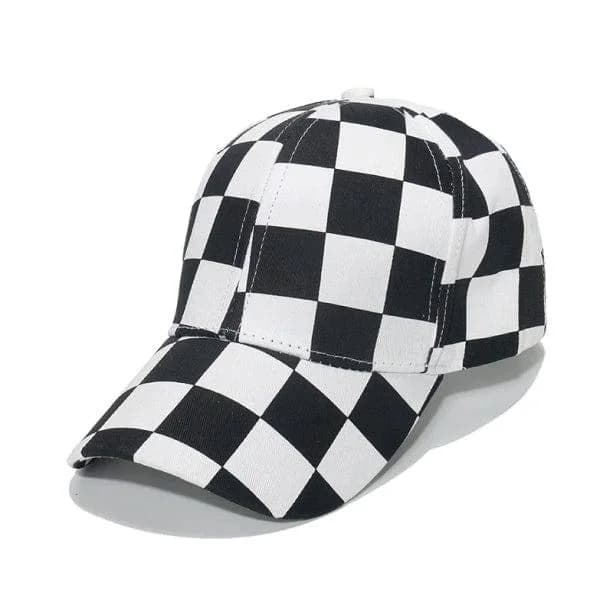
Framing the face with headwear immediately directs attention upwards. A checkered bucket hat, beret, or beanie sits right at eye level, making it the most visible accessory you can choose. Because it sits next to your hair, skin, and collar, the surrounding colors need to be intentional. Busy collars, heavy statement earrings, or bright graphic tees worn right below a patterned hat often create visual clutter around the neckline.
When you style pieces from the Checkered Hats collection, pair them with understated collar designs. Think plain crewneck sweatshirts, clean mock-neck tops, or simple uncollared knitwear. If your hat uses a monochrome black-and-white grid, a solid slate grey, cream, or washed navy jacket balances the brightness of the white blocks without introducing competing graphics.
Weather plays a big role in headwear choices. In humid or warm conditions, lightweight cotton headwear keeps the head cool while grounding simple white t-shirt and denim short combinations. In crisp or rainy weather, structured knit or wool-blend hats add warmth and a sharp geometric counterpoint to heavy matte outerwear, such as long wool coats or plain utility parkas.
- Choose clean, unadorned collars to keep the neckline uncluttered
- Pair high-contrast hats with muted solid jackets or knitwear
- Avoid pairing statement earrings directly below patterned headwear
3. Framing the Torso with Checkered Bags
A shoulder bag, tote, or crossbody offers mobile interest that shifts slightly as you move through your day. Because a bag rests against your ribs, hip, or lower back, it interacts directly with your coat, top, and trousers simultaneously. This makes it one of the most versatile entry points in the Checkered Bags range, but it also means the garment resting directly beneath the bag must provide clean contrast.
If you carry an ivory-and-black checkered tote over a jacket with heavy houndstooth, pinstripes, or patch embroidery, the patterns blur together into a confusing visual mix. Instead, wear your bag against a smooth, solid surface. A solid trench coat, an olive cargo jacket, or an unpatterned canvas overshirt acts as a neutral backdrop that makes the squares pop cleanly.
Consider how the strap interacts with your top half as well. A crossbody strap cuts diagonally across your chest, dividing your silhouetteThe overall shape an outfit creates, from fitted to loose and layered.. If the strap itself or the bag body carries a grid, keep your chest area free of large text prints or chest pockets. Handheld totes or shoulder bags with shorter drops sit farther down near the hips, leaving your upper body entirely open for soft, textured knits.
- Carry patterned bags against clean, unprinted outerwear
- Avoid wearing bags over tops with large chest graphics or busy breast pockets
- Adjust strap lengths so the pattern rests where you want the visual focus
4. Anchoring the Silhouette at the Waistline
Belts do more than keep trousers in place; they establish the proportions between your upper and lower body. When a belt carries a high-contrast pattern, it creates an unmistakable horizontal line across your midsection. This makes waist-level accessories particularly effective for breaking up monochrome jumpsuits, high-rise trousers, or oversized knitwear that might otherwise look like a shapeless column.
When browsing Checkered Belts, look closely at how the width of the belt aligns with your trouser loops. A medium-width canvas or faux-leather strap threads cleanly through standard denim loops, peeking out between a tucked-in t-shirt and your waistband. To keep the look cohesive, wear tops that tuck in neatly—such as a fitted ribbed tee—or slightly cropped hemlines that hit right above the buckle line.
Avoid wearing a patterned belt if your trousers already feature heavy contrast stitching, exposed double zippers, or all-over distressing. The grid needs a clean band of denim, twill, or corduroy to rest against. If you wear black trousers and a black shirt, a black-and-white checkered belt creates a sharp, graphic divider that defines your waist without demanding additional colorful accessories.
- Tuck tops in fully or wear slightly cropped hems to expose the pattern cleanly
- Match the belt width comfortably to your trouser belt loops
- Use solid-color pants to give the geometric belt a solid, quiet border
5. Scale and Grid Proportion: Small Versus Large Checks
The size of the squares dramatically changes the energy of your outfit. Micro-checks—where each tile is smaller than a postage stamp—read almost like a textured neutral from a distance, revealing their geometric nature only up close. In contrast, large-scale checkerboards with tiles measuring several inches across demand immediate attention and function as loud visual statements.
When choosing from general Checkered Accessories, scale should match your overall frame and the silhouetteThe overall shape an outfit creates, from fitted to loose and layered. of your clothing. Smaller accessories like wristbands, scrunchies, or mini cardholders generally benefit from tighter grids, as an oversized block pattern can get cut off awkwardly along tiny seams. Larger pieces like slouchy messenger bags or oversized scarves provide the broad canvas needed for big, dramatic tiles to show fully.
You can also use grid size to manipulate proportions. If you are wearing a very voluminous, oversized coat, a large-scale check can match that visual weight comfortably. A tiny micro-print against an enormous duvet jacket might look lost or overly busy, whereas a clean medium-to-large square pattern holds its own against broad fabric sweeps.
- Micro-checks appear subtle and read almost like textured solids from afar
- Large tiles make high-impact statements and suit wider accessories
- Ensure the accessory provides enough surface area for full square repeats

6. Monochrome Versus Saturated Checkerboards
Not all checks are black and white. While the traditional monochrome grid remains the most familiar option, colored variations introduce an entirely different mood to your wardrobe. Warm earth-toned checks, pastel blocks, and neon contrasts each require a specific styling mindset to prevent colors from clashing with your core garments.
A black-and-white grid functions practically as a neutral. You can slide it into outfits built around navy, beige, olive, denim, or grey without creating color friction. However, when an accessory incorporates saturated squares—such as green, yellow, or red—you must decide whether the rest of your outfit will complement that shade or remain completely muted to let that single color lead.
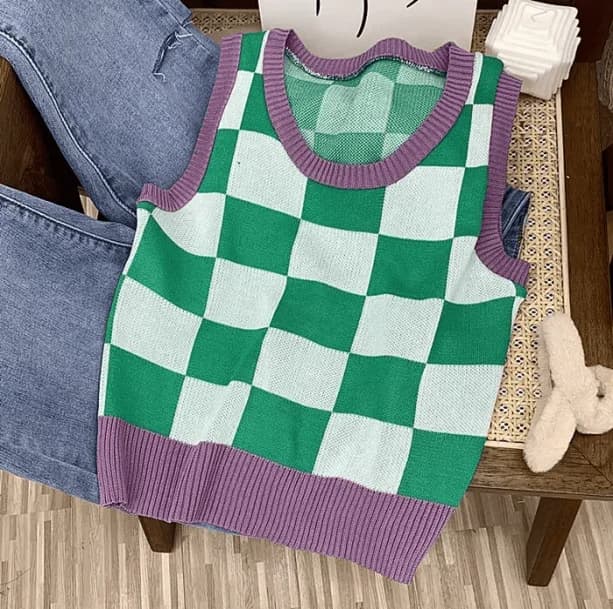
For example, if you incorporate a piece inspired by warm tones or choose a garment like the Green Checkered Top, which features an as-pictured option in a one-size fit, you can pull that specific green forward by surrounding it with matte black or light-wash denim. The same applies to accessories: let the color inside the grid dictate which undertones you use in your footwear or outerwear, rather than piling on unrelated bright colors.
- Monochrome grids integrate effortlessly into almost any neutral palette
- Colored squares require surrounding clothing to echo or gently support that tone
- Pick one color within the grid to inspire your secondary solid pieces

7. Fabric Textures That Complement Crisp Grids
Checkerboards are sharp, mathematical, and hard-edged. If you pair them solely with slick, shiny synthetic fabrics, the whole outfit can feel cold or stiff. Introducing tactile, organic textures softens the crisp geometry of the pattern and makes the outfit feel lived-in, relaxed, and visually nuanced.
Matte fabrics like heavy cotton canvas, washed denim, brushed corduroy, and knit wool balance out the rigid lines of printed accessories. If you are carrying a smooth polyester or nylon checkered bag, pairing it with a ribbed wool cardigan or a brushed flannel shirt grounds the look. The soft nap of the knitwear absorbs light, allowing the graphic squares of the bag to stand out in high contrast.
Conversely, be careful with fabrics that possess their own strong linear weave, like wide-rib corduroy or herringbone twill. If the ribs in your corduroy trousers run vertically, a high-contrast checkered belt creates a grid-against-stripes clash at the waistband. Stick to fine-wale corduroy or flat-weave cottons when wearing patterned straps or waist accessories.
- Pair slick synthetic accessories with soft knits or textured canvas
- Use matte cotton and denim to soften the sharp geometric edges of the print
- Watch out for heavy directional weaves like herringbone that might clash

8. When the Garment Leads: Swapping the Focal Point
While this guide focuses primarily on accessorizing, there are days when you want your main clothing piece to carry the pattern instead. When your garment becomes the hero, the rules simply invert: your accessories must step into the supporting background role. Attempting to wear a checkered bag over a checkered sweater quickly overloads the silhouetteThe overall shape an outfit creates, from fitted to loose and layered..
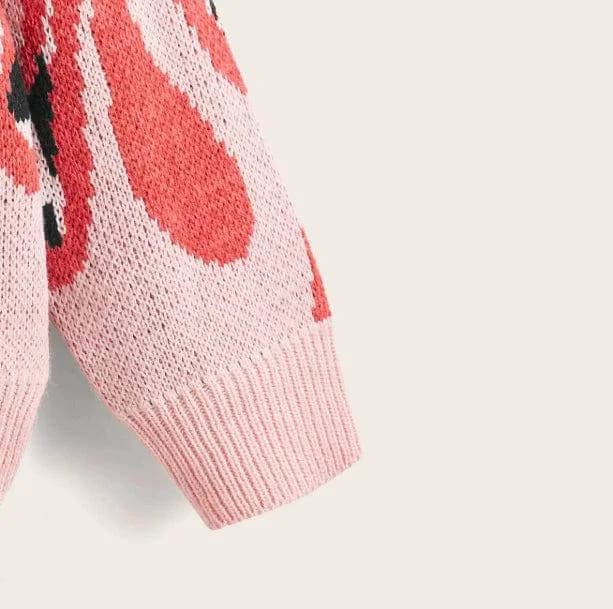
Consider an expressive knit like the Checkered Flames Sweater, constructed from acrylic and offered in sizes S through XL. Because this sweater features a bold graphic combination, any bag, hat, or belt paired with it should be entirely plain. A smooth black leather backpack or an unprinted canvas cap allows the dramatic knitwear design to take center stage without visual interruption.
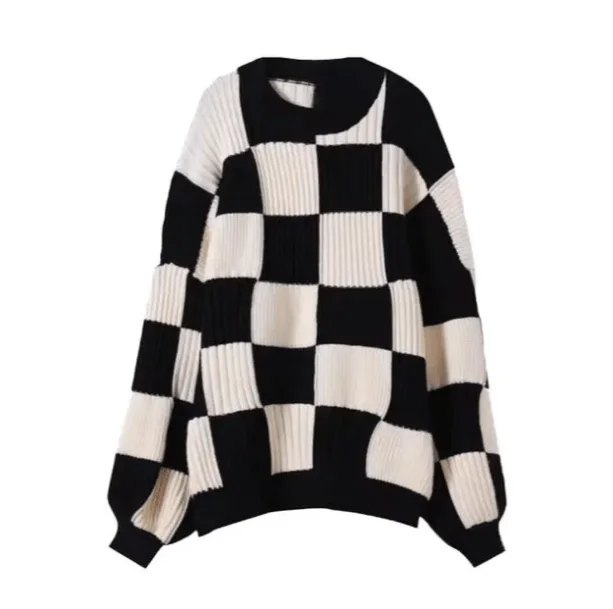
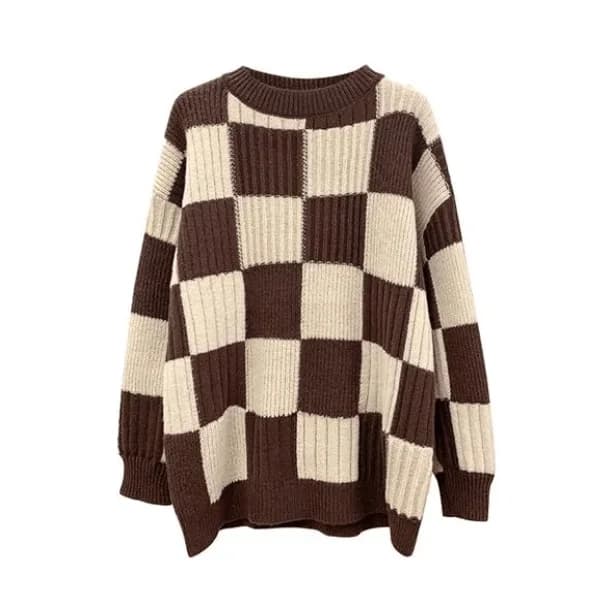
Similarly, the Oversized Checkered Sweater, crafted from a polyester-acrylic blend in brown or black options across sizes S to 2XL, covers a substantial portion of your upper body. When wearing an oversized patterned knit of this scale, keep your waist unbelted and choose a minimalist, solid-toned tote. When the garment leads, the accessory exists purely for function.
- Invert the rule: if your top or bottom is patterned, pick solid accessories
- Avoid wearing patterned shoulder bags over heavy graphic knitwear
- Let oversized patterned sweaters hang naturally without distracting waist belts
9. Styling High-Impact Outerwear with Quiet Accents
Outerwear covers the largest surface area of any garment you wear outdoors. When your jacket features an all-over grid, it acts as an immovable visual wall. Adding patterned headwear, scarves, or bags against a checkered jacket creates an overwhelming barrage of lines that eliminates any sense of personal styling structure.
If you step outside in the Plush Checkered Jacket—made from polyester and offered in sizes M through 2XL as pictured—the jacket is the unquestioned center of your look. Its textured plush finish already introduces tactile volume alongside the grid pattern. Adding a checkered shoulder bag over this plush surface causes the bag strap to sink into the fleece while creating an awkward clash of competing squares.
Instead, balance this bold jacket with completely smooth, neutral accessories. A plain black knit beanie, a matte leather crossbody bag worn under the jacket, or simple unpatterned gloves provide functional warmth while respecting the jacket's visual footprint. The goal is to let the coat do all the heavy lifting while your accessories remain clean, quiet, and utilitarian.
- Never layer patterned accessories over high-coverage checkered outerwear
- Pair plush or textured patterned jackets with smooth, flat leather or canvas accents
- Keep beanies and scarves strictly monochrome and unprinted

10. Lower-Body Focal Points: Skirts and Trousers
Placing the pattern on your lower half grounds the entire outfit, pulling the eye downward toward your stride. A patterned skirt or pair of pants gives your legs definition while leaving your entire upper body open for clean layeringWearing pieces over or under one another to add depth, warmth or contrast.. However, this means you must keep footwear and waist accessories relatively subdued to avoid a chaotic lower half.
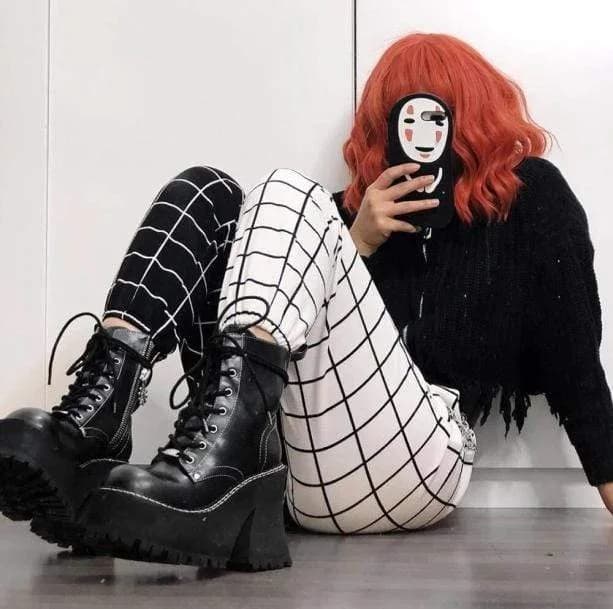
For a tailored, graphic look, the High Waist Checkered Skirt, made of polyester and available in sizes S to L, creates a structured mid-rise or high-rise focal point. Pairing this skirt with a patterned belt or graphic socks creates too many horizontal breaks. Instead, tuck a solid black turtleneck or a plain white tee into the waistband and finish with plain leather boots.
If you prefer a bright splash of color on your lower half, options like the cotton Yellow Checkered Skirt (sizes S to XL) or the polyester-spandex Red Checkered Skirt (sizes S to L) command immediate attention. When working with these vibrant skirts, avoid brightly colored bags. A plain canvas tote or neutral cross-body bag lets the skirt's vivid hue and crisp geometry lead without competition.
- Anchor patterned skirts with completely solid, neutral footwear
- Avoid wearing printed belts over skirts that already feature a checkered waistband
- Use simple tucked-in tops to highlight the waistline cleanly
11. Summer Outfits: Lightweight Balance
Warm-weather dressing presents a specific styling challenge: you have fewer layers to work with. Without coats, scarves, and cardigans to break up your outfit, any patterned item you add carries double the visual weight. In high heat, a single checkered accessory can keep a basic shorts-and-tank combination from feeling uninspired, provided you keep the fabrications breathable.
A lightweight cotton bucket hat or a breathable canvas tote paired with relaxed linen shorts and a ribbed white tank top is an effortless warm-weather formula. The check adds graphic depth, while the open skin and airy fabrics prevent the outfit from feeling visually stuffy. Because summer lighting is bright and direct, high-contrast monochrome checks look particularly crisp outdoors.
If you decide to wear a summer top like the Checkered Crop Top, which features a cotton-polyester blend in sizes S to M, treat it as your single warm-weather statement. Pair it with breezy solid linen trousers or plain denim cut-offs, avoiding patterned hats or printed bags. Letting a lightweight top stand alone keeps your warm-weather silhouetteThe overall shape an outfit creates, from fitted to loose and layered. fresh and breathable.
- Rely on single canvas or cotton accessories to energize basic shorts and tees
- Let bare arms and light fabrics provide natural breathing space around the print
- Keep warm-weather accessories lightweight to avoid physical and visual heaviness
12. Trans-Seasonal Layering Across Hemispheres
Trans-seasonal weather—those unpredictable weeks between deep winter and high summer—is the easiest climate for styling accessories. LayeringWearing pieces over or under one another to add depth, warmth or contrast. allows you to partially conceal and reveal your checkered focal point, creating subtle visual depth rather than putting the entire pattern on full blast at all times.
Consider wearing an open overshirt, a lightweight trench, or an unbuttoned cardigan over your base outfit. If you are wearing a checkered crossbody bag, wearing it beneath an unbuttoned coat lets the pattern peek through the center opening, framing the grid between two vertical panels of solid color. This cuts the width of the pattern and creates a slimming, vertical visual frame that flatters any silhouetteThe overall shape an outfit creates, from fitted to loose and layered..
This technique works equally well in autumn transitions or cool spring mornings in both northern and southern hemispheres. A patterned scarf tucked neatly into the lapels of a solid overcoat exposes just a hint of geometry at the neck without overwhelming your torso. As the afternoon warms up and you remove the coat, the accessory naturally emerges as the primary focal point of your indoor look.
- Wear crossbody bags beneath open jackets to create a framed vertical sliver of print
- Tuck checkered scarves inside solid coat lapels for controlled pattern exposure
- Use transitional layers to adjust how much pattern shows as the temperature shifts
13. Common Styling Mistakes to Avoid
The most frequent misstep when styling checkered items is the unintentional pattern clash. Pairing a checkerboard belt with a gingham blouse or a houndstooth coat creates visual chaos because the geometric grids compete in scale, direction, and density. Unless you are intentionally building an editorial print-on-print look, keep your non-checkered garments free of other geometric patterns.
Another common error is ignoring strap and hardware conflicts. If you choose a checkered bag that features silver buckles and heavy black nylon strapping, pairing it with warm brass jewelry, a brown leather belt, and gold-trimmed shoes creates a discordant finish. Check the hardware and trim on your accessories to ensure they sit harmoniously with your remaining metal accents and leather tones.
Finally, avoid the temptation to match too precisely. Wearing matching checkered shoes, a matching checkered bag, and a matching checkered headband creates a costume-like effect rather than an effortless outfit. Selecting a single hero accessory demonstrates much stronger styling confidence than purchasing a pre-matched three-piece patterned set.
- Do not pair checkerboards with competing grids like gingham or houndstooth
- Match the hardware metals on your patterned accessories to your jewelry
- Avoid wearing head-to-toe matching checkered accessory sets

14. Decision Checklist for Choosing Your Hero Piece
Before purchasing or styling your next piece, run through a practical checklist to determine which accessory fits your current wardrobe best. Start by examining what you wear most often. If your daily uniform consists of oversized neutral hoodies or plain coats, a structured hat or a crossbody bag from the Checkered Accessories collection provides the quickest, lowest-effort visual upgrade.
Next, evaluate your tolerance for contrast. If you prefer low-key styling, look for tonal checks—such as charcoal and black or beige and cream—or micro-scale grids that offer subtle texture. If you love high-contrast street style, an ivory-and-black waist belt or a bold shoulder bag will give you the sharp visual divider you are looking for. Compare your options directly against the solid staples you already wear every week.
Lastly, consider how you intend to expand your collection over time. If you eventually plan to integrate patterned tops, knitwear, or skirts from the wider Checkered Clothes range, choose versatile solid accessories now so you have the flexibility to swap the focal point between your garments and your accents whenever you choose.
- Audit your core outerwear: choose hats or bags that frame your daily jackets
- Select grid contrast based on your comfort level: tonal for subtle, black-and-white for bold
- Ensure you own enough solid basics to frame your chosen hero piece cleanly