Created by the Kawaii Vibe editorial team. Our named style desks are editorial personas. Product details and availability can change.
Checkered jewelry introduces graphic geometry to your outfit, but its bold grid pattern means it behaves very differently from plain metallic pieces. When you bring miniature squares and contrasting enamel tiles near your collarbones, the surrounding clothing shapes either highlight the pattern or create distracting visual noise. The core solution is understanding where graphic contrast belongs and where your clothing needs to give the pattern room to breathe.
Whether you are styling a monochrome enamel choker, a checkerboard pendant, or a stack of geometric bands, managing your neckline and metal base determines whether your look feels composed or chaotic. This guide walks through neckline matching, warm versus cool metal pairings, stacking ratios, and ways to integrate jewelry with patterned garments.
The Baseline Rule: Scale and Negative Space
Checkered jewelry relies on repeated geometric intervals. Because your eye naturally tries to map the grid, wearing a checkered pendant directly over heavily textured fabrics or competing tiny prints makes the accessory vanish into the background. To keep a checkered necklace crisp, you need a defined frame of clear skin or smooth, unpatterned textile around it.
A pendant measuring two centimeters across needs at least three to four centimeters of uninterrupted space on every side to register as an intentional graphic focal point. When worn directly against bare skin, your natural skin tone acts as that clean backdrop. When worn over clothing, the fabric weave and collar edge serve as the border, which is why smooth flat knits and plain cotton weaves consistently showcase patterned jewelry far better than loose bouclé or chunky cable knits.
- Ensure at least a two-finger width of negative spaceAn uncluttered area that gives the rest of a design room to stand out. around any checkered pendant.
- Pair intricate micro-check accessories with smooth textiles rather than rough or slubby textures.
Crew Necks and High Collars: Pendant Length Strategy
A classic crew neck cut sits close to the base of your throat, creating a horizontal curve that directly cuts across typical chain lengths. If a checkered pendant hits directly on top of a ribbed crew collar, the pendant tilts awkwardly and competes with the collar's seam. To solve this, you either go shorter or significantly longer.
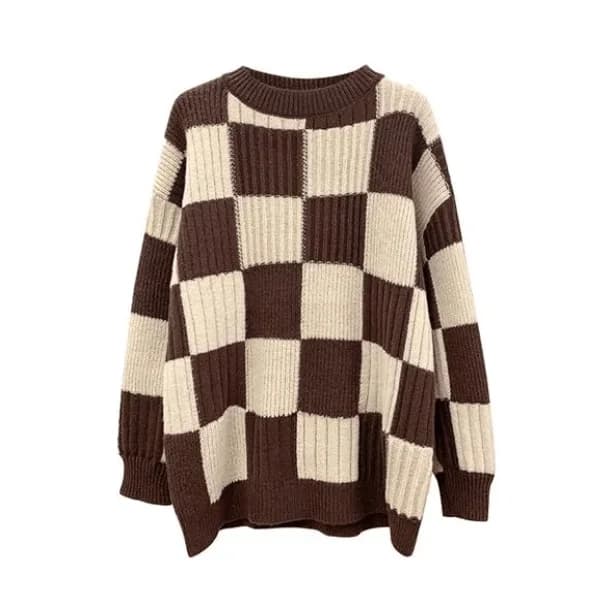
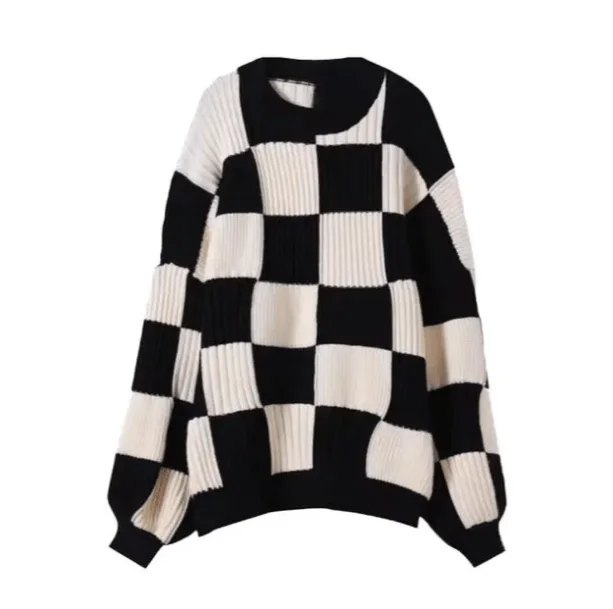
A tight sixteen-inch chain holds your pendant entirely above a standard crew neck, letting it rest flat against your collarbones. Alternatively, choosing a twenty-two or twenty-four-inch chain drops the checkerboard element down to mid-chest level, clearing the collar seam entirely. If you are wearing a cozy layer like the Oversized Checkered Sweater in black or brown, dropping a long, clean metallic chain with a solid checkered charm down onto the chest breaks up the chunky knit without getting tangled in the collarline.

V-Necks and Plunging Cuts: Angular Alignment
V-shaped necklines create natural diagonal sightlines that draw attention downward toward the center of your torso. When you introduce checkered jewelry into a V-neck, the shape of the pendant itself determines whether the lines flow smoothly or fight against each other. Circular or oval charms with checkered enamel soften the hard diagonal lines of the shirt, creating an appealing contrast of forms.
If you choose a square or rectangular checkered pendant, pay attention to point alignment. A square charm hung straight looks stable, but a diamond-oriented checkered tile mirrors the downward angle of the plunge. For days when you want a relaxed casual look, slipping a square enamel pendant inside the open collar of an unbuttoned knit keeps the frame open and gives the pattern a dedicated display window.
Square and Sweetheart Necklines: Framing the Grid
Square necklines already feature sharp ninety-degree angles, creating an architectural boundary across your chest. Adding a square checkered pendant inside a square neckline can feel overly rigid if every line runs parallel. Instead, introduce contrast by pairing square neck cuts with rounded checkered beads, circular locket shapes, or offset checkered tile charms.
A sweetheart neckline offers softer curves along the bust, making it one of the most forgiving cuts for graphic jewelry. When styling tops with defined necklines from our wider Checkered Tops selection, such as fitted silhouetteThe overall shape an outfit creates, from fitted to loose and layered.s, keep the necklace chain short so the piece sits high above the curve of the garment. This prevents the chain from slipping behind the fabric edge when you move throughout the day.
Turtlenecks and Mock Necks: Over-Fabric Placement
Wearing jewelry over a turtleneck requires heavier hardware so the piece does not get lost against the fabric volume. Lightweight, gossamer chains tend to ride up or get caught in the ribbing of a high neck, causing checkered charms to flip backwards. Choose medium-weight curb, box, or figaro chains that have enough inherent weight to anchor the pendant in place.
Solid-colored turtlenecks in off-white, slate, or black act like a museum mount for high-contrast accessories from the Checkered Jewelry collection. A bold black-and-white checkered disk centered over an ink-black mock neck creates a striking focal point. Avoid pairing high-collar patterned tops with busy necklaces; keep the necklace strictly over solid fabric surfaces to avoid overwhelming the eye.
Gold Versus Silver Metal Bases: Matching Contrast Levels
Checkered jewelry frequently uses enamel or printed resin tiles set within a metal bezel. The color of that metal framing fundamentally changes how graphic the pattern feels against your skin. Silver and stainless steel emphasize the cool, stark nature of high-contrast patterns like monochrome black-and-white or navy-and-cream tiles.
Warm yellow gold softens the transition between contrasting squares, imparting a vintage look that works beautifully with warm earth tones. If your wardrobe leans toward olive, tan, warm cream, or mustard, gold-mounted checkers blend more harmoniously with your clothing palette. For cool pastels, charcoal, pure white, and icy blues, silver settings provide a cleaner, crisper edge that keeps the grid looking sharp.
Warm-Tone Styling: Earthy Palettes and Checkers
Warm styling does not mean abandoning high-contrast patterns; it simply means choosing complementary tones. Brown-and-cream, forest-and-tan, or terracotta checkered jewelry offers a grounded feel that pairs naturally with denim, corduroy, and soft woven wools. When you choose warm checkered pieces, lean into antiqued brass or polished yellow gold for your companion chains and rings.
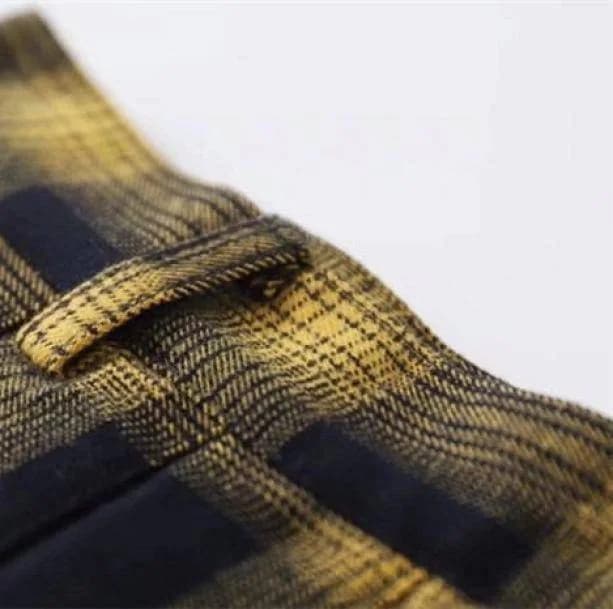
You can anchor an earthy outfit with textured layers and warm hues. For example, wearing the Yellow Checkered Skirt with a plain cream knit gives you an ideal foundation to mirror golden tones in your jewelry. Adding a gold-rimmed warm checkered pendant or a tortoise-and-cream ring ties the warmth of the skirt into your upper body without repeating the exact same print across every garment.

Cool-Tone Styling: Stark Monochrome and Pastels
Cool-toned styling thrives on clarity and precision. Classic black-and-white checkerboard patterns set in high-shine rhodium, silver, or stainless steel provide an energetic, clean-lined finish. This combination works exceptionally well against crisp poplin shirts, dark wash denim, and minimalist outerwear.
Cool pastels like lilac, sage, and mint also pair seamlessly with silver-framed checkered rings and necklaces. If you are wearing something visually dynamic like the Green Checkered Top, avoid wearing a patterned necklace on top of it. Instead, shift your jewelry to your hands with silver-banded Checkered Rings, letting your rings pick up the graphic theme while leaving your neckline clear and uncomplicated.

The Clutter-Free Chain Stacking Formula
LayeringWearing pieces over or under one another to add depth, warmth or contrast. necklaces when one piece contains a busy checkered pattern requires strict hierarchy. A reliable rule of thumb is the 'One Pattern, Two Plains' formula: combine one focal checkered necklace with a maximum of two plain metallic chains of different gauges and lengths. Adding a second patterned pendant immediately introduces competing visual anchors.
Start by placing your checkered pendant at the base of your throat on a sixteen-inch chain. Add a slightly thinner fourteen-inch plain choker above it, or drop a simple eighteen-inch paperclip chain below it. The plain chains provide metallic shine without competing with the grid of the pendant. Ensure each chain differs in length by at least two inches to prevent tangling and to maintain clean separation between layers.
- Limit yourself to one patterned or checkered pendant per necklace stack.
- Separate layered chains by at least two inches to prevent knots and visual crowding.
- Use varying chain styles, like pairing a box chain pendant with a flat snake chain.
Ring Stacking: Balancing Enamel Bands with Plain Metals
Your hands are constantly in motion, making ring placement one of the easiest ways to wear patterned jewelry without worrying about neckline conflicts. However, stacking multiple checkered bands on the same finger can look heavy and disjointed. The key is using plain metal spacers to give the eye a resting point between graphic tiles.
Try wearing a wide checkered ring on your index finger, balanced by a thin, smooth band on your ring finger. If you prefer stacking on a single finger, sandwich a slim checkered band between two ultra-thin plain metallic bands. This frames the checkerboard like a framed painting, giving the pattern structure while ensuring the ring stack remains comfortable to wear throughout the day.
Coordinating Jewelry with Checkered Clothing
Wearing checkered jewelry alongside checkered clothing requires careful management of print scale. If your top features the exact same square size as your pendant, the two items cancel each other out. If you wear an all-over print like the Checkered Flames Sweater, keep your chest completely free of patterned necklaces.
Instead of layeringWearing pieces over or under one another to add depth, warmth or contrast. checker-on-checker at your chest, redirect the pattern to your extremities using items from our Checkered Accessories or jewelry lines. Wear plain hoop earrings and move your checkered accents down to stacked resin rings or a patterned belt. If you wear a patterned bottom like the Red Checkered Skirt or the High Waist Checkered Skirt, your entire upper torso remains open for a graphic checkered pendant worn over a solid bodysuit.


Mixing Checkered Accessories Across an Outfit
When building an outfit from our broader Checkered Clothes range, limit yourself to two checkered elements total across your entire look. A pair of checkered hair clips paired with a checkered enamel ring creates a balanced upper-body framing without feeling like a uniform. The eye travels comfortably between the two points without getting stuck.
A heavy outer piece like the Plush Checkered Jacket makes a bold statement on its own. If you throw this jacket over a solid t-shirt, you can finish the look with a minimalist checkered pendant tucked inside. The key is ensuring the jewelry pattern remains smaller in scale than the jacket's print, establishing a clear visual hierarchy between garment and accessory.
Seasonal Layering: Weather Considerations
Jewelry styling changes dramatically across climates and seasons. In colder weather, heavy outerwear and thick scarves often swallow delicate chains or pull on ear hardware. Sturdy checkered signet rings and enamel huggie hoops are reliable cold-weather choices because they sit close to the body and will not snag on knit mittens or woolen scarves.
In hot, humid weather, sweat and sunscreen can cause plated jewelry or lower-grade metals to tarnish quickly against bare skin. When styling warm-weather pieces like the Checkered Crop Top, opt for solid stainless steel chains or glazed ceramic pendants that hold up to moisture. Keep stacks lighter in summer so heavy metal does not feel clingy against your neck and wrists.
Buyer Checklist: Selecting Your Ideal Piece
Before purchasing a new checkered jewelry piece, run through a quick practical checklist to ensure it seamlessly integrates into your existing wardrobe. Consider whether the piece's metal tone aligns with the hardware on your favorite handbags, jackets, and existing everyday jewelry. Mixing metals can work, but intentional matching makes daily styling far simpler.
Finally, assess the size and scale of the checkered pattern itself. Micro-check designs read almost like neutral textures from a distance, making them highly versatile for layeringWearing pieces over or under one another to add depth, warmth or contrast.. Larger block checkers demand to be the centerpiece of an outfit, meaning you will need plenty of solid basics ready to pair with them. Choose the scale that best reflects how bold you want your daily styling to be.
- Verify that the chain length works with your most frequently worn necklines.
- Check that the pattern scale suits your preference: micro-grid for layeringWearing pieces over or under one another to add depth, warmth or contrast., macro-block for a solo statement.
- Ensure the base metal (gold or silver tone) harmonizes with your everyday hardware.
- Confirm that rings have smooth interior bands for comfortable all-day wear.
Choosing Between Subtle Micro-Check and Bold Macro-Check Jewelry
When deciding on a checkered accessory, the size of the grid squares dictates whether the piece functions as an everyday accent or an outspoken visual centerpiece. Micro-check patterns feature tiny tiles that blur into an eye-catching, textured mosaic from a few feet away. In contrast, macro-check pieces display distinct, bold squares that immediately read as graphic geometry even from across a room.
If your wardrobe revolves around tailored blazers, collared button-downs, or fine-gauge knits, micro-check designs offer subtle detailing without conflicting with professional or minimalist silhouetteThe overall shape an outfit creates, from fitted to loose and layered.s. A dainty pendant with miniature tiles slips effortlessly into daily routines and pairs gracefully with existing pieces from our Checkered Jewelry lineup. The smaller scale lets you experiment with the trend while keeping your overall outfit grounded and understated.
Macro-check designs excel when you want a defined graphic anchor against oversized streetwear or plain cotton foundations. A broad, high-contrast band from our Checkered Rings collection provides an intentional punch that stands up against heavy denim jackets, cargo silhouetteThe overall shape an outfit creates, from fitted to loose and layered.s, or relaxed graphic tees. Choosing between the two comes down to styling goals: pick micro-checks for seamless, textured layeringWearing pieces over or under one another to add depth, warmth or contrast., and reserve macro-checks for standalone statements that cut through casual, solid-toned outfits.