
Created by the Kawaii Vibe editorial team. Our named style desks are editorial personas. Product details and availability can change.
Wearing patterned bottoms changes how every other piece in your wardrobe interacts with your silhouetteThe overall shape an outfit creates, from fitted to loose and layered.. When you pick checkered pants, your legs become the primary visual anchor of your outfit. If your tops or jackets fight that pattern or sit at an awkward point along your torso, your proportions can quickly feel top-heavy, cut in half, or unintentionally bulky.
Solving this does not require an entirely new wardrobe or complicated styling formulas. It comes down to understanding three physical dimensions: the width of your pant leg, the vertical line created by your hem and rise, and the weight of your layers. Once you align these elements, bold patterns become surprisingly straightforward to wear across casual, structured, and cozy aesthetics.
In this guide, we break down how to calculate visual weight, pair specific cuts with balanced tops, manage outer layers without burying your frame, and choose shoes that ground high-contrast prints. We will walk step by step through daily outfits that feel deliberate, comfortable, and easy to adjust across changing climates.
The Core Mechanics: Why Checkered Pants Shift Visual Proportions
Every garment directs the viewer's eye along lines, shapes, and planes. When you wear solid neutral trousers, the eye travels smoothly downward without stopping, creating a subtle vertical illusion. Checkered fabric does the opposite. By introducing repeated horizontal and vertical grids across your legs, the pattern creates visual texture that holds the eye. This effect naturally widens the area it covers compared to a monochrome surface.
Because of this geometric grid, your upper body pieces need to provide clear structural boundaries. If you wear an unstructured, busy top alongside patterned trousers, both halves of your silhouetteThe overall shape an outfit creates, from fitted to loose and layered. compete for attention, muddying your overall shape. Establishing balance is not about muting your personality; it is about choosing whether your top supports the pattern with a clean break, mirrors its lines through structured tailoring, or softens it with neutral volume.
If you are browsing broad selections like Checkered Clothes to see how various silhouetteThe overall shape an outfit creates, from fitted to loose and layered.s handle geometric prints, you will notice that grid size alters the visual scale immediately. Micro-checks act almost like textured solid tones from a distance, whereas high-contrast bold checks draw immediate focus to your hip line, knees, and ankles. Recognizing how this grid behaves on your lower half allows you to make deliberate choices about width, hem length, and layeringWearing pieces over or under one another to add depth, warmth or contrast..
- High-contrast checks broaden the lower half, requiring intentional waist definition or tailored shoulders.
- Tonal or small-scale checks blend more subtly, letting you wear looser or more complex tops without visual clutter.
- The horizontal lines in any check pattern highlight where the garment widens, making cut and drape essential.
Tackling Wide-Leg Cuts: Keeping Volume Grounded
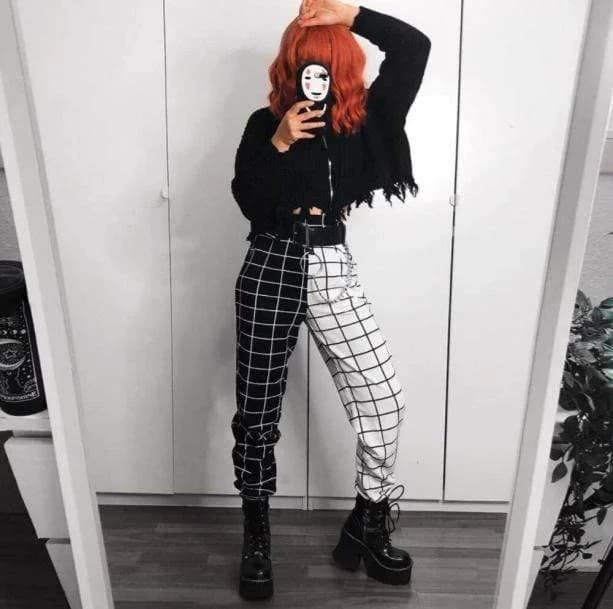
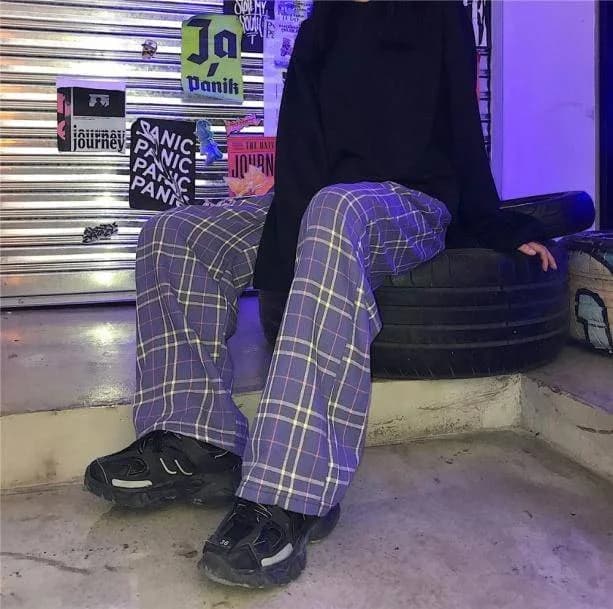
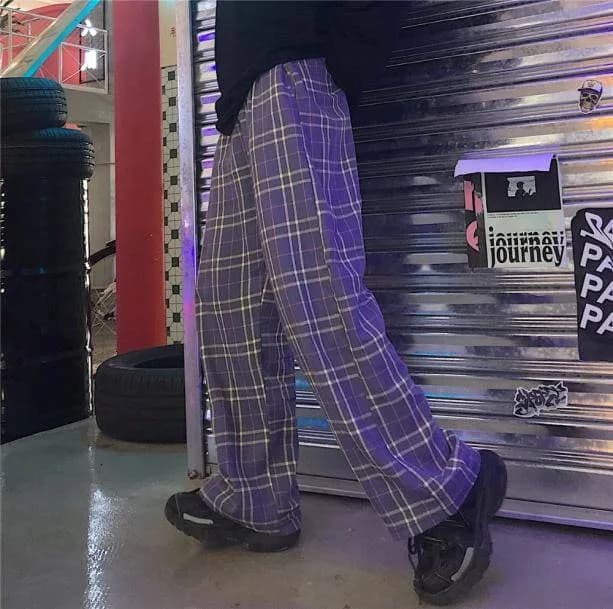
Wide-leg trousers are among the most popular silhouetteThe overall shape an outfit creates, from fitted to loose and layered.s for geometric prints because the fabric allows the checks to drape without stretching across curves. However, wide checkered legs introduce substantial horizontal volume to your bottom half. If you combine that volume with a long, loose top that falls over the hips, you create a boxy column that obscures your natural frame entirely.
To balance a wide leg, you want to bring clarity to your upper torso. A fitted knit, a tucked baby tee, or a cropped sweatshirt creates an immediate break where the wide waistband sits. This high break point visually lengthens your legs, turning the dramatic sweep of the wide cut into an asset rather than a shape-swallowing hazard. If you prefer looser tops, look for garments that feature banded waists or tuck the front corner into your waistband to preserve your midsection line.
For everyday styling, pieces like Black and White Pants (available in sizes S through XL) show how high-contrast monochrome checks work with wide-cut legs. You can pair wide monochrome bottoms with a fitted ribbed black tank top and a structured tote for an easy daytime errand look, or add a cropped denim jacket to keep your upper frame neat and defined.
Straight-Leg and Relaxed Denim: Building Everyday Symmetry
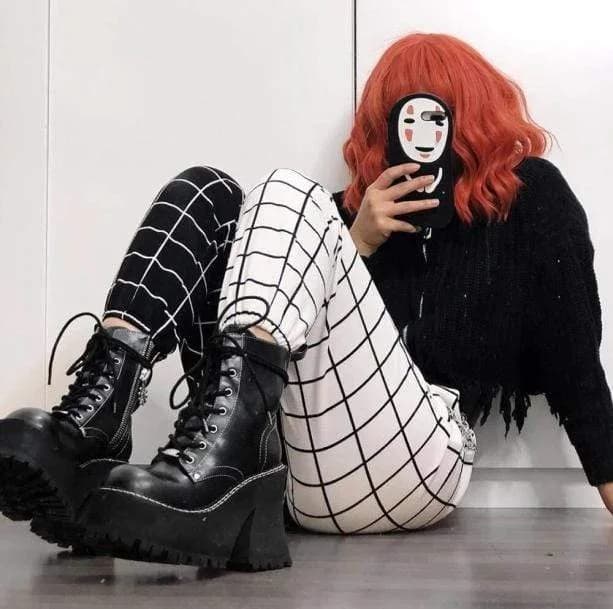
Straight-leg cuts offer the most neutral canvas because the leg opening drops directly from the hip and knee down to the ankle without widening or tapering aggressively. When checks appear on relaxed or straight-cut denim, the pattern retains its crisp geometric integrity rather than spreading out or gathering dramatically at the hem.
Because straight legs occupy a moderate visual width, you have maximum flexibility with your tops. You can comfortably wear relaxed t-shirts tucked in, boxy button-downs left open over a camisole, or hip-length sweaters. The goal here is symmetry: avoid extremes that make your torso look either excessively shrunken or overwhelmingly broad. A semi-tucked shirt or an open cardigan falling to mid-hip creates balanced vertical lanes that complement the upright lines of the straight cut.
Exploring dedicated options in Checkered Jeans reveals how denim fabrics hold their shape around the waist and pockets. The rigidity of denim prevents checks from shifting or warping during movement, giving you reliable lines throughout the day. Pair straight-leg checkered denim with a simple crewneck sweatshirt and low-profile canvas sneakers for an understated, balanced look that feels effortless.
- Straight cuts maintain grid geometry cleanly from hip to hem.
- Mid-hip open layers provide flattering vertical frames down the torso.
- Slightly rolling the hem can expose the ankle, adding lightness to heavier denim textures.
Crop Tops and Upper Hemlines: Where Your Waistline Sits
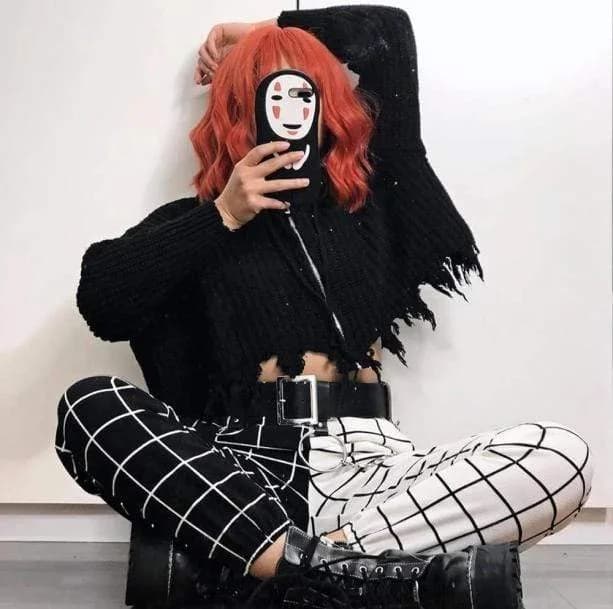
Upper hemlines determine where an outfit visually resets. When wearing checkered bottoms, your waistline serves as the dividing line between busy pattern and solid surface. Crop tops are especially effective because they end at or slightly above the waistband, leaving the entire pattern visible without any overlapping fabric creating odd creases or lumps around your midsection.
When styling a cropped upper layer, pay close attention to the gap between your top hem and pant waistband. A zero-gap or one-inch gap generally creates a cohesive, modern look that emphasizes leg length. A wide gap with low-slung bottoms pushes the visual center downward, which can shorten the leg line if your pants feature a busy check. If you want a playful touch of matching pattern, the Checkered Crop Top, cut from a cotton-polyester blend in sizes S through L, lets you coordinate your top with high-waisted neutral denim or tonal bottoms.
If you prefer not to expose skin, you can achieve the exact same proportion with a standard top by employing an internal tuck into your bra band or using a French tuck directly into your pants. The mechanical principle remains the same: ending your upper layer at the narrowest point of your midsection keeps the bold visual presence of your trousers in clean proportion.
- Crop tops ending right at the waistband make legs look longer beneath patterned fabrics.
- Tight, high-neck cropped tops offset wide, flowing trousers by balancing volume.
- Loose, boxy cropped tees pair best with straight or slightly tapered checkered pants.


Cropped Sweaters and Mid-Weight Knits: Softening High-Contrast Lines
Mid-weight knits offer texture that softens the sharp geometric grid of checkered trousers. A common styling mistake is throwing a long, heavy knit directly over checkered pants, which can create a bulky, shapeless silhouetteThe overall shape an outfit creates, from fitted to loose and layered.. Instead, selecting cropped or waist-length sweaters maintains the structural division of your outfit while introducing comfortable, cozy texture.
Knitted sweaters also allow you to play with pattern scale. If you are wearing a micro-check pant, a textured cable-knit or ribbed sweater adds depth without clashing. If your pants feature bold, high-contrast squares, choosing a solid mid-weight knit in one of the pattern's accent colors anchors the look. For example, pairing neutral trousers with a distinct knit like the Checkered Flames Sweater, an acrylic piece in sizes S through XL, shows how graphic knitwear can become a statement top when balanced by simple, solid-toned trousers.
When selecting knitwear, consider fabric weight around the hem. Thick, chunky hems that hit awkwardly across the widest point of the hip can disrupt the vertical drop of your trousers. Opt for knitwear with a ribbed hem that rests comfortably at your natural waist or can be neatly folded upward to preserve the line of your lower half.
- Ribbed knit textures break up smooth geometric prints without visual chaos.
- Cropped knit hemlines prevent heavy winter fabrics from overwhelming patterned legs.
- Tucking one corner of a medium-weight knit maintains waist clarity effortlessly.

Oversized Sweaters: Mastering the Half-Tuck and Drop Shoulder
Oversized sweaters can look incredible with checkered bottoms, but they require deliberate styling to avoid looking sloppy. When both your top and bottom are loose, you run the risk of erasing all body structure. The solution lies in creating intentional asymmetry or anchoring the volume around the shoulders rather than the hips.
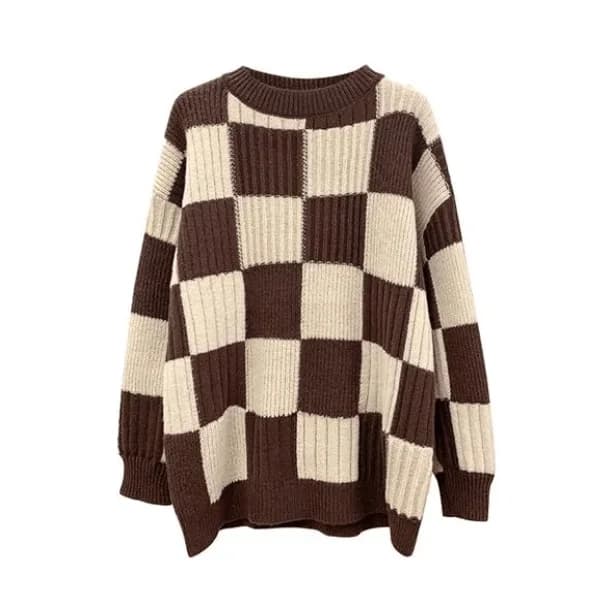
A drop-shoulder seam pulls attention horizontally across the upper chest, which balances the width of wide or straight-leg trousers. To keep the oversized fabric from swallowing your waist, employ the half-tuck: take a two-inch section of the sweater's front hem and tuck it loosely into your pant waistband, allowing the sides and back to drape naturally. This reveals where your pants begin while preserving the relaxed, cozy drape of the knitwear.
The Oversized Checkered Sweater, offered in Brown and Black in polyester and acrylic (sizes S through 2XL), illustrates how relaxed volume functions. Because this knit features its own oversized graphic check, it pairs best with solid trousers or neutral bottoms rather than competing patterned pants. If you do pair oversized solid knits with patterned bottoms, stick to fine or medium yarn weights so the tuck sits smoothly without bunching at the zipper.

Outerwear and Length: Trench Coats, Cropped Jackets, and Puffers
The outer layer you choose can make or break an outfit built around checkered pants. Outerwear creates long vertical frames over your clothing, and where the jacket ends dictates how your checkered pants are framed. A jacket hem that stops mid-thigh often cuts the leg line in half, which creates a jarring visual interruption against horizontal checks.
Instead, aim for extreme lengths: either distinctly cropped or comfortably long. A cropped jacket—such as a moto, denim, or flight jacket ending at the waist—maximizes the visible expanse of your checkered pants and lets the pattern run continuously downward. Conversely, a long trench coat or duster coat that falls past the knees frames the pants on both sides, revealing a narrow vertical column of pattern down the center that draws the eye vertically and streamlines your frame.
For plush textures, an option like the Plush Checkered Jacket in polyester (sizes M through 2XL) brings rich volume to the upper body. When wearing a bold outer layer like this, pairing it with clean, solid bottoms keeps the outerwear as the focal piece. When your pants are the patterned element, choose a solid cropped or long coat to let the trousers take center stage.
- Cropped jackets maintain an elongated lower half by showcasing the full rise.
- Duster and trench coats create vertical framing that visually slims patterned pants.
- Avoid mid-thigh coats that break the geometric grid at an awkward horizontal line.
Alternative Bottoms: Comparing Skirts and Trousers
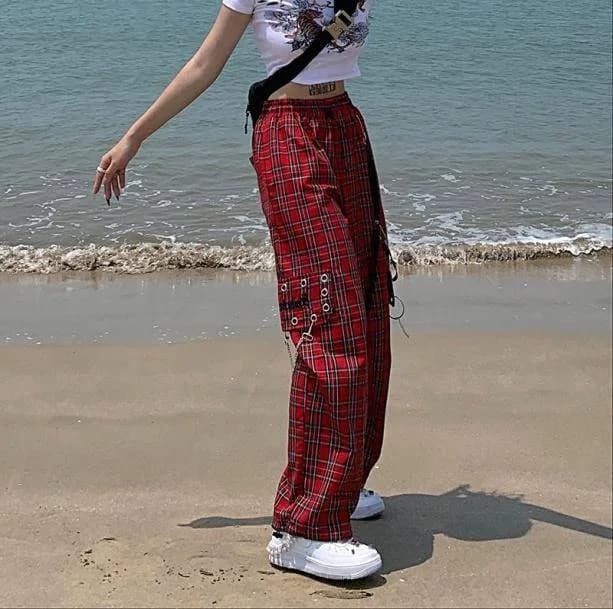
Understanding why checkered pants behave the way they do becomes clearer when you compare them to other checkered garments. Skirts, for instance, handle geometric checks entirely differently because the fabric falls as a single continuous bell, column, or drape rather than splitting into two separate leg shafts. This absence of an inner inseam changes how the pattern stretches and rests around your lower half.
A structured skirt like the High Waist Checkered Skirt, made from polyester in sizes S through M, uses waist tailoring to spread the pattern outwards smoothly. Trousers, on the other hand, require pattern matching at the crotch, hip, and side seams, meaning the lines move independently with every step. When you walk in checkered pants, the pattern shifts and breaks dynamically, which demands simpler upper layeringWearing pieces over or under one another to add depth, warmth or contrast. than a skirt might require.
When shopping through the broader Checkered Clothes collection, comparing silhouetteThe overall shape an outfit creates, from fitted to loose and layered.s helps you decide whether you want the unbroken structural drape of a skirt or the active, practical movement of trousers. If you love bold prints but want minimal visual disruption around your legs, high-waisted skirts offer an easy gateway, while trousers provide an energetic, casual aesthetic that anchors streetwear and daily separates.
- Skirts maintain an unbroken pattern panel, making them simpler to balance with boxy tops.
- Pants divide the pattern into two moving columns, requiring clean lines above the waist.
- A high-waisted cut on either garment establishes an immediate, leg-lengthening base.

Shoe Profiles: Balancing Hem Width and Footwear Weight
Your shoes serve as the visual punctuation mark at the bottom of your checkered pants. Because patterned trousers create visual weight around the legs, pairing them with ultra-thin, delicate shoes can make an outfit look top-heavy, as if the pants are overwhelming the feet. Conversely, matching wide or thick pants with grounded footwear brings harmonious weight to the entire base.
For wide-leg checkered pants, reach for shoes with substance: chunky platform loafers, lug-sole boots, or retro sneakers with a substantial sole unit. The wide opening of the hem can rest cleanly over the shoe without dragging on the ground or swallowing your footwear entirely. For straight-leg or slightly tapered checkered pants, you can transition into lower-profile shoes, such as classic flat sneakers, Mary Janes, or slim ankle boots, provided the hem rests cleanly at or slightly above the ankle bone.
Pay attention to color bridging as well. If your pants feature a stark black-and-white grid, a black shoe anchors the hem neatly, while a white sneaker pulls out the lighter squares for a fresh, casual vibe. Avoid shoes that match your skin tone when wearing high-contrast checks, as this sudden color shift can make the pants appear abruptly truncated at the ankle.
- Chunky boots and platform soles support the substantial volume of wide-leg trousers.
- Low-profile sneakers work best when straight hems show a sliver of ankle.
- Matching your shoe tone to one color in the check creates a cohesive vertical line.
Hardware, Accents, and Punk Details: Managing Visual Noise
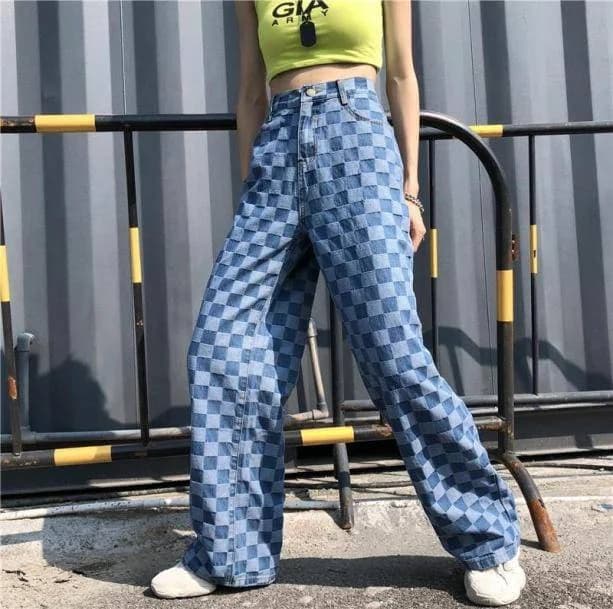
Checkered patterns have a rich history rooted in punk, ska, and alternative fashion, meaning they are frequently paired with metal hardware, chains, zippers, and grommets. While these accents add undeniable personality and attitude, they also introduce extra visual focal points that compete with the pattern itself. Balancing these elements requires careful editing of the rest of your outfit.
A piece like the Red Pants With Chains (offered in sizes S through L) demonstrates how hardware interacts with bold color and print. The chains add dynamic horizontal and diagonal lines across the hips. To balance an expressive piece like this, your upper half should remain clean and grounded: think a plain black ribbed baby tee, a solid leather jacket, or a monochrome fitted hoodie. Allowing the hardware and the check to remain the sole focus keeps your outfit looking curated rather than cluttered.
When adding your own accessories, follow the rule of placement: if your checkered pants already feature chains or heavy buckles, skip busy patterned belts or heavily studded shoulder bags. Keep bags, jewelry, and hats clean and sculptural so the intricate details on your trousers have room to stand out cleanly.
- Let built-in pant hardware act as your primary accessory.
- Pair accented trousers with simple, solid tops to prevent visual chaos.
- Opt for smooth leather or canvas bags rather than multi-pocket, heavily detailed straps.
Top Silhouettes: From Baby Tees to Layered Collars
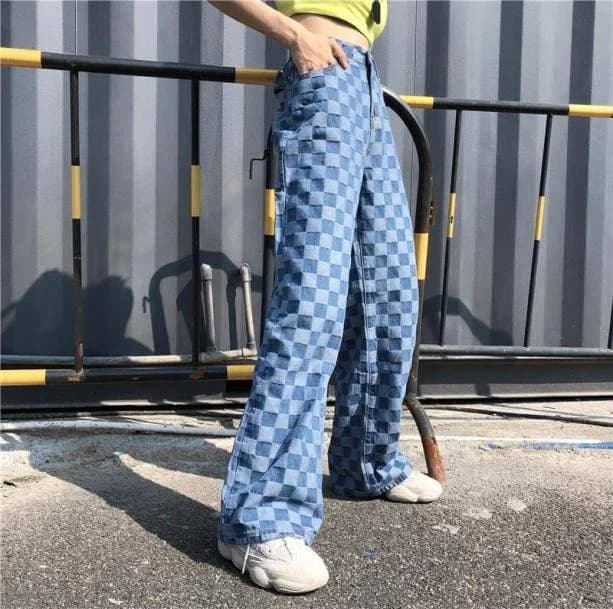
The silhouetteThe overall shape an outfit creates, from fitted to loose and layered. of your top sets the tone for how formal, casual, or relaxed your checkered pants will appear. T-shirts with close-fitting cuts, such as baby tees, provide a crisp counterpoint to the busy energy of geometric pants. Their narrow shoulder seams and fitted sleeves create a compact upper frame, making the outfit look balanced and intentional even if your pants are loose and slouchy.
For a more collegiate or polished look, layered collars work remarkably well. LayeringWearing pieces over or under one another to add depth, warmth or contrast. a crisp white button-down under a plain crewneck sweater lets the collar frame your face while keeping your torso clean and solid above the checkered trousers. The small touch of geometric precision at the neck subtly echoes the structure of the pants without repeating the pattern.
If you are browsing Checkered Tops to explore pattern options, consider whether you want to double down on the grid or contrast it. While pattern-mixing can be done, pairing a checkered bottom with an airy, solid cotton blouse or a structured button-up is universally flattering. Look for tops that hit either directly at the high hip or right at the waistband to keep your visual lines neat and uncluttered.
- Fitted baby tees offset loose, wide checkered pants by balancing proportions.
- Layered collars add subtle structure that complements geometric lower halves.
- Solid tops in neutral cottons or linens provide breathing room around graphic grids.
Pattern Mixing vs. Solid Balance: When to Mix and When to Rest
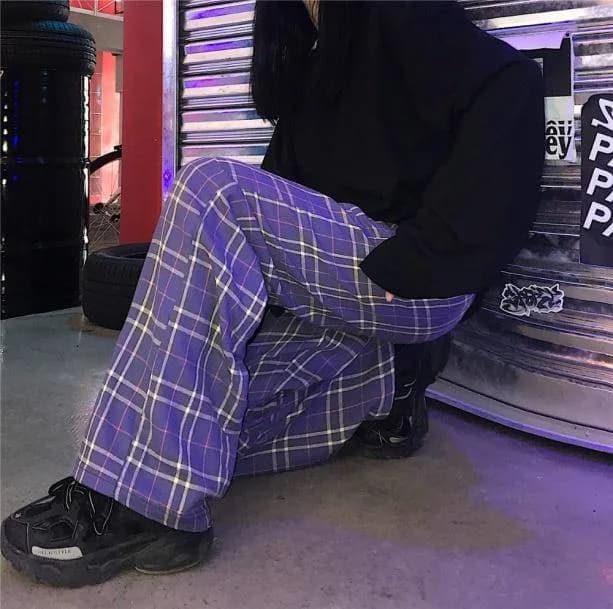
Deciding whether to mix patterns or stick with solids comes down to visual breathing room. Checkered pants are bold, and wearing them with a solid top is the most foolproof way to maintain clean proportions. A solid top provides an uninterrupted block of color that lets the eyes relax, establishing a clear hierarchy where the pants are the indisputable centerpiece.
However, if you want to mix patterns, scale and orientation are your key tools. Never pair checks with an identically sized check unless you are wearing a deliberately matched two-piece suit. Instead, pair a large, open windowpane check pant with a narrow, thin pinstripe top, or wear bold checkered bottoms with a small, abstract floral or delicate graphic. Changing the scale keeps the two patterns from blurring together into visual static.
You can also explore unexpected color pairings using dedicated knits like Checkered Sweaters or tops like the Green Checkered Top, which comes as a One Size garment. If you choose to wear a patterned piece like this top, pair it with solid denim or black trousers rather than a contrasting checkered pant. Keeping one half of your outfit anchored in a solid color guarantees balance while letting your chosen patterned piece shine.
- Always vary pattern scale dramatically if attempting to mix prints.
- Solid tops offer essential visual rest, making them the safest daily choice.
- Keep accessories solid and neutral when combining multiple prints in one look.
Weather Transitions: Adapting Your Proportions Year-Round
Checkered pants are adaptable across all four seasons, but your layeringWearing pieces over or under one another to add depth, warmth or contrast. tactics need to shift to maintain clean proportions as temperatures change. In warm weather, the challenge is keeping the outfit dynamic without the aid of layers. High-waisted checkered pants paired with simple ribbed tank tops, slide sandals, or lightweight canvas sneakers create a light, breezy look where the trousers do all the heavy lifting.
In cooler weather, the risk shifts toward over-layeringWearing pieces over or under one another to add depth, warmth or contrast., which can swallow your proportions under piles of fabric. When temperatures drop, rely on thermal base layers worn discreetly underneath your checkered pants rather than piling thick, heavy layers on the outside. A sleek, heat-retaining long-sleeve tee tucked tightly into your waistband allows you to wear a cozy fleece or puffer coat without losing your waistline under multiple hems.
During transitional spring and autumn months, rely on open layers to handle fluctuating temperatures. A lightweight cardigan, a denim overshirt, or an unbuttoned flannel worn over a plain tee leaves a visible vertical opening down the front of your torso. This vertical frame elongates your body, neatly framing your checkered pants while giving you the practical flexibility to add or shed layers as the weather shifts.
- Summer: Rely on minimal, fitted ribbed tanks to keep patterned bottoms light and airy.
- Winter: Wear thin thermal base layers under your pants to minimize bulky outer garments.
- Transitional: Use open button-downs and cardigans to create slimming vertical lines.
The Decision Checklist: Choosing Your Next Checkered Outfit
When you are standing in front of your closet or browsing new pieces in Checkered Pants, running through a quick mental checklist will save you time and ensure your outfit comes together effortlessly. Patterned trousers require just a moment of consideration regarding cut, fabric, and layeringWearing pieces over or under one another to add depth, warmth or contrast. balance before you walk out the door.
Start by assessing your pant width. If your pants are wide-leg or relaxed, ensure your top is either fitted, cropped, or ready to be tucked in. If your pants are straight or slim-cut, you have the green light to play with looser, boxy tops or mid-length knitwear. Next, examine your hemline and shoe pairing: make sure your footwear carries enough visual weight to ground the pattern, and verify that your pant hem breaks cleanly without gathering excessively around your feet.
Finally, evaluate your color and pattern harmony. Look at your reflection from a few paces back: is there a clear focal point, or are your tops, accessories, and bottoms fighting for attention? By ensuring your waistline is defined and your layers sit at flattering vertical points, you can wear checkered pants with total confidence, regardless of the season or setting.
- Check the leg width: balance wide pants with fitted tops, and slim pants with relaxed cuts.
- Verify the waist break: tuck, half-tuck, or crop tops to keep the waistband clearly defined.
- Match shoe weight to pant volume: choose chunky soles for wide cuts, and sleeker profiles for straight hems.
- Edit accessories: let your checkered pants remain the primary statement piece.


