Created by the Kawaii Vibe editorial team. Our named style desks are editorial personas. Product details and availability can change.
LayeringWearing pieces over or under one another to add depth, warmth or contrast. a checkered knit can sometimes feel tricky because high-contrast grids naturally claim center stage in an outfit. When a top layer features graphic lines and blocks of color, every collar, hemline, jacket lapel, and trouser cut worn with it either frames the pattern or competes against it. Finding the right balance comes down to understanding visual weight, volume distribution, and garment textures.
Whether you lean toward oversized drop-shoulder cuts, cropped silhouetteThe overall shape an outfit creates, from fitted to loose and layered.s, or hybrid statement knits, the secret to a sharp outfit is managing the layers around the check. You do not need an endless wardrobe to make these patterns work throughout the year. Instead, you just need a few dependable layout formulas that suit your personal proportions and respond smoothly to shifting weather.
Reading the Grid: Choosing Scale for Your Body Frame
The physical size of a checkerboard pattern shapes how the entire garment drapes across your torso. Micro-checks, measuring an inch or less across each square, visually read almost like a heathered texture from across the street. These smaller prints are forgiving under outerwear because their compact rhythm does not overwhelm your frame, making them an easy pick if you want the visual interest of a print without intense focal points.
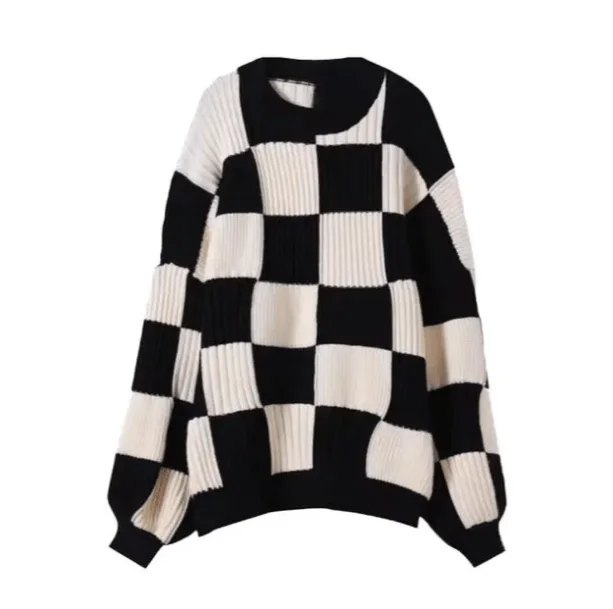
Macro-checks and large checker blocks create wide horizontal and vertical bands across the bust and midsection. If you have a petite frame, broad squares can quickly dominate your torso unless you offset them with clean, long vertical lines below the waist. Conversely, broader shoulders often sit naturally under larger grids because the proportion of the pattern mirrors the natural width of the body, allowing the visual rhythm to feel stable rather than crowded.
When choosing knitwear across the checkered sweaters collection, check how the pattern aligns across seams. An oversized checker layout demands quiet companion pieces, whereas mid-scale grids offer flexible styling space for both casual weekday errand runs and structured evening outings.

Balancing Proportions: Cropped, Boxy, and Slouchy Silhouettes
Sweater cut directly influences how your waistline and legs are perceived. A cropped knit pulls the eye upward toward your natural waist, creating a sharp dividing line between your upper body and lower half. Pairing a cropped cut with high-waisted bottoms establishes a classic one-third to two-thirds proportion that elongates the appearance of the legs while keeping the volume up top compact.
A slouchy, tunic-length check operates on completely different mechanics. It shifts the primary horizontal line down past the hips, elongating the torso and bringing a relaxed drape. When styling a longer knit, keeping your bottom layer sleek or straight-cut stops the extra fabric from swallowing your frame. A boxy cut with a square torso and standard waist-length drop acts as the middle ground, functioning cleanly over both fitted underlayers and relaxed pants.
- Cropped knits: Pair with high-waisted bottoms to keep your legs looking long and deliberate.
- Boxy mid-lengths: Best worn loose over untucked undershirts or partially tucked into structured waistbands.
- Slouchy long cuts: Match with straight trousers or slim bottoms to offset bulk along the hem.
Base Layering: Collars, Mock Necks, and Button-Downs
What you wear beneath your knitwear defines the tone of the neckline and protects skin from heavier yarn textures. A crisp poplin button-down collar peeking over a crewneck introduces structure and an academic feel, especially if you pull the shirt cuffs out past the sweater sleeves. Keeping the undershirt in a solid neutral grounds the geometric pattern of the sweater, allowing the grid to pop cleanly without color clashes.
For cooler temperatures, a fitted cotton mock neck or turtleneck provides warmth while creating a smooth vertical column at the throat. This underlayer shields your neck from wind and frames the top edge of the knitwear. If you are layeringWearing pieces over or under one another to add depth, warmth or contrast. under lightweight knits or transitional styles, smooth base layers like a simple cotton tee prevent clinging and preserve the intended drape of the sweater.
Playing with Graphics: Styling Hybrid Checker Sweaters
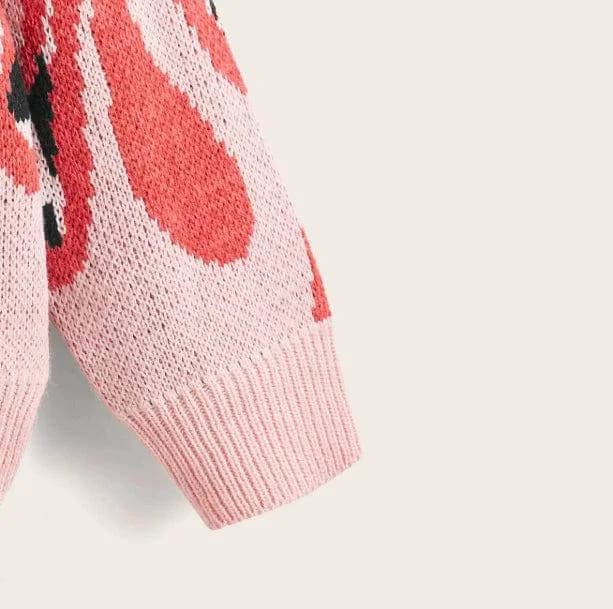
Not all checkered pieces follow traditional monotone squares. Many modern street style designs incorporate flames, gradients, or warped geometry into the knit fabric. A piece like the Checkered Flames Sweater, which is knit from acrylic and offered in sizes S through XL, shows how graphic motifs merge classic gridwork with fiery street visuals. Because this top carries bold dual imagery, it demands thoughtful underlayers and companion items.
When dealing with an expressive pattern of this type, keep base layers and trousers understated. A dark canvas pant or rinsed denim lets the knit serve as the genuine centerpiece. LayeringWearing pieces over or under one another to add depth, warmth or contrast. a solid black or dark charcoal zip-up shell over top lets the graphic peek through the front opening without competing against secondary patterns or clashing colors.
Acrylic yarns provide lightweight resilience and hold shape well through frequent wear, but they lack the heavy drape of dense wools. Wearing a soft cotton crewneck tee underneath ensures breathability and all-day comfort, preventing static buildup while letting the bright graphic maintain its structure across your shoulders.

The Oversized Knit Formula: Handling Bulk with Ease
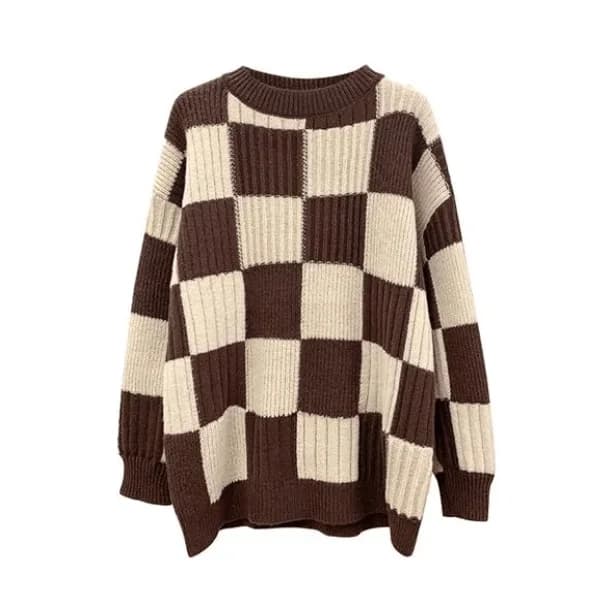
Large-gauge yarns and slouchy fits provide supreme comfort, but managing that extra volume requires intentional layeringWearing pieces over or under one another to add depth, warmth or contrast. choices. The Oversized Checkered Sweater, produced in a polyester and acrylic blend with Black and Brown color choices across sizes S to 2XL, exemplifies this cozy, broad cut. The drop-shoulder construction creates a relaxed silhouetteThe overall shape an outfit creates, from fitted to loose and layered. that moves easily around the torso.
To balance an oversized piece, focus on anchoring your lower half. Tucking a thick, broad knit into trousers can create unwanted bulk at the zipper, so try an asymmetric tuck at one hip instead. Alternatively, let the hem hang completely loose over slim or straight-leg bottoms to lean into relaxed proportions.
Underneath a broad sweater, stick to fitted base layers. Bulky flannels or heavyweight thermals will bind in the armpits and bunch along the upper arms. A thin bamboo or fine-gauge cotton undershirt leaves plenty of room inside the sweater's polyester-acrylic sleeves, keeping movement easy and temperature balanced.
Layering Over Lightweight Checks: Spring and Summer Adjustments
Warmer weather does not mean putting away geometric prints. Instead of heavy knits, transitional outfits benefit from airy base layers like the Green Checkered Top, which features a one-size build, or the Checkered Crop Top, cut from a breathable cotton-polyester blend in sizes S through L. These lighter garments introduce the look of the grid without trapping body heat during warm afternoons.
For spring layeringWearing pieces over or under one another to add depth, warmth or contrast., wear these lighter pieces beneath unbuttoned poplin work shirts, lightweight utility vests, or loose cardigans. If the breeze picks up, drape a soft cotton cardigan over your shoulders and knot the sleeves around your collarbone. This technique frames the checkered top while keeping an extra warm layer ready to wear at a moment's notice.
Exploring lighter separates in the checkered tops collection allows you to build multi-season combinations. Pairing a fitted cotton-poly crop with a wide-cut overshirt provides a pleasant interplay between snug and relaxed garments, keeping your silhouetteThe overall shape an outfit creates, from fitted to loose and layered. dynamic through changing daylight temperatures.


Outerwear Compatibility: Trench Coats, Puffer Jackets, and Wool Overcoats
Throwing a coat over a patterned knit requires attention to coat closures, sleeve widths, and lapel shapes. A classic long wool coat with an open notch lapel provides a neat vertical frame that breaks up the horizontal rhythm of a checkered front panel. Opt for coat fabrics in camel, slate, or black so the outerwear acts as a neutral canvas around the knitwear.
Puffer jackets present a different challenge: both the coat and the knit bring noticeable loft and visual thickness. To avoid feeling restricted across the back and shoulders, select an outerwear style with raglan sleeves or a relaxed armhole. Keep the puffer unzipped to prevent the pattern from looking compressed, allowing the knit fabric room to breathe and settle naturally.
If you encounter damp, chilly weather, a smooth nylon trench coat stops wind without adding extra bulk over dense yarn. The sleek, semi-matte finish of trench fabric provides a sharp textual contrast against fuzzy knits, elevating everyday street outfits with zero fuss.

Pattern Pairing: Mixing Knits with Checkered Bottoms
Pattern clashing can look deliberate and cohesive if you vary the grid sizes between your top and bottom halves. The easiest mistake is pairing two garments featuring identical square dimensions and contrast levels, which visually blurs into a uniform jumpsuit effect. To keep individual garments distinct, contrast a bold macro-check knit against a micro-gingham or pleated school skirt.
For example, you might anchor an outfit with options from the checkered skirts collection. A tailored choice like the High Waist Checkered Skirt, cut from structured polyester in sizes S to L, delivers crisp geometric discipline. The straight lines of the skirt contrast nicely against a relaxed, solid-tone sweater, or can be carefully styled with a micro-grid top if color paletteA small group of colors you repeat to make an outfit feel connected.s share a common neutral thread.
Alternatively, lively options like the Yellow Checkered Skirt, made from cotton in sizes S to XL, or the Red Checkered Skirt, crafted in a flexible polyester-spandex blend across S to L, provide vibrant foundations. When pairing bright skirts with sweaters, select a solid cream or charcoal knit to give your eyes a comfortable resting point between bold patterns.
Trouser Pairings: Wide-Leg, Tailored, and Denim Coordinates
Your choice of legwear dictates the overall architecture of a layered look. Wide-leg trousers in structured cotton twill balance out chunky upper garments by mirroring their horizontal volume. This creates a comfortable, relaxed silhouetteThe overall shape an outfit creates, from fitted to loose and layered. that remains intentional. A sturdy mid-blue denim jean softens the visual geometry of square patterns, offering a grounded, everyday casual aesthetic.
If your closet favors geometric bottoms, browse through the checkered pants collection to see how straight trousers and flares interact with top layers. When choosing pants with strong prints, look for sweaters with understated finishes. A plain crewneck or fine-gauge solid knit lets the checker pattern on the legs stand out without visual confusion.
Tailored trousers with front pleats offer a dressier path. Tucking a medium-weight checker sweater into pleats creates a distinct break at the hips. Add a plain leather belt with clean metallic hardware to anchor the waist, balancing the knit's softness against crisp tailoring.
Layering Over Knits: Vests, Harnesses, and Outer Accents
LayeringWearing pieces over or under one another to add depth, warmth or contrast. does not stop at throwing a jacket over your shoulders; you can also layer accessories directly over your knitwear. A utilitarian canvas vest or a quilted gilet layered over a checkered sweater compresses the knit across the ribs while letting patterned sleeves hang free. This highlights the grid along your arms and breaks up wide chests with functional center zip lines.
Leather harnesses and structural waist cinchers introduce an edgy street aesthetic to soft knits. Cinched over an oversized sweater, a harness defines the torso without requiring you to tuck dense fabric into a waistband. The smooth sheen of leather offers a tactile contrast to fluffy acrylic or brushed yarns.
For casual days, a plain cross-body utility bag or chest rig worn over your knit creates similar visual divisions. The diagonal or vertical straps cut across horizontal check patterns, grounding the playful knitwear with modern utilitarian geometry.
Heavy Winter Insulation: Fleece, Plush, and Shearling Layers
When winter temperatures drop near freezing, combining knits with textured outer layers locks in critical warmth. Consider how outer shells like the Plush Checkered Jacket, manufactured from insulating polyester fleece across sizes M to 2XL, interact with interior knits. A high-pile outer garment traps warmth, but requires sleek, low-friction layers beneath it to prevent binding.
Avoid pairing a high-pile plush jacket with a fuzzy mohair or bouclé knit, as the competing fibers generate friction that twists your sleeves whenever you reach or turn. Instead, pair fleece and shearling outerwear with flat-gauge, tightly knit sweaters. The smooth outer face of a flat knit slides effortlessly into polyester fleece sleeves.
Keep necklines aligned between heavy layers. If your outer plush jacket has a tall stand collar, wear a simple crewneck sweater underneath to keep your neck free of uncomfortable fabric bunches. This keeps warmth close to the chest without irritating the jawline.

Color Strategy: Monochromes, Earth Tones, and Saturated Accents
Managing color in checkered outfits requires picking one primary anchor hue and building around it. Monochromatic black-and-white grids are the most adaptable because they treat pattern as neutral value rather than pure color. You can wear them over vibrant turtlenecks or under vivid jackets without causing dissonance, as long as the base checks stay strictly black and white.
Earth-toned knits incorporating olive, chocolate, tan, and cream call for warmer base layers. An ecru collar or camel wool scarf harmonizes naturally with brown check panels. LayeringWearing pieces over or under one another to add depth, warmth or contrast. cold grey or icy pastels against warm earth-toned checkers often looks disjointed, so stick to either warm or cool families across your layered items.
If your sweater showcases vibrant colors like forest green, cobalt, or scarlet, pull one tone from the grid and repeat it in your socks, undershirt, or beanie. Repeating a single accent shade ties the entire outfit together into a cohesive look without drowning the eye in competing blocks of color.
Common Layering Pitfalls and How to Fix Them
One frequent styling mistake is stacking too many bulky seams at the shoulder. When a heavy drop-shoulder sweater is worn over a thick western shirt and under a stiff denim jacket, three distinct armhole seams press into your shoulder joint, causing discomfort and awkward puckering. To fix this, pair drop-shoulder knits with raglan outer coats and seamless undergarments.
Another pitfall is letting hem lengths compete at the waist. If your undershirt, sweater, and outer jacket all end within an inch of each other, they create a cluttered horizontal band across your hips. Aim for intentional staggered lengths: either let the inner shirt hang three inches below a cropped knit, or wear an outer coat that extends past your sweater hem.
Static cling between synthetic fibers is another common annoyance during dry months. Polyester undershirts worn beneath acrylic knits can build charges that cause garments to twist uncomfortably. Wearing a natural cotton layer between synthetics breaks static buildup and ensures your sweater hangs cleanly.

The Layering Decision Checklist: Building Your Outfit Step-by-Step
Before stepping out the door, take a moment to evaluate your layered outfit from top to bottom. Checking visual balance, movement range, and seasonal preparedness ensures you feel comfortable and confident throughout your day. For a broader look at how these pieces fit into a complete wardrobe, explore the full selection of Checkered Clothes to mix and match silhouetteThe overall shape an outfit creates, from fitted to loose and layered.s effectively.
Run through the simple verification points below to confirm that your sweater, base garments, and outerwear work as a cohesive unit. Making minor adjustments to tucks, collars, or cuff placements can immediately turn a cluttered outfit into a deliberate street style look.
- Armhole Mobility: Raise both arms; ensure sleeves move freely without dragging the entire sweater up your ribs.
- Collar Harmony: Check that your shirt collar, mock neck, or jacket lapels rest flat without bunching at the nape.
- Pattern Distribution: Confirm you have at least one clean, solid neutral zone balancing out the checkered grid.
- Hemline Stagger: Verify that your undershirt, sweater hem, and outerwear fall at distinctly different lengths.
- Fabric Friction: Ensure high-pile knits slide easily inside coat sleeves without twisting or binding.