Created by the Kawaii Vibe editorial team. Our named style desks are editorial personas. Product details and availability can change.
Here's the short answer on how to layer clothes for winter: wear a slim long sleeve next to your skin, add one interesting middle piece like a sweater or layered top, then finish with a coat that's roomy enough to close over both. Three layers, each with a job. The base manages comfort, the mid is your outfit, the outer is your weather shield.
The cute part is where most people lose the plot. You build a great look, then a puffy zipped-up coat hides all of it. This guide is built around keeping the outfit visible: open collars, sleeves that don't bunch, hems that peek out, and coats that frame the look instead of burying it.
I'm Jules from The Outfit Desk, and everything below is styling logic, not a lab report. Use it as a starting recipe and adjust for your own climate, your commute and how warm you run. Product mentions are optional ideas for filling gaps, nothing more.
The Three-Layer Idea in Plain Terms
Think of winter dressing as three jobs. The base layer sits against your skin and should feel smooth and not itchy. The mid layer is the visible outfit and adds most of the warmth. The outer layer blocks wind, damp and cold air, and it's the piece you take off last, or never, depending on how long you're outside.
The reason this beats one giant jumper is flexibility. Indoors you drop the outer layer and still look finished. On a warm bus you can lose the mid and keep the base. If your day swings between freezing platforms and heated offices, three thinner pieces beat one thick one every time.
A useful rule for cute outfits: only one layer should be the star. If your mid is a loud sweater, keep the base plain and the coat simple. If your coat is the statement, let the mid be quieter. Two stars fight, and the thick layers always win by hiding the thin ones.
- Base: comfort and a smooth surface
- Mid: the outfit and most of the warmth
- Outer: wind and weather protection
- One star piece per outfit
Base Layer: What to Look For
Your base should fit close without squeezing. Look for a slim long sleeve with a neckline that sits lower than whatever goes over it, so no stray collar pokes out unless you want it to. Plain colors are the easiest choice because they vanish under the mid layer and can be matched to skin tone, black or white depending on the outfit.
On fabric, cotton feels soft and familiar, and blends with polyester or spandex tend to hold their shape better after washing. Check the product page for the stated material rather than guessing from the photo. If a top lists cotton and polyester, that's a reasonable all-rounder. Whether it's warm enough is something you judge by how it feels on you, not by a label.
Browse the women's long sleeve tops collection with one question in mind: will this sleeve be annoying under a sweater? Thin cuffs that sit at the wrist are ideal. Wide, flared, or heavily ruched sleeves look cute alone but turn into lumps under anything else, so save those for days when they're the top layer.
Base Layers That Double as the Outfit
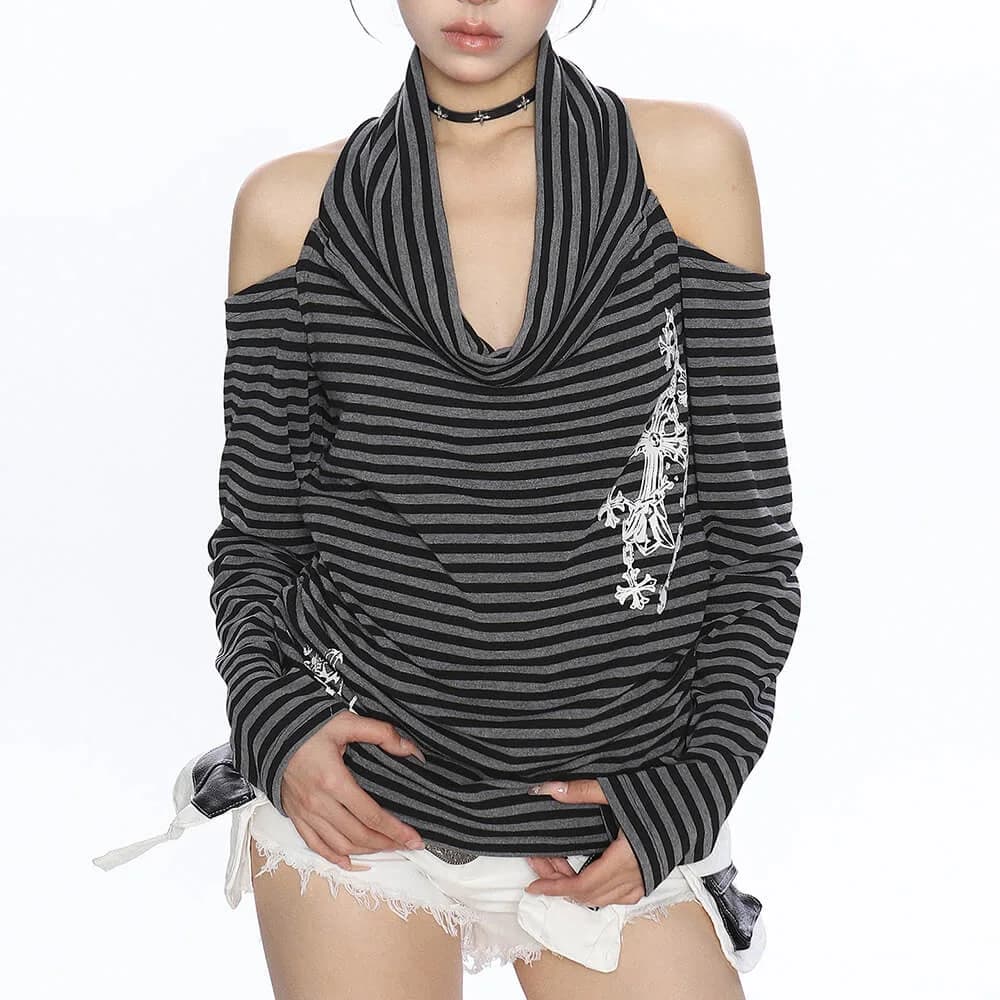
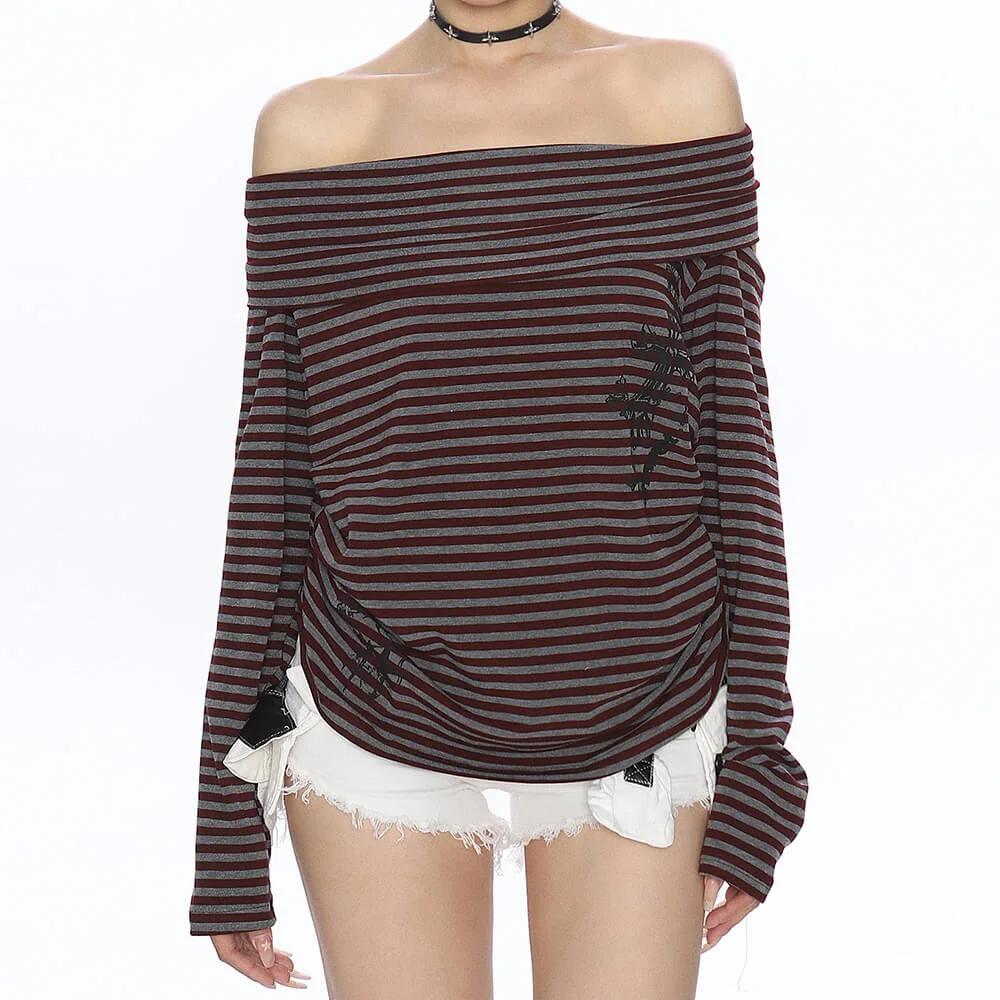
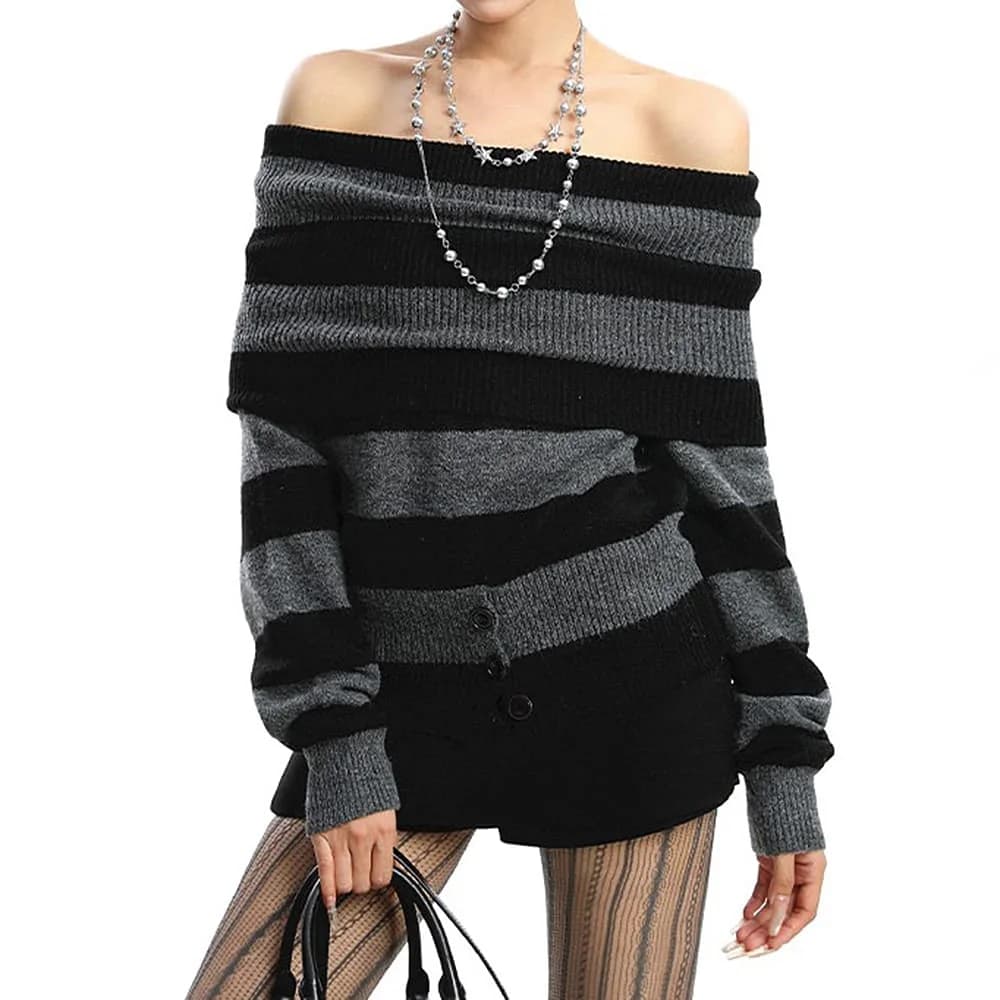
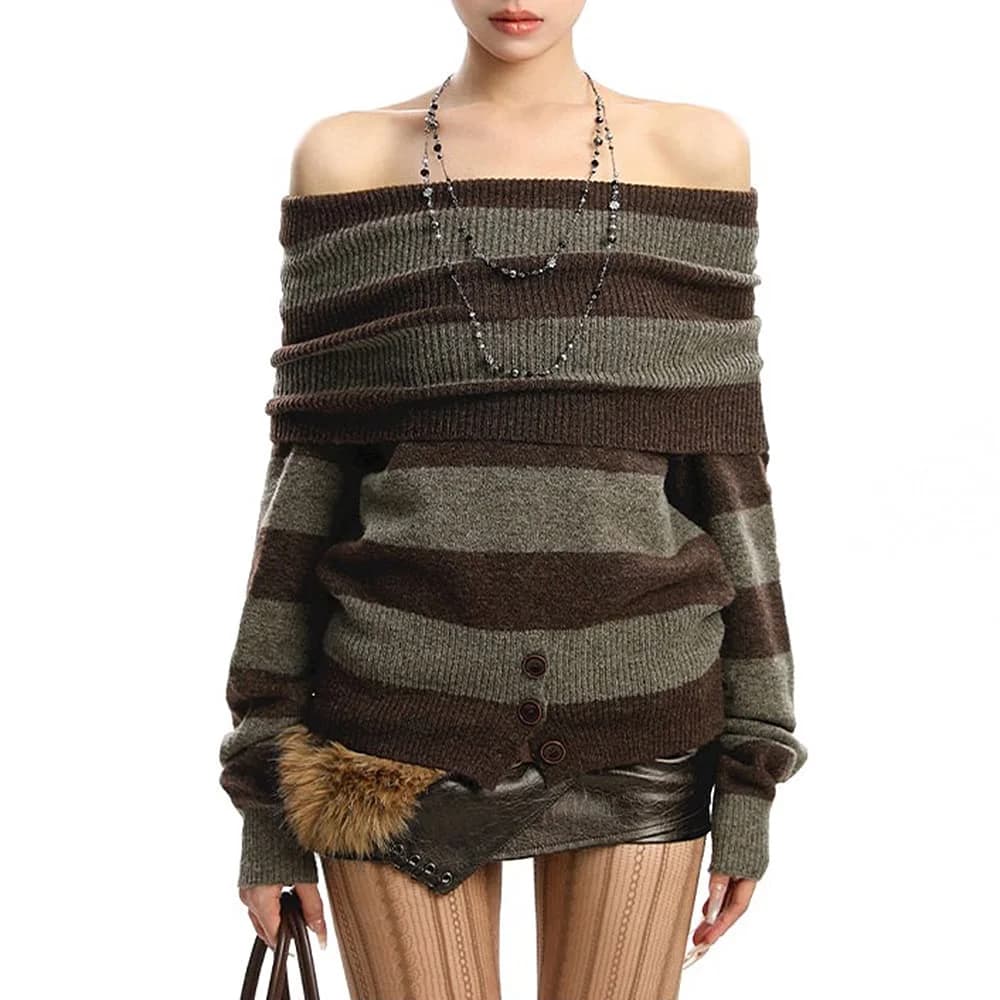
Some tops are made to be seen, and those are the best base picks if you hate looking bundled. The 2000s Cold Shoulder Drama Striped Top comes in grey/red and grey/black in S to L, in cotton and polyester. The cold-shoulder cut means it works best as a visible piece under an open jacket, rather than hidden under a thick knit.
Try it with a cropped cardigan or short jacket left open, high-waist trousers or a skirt, and tights. The stripes give you pattern near the face, which reads cute even when the coat is on and unzipped to the chest. If the shoulder openings feel too airy for your climate, wear a thin plain long sleeve beneath and let the cutouts show it.
Pitfall to avoid: stacking a patterned base under a patterned sweater. Stripes under a heavy intarsia knit just look noisy. Pick one pattern zone and keep the rest solid.

Mid Layer: Sweaters and Knits
The mid layer does the heavy lifting for warmth, and it's where personality goes. A sweater with a clean neckline and medium thickness is the workhorse. Very chunky knits are cozy but eat up coat space, so if you love them, size your outer layer up or wear the knit only on shorter outdoor days.
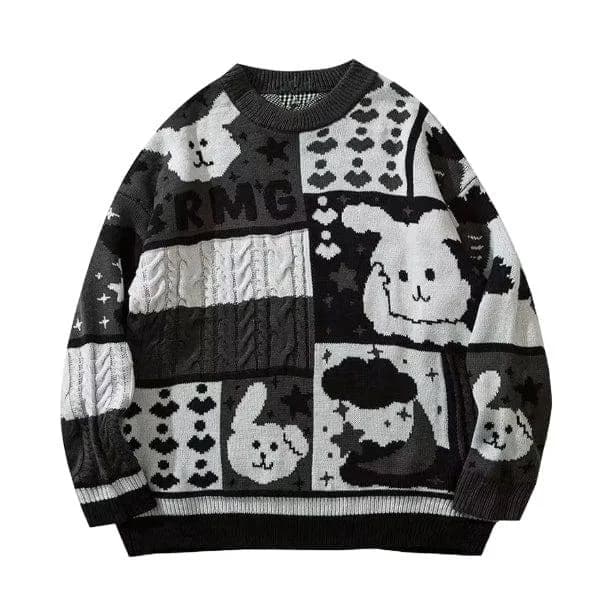
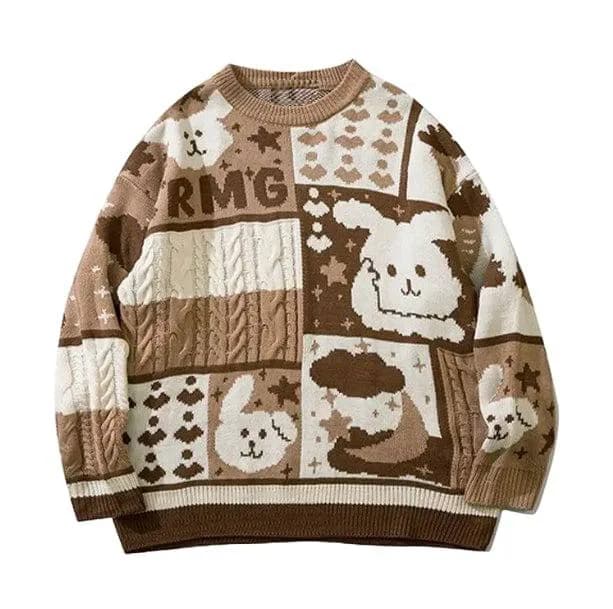
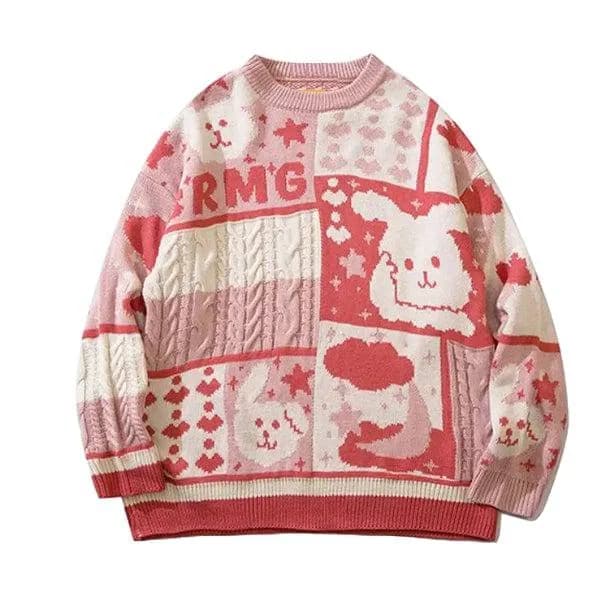
Two sweaters from the catalog show different moods. The Cute Bunny Sweater is cotton, in black, brown or pink, sizes S to XL, which suits a soft, sweet look with a plain tee or long sleeve underneath. The Cutesy Bow Sweater is polyester, in black or pink, sizes M to XL, and its bow detail makes it a good partner for a collared shirt peeking out at the neckline.
Compare options by thinking about where the decoration sits. Details at chest height stay visible under an open coat. Details at the hem or cuffs vanish under a belt or sleeves. You can browse more in the sweaters collection with that placement test in mind.

Layered Tops as a Mid Layer Shortcut
If bulky knits aren't your thing, a top that already looks layered saves effort. The E Girl Layered Crop Top is polyester in black/green, S to L, and the Strawberry Print Layered Tee is cotton in brown/pink, S to L. Both give a stacked look in one piece, so you don't need to wrestle with extra sleeves and hems.
Because they're lighter, they work best as the mid layer on cool days or as the inner layer under a cardigan or jacket when it's properly cold. A cropped hem pairs well with high-waist bottoms so no skin shows in between. If you don't want a gap, wear a plain long sleeve beneath it and let the longer hem peek out.
One thing to check before buying is the listed size range. Both stop at L, so if you plan to wear thick layers beneath, compare against your usual fit and consider whether you'd want the extra room. I can't promise how a specific cut fits you, so use the size options shown on the page as your guide.

Sleeve Fit: The Detail That Makes or Breaks It
Sleeves decide whether layeringWearing pieces over or under one another to add depth, warmth or contrast. looks tidy or lumpy. The goal is a gradient: slim at the base, slightly looser at the mid, roomiest at the outer. If the mid layer's sleeve is tighter than the base, you'll see the base bunch up at the elbow, and that annoying ridge never goes away.
Cuffs matter too. A fitted cuff at the wrist keeps warm air in and stops sleeves from sliding up when you put on a coat. If your jacket sleeves are narrow, choose a thinner mid layer on those days. A good test in the fitting stage: put on your mid layer, then your coat, and raise both arms. If the coat lifts and the sleeves ride up past your wrist, size up the outer layer.
Length is the last piece. Ideally base sleeves end at the wrist bone, mid sleeves at or just past it, and coat sleeves cover the knit cuff by a finger or so. Mismatched lengths aren't a disaster, but a tiny bit of base showing at the cuff looks deliberate and cute, while a chunk of it looks like you borrowed the wrong top.
Outer Layer: Choosing a Coat That Shows Your Outfit
The best coat for a cute layered look has an open or wide neckline, a hem that hits at the hip or upper thigh, and enough room in the body to close over a sweater. Hoods and big collars can hide a lot, so decide whether you want them to be the focus. Start with the main outerwear collection for the range, then narrow to coats and jackets when you know the shape.
Material and detail change how a coat sits over layers. The Mercury Rising Fur Trim Winter Jacket is listed in vegan fur, in black or green, sizes S to XL. A trim like that frames the face, so keep the layers below simpler: a plain base and a neat knit. The trim then acts as the accent.
How to compare: try each coat over your bulkiest planned mid layer, not over a tee. Check you can cross your arms and sit down without the fabric pulling across your back. That five-minute test is worth more than any size chart.
Lighter Jackets and Transitional Weather
Not every cold day needs a heavy coat. If the weather is cool rather than harsh, a structured jacket over a sweater can be enough, especially if your commute is short. The Corduroy Baseball Jacket is listed in cotton, polyester and microfiber, in blue or pink, sizes M to XL and 2XL. A baseball cut sits at the hip, so it shows plenty of what's underneath.
Pair it with a long sleeve and a pleated skirt with tights, or with straight trousers and a collared shirt under a thin knit. The ribbed cuffs and hem typical of this style can help keep the jacket sitting neatly, but check the page photos for how it actually looks. The sizes begin at M, so if you're smaller, look in the wider coats collection.
I wouldn't count a light jacket as a winter coat for freezing, windy or wet days. Use it as the outer layer when the temperature is mild, or as a middle layer under a bigger coat if your size allows. Always judge by your local weather and how you feel outside.
A Statement Jacket Done Right
If you buy one loud coat, build the rest around it. The Rainbow Winter Jacket is listed in cotton, spandex, silk and microfiber, with multi-toned colorblock styling, sizes S and M. The page also mentions free standard shipping on every order and an estimated delivery window of 15-35 days, so plan ahead rather than ordering the week you need it.
Because the colors are the point, keep what's underneath quiet. A neutral base like white, cream or black, a solid sweater in one calm shade, and plain trousers or a simple skirt let the jacket carry the look. Pull one color from the jacket into a small accent, like a beanie or socks, and the outfit feels planned rather than random.
With only S and M listed, check the size carefully. If you want to wear a thicker sweater beneath, consider whether the jacket will close comfortably over it. When in doubt, wear thinner mid layers with it, such as a fitted long sleeve and a light knit.
Beanies and Head-to-Toe Proportion
A beanie is the cheapest way to make a layered outfit look finished. Browse the kawaii beanies when you want the top of the look to match the cute details below. A beanie that sits slightly back on the head shows more of your face and hair, while one pulled low gives a snug, compact shape.
Proportion is the trick. If your coat has a big collar or fur trim, a slim beanie keeps things balanced. If your coat is plain and fitted, a chunkier beanie adds interest. Color-wise, repeat a shade from your mid layer so the head and torso feel connected, for example a pink beanie with a pink bunny knit under a black coat.
Hair and ears matter in practice. Check the page for fit information, and remember that a beanie over a thick hood just creates bulk. If you wear hoods often, pick coats with detachable ones or skip the hood and use the hat instead.
Five Outfit Recipes You Can Copy
Recipe one is soft and sweet: a plain white long sleeve, the Cute Bunny Sweater in pink, a pleated skirt, thick tights and a black coat left open. Recipe two is sharper: a black base, the Cutesy Bow Sweater over a collared shirt, straight trousers and a structured jacket. Both keep the sweater's detail at chest level where the coat opens.
Recipe three is a layered-look shortcut: the Strawberry Print Layered Tee over a thin long sleeve, high-waist jeans and the Corduroy Baseball Jacket in pink or blue for a mild day. Recipe four leans edgy: the E Girl Layered Crop Top with high-waist cargo pants and the Mercury Rising Fur Trim Winter Jacket in black for contrast. Recipe five is retro: the striped cold-shoulder top with a short cardigan and a beanie.
Each of these works because the layers get thicker and looser moving outward, only one item carries the loudest detail, and the neckline of each layer sits a little lower than the one above it. Swap any piece for a similar one in your wardrobe and the logic still holds.
- Sweet: plain long sleeve + bunny sweater + pleated skirt + open coat
- Sharp: black base + bow sweater + collared shirt + structured jacket
- Mild day: layered tee + long sleeve + corduroy jacket
- Edgy: layered crop top + cargo pants + dark fur-trim jacket
- Retro: striped top + short cardigan + beanie
Color, Texture and Pattern Rules
Layers look better when they share a color family. Pick two main colors and one accent for the whole outfit, counting the coat and beanie. Pink, cream and brown go together easily. Black, grey and a pop of green do too. If you're unsure, anchor with a neutral coat and let the middle layer carry the color.
Texture adds depth without more color. A smooth cotton base, a ribbed or knit sweater, and a corduroy or faux-fur outer are three different textures that look intentional together. Too many shiny or fuzzy items at once can feel heavy, so mix one soft, one smooth and one structured piece.
Patterns need spacing. A large print on the mid layer works with a plain base and coat. Small stripes can sit near the face if everything else is solid. If you want to wear two patterns, make one much bigger than the other and keep them in the same color family so they read as a pair.
Common Pitfalls and How to Fix Them
The biggest mistake is buying each layer in your usual size without checking how they stack. A coat that fits perfectly over a tee may not close over a sweater. Try the whole stack, or at least choose the outer layer last and size it for the bulkiest thing you'll wear beneath.
Next is moisture. A base that feels damp from walking fast then standing at a stop will feel colder, so choose layers you can easily remove and add. Keep the base thin enough that you can take the mid off indoors without feeling underdressed. I can't give advice on health or cold-related risks, so for extreme weather rely on local guidance and your own judgment.
Finally, avoid hiding the good stuff. If a collar, bow or hem is the best part of the outfit, make sure it sits where the coat opens. Bunched scarves and hoods can swallow it, so move accessories to the head or wrists instead.
Buying Checklist Before You Order
Run through this before you add anything to your basket. It's meant to catch the problems that only show up once the parcel arrives. Look at each product page for listed material, color options and sizes, and compare them to what you already own so you buy gaps, not duplicates.
If an item has a longer delivery window, like the 15-35 days listed on the Rainbow Winter Jacket page, order earlier than you think you need to. Don't rely on a coat arriving by a particular event, and keep a backup outer layer in case it's late.
Start small. One new mid layer and one outer layer can reshape a whole wardrobe if the base pieces are already sorted. Add a beanie last, once you know the colors you're working with.
- Base is slim, plain and comfortable at the neck and wrist
- Mid layer has its detail at chest height
- Sleeves get looser from inside to outside
- Coat closes over your bulkiest mid layer
- Only one star piece in the outfit
- Two main colors plus one accent
- Sizes checked against the product page options
- Delivery time noted before you order