Created by the Kawaii Vibe editorial team. Our named style desks are editorial personas. Product details and availability can change.
The short answer: pick one soft palette, let lace and bows do the quiet work, and give the animal motif one clear spot. That is the whole trick behind kawaii coquette outfits that look pulled together instead of piled up. Coquette is delicate and a little wistful. Kawaii is bright and playful. They get along well when one of them leads.
This guide walks through how to choose that leader, where lace and ribbon should sit, how to keep an animal print or charm from fighting them, and what to do when the weather changes. You will find three full outfit formulas, a way to compare options before you buy, and a checklist at the end.
Everything here is styling advice, not a rulebook. If you love a busier look, you can loosen the limits. But if your outfits keep ending up feeling messy and you cannot say why, start with the restraint below and add things back one at a time.
The Quick Formula Before Anything Else
Here is the formula in one line: two palette colors plus one neutral, one lace or ribbon feature on the upper half, one animal element, and one finishing accessory. Count your pieces after you dress. If the lace, the bows and the animal motif each want to be the star, take one away.
Why does this work? Coquette details are small and repetitive: bows, ruffles, scalloped edges, trims. Kawaii animal pieces are usually bolder in shape, like a face, a pair of ears or a character print. When both are loud, your eye has nowhere to rest. When the animal is the single bold thing and the coquette details stay fine and tonal, the outfit reads as sweet and intentional.
A practical way to test it: stand a few steps back from a mirror, or snap a photo and shrink it on your phone. You should be able to name the focal point in about a second. If you find yourself saying it is kind of everything, simplify.
You can browse the wider Coquette collection for the ribbon and lace side, and the Kawaii Clothes collection for playful animal pieces. Keeping those two shopping lanes in mind helps you choose one leader and one supporting player rather than buying two leads.

Start With a Restrained Palette
Palette is the thing that stops this mix from clashing. Choose two colors and one neutral, and stick to them from head to toe. Good starting trios are blush pink, cream and a touch of silver; baby blue, white and soft grey; or butter yellow, ivory and a pale pink accent. The neutral is your glue, so it should appear at least twice, say in a top and a shoe.
Animal motifs are where palettes usually break. A cartoon bunny in bright red or a neon cat face will drag the whole outfit away from soft coquette tones. Look for animal pieces already in your chosen colors, or in a neutral such as white, cream or grey. If the animal item is colorful, let it be the only colorful thing and keep everything else in the neutral.
Temperature matters too. Keep everything either cool (baby blue, silver, white) or warm (butter yellow, cream, peach). Mixing a cool blue lace top with a warm yellow shoe can still work, but only if a shared neutral, like white, sits between them.
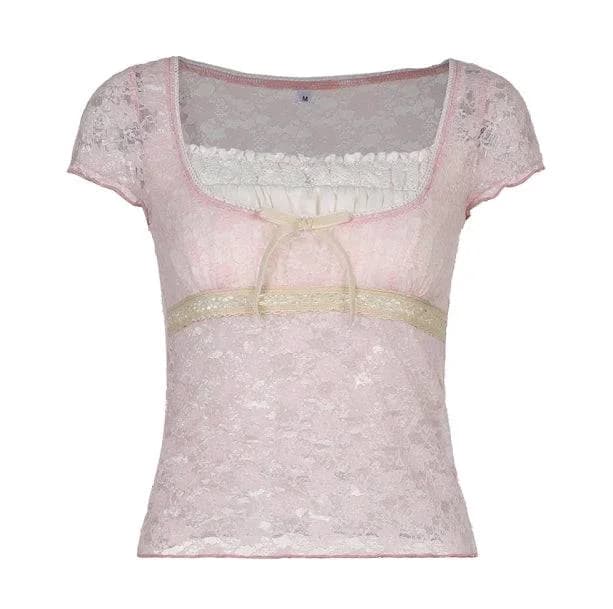
If you are unsure, build around the lace piece. The Coquette Lace Top comes in blue or pink, which gives you an easy anchor color. Choose one, then pull a second color from your animal piece and let the rest be white, cream or silver.
The One-Animal Rule
Give the animal motif one job in one place. That might be a printed top, a bag charm, a hair clip, a pair of socks or a character sweater. Not two or three. Coquette already supplies plenty of detail, so a second animal piece tips the look toward costume.
Pick the placement by what else is going on. If your top has heavy lace, put the animal lower or smaller: socks, a bag charm, a clip. If your top is plain, the animal can sit on the chest as a print or patch. Think of it as a see-saw: lace high means animal low, and the other way around.
Scale also helps. A large animal graphic pairs better with fine, narrow lace. A tiny animal charm can sit beside wider ruffles. If both are large, they compete. If both are tiny, you may get a busy, speckled look from a distance, so mix one big element with one small element.
When you shop, the Kawaii Clothes collection is a good place to look for the animal piece, since that is where the playful items live. Check the colors in the photos against your palette before you commit. If the animal fits your two colors, buy it. If it brings in a third bright color, pass or plan to keep everything else neutral.

Where Lace Should Go and How Much
Lace is most flattering and least fussy when it frames the edges: collars, cuffs, hems and necklines. A lace top with delicate trim at the neck and sleeves already does a lot, so the rest of the outfit can be quiet. The Coquette Lace Top is a straightforward example of this idea, offered in blue and pink in sizes S to L.
Keep lace to roughly one zone per outfit: upper body, hem, or feet. If your top is lacy, a plain skirt or trousers let it breathe. If you want lace on the legs or shoes, make the top simpler. Two lace zones can work if they match in color and are far apart, like a lace collar and lace-trimmed shoes, because the repeat feels like a rhythm rather than a pile.
Lace texture matters. Fine, flat lace sits well under cardigans and jackets. Chunky or ruffled lace adds volume and works best alone. Before wearing layers together, think about bulk at the shoulders and wrists, since two ruffled sleeves under each other can get uncomfortable and lumpy.
A small pitfall: lace in a different shade of white from your other whites can look dingy beside them. Pair ivory with cream and bright white with silver or blue, and avoid mixing the two families side by side.
Bows: How Many and Where
Bows are the signature of coquette, and also the easiest way to overdo it. A decent limit is three visible bows in an outfit, and they should be different sizes or in different places. One in the hair, one at the neck or collar, and one on the shoes is plenty. Matching them in color makes the look feel designed.
Place bows along a vertical line so the eye travels naturally. A hair bow, a neckline bow and a shoe bow form a gentle top-to-bottom path. Bows scattered at random heights, like one at the waist, one on a bag and one on a sleeve, create clutter. If your top already has a bow, skip the choker bow or the hair bow.
The material of bows can shift the mood. Satin ribbons feel polished and romantic. Grosgrain or cotton ribbon feels more casual and school-like. Mix them cautiously. If your blouse is satin, a matching satin ribbon looks coherent, while a stiff cotton one may look mismatched.
If you have an animal element with its own bow, such as a character wearing a ribbon, count it. That uses up one of your three, so you can leave the hair bow off. Think of bows as seasoning: easy to add, hard to remove from a dish once everything is stirred in.
Outfit One: Soft Blouse, Animal Bag Charm
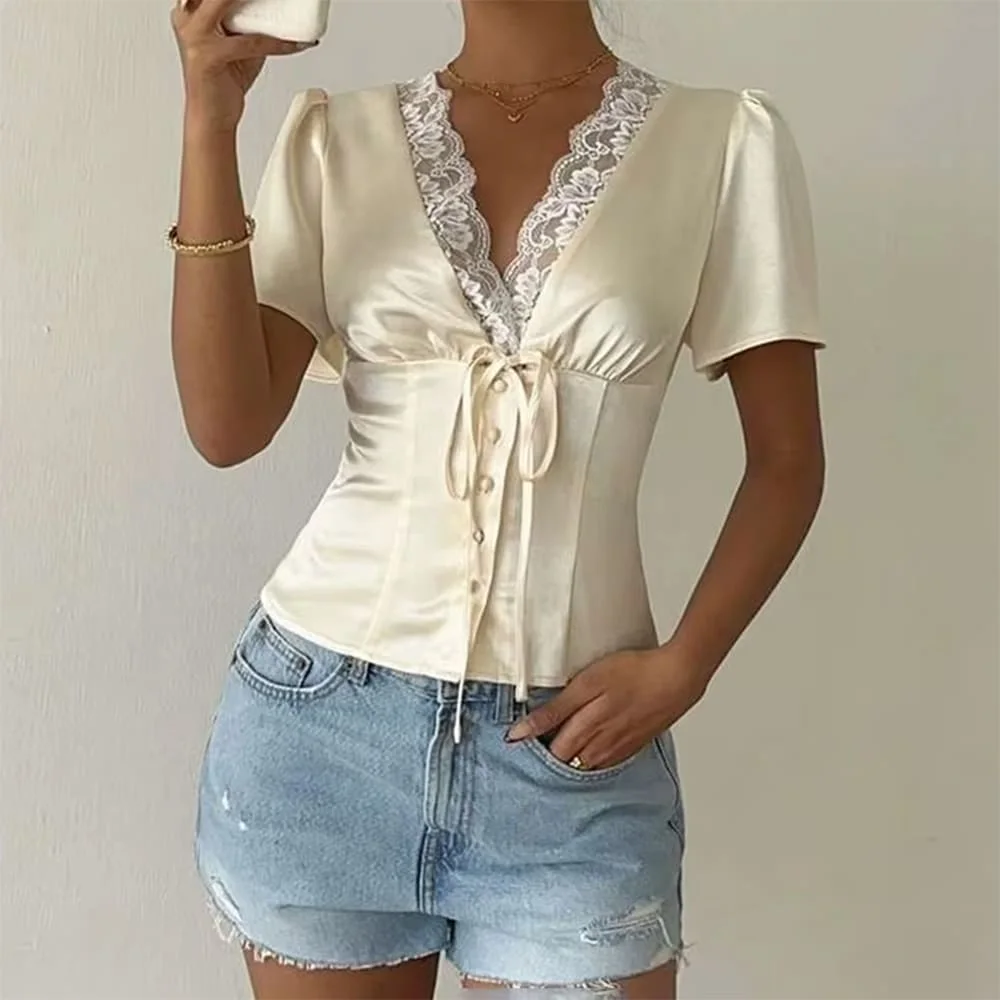
This is the most grown-up version, good for a café, class or a casual work setting. Start with the Coquette Girl Satin Lace Blouse, listed in beige in sizes S to L and made of polyester. Beige is a flexible neutral, so it sits calmly with pink, blue or soft grey.
Pair it with a simple skirt or straight trousers in cream or grey. Keep the bottom half plain so the blouse carries the lace. Then add the animal in a small, easy way: a bag charm, a pin on a cardigan, or a clip in your hair. This keeps the kawaii element playful without competing with the satin and lace.
For shoes, choose flats in a pastel from your palette. Beige and light pink are a gentle match. Add a single bow in your hair, and leave the neck bare or add a very slim necklace. That makes the outfit: one lace feature, one animal charm, one bow, one pastel.
Why it works: the blouse and bottoms are tonal, so the little animal charm becomes the surprise rather than clutter. If you want to push it more kawaii, swap the charm for a printed animal tee under an open blouse, but then drop the hair bow. Remember the see-saw: when the animal goes up, the bows come down.

Outfit Two: Lace Top With Animal Print Skirt or Socks
For a more openly kawaii day, make the animal piece the lower half. Wear the Coquette Lace Top in pink or blue with a skirt or shorts that carries a small animal print in white, grey or a matching pastel. Browse the Kawaii Clothes collection for animal-themed pieces and choose one whose background color matches the top.
Keep the top tucked or cropped so the waistline is clear, and keep accessories few: a hair bow in a color already in the skirt, and plain white socks or a lace-edged pair. If the print is busy, leave the hair bow off and use a plain clip.
The color link is what holds this together. If the top is pink, find a print where pink is the lightest accent. If the top is blue, look for grey, white or soft blue animals. Do not try to match the exact shade; just stay in the same family, and the eye will accept it.
A common mistake here is adding a second lace item at the bottom, like ruffled socks, plus a bold shoe. Pick just one. If you love ruffled socks, let the top be plainer. If the top is lacy, go with smooth ankle socks and let the shoes carry a simple, single-color finish. This outfit can go bright without feeling messy because the structure stays simple.
Outfit Three: Lace-Sleeve Hoodie for Relaxed Days
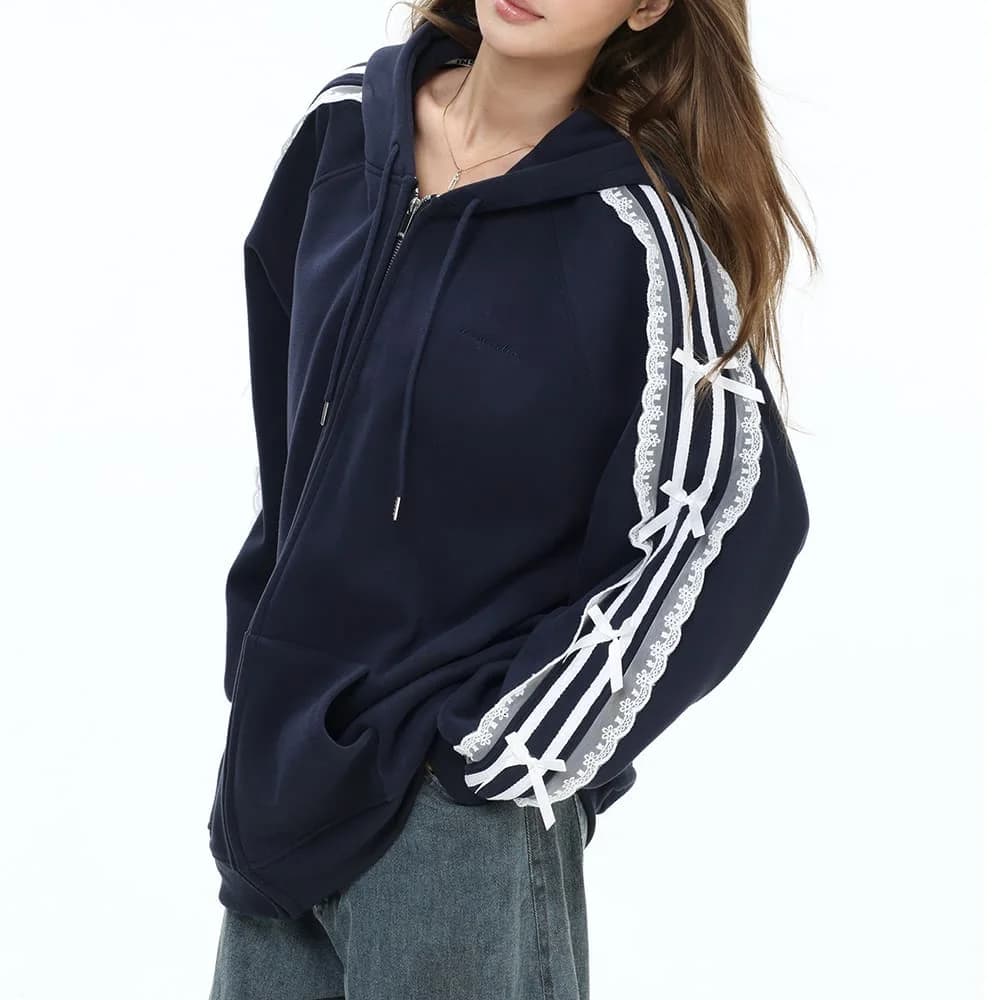
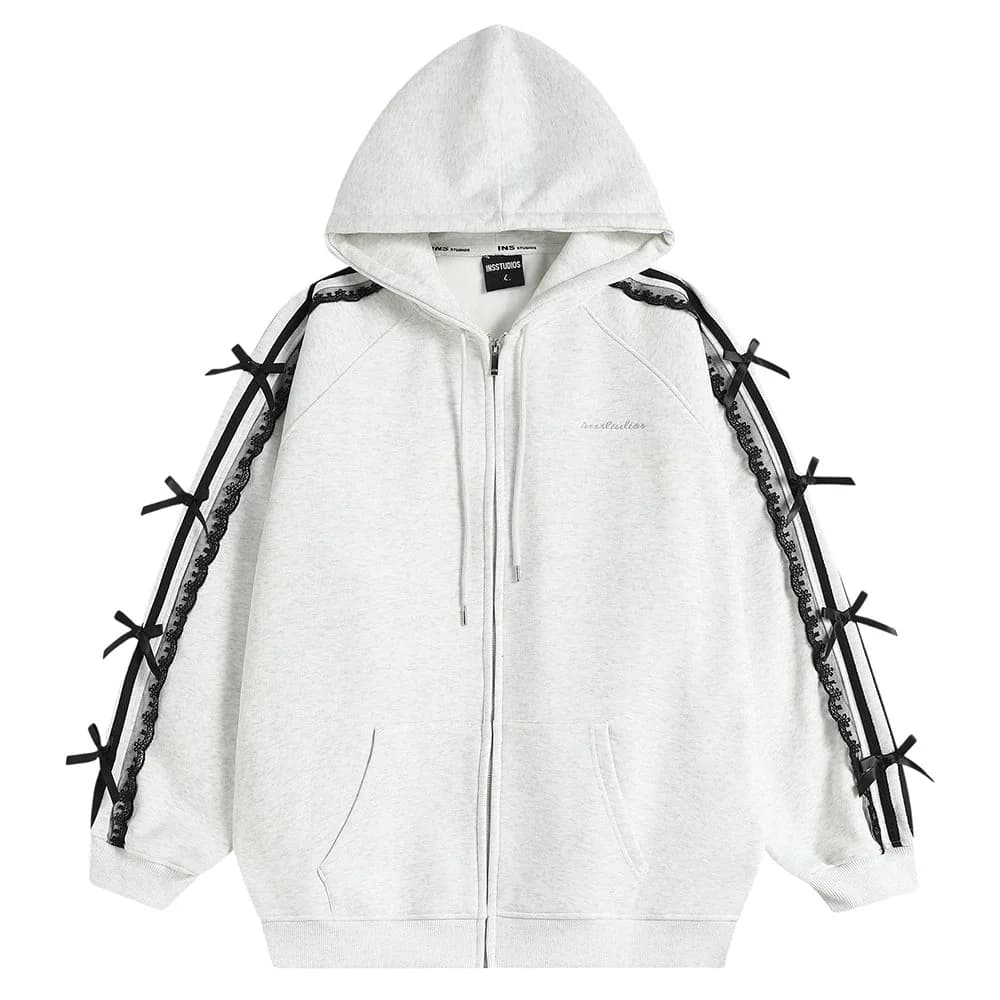
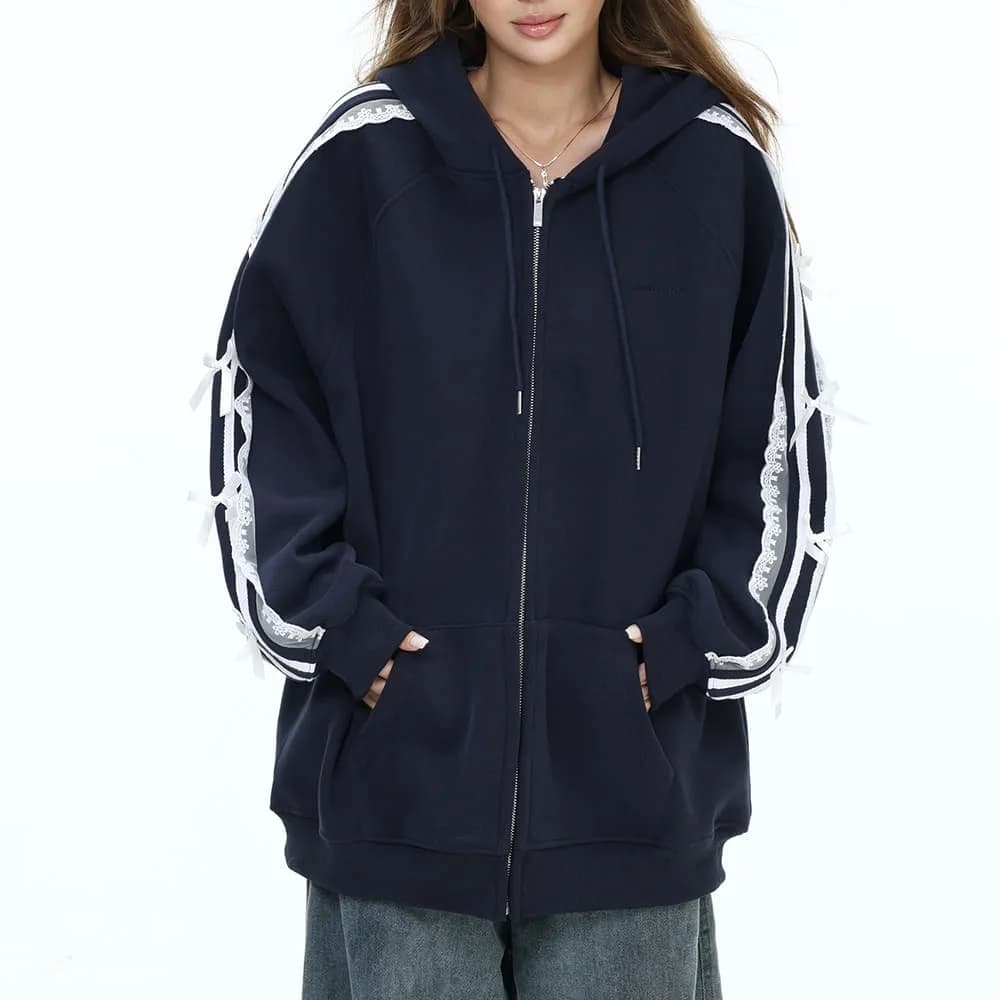
Coquette does not have to mean dressy. The Coquette Lace Sleeve Hoodie is offered in white or navy blue, in sizes S to XL, and is made of cotton and polyester. It brings lace to a casual shape, which is a good bridge to kawaii streetwear.
With the white version, go soft: light-wash or white bottoms, white sneakers or flats, and an animal accessory such as a bag charm or character socks. With the navy version, the look turns cooler and more contrast-based. Pair it with a pale pink or baby blue skirt, white socks and a small animal clip. Navy gives your pastels something to lean against, so they feel crisp.
Because the lace sits on the sleeves, keep your bag straps and jacket sleeves in mind. A cross-body bag strap pressed over lace may rub or crush it. Choose a handheld bag or a shoulder strap that sits beside the sleeve rather than on top.
Hoodies are roomy, so balance the proportion: keep the bottom half fitted or short, or use a mini skirt, so the outfit does not look swallowed. Add one bow at most, perhaps in the hair, and let the lace sleeves be the coquette statement. The animal piece can then be playful and slightly bigger, such as a larger charm or a patterned sock.
Shoes and Legwear That Tie It Together
Shoes are where coquette and kawaii meet happily, since Mary Janes lean sweet in both worlds. The 2.0 Coquette Lace Trim Mary Jane Flats come in baby blue, light pink, butter yellow and white, made of vegan leather. The listing says they run small, so review the sizing information before choosing, and consider checking the next size up if you are between sizes or plan to wear thicker socks. Sizes run from EU35 (US5.0) to EU40 (US9.0).
For a taller, dressier shape, the Coquette Lace Mary Jane Heels come in red, white, black and silver, also in vegan leather and also noted as running small. White or silver are easy with pastel outfits; black adds a sharper edge; red works best when it is your single accent and the rest is cream or white.
For legwear, the Coquette Ruffle Lace Leg Warmers in white, one size, in cotton and polyester, add a ruffled finish. Wear them with flats and a simple skirt, and skip lace on the top half or hem. They work like a second pair of socks, so keep your animal element on top, not at the ankle.
Rule of thumb: either the shoes or the legwear carry lace, not both lace and a bold animal sock.


Hair Accessories: The Easiest Place to Blend Both
Hair is the lowest-risk spot to combine the two styles, since a clip or ribbon is small and easy to swap. A bow clip handles the coquette side; an animal-shaped clip handles the kawaii side. Wear one on each side of a part, or stack one bow and one small animal clip on the same side, as long as they share a color.
Browse the Aesthetic Hair Accessories collection when you want to experiment without changing your clothes. A good approach is to dress in a quiet base outfit, then try two or three accessories and take a photo of each. The photo makes it obvious which one reads as too much.
Placement changes the mood. High on the head, bows feel playful and youthful. Low at the nape or at the side, they feel softer and more romantic. If your outfit already has a statement collar or neckline bow, wear hair accessories higher so they do not compete with the neckline.
Hairstyle matters, too. Half-up styles give bows a place to sit. Braids and low pigtails suit ribbon woven in. Short hair works well with two small clips rather than one big bow. Finally, keep hair accessories in your palette. A bright red clip in a pink-and-cream outfit will act like a spotlight, which can be nice if it is the animal element, but not if it is just a bow.
Jewelry and Neckline Details
Necklines are crowded already when lace and bows are involved, so jewelry should be minimal and chosen with intent. The Coquette Bows Choker Necklace is listed in silver in a standard size. It suits open or low necklines, like a scoop or square neck, where the choker has space. With a high lace collar, it may compete, so skip it or wear a different piece lower.
The Coquette Necklace, listed as one size and as pictured, is a gentler alternative if you want something less central. Check the product images to see how long it sits, and match it to your neckline rather than guessing.
Silver pairs nicely with cool palettes like baby blue, white and grey. If you are leaning warm with butter yellow and cream, keep jewelry tiny and let it fade into the background, or pick the piece that looks least metallic in the pictures.
One neck piece is enough. If you wear a choker, skip a bow at the collar. If your animal element is a pendant or pin, move the choker out. Earrings should be small studs or simple drops, since the neck and hair already carry the bows. A good last test is to ask whether your eye jumps between the neck, the hair and the top. If it does, remove one thing, usually the necklace.
Weather, Layers and Comfort
Coquette pieces tend to be delicate, so plan layers by temperature rather than by month. In warm weather, a light lace top with a plain skirt or shorts, flats and a hair accessory is enough. Skip leg warmers and keep the animal element small: a clip or a charm. Breathable fabrics matter, so check each listing for materials and avoid assuming anything it does not state.
In cool weather, layer thoughtfully. The Coquette Lace Sleeve Hoodie can act as the main warm layer, or you can put a plain cardigan over a lace top, leaving the collar visible. Add the Coquette Ruffle Lace Leg Warmers over tights or socks for extra interest at the ankle. Keep outer layers simple in cream, grey or navy, and let the animal piece peek out from a bag or sleeve.
Rain and wind are tougher on lace and satin, so choose a slim coat in a neutral and avoid heavy scarves that crush a bow. Comfort counts as well. Shoes listed as running small deserve a bit of caution if you plan long walks, so check the sizing information and think about sock thickness.
Pack a small spare: a hair clip or tiny bow in your bag lets you change the look midday if layers hide your main detail.
How to Compare Options Before You Buy
When you are choosing between two pieces, ask four questions. First, does it share a color with something I already own? Second, which zone does it occupy: neck, sleeves, hem, feet or hair? Third, does it overlap with another zone I already use? Fourth, can I wear it at least three different ways? If the answer to the first is no, or the third is yes, wait.
Use product pages for facts, not guesses. Check available colors, sizes and the material line. For example, the satin lace blouse is listed in polyester, the hoodie in cotton and polyester, and the Mary Janes in vegan leather with a note that they run small. If something is not stated, such as stretch or lining, do not assume it. Ask customer care if you need to know.
Compare by role. If you are building a wardrobe slowly, start with one lace top, one pair of Mary Janes and one hair accessory, then add the animal piece last, because you can then match its colors precisely. Buying the animal item first often forces the rest to bend around a color you did not choose.
Finally, think about repeat wear. A neutral blouse or white hoodie carries many more outfits than a very specific print. Save the boldest pieces for last, and keep the quieter ones as the foundation.
Common Pitfalls and a Final Checklist
The most frequent problems are easy to spot once you know them. Too many bows in too many sizes, mismatched whites, lace on every zone, an animal print in a third color, and shoes that pinch because the size was guessed. Another is wearing every layer at once, so the hoodie, a cardigan, a collar and a choker all pile up at the neckline. When in doubt, take off the item you added last.
Do a quick pass in the mirror before you leave: palette, zones, bows, animal, comfort. If all five feel settled, you are done. If one feels off, fix only that one instead of restarting. Small adjustments like swapping a clip or removing a necklace often solve it.
You can also keep a mini kit: a spare clip, a lint roller for lace, and a small pouch for ribbons. Keep exploring the Coquette Aesthetic collection for more ideas on soft details, and return to your checklist whenever the outfit starts to feel crowded.
- Two palette colors plus one neutral, repeated at least twice
- One lace feature per outfit, placed at an edge or a single zone
- No more than three visible bows, at different heights or sizes
- One animal element, in the opposite zone from the lace
- One neck piece at most, matched to the neckline
- Shoe size checked against the listing, especially for styles noted as running small
- Layers planned by temperature, with materials read from the product page
- A final mirror or photo check: can you name the focal point in a second?