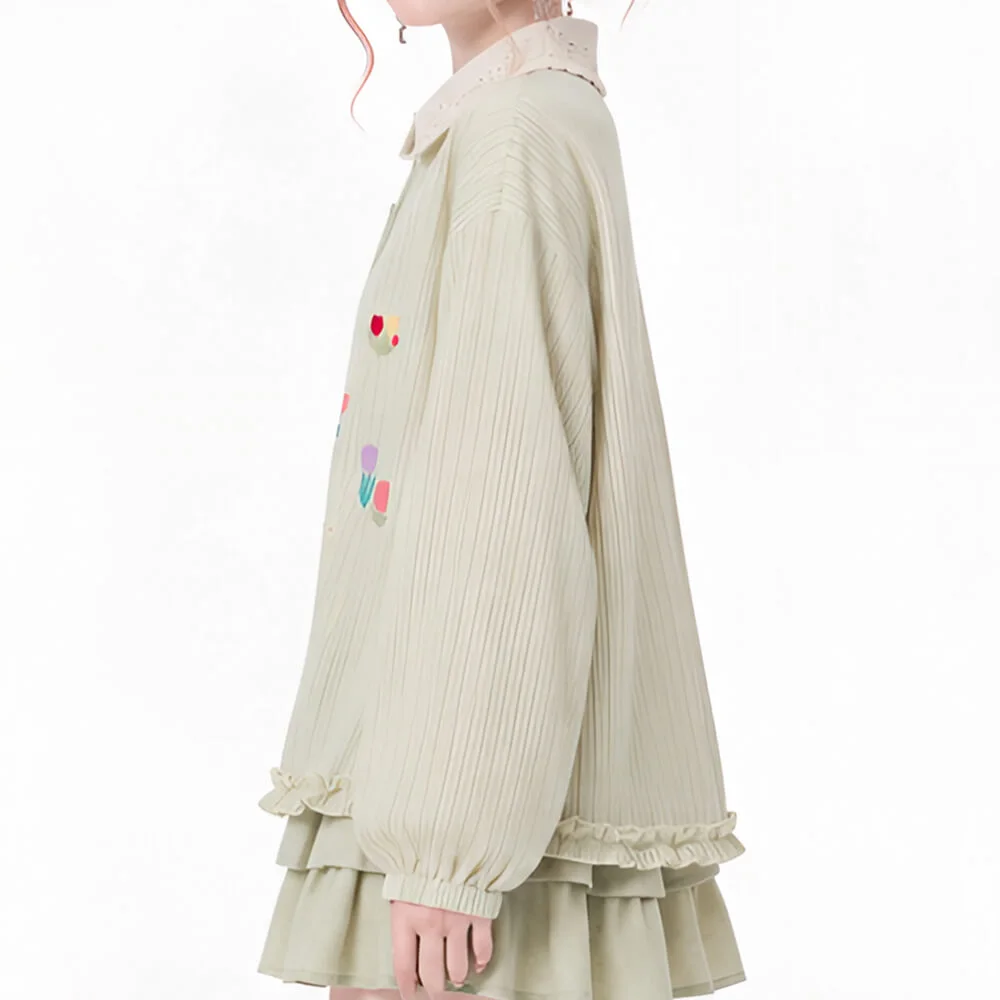
Created by the Kawaii Vibe editorial team. Our named style desks are editorial personas. Product details and availability can change.
The quick answer: pick three pieces and let them do the work. One piece in a cottage fabric or shape, one piece with a cute motif like a bunny or a mushroom, and one quiet piece in soft green or cream that ties them together. Everything else stays plain. That is the whole idea behind kawaii cottagecore outfits that look styled instead of crowded.
Cottagecore is the soft, countryside side of things: gathered sleeves, embroidery, knits, florals. Kawaii adds the sweetness: round animals, little details, playful accessories. Put both on at full volume and you get costume. Turn each one to about half and you get something you can wear to class, work or a weekend market.
Below you will find the rule explained, how to choose a base, a soft green palette, motif placement, three full outfit formulas, weather notes and a checklist. Product mentions are optional suggestions from our shop, and we are a retailer, not the maker, so always read each product page for the details that matter to you.
The Three-Piece Rule, Explained
Here is the rule in plain terms. Piece one is your cottage anchor: a dress, a knit, a cotton shirt, anything with that homespun softness. Piece two is your cute focus: the item with a bunny, a mushroom, a cat, a lamb or a bold flower. Piece three is your calm connector: a color or texture that sits between the first two and makes them feel related, usually a soft green, cream or warm brown.
The reason it works is simple. Cottagecore already has a lot going on in texture, and kawaii loves detail. If every piece has a statement, your eye has nowhere to rest. With three deliberate pieces, one thing leads, one supports and one quiets the room. The rest of the outfit, like plain trousers, simple shoes or a basic skirt, just fills in the gaps.
A quick test before you leave the house: count how many things have a motif or a pattern. If it is more than two, take one off. Prints can be counted generously. A gingham skirt, an embroidered collar and a bunny charm are three separate voices, and that is already a full conversation.
One more tip: the three pieces do not have to be clothing. A bag, a hair clip or socks can be your cute focus if the clothes are plain. That flexibility is what makes the rule easy to adapt to a tight budget or a strict dress code.
- Piece one: cottage anchor (fabric or shape)
- Piece two: cute focus (bunny, mushroom, animal, flower)
- Piece three: calm connector (soft green, cream, brown)
- Everything else: plain and quiet

Choosing Your Cottage Base
Your base piece sets the tone, so start there. Look for the things that read as cottage at a glance: puffed or gathered sleeves, square or rounded collars, ribbed or chunky knits, cotton-feeling shirts, smocked or tiered skirts, and small embroidery. Our main cottagecore collection and the wider aesthetic cottagecore clothes page are good places to scan for these shapes side by side.
When comparing bases, think about how much the piece can carry. A plain, gently shaped cotton blouse can sit under almost any motif piece. A heavily embroidered smock dress is already a statement, so it would take the cute focus slot on its own. Decide which job each item is doing before you add it to your cart.
Check the product page for fabric information where it is listed. For example, when browsing shirts or tops, look closely at the listed materials and size ranges before buying. Where a page does not list a material, do not assume. Look at the photos and size details, and contact support if something matters to you, like how sheer or stretchy a piece is.
A last point on proportion: if the base is voluminous on top, like a puffed sleeve, keep the bottom half slimmer or straight. If the base is a full skirt, choose a more fitted top. One soft, big shape per outfit is plenty.
Building a Soft Green Palette
Soft green is the glue of this look, and it is forgiving. Think sage, moss, pale mint, olive-leaning khaki and the dusty green of dried herbs. These sit happily beside cream, oatmeal, warm brown and faded pink. They also calm down bright kawaii colors, which is why they work so well when you want a bunny or a mushroom to feel gentle instead of loud.
A simple way to use it: pick one green as your connector and repeat it twice, in different sizes. A green shirt and a green hair accessory, or a green phone case and green socks. Repeating a color in a big spot and a tiny spot makes an outfit feel planned. Using it once can feel accidental.
Be careful mixing several greens. A yellow-toned olive next to a blue-toned mint can look off, and you may not see why. If you want two greens, keep them one clearly dark and one clearly light, or stay in the same family of warmth. Cream or white between them also helps separate the tones.
If green is not flattering near your face, put it lower down. A green skirt, bag or socks gives you the palette without sitting by your skin. And colors always look different on screen and in daylight, so treat product photos as a guide rather than a guarantee.
Placing Mushroom Motifs Without Overdoing It
Mushrooms are the most cottagecore of the cute motifs. They suggest forests, foraging and fairy rings, and they sit well with greens and browns. The question is where to put them. Our shop does not currently list a mushroom item among the products recommended here, so treat mushrooms as a motif to hunt for across the cottagecore and kawaii dress pages, and use the placement advice below when you find one.
Small and scattered works best on large areas like a dress or skirt. A big single mushroom works best on a small area like a pocket, a patch or a bag. Never do both at once. If a skirt is dotted with tiny mushrooms, your top should be plain or only lightly textured.
Mushroom colors matter. Red-capped mushrooms are bold and storybook; cream and tan ones are quieter and more grown-up. If you want kawaii but with a lower volume, go for the muted version and let the shape do the talking.
Finally, think about balance with other nature motifs. Mushrooms plus flowers plus leaves can turn into a wallpaper. Choose one companion at most. Mushrooms with a simple gingham, or with a plain knit, usually looks sweeter than mushrooms with three other prints.

Bringing in Bunnies
Bunnies are the easiest animal to dress in this style because they already live in both worlds. They are classic countryside, and they are the cutest thing in kawaii. The Kawaii Bunny collection is the place to browse for items where the bunny leads, so you can pick your cute focus there and build the cottage pieces around it.
The key decision is scale. A bunny on a hair accessory is a whisper. A bunny across the chest of a top is a shout. For a first outfit, go with the whisper. A set of bunny hair clips in soft brown makes it easy to add detail without overwhelming the look, whether you place them symmetrically at the sides or split them across a half-up style. It is a quick way to add a bunny without touching the clothes.
One pitfall: bunny plus pink plus ruffles plus bows can slide into a very different, much louder look. If you want to stay cottage, swap the pink for cream or sage and keep the ruffles to one spot.
If you prefer the bunny on the clothes, balance it with a calm base. A bunny top with a plain A-line skirt and neutral shoes needs nothing else. Add a soft green cardigan as your third piece and you are done.
Dresses as the One-Piece Shortcut
When you are short on time, a dress is your cottage anchor and your connector in one. Browse the kawaii dresses and look for shapes with a defined waist, a softly gathered skirt or a smocked bodice. Those shapes carry the cottage side by themselves, and you only need to add the cute focus.
Here is a formula: dress in a soft green or cream, plus one cute accessory, plus plain footwear. That already satisfies the three-piece rule, because the dress covers two roles. If the dress has a small print, keep accessories to solid colors. If the dress is plain, you have more freedom to go bolder with a patterned bag or novelty socks.
Length changes the mood. A mid-calf length reads more cottage and storybook. A shorter hem reads more playful and kawaii. Neither is better; just match the shoes. Chunky flats or boots suit the longer length, while ankle socks and rounded shoes suit the shorter one.
Check sizing details carefully before buying. Product pages show which sizes are available, and since we are a retailer rather than the maker, we would suggest comparing your own measurements with any size information on the page rather than guessing from the label.
Outfit One: The Embroidered Shirt Day Look
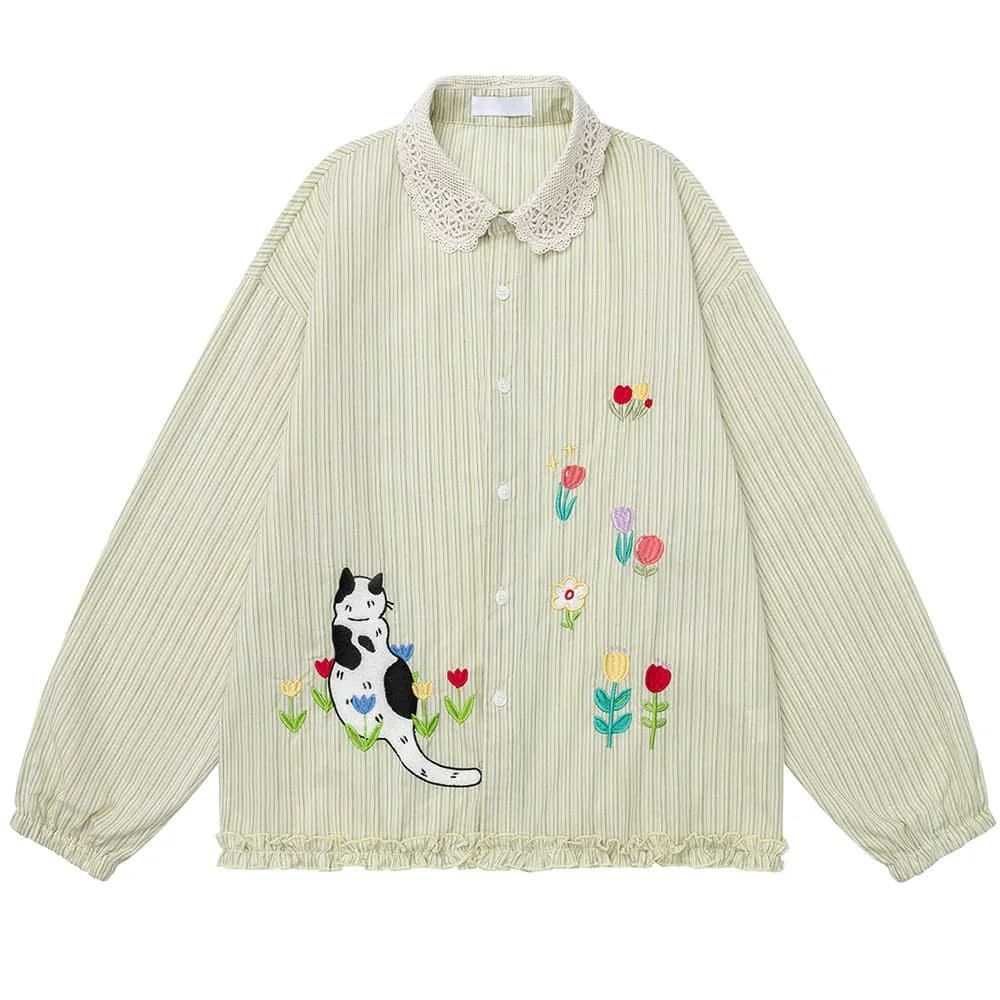
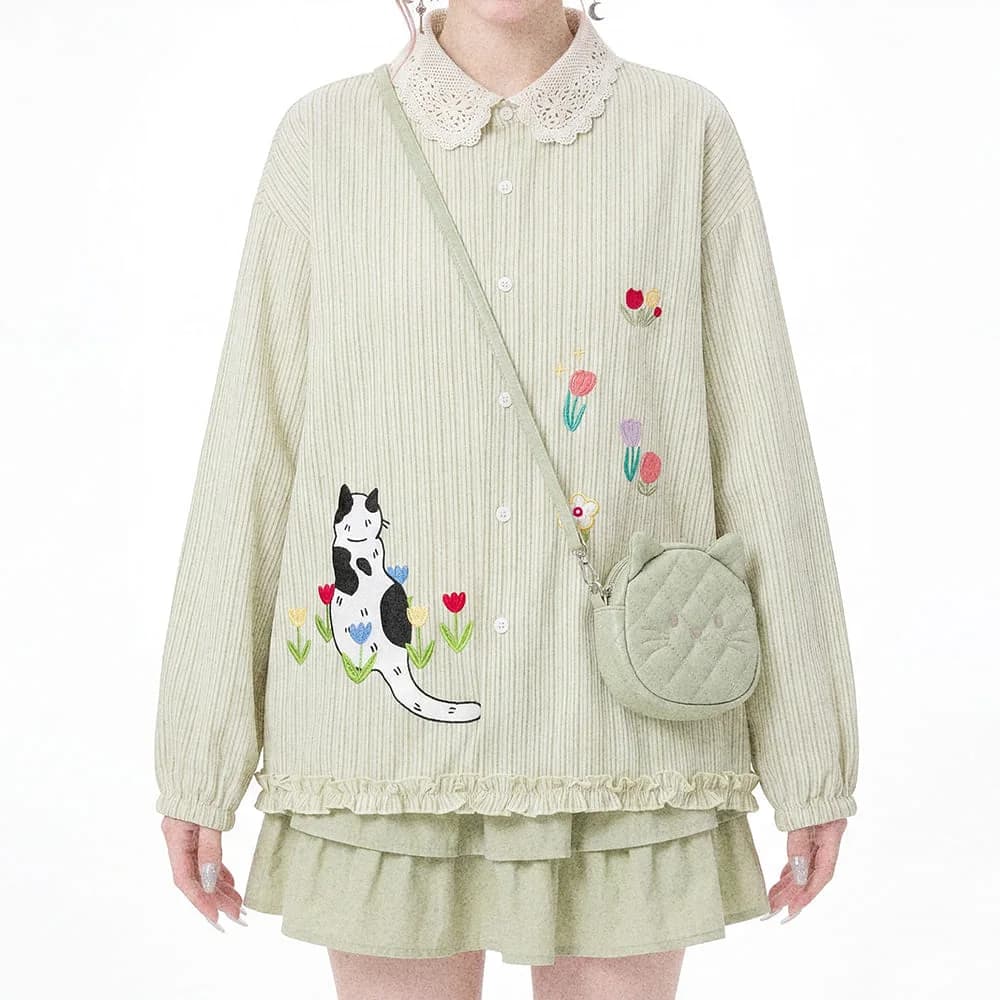
This is the easiest outfit to start with. Take an embroidered cottagecore button-down or blouse as your cute focus. Look for pieces featuring charming motifs like small animals or botanical floral accents on a soft green background. The animal brings the sweetness, the flowers add a classic cottage note, and the green serves as your calm connector. One piece does a lot.
Because the shirt does three jobs, keep the rest simple. Try a plain cream or light brown skirt or straight, relaxed trousers, and flat shoes. Tuck the shirt in loosely at the front if you want a waist, or leave it out over a high-waisted bottom. Either way, avoid adding a second printed top layer.
Now the second and third pieces. Piece two can be a plain cream cardigan or knit vest. Piece three can be a small bag. If the shirt is your embroidered moment, a quiet bag is better than a loud one.
Why it works: the green and cream are close in tone, the embroidery gives texture without needing a print on the bottom half, and the outfit stays easy to repeat with other bottoms. For work or class, swap the skirt for dark trousers and it reads neat and friendly.
Outfit Two: Knit Crop Top and High Waist
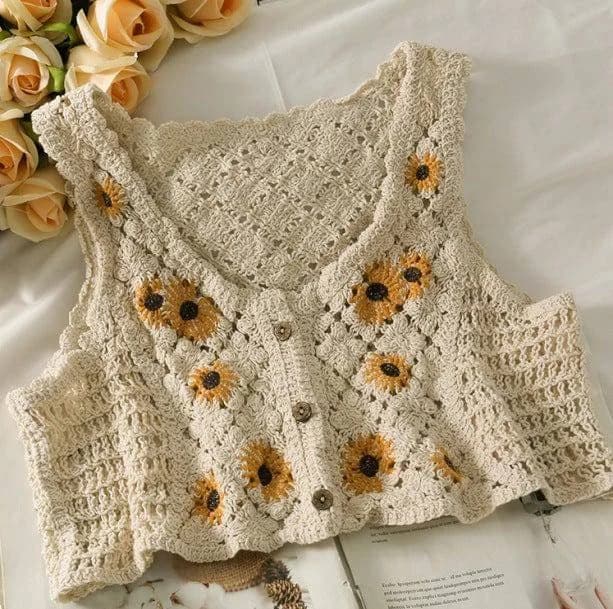
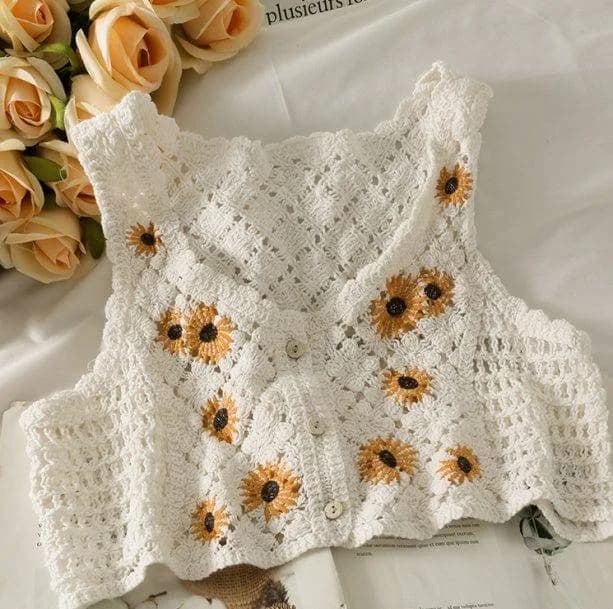
For a cozier, slightly younger feel, start from the Cottagecore Knitted Crop Top. It comes in white and apricot, in one size. Since the cut is cropped, the secret is the waistline underneath. Pair it with a high-waisted skirt or trousers so the proportions look intentional: short on top, high at the waist, longer below.
Choose the color by what you already own. White is the cleaner base and goes with soft greens and browns. Apricot adds warmth and goes well with sage, cream and faded florals. Do not pair apricot with a bright pink, as the two can fight.
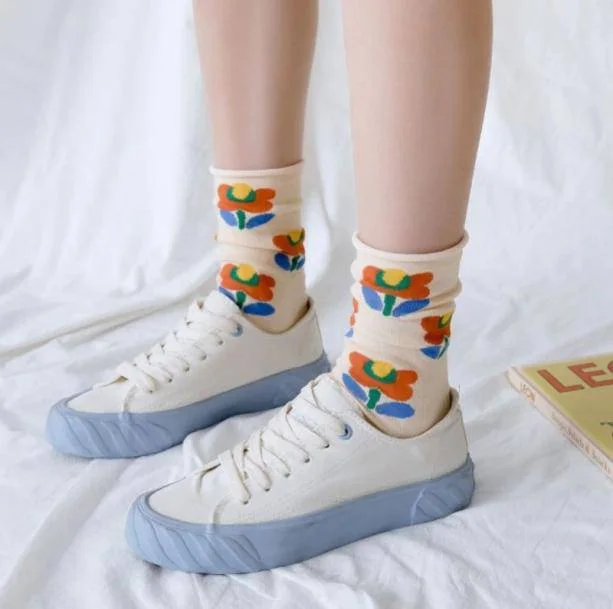
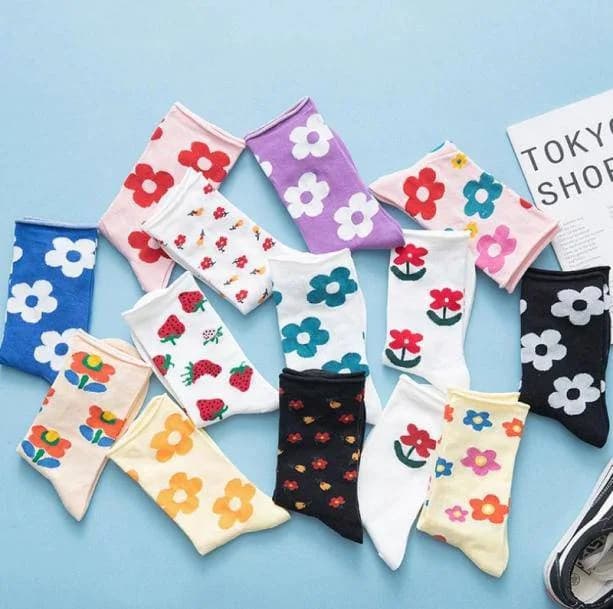
The cute focus here can be lower down. Try novelty flower socks with rounded shoes and a skirt that stops above the ankle, so the socks show. The Kawaii Flower Socks come in options numbered 1 to 10 and one size, so look through the photos to find the one that sits closest to your palette. Choose a soft option if the knit is the star, or a bolder one if the knit is white and plain.
Add a third piece in green: a skirt, a ribbon or a bag strap. Done. The outfit has a cottage knit, a cute detail at the ankle and a green connector, and nothing is competing.
Outfit Three: Herb Tee, Patchwork Bag, Long Skirt
Not every day calls for a dress. This one starts with a botanical or herb-themed graphic tee. Available options in soft green, white or heather grey make an easy, relaxed everyday anchor when you want cottage comfort.
Pair it with a long, softly flowing skirt in a solid color. Cream, tan or deep olive all work. If you pick the green tee, choose a neutral skirt. If you pick white or grey, a sage or moss skirt brings the palette back. Tucking the front of the tee in keeps the skirt from swallowing your shape.
Then bring in the cute focus through the bag. A patchwork shoulder bag in complementary tones carries a lot of visual interest, so keep the clothes calm around it. It brings that handmade, quilt-like feeling that suits cottagecore without needing any animals at all.
If you want a bunny too, tuck in the brown clips from earlier. Just be mindful: patchwork bag plus bunny clips plus a graphic tee is three voices already. Drop one of them if the outfit starts to feel busy. This is the three-piece rule in everyday form.
Bags and Backpacks: Choosing the Right Size and Mood
A bag is often the cheapest way to try a motif, because you can change it without changing your clothes. Think about the job first. A shoulder bag suits walking around, cafes and light carry. A backpack suits campus, commuting and days when you need your hands free.
If you want the backpack route, look for a charming floral or daisy backpack in a coordinating shade like soft green, neutral black or pastel pink. Green makes a natural connector against a cream or white top. Black is the most grown-up and works if the rest of your outfit is already full of softness. Check the product page for dimensions before you buy, because we do not want to guess whether it fits a laptop or your daily bits.
With any bag, match the color to one thing in your outfit, not everything. If the bag is multicolor, like the patchwork shoulder bag, pick the calmest color in it and echo that in a smaller spot, such as socks or a hair accessory.
Weight matters too. A pretty bag that digs into your shoulder will stay in the wardrobe. Think about strap length and how you carry things, and read the listing carefully for what is actually described.
Tiny Details: Hair Clips, Socks and Phone Case
Small items are where kawaii cottagecore gets its personality at low cost. They are also where it gets cluttered fastest. A good habit is to choose just one tiny detail per outfit as the cute focus, then let the others be neutral.
For hair, the brown bunny clips mentioned earlier can go on either side of a center parting, or one can hold back a front section while the other stays in a pocket for later. On short hair, use them at the temples. Brown sits nicely with most hair colors and with green clothes.
For feet, the flower socks add a cheerful line between hem and shoe. Show them with ankle boots, loafers or flats, and keep skirts or trousers cropped enough to reveal them. For your phone, consider a themed case featuring a sweet lamb or woodland creature in soft green. Always check your exact phone model in the option dropdown before ordering. A green creature case is a gentle nod to the theme and can serve as your connector when your outfit is otherwise neutral.
Do not wear all three at once unless the clothes are completely plain. Pick the one that makes you happiest and let the others wait.
Weather and Layering Without Losing the Look
Rather than tying this to a season, think in temperatures. When it is warm, lean on light cotton-feeling tops, dresses and ankle socks. Sleeves can be puffed, but keep the fabric airy. Pick pale greens and cream, which look fresh and don't hold the eye as much as heavy browns.
When it is mild, your third piece becomes the layer. A cardigan, a knit vest or a light shirt worn open over a tee gives you a connector in soft green. This is also the best time for the Cottagecore Knitted Crop Top, worn over a long-sleeve tee if you want more coverage, though check the product page for fit rather than assuming stretch.
When it is cold, build from the base. Put on warm basics first, like tights or thermal layers in neutral colors, then your cottage anchor, then a coat in brown, olive or cream. Keep your cute focus visible: clips, socks above boots, a bag outside the coat. If the weather hides the clothes, the accessories carry the look.
Rain calls for practical choices. A bag in a wipeable material may be better than a fabric one, but check the listing for care details instead of assuming. And protect delicate embroidery by following care guidance on each product page.
How to Compare Options Before You Buy
With a lot of cute items, it is easy to add things that do not talk to each other. Before checking out, lay your picks side by side, on screen or on a bed, and ask the same four questions. Which one is my cottage anchor? Which one is the cute focus? What is my green connector? What is the plain stuff supporting them?
Then compare practical details. Look at the available sizes, because sizing varies significantly across items: certain tops offer standard size runs from S upwards, while accessories and specialty items are often one size only. Read the material line where it exists, and where it is blank, don't assume. Look at color options too, since photos can show only one version.
Compare price per wear, too. A neutral base that works with five things is a better buy than a loud piece that works with one. If you are unsure, buy the quiet connector first, then add the cute focus later when you know your palette.
Finally, check delivery and return information on our policy pages for your country, since we won't guess at timing or terms here. That keeps surprises to a minimum and lets you shop with a clear head.
Common Pitfalls and a Final Checklist
The biggest mistake is stacking motifs. Mushrooms, bunnies, flowers, gingham and patchwork all in one outfit read as noise. The second is mismatched greens, where one item is yellow-olive and another is blue-mint. The third is ignoring shape: lots of volume on both top and bottom can swallow you. And the fourth is forgetting the plain pieces, which are what make the cute ones look good.
Another trap is buying only the fun items. Without calm basics like cream tops, straight trousers and simple shoes, you will end up with a drawer of statements and nothing to wear them with. Keep a handful of neutral pieces in cream, brown and sage, and everything else becomes easier.
Before you leave the house, run this quick check. You can also browse the Kawaii Bunny and Cottagecore collections again with these questions in mind, and pick up one piece at a time rather than a whole new wardrobe.
- Can I name my three pieces: anchor, cute focus, connector?
- Is green repeated in a big spot and a small spot?
- Is only one item doing the loudest motif?
- Is there one soft, voluminous shape, not two?
- Do the plain pieces outnumber the printed ones?
- Have I checked sizes, materials and care on each product page?