Created by the Kawaii Vibe editorial team. Our named style desks are editorial personas. Product details and availability can change.
Balancing Danish pastel pants comes down to managing soft visual weight against structured volume. Pastel tones like butter yellow, soft mint, powder blue, and baby pink naturally draw the eye outward because light colors reflect light. When you pair those tones with relaxed cuts, wide legs, or bold checkerboard prints, your lower half carries substantial visual presence. If your top half feels disconnected in volume or length, the outfit can quickly look shapeless or bottom-heavy.
The goal of this guide is to show you exactly how to calibrate horizontal width, vertical length, and seasonal layeringWearing pieces over or under one another to add depth, warmth or contrast. so your outfit feels intentional, calm, and grounded. Whether you are working with lightweight cotton loungewear, graphic street trousers, or quilted textures, getting your proportions right means treating every garment as a counterweight to the piece next to it.
Instead of treating pastels as a novelty theme, we will approach them through practical garment ratios. You will learn how to identify your pants' volume profile, select tops that frame your waistline cleanly, choose footwear that anchors wide hems, and layer light outerwear without losing your silhouetteThe overall shape an outfit creates, from fitted to loose and layered..
Understanding the Visual Weight of Soft Colors
Pastel fabrics reflect more ambient light than deep navy, charcoal, or washed black denim. Because light colors visually expand while dark colors recede, a wide-leg pant in pale lilac or seafoam naturally reads wider than the exact same cut in raw indigo. When you plan Danish pastel pants outfits, you need to acknowledge this visual expansion right from the start rather than trying to hide it.
To keep light-toned pants grounded, evaluate their surface texture and fabric density. A smooth, opaque textile like a cotton twill or dense polyester blend holds its shape across the thigh and knee, creating clean vertical lines. Thin, unstructured knits or lightweight poplins, on the other hand, drape close to the leg and fold around your movement, which changes how wide the leg looks in motion. Understanding whether your pants hold their structure or collapse downward helps you decide whether your top layer needs crisp edges or soft drape.
When styling, look at your overall reflection as color blocks. If the lower block is wide and luminous, the upper block needs a clear focal point—such as an open collarline, a neat hem crop, or a contrasting tone—to keep your eye circulating rather than settling solely at the hemline.
- Lighter hues reflect light, creating the impression of greater width than dark tones.
- Structured fabrics provide crisp borders that help define your silhouetteThe overall shape an outfit creates, from fitted to loose and layered..
- Draping fabrics move fluidly, softening the overall volume of wide cuts.
Classifying Your Pants: Volume, Hem Break, and Rise
Before choosing what to wear on top, classify your bottoms by their three core structural dimensions: volume through the leg, the break at your ankle, and the rise at your waist. High-rise pants that sit at your natural waist create an extended leg line that can easily support exaggerated widths, while mid-rise and low-slung cuts place the horizontal dividing line across your hips, requiring different upper-body lengths.
Next, look at the hem break. A full break occurs when wide-leg trousers pool slightly over the top of your shoes, which enhances a relaxed, streetwear-leaning aesthetic. A no-break hem sits directly above your shoe collar, exposing the ankle or footwear profile and keeping the outfit feeling tidy. If your bottoms have a wide leg opening, a slight puddle break looks effortless, whereas tapered pastel trousers look crisper with an ankle-skimming crop.
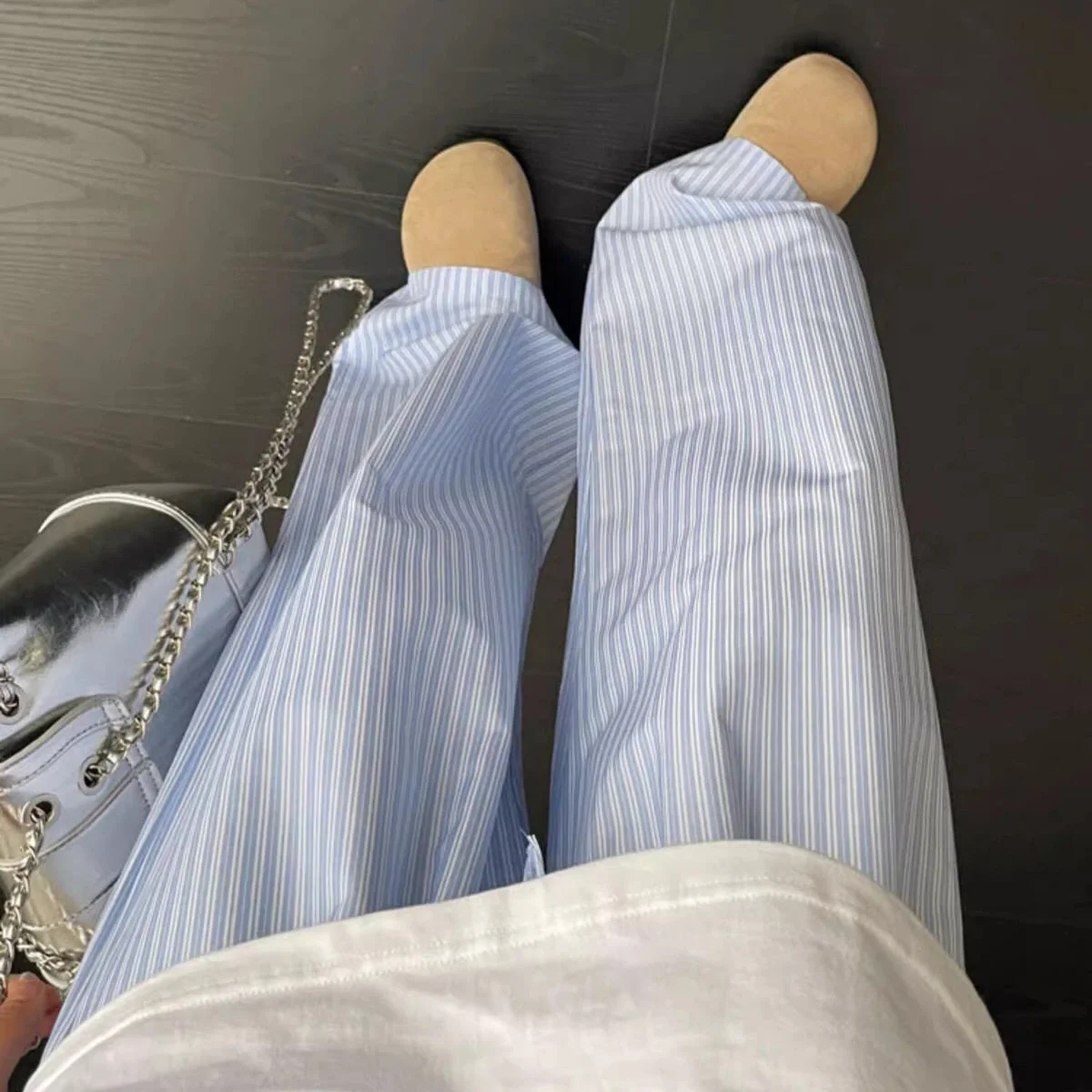
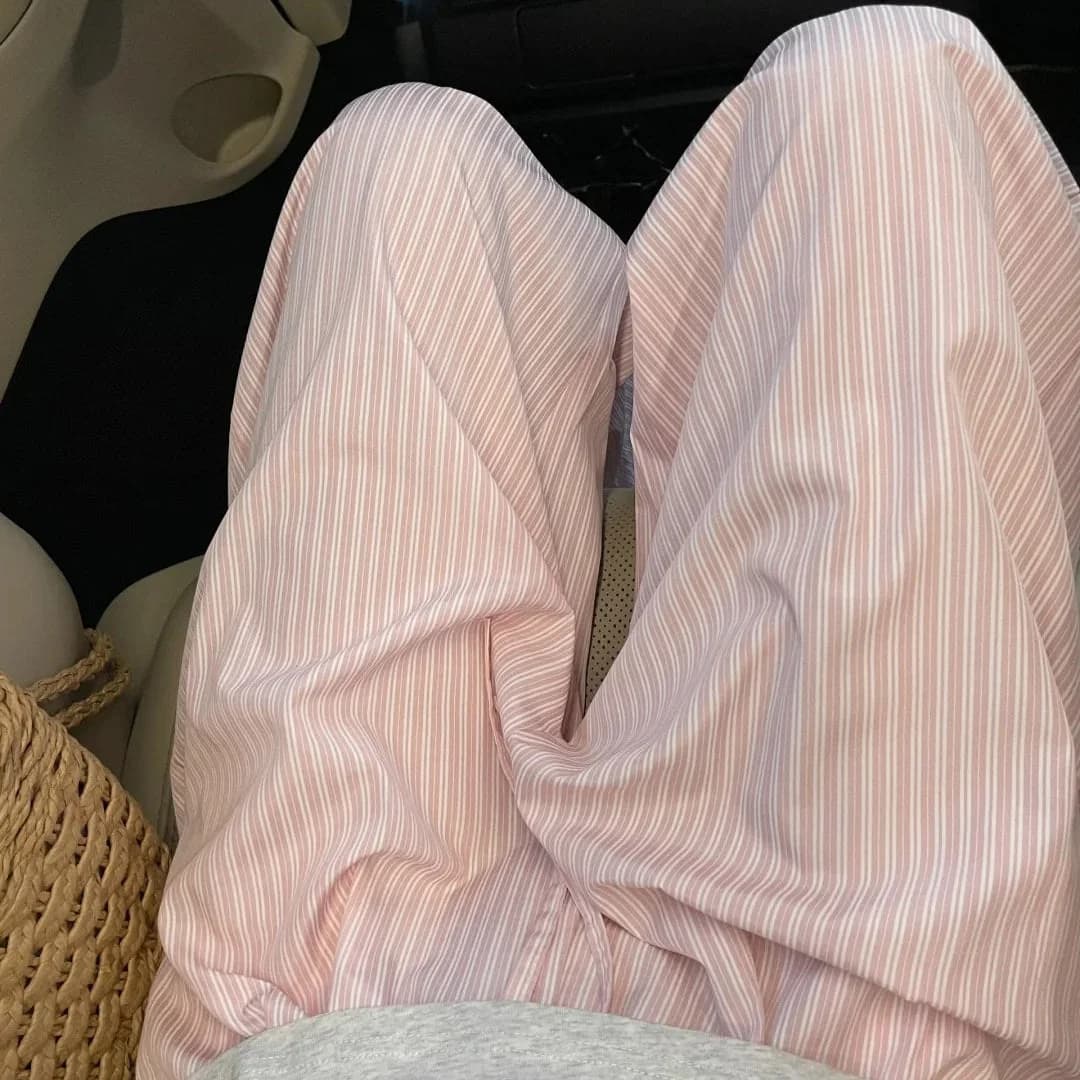
You can see this distinction across different trouser cuts. For example, our Loose Fit Pastel Cotton Stripe Pants offer a relaxed, straight drape made from a polyester and cotton blend with light blue or pink stripes, lending themselves to easy everyday pooling. In contrast, heavier utility styles fall with stiffer vertical lines that require firmer footwear to prevent the fabric from buckling awkwardly around your ankles.
- High-rise cuts maximize visual verticality to balance very wide trouser legs.
- Hem pooling adds casual ease, while cropped hems preserve clean definition.
- Straight-leg silhouetteThe overall shape an outfit creates, from fitted to loose and layered.s allow more flexibility with layeringWearing pieces over or under one another to add depth, warmth or contrast. lengths than dramatic barrel cuts.

The Cropped-Top Ratio: Keeping Waistlines Visible
The simplest, most reliable way to balance wide-leg pastel bottoms is by pairing them with a hemline that ends at or slightly above your natural waistband. When your pants feature an expansive sweep through the thigh and calf, a cropped top establishes a high waistline, immediately preserving an elongated lower-half line and preventing your torso from looking compressed under heavy fabric.
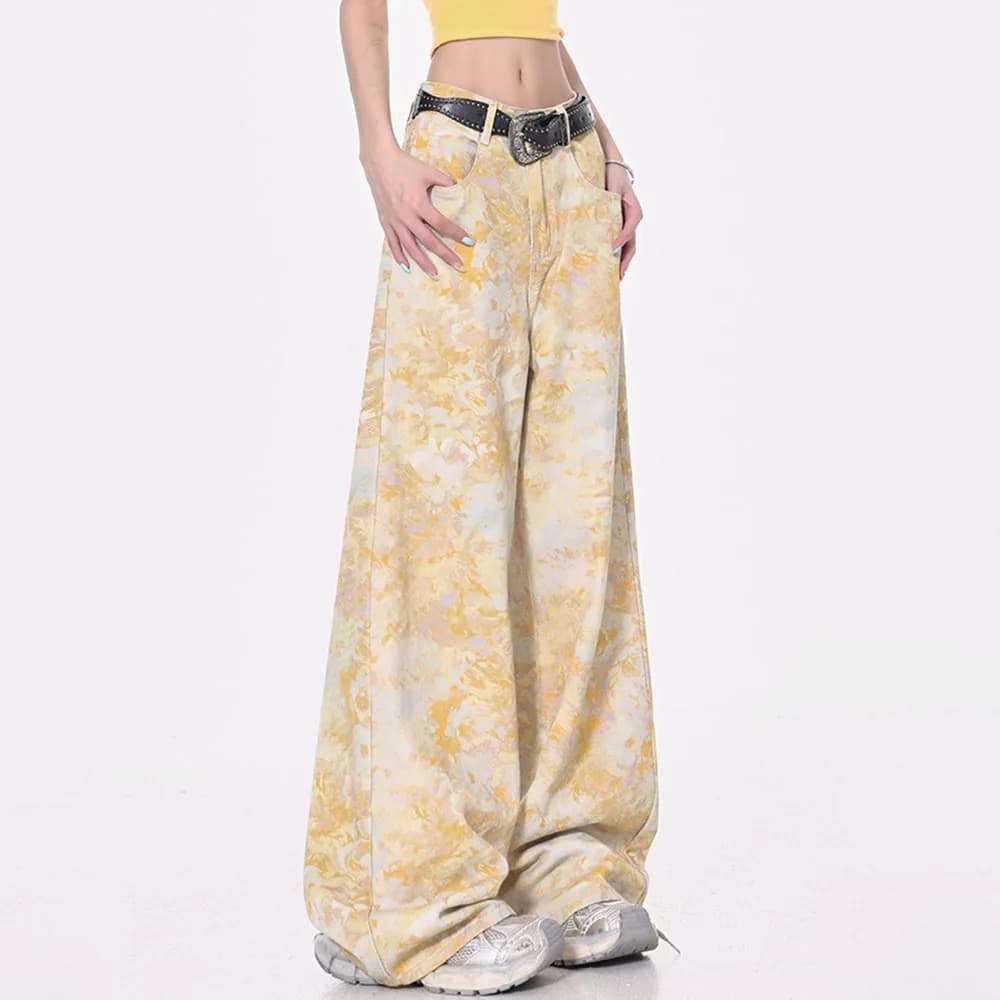
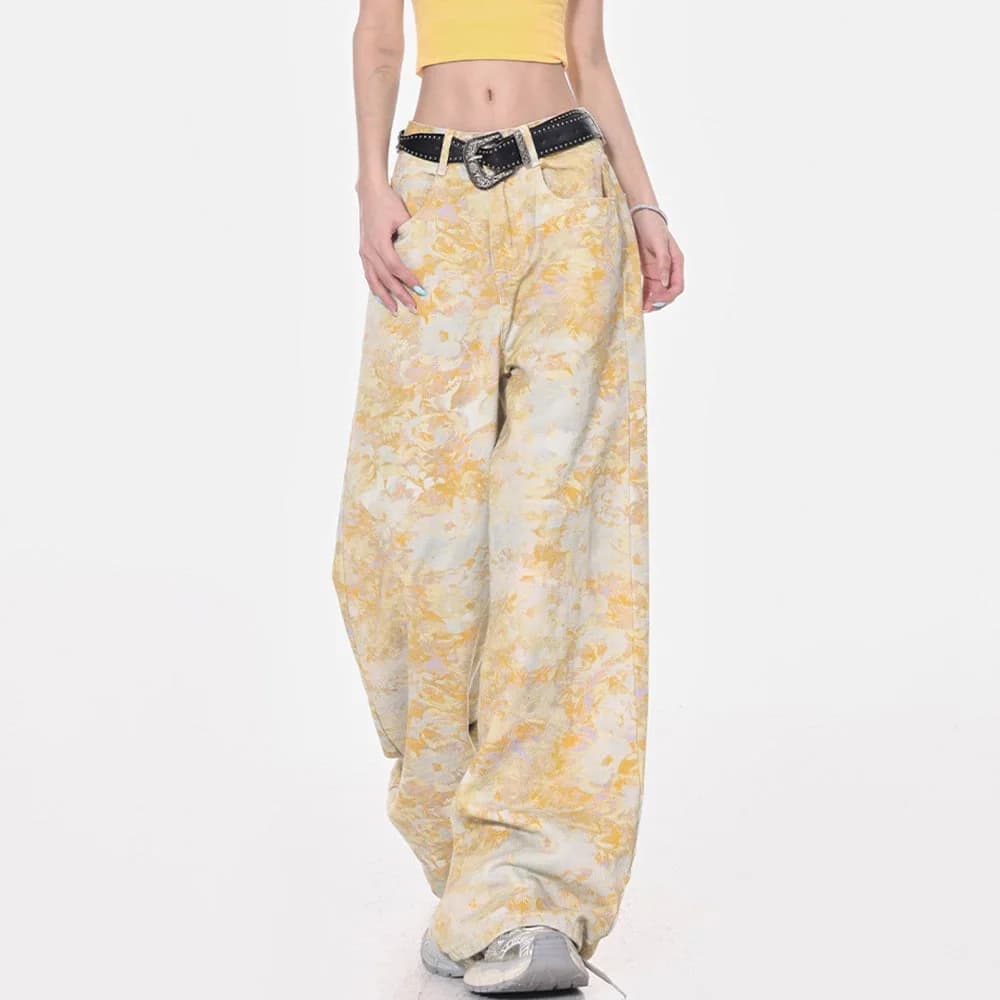
If you are styling casual streetwear bottoms like our Lemon Swirl Baggy Pants, which feature an all-over graphic swirl pattern in cotton and polyester, pairing them with a shorter top gives the pattern room to breathe without overwhelming your frame. A fitted baby tee or a lightly cropped ribbed shirt acts as a neat anchor, letting the yellow swirl pattern command the visual interest below.
When choosing cropped tops, consider the sleeve length as well. A short cap sleeve or a sleeveless cut leaves your arms bare, balancing out full-coverage pants on warmer days. If you prefer long sleeves, opt for a close fit through the forearms to offset the loose fabric rippling through your trousers.
- Cropped hems reset the visual waistline at your narrowest natural point.
- Bold graphic trousers benefit from clean, non-competing tops.
- Fitted sleeves provide a tidy counterweight to voluminous trouser hems.

Fitted Underlayers: Balancing Exaggerated Trousers
When your pants feature maximum volume, texture, or padding, tight-fitting underlayers become your best friend. A form-fitting base layer introduces negative spaceAn uncluttered area that gives the rest of a design room to stand out. across your chest, shoulders, and waist, giving clear definition to your body while allowing your trousers to be as playful or dramatic as you want.
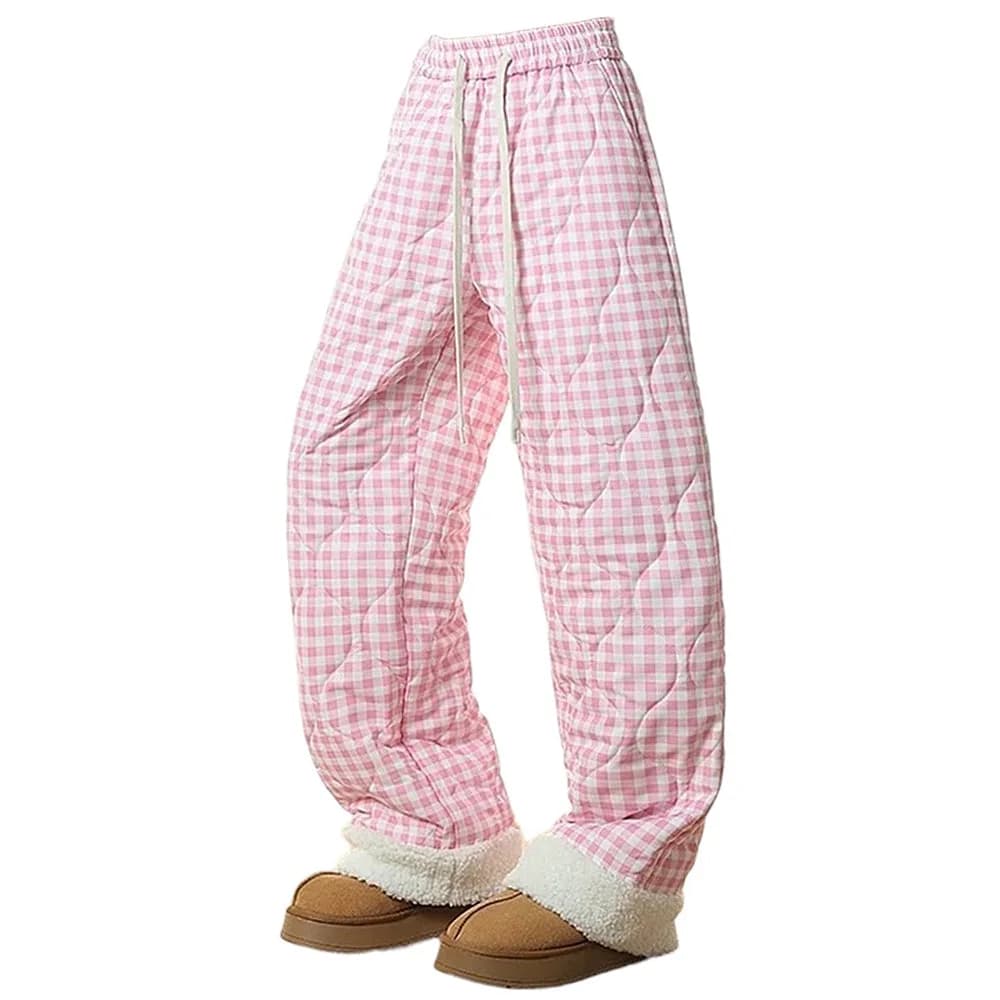
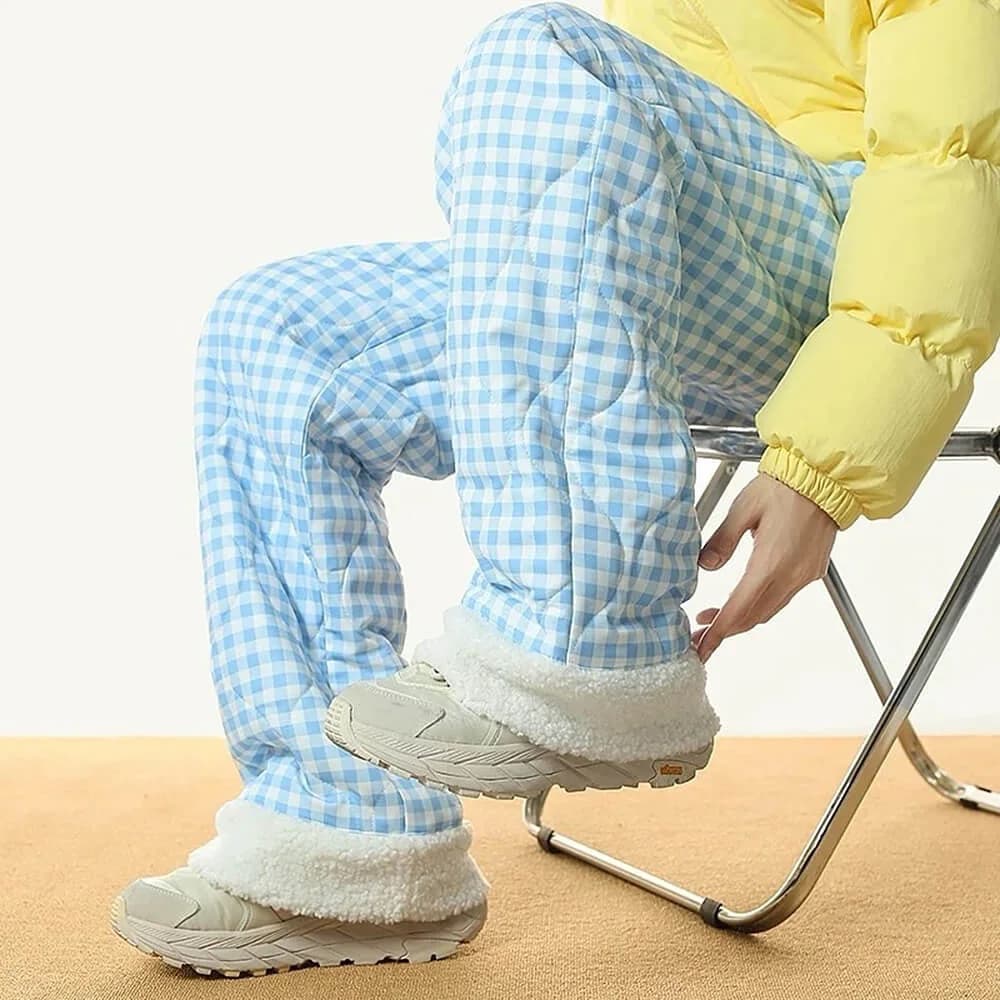
Consider an extreme volume piece like our Pastel Checkered Puffer Pants. Made from polyester with padded quilting in pink or blue colorways, these bottoms carry unmistakable physical and visual bulk. If you pair them with an oversized hoodie, the entire silhouetteThe overall shape an outfit creates, from fitted to loose and layered. loses all structure. However, pairing them with a sleek tank top, such as the Pastel Kitty Tank Top, creates instant contrast between your fitted upper torso and the quilted grid below.
This formula works just as well across everyday denim and cargo trousers. Tucking a fitted ribbed camisole, mock-neck top, or stretch bodysuit into structured Danish Pastel Pants creates an uncluttered horizontal seam at the waistband, keeping your outfit balanced even if you add a loose jacket later on.
- Quilted and padded trousers need form-fitting base tops to avoid silhouetteThe overall shape an outfit creates, from fitted to loose and layered. bloat.
- Tucking in your base layer preserves clean waist definition.
- Sleeveless underlayers offer structural balance against wide pant legs in mild weather.

Styling Danish Pastel Jeans: Structure Versus Softness
Denim provides a distinct visual rhythm compared to loungewear or fluid trousers because of its structural weave, exposed seams, and pocket hardware. When you wear pastel denim, you get the gentle, whimsical palette of soft tones combined with the durable, boxy structure of classic jeans. This balance makes denim an ideal grounding piece for experimental outfits.
To browse different denim silhouetteThe overall shape an outfit creates, from fitted to loose and layered.s, explore our curated Danish Pastel Jeans lineup, where straight cuts, wide flares, and wide-leg fits sit alongside gentle cream, mint, and soft lilac washes. Because denim holds its shape independently without clinging to the body, you can experiment more boldly with soft knitwear and flowy blouses on top without losing your architectural silhouetteThe overall shape an outfit creates, from fitted to loose and layered..
When styling pastel jeans, match the heaviness of your top to the weight of your denim. A stiff, heavyweight pair of pastel jeans supports slightly chunkier cardigans, whereas a lightweight, soft-wash cotton jean works beautifully with lightweight tees, silky camisoles, or delicate tie-front blouses.
- Denim maintains its own structure, preventing pastel shades from looking like sleepwear.
- Visible seam lines and rivets add grounding utility details to soft outfits.
- Heavyweight denim pairs naturally with textured knitwear, while lightweight denim favors breezy tops.
Knit Pants and Fluid Fabrics: Managing Movement
Knit bottoms and fluid textiles introduce continuous motion to an outfit. Unlike rigid denim, knits stretch, shift, and puddle around your stride. While this makes them exceptionally comfortable, it also means their visual width changes dynamically as you walk, sit, and move throughout the day.
A design like our Cotton Candy Knit Pants, crafted from multicolor polyester yarn, brings soft visual texture and dynamic color transition to your lower half. Because knit fabric has soft, unfixed borders, styling it requires a top with a distinct hemline. If you pair knit pants with an equally soft, untucked knit sweater, the look can easily feel like pyjamas. Instead, establish clear structure up top with a neat collared shirt, a tailored baby tee, or a cropped knit with defined ribbed borders.
Footwear also plays a major role when styling knit pants. Shoes with a substantial sole, such as a platform sneaker or a solid wooden-soled mule, hold knit hems off the ground, keeping the vertical line clean and preventing soft pants from dragging or wearing down along the back heel.
- Fluid and knit pants change width as you walk, requiring grounded footwear.
- Avoid pairing loose unstructured knits with loose unstructured tops unless loungewear is the goal.
- Firm platform soles keep soft trouser hems clean and elevated off the sidewalk.
Mastering the Oversized-on-Oversized Look Safely
The Scandinavian aesthetic frequently embraces loose garments worn over loose garments, but this is done with deliberate care rather than accidental carelessness. Wearing an oversized top over wide-leg pastel pants works when you introduce subtle styling interruptions that signal where your body starts and ends.
One of the most effective techniques is the partial tuck or French tuck. When wearing relaxed tees from our Danish Pastel T-Shirts range over slouchy trousers, tucking just the center front of the hem into your waistband creates a curved vertical line that reveals your rise while letting the sides drape naturally around your hips. This simple adjustment prevents a boxy tee from turning into a straight, unflattering cylinder.
Another reliable method is neckline management. An oversized top with an open collar, deep scoop neck, or unbuttoned camp collar exposes skin along your clavicle and neck. This open negative spaceAn uncluttered area that gives the rest of a design room to stand out. prevents the combined volume of your top and bottoms from swallowing your frame, creating lightness right near your face.
- A gentle front tuck breaks up a long horizontal hem without looking stiff.
- Open necklines allow oversized silhouetteThe overall shape an outfit creates, from fitted to loose and layered.s to breathe.
- Rolling or pushing up your sleeves exposes wrists, adding balance to full-cut garments.

Layering Cardigans: Lengths, Buttons, and Drape
Cardigans are a cornerstone of pastel layeringWearing pieces over or under one another to add depth, warmth or contrast., offering both warmth and tonal continuity. However, the length of your cardigan drastically influences how your pants are framed. A cardigan that ends at the widest point of your hips will broaden your silhouetteThe overall shape an outfit creates, from fitted to loose and layered., whereas a cropped cardigan or a longline duster creates vertical continuity that complements wide trousers.
Our Danish Pastel Cropped Cardigan illustrates this concept well. Made from lightweight polyester and available in pink, blue, white, green, and yellow, its shorter hem meets high-waist pants directly at the waistband. By leaving the lower two buttons unfastened, you create an inverted 'V' shape that widens slightly over your pant waistband, framing your midsection without clinging tightly.
If you prefer full-length cardigans, choose styles made from fine-gauge knits rather than chunky, heavy wools. Let the cardigan hang completely open so that it forms two long vertical color pillars on either side of your body, framing your pastel pants and tee in the center while maintaining a flattering, unbroken vertical line.
- Cropped cardigans maintain clean waistband visibility on wide-leg trousers.
- Unbuttoning the lowest cardigan button creates an inverted split that eases hip transitions.
- Open longline cardigans create slenderizing vertical side columns around your outfit.
Co-Ords and Matching Sets: Proportions in Uniform Pastels
Matching sets remove the guesswork of color coordination, but they introduce a unique structural challenge: wearing an identical pastel tone from shoulder to hem can turn your body into a single monochrome block. To keep a matching outfit engaging, you must introduce contrast through proportion, texture, and subtle skin exposure.
For example, pairing coordinates like our Pastel Mermaid Top—a three-color polyester style available in pink, yellow, and blue—with matching bottoms works best when the neckline, midriff, or shoe choice breaks up the single-color field. When a co-ord set utilizes matching pastel pants, adding a white or cream tank top underneath an open shirt provides a crisp divider that grounds the matching pieces.
You can also break up a monochromatic pastel set by introducing contrasting accessories. A structured canvas tote bag, a neutral leather belt, or chunky white sneakers inject clean boundary lines into a coordinated outfit, preventing the soft hues from blending together indistinctly.
- Monochrome sets require focal breaks at the waist, neckline, or footwear.
- LayeringWearing pieces over or under one another to add depth, warmth or contrast. a neutral base under a matching top-and-bottom set separates the colors cleanly.
- Structured accessories introduce crisp borders against soft matching fabrics.
Graphic and Printed Pants: Pattern Ratios
Patterned pants are an expressive staple in aesthetic fashion, ranging from whimsical ditsy florals to bold cosmic prints and abstract swirls. Because printed trousers carry twice the visual complexity of solid-color pants, they demand careful coordination with your tops to avoid visual clutter.
When wearing trousers with distinct motifs, such as our Star Print Baggy Pants in pink or grey polyester, make the pants the hero piece of your outfit. Pair them with solid-color basics chosen directly from our Danish Pastel Tops collection, such as a plain cream baby tee, a pastel ribbed long-sleeve, or a minimalist pastel tank top. Pulling one neutral tone directly from the print's background keeps the outfit harmonious without competing for attention.
Scale also matters when mixing patterns. If you feel adventurous and want to combine a patterned top with printed pants, ensure the two prints have vastly different scales. Pair a micro-gingham or tiny floral blouse with large, bold checkerboard trousers, or team a large-scale graphic print with subtle, fine pinstripes.
- Let expressive printed pants act as the primary visual focus of your outfit.
- Pick out the secondary color from your pants' print when selecting your top.
- If mixing prints, combine a small-scale micro pattern with a large-scale motif.
Footwear Ratios: Anchoring Wide Pastel Hems
Your shoes serve as the physical base of your outfit, dictating how your trouser hems fall and how grounded the soft pastel shades feel against the sidewalk. Because light-toned trousers naturally draw attention downward toward your feet, flimsy, paper-thin flats can often make wide-leg pants look disproportionately heavy and unfinished.
To balance the sweep of wide-leg trousers and baggy jeans, lean into shoes with solid visual substance. Platform canvas sneakers, retro skate shoes with thick rubber foxing, chunky loafers, and padded slides all provide enough physical presence to anchor a wide hemline. The sole gives the fabric something firm to rest upon, preventing hems from collapsing into your arches.
Shoe color also influences vertical proportions. Matching your footwear color closely to your pant hue extends the vertical line of your legs, making you appear taller. Alternatively, choosing a clean optic white sneaker creates a bright, crisp contrast that complements the playful, breezy nature of aesthetic pastel styling.
- Chunky soles and platform shoes provide the necessary counterweight for wide hems.
- Flat, wafer-thin shoes can get swallowed beneath voluminous trouser legs.
- Matching shoe tones to pant colors lengthens the visual appearance of your legs.
Outerwear and Length Transitions for Changing Weather
Styling pastel pants across cooler or shifting weather requires layeringWearing pieces over or under one another to add depth, warmth or contrast. outerwear that doesn't smother your outfit's proportions. The two most dependable coat lengths for wide pastel trousers are a cropped utility jacket that hits at the hip bone, or a long, tailored trench coat that falls past the calf.
Mid-thigh jackets—like standard peacoats or mid-length windbreakers—are generally the hardest to balance with wide-leg pastel bottoms. They cut across your body at a wide point, creating a square, boxy block that conflicts with the volume of your pants below. Instead, a short boxy jacket leaves your trousers' long silhouetteThe overall shape an outfit creates, from fitted to loose and layered. intact, while a long, open trench creates sharp vertical side panels that frame the pastel pants as you walk.
Pay attention to outerwear colors as well. Rather than covering soft pastel trousers under a harsh, dark black coat, opt for neutral outerwear in warm ecru, pale grey, sand, or light sage. These gentle tones complement the softness of your bottoms, creating a unified palette that feels cohesive from head to toe.
- Cropped jackets maintain an elongated lower half by preserving natural waistlines.
- Long, flowing duster coats and trench jackets create lean vertical framing lines.
- Mid-thigh outerwear lengths often disrupt the natural drape of wide trousers.
Everyday Pitfalls and Proportion Fixes
When building Danish pastel pants outfits, a few common mistakes can disrupt your look. The first pitfall is ignoring waistband construction. Elasticated pull-on waistbands, while comfortable, can bunch up under fitted tops. If your pants have a gathered elastic waist, either wear a slightly cropped top that covers just the top seam or choose a looser shirt with a soft front tuck to hide bunching.
Another frequent mistake is color-clashing undertones. Not all pastels share the same temperature; pairing a warm, peachy pink top with cool, lilac-toned pink pants can make one of the garments look faded or slightly dirty. To keep your outfit looking fresh, pair cool pastels with other cool tones (like sky blue and mint), or warm pastels with other warm tones (like pale peach and soft butter yellow).
Finally, avoid the temptation to add too many competing pastel tones at once. While the aesthetic is playful, wearing four different pastels across your top, pants, jacket, and shoes can make an outfit look chaotic. Stick to a primary pastel for your pants, a secondary pastel or crisp neutral for your top, and clean white or ecru accessories to tie everything together.
- Group cool pastels together and warm pastels together to avoid muddy clashes.
- Conceal bulky gathered waistbands using a loose front tuck or relaxed crop.
- Limit each outfit to one or two core pastel colors supported by clean neutrals.
The Outfit Proportion Checklist
Before heading out, run through this quick proportion checklist to make sure your Danish pastel pants outfit feels comfortable, balanced, and intentional. Taking twenty seconds to adjust a hem, unfasten a button, or swap a shoe can transform a disjointed look into an effortless aesthetic ensemble.
First, assess your vertical balance: does your waistline feel clearly identified, either through a cropped top, a deliberate tuck, or a contrasting belt? Second, review your width ratio: if your pants feature expansive volume or heavy padding, is your top sleek enough to provide visual structure? Third, examine your hemline: are your pants falling cleanly over your shoes without dragging uncomfortably on the ground?
To build a versatile wardrobe of soft hues and easy-to-style garments, browse our complete Danish Pastel Clothes directory. By combining comfortable fabrics, mindful layeringWearing pieces over or under one another to add depth, warmth or contrast., and solid proportions, you can assemble cheerful pastel outfits that feel calm, confident, and perfectly balanced every day.
- Waistline clearly identified through a tuck, crop, or fitted underlayer.
- Upper body volume deliberately chosen to counterbalance pant width.
- Shoe sole has enough visual weight to anchor relaxed hems cleanly.
- Palette limited to harmonious warm or cool tones backed by neutral accents.