Created by the Kawaii Vibe editorial team. Our named style desks are editorial personas. Product details and availability can change.
Short answer: in a small room, use three zones instead of one big pile. Put your favourites on a shelf at eye level, store the bulk in a hanging net or corner above the bed, and keep one or two big plushies on the bed itself. That split keeps floor and desk space free and makes the collection look chosen rather than dumped.
This guide covers how to decide what goes where, how much space each approach really needs, how to cut down on dust, and how to avoid the usual mistakes like overloaded nets and shelves that lean. Nothing here needs special tools, and you can mix and match.
Where we mention a specific plushie, it's an optional idea for filling a gap in a display, not a requirement. You can browse the full range in Kawaii Plushies if you want to see sizes and colours side by side.
Start by sorting your plushies into three groups
Before you buy a single hook or shelf, lay everything out on the floor and sort into three piles: show, store and snuggle. Show is the group you want to see every day, usually the ones with the best faces or the most memories. Store is the bigger crowd that you like but don't need front and centre. Snuggle is the handful that actually get hugged, slept with or used as pillows.
Once sorted, count each group. A rough rule that works in most small rooms is about six to ten plushies on show, a net or corner for the store group, and two or three for the bed. If your show pile has twenty, pick again. A display with breathing room reads as intentional, while a packed one reads as clutter even when every plush is adorable.
Be honest about the snuggle pile. Those plushies will get squashed, moved and washed, so they don't belong on a styled shelf. Keeping them on the bed or in a basket stops you from constantly rearranging the display.
- Show: faces you love, in good shape, easy to keep clean
- Store: the bulk, fine to be squished a bit
- Snuggle: bed and sofa plushies that get handled daily
- Rotate the groups every month or two so favourites change
Shelf displays: spacing, depth and height
Shelves are the tidiest option because each plush gets its own spot. Measure your shelf depth before anything else. A plush that is deeper than the shelf will tip forward over time, so choose pieces that fit with a little margin, or sit them leaning against the wall. Put the largest plushies on the lowest shelf, where the weight is safest and the shelf looks balanced.
For spacing, leave a hand's width of air above each plush so ears and heads aren't crushed by the shelf above. Space them so they overlap slightly at most, not stacked three deep. Odd numbers, like three on a shelf, usually look more natural than pairs.
Mix plush with small non-plush items to give the eye somewhere to rest: a framed print, a little lamp, a small plant or a tiny figure. The Kawaii Decorations range is a handy place to look for small bits that sit between plushies without competing with them.
- Biggest plushies lowest, smallest highest
- Hand's-width gap above heads
- Two to four plushies per shelf, then a breather item
- Check the shelf is fixed to the wall if it's tall
Hanging nets and corner hammocks
A hanging net is the best answer for a big collection in a tiny room because it uses wall and corner space nobody else is using. Mount it across an upper corner, ideally above head height when you're standing, so it never gets in your way. Use anchors that suit your wall type, and read the net's own instructions for fixings and any weight limit. If you can't find a stated limit, assume it is lower than you hope and load it lightly.
Fill the net with lighter plushies, since many soft toys together get heavier than they look. Put the bigger ones at the bottom and the lightest on top so the load pulls evenly. Avoid cramming. When a net is stuffed to bursting it sags in the middle and pulls on its fixings.
One thing to plan for is faces. In a net, plushies tend to flop into each other and their faces vanish. Turn your favourites outward and tuck the plain-backed ones behind them. Every month, take them out for a shake and a reshuffle so the bottom ones don't stay squashed flat.
- Mount above standing head height
- Fix to the wall with anchors suited to your wall type
- Light plushies on top, heavier at the bottom
- Never rely on sticky strips for a loaded net
Bed-corner setups that still leave room to sleep
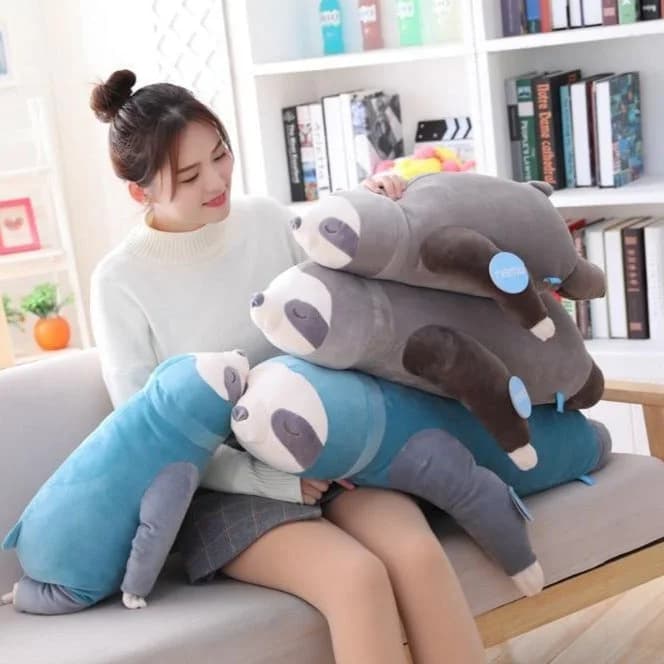
The bed corner is where most plushie collections start, and it works if you give it a boundary. Pick the corner against the wall and keep the pile in a triangle shape with the biggest plush at the back and smaller ones in front. This leaves the rest of the bed clear, and it's easy to move the lot to a chair at night.
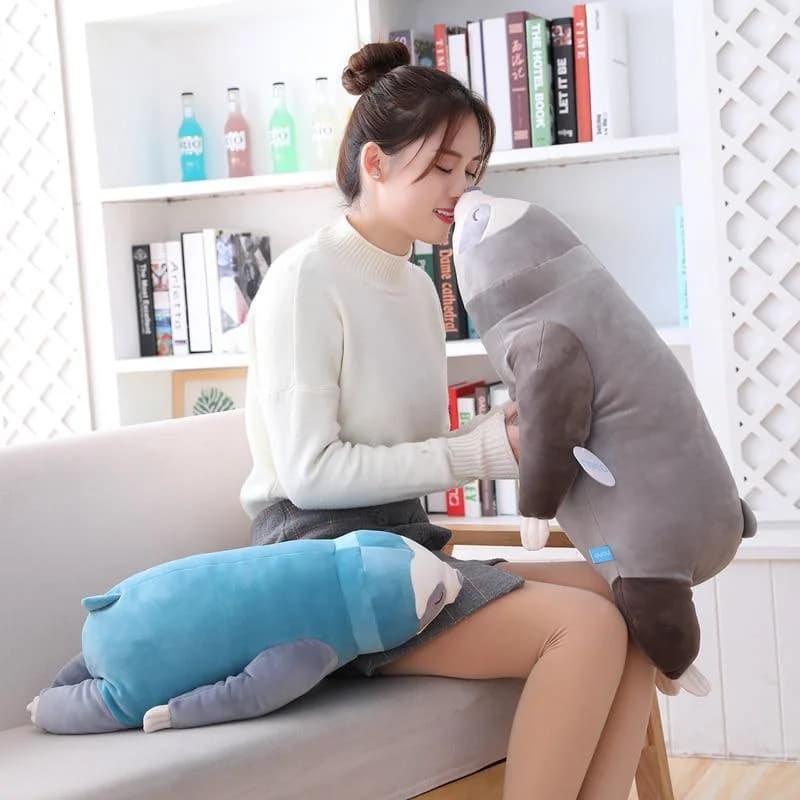
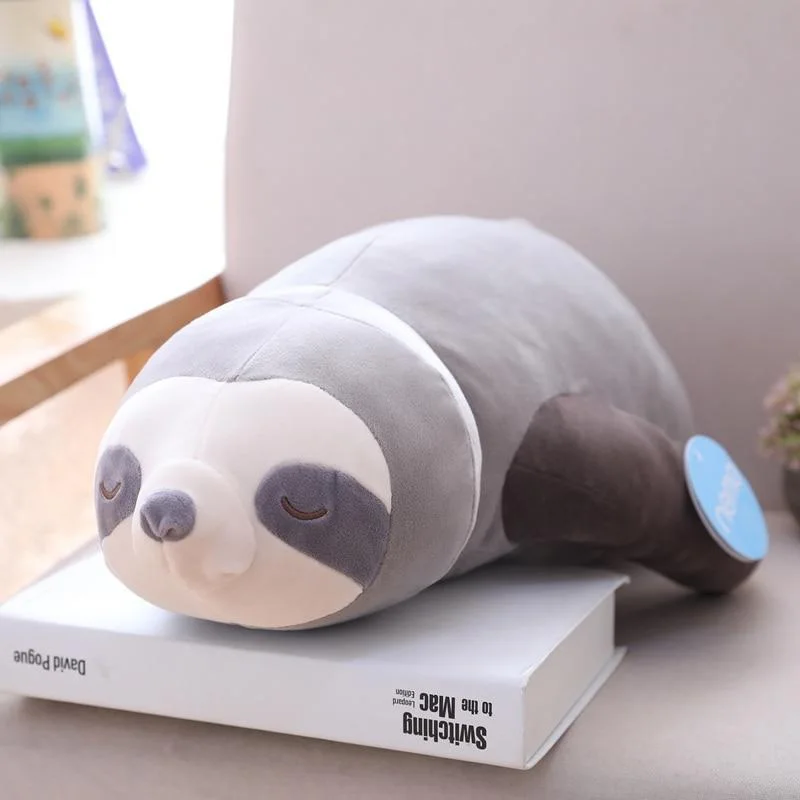
If you're short on floor space, a large plush can double as a back cushion. The Kawaii Sloth Plushie comes in 65cm, 80cm and 100cm, so it can be the anchor of a corner: the smaller size suits a single bed, and the larger ones make a proper lean-back. Measure the corner first, because a 100cm plush takes up more of a small bed than you might expect.
Keep a rule that no more than about five plushies sleep on the bed. More than that, and you spend the evening moving them. A basket or a cloth bin beside the bed gives the overflow somewhere to go without leaving them on the floor.
- Biggest plush at the back, wall side
- Triangle shape, smaller ones in front
- Limit to around five on the bed
- A basket nearby for overflow
Choosing hero plushies as anchors
Every good display has an anchor: one plush that is bigger or more striking and gives the group a centre. Without one, a collection of similar-sized toys can look like a pile of equal voices. Pick the anchor first, then arrange the rest around it.
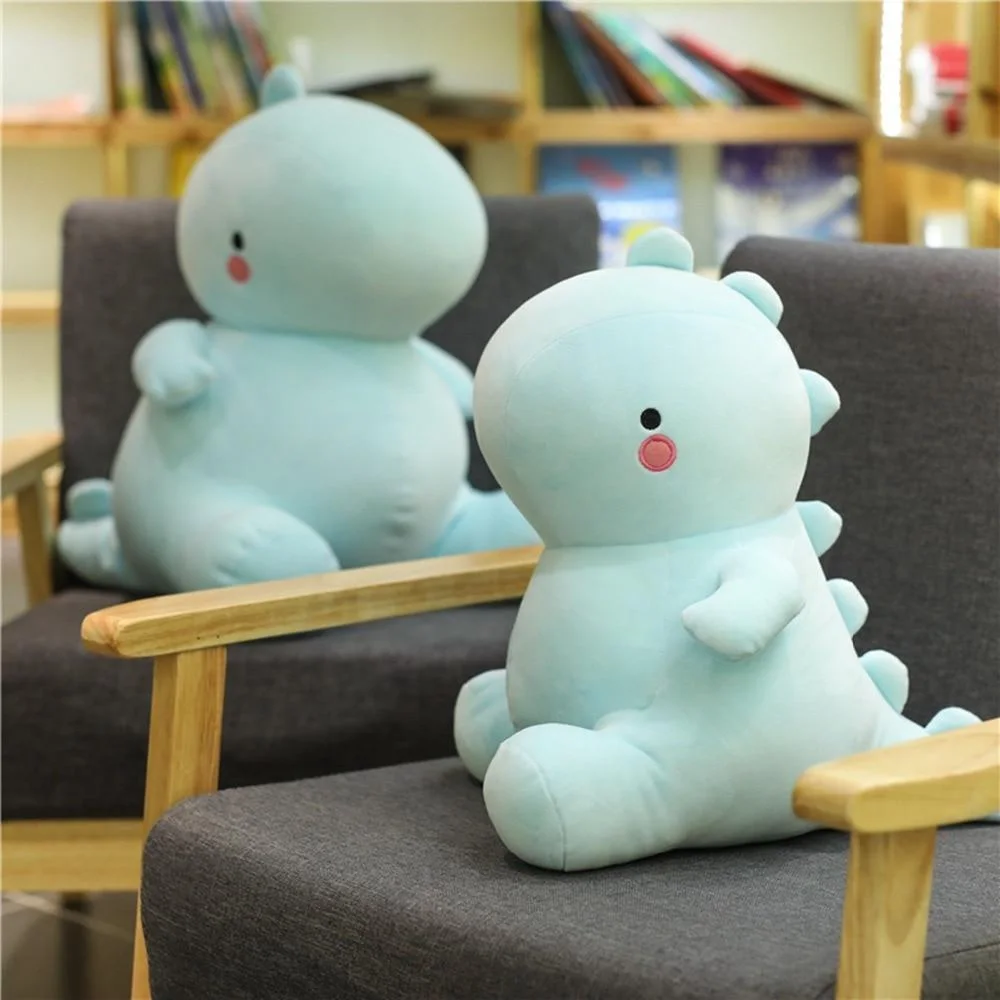
For a shelf, a mid-size piece works well. The Kawaii Dinosaur Plushie is listed in 30cm, 40cm and 50cm, in blue or pink, so you can pick a size to match the shelf depth and height you measured. The 30cm suits a standard shelf, while the 50cm is better on a bed, a chair or the floor corner.
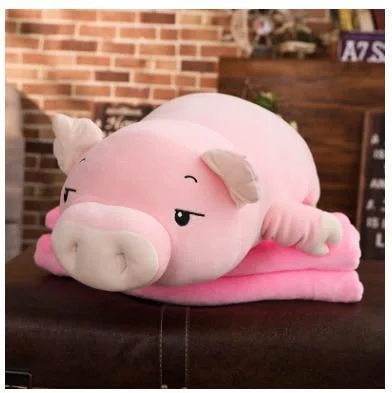
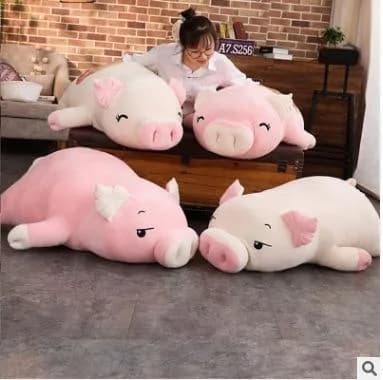
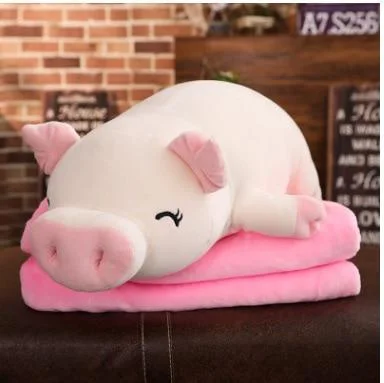
For a bed corner, the Lazy Pig Plushie is offered in white or pink, with eyes open or closed. Closed eyes give a sleepier, calmer look, which fits a bed corner nicely, while open eyes feel livelier on a shelf. Whichever you choose, keep the anchor away from the very edge so it can't be knocked off.

Colour and theme grouping
Colour is the easiest way to make a mixed collection look planned. You don't need to match everything. Instead, group by two or three colours and let the odd outlier be the fun one. For example, a pink, cream and grey shelf will look soft and consistent even if the animals are all different.
If your plushies come from lots of places and clash, split them across zones by colour: the pastel ones on the shelf, the bolder ones in the net. That way each zone feels coherent, and nothing needs to be thrown out.
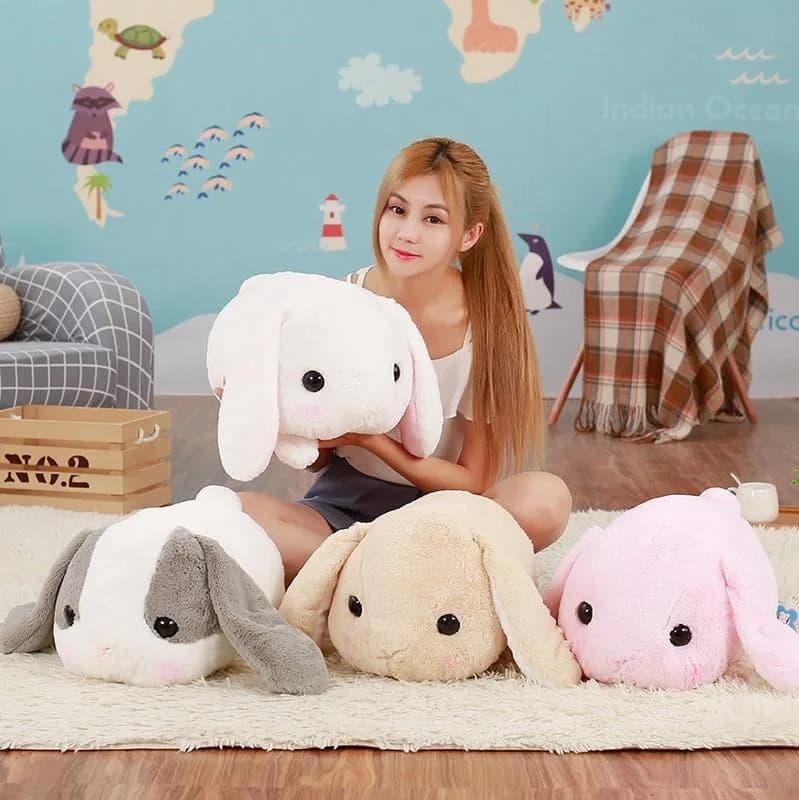
The Kawaii Floppy Bunny Plushie is available in grey, tan, white and pink, which makes it useful for bridging palettes. A grey one can sit with cooler colours, a tan with warmer ones. Likewise the Kawaii Sleepy Cat Plushie comes in purple, cream, blue and dark purple, handy if you want a cooler, dusky corner. Check the exact colour options on each page before you plan around them.
Dust: how to keep a plush display fresh
Dust is the main downside of open display, because soft fabric holds it. The easiest defence is airflow and placement. Avoid putting plushies right above a heater, directly beside an open window, or on the floor where dust settles most. Higher shelves away from the bedding usually collect less lint than the bed area.
Make dusting part of a routine rather than a project. Once every week or two, a quick pass with a soft brush or the brush attachment of a vacuum on a gentle setting, if your plush can handle it, lifts the surface dust. Check each toy's care label first, as specific plushies may have delicate fabrics or stitching that require extra gentle handling.
For pieces you want to keep especially clean, like a prized one on a shelf, you can rotate it with another or give it a protective cover such as a closed cabinet. A glass-front cabinet cuts dust a lot but also hides the cuddly feel, so it suits the very special few rather than the whole collection.
- Keep away from heaters and open windows
- Soft brush pass every week or two
- Check care labels before cleaning
- Rotate favourites so no plush stays dusty for long

Sunlight, damp and other quiet enemies
Direct sun fades fabric over time, especially darker and brighter colours. If your only free wall gets strong light, put paler plushies there or use a curtain or blind to soften it. This applies at any time of year and in any part of the world, since the angle of the sun changes with the room, not just the calendar.
Damp is the other one. A plush on a shelf against an exterior wall in a humid room can pick up a stale smell. Leave a small gap between the plush and the wall, and give the shelf airing time by opening a window now and then. If a room is persistently damp, keep the collection somewhere else.
Also watch out for things that stain: open drinks, scented candles, hair products and makeup near a vanity. Keep plushies out of the splash zone. If you need to clean a mark, spot-clean gently and test on a hidden area first, and follow the care label.
Using the desk, windowsill and other small spots
Once the main zones are set, small spots can finish the job. A desk with a compact plush beside the monitor adds personality without eating work space. Keep it off the keyboard side so it doesn't get in the way of your arm, and avoid placing it where charging cables or heat from a laptop could be an issue.
Windowsills only work when they are deep enough and the plush isn't in strong sun. The Kawaii Cuddle Hamster Plushie is listed in small and large sizes, in grey or brown, so the small one is a candidate for a desk corner or deep sill, while the large one suits the bed or a chair.
Pair these with a few non-plush touches. Browsing Aesthetic Room Decor can help you find lamps, wall pieces or little accents that make a tiny plush spot look styled rather than random.
Matching plushies to the rest of the room
A plushie display looks best when the room around it supports it. If the walls and bedding are busy, a big plush collection will feel loud, so keep the surrounding pieces simple: plain bedding, one or two wall prints, neutral storage. If the room is already plain, the plushies become the colour.
Think about texture and light too. A warm lamp near the shelf makes soft toys look cosy in the evening, while harsh overhead light flattens them. The Home Decor collection is a useful place to look when you're choosing storage baskets, cushions or other pieces that tie the corner together.
Match your animals to a mood. A sleepy, pastel group suits a calm bedroom. Characterful, quirky animals like the Kawaii Nine-Tailed Fox Plushie work as a focal point on a shelf, since it is sold as pictured. The Kawaii Pink Piggy Plushie is also sold as pictured and suits a soft pink theme. Check each product page for sizing details before you plan the space.
Safety and stability basics
Display is mostly about looks, but a few practical safety points matter in a small room. Anything on the wall above a bed should be light and securely fixed, since you don't want something falling on you or on someone sleeping. If you're unsure about a fixing, choose a lower position or a different method.
Tall shelves should be fixed to the wall if the manufacturer's instructions say so, and heavier plushies belong low down. Keep cables, candles and lamps with hot bulbs well away from fabric, and never drape plushies over a lamp or heater. If you share your home with small children or pets, think about what they can reach and pull.
If you rent, check your agreement before drilling. Many people use freestanding shelves, over-door hangers or corner stands instead, which don't touch the walls. Just remember the same load rules apply: check any stated limits, and when in doubt, put less on it.
- Light, secure fixings above beds
- Heavier plushies on lower shelves
- Keep fabric away from heat and flames
- Check your rental agreement before drilling
How to compare display options before buying
Different setups suit different rooms, so compare them on four things: floor space used, wall space used, how easy it is to reach the plushies, and how much cleaning it needs. Shelves use wall space and are easy to dust. Nets use corner space and hide faces. Bed corners use bed space and are the easiest to reach but the hardest to keep tidy.
Measure first. Write down your wall width, shelf depth, corner height and the size of your largest plushies. Then check each product's listed size. Where a product lists sizes, like 30cm, 40cm or 50cm, those are the numbers to use, and where no measurements are given, don't guess; check the page or ask before you plan around it.
Finally, think about how often you want to change things. If you like to rearrange, choose flexible options like freestanding shelves or removable hooks. If you want a set-and-forget wall, take your time on placement because every hole counts.
Common mistakes to avoid
The most common mistake is trying to display everything. A small room can't hold a whole collection in view, and the result is visual noise. Rotate instead: keep some in a closed box or bag and swap them in now and then. It keeps the display fresh and spreads wear across your plushies.
Another mistake is ignoring weight. Many soft toys together add up, and an overloaded net or a floating shelf can fail. Others forget about reach: if you put the favourites too high, you stop touching them, and half the joy of a plush is picking it up.
Last, people skip the dust plan. A display you can't clean easily becomes a chore. Leave a gap behind and between pieces so a brush can get in, and avoid tight stacks you'd have to dismantle every time. A small setup you maintain beats a big one that slowly gets grubby.
A simple checklist and starter layouts
Here is a quick way to put it all together. Layout one, for a single bed room: a two-shelf unit with six plushies, a corner net for the overflow, and two plushies on the bed. Layout two, for a student room with a desk: one shelf above the desk, one small plush by the monitor, and a basket under the bed for the snuggle group.
Layout three, for a rented room where you can't drill: a freestanding shelf, a stand-alone corner basket and an over-door hanger for a few light plushies. In all three, choose an anchor, keep to two or three colours, and leave space to dust.
Use the checklist below before you buy or hang anything. If you tick everything, you can add pieces from Kawaii Plushies or Kawaii Decorations over time, one at a time, without the room tipping into clutter.
- Sorted into show, store and snuggle
- Measured shelf depth, wall width and corner height
- Checked fixing and weight limits
- One anchor plush chosen
- Two or three colours as a base
- Dust routine and rotation plan decided
- Away from heat, sun and damp
- Room left to move and sleep