Created by the Kawaii Vibe editorial team. Our named style desks are editorial personas. Product details and availability can change.
Piling on studded belts, chunky chains, fingerless warmers, and layered rings all at once often creates visual chaos instead of intentional style. When every piece screams for attention, none of them actually stand out. The easiest way to assemble an authentic, sharp alternative look is to isolate a single anchor piece—whether that sits at your waist, throat, or feet—and let every supporting layer defer to it.
Instead of treating accessories like an afterthought added right before walking out the door, building from a planned centerpiece changes how your clothes hang, how your proportions read, and how comfortable you stay throughout the day. By establishing one visual target, you can balance textures, calibrate metal finishes, and prevent competing graphics from fighting each other.
This edit walks through the step-by-step method of picking that core focal zone, pairing complementary apparel from our wider Emo Clothes line, and using the curated Emo Accessories catalog to assemble clean, high-impact looks that feel deliberate rather than crowded.
The Anchor Concept: Why One Focal Zone Transforms an Outfit
The human eye naturally searches for a place to rest when looking at an outfit. In alternative fashion, where high-contrast motifs, distressed denim, and metallic hardware are standard, the risk of visual fatigue is remarkably high. By deciding in advance whether your waist, neckline, wrists, or lower legs will carry the main interest, you establish a hierarchy. Everything else you wear simply supports that decision, keeping the look sharp, punchy, and grounded.
When you build around an anchor, you also solve practical everyday issues. Wearing three heavy chain belts alongside four layered necklaces and studded cuffs guarantees tangled hardware, snagged fabric, and uncomfortable weight during an ordinary day out. A single hero area lets you enjoy heavy hardware or graphic prints without feeling weighed down or looking like you put on every item you own simultaneously.
Begin your styling process by asking which area you want people to notice first. If you have a wide, dual-grommet strap that deserves attention, that belt dictates your choice of top and trouser rise. If your priority is an intricate collar or choker, your upper torso must remain clean enough to let that hardware breathe.
- Pick your target zone before selecting clothes: waist, neck, wrists, or legs.
- Keep secondary zones simple with minimal hardware and solid textures.
- Allow negative spaceAn uncluttered area that gives the rest of a design room to stand out. around your hero item so details stay visible.
Defining the Waistline: Styling Around Heavy Grommet and Studded Belts
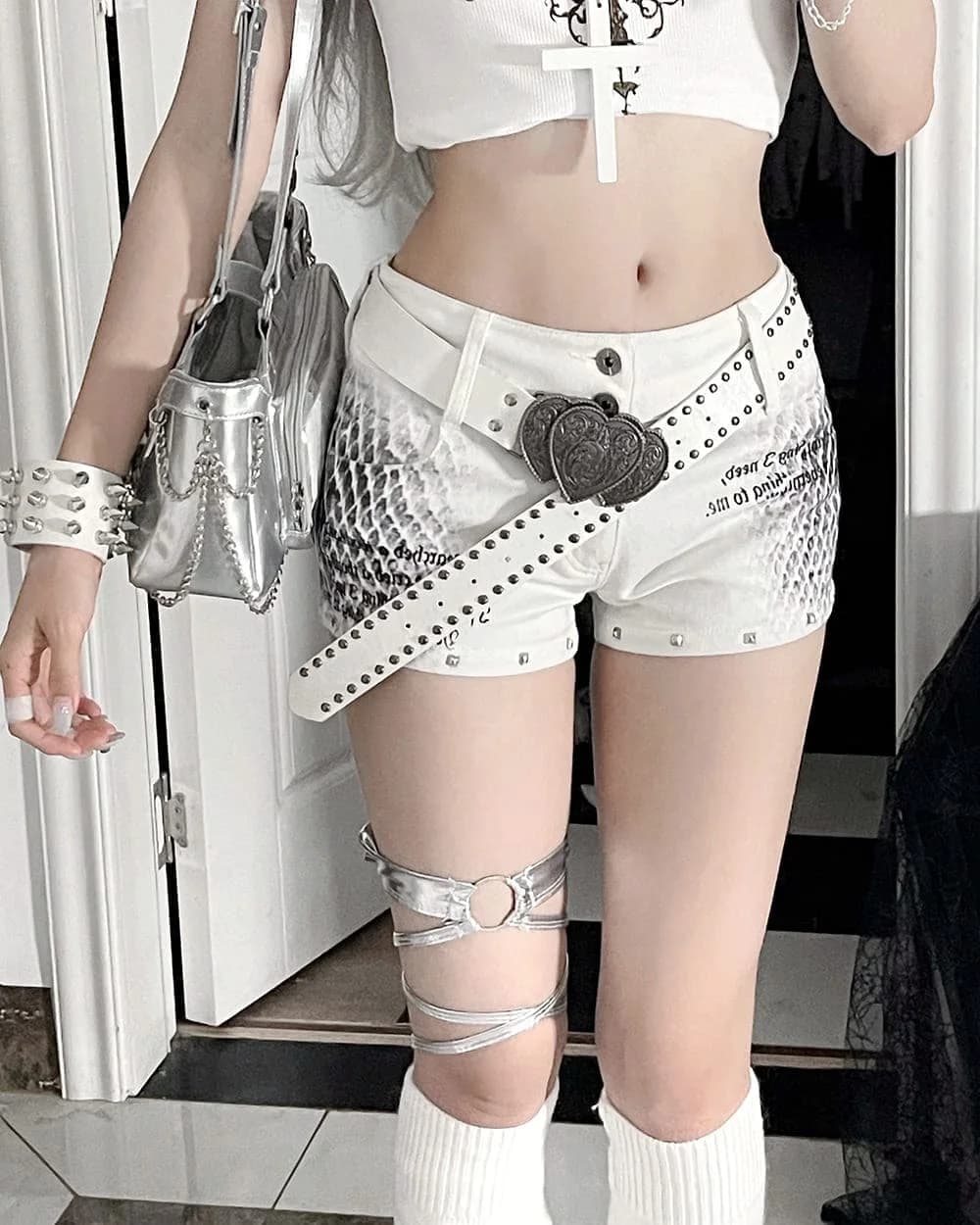
The waistline is historically the most classic focal point in the aesthetic. A wide strap lined with pyramid studs or silver-tone grommets immediately breaks up an outfit, creating distinct upper and lower body proportions. To give this zone maximum presence, start your search within dedicated Emo Belts, picking a width and pattern that anchors your midsection.
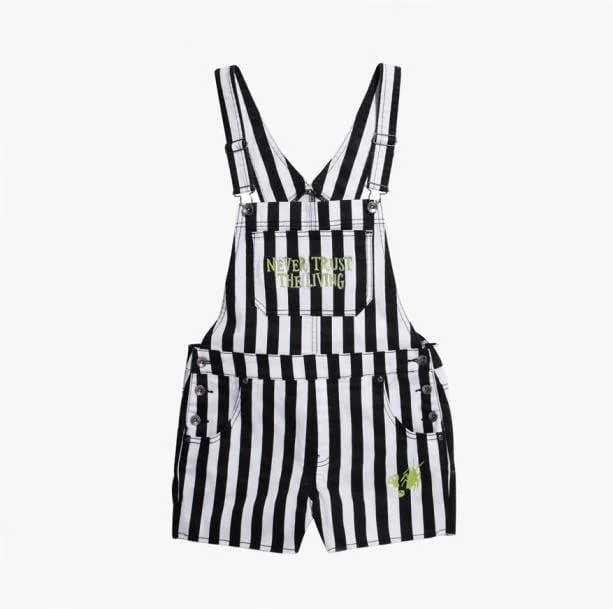
To let a statement belt lead, your tops should either tuck cleanly into your waistband or feature a cropped hemline that sits just above the hardware. Dropping an oversized, un-tucked graphic tee directly over a studded belt hides the detail and adds awkward bulk around your hips. Instead, pair a structured strap with the Teen Craft Loose Fit Striped Pants, which are crafted from a blend of cotton and polyester in a black/white colorway. The vertical lines of the trousers draw the eye right up to your waist, while the loose fit balances the rigid hardware.
When your belt is the star, pull back on other mid-body extras. Skip bulky keychains, heavy wallet chains, or loud hip pouches. Let the belt's metalwork speak for itself against the contrast of your pants and a tucked monochrome top.
- Tuck or crop tops so you never hide your selected belt hardware.
- Pair horizontal waist studs with vertical line pants to guide the eyes.
- Leave hip rings and extra side chains off when the belt itself is wide or ornate.

Framing the Neckline: Making Chokers and Layered Chains the Centerpiece
If you prefer your statement piece up near your face, shifting your focal point to the throat and collarbones demands a totally different garment foundation. When exploring options across Emo Jewelry, look for pieces with substantial gauge wire, padlock pendants, or distinct O-ring links that command attention.
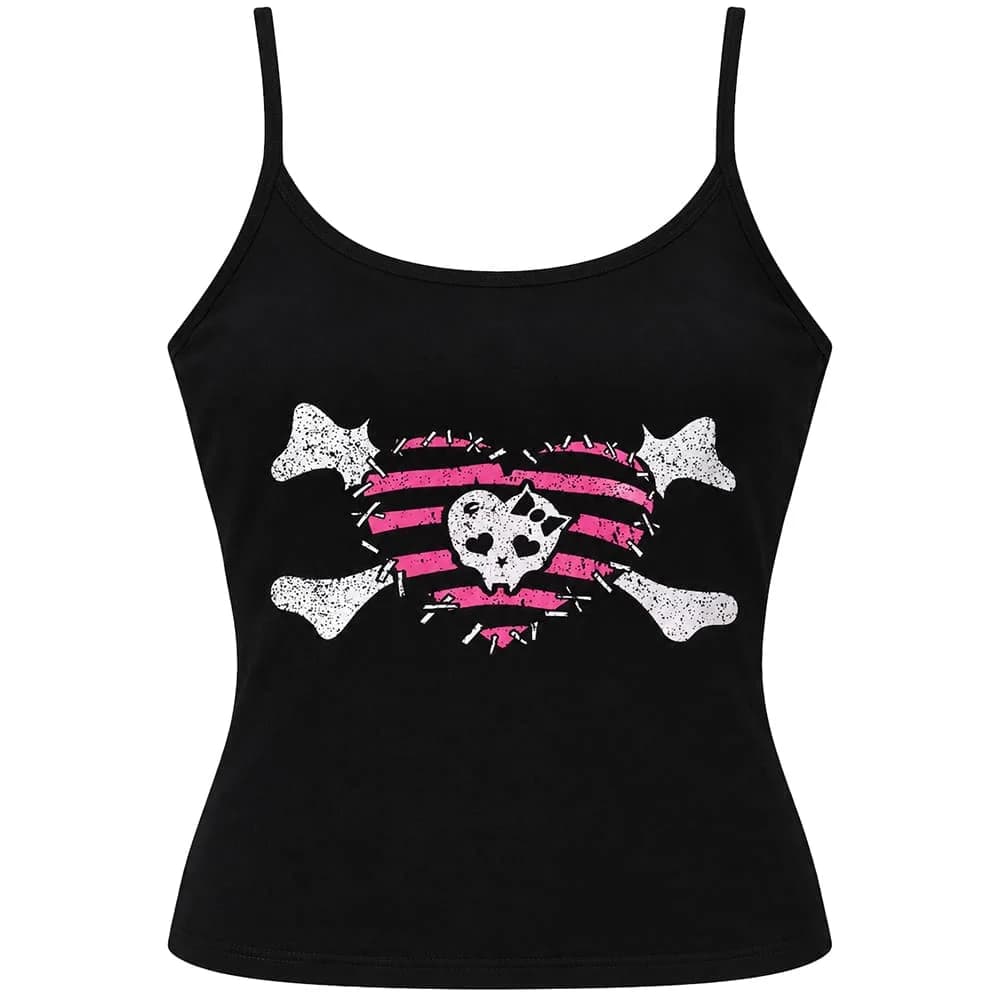
The golden rule of an upper-body focal point is neckline clearance. A crewneck tee that bunches against a choker creates visual conflict and chafes your skin. Instead, select tops with open collars, scoop necks, or deep scoop silhouetteThe overall shape an outfit creates, from fitted to loose and layered.s. For example, pairing a layered collar arrangement with the Emo Girl Skull & Bones Tank Top, made of black polyester, leaves your upper chest open. The graphic sits lower on the torso, allowing your neck hardware to sit against bare skin or flat fabric without obstruction.
Because chains catch light and swing as you walk, keep the surrounding upper layers minimal. If you toss an unzipped outer layer over your tank, ensure the collar lies flat. Steer clear of oversized scarves, thick fur lapels, or shirts with busy chest embroidery that compete directly with the necklaces you want people to notice.
- Match choker drop lengths to open necklines like scoops or unbuttoned collars.
- Ensure graphic prints sit well below where your pendants rest.
- Keep shoulder and collar details smooth to avoid snagging jewelry links.
Sleeve and Wrist Focus: Balancing Arm Warmers, Cuffs, and Rings
When wrists and hands act as your anchor, your movements draw the eye. Arm warmers, thumbhole cuffs, and stacked silver rings create great tactile contrast, especially when gesturing or carrying a bag. This approach works particularly well if you spend your day at a desk or in spaces where bulky neck or waist accessories feel restrictive.
Because hands and forearms are constantly active, the garments above them must balance their presence. If you are layeringWearing pieces over or under one another to add depth, warmth or contrast. arm warmers, wear a short-sleeved base layer or push up the sleeves of a relaxed top so the wrist detail does not bunch uncomfortably under tight cuffs. When building out hand jewelry, pair your rings with smooth, matte fabrics nearby to keep the metal visible.
To complement this localized detailing without clashing, look for outerwear with clean wrist profiles. Avoid jackets with heavy storm flaps or thick elastic cuffs that crush your arm accessories. An open-cuff jacket or a relaxed layer keeps wrist stacks comfortable and front-and-center throughout the day.
- Push back or shorten your shirt sleeves to give arm accessories clean display room.
- Stack rings across one or two fingers rather than spreading them equally on both hands.
- Check that your outerwear cuffs slide easily over your wrist accessories without snagging.
Lower-Leg Architecture: Anchoring Outfits with Socks and Footwear
Directing the main focus to your calves, ankles, and feet produces an alternative silhouetteThe overall shape an outfit creates, from fitted to loose and layered. that balances top-heavy layeringWearing pieces over or under one another to add depth, warmth or contrast.. High-contrast legwear—such as knee-high striped knits, fishnets, or loose leg warmers—grounds your frame and pulls visual weight downward. You can browse through Emo Socks to find ribbed pieces or bold patterns that set the tone for your lower half.
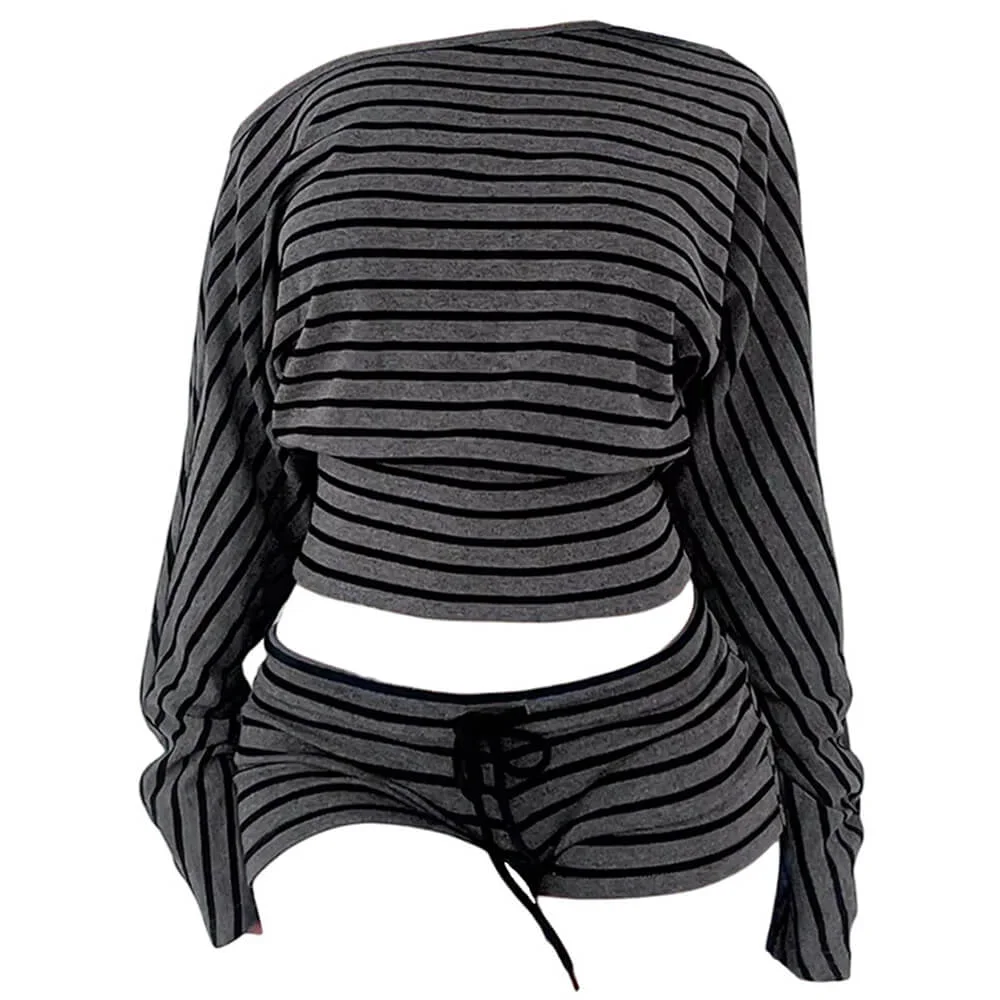
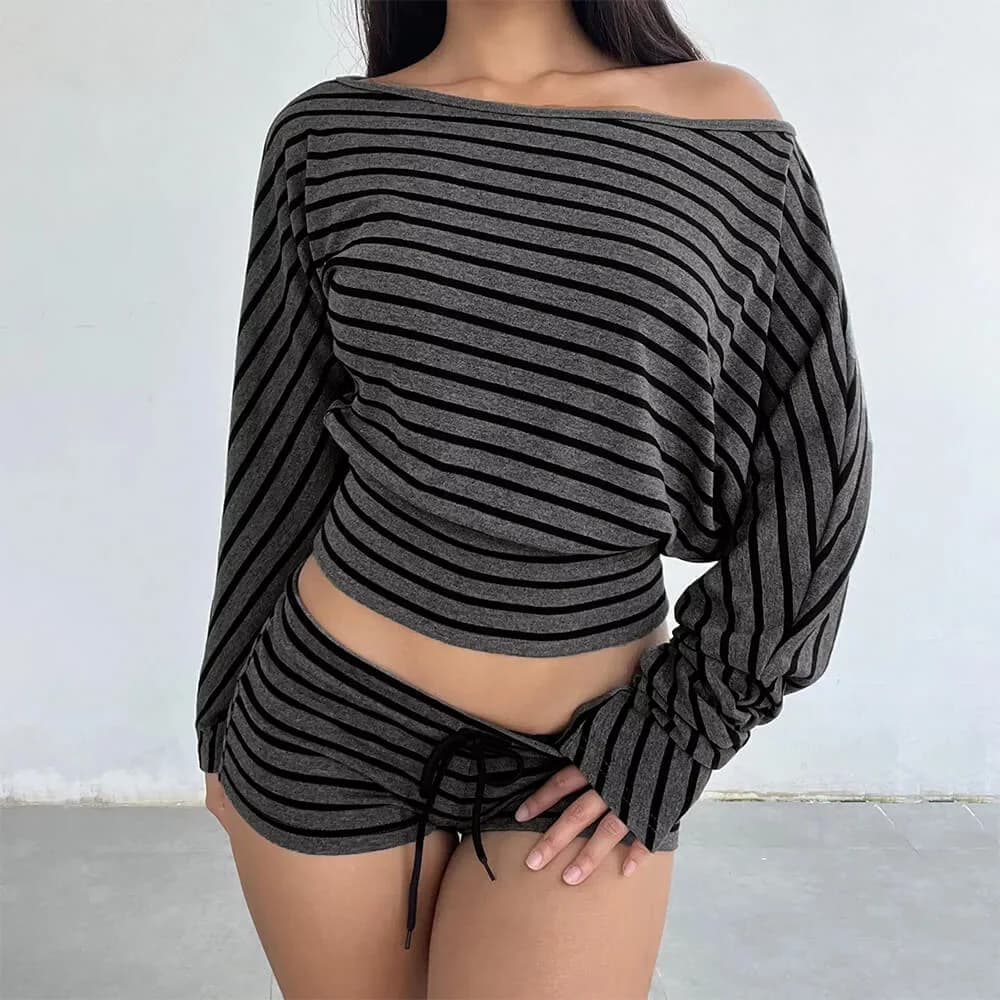
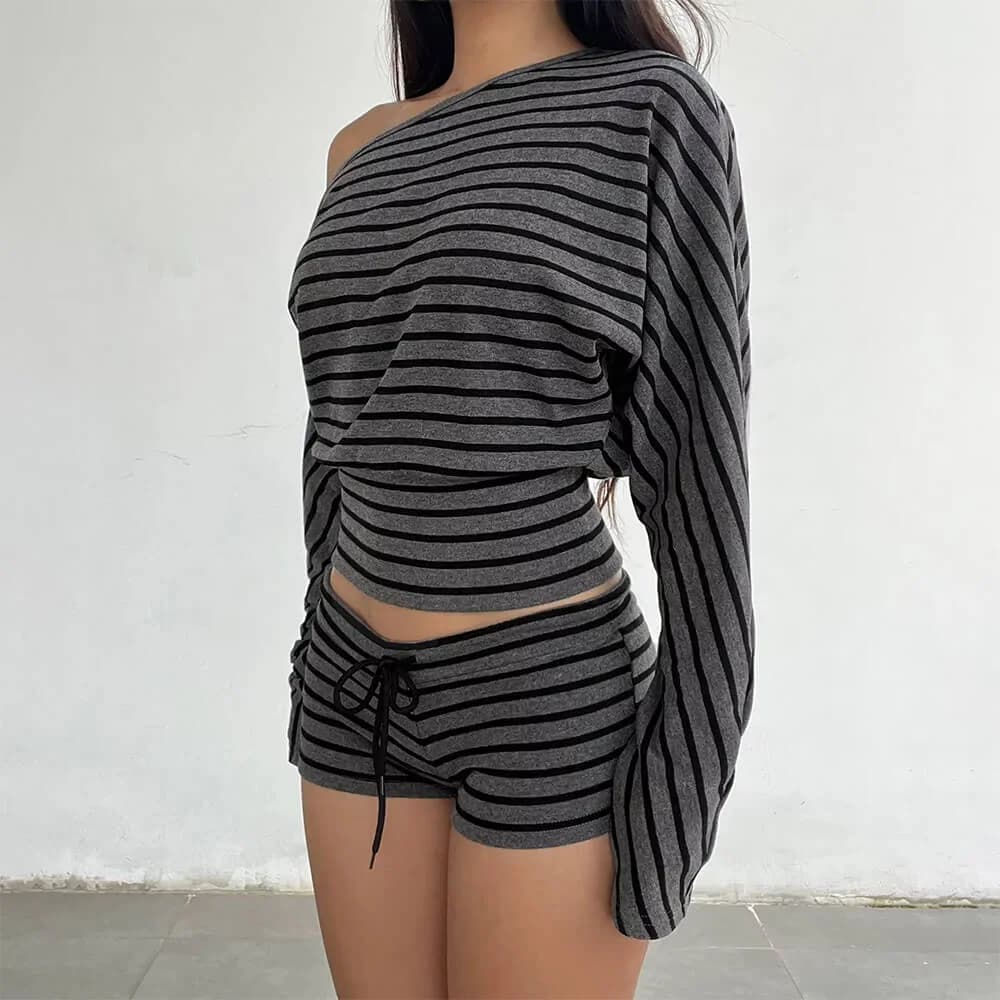
A lower-leg focal point requires careful hemline management. If your socks are meant to be seen, trousers that drag along the ground completely defeat the purpose. Pair tall, patterned socks or chunky knit warmers with shorter garments like the 2010s Style Striped Booty Shorts, made from a cotton and polyester blend in black/grey. The compact cut of the shorts gives ample space for high-calf socks to run up the leg, creating an elongated line while letting the lower-leg textures dominate.
With your feet and calves holding the visual weight, keep the rest of the outfit structurally quiet. A plain dark top and a simple canvas bag allow the eye to drop straight down to your footwear styling without distraction.
- Choose shorts, mini-skirts, or rolled hems to show off sock details.
- Counter bulky footwear or knit warmers with fitted shorts to preserve balance.
- Keep your waistline clean so the silhouetteThe overall shape an outfit creates, from fitted to loose and layered. guides attention toward your shoes.

Balancing Bold Graphics Against Accessory Weight
A frequent mistake when styling alternative clothes is pairing an intricate, high-contrast graphic tee with equally intricate accessories. When a busy chest print fights against layered chains or a heavily studded belt, the outfit loses focus and looks messy.
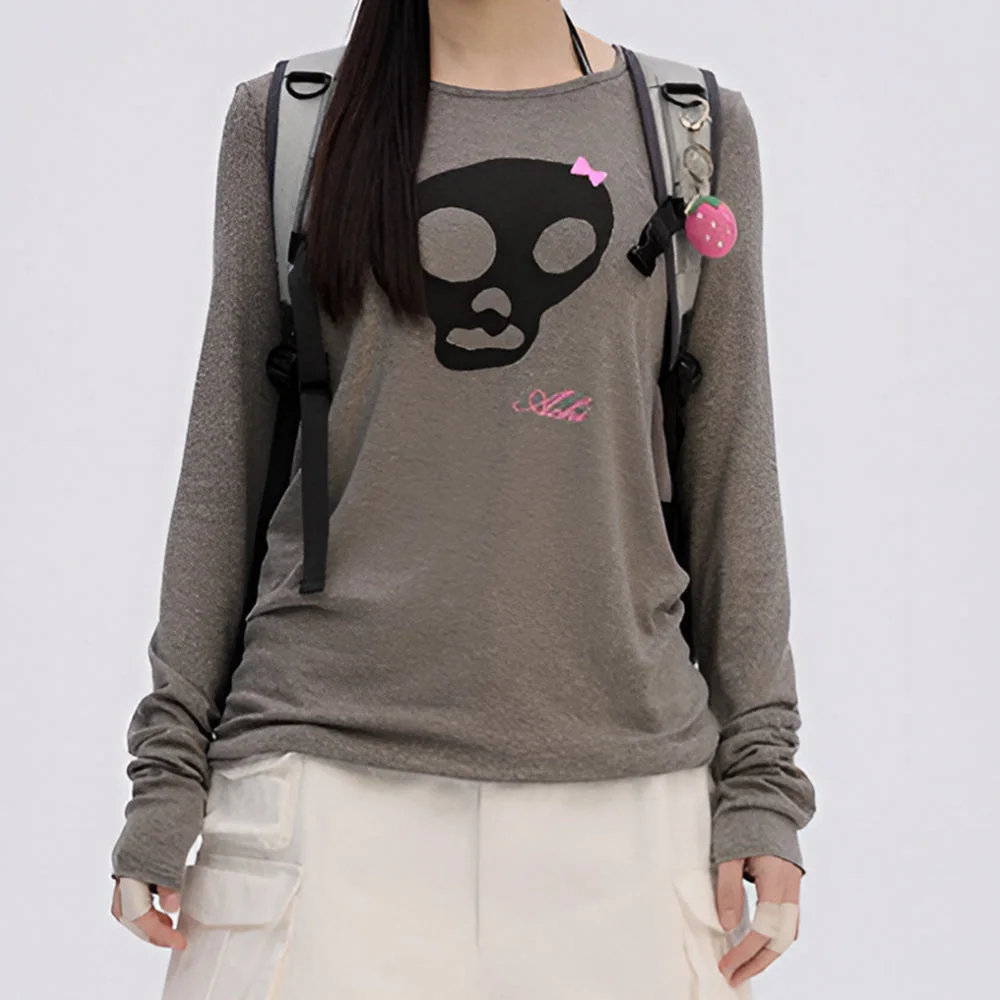
If your top carries a major screen print, your accessories must become secondary framing devices rather than competing stars. Take the 2007 Era Leopard Skull Long Sleeve Top, constructed from white polyester with an energetic front graphic. Because the graphic combines animal print and skull motifs, hanging a complex metal pendant over it clutters the artwork. Instead, make your waist or wrists the focal point with a solid black belt or understated cuff, leaving the chest clear so the top does its job.
Conversely, if you are determined to wear your most elaborate necklace or harness, select a plain, solid base top. Matte black, washed grey, or unprinted white tops provide the quiet canvas necessary for complex metalwork, distinct buckle shapes, and layered straps to be appreciated.
With a detailed chest graphic, keep accessories restrained and place any extra pattern below it. A dark checked skirt can add texture without putting another bold print beside the artwork; choose a solid belt or simple wrist detail rather than stacking focal points at the waist and wrists. The E-Girl Clothes collection offers a related graphic-and-check pairing.
- Pair busy chest graphics with quiet wrist or waist accessories.
- Reserve complex neck jewelry for unprinted, solid-color base shirts.
- Step back in full natural light to verify your graphic and jewelry do not blur together.

Outerwear Integration: Preserving Accessories Beneath Hoodies and Jackets
Cold or rainy weather often ruins a carefully planned accessory layout when you throw on a heavy jacket that hides everything underneath. The key to cold-weather styling is picking outerwear that works with your focal point rather than burying it.
If your statement piece sits at the chest or waist, choose zip-up hoodies that can be worn half-open. The Chain Skeleton Fitted Zip Up Hoodie, made of black polyester and available in sizes M to 3XL, offers a fitted cut that sits neatly over base layers. Its dark canvas and integrated skeletal motif complement an alternative look while the center zip allows you to expose a featured belt buckle or lower necklace stack when unzipped.
For looks where the outerwear itself brings substantial texture, keep base accessories smooth. A piece like the 2000s Striped Faux Fur Zip-Up Hoodie, built from black/grey polyester with a plush exterior, carries significant visual volume. When wearing this, make your hands or footwear the focal zone—such as stacked rings or distinct socks—so your accessories do not get lost in the deep pile of the faux fur.
- Leave zip-up outerwear partially open to showcase statement belts and pendants.
- Pair textured jackets like faux fur with wrist or lower-leg focal points.
- Check that hood pulls and collar cords do not tangle into your neck chains.
Metal Finishes and Hardware Harmony
While intentionally mixing metals can work when planned carefully, randomly combining bright yellow brass, brushed antique copper, and mirror-finish silver usually looks accidental. To make your single focal point look coherent, harmonize the secondary hardware across your whole outfit.
If your centerpiece is a polished chrome or silver-tone O-ring choker, ensure the eyelets on your shoes, the buckles on your boots, and the sliders on your bag match that cool-toned palette. You do not need every finish to be identical, but keeping them within the same metal family (such as nickel, gunmetal, and steel) creates an integrated look. Mixing warm brass grommets with ice-cold silver chains often pulls attention away from your chosen focal point by introducing unnecessary contrast.
Consider the weight and gauge of your hardware as well. If your core piece features delicate, thin-link wire, pairing it with massive industrial carabiners at your hip creates an awkward mismatch. Match light chains with delicate clasps, and anchor heavy industrial chokers with equally thick hardware elsewhere.
- Stick to one metal family—such as silver, gunmetal, or chrome—per outfit.
- Match the visual gauge of secondary hardware to your anchor piece.
- Check zipper teeth and bag clips to prevent random brass clashes.
Silhouette Proportions: Tight, Loose, and Accessory Scale
Accessories do not exist in a vacuum; they sit directly on the silhouetteThe overall shape an outfit creates, from fitted to loose and layered. you build with garments. A tiny, thin strap belt vanishes entirely when strapped over voluminous, baggy cargo pants. Similarly, an enormous, four-inch-wide spiked collar can overwhelm a fitted, minimalist silhouetteThe overall shape an outfit creates, from fitted to loose and layered..
Balancing scale requires matching accessory proportions to garment volume. If you are wearing wide-leg bottoms, you need a belt with enough strap width and buckle substance to hold its own against the sweeping fabric. If your clothing is fitted and close to the body, medium-gauge jewelry and streamlined accessories prevent the hardware from looking like it is wearing you.
Think about vertical distribution as well. If you are styling an oversized top layer like the Fawn Ear Grunge Hooded Jacket, a polyester piece offered in black and grey, the silhouetteThe overall shape an outfit creates, from fitted to loose and layered. flares through the torso and hood. Placing a delicate wristband underneath will simply disappear. Balance the loose, playful cut of the jacket with a ground-level focal point like structured legwear or substantial footwear accessories.
- Match thick belts to wide trousers so the accessory holds its visual weight.
- Keep jewelry proportions lighter when wearing skin-tight silhouetteThe overall shape an outfit creates, from fitted to loose and layered.s.
- Use lower-body accessories to counterbalance voluminous, oversized jackets.
Color Palettes: Guiding the Eye Using Monochrome and Color Pops
Color placement plays a massive role in directing focus. Because classic alternative outfits lean heavily on black, grey, and white, introducing a single accent hue instantly designates that item as the outfit's star.
When your anchor piece features a punchy hue, keep everything else strictly neutral. If you pick a vibrant layer like the Broken Heart Skeleton Zip Up Hoodie in its Orange or Green polyester option (it is also available in Dark Grey), that garment will immediately claim center stage. In this case, your accessories should drop back into support roles: simple matte black studs, monochrome leather straps, and muted silver rings that let the bold color perform without interference.
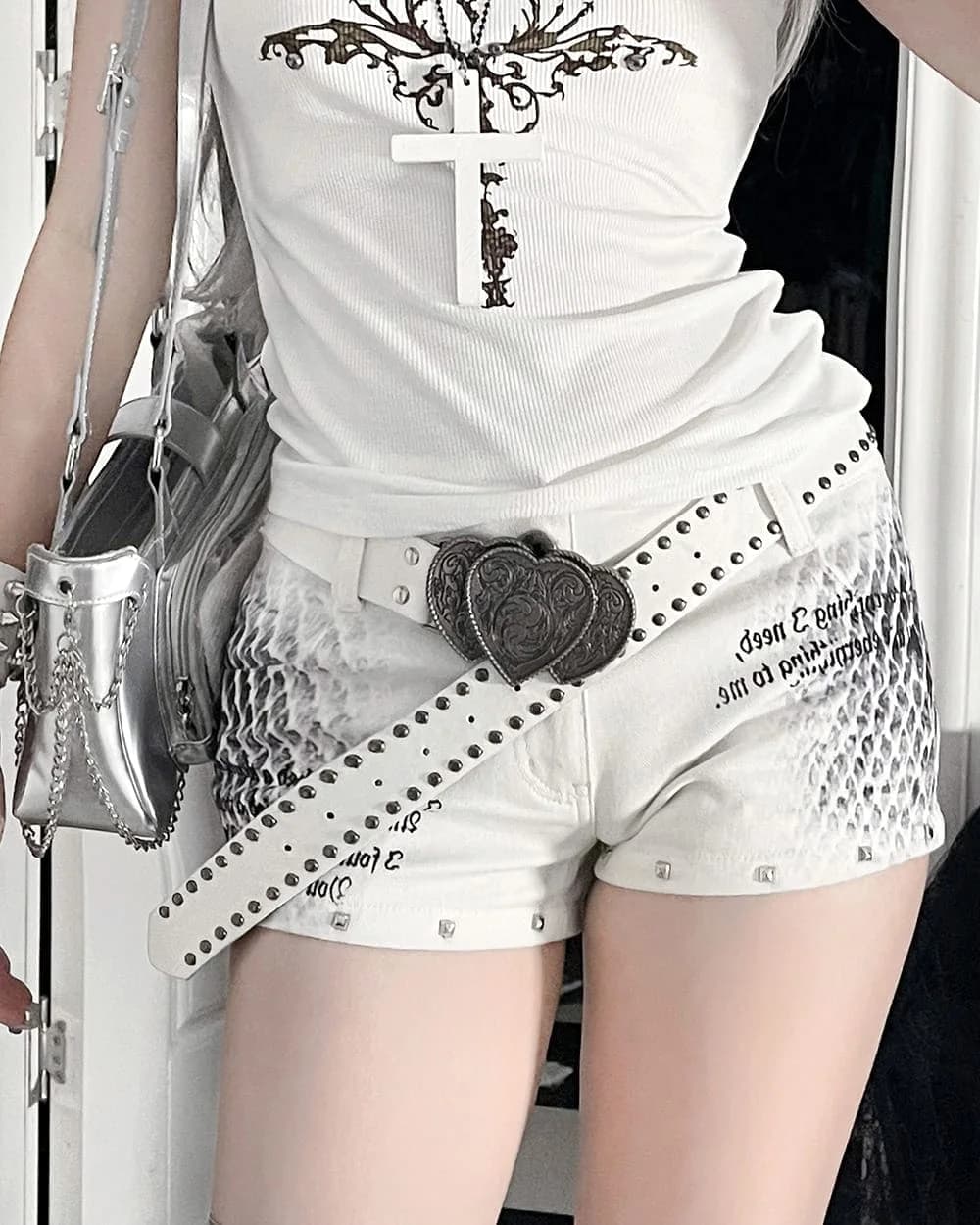
If your apparel is purely monochrome black and white, you can use high-contrast accessories to create your focal point. A stark white studded belt against all-black denim, or neon-striped arm warmers paired with a washed grey tank, acts like a spotlight. Just ensure you do not scatter secondary bright accents across multiple random zones.
- Use high-contrast neutrals (white on black) to make specific hardware pop.
- Keep accessories matte and monochrome when wearing vibrant outer layers.
- Limit bright accent colors to a single zone to preserve visual hierarchy.

Adapting One Core Accessory for Different Social Settings
A major benefit of mastering the single-anchor approach is how easily you can adapt an outfit for different environments. One standout accessory can easily transition between casual daytime errands, an evening gig, or a restrictive dress-code environment simply by swapping what surrounds it.
Take a standout studded belt. For a relaxed, everyday daytime setup, pair it with standard black denim, canvas shoes, and a clean, solid crewneck tee. The belt adds edge without feeling overstyled for a coffee run or class. For an evening concert, swap the plain tee for a distressed tank, pull out your matching wrist cuffs, and swap to lug-soled boots. The core anchor stays the same, but the surrounding garments elevate the energy.
If you are navigating an office or school with a conservative dress code, shift your focal point to a refined piece from our Emo Jewelry selection, such as a delicate dark-pendant necklace or minimal signet rings. Paired with a structured black knit sweater and tailored dark trousers, the alternative identity remains intact while meeting everyday professional standards.
- Tone down a bold belt for daytime by pairing it with simple, solid cotton staples.
- Ramp up an outfit for events by swapping standard shoes for chunky, hardware-rich boots.
- Use subtle silver or dark-stone jewelry to maintain your aesthetic in formal settings.
Seasonal Adjustments: Managing Comfort and Hardware Across Climates
Weather dramatically alters how accessories feel and perform. Metal conducts heat and cold rapidly, leather and vinyl trap sweat, and knitwear can snag easily on sharp studs. Planning your focal zone with local conditions in mind keeps you looking sharp without suffering through the day.
In freezing or damp climates, wearing heavy metal chokers directly against bare skin is uncomfortable. Instead, pivot your focal point downward toward textured knits from our Emo Socks catalog layered over warm tights, or choose a waistline anchor layered safely over tucked sweaters. When selecting outerwear for rainy or blustery days, check that chain attachments or belt rings will not rub uncomfortably against waterproof coated fabrics or rip delicate linings.
In hot or humid summer weather, thick faux-leather belts and dense wrist warmers quickly become unbearable. Shift your anchor point to lightweight metal chains draped over an open tank top, or use a graphic focal point at the legs with airy shorts. Choosing lightweight polyester garments that dry quickly ensures you stay cool while maintaining your alternative aesthetic.
- Avoid bare-metal neckwear in freezing temperatures; opt for legwear or waist accents.
- Swap heavy leather wristbands for breathable cotton arm warmers in warm weather.
- Ensure sharp spiked hardware stays clear of fragile waterproof jacket shells.
Common Accessory Traps and What to Do Instead
The quickest way an alternative outfit falls apart is falling into common accessory traps. The most widespread error is the 'everything at once' mindset, where someone wears a choker, three layered necklaces, two belts, wrist warmers, stacked cuffs, fishnets, and patterned socks simultaneously. The result is visual noise where individual, well-chosen items lose all identity.
Another frequent mistake is ignoring comfort and movement. Long keychains that swing awkwardly against your knee with every stride, necklaces that pinch your skin, or belts cinched so tightly they distort the waistband of your pants ruin your posture and confidence. If an accessory makes it difficult to sit, walk, or reach into your pockets, it does not belong in the outfit.
Finally, beware of mixing conflicting graphic themes. If your top features an intricate gothic motif, your belt has cartoon checkers, and your socks feature athletic stripes, the styles fight each other. Pick one coherent narrative or mood for the day and edit out anything that deviates from it.
- Remove at least one accessory before walking out the door if every zone feels filled.
- Test your mobility: sit down and walk to ensure chains and buckles do not pinch.
- Align your secondary prints (stripes, checks, solids) to match your main piece.
The Accessory Selection Checklist
Before finalizing your outfit, run through a quick mental checklist to ensure every piece works in harmony. Taking thirty seconds to evaluate your styling saves you from fiddling with tangled chains or awkward waistbands later in the day.
Start by identifying your chosen focal point: does it instantly catch your attention when you look in a mirror? If your eyes wander aimlessly between your neck, waist, and shoes, simplify your secondary pieces. Next, check your functional balance: can you sit comfortably, access your pockets, and move your arms without snagging hardware on your clothes?
Lastly, verify your finish and proportion harmony. Confirm that your metals match in tone, your clothing hemlines showcase your accessories rather than hiding them, and your fabric weights balance your hardware. When every element works together to highlight one strong statement piece, your outfit looks cohesive, intentional, and authentically yours.
- One clear focal zone identified (neck, waist, wrists, or legs).
- Secondary accessories kept minimal, solid, or unprinted.
- Hardware metals matched in finish family and visual weight.
- Clothing hemlines adjusted to display, rather than bury, your focal piece.
- Full physical comfort: no painful pinching, awkward swinging, or fabric snagging.