
Created by the Kawaii Vibe editorial team. Our named style desks are editorial personas. Product details and availability can change.
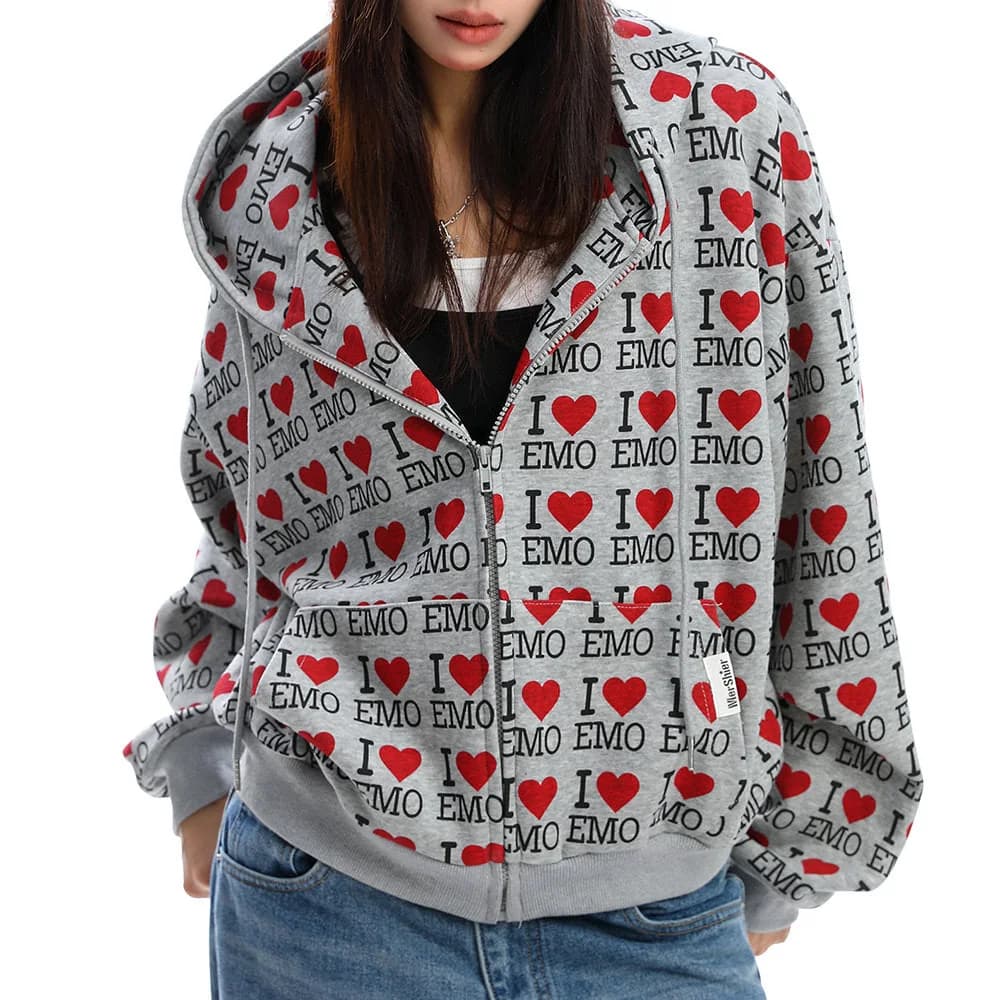
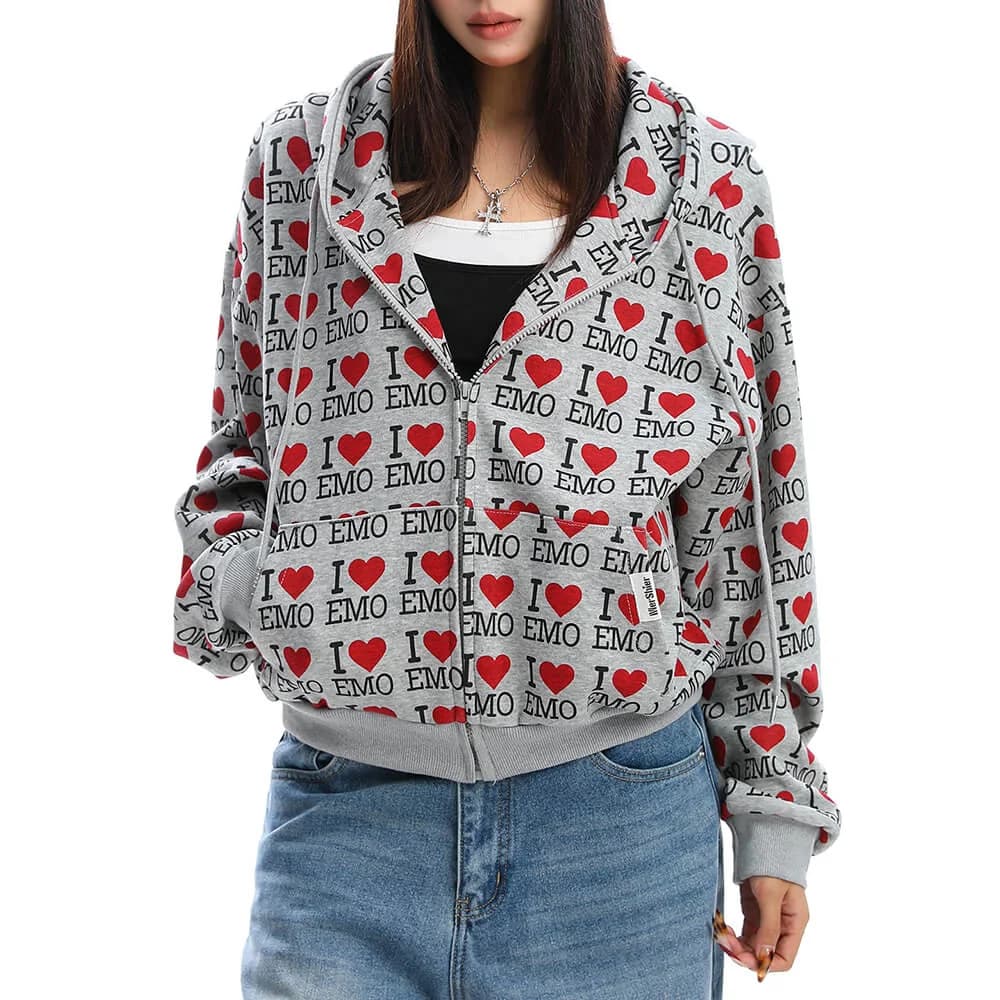
Styling an emo hoodie comes down to managing volume, hemlines, and contrasting textures. While alternative wardrobes have always revolved around comfortable black fleeces and graphic zip-ups, throwing a heavy top over arbitrary bottoms often results in a shapeless silhouetteThe overall shape an outfit creates, from fitted to loose and layered.. Getting the balance right requires paying attention to where your waistband sits, how much length your top layer adds, and what peeks out underneath the cuff or hem.
Whether you prefer early-2000s razor-thin silhouetteThe overall shape an outfit creates, from fitted to loose and layered.s or mid-2010s relaxed fits, the core principle is contrast. If your outerwear is roomy and long, your base layers and legwear need structure to keep the outfit intentional. Conversely, if your hoodie has a narrow cut that hugs the shoulders, you have room to bring in wider jeans, textured tights, or distinct horizontal layers underneath.
This guide breaks down the mechanics of styling different cuts, integrating underneath layers without bunching, and coordinating hems across bottoms. You will find concrete outfit combinations, proportional adjustments for different weather conditions, and practical comparison points to help you choose the right cut for your day-to-day wardrobe.
The Baseline Silhouette: Managing Volume and Contrast
Every successful alternative outfit relies on deliberate visual weight. When building a look around casual tops, you generally choose between two balancing philosophies: fitted on top with wider legs below, or oversized up top with slim bottoms. Mixing extreme volume on both halves usually requires heavy accessories like utility belts or chunky boots to keep the overall look grounded and readable.
If you start with an oversized piece, your pants, skirts, or shorts should provide an anchor point. Letting a long hem hang down over baggy trousers without any waist definition can shorten your frame and swamp subtle details. You can easily counter this by leaving a front zip half-open, tucking an inner shirt into high-waisted bottoms, or choosing bottoms with sharp patterns to create clear horizontal boundaries.
When working with narrower silhouetteThe overall shape an outfit creates, from fitted to loose and layered.s, the goal flips. A fitted hoodie highlights your torso, giving you freedom to layer flared denim, utility cargo pants, or tiered skirts. Checking where the lower ribbing rests against your hip bones tells you immediately how much room you have to play with layered hems below.
To define the waist under an oversized hoodie, tuck in the inner tee and leave the hoodie partly open, then keep the lower half visually simple. For a more dramatic outfit, add a dark outer layer with a contrasting texture and one piece of statement jewelry. The Visual Kei Clothes collection offers a visual-kei-inspired reference for that layered direction.
- Pair broad tops with clean, tapered, or skin-skimming lower pieces.
- Balance narrow tops with wide cuffs, cargo pockets, or flared legs.
- Use hardware like zippers to reveal vertical contrast lines down the center body.
Fitted Zip-Ups: Nailing the 2000s Skinny Silhouette
The classic mid-2000s aesthetic favored body-skimming zip-ups that ended directly at the hip bone rather than draping past the rear. This tailored cut makes layeringWearing pieces over or under one another to add depth, warmth or contrast. straightforward because it leaves your waistband entirely visible, creating clean lines for studded belts or contrasting shirt hems.
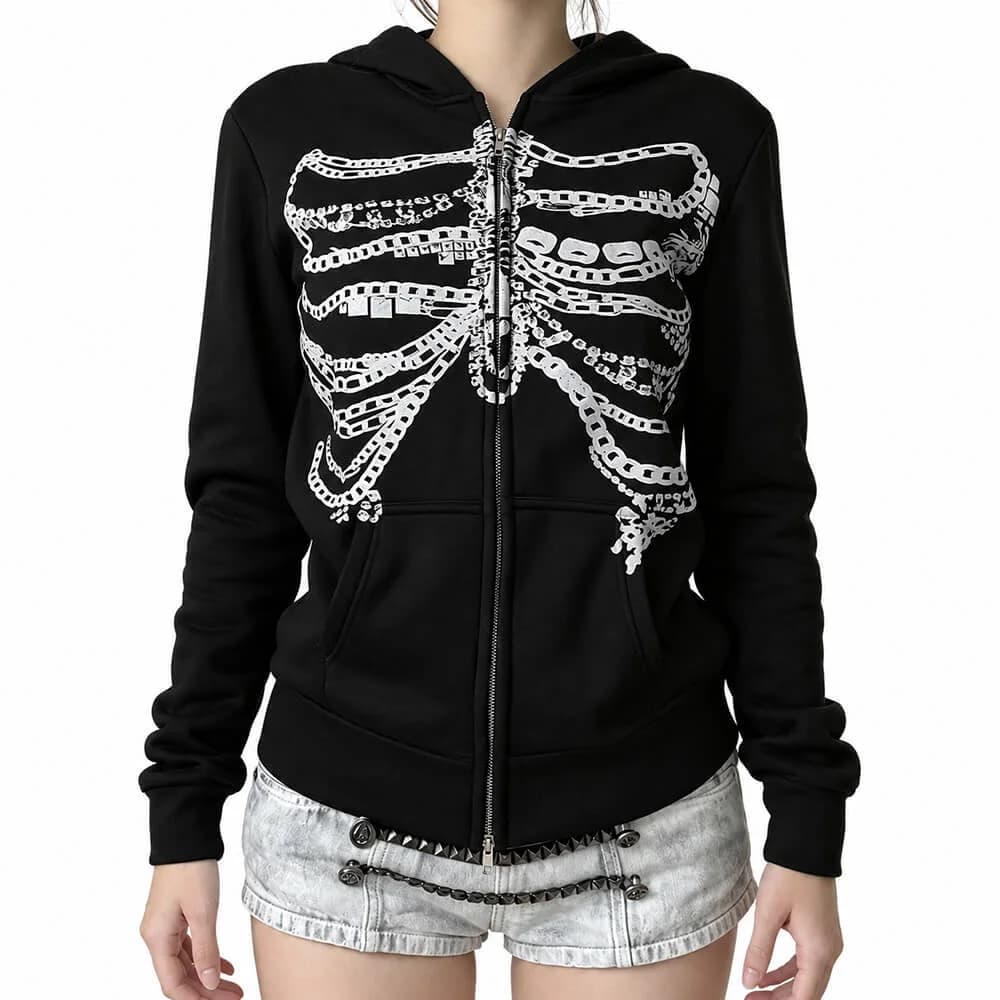
To style this cut cleanly, select base layers that sit flat against the skin so the sleeves and torso do not bunch up. The Chain Skeleton Fitted Zip Up Hoodie offers a fitted polyester cut in solid black with ribbing that sits neatly at the waist. Because it does not add bulk around the midsection, it leaves ample room for wider bottoms or structured hardware.
You can pair this style with straight-leg denim or mini skirts. Avoid wearing bulky thermal sweaters beneath a narrow zip-up, as the extra fabric collects in the armpits and distorts the clean line of the shoulders. Stick to fine-gauge knits, mesh, or simple jersey tops to keep the profile sharp.
- Check that sleeve seams align naturally with your shoulder joint.
- Keep base garments lightweight to prevent bunching along the sleeves.
- Use visible belt details to mark the boundary where the ribbing ends.

Oversized Fits: Drop Shoulders and Clean Legwear
Oversized zip-ups and pullovers offer warmth and comfort, but their drop-shoulder seams and extended torso length change your visual center of gravity. When the bottom hem lands mid-thigh, the hoodie acts almost like a tunic or short dress, which changes which bottoms work best.
The most reliable formula for a long, relaxed top is pairing it with legwear that stays close to the body. Opaque black tights, skinny jeans, or bike shorts balance the upper-body drape cleanly. Exploring diverse cuts across Emo Hoodies shows how dropped seams create a casual drape that benefits from structured footwear, like platform lace-up boots or low-profile canvas sneakers.
If you prefer a boxy streetwear vibe rather than a retro look, you can still wear loose trousers. Just make sure your hoodie hem ends slightly above the widest part of your hips, or unzip the lower half so your leg line remains visible as you walk.
- Let oversized hems float freely instead of rolling them under repeatedly.
- Ground loose upper layers with substantial combat boots or creepers.
- Unzip from the bottom upward on two-way zippers to show inner rise details.
Base Layer Foundations: Tanks, Tees, and Visual Breaks
What you wear under an unzipped or partially zipped hoodie shapes the entire outfit. A plain undershirt functions fine for warmth, but graphic prints, ribbed textures, or subtle hardware turn practical layers into a deliberate style statement.
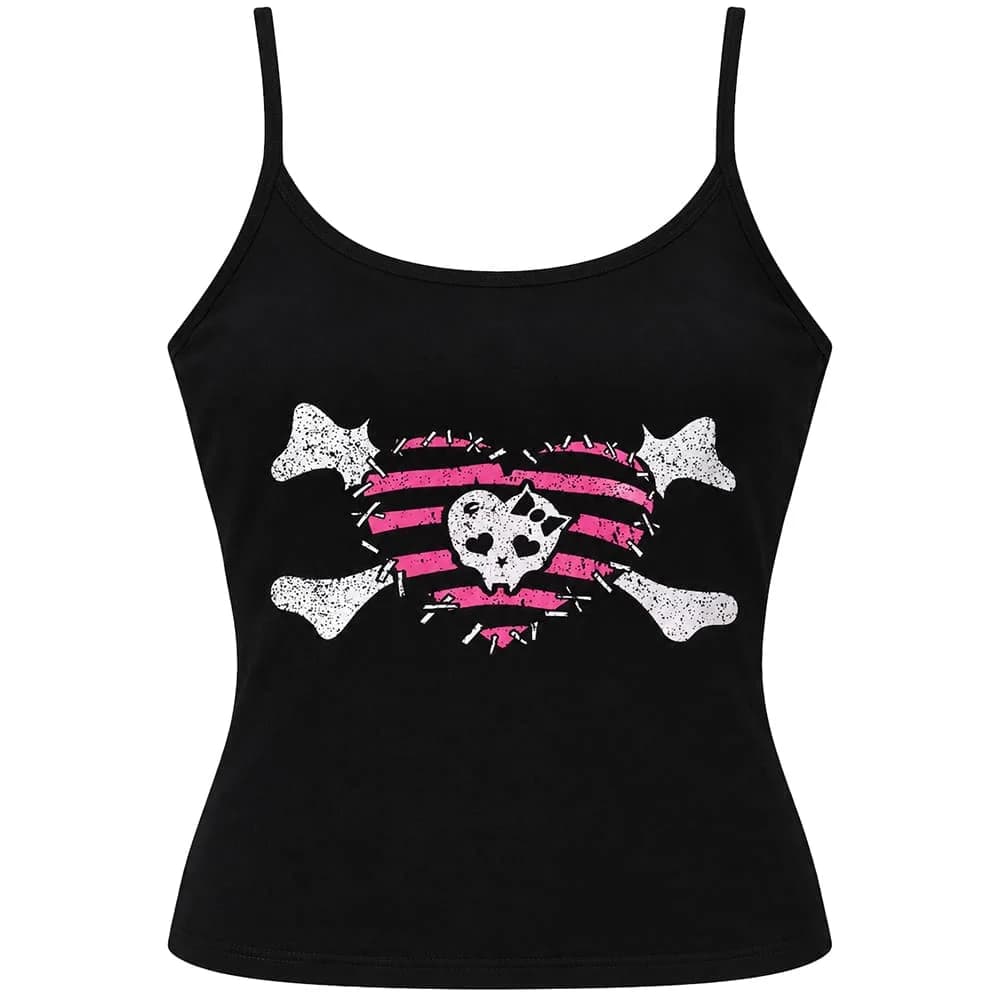
For an easy everyday option, start with a fitted graphic tank tucked cleanly into your waistband. The Emo Girl Skull & Bones Tank Top gives you a lightweight polyester base in black that introduces a graphic focal point at the chest without adding any bulk under the hoodie's sleeves. It sits flat, keeping your collarbone and neck area uncluttered.
When selecting undergarments, pay attention to the neckline height. A scoop neck or boat neck under an open hoodie opens up space for choker chains or pendant necklaces, whereas a high crewneck draws attention upward toward the jawline. Choosing the right cut lets you frame accessories without competing for visual space.
- Tuck thinner base layers into your waistband to keep hemlines organized.
- Use graphic chest prints to draw the eye inward when your outer layer hangs open.
- Match the sleeve weight of your underlayer to the hoodie's internal arm width.
Thermal Long Sleeves and Contrasting Cuffs
Exposing layered sleeves beneath your hoodie cuffs is a staple alternative styling technique that adds practical warmth and horizontal contrast. To make this work, the inner sleeve should fit closely against the forearm so the outer cuff slides over smoothly without catching.
A long-sleeve graphic top works exceptionally well when pushed slightly past the outer sleeve edge. Wearing the 2007 Era Leopard Skull Long Sleeve Top in white polyester underneath an open dark jacket gives you a bright visual pop at the wrists and chest. The white fabric cuts through dark outer layers, making the entire outfit look deliberate rather than accidental.
Watch out for seam conflicts around the wrists. If both your top and your hoodie have thick elasticated cuffs, pulling one over the other creates uncomfortable bulk. Instead, pull the inner sleeve down straight over the palm and let the hoodie cuff rest right behind the wrist joint.
- Push outer cuffs back slightly to expose patterned or thumbhole sleeves.
- Choose lightweight inner fabrics so your arms move comfortably.
- Use contrasting sleeve colors to break up solid dark outfits.

Cropped and Modified Hemlines: High-Waisted Pairing
Cropped cuts shift the focus toward your waistline and hip structure. While oversized hoodies drape downward, a crop lifts visual weight upward, making your legs appear longer and giving you a strong base for high-rise denim, pleated skirts, or layer-heavy belts.
Styling a crop successfully means deciding how much skin or base fabric you want visible. If you prefer full coverage, layer a form-fitting mesh top or high-rise tights beneath your waistband. When browsing wider wardrobe selections across Emo Clothes, you will find that pairing short upper cuts with mid-to-high rises gives structure to layered looks that might otherwise appear unstructured.
Avoid pairing a high crop with very low-rise bottoms unless you specifically want the midriff-heavy look of early 2000s pop-punk. For most day-to-day outfits, letting the cropped hem hover one to two inches above a belt line keeps the proportions grounded and comfortable.
- Pair cropped tops with bottoms that sit at or above the natural hip bone.
- Add fishnet or mesh underneath to cover the midriff without hiding the cut.
- Use wide grommet belts to bridge the gap between hem and waistband.
Shorts and Mini Skirts: Managing Hemline Overlap
Wearing a hoodie with shorts or a mini skirt creates an energetic, casual look, but the hemlines require careful coordination. If your top layer hangs lower than your shorts, it can look from behind like you forgot to wear bottoms altogether.
To prevent awkward overlap, your shorts hem should extend at least two to three inches below the bottom ribbing of an unzipped hoodie. The 2010s Style Striped Booty Shorts offer a cotton-polyester blend in black and grey that provides a striped border right beneath a dark hem. This horizontal pattern clearly defines where the upper layer stops and the leg line begins.
If you want to wear a very long pullover with short bottoms, keep the shorts clearly visible from the front by partially tucking the front center of the fleece into the waistband. This exposes the belt line, keeps your proportions legible, and prevents the top from completely obscuring your lower half.
- Ensure at least two inches of bottom fabric shows past the hoodie hem.
- Use striped or textured shorts to create clear color breaks.
- Add opaque tights or leg warmers if you need extra weather coverage.

Transitioning to Heavier Outerwear: Jackets and Vests
When the temperature drops, a hoodie often transforms from your main outer piece into a functional mid-layer. The challenge here is keeping the hood resting neatly outside the heavier coat without choking your neckline or pulling the shoulders backward.
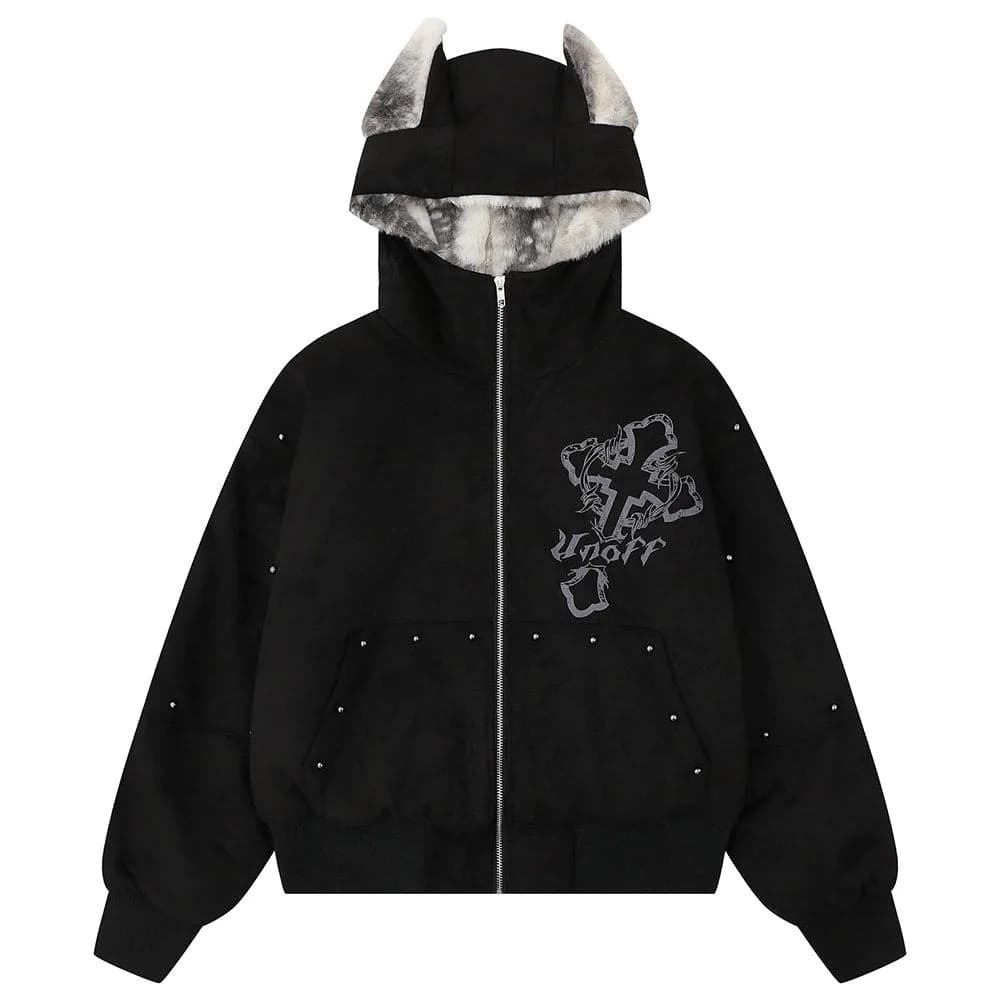
A roomy outer layer like the Fawn Ear Grunge Hooded Jacket, available in black and grey polyester, works well over lighter tops or acts as a statement outer layer itself. If you are layeringWearing pieces over or under one another to add depth, warmth or contrast. another coat over your hoodie, look through Emo Jackets to find pieces with relaxed armholes, denim vests, or loose utility shells that give thick fleece sleeves room to move.
Always pull the hood completely clear of your jacket's collar before zipping anything up. Letting the fabric bunch inside your coat collar feels uncomfortable and causes the front zip to buckle outward across your chest.
- Check that your outer jacket has wide armholes to fit fleece sleeves comfortably.
- Pull the hood out and drape it smoothly over the coat collar before zipping.
- Choose unlined hoodies as mid-layers to avoid overheating indoors.
Pattern Clashing and Monochrome Balance
A completely black outfit is a classic choice, but combining varied patterns, heather tones, and contrasting motifs prevents dark layers from blending into an indistinct shape. The trick to mixing patterns is varying their scale.
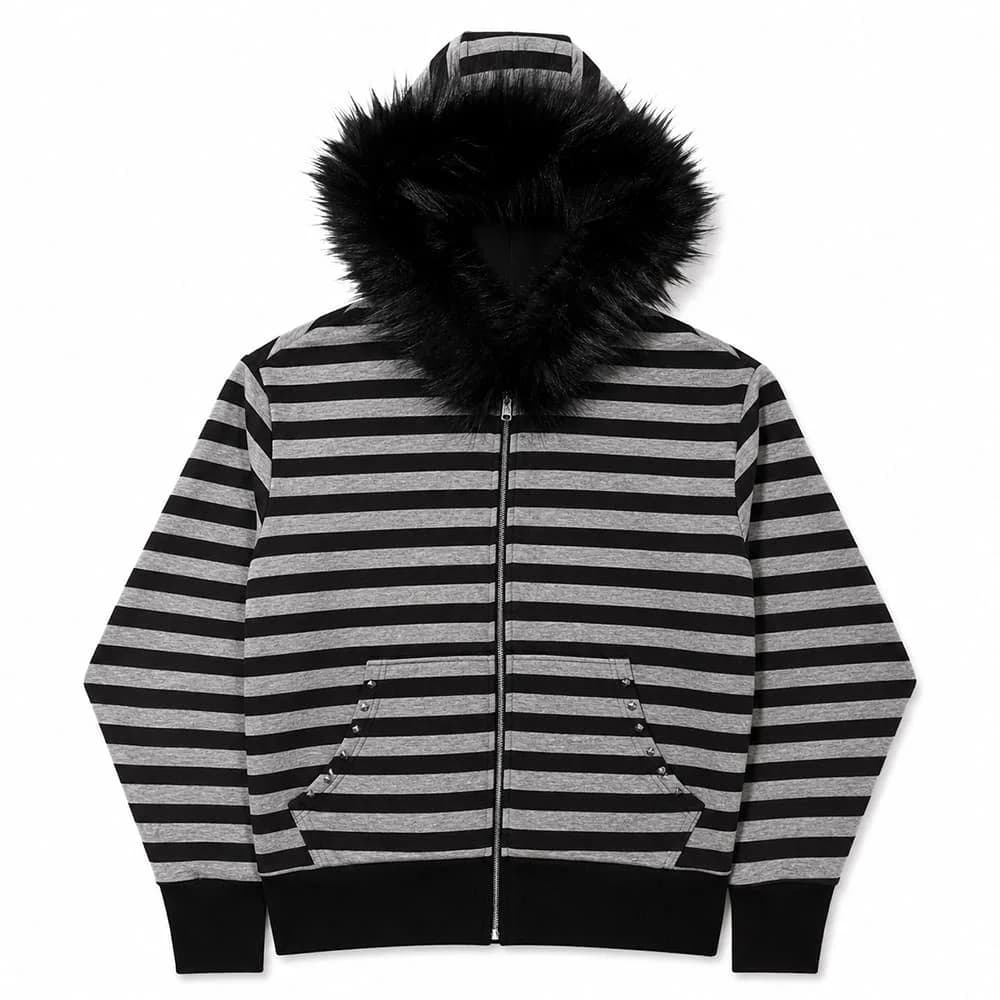
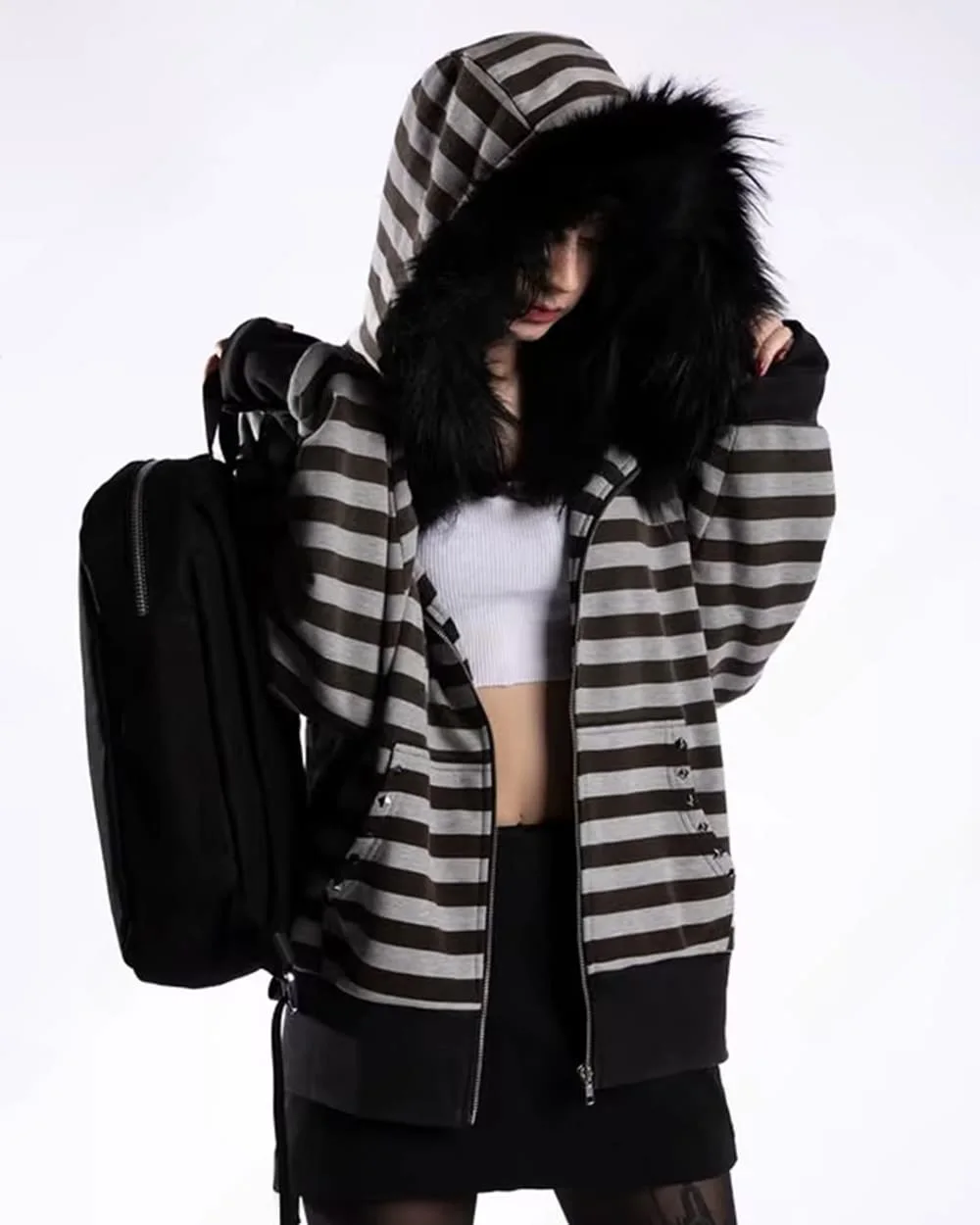
If your hoodie features prominent lines, like the 2000s Striped Faux Fur Zip-Up Hoodie in its black and grey polyester finish, pair it with solid bottoms or much smaller prints. Placing large horizontal stripes right next to wide vertical checkerboard pants can easily overwhelm the eye. Instead, let the striped faux fur serve as the statement piece and keep your base layers muted.
Conversely, if your hoodie is solid black with minimal hardware, you have total freedom to introduce bold patterns on your legs. Tartan skirts, skeleton-print leggings, or two-tone denim all stand out clearly against a dark, low-key backdrop.
- Pair wide horizontal stripes with solid or micro-patterned bottoms.
- Balance faux fur or plush textures with sleek canvas or denim.
- Use neutral greys and washed tones to break up solid jet-black garments.
Relaxed Legwear: Balancing Puddle Pants and Flares
While skinny jeans remain an emo wardrobe foundation, relaxed trousers, skate pants, and flares offer a fresh, modern way to balance zip-ups. The trick lies in managing where the pants pool around your footwear.
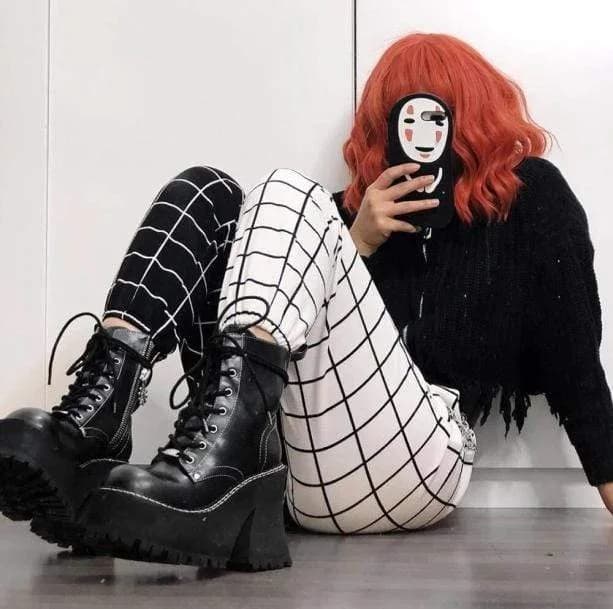
When combining loose legwear with casual tops, pay attention to the waistline. The Teen Craft Loose Fit Striped Pants feature a cotton-polyester blend with crisp black and white vertical striping. Because the vertical lines pull the eye downward, pairing them with a slightly fitted or cropped hoodie prevents the full outfit from feeling bulky.
If your pants break heavily over your shoes, keep your upper layers closer to the body to preserve your overall frame. Leaving your zip-up unfastened over a tucked shirt lets your waistline stay visible, maintaining clear definition even with wide trouser legs.
- Wear vertical stripe patterns to visually lengthen your lower half.
- Keep the upper body fitted or unzipped when wearing wide-leg trousers.
- Choose platform sneakers or boots to keep long pant cuffs off damp pavements.
Color Accents: Moving Beyond Flat Black
Alternative styling frequently focuses on monochrome palettes, but strategic pops of saturated color provide contrast and make graphics stand out. Earthy tones, deep jewel shades, or muted neons give graphic prints extra depth.
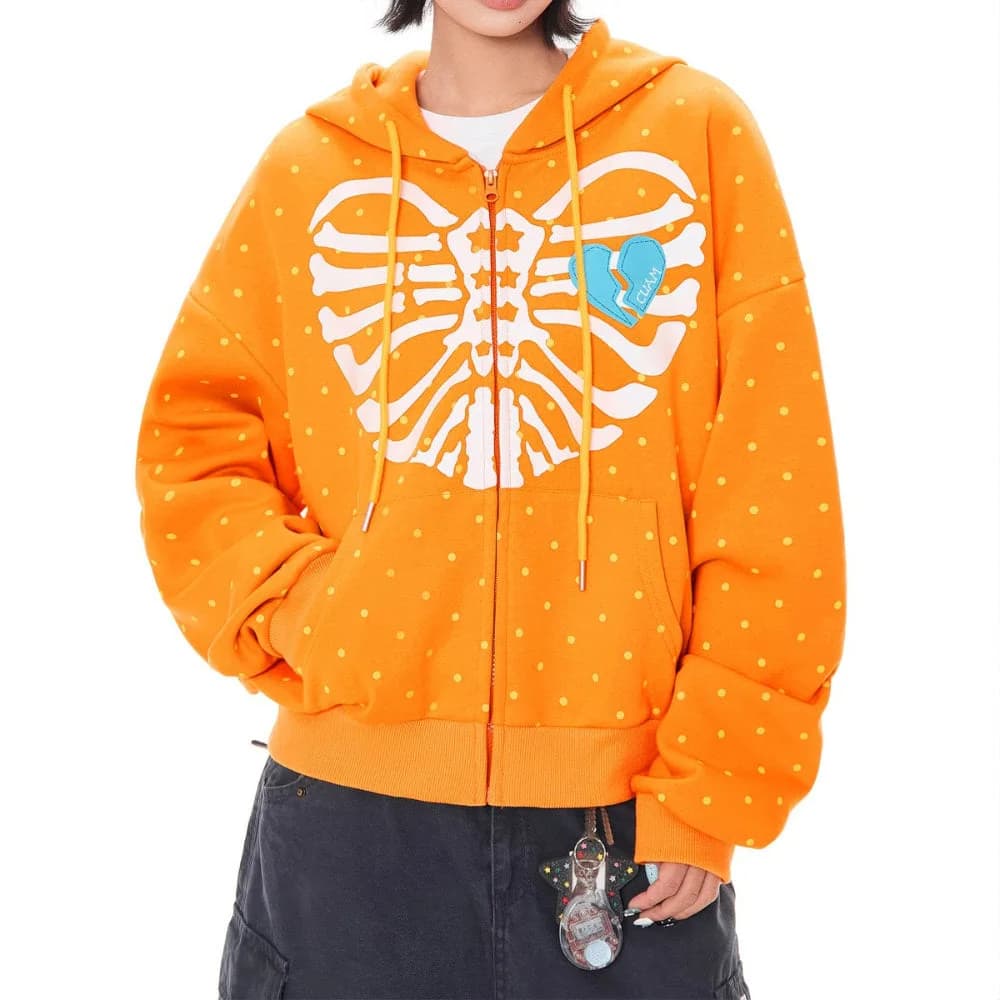
A piece like the Broken Heart Skeleton Zip Up Hoodie introduces options in Orange, Dark Grey, and Green alongside traditional black. Incorporating a green or orange top lets you build outfits around complementary details, such as matching your shoe laces, beanie, or bag hardware to the hoodie's secondary tones.
When working with colored hoodies, keep the surrounding layers grounded in black, charcoal, or dark denim. Let the accent piece do the heavy lifting rather than trying to balance several competing bright shades across your base layers and shoes.
- Let a colored zip-up remain the primary visual highlight of the outfit.
- Match small accessories like beanies or shoelaces to your top's accent hue.
- Anchor bright tones with washed charcoal or matte black bottoms.

Hardware, Belts, and Metal Accents
Metal hardware adds weight and structure to soft fleece fabrics. Silver eyelets, pyramid studs, safety pins, and chunky zipper pulls reflect light and break up continuous fields of dark fabric.
When styling an open hoodie, your belt becomes the bridge between your top and bottom halves. A studded belt sitting slightly angled on your hips adds an asymmetrical detail that draws the eye inward. You can browse complementary pieces across Emo Tops to find simple hems that sit high enough to let your belt hardware stay visible.
Be mindful of where metal elements rest against each other. If your hoodie features decorative zipper pulls or chain accents, avoid wearing heavy neck chains that hang at the exact same level. Spacing your hardware vertically ensures each piece stands out clearly.
- Stagger necklace lengths so they do not tangle with hoodie drawstrings.
- Position studded belts so the buckle sits cleanly between open zip edges.
- Choose sturdy zipper pulls that hang straight without twisting the fabric.
Footwear Proportions: Anchoring the Lower Half
The shoes you choose determine how your hoodie drape settles. Lightweight canvas sneakers create an agile, low-profile look, while heavy platform boots provide a solid visual anchor that balances bulky, oversized outerwear.
If you are wearing an oversized pullover with bare legs and shorts, heavy footwear is essential. Pairing a long fleece with chunky combat boots or creeper soles keeps the lower half from looking too bare. Look through Emo Shorts for base garments that pair naturally with tall socks, tights, and lug soles.
For narrow, fitted zip-ups paired with straight or skinny trousers, lower-profile shoes like classic skate slip-ons or flat lace-ups preserve the sleek 2000s silhouetteThe overall shape an outfit creates, from fitted to loose and layered.. Match the visual weight of your footwear to the bulk of your outermost layer to keep the whole outfit balanced.
- Wear chunky boots to visually balance thick, oversized fleeces.
- Opt for low-profile sneakers when keeping your upper layers narrow.
- Add scrunched socks or leg warmers to smooth the transition to your shoes.
Style Checklist: Dialing In Your Outfit Proportions
Before stepping out the door, take a quick look in a full-length mirror to check your overall proportions. A few minor adjustments—like hitching up your sleeves, unzipping the lower two inches of a jacket, or pulling a collar clear—can instantly make a casual outfit look pulled-together.
Check where your garments meet. Your base layers should either tuck cleanly into your waistband or extend past the outer hem by a deliberate margin of two to three inches. Hems that bunch up awkwardly around your hips usually mean the fabric is catching on your belt or your inner shirt is too long.
Use the quick checklist below to audit your proportions before heading out. Tuning these small points ensures your alternative outfits feel balanced, intentional, and comfortable all day long.
- Ensure your hoodie cuffs and inner sleeves do not bunch heavily around the wrists.
- Confirm that your shorts or skirt hems are visible beneath the outer jacket.
- Check that your hood lies smoothly over any external jacket collars.
- Make sure bulky outerwear is balanced by substantial footwear.
- Confirm that graphic chest prints are cleanly framed by your open zipper.