Created by the Kawaii Vibe editorial team. Our named style desks are editorial personas. Product details and availability can change.
If you want the short answer: pick one loud piece, two supporting pieces, and let everything else stay quiet. For emo accessories that usually means a chunky wristband or bracelet stack, a few studs or small hoops, and one necklace that has some attitude. Add a belt with visible holes or hardware and you have the whole look without it turning into a pile.
Small items do most of the work in this style. A plain black tee and dark jeans can read as nothing in particular, then a stack of wristbands, a chain at the hip and a pendant make it clearly emo. That is also why it is easy to overdo. Everything is small, so everything feels like it deserves to be worn at once.
This guide covers what to buy first, how to stack, where things should sit on the body, how to mix metals, and what to check before you order. Where it helps, there are optional suggestions from the shop, but the principles work with any pieces you already own.
The short list of pieces that define the look
Five categories carry most of the emo feel: wristbands or bracelets, ear studs and small hoops, a statement necklace, a belt with hardware or a chain, and rings. You do not need all five every day. Three of them, chosen well, are enough.
Think of them as jobs. Wrists add texture and width. Ears add small points of metal near your face. A necklace adds a focal point on the chest. A belt or chain adds a line at the waist or hip. Rings add detail to hands, which show up a lot in photos and when you hold a phone or a coffee.
If you are starting from scratch, begin with the Emo Aesthetic collection to see how the pieces sit together, then move into specific categories once you know which job you want filled first.
Start with the wrists
Wrists are the easiest place to build the look because you can see your work as you go. A wide band or cuff-style piece gives you a base. Thinner bracelets then sit next to it for contrast.
A reliable formula is one wide, dark piece plus two thin ones. Wear the wide one closest to your hand, so it reads as the anchor, and let the thin ones sit a finger-width up your arm. If you prefer both wrists dressed, keep the second one lighter. One loaded wrist and one nearly bare wrist looks more intentional than two equally busy ones.
Browse the Bracelets collection and compare width, closure and colour before buying. Closure matters more than people expect: a band you struggle to fasten is a band you will stop wearing.
- Wide piece nearest the hand, thin pieces above it
- Keep one wrist busier than the other
- Check the closure so you can fasten it one-handed
- Leave room for a watch or hair tie if you wear one
Studs, hoops and the ear stack
Ears give you the most metal in the smallest space. Studs are the backbone: simple, flat, easy to keep tidy. Small hoops add movement. Mixing the two in the same ear is where the layered feel comes from.
Placement is about spacing. If you have several piercings, vary the shapes so they do not blur together. A round stud, then a small hoop, then a bar or star shape gives each piece its own space. Repeating the exact same stud three times works too, but then it reads as a pattern rather than a collection.
Keep one ear slightly more detailed if you want a lopsided, casual feel, or mirror both sides for a neater result. The Earrings collection is the place to compare sizes and styles. Check the listing for how a piece fastens and what it is made from, especially if you have sensitive ears, and do not assume anything the listing does not state.
A necklace with a point of view
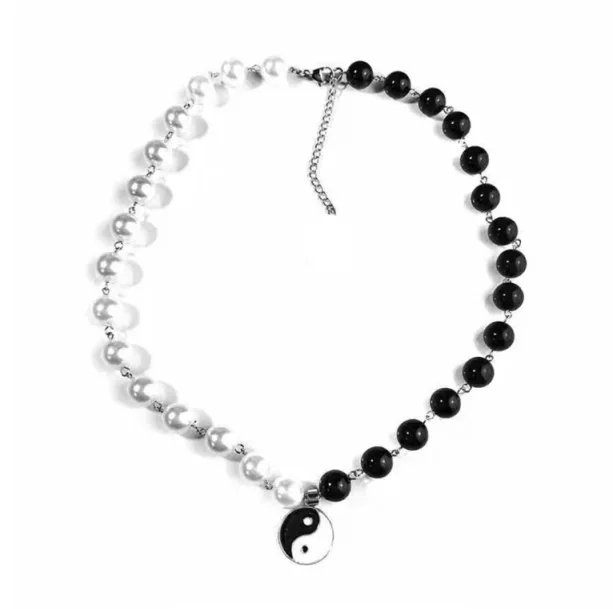
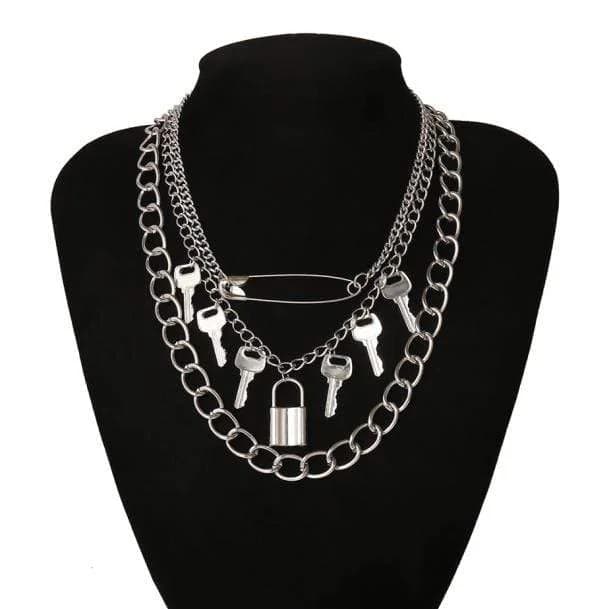
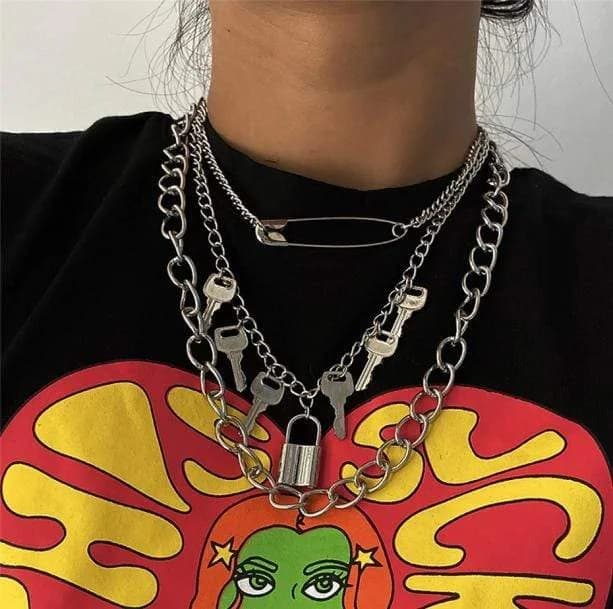
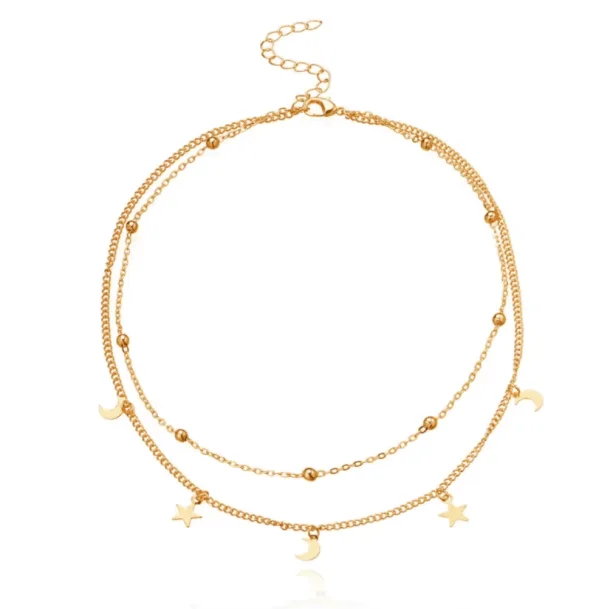
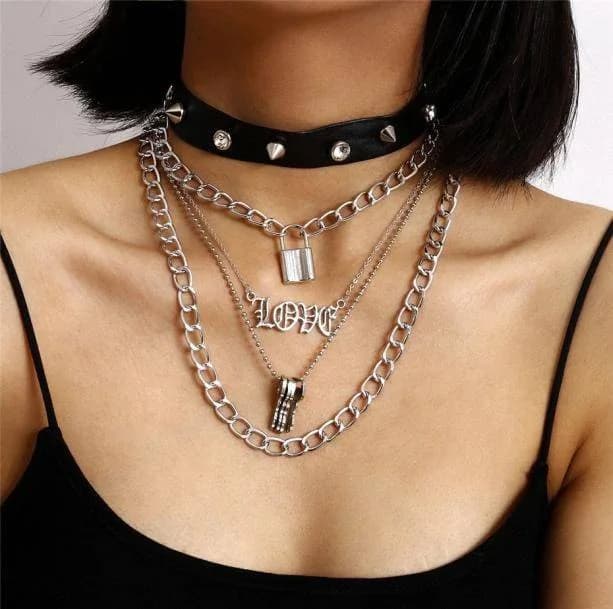
For the chest, pick one piece that says something, then support it with plainer chains. The Grunge Love Necklaces are an optional choice here: they come in a single as-pictured option in one size, so the main decision is whether the design suits your neckline rather than which variant to choose. The listing does not state a material, so check the product page for details before you decide.
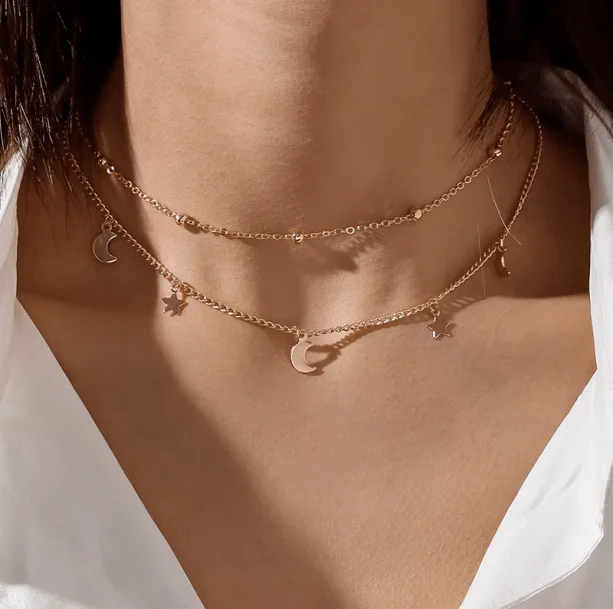
Length is the practical part. A shorter piece sits at the collarbone and works under open collars. A longer one hangs over a tee and gets the attention. Wearing both gives a staggered effect, as long as the lengths differ by a few centimetres or more. If two chains hang almost the same length, they tangle and look accidental.
Keep the statement piece away from busy prints. A graphic tee already has a focal point, so let the necklace go simpler on those days.
Belts, chains and the waist line
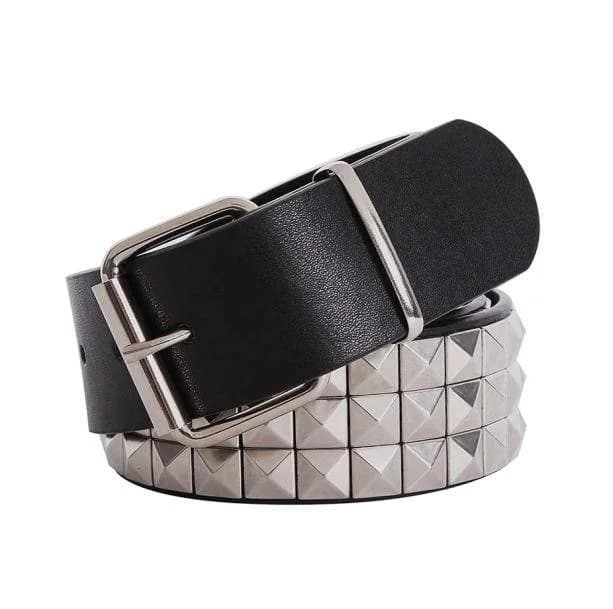
A belt does more than hold up trousers here. Visible holes, hardware and a bit of hanging chain add a second layer of detail below the chest. The Double Hole Belt is an optional pick if you want that look. It is listed as faux leather with a length of 110 cm, in one size, so check that length against how you wear your trousers before ordering. Measure a belt you already own and compare, rather than guessing.
If you want chain detail, the Belts And Chains collection lets you compare options. Add chains one at a time. A single loop at the hip is enough to read as deliberate. Check the weight and how any clasp attaches to a belt loop, since a heavy chain on a thin loop can drag.
Keep the belt visible. Tuck a tee in at the front or wear a shorter top, so the hardware is not hidden under fabric.

Rings that do not fight the wristbands
Rings and wristbands sit close together, so they compete if both are heavy. A simple rule: if your wrist is loaded, keep rings to two or three; if your wrist is bare, go further.
The E-Girl Rings Set is an optional option if you like to rotate pieces. It is a one-size set listed as pictured, and no material is given, so look at the images and product page to judge the style and fit. Because sizing is a single option, try the rings on different fingers, and consider thumbs or middle fingers where a looser fit works.
Spread rings across both hands rather than stacking everything on one. Two on the left, one or two on the right looks lighter than a full set on a single hand.

Mixing metals without it looking messy
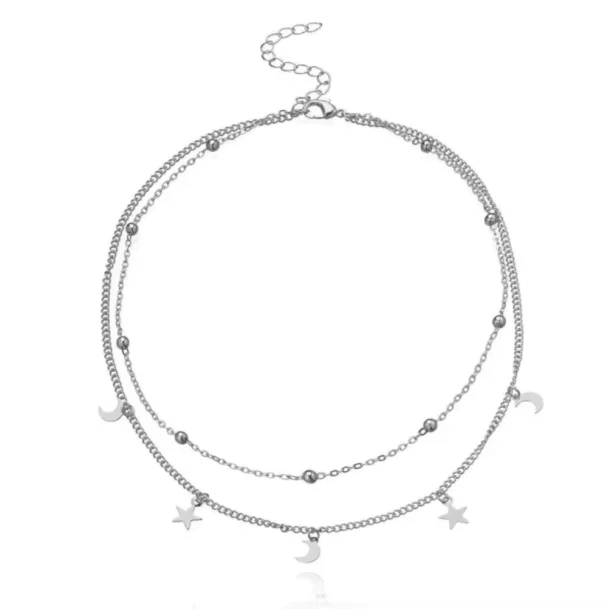
Mixed metals look tidy when there is a reason for the mix. The easiest reason is proportion: let one metal lead and use the other as the accent. Something like mostly silver-tone with one or two gold-tone pieces reads as a plan. An even split reads as random.
Another trick is to bridge. Wear one piece that contains both tones, like a bracelet with mixed hardware, and the rest of the outfit feels connected. Repeat each tone at least twice, in different places: a gold-tone ring and a gold-tone earring, say, keeps the accent from looking lonely.
Do not rely on colour names alone. Photos and lighting change how metal looks, so check the images in each listing. If a product page does not name the metal or finish, treat that as unknown and judge by the picture.
- Pick a lead metal and an accent
- Repeat the accent in two places
- Use one mixed-tone piece as a bridge
- Match hardware on belts and bags where you can
Three outfits to copy and adapt
Outfit one, easy day: a black tee, dark jeans, a wide wristband plus two thin bracelets, small studs and a short necklace. The Herbology T-shirt is an optional base. It is polyester and comes in black or white, sizes S to 3XL. Black keeps the focus on the metal, white gives a sharper contrast.
Outfit two, layered and slouchy: the Dark Academia Vintage Plaid Shirt in brown, black or khaki (cotton and polyester, M to 2XL) worn open over a tee. Add a longer necklace so it hangs over the tee and between the shirt edges, plus the Double Hole Belt if the shirt is worn short enough to show it.
Outfit three, graphic and bold: the Grunge Thoughts T-Shirt in cotton broadcloth, S to XXL, with the Black and White Pants in S to XL. Here the clothes already have a lot going on, so keep jewellery to a wristband, studs and a ring or two. Metallic trainers like the Grunge Style Metallic Sneakers, in black or white, could echo your hardware, but check sizing since the listed sizes are limited.

Layering for weather and comfort
Accessories behave differently depending on what you are wearing. In warm weather, bare arms show the whole wrist stack, but metal can feel sticky against skin, so keep bands lighter and skip heavy chains on bare necks. Leather-look or fabric bands can feel warm, so choose what you can stand for a full day.
In cold weather, sleeves cover wrists. Move the attention up: bigger necklaces over knitwear, more ear detail, and a belt chain over a coat is only practical if the coat is short enough. Bracelets under cuffs can catch, so keep them slim or move them to the outside of a loose sleeve.
Whatever the climate, think about friction. Chains rub on knits and snag them. A smooth tee under a necklace is kinder to both.
How to compare options before you buy
Product pages tell you what to check. Look for material, listed length, sizes and options. If a listing says one size, assume you cannot adjust beyond what is described, and compare it with something you own. If a material field is empty, it means the shop has not given it, so do not guess.
Compare pieces by job, not by looks alone. Ask what each one adds that you do not already have. Two similar necklaces are redundant. A necklace and a belt are not.
Use the Aesthetic Jewelry collection when you want to compare across categories in one place, then narrow down to bracelets, earrings or chains once you know what you are missing.
Common mistakes and quick fixes
The first mistake is wearing everything at once. If you look in the mirror and cannot tell what the focal point is, remove the two least important pieces. The second is matching too closely: identical lengths, identical widths, identical finishes look flat.
Third is ignoring comfort. A band that digs in or a necklace that tangles gets left in a drawer. Fourth is storing pieces in a heap, which tangles chains and scratches metal. Keep chains separate and clasp them closed.
Last, do not over-rely on the clothes to do the work. Jewellery that fights a loud print is wasted. Choose whether the clothes or the accessories lead, and let the other support.
A quick checklist before you leave the house
Run through this once and you will catch most problems. It takes less than a minute and gets quicker with practice.
If something fails the check, remove it rather than adjusting it. Fewer pieces worn well beat many worn carelessly.
- One focal piece, two supporting pieces
- Wide wristband nearest the hand, thin ones above
- Necklace lengths differ by a few centimetres
- One lead metal, one accent, repeated twice
- Belt hardware visible, not hidden by a top
- Rings spread across both hands
- Nothing snags on your sleeves or knitwear
- Closures fastened and comfortable
A worked example: building a look from five pieces
Say you own a black tee, dark jeans and a handful of mixed-tone pieces, and you want a look that reads as emo without looking crowded. Start with the loudest item. Here that is a wide black wristband on the left wrist. That is your one loud piece.
Now add two supporters. Choose a thin bracelet to sit a finger-width above the band, and a pair of small flat studs. Both are quiet, so they back up the wristband instead of competing with it. Put the necklace on only if the neckline is open; with a crew neck, a short chain at the collarbone is enough.
Next, check the metal. If the studs and the thin bracelet are both silver-tone, silver is your lead. A single gold-tone ring on the right hand would be the accent, but it needs a partner. Add a second small gold-tone detail somewhere else, such as one hoop in the second ear hole, and the mix looks planned.
Finally, take one thing off. If you are still unsure what the eye lands on, remove the thin bracelet. The wristband stays as the focus, and everything else stays small. This subtraction step is the quickest way to stop an outfit tipping into clutter.
Which piece to buy first, by what you already own
Rather than buying by category, buy to fill the gap in your current wardrobe. The right first purchase depends on what is missing.
If your outfits feel flat from the waist down, a belt or chain does more than another necklace would. The Belts And Chains collection is the place to start. If your outfits look fine from a distance but empty up close, small ear pieces and rings add that close-range detail. Browse the Earrings collection for that. If you already have plenty of silver chains but nothing on your arms, the Bracelets collection fills the obvious hole.
If you have none of it and cannot decide, look at the Emo Aesthetic collection and pick whichever single item you would reach for on a rushed morning. Pieces you actually grab get worn; pieces that need planning stay in the drawer.
- Flat from the waist down: belt or hip chain
- Plain up close: studs, small hoops, rings
- Bare arms: a wide band, then a thin bracelet
- Nothing yet: the one item you would grab in a hurry
A five-question decision checklist for any new piece
Before adding something to your basket, run it through a few questions. They are quick, and they catch most regrets.
First, what job does it do that nothing you own already does? Second, which two outfits could you wear it with tomorrow? If you cannot name two, wait. Third, does it share a metal tone with at least one thing you already wear, or is it deliberately the accent? Fourth, can you fasten and remove it yourself without fuss? Fifth, does the listing give the details you need, such as size, length and material, or are you guessing from photos?
A piece that passes all five is a safe buy. One that fails on the first two is usually an impulse purchase, and that is fine now and then, but it helps to know which one you are making. If you want to compare across categories before deciding, the Aesthetic Jewelry collection puts them side by side.
- What job does it do that nothing else does?
- Can you name two outfits for it?
- Does its metal tone fit your lead or accent?
- Can you fasten it yourself?
- Does the listing answer your questions?
Quick swaps for different settings
The same pieces can shift in tone depending on where you are going. For a day at work or uni, keep the focal point to one item and move the rest down in size: a wristband, studs and nothing at the neck. It still reads as emo, just quieter.
For a gig or night out, add the second layer. Bring in the longer necklace, a hip chain on the belt and a couple of extra rings on the hand that is less busy. You are not adding new categories, only increasing the count within the ones you already wear.
For photos or a casual meet-up, think about what the camera sees. Hands, ears and the upper chest show up most, so put your detail there and let the waist stay simple. A good rule across all three settings is to change only one thing at a time. Swap the necklace, or the wrist stack, but not both, and the outfit stays coherent.