Created by the Kawaii Vibe editorial team. Our named style desks are editorial personas. Product details and availability can change.
Here's the short answer: pick one hero accessory, give it two supporters, and let everything else stay quiet. Fairy grunge already has a lot going on, with lace, frayed edges, butterflies and soft, worn-in colours. Accessories should feel like they were collected over time, not poured on all at once.
This guide is about restraint. We'll go through necklaces, hair pieces, rings, bracelets and tights, one at a time, with before-and-after examples so you can see where an outfit tips from curated into cluttered. The pieces named are optional ideas, not a shopping list.
I'm Alex from The Alternative Desk, an editorial voice, not a person with a styling career to point to. Everything here is general styling logic you can test in your own mirror, with your own stuff.
The 1-2-2 rule: a quick way to stop
If you only remember one thing, make it this: one hero, two supporters, two quiet extras. The hero is the piece people notice first. The supporters echo its colour or shape. The quiet extras are small things like a thin ring or a plain clip that fill space without asking for attention.
Fairy grunge is a layered look by nature, so the clothes already count as part of the busy budget. A lace tight, a distressed skirt and a graphic top are three textures before you add anything. That's why the rule counts accessories separately, but you adjust it based on how loud the outfit is.
Quick test: stand back from the mirror and squint. If your eye jumps around with no place to rest, remove the last thing you added. Usually that's the right call.
- Hero: the one thing you'd point to if someone asked what you're wearing
- Supporters: two pieces that repeat its colour, metal tone or shape
- Quiet extras: small, plain items that don't compete
- Busy outfit means fewer extras; plain outfit means you can add more
Start with the outfit, not the jewellery box
Most overdone looks happen because accessories are chosen first and clothes second. Flip it. Build the outfit, then decide how much it can carry.
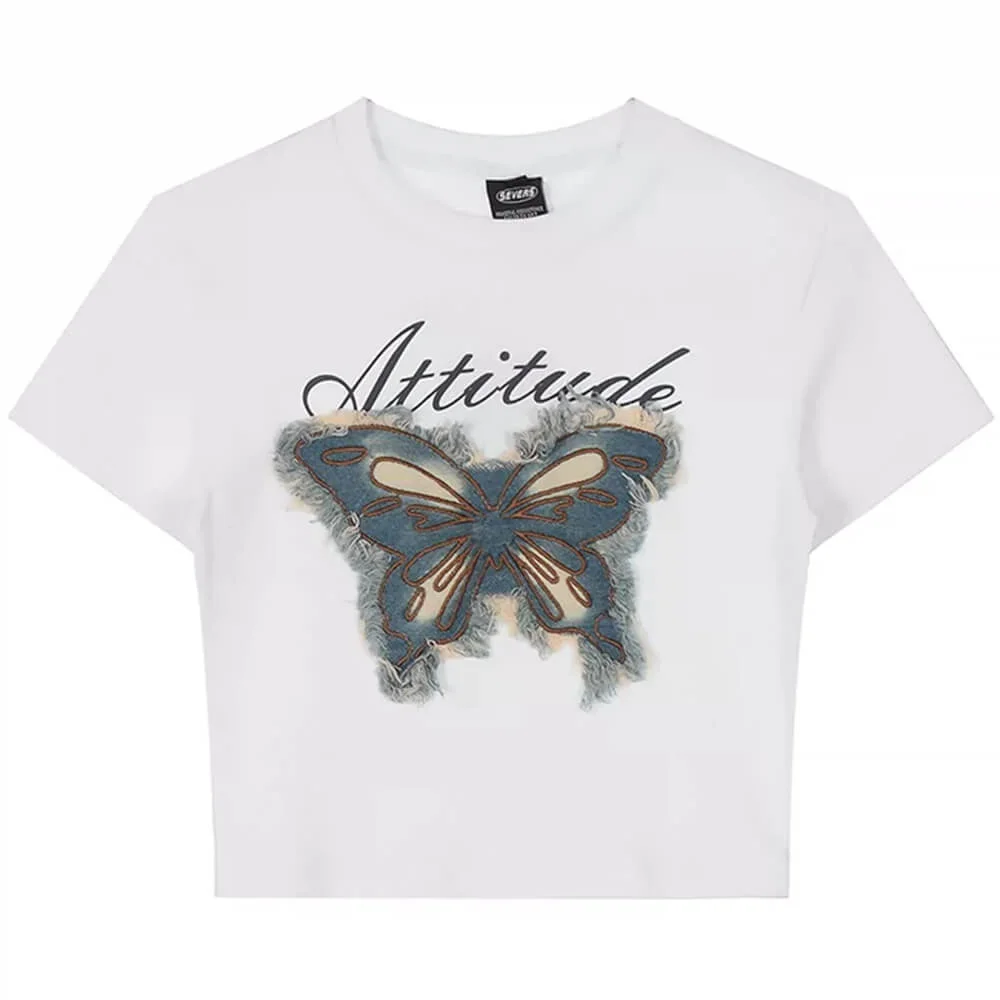
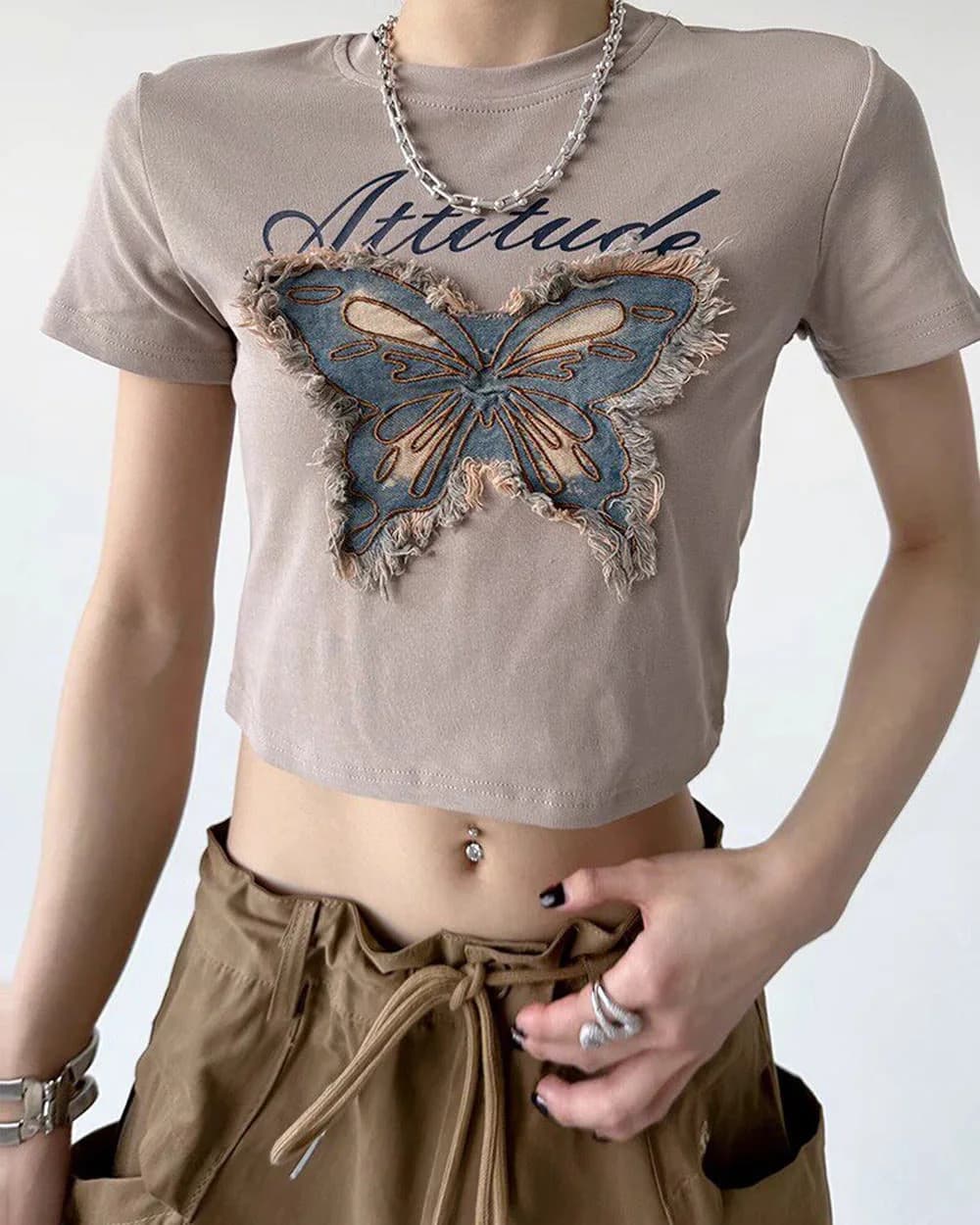
Say you start with the Fairy Grunge Butterfly Patch Top, which comes in beige or white. The butterfly patch detail is already the focus, so the top is your hero. Everything else should stay softer and let the patch do the talking.
Now say you start with a plain tee and a simple skirt. That outfit has room for a statement choker and a hair piece. Same accessories, different result, because the base is quieter.
If you want ideas for the clothing layer first, the fairy grunge aesthetic clothes collection is a good place to browse tops and skirts before you pick the small stuff.

Necklaces and chokers: where the neckline decides
Necklines tell you what will work. A high crew neck leaves little room, so a choker or a single short chain is plenty. A scoop or square neckline can handle a choker plus one longer piece. A V-neck suits a longer pendant that follows the line.
Before: a lace-trim top, a choker, two mid-length chains and a long pendant, all in different metals. The neckline vanishes and the pieces tangle. After: the same top with one choker and one thin chain that falls a few finger-widths below it. The gap between them is what makes it look planned.
Keep gaps visible. Layered necklaces look intentional when each one has its own band of skin or fabric around it. When they touch and pile up, they read as a knot.
Browse the aesthetic necklaces and chokers and compare by length and visual weight, not just looks. A heavy pendant needs a plain neck. A fine chain can sit with a busy collar.
- High neckline: one choker or one short chain
- Wide neckline: choker plus one longer piece
- Pick one metal tone, or mix on purpose with two at most
- Leave a clear gap between layers
Hair pieces: choose a zone
Hair accessories are the easiest place to go too far because there's so much real estate. The fix is to give your hair one zone. That could be the front sections, the crown, or the back of the head. Keep everything in that zone.
Before: butterfly clips along both sides, a bow at the back and a headband on top. After: three small clips clustered on one side, nothing else. The cluster looks like a decision.
Odd numbers tend to look more natural than pairs. Three clips, one barrette plus two small pins. Perfect symmetry can feel stiff against a messy, soft look like fairy grunge.
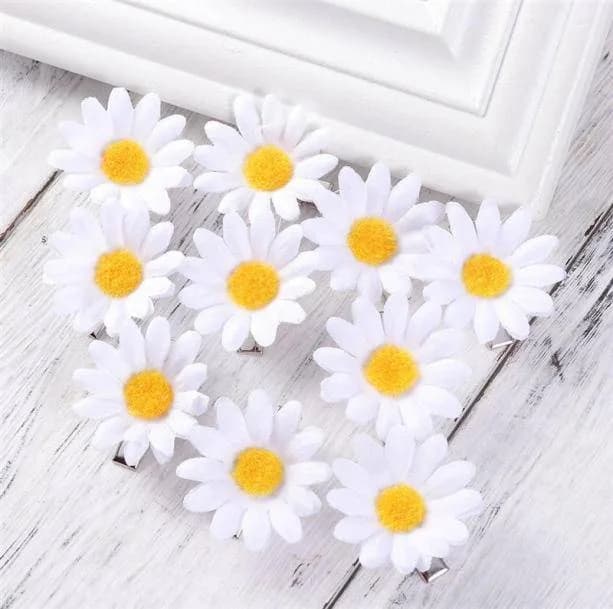
Think about hair texture too. Heavier pieces suit thicker or tied-back hair, where they have something to hold on to. Lightweight ones suit looser styles. Look through the aesthetic hair accessories and check the size and weight of each item before deciding how many you can use together.
If you wear a statement necklace, keep hair simple. If your hair is the feature, go lighter at the neck. They shouldn't both be heroes.
Rings: stack by spacing, not by count
Rings read as clutter fast because hands move constantly. The trick is spacing. Put rings on different fingers and different knuckle positions so each one shows.
A neat default is three rings on one hand, with one hand left lighter. Put a bolder ring on one finger, a thin band on another, and leave a finger or two empty. The empty fingers act like pauses in a sentence.
Before: a ring on every finger, plus bracelets stacked above. After: two rings on one hand, one on the other, and a single bracelet. Hands look relaxed instead of loaded.
Check how a ring sits next to the others. Wide, chunky rings need space around them; thin ones can sit side by side. You can compare options in the rings collection by thickness and detail, then pick one standout and a couple of plain partners.
Practical point: if you type, cook or carry a bag all day, fewer and flatter rings are more comfortable. Save the big ones for days when you're not using your hands much.
Bracelets: one cluster, one wrist
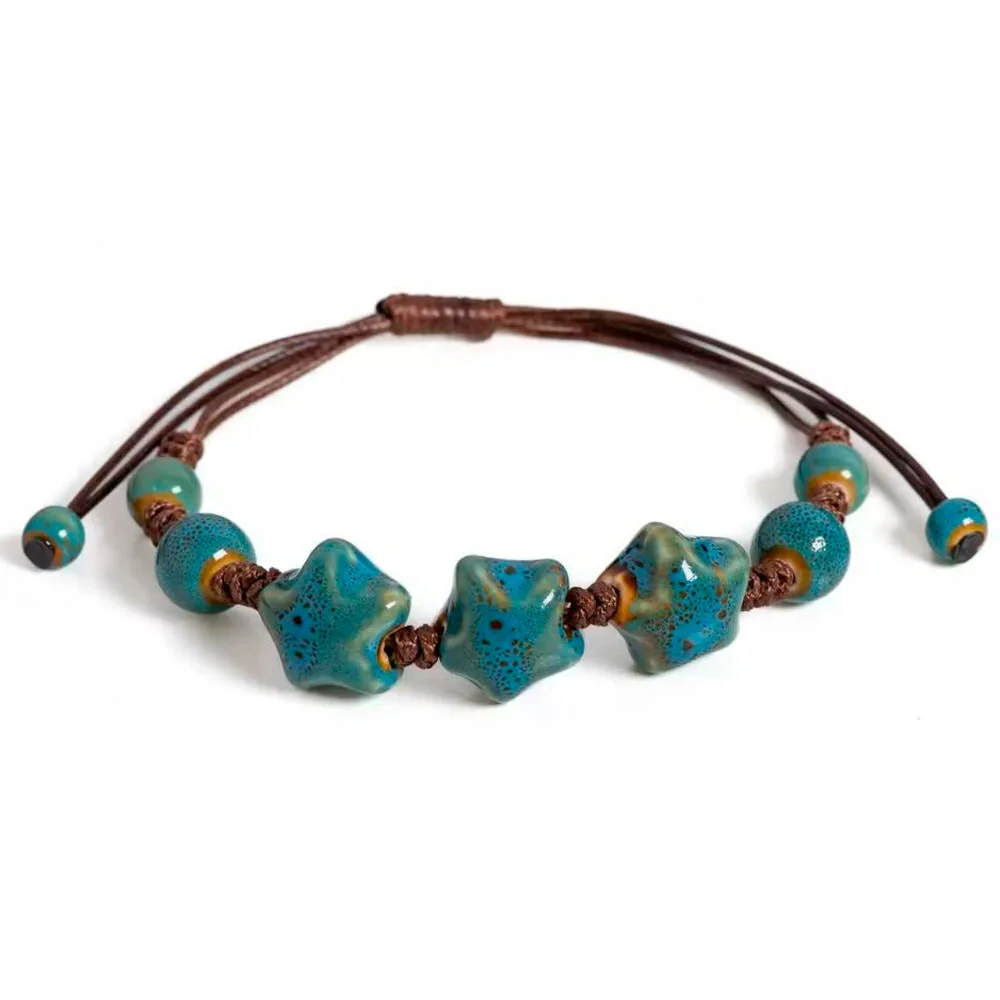
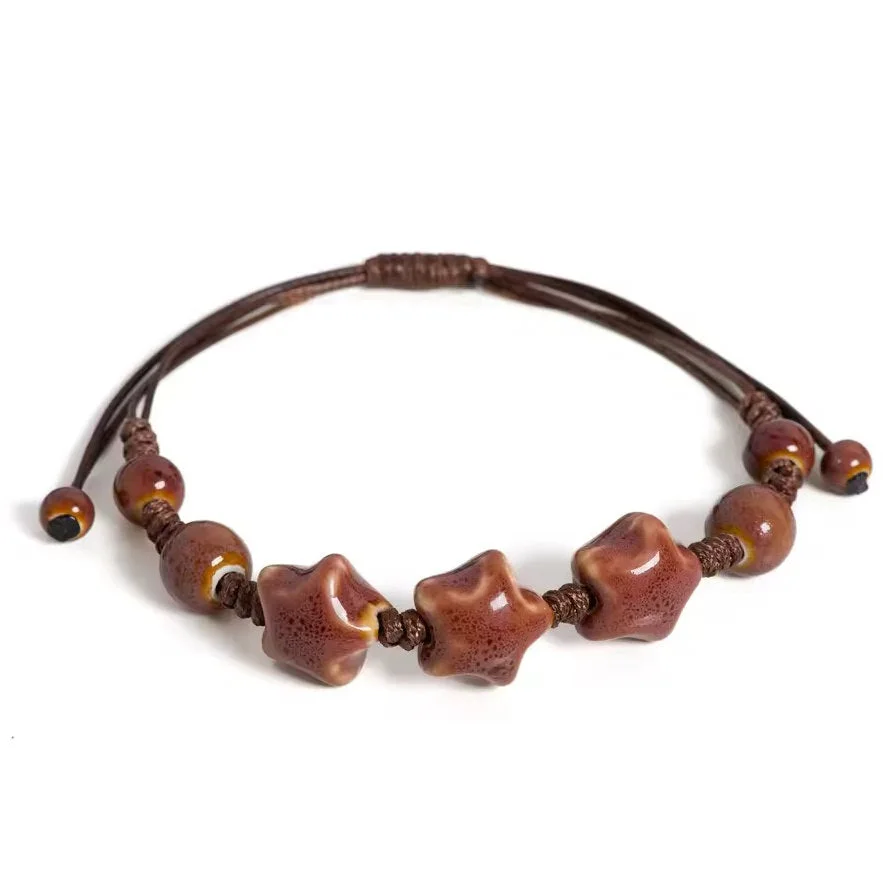
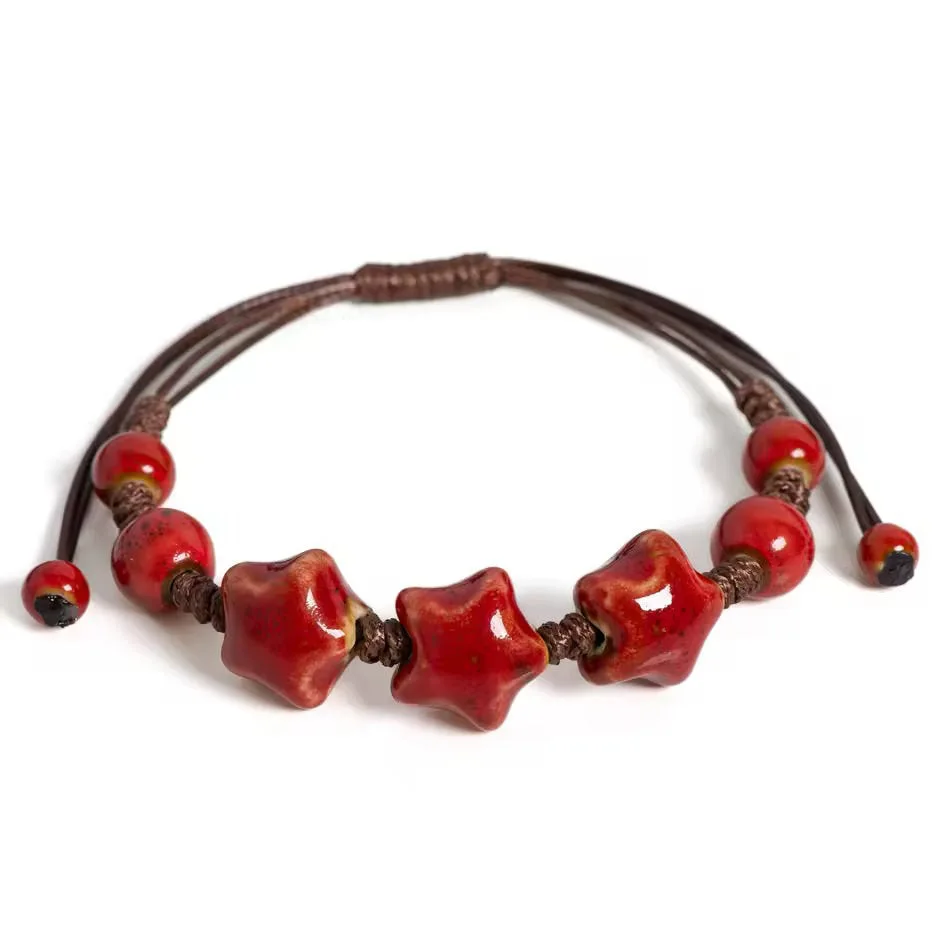
Bracelets are a nice way to add colour without crowding your neck or hair. The Fairy Grunge Star Bead Bracelet comes in red, brown or blue, and the Fairy Grunge Star Beaded Bracelet comes in multicolor. Both are listed as one standard size.
Use them as your small colour accent. If your outfit is mostly brown and beige, a red or brown bead bracelet adds a spot of warmth. If your outfit is neutral and you want something playful, the multicolor one gives you a small burst.
Wear them on the wrist opposite your watch, or on the hand with fewer rings. That keeps one hand as the busy one and one as the calm one.
If you wear both bracelets together, treat them as a single cluster and keep rings minimal on that hand. Two bead styles plus a stack of rings is where the look starts to feel crowded.

Tights and stockings: texture counts as an accessory
Tights are easy to forget in an accessory plan, but patterned or lace ones are doing the same job as a necklace. They add texture and draw the eye down. Treat them as a supporter or a hero, not an afterthought.
The Fairy Grunge Aesthetic Lace Tights are listed in brown nylon, free size. Lace is already detailed, so keep the rest of the lower half calm. Pair them with a solid or simply textured skirt and plain shoes.
Before: lace tights, a ruffled skirt, chunky socks over the top and a leg chain. After: lace tights, a plainer skirt, and nothing else on the legs. The lace now reads as a feature, not noise.
Explore more in the aesthetic tights and stockings collection. When comparing, think about the pattern scale. A delicate pattern is easier to combine with other details than a bold one.
Weather note: tights are a flexible layer in most climates. In cooler weather they add warmth under a skirt; in warm weather you may skip them and shift the weight to jewellery instead.

Outfit one: soft and neutral, hero on top
Base: the Fairy Grunge Butterfly Patch Top in beige, with the Fairy Grunge Asymmetrical Skirt, which is listed in brown polyester.
Why it works: the top is the hero, and the earth-tone palette is cohesive. The skirt's uneven hem adds movement, so you don't need much more.
Accessories: one thin chain that sits above the patch, three small hair clips on one side, and one bead bracelet in brown. Skip rings or wear just one thin one.
Adapt it: add the brown lace tights if you want more texture, but then drop the bracelet. If it's warm, leave the tights off and keep the chain. If you want more edge, swap the thin chain for a close choker, but keep hair simple.
Outfit two: darker and longer, hero at the neck
Base: the Fairy Grunge Butterfly Long Sleeve Top in brown with the Fairy Grunge Butterfly Maxi Skirt in beige/black, which is listed as free size.
Why it works: the long sleeves and maxi length cover a lot, so the accessories at the neck and hands become the visible details. A butterfly theme on both pieces means you shouldn't add more butterfly-themed items, or it turns into a costume.
Accessories: a choker as the hero, a simple hair clip or two, and two rings on one hand. The sleeves hide wrists, so skip bracelets, or push them over the cuff only if it feels comfortable.
Pitfall: matching butterfly top, skirt and butterfly clips. Pick one place for the motif to repeat at most. Let clips be plain or star-shaped instead.
Outfit three: denim and lace, hands and hair as the hero
Base: the Fairy Grunge Lace Up Denim Pleated Skirt in blue denim, available in S to XL, with a plain tee or fitted top and the brown lace tights.
Why it works: the lacing detail and pleats are already visual interest, and denim grounds the lace. This is a good setup for people who like fairy grunge but want a more everyday look.
Accessories: keep the neck bare or add one tiny chain. Let hair clips be the hero, in a small cluster, and add the multicolor bead bracelet for a bit of fun.
Adapt it: if the tights feel like too much with the lacing, go bare-legged or use plain ones and let the skirt lead. Choose either the lace on the skirt or the lace on the legs to be the main one.
Pitfalls, comparison tips and a final checklist
Common slips: mixing too many metal tones, repeating the same motif everywhere, wearing a heavy necklace over a busy top, and adding something new at the last minute out of nerves. The last one is the sneakiest.
When comparing options, check these things: size and weight, colour fit with what you already own, whether it works with at least three outfits, and what the product page lists for materials and sizes. If a detail isn't listed, don't assume it. Ask before buying if it matters to you, for example if you have sensitive skin.
Do a final pass before you leave the house. Take one thing off, then see whether you miss it. If you don't, leave it off.
- Is there one clear hero?
- Do two pieces repeat its colour or metal?
- Is there a visible gap between necklace layers?
- Are hair pieces in one zone?
- Do rings leave some fingers empty?
- Is only one of lace tights or lace skirt leading?
- Does the outfit still feel like you after you remove one item?
A worked example: editing one outfit in four passes
The earlier outfits show finished looks. This one shows the process, because the hard part is usually knowing which item to take off. Start with a plain brown tee, a dark pleated skirt and lace tights. Before touching jewellery, decide the hero. Here it is the tights, since lace on the legs is the most detailed thing on the body.
Pass one is the first draft, and it is always too much: a choker, a long pendant, four hair clips, three rings on each hand and a bracelet. Pass two removes anything that competes with the hero. The pendant goes, because it pulls attention up while the tights pull it down. Pass three fixes duplication. Two of the four clips go, and the rings drop to three in total. Pass four is the swap test: replace one remaining piece with something smaller, not something louder.
The result is a choker, a small cluster of two clips, two rings on one hand and one on the other. It has fewer pieces than the first draft, but each one is readable. If you plan to try this, do the passes in the mirror, not in your head. Your first draft is a starting point and was never meant to be the final look.
- Pass one: put on everything you are tempted to wear
- Pass two: remove whatever competes with the hero
- Pass three: remove duplicates of the same shape, colour or motif
- Pass four: downsize one piece instead of adding another
Pairing by contrast: soft pieces, sharp pieces
Fairy grunge works because it mixes soft and rough, so use that as a way to choose between accessories. If the clothes lean soft, such as lace, pastel tones or floaty layers, one sharper accessory stops it going sugary. A dark choker or a chunkier ring does the job. If the clothes lean rough, with distressed denim, fraying or heavy black, one delicate piece softens it, like a small clip or a fine chain.
The rule is one contrast, not several. A lace top with a dark choker already has its edge, so the rings and hair pieces should return to soft. An all-black outfit with a delicate hair cluster is already balanced, so the neck can stay plain.
This also helps when you are unsure what to buy. Look at your wardrobe and count whether it is mostly soft or mostly rough, then shop for the opposite. The fairy grunge aesthetic clothes range sits on both sides, so check which direction your chosen top or skirt leans before you pick the finishing details.
- Soft outfit: add one sharp piece, such as a dark choker or a bold ring
- Rough outfit: add one delicate piece, such as small clips or a thin chain
- Stop after one contrast; let everything else follow the outfit's mood
Deciding what to wear on a time-pressed morning
Restraint is easier with a quick routine than with a mirror debate. Ask these questions in order and stop at the first answer that settles it.
First, where is the detail in the clothes? Choose the opposite zone for your hero accessory. Detailed top means hair or hands. Detailed legs means neck. Plain everything means you can choose freely.
Second, how long will you wear it? For a long day, favour things that stay put. Small clips and thin rings need less adjusting than a heavy layered necklace, which tends to shift and tangle. Browse aesthetic hair accessories and aesthetic necklaces and chokers with that in mind.
Third, is there a reason to dress it up? A night out can take one extra layer, such as a second chain or an extra ring. A quick errand run rarely needs it.
Finally, set a limit on the number of decisions. Keep a small tray of five or six pieces that mix well, such as one choker, one thin chain, a few clips and two rings from the rings collection. Choosing from a small group nearly always looks more cohesive than choosing from a full drawer, and it takes less time.
- Put the hero opposite the busiest part of the outfit
- Choose pieces that stay in place for long days
- Reserve extra layers for occasions that call for them
- Keep a small set of go-to pieces that mix well
When tights and jewellery clash
Tights interact with jewellery more than people expect. Lace patterns echo filigree and chain detail, so a lacy leg with a lacy choker can look like a matching set rather than an outfit. If both are delicate, make one of them plain or switch the choker to a smooth style.
Colour matters too. Brown tights suit warm metals and earthy beads, while cooler silver tones can look disconnected from them. You do not need a perfect match, but keep the undertone consistent across the metals you can see at once.
If your outfit has a short hem, the tights are visible and should be treated as a main feature. With a long skirt only an ankle shows, so you can put your effort elsewhere. Look at the aesthetic tights and stockings with your hem length in mind before deciding how much the pattern will really contribute.
- Delicate tights: choose a smoother neckpiece
- Warm-toned tights: stay with warm metals and earthy colours
- Short hem: tights are a main feature; long hem: they are a minor one