Created by the Kawaii Vibe editorial team. Our named style desks are editorial personas. Product details and availability can change.
Fairy grunge jewelry relies on earthiness, decay, and whimsical detail, but wearing multiple intricate charms at once often turns into a tangled knot. When you combine raw pendants, beaded cords, and textured chains over distressed knits or raw hems, small errors in length and metal tone can make your chest look overcrowded rather than thoughtfully styled. The solution is matching pendant drops directly to your neckline while treating metal finishes as deliberate accent tones rather than random accidents.
Getting the look right means looking at the empty space between your throat and your hem. If your collar already features heavy eyelets, distressing, or busy graphics, piling on five identical fine chains only creates visual chaos. By setting strict anchor pieces, spacing your chains by at least two inches, and letting specific metal finishes speak to your garment tones, you get all the mossy, woodland grit of the style without losing individual pieces in fabric folds.
This guide breaks down the mechanics of fairy grunge styling across neckline cuts, mixed metal balances, sleeve lengths, and wrist details. Whether you are assembling a full festival set or styling a casual weekday layer, these rules will help you build balanced clusters that stay comfortable and maintain their silhouetteThe overall shape an outfit creates, from fitted to loose and layered. through movement.

1. The Core Architecture of Neckline Clearance
The single biggest reason layered necklaces turn messy is a clash between chain drops and garment necklines. When a pendant hits directly on a seam, hem, or collar band, it constantly flips over, catches on threads, and disrupts the line of your outfit. A solid baseline rule is to ensure every charm either sits fully on bare skin at least one inch above your collar, or drops clearly onto smooth fabric at least two inches below the seam.
If you are wearing an open scoop neck or a square cut, you have a natural frame of bare skin to fill. In this space, shorter chokers measuring twelve to fourteen inches form a crisp horizon, leaving room for a sixteen-inch fine link and an eighteen-inch drop pendant to sit flat against your chest. The bare skin provides high contrast, which allows dark metals and oxidized silver pendants to stand out clearly without competing against fabric ribbing or graphic prints.
High crew necks, boat collars, and distressed raw-edge collars require the opposite approach. Shorter chokers get swallowed by the collar or rub uncomfortably against ribbing, so your layeringWearing pieces over or under one another to add depth, warmth or contrast. sequence should begin below the collar line. Starting your shortest chain at twenty inches and letting your longest piece fall to twenty-eight or thirty inches creates an elongated vertical drape that pulls the eye downward, making thick knits or layered tops look structured instead of bulky.
- Chokers (12 to 14 inches): Best suited for open collarbones and deep scoops on bare skin.
- Mid-length pendants (16 to 18 inches): Ideal for sitting above shallow scoops or low V-necks.
- Matinee drops (20 to 24 inches): Float clean over crew tops, turtlenecks, and layered bodices.
- Opera lengths (28 to 32 inches): Provide a slimming vertical line over bulky hoodies and oversized cardigans.
2. Mixing Metals: Balancing Bronze, Pewter, and Silver
Traditional jewelry rules caution against mixing warm and cool metals, but fairy grunge relies heavily on the tension between them. Antique bronze, weathered pewter, blackened steel, and oxidized silver can live together in a single stack if you establish a dominant finish. Choose one primary metal to make up roughly seventy percent of your metals, then use your second metal as an intentional highlight.
For example, if you make oxidized silver your primary metal, wear an antiqued silver choker and a heavy pewter pendant. You can then introduce warmth through a secondary bronze locket or a brass wire-wrapped charm on your mid-length chain. This creates a weathered, found-object aesthetic that looks gathered over time. The pitfall to avoid is high-shine, mirror-polished metals; ultra-bright yellow gold or reflective chrome silver breaks the earthy, lived-in mood of the aesthetic.
When selecting pieces from the fairy grunge jewelry collection, look for darkened crevices, hammered textures, and brushed surfaces. These matte textures diffuse light rather than bouncing it cleanly, allowing different metal colors to sit side by side without looking like mismatched sets from two different eras.
- Primary metal base: Set roughly 70% of your stack in one finish (like antiqued pewter) to anchor the look.
- Accent finish: Use the remaining 30% for contrasting highlights, such as warm brass or tarnished copper.
- Finish consistency: Stick to matte, patinated, oxidized, or satin textures rather than mirror polishes.
- Stone mounts: Pair cooler metals with green jasper or clear quartz, and warm metals with amber or tiger eye.
3. Styling Chokers with Distressed and Patchwork Tops
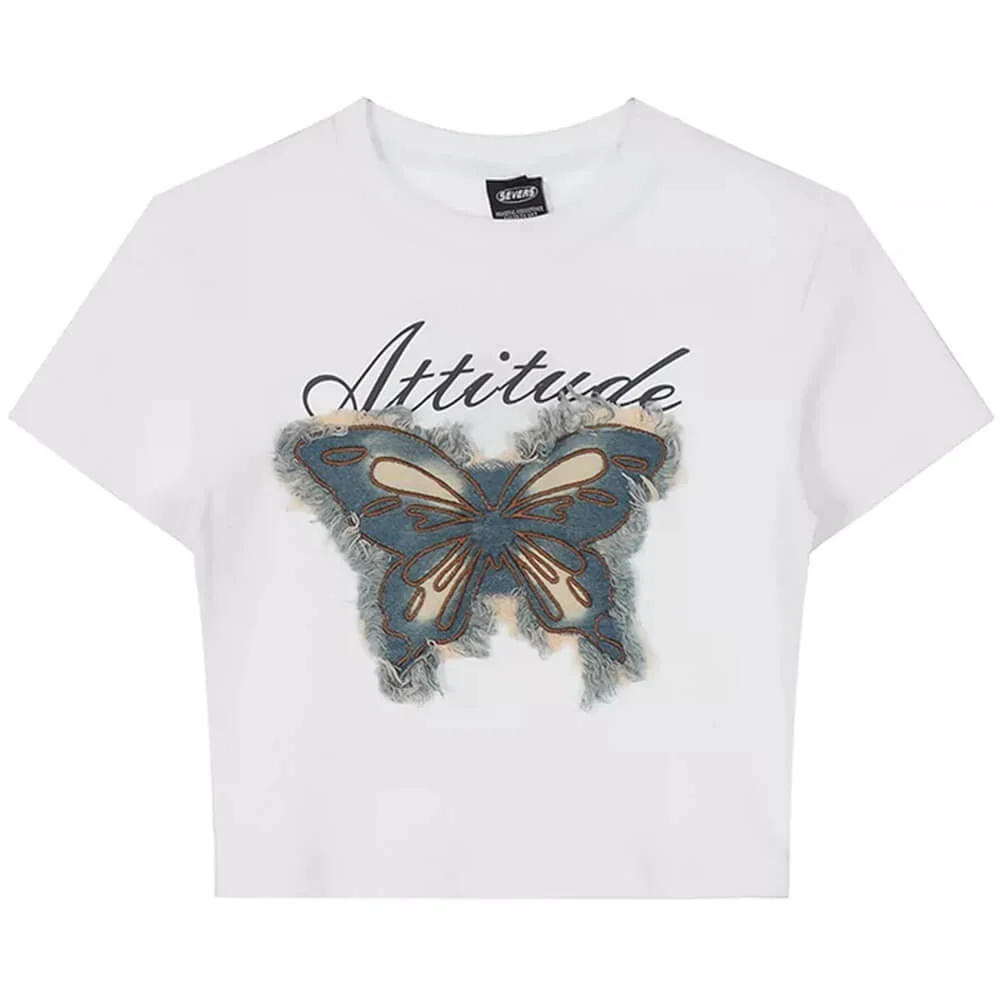
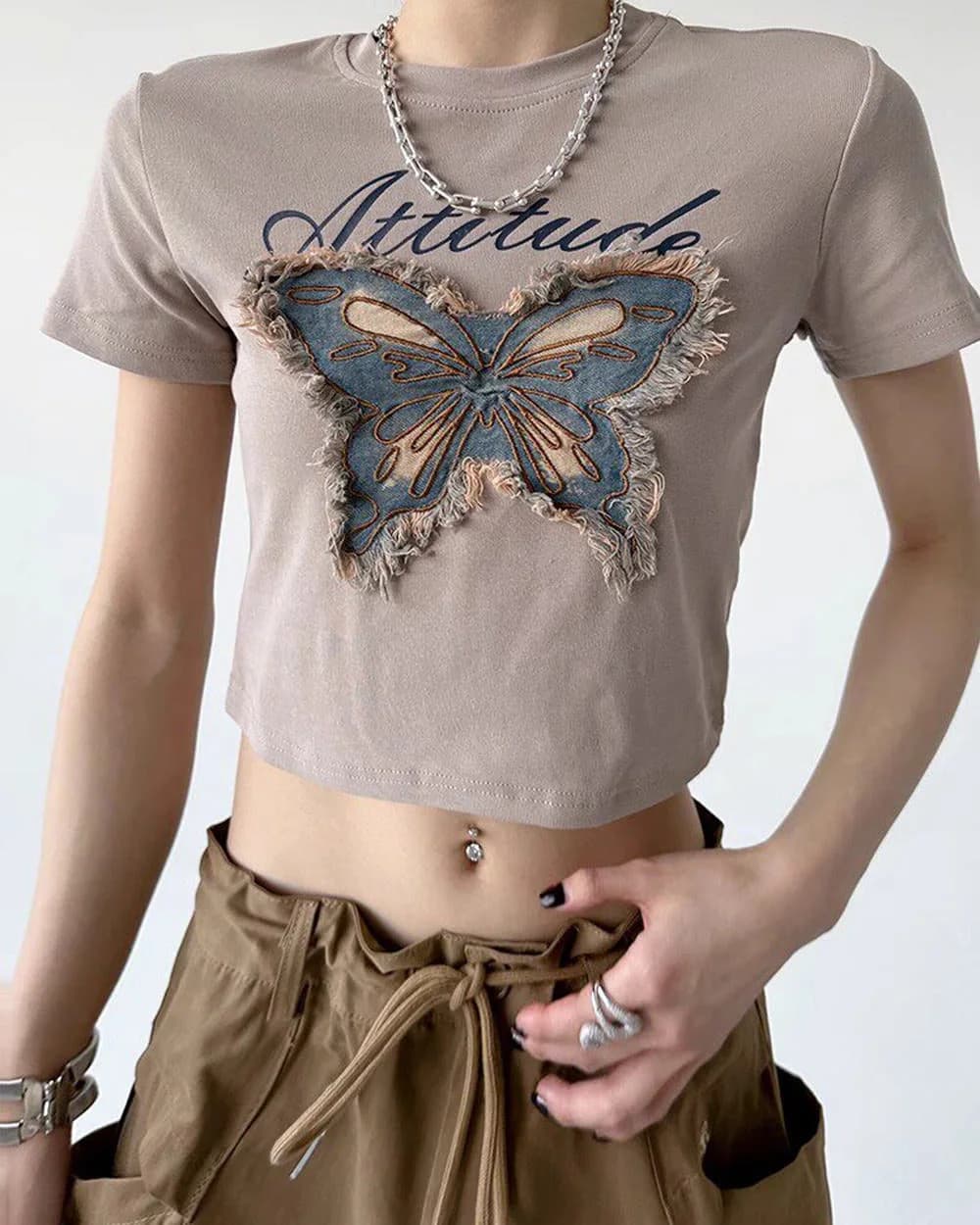
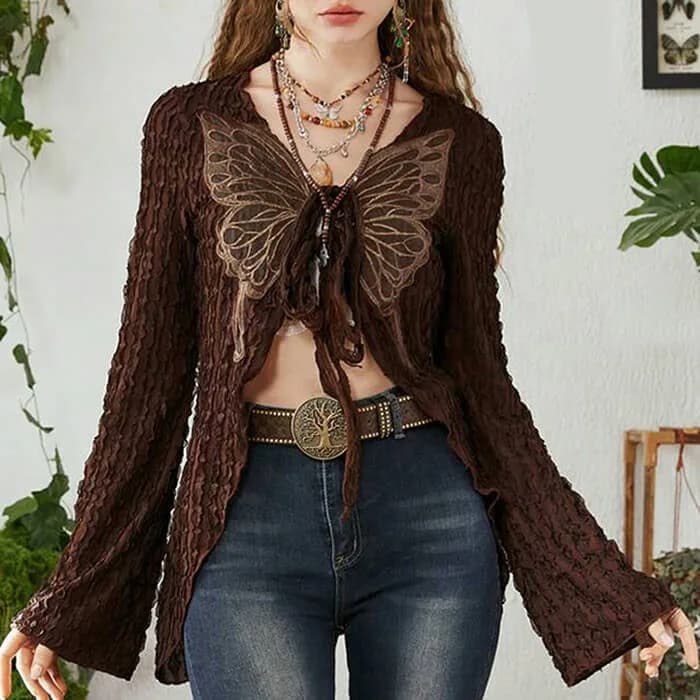
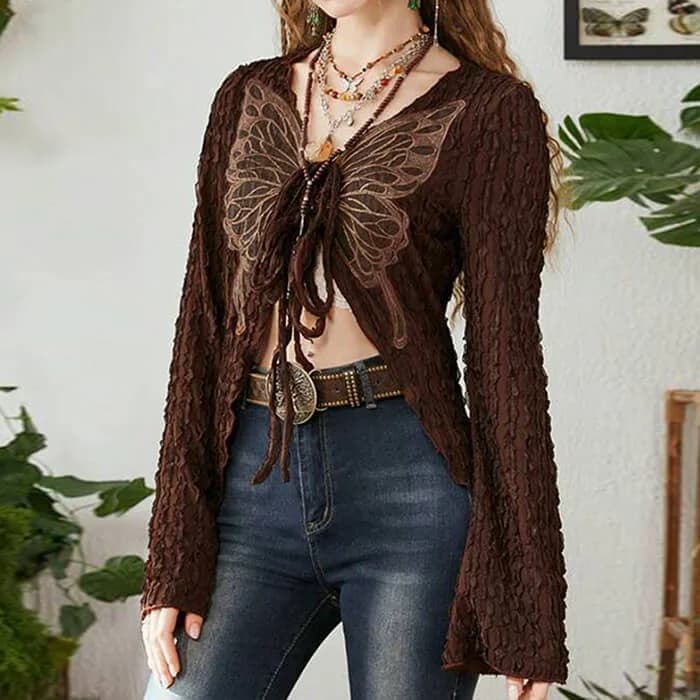
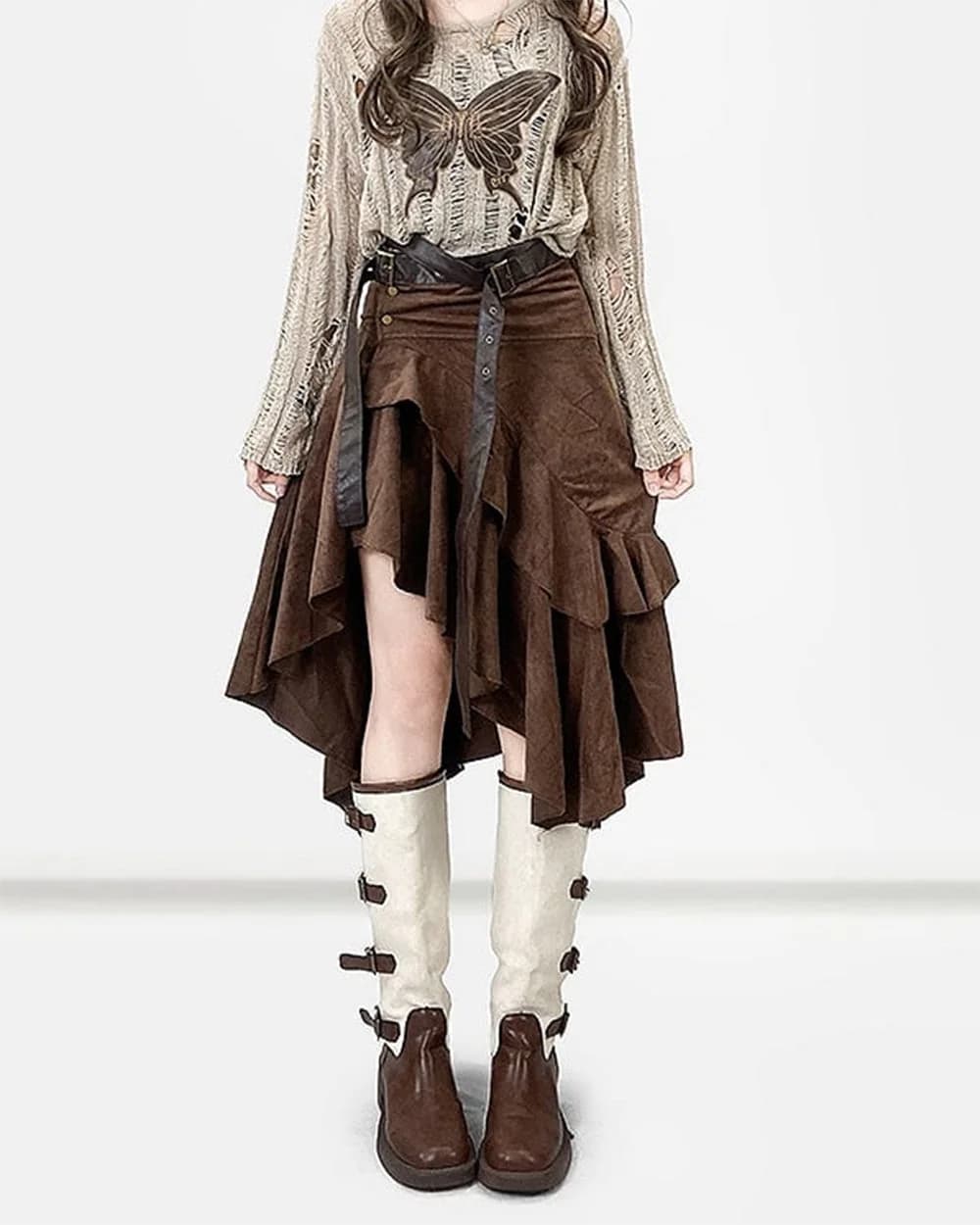
Patchwork tops present a unique layeringWearing pieces over or under one another to add depth, warmth or contrast. challenge because their seams, varied dye patterns, and raw thread finishes provide plenty of visual texture on their own. When wearing detailed tops like the Fairy Grunge Butterfly Patch Top, adding a wide, heavily beaded collar will overcrowd your throat. Instead, pick a slender velvet ribbon, a simple braided cord, or a tight-link curb chain that hugs the upper neck.
Because this top features a structured front detail and a clean upper chest cut in beige or white, a dark cord choker provides high-contrast definition right below the chin. From there, you only need one additional drop necklace that terminates right above the butterfly patch. This maintains a clear pocket of negative spaceAn uncluttered area that gives the rest of a design room to stand out. between the jewelry and the garment artwork, preventing the charm from banging against the center fabric design.
If your patchwork top features asymmetric shoulders or raw cutouts, skip symmetrical chokers altogether. An asymmetrical neckline pairs best with a single lariat-style cord or an off-center pendant that mirrors the organic, irregular cut of the clothing. By letting the neckline guide the angle of your chains, you avoid having your jewelry fight the garment's natural lines.
- Cord width: Keep chokers under 8mm wide when wearing patterned or patched tops to avoid a suffocating look.
- Placement: Position the choker snug against the base of the throat, maximizing skin distance before the top begins.
- Pendant limit: Restrict drops to a single center piece to avoid visual clutter against multi-panel stitching.
- Palette check: Contrast dark cord chokers against light fabrics, or use pale twine and aged silver on dark knits.
4. High Collars, Distressed Hoodies, and Long Chains
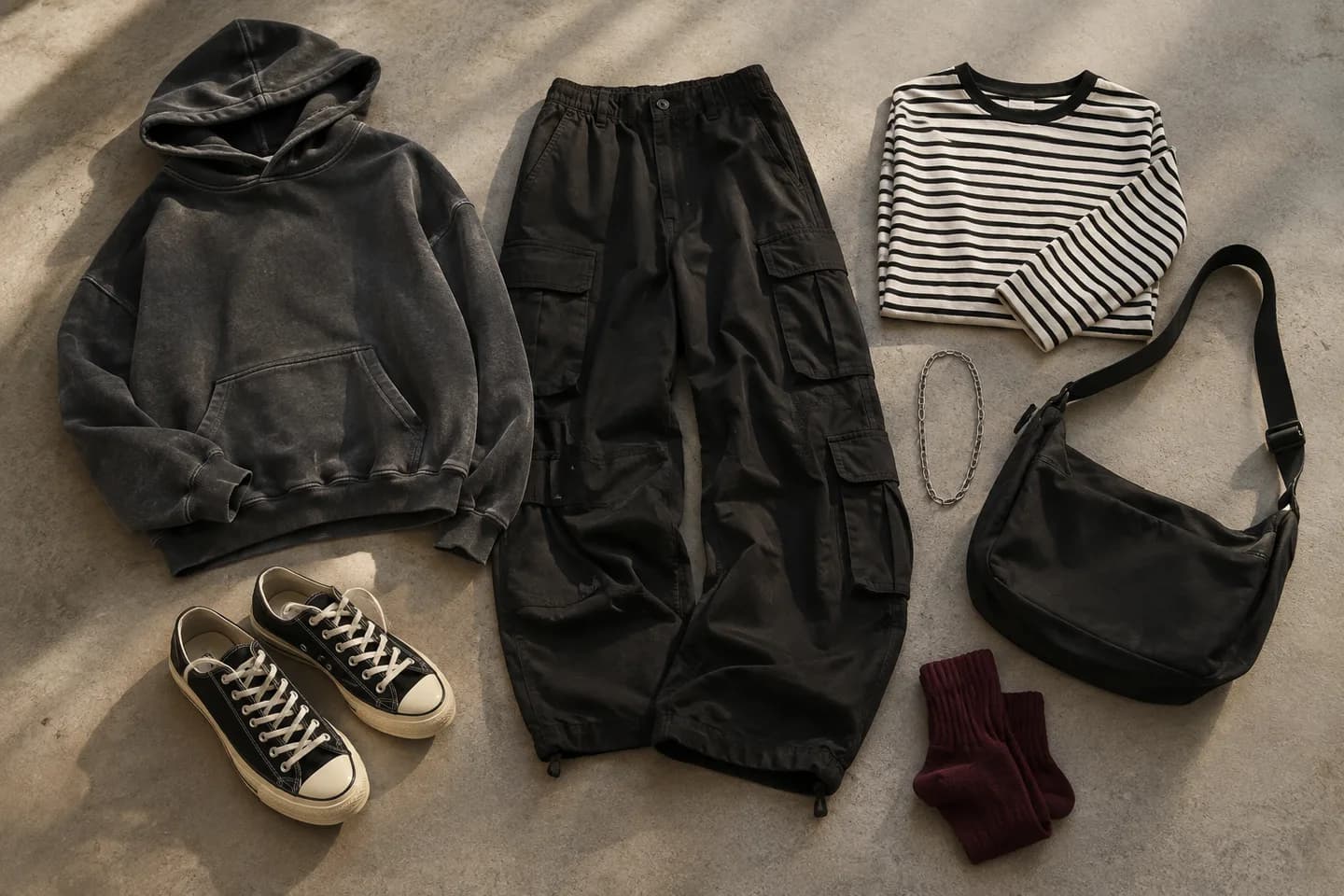
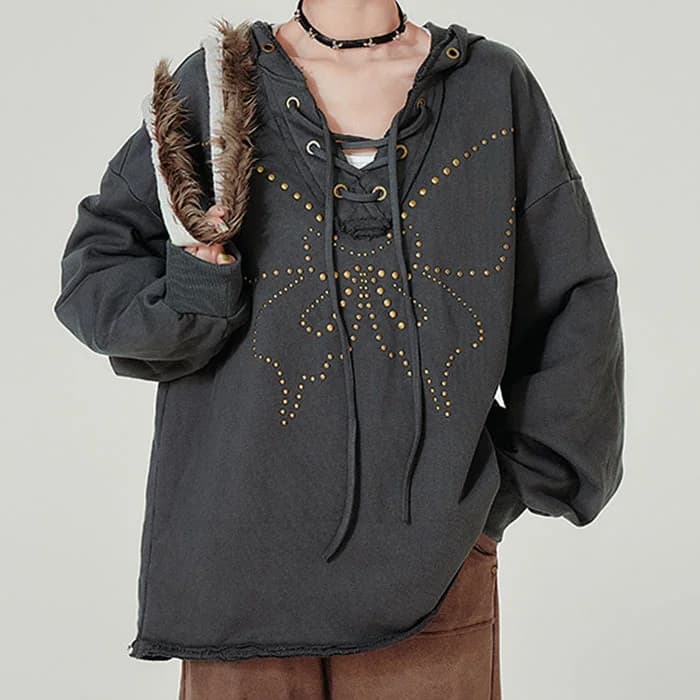
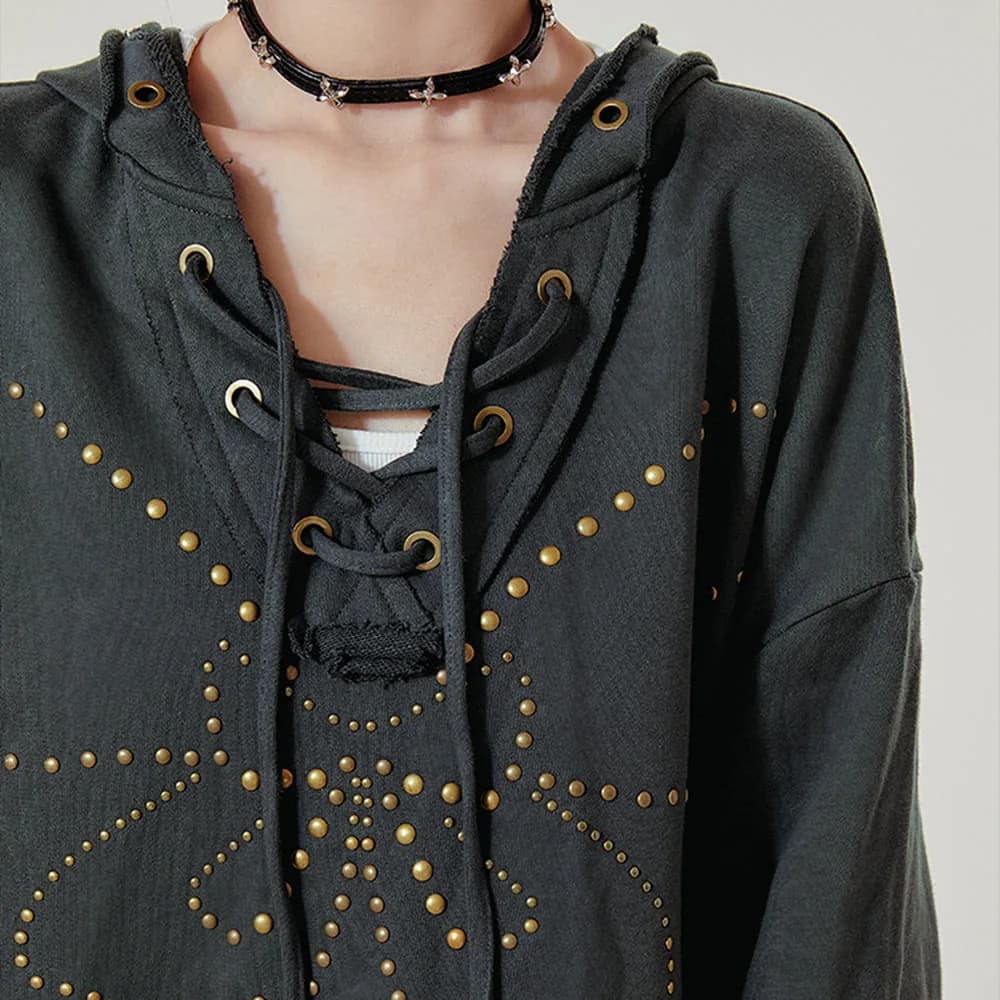
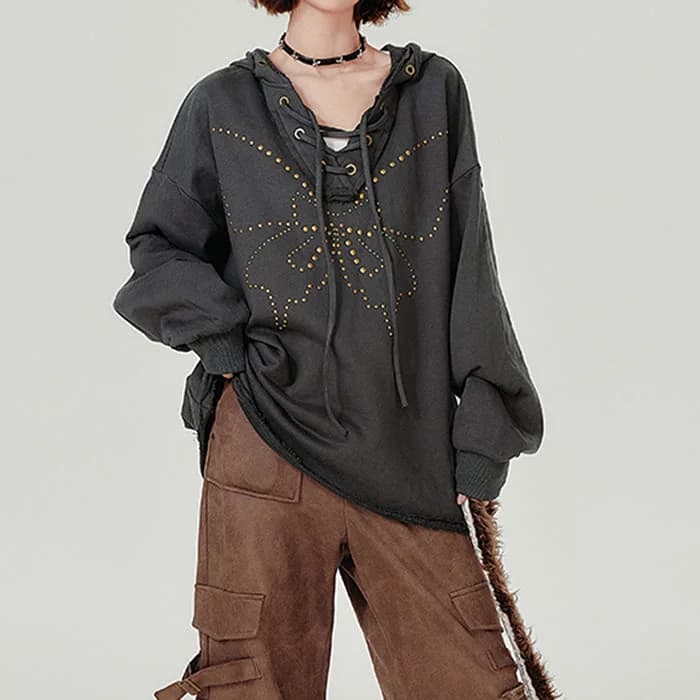
Bulky garments like the Fairy Grunge Studded Butterfly Hoodie bring significant fabric volume and hardware around the neck and shoulders. Trying to wear delicate 16-inch chains under a thick hood or metal-studded collar results in tangled links that vanish under the fleece. Heavy layers require jewelry with physical presence and substantial chain weight.
Pairing this grey studded hoodie with a long twenty-eight-inch stainless steel or oxidized curb chain creates an intentional line that cuts right through the center of the heavy cotton blend. A sizable talisman pendant—such as an antiqued key, an insect casing, or an uncut raw crystal—provides enough downward weight to keep the chain centered even when your outer layer moves or shifts during a walk.
If you want to wear more than one piece over a hoodie or high collar, stick to a two-tier maximum. Your first piece should drop just below the center collar seam, and your second piece should rest comfortably around the mid-chest. Avoid fine wire links entirely here; hoodie fleece and drawstring eyelets easily snag fragile chains, potentially snapping them during normal daily wear.
- Minimum length: Choose chains 24 inches or longer to clear drawstring hoods and chunky fleece collars.
- Chain gauge: Opt for links at least 2mm thick to prevent snags on hoodie ribbing, studs, or seam stitching.
- Pendant weight: Select solid metal charms or dense stone drops that stay centered over heavy textiles.
- Hardware pairing: Match pendant metal tones to the metal eyelets or studs on your outerwear.
5. The Three-Chain Layering Formula for Open Necklines
To assemble an everyday neck stack that never tangles, use the three-tier rule: anchor, texture, and drop. The anchor is your shortest piece, typically a twelve to fourteen-inch cord, simple choker, or close collar. It defines your neckline and establishes your baseline metal or material. Because it stays high on the neck, it cannot physically tangle with the longer layers below it.
The second piece is your texture layer, falling between sixteen and eighteen inches. This chain should feature distinct surface interest, such as twisted rope links, small spaced beads, or flat oval links, but it should remain free of large center pendants. By keeping this intermediate tier pendant-free, you eliminate the primary cause of necklace tangling: two pendants swinging into each other and twisting their respective chains into a knot.
The third piece is your drop, measuring twenty to twenty-two inches. This is where your hero pendant belongs—be it an ornate moth, a dagger, or an antiqued locket. Because the drop swings freely below the texture layer, each piece occupies its own horizontal band across your chest. You can browse coordinated options in the fairy grunge necklaces collection to find pieces that fit cleanly into these three distinct length brackets.
- Tier 1 (12–14 in): Base anchor; choker, velvet band, or flat curb chain without hanging pendants.
- Tier 2 (16–18 in): Surface texture; cable, beaded, or figaro chain with no center charm.
- Tier 3 (20–24 in): Feature focal point; holds your primary heavy charm, moss agate, or carved talisman.
- Spacing rule: Maintain a minimum two-inch difference between each tier to prevent link crossover.
6. Sleeve Lengths, Cuffs, and Wrist Stacking Rules
Wrist styling is directly dictated by your sleeve choice. Long, flared, or bell sleeves already bring plenty of drama to your hands, meaning rigid metal bangles will constantly snag on your cuffs or slide up out of sight. When wearing long, fitted sleeves like the Fairy Grunge Butterfly Long Sleeve Top, you have a flat, smooth canvas that handles layered cuffs exceptionally well.
For long sleeves with standard cuffs, wear thin, malleable leather wraps or tarnished chain bracelets directly over the fabric at the wrist bone. This pins the sleeve slightly while showing off your metalwork. If the top has loose thumbhole cuffs or flared wrists, pull your bracelets off entirely and shift your accessories to your fingers, or wear an upper arm cuff hidden under the flare that reveals itself only when you lift your arms.
With short sleeves or sleeveless tops, you can build asymmetrical wrist stacks. Balance is key: keep one arm relatively light with a single watch or leather strap, and load the other arm with two or three mixed-texture pieces. Combining a braided cord, a dark bead bracelet, and an oxidized link chain gives you a rich, collected aesthetic without creating excess bulk on both sides.
- Fitted long sleeves: Place structured metal cuffs or wraps over the sleeve end to frame the wrist.
- Flared cuffs: Keep wrists clear of pronged jewelry to avoid fabric snags; focus on rings instead.
- Short sleeves: Use an asymmetric layout—one multi-layered arm stack balanced by a minimal opposite wrist.
- Texture mixing: Combine one organic band (leather or hemp) with two metal chains for natural contrast.

7. Ring Stacking: Distributing Weight Across Both Hands
A successful ring stack balances heavy statement bands with slender knuckle spacers so your hands look adorned rather than weighed down. If you wear two oversized, stone-heavy rings on adjacent fingers, they will clack against each other, pinch your skin, and restrict everyday hand movement. You can review a range of carved bands and organic silhouetteThe overall shape an outfit creates, from fitted to loose and layered.s in the fairy grunge rings collection to help build comfortable combinations.
Begin with one primary anchor ring per hand. A large signet, an oxidized branch ring, or a claw-set smoky quartz works best on the middle or index finger, which naturally carry larger jewelry better than the ring or pinky fingers. Once your anchor is placed, add slender midi rings or plain hammered bands to the remaining fingers, leaving at least one finger completely bare on each hand. This empty space gives your eyes a resting spot and keeps your hands functional.
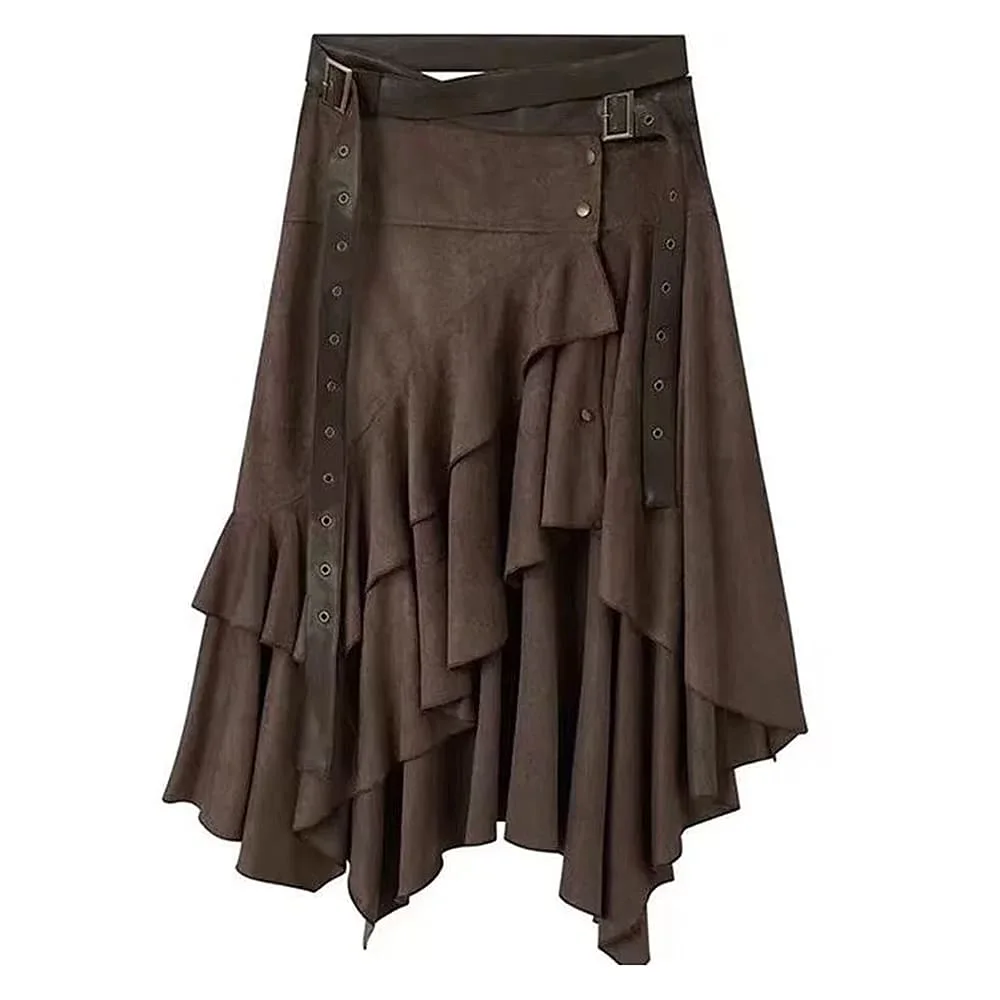
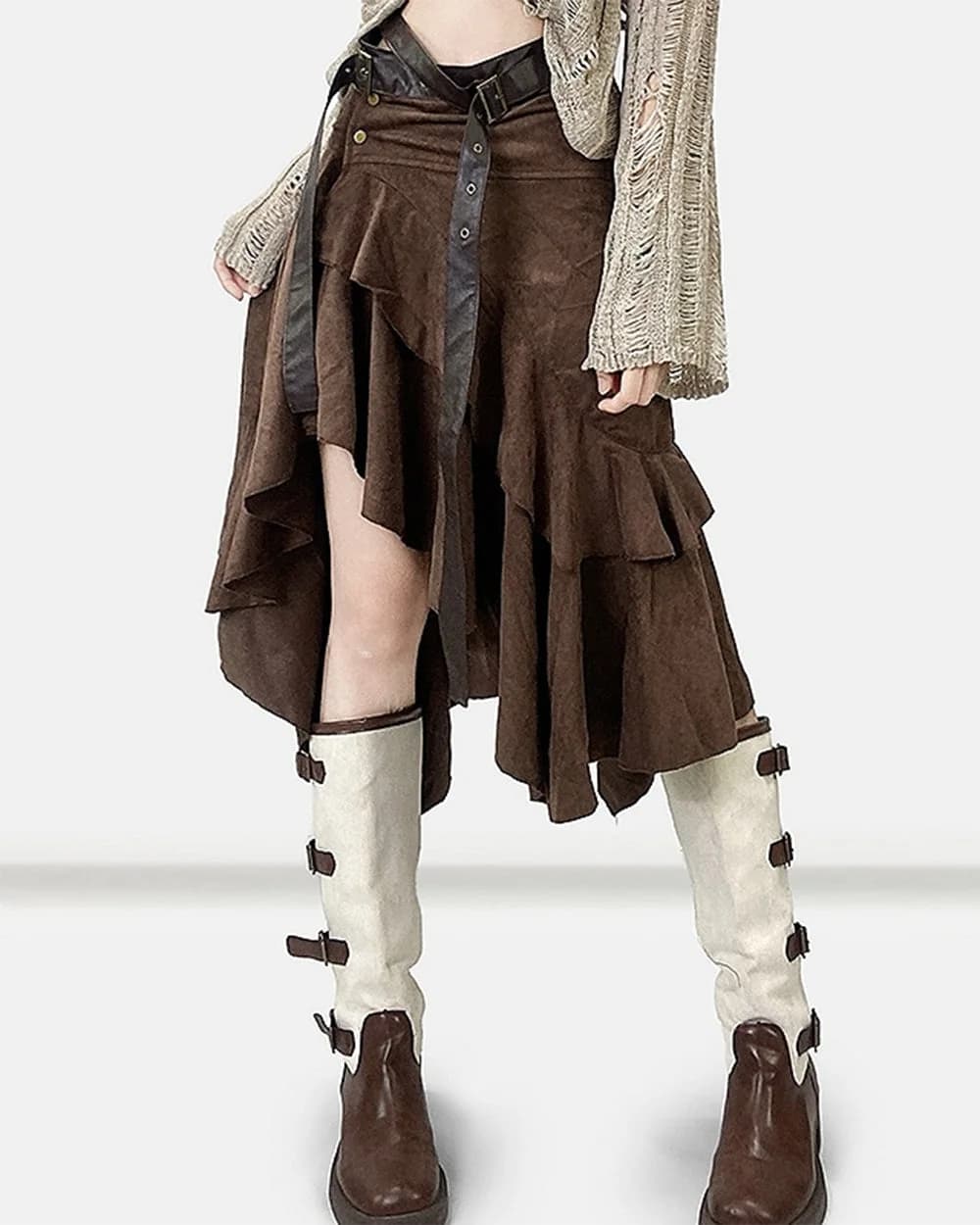
Pay attention to hand balance relative to your clothing silhouetteThe overall shape an outfit creates, from fitted to loose and layered.. If you are wearing a bottom piece with strong directional draping, such as the Fairy Grunge Asymmetrical Skirt, carrying an organic, irregular ring stack reinforces the raw aesthetic of your overall outfit. Try placing a double-band midi on your dominant index finger and a wider thumb ring on your opposite hand to create a natural, asymmetrical balance across your body.
- Anchor placement: Keep large statement rings on index or middle fingers to balance hand weight.
- Midi spacing: Wear above-the-knuckle bands on opposite fingers from your heaviest base rings.
- Comfort test: Ensure adjacent fingers do not have wide metal rims that rub together during hand grips.
- Negative spaceAn uncluttered area that gives the rest of a design room to stand out.: Leave at least one finger bare per hand to keep the styling relaxed and wearable.
8. Balancing Whimsy and Grit: Charms, Insects, and Hardware
Fairy grunge balances delicate forest elements with gritty industrial undertones. If you style your outfit solely with polished fairies, flower buds, and pastel beads, the look shifts into classic cottagecore. Conversely, if you wear only heavy spikes, razor links, and safety pins, it becomes traditional mall goth. The aesthetic lives directly in the middle: pair a delicate motif with a rough, weathered finish.
When choosing insect or floral charms, look for detailed anatomy—like veined cicada wings, skeletal leaf patterns, or coiled beetles—cast in dark pewter or oxidized brass rather than shiny pink enamel. You can offset a delicate dragonfly pendant by hanging it from a heavy industrial ball chain or a raw leather knot. This juxtaposition gives the piece an unearthed, archival feel that aligns with the broader fairy grunge aesthetic clothes ethos.
Another way to strike this balance is pairing delicate charms with utilitarian fastenings. Use small carabiners, toggle clasps, or oversized spring rings as visible front-facing design elements rather than hiding them at the nape of the neck. By exposing the functional, mechanical parts of your jewelry alongside organic nature motifs, you maintain the grounded, DIY character central to the look.
- Organic motifs: Look for skeletal leaves, moths, beetles, fungi, and raw, uncut mineral points.
- Industrial balance: Hang fragile nature charms on curb links, ball chains, or thick leather thongs.
- Finish choice: Select antiqued, matte, or patinated metals over bright, high-shine gold or silver plating.
- Exposed hardware: Treat functional clasps and jump rings as deliberate design details.
9. Coordinating Jewelry with Earth-Toned and Distressed Bottoms
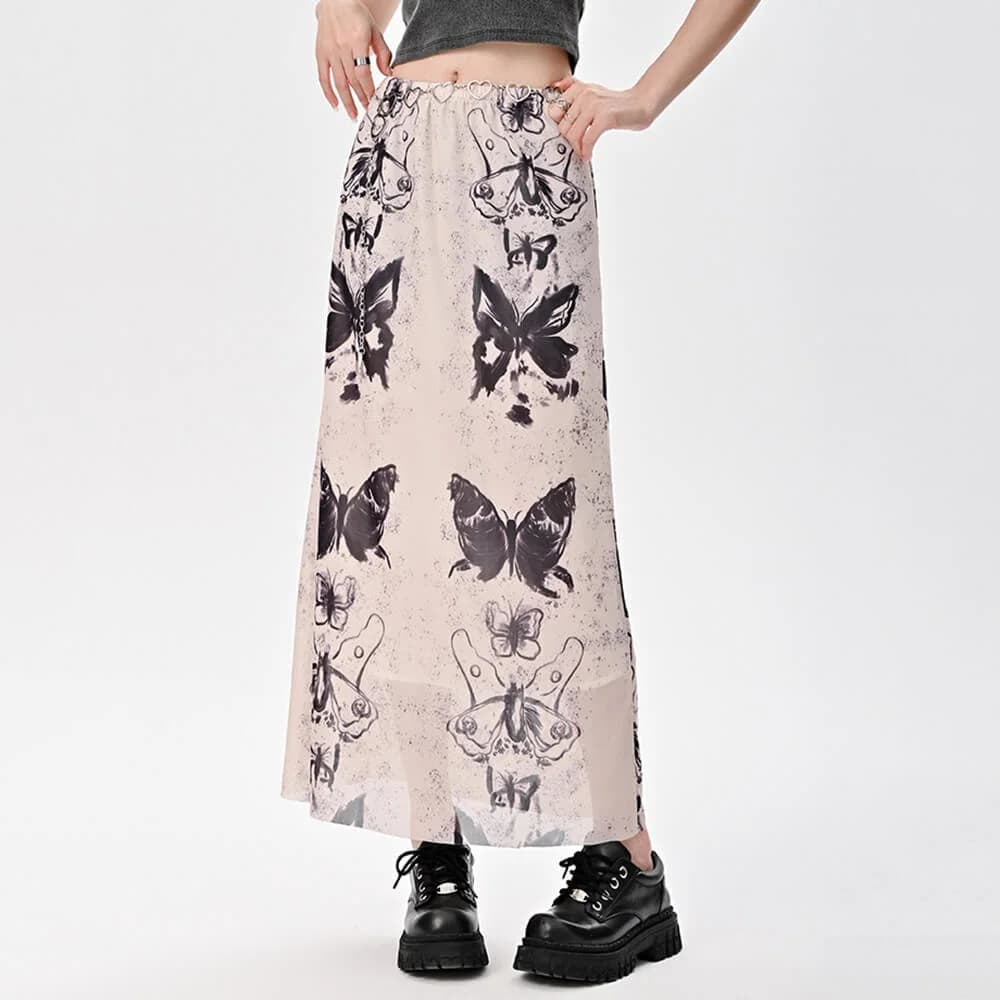
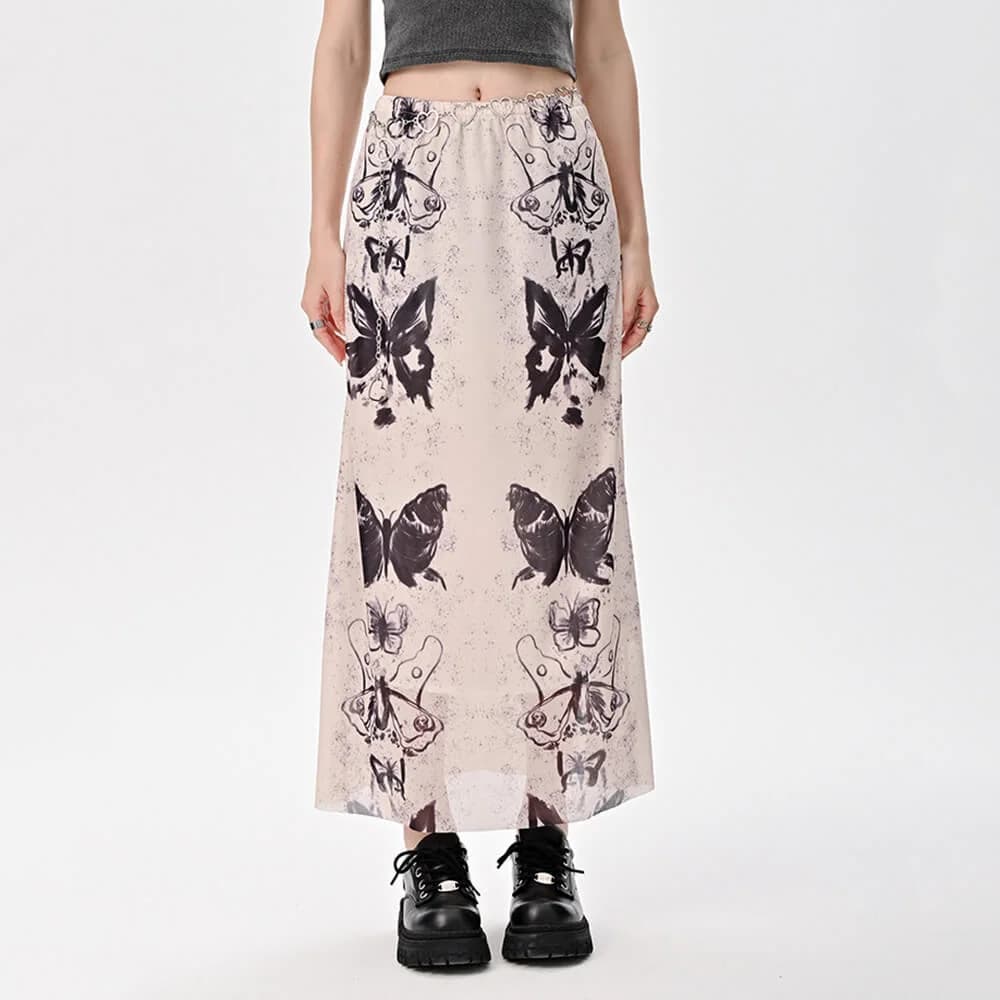
Jewelry styling does not stop at your collar; it needs to make sense alongside the rest of your outfit. If you wear rich earth tones like mud browns, washed olive, and moss green, warm metal accents pull those tones together. A flowing option like the Fairy Grunge Butterfly Maxi Skirt in beige and black has an airy silhouetteThe overall shape an outfit creates, from fitted to loose and layered. that pairs naturally with longer, swinging pendants and organic stone accents.
When wearing skirts made of lightweight polyester or chiffon, choose jewelry with smooth bezels and flat backs so dangling chains do not snag on delicate, sheer layers as you walk. Longer waist chains or belly chains worn over the skirt band should feature smooth, rounded links rather than sharp claw prongs, letting the fabric move fluidly underneath without catching threads.
By contrast, heavy canvas or denim bottoms can handle sharp, rugged metal accessories. If your outfit is rooted in washed earth tones on the bottom and a simple dark tee on top, matching your necklace charms to the undertones of your skirt creates a cohesive vertical line. Olive and brown skirts look grounded with tarnished bronze and moss agate, while black and grey skirts pair best with raw pewter, hematite, and oxidized silver.
- Fabric protection: Choose smooth, bezel-set stones rather than sharp prong settings when wearing sheer skirts.
- Waist accents: Pair long flowing skirts with low-slung, flat-link chain belts or leather cord wraps.
- Color harmony: Match warm bronze and brass to brown, beige, and olive fabrics; use pewter for greys and blacks.
- Movement check: Ensure long matinee chains clear your beltline by at least three inches when seated.
10. Styling Around Structured Denim and Grommets
Garments that come with their own metal hardware require a slightly different approach to jewelry. Pieces like the Fairy Grunge Lace Up Denim Pleated Skirt or the Fairy Grunge Lace Up Flared Jeans already incorporate prominent metal eyelets, lace-up grommets, and visible rivets. Your jewelry should complement this hardware rather than fight it for attention.
When wearing lace-up denim, identify the metal finish of the grommets first. If the skirt features silver or gunmetal eyelets, introduce that same tone somewhere in your upper body accessories—such as in a link necklace or a set of hoop earrings. This ties the lower and upper halves of your outfit together. However, avoid matching everything perfectly; adding a single weathered brass charm or a braided hemp cord prevents the outfit from looking like a uniform.
Because lace-up pants and skirts add significant visual texture to your waist and hips, keep your necklace drops above your midriff. If a long thirty-inch chain swings down directly in front of a busy lace-up fly or grommeted waistband, the two hardware elements will clash visually and audibly clatter against each other. Keep your necklaces higher on your chest and let the garment's lace-up detailing own the lower half of your frame.
- Grommet alignment: Note the color of your skirt or jean eyelets and echo it in at least one jewelry piece.
- Length clearance: End necklaces above the ribs when wearing high-waisted lace-up or eyelet bottoms.
- Texture contrast: Soften heavy denim and metal rivets with leather cords, wooden beads, or raw quartz drops.
- Sound check: Avoid long chains that slap against waist metal, which causes annoying clanking as you walk.
11. Adding Hair Accessories and Piercings Without Overcrowding
Your neck stack does not exist in isolation; it sits right below your ears, jawline, and hair. If you wear multiple stacked necklaces alongside large statement earrings, hair barrettes, and facial piercings, your head and neck area can quickly become visually overwhelmed. The key to staying balanced is managing visual scale: if your neck stack is dense and multi-layered, pull back on your ear and hair accessories.
Pair elaborate, multi-tier necklace stacks with simple wire hoops, small patinated studs, or small ear cuffs. This lets your necklaces take center stage without competing with oversized dangling earrings. If you want to wear a dramatic set of hanging moth earrings or raw crystal drops, simplify your chest layer down to a single minimal choker or skip the necklace entirely, directing focus toward your face.
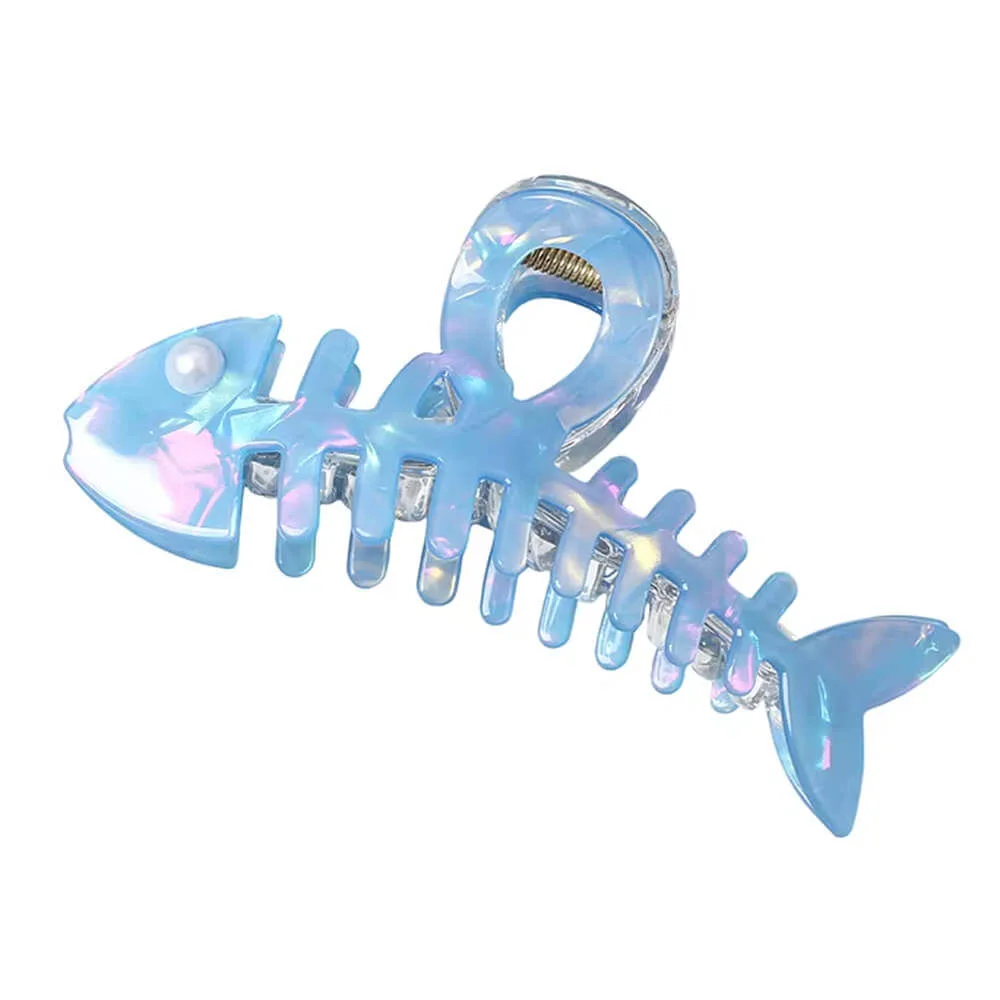
For hair accents, pick functional pieces made from organic materials. Wooden hair sticks, tarnished bronze hair slides, or matte leaf clips from the wider fairy grunge accessories collection add earthiness without the reflective glare of polished metal. These subtle accents frame your face and tie your hairstyle into your jewelry theme without competing with your necklaces for attention.
- Earring balance: Wear minimal studs or small hoops when wearing three or more layered necklaces.
- Hero ear pieces: Strip down to a simple choker or bare neck when wearing large, shoulder-duster earrings.
- Hair accents: Use dark timber, bone, horn, or patinated metal clips that sit flush against your hair.
- Piercing cohesion: Keep facial studs and cartilage rings within the same oxidized or brushed metal family.
12. Styling for Dynamic Volume and Asymmetric Lines
Garments with high-energy cuts—like the gathered hem on the Fairy Grunge Ruffled Mini Skirt—introduce movement, ruffles, and diagonal lines. When your clothing features asymmetry or ruffled tiers, your jewelry should either echo that organic flow or provide a clean, steady center line to ground the entire look.
To echo the dynamic energy of a ruffled red mini, try an asymmetrical necklace design: a chain mixed with small freshwater pearls on one side and raw curb links on the other, or a charm cluster where pendants hang at slightly staggered heights. This irregular layout complements the uneven tiers and ruffled textures of the skirt, creating an artfully disordered woodland vibe.
If you prefer a more grounded look, use a singular, heavy vertical drop pendant to anchor your upper half. The straight center line of a 22-inch chain stabilizes the fluttery, layered volume of the ruffles below, keeping the outfit purposeful. In both approaches, stick to tarnished silver or antiqued bronze to tone down the vivid red fabric and anchor the outfit within an earthy palette.
- Echoing volume: Use asymmetrical chain styles (half-pearl, half-chain) alongside ruffled or layered hems.
- Grounding volume: Use a single heavy, centered drop pendant to add a steady vertical line over wide skirts.
- Color contrast: Pair rich fabric tones like deep red with dark antiqued silver to keep the look grounded.
- Charm clustering: Group small charms on an off-center jump ring to lean into natural asymmetry.

13. Common Fairy Grunge Jewelry Mistakes and Quick Fixes
The most common mistake when styling fairy grunge jewelry is ignoring chain weight. Pairing a heavy, solid-pewter talisman with a paper-thin, fragile link chain looks off-balance and invites breakage. The visual weight of your chain should match the physical bulk of your pendant. Thick cast charms need substantial curb, rope, or woven cords to look properly supported.
Another frequent misstep is letting every piece shout at once. If you wear a wide lace choker, a detailed dragonfly necklace, a chunky crystal drop, four rings on every finger, and a noisy wrist stack, the eye has nowhere to rest. The individual charm of each piece gets lost in the crowd. Pick one signature element—like an intricate necklace focal point or an oversized ring cluster—and let your other accessories play supporting roles.
Lastly, beware of shiny, uniform commercial coatings. Fairy grunge relies heavily on textures that look discovered, preserved, or weathered. If you have jewelry that looks too bright or pristine right out of the box, you can mute that high shine by swapping high-gloss chains for matte cotton cords, raw leather thongs, or pairing them alongside heavily oxidized vintage pieces to temper the gloss.
- Weight mismatch: Ensure heavy pendants are hung on chains at least 2mm thick to balance proportions.
- Overcrowding: Limit yourself to one visual anchor area (either chest, wrists, or hands) per outfit.
- Excessive shine: Tone down bright commercial metals by swapping chains for black wax or brown leather cords.
- Tangle prevention: Never layer two chains of the identical length; always space them by at least 1.5 to 2 inches.
14. The Practical Buyer and Styling Checklist
Before purchasing a new piece or walking out the door in a fresh stack, run through a quick practical checklist. Fairy grunge looks effortlessly gathered, but the best outfits are built with comfortable wear, chain spacing, and neckline clearance in mind. Make sure every piece you choose works with your daily routine and stays comfortable all day long.
Take a look at your closet to see which necklines you wear most frequently. If your wardrobe is dominated by boat necks and hoodies, buying fourteen-inch chokers will leave you with few outfit combinations. Focus your budget on the chain lengths that match your favorite tops, and invest in an inexpensive pack of chain extenders so you can adjust your favorite pendants to sit comfortably over different fabric weights.
Finally, check how your accessories feel when you move. Sit down, cross your arms, and lean forward. If your necklaces swing into your lap, tangle around each other, or catch painfully on your sleeve knits, make adjustments before heading out. Swap out a chain, drop a tier, or shift your rings until your jewelry feels lightweight, natural, and securely anchored.
- Check neckline match: Does your pendant sit either entirely on bare skin or cleanly on top of your fabric?
- Measure spacing: Is there at least a two-inch gap between every necklace tier in your layered stack?
- Match hardware tones: Does your jewelry harmonize with the zippers, studs, and eyelets on your clothes?
- Do the movement check: Lean forward to ensure charms swing freely without knotting or snagging loose threads.