Created by the Kawaii Vibe editorial team. Our named style desks are editorial personas. Product details and availability can change.
Balancing cool-weather outfits comes down to managing volume rather than piling on extra garments. When your trousers get heavier or wider, the rest of your outfit needs clear reference points so your overall silhouetteThe overall shape an outfit creates, from fitted to loose and layered. stays intentional. A loose leg can easily feel overwhelming if your jacket cuts across the widest point of your hips or if your knitwear puddles around your waist without structure.
Getting your proportions right means deciding where your focal point sits before picking your layers. Whether you prefer wide trousers, relaxed denim, or fluid knit bottoms, the secret is adjusting your hem breaks, top lengths, and outer layer silhouetteThe overall shape an outfit creates, from fitted to loose and layered.s to create visual harmony. Exploring modern Fall Clothes gives you plenty of room to experiment with shapes while keeping your day-to-day outfits comfortable and functional.
In this guide, we break down the practical geometry of cool-weather styling. You will learn how to pair different pant leg widths with the right outerwear, how footwear changes where trousers should fall, and how to structure your layers so every piece complements your look cleanly.
The Baseline Proportions: Defining the Volume Anchor
Every successful layered outfit starts with picking an anchor. If your bottom half carries generous volume, your top half generally needs a defined shape, a shorter hem, or an open layer that reveals the waistline beneath. Conversely, slimmer or straight-cut trousers allow you to wear oversized sweaters, boxy parkas, and long cardigans without feeling bulky. When both halves are completely unstructured, your frame gets lost under the fabric.
A dependable starting point for wider cuts is the rule of thirds. Instead of dividing your body in half with a hip-length top and mid-rise trousers, aim for a one-third top and two-thirds bottom split. High-rise trousers paired with a tucked base layer or a cropped jacket immediately establish this balance, creating vertical length even when the trouser legs are remarkably wide.
When building a wardrobe around comfortable bottoms, look at your overall collection of Fall Pants to see where your volume leans. If your favorites are mostly barrel cuts and puddling hems, make sure your collection of tops features fitted ribbed knits, cropped silhouetteThe overall shape an outfit creates, from fitted to loose and layered.s, and structured collars that help frame your neckline cleanly.
Tackling Wide-Leg Denim Without Dragging Hemlines
Wide denim brings substantial visual and physical weight into cool-weather outfits. Heavy twill doesn't drape like wool or polyester; it holds its own geometry, creating strong vertical lines that require thoughtful footwear choices. If the hem is cut very wide, letting it drag on damp autumn sidewalks quickly ruins the line of your outfit and damages the cuffs.
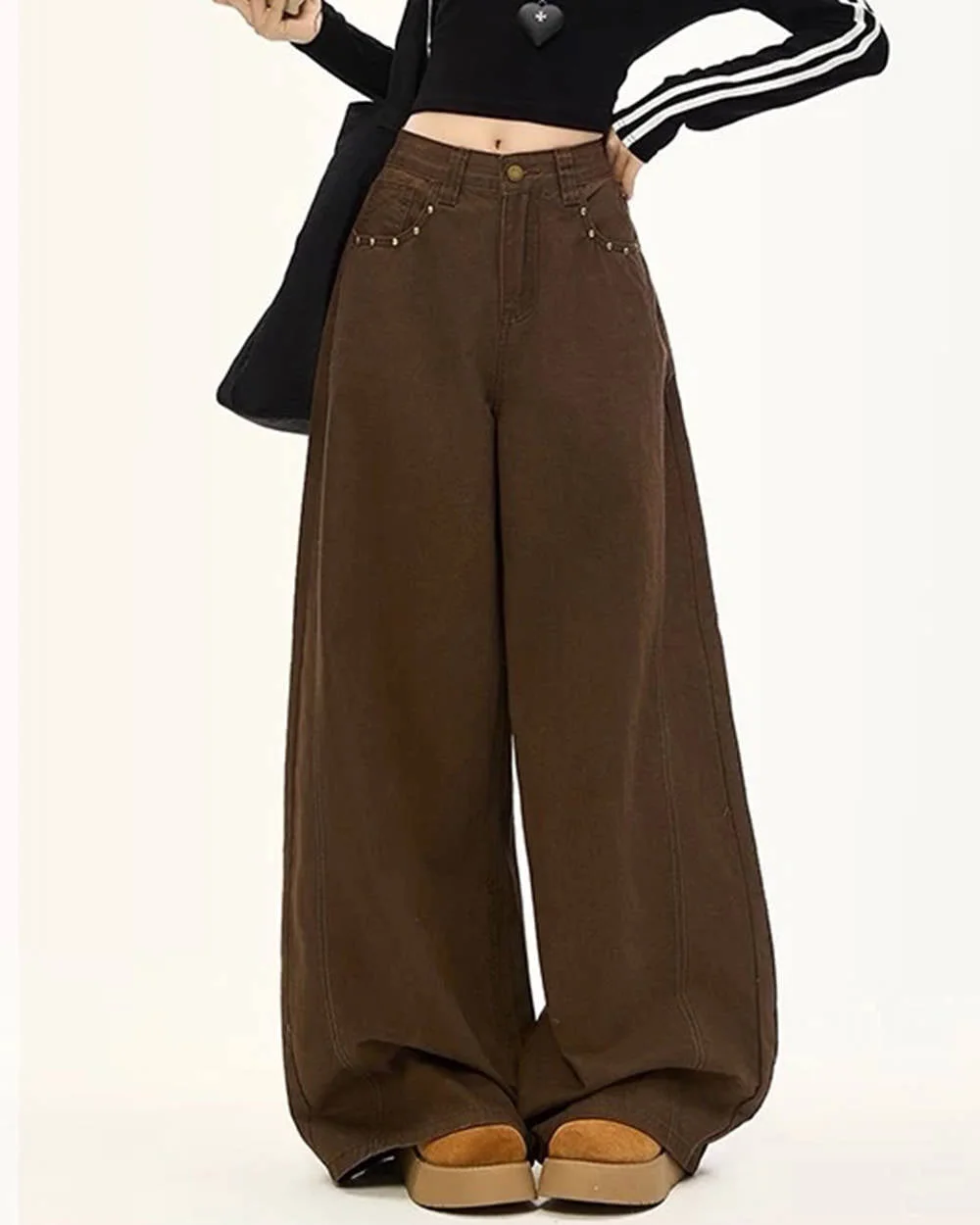
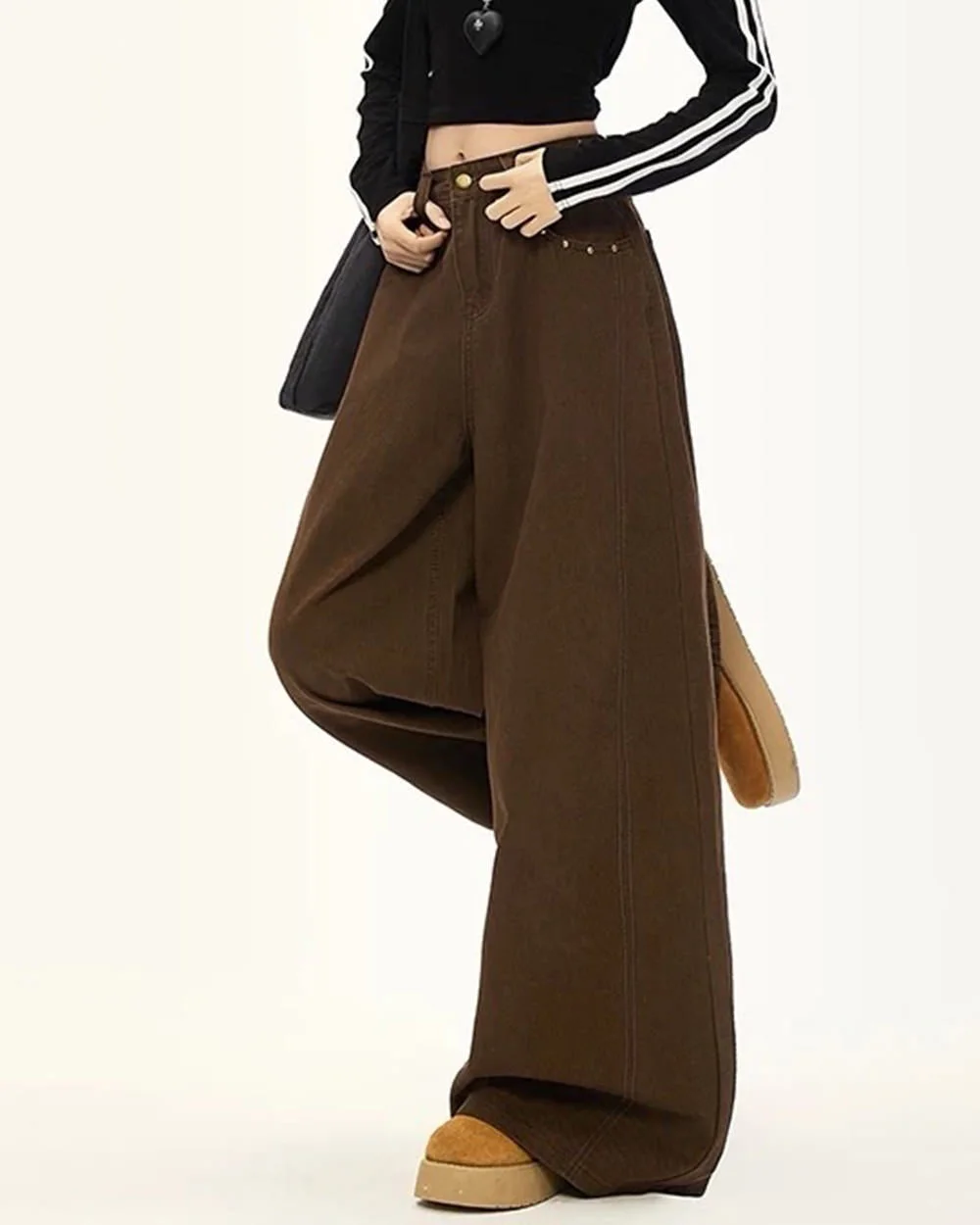
To balance wide denim, look for styles with thoughtful design details that break up solid swaths of fabric. For example, the Star Pocket Wide-Leg Brown Pants use brown denim and subtle back pocket embroidery to add visual interest. Because they are cut with generous room through the leg in sizes S through 2XL, pairing them with a structured platform sneaker or a rounded-toe lug-sole boot keeps the hem suspended just above the ground.
On your upper half, keep the visual weight compact. Tuck a lightweight mock-neck jersey into the waistband, and add an open overshirt or short chore jacket. This frames the waist, highlights the rise of the denim, and ensures the generous cut of the trouser leg remains the deliberate centerpiece of the outfit.

Cropped Outerwear with Ultra-Wide Trousers
Cropped jackets are one of the most reliable styling tools for managing expansive pant silhouetteThe overall shape an outfit creates, from fitted to loose and layered.s. By ending between your natural waist and the top of your hip bone, a shorter jacket lets the full length of high-rise trousers show. This visually lengthens your legs while preventing heavy outerwear fabrics from competing with roomy trouser cuts.
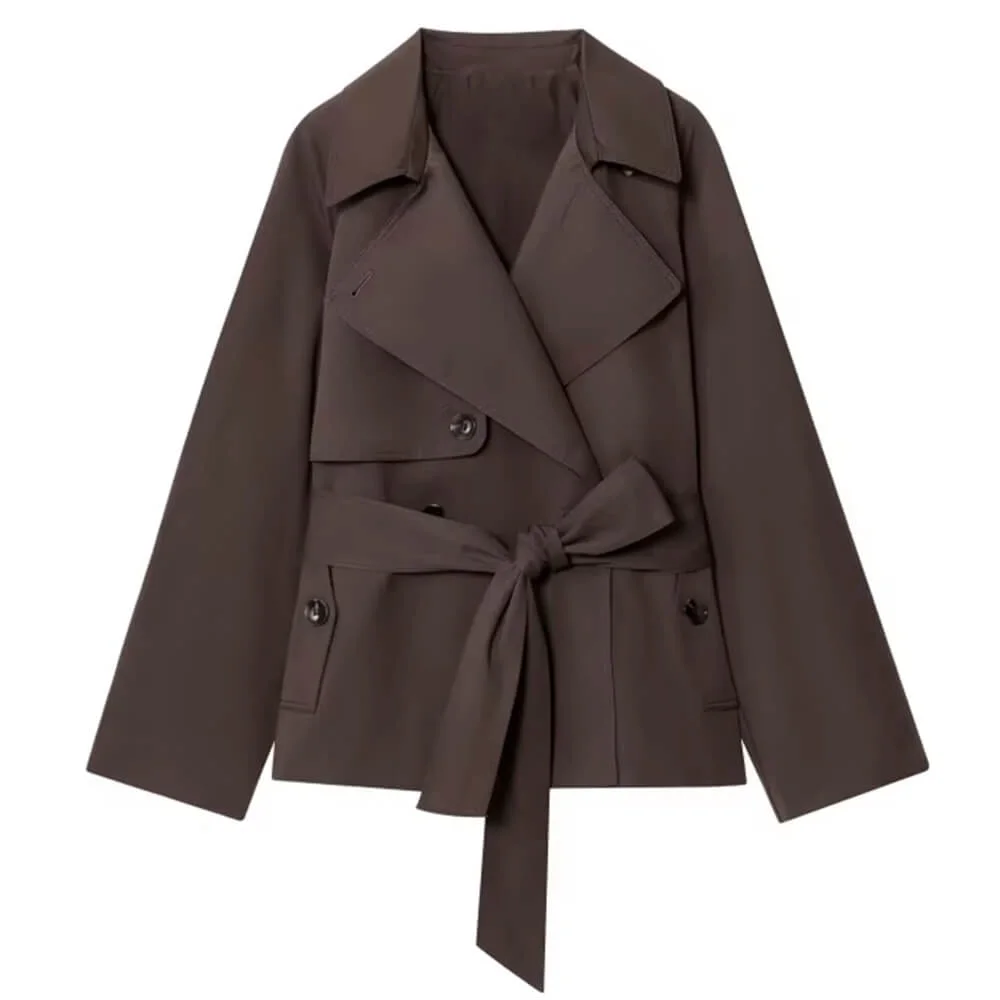
When styling an ultra-wide bottom, select an outer layer with structural integrity. A piece like the Fall Feed Favorite Cropped Jacket, constructed from polyester in sizes XS to L, delivers a defined boxy boundary that hits at the waist. Available in rich shades like Burgundy, Brown, Green, Navy, and Tan, it pairs naturally over wide neutrals, offering crisp contrast against loose-fitting legs.
Underneath your cropped outer layer, keep base garments flat against the torso. A thin ribbed turtleneck or smooth camisole creates a comfortable base that will not bunch under the waistband. If the weather turns brisk, buttoning just the collar or the top two buttons creates an inverted V-shape at your waistline, framing your trousers without adding bulk around your middle.

Patterned Trousers: Balancing Scale and Palette
Patterned bottoms introduce an extra layer of styling complexity because the print draws the eye downward. Plaid, houndstooth, and check patterns visually widen trousers compared to solid dark neutrals. When styling printed bottoms, the goal is to balance the scale of the pattern with clean, grounded solid tones above.
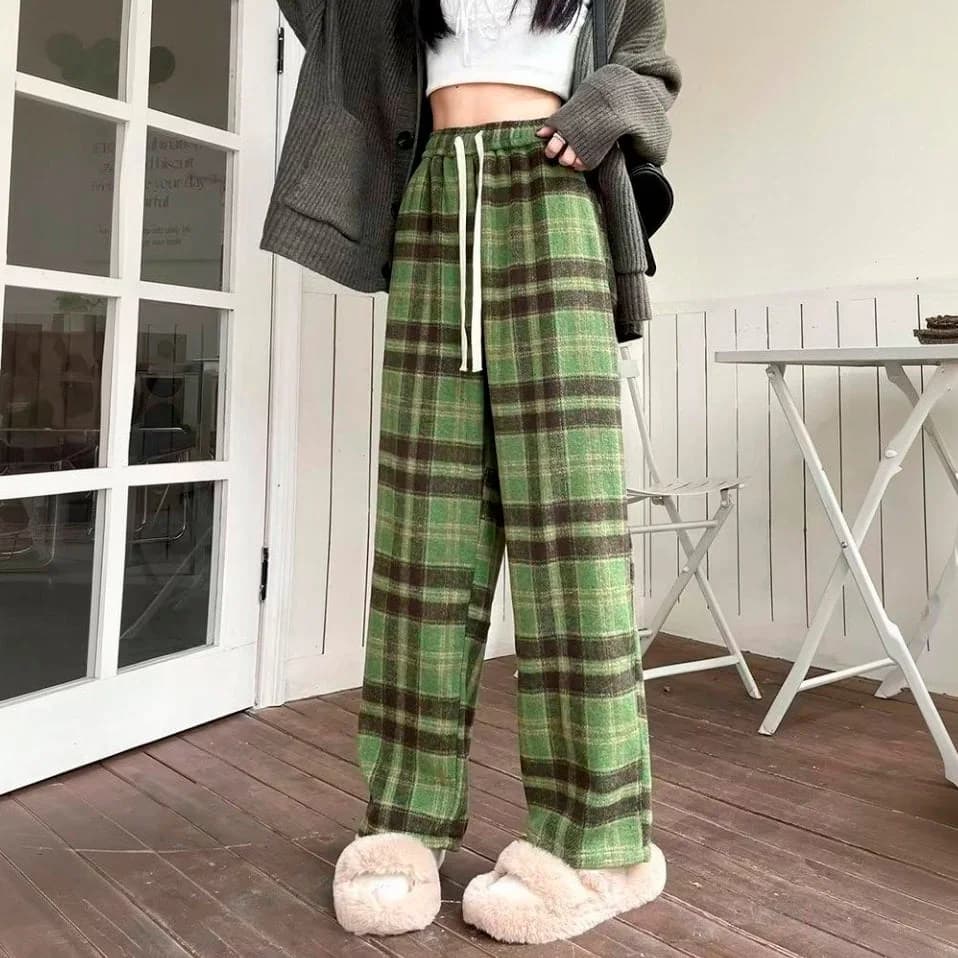
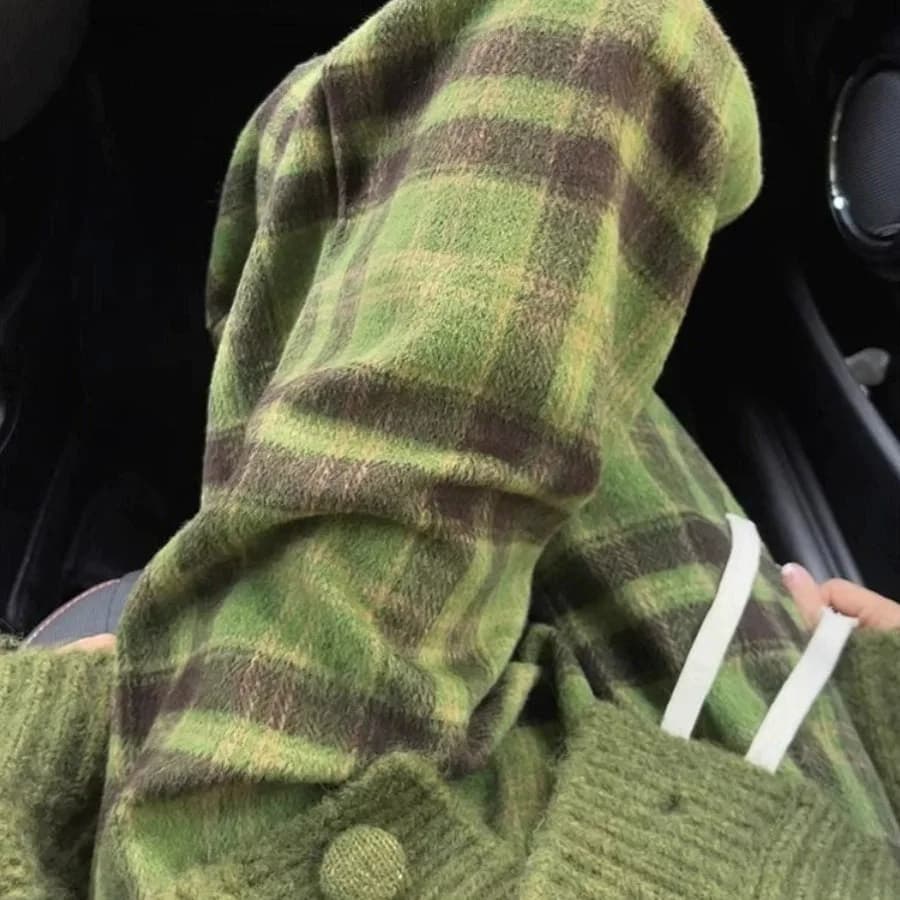
An easy way to coordinate patterned trousers is matching your top to one of the secondary shades found in the weave. The Matcha Mood Plaid Pants, made from polyester in sizes S to XL, feature a distinct green check. Instead of pairing them with an equally loud patterned sweater, anchor the look with an ivory crewneck or an olive knit pulled from our range of Fall Tops to keep the outfit unified.
To balance the drape of soft polyester plaid, consider the footwear anchor. Fluid patterns look best when grounded with footwear that has a clean profile, like a minimalist leather loafer or a low-profile derby shoe. This anchors the hem without the visual clutter of heavy laces or exaggerated hardware competing with the checks.

Knit Trousers: Managing Slouch and Fluidity
Knit pants offer exceptional comfort for casual autumn days, but their fluid drape can lean too relaxed if styled without structure. Unlike rigid denim or tailored woven fabric, knit materials follow movement and lack sharp creasing. To keep a knit-pant outfit balanced, you must introduce crisp lines through tailored top layers and structured accessories.
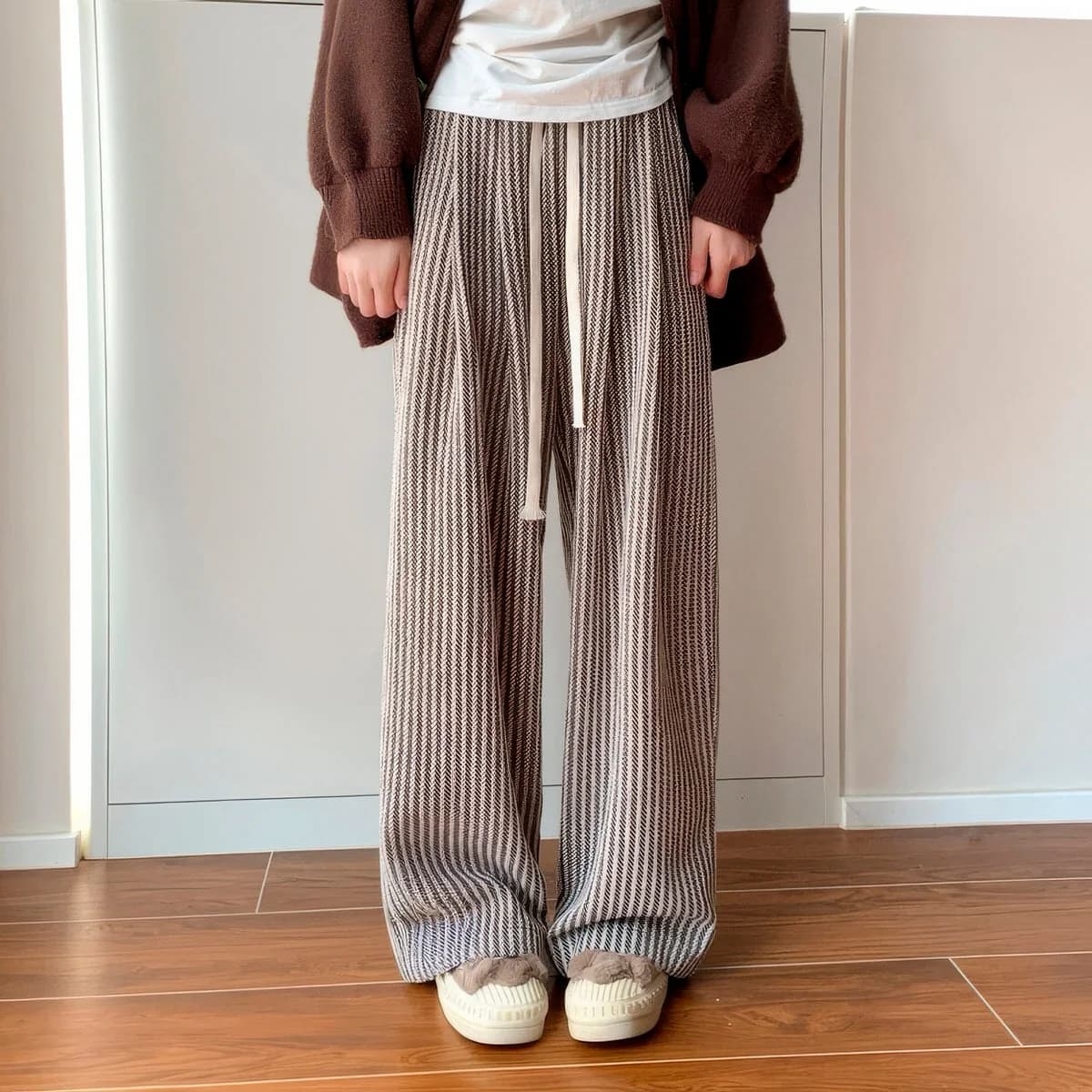
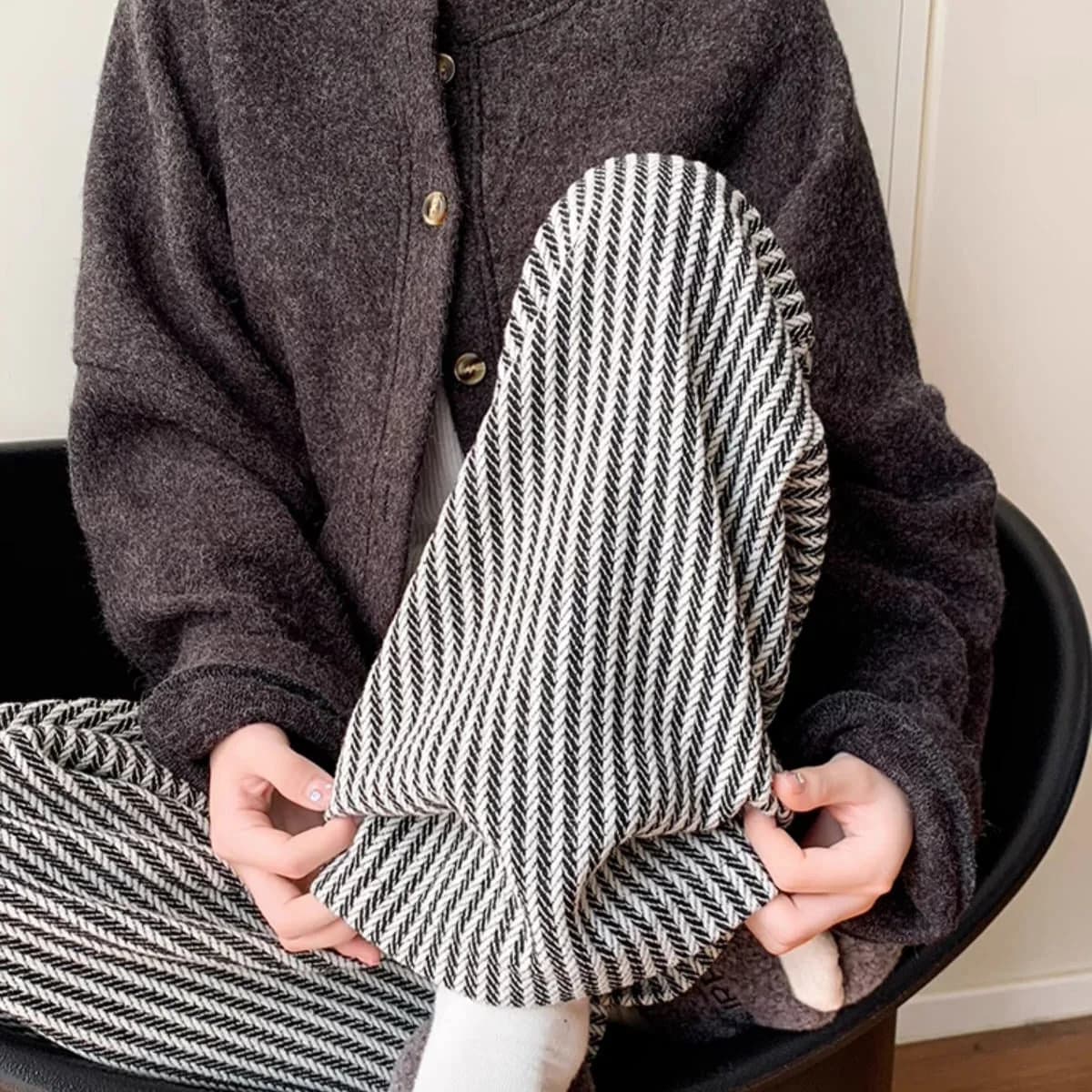
A style like the Coffee Break Knit Pants, available in Brown and Black/white polyester blends in sizes S to XL, creates a soft, sweeping silhouetteThe overall shape an outfit creates, from fitted to loose and layered.. To keep this fluid cut grounded, pair it with structured elements rather than oversized fleece. A tailored button-up shirt peeking out beneath a crewneck vest adds collar and cuff definition, balancing the relaxed drape of the legs.
Footwear also plays a pivotal role in preventing knit pants from looking like loungewear. Choose shoes with clear edges and defined soles, such as clean retro trainers or squared-toe ankle boots. The contrast between soft knit ribbing and firm shoe leather adds deliberate contrast that makes casual fall pants feel polished.

Vintage Plaids and Mid-Weight Layering
Vintage-inspired wide-leg plaids carry a classic, collegiate feel that pairs exceptionally well with mid-weight outerwear. Because these trousers evoke heritage textures, they look best alongside layers that share a tactile warmth, like corduroy, brushed twill, and medium-gauge knitwear. The challenge lies in ensuring these rich textures do not look overly busy together.
For instance, the Autumn Study Vintage Plaid Wide Leg Pants, offered in sizes S through XL in a multi-tonal Brown/blue polyester fabric, introduce deep earthy hues that can anchor a variety of layers. To complement the wide leg, style them with a classic cream waffle-knit long-sleeve tee tucked securely at the waist, layered under an unbuttoned tan overshirt.
To refine your outerwear pairing, browse tailored options among our Fall Jackets to find pieces that end cleanly around mid-thigh or higher. A utility jacket or boxy canvas coat complements the vintage aesthetic of wide plaid without overwhelming your frame.
Baggy Jeans and the Rule of Counterweight
Baggy jeans represent a bold casual silhouetteThe overall shape an outfit creates, from fitted to loose and layered. that demands careful balancing of counterweights. If you wear an oversized denim cut with an equally loose, long hoodie, the entire silhouetteThe overall shape an outfit creates, from fitted to loose and layered. drags downward, hiding your proportions completely. The counterweight technique uses intentional volume placement to maintain a balanced profile.
Consider the Crime Time Baggy Pants, crafted from sturdy brown denim in sizes S to XXL. These feature an unapologetically baggy profile with roomy thighs and generous leg openings. To balance this volume, use the counterweight method by pairing them with a fitted baby tee or a slim-cut ribbed henley on top, layered underneath a structured, open outer layer.
Your choice of footwear is equally critical with deep baggy denim. A shoe with too slim a profile will disappear beneath wide cuff hems, causing the fabric to break repeatedly and fold awkwardly over your instep. Instead, anchor wide brown denim with a chunky skate shoe, a substantial lug-sole derby, or a platform boot that fills out the wide hem opening cleanly.
Coordinated Sets: Streamlining Two-Piece Ensembles
Two-piece coordinated sets take the guesswork out of pairing jacket and pant fabrics, but they still require styling discipline to avoid looking uniform or flat. When both pieces share the exact same textile, your silhouetteThe overall shape an outfit creates, from fitted to loose and layered. depends entirely on how you style the intermediate layers, the neckline, and your footwear breaks.
A versatile example is the Mercury Rising Pants & Jacket Set, offered in sizes S to XL in denim with vegan leather accents, available as separate pieces or as a full two-piece set. Wearing matching pants and jacket creates a strong, unified column of color and texture. To prevent this look from feeling too uniform, use a contrasting base layer to break up the front line.
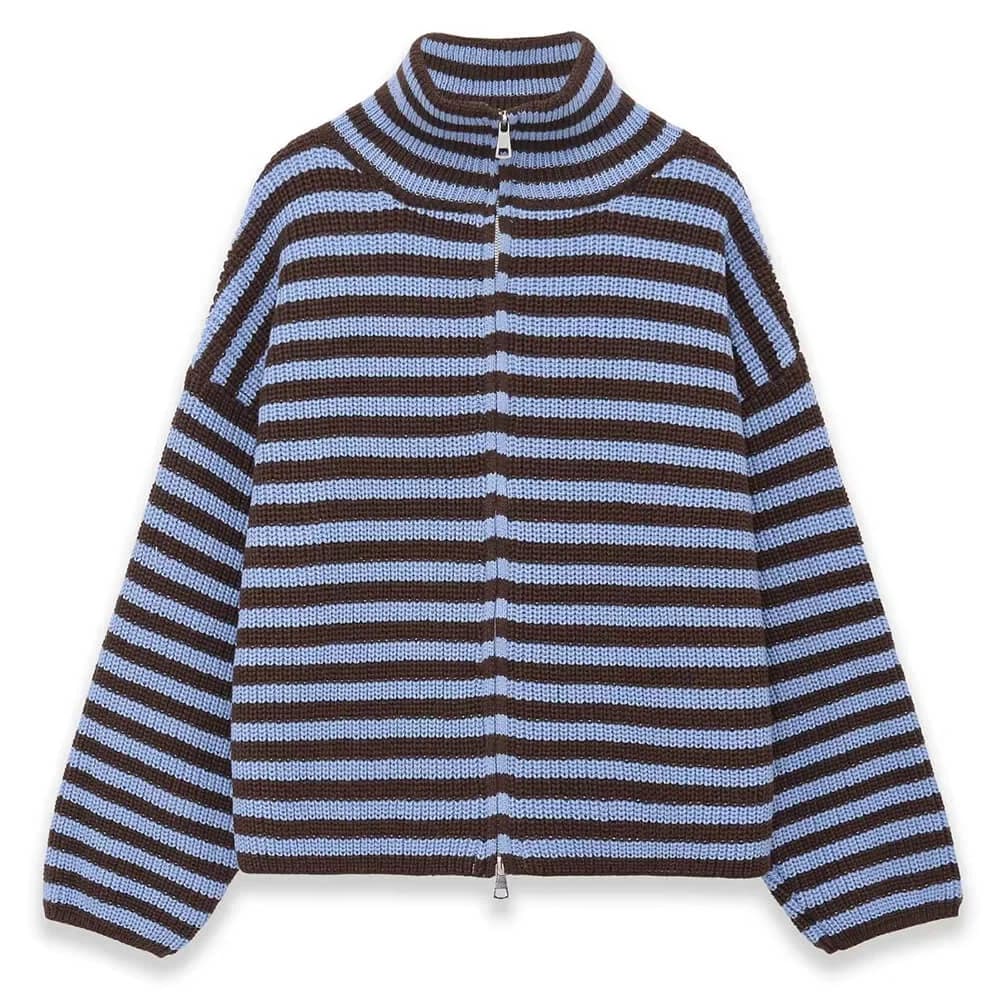
Leaving the jacket unzipped or unbuttoned creates a sharp vertical line running down your torso, exposing your inner base layer and waistline. A fine-gauge ribbed mock neck in a contrasting tone cuts through the monochrome exterior, providing an intentional midpoint that lets both pieces frame your outfit effortlessly.
Cotton-Polyester Blends for Casual Utility Outfits
Blended utility trousers offer the structure of cotton alongside the resilience and fluid drape of polyester. This combination makes them ideal for everyday fall outfits that need to handle changing outdoor weather while keeping a relaxed streetwear aesthetic. The main goal when styling utility trousers is managing their relaxed drape through your choice of top layers.
The Main Interest Wide Leg Baggy Pants, cut from a cotton and polyester blend in brown and sized S through XL, showcase this relaxed utility cut. Because blended fabric hangs slightly softer than 100% rigid denim, it drapes smoothly around the lower leg, pooling neatly over sneakers. Pairing them with an athletic zip-up hoodie or a cropped windbreaker maintains that casual aesthetic without drowning your proportions.
To keep utility cuts looking sharp, maintain control around the waistline. A canvas belt with a clean metal buckle defines the high rise of the trousers, while a tucked graphic tee keeps your top half organized. This combination creates an easy, balanced outfit suited for transitional temperatures.
Denim Comparisons: Rigid Twill vs. Fluid Cuts
When shopping across different Fall Jeans, understanding how different fabrics drape will save you endless styling frustration. Rigid 100% cotton denim behaves very differently from blended cotton-polyester or lightweight twills. Rigid denim holds its architectural shape off your legs, creating a pronounced silhouetteThe overall shape an outfit creates, from fitted to loose and layered., whereas softer denim blends drop directly toward the floor, following your movements more closely.
If you are styling rigid wide-leg jeans, keep your tops tailored and structured. Rigid fabric creates clear edges, so pair it with clean-lined outerwear like chore coats or structured knit jackets. If your jeans are made from a softer blended denim, you have more leeway to wear slightly boxier tops, as the pants will drape rather than project outward.
Always check the weight and composition listed on product pages before deciding on your styling strategy. A heavier denim requires shoes with a firm sole to hold the hem, while lighter denim works easily with flexible canvas sneakers or light leather loafers without crushing the hemline into stiff, awkward creases.
Hem Breaks and Footwear Pairings
Where your trousers meet your shoes determines whether an outfit looks intentional or accidental. In cool-weather fashion, you will generally work with three main breaks: the full break, the slight break, and the clean no-break crop. Each serves a specific trouser width and footwear combination.
A full break works best with wide-leg baggy styles, allowing the hem to fold once or twice over the tongue of a substantial shoe. This creates a relaxed, street-ready drape. However, if your trousers are straight or tapered, a full break can look untidy; these cuts look far crisper with a slight break that just grazes the top of your footwear, or a cropped no-break hem that leaves room to highlight ankle boots.
Match your pant width to shoe sole thickness carefully. Wide trousers need footwear with a wide footprint or platform sole to prevent the cuff from sweeping the street. Straight trousers pair comfortably with low-profile boots, retro sneakers, and classic oxfords without overwhelming the hem.
Layering Under vs. Layering Over
When temperatures drop, layeringWearing pieces over or under one another to add depth, warmth or contrast. becomes essential, but where you add that extra warmth drastically alters your proportions. LayeringWearing pieces over or under one another to add depth, warmth or contrast. under involves wearing slim, thermal base layers, tights, or thin turtlenecks beneath your clothes. LayeringWearing pieces over or under one another to add depth, warmth or contrast. over means throwing thick cardigans, scarves, and heavy coats on top of your main garments.
For wide-leg and relaxed fall trousers, layeringWearing pieces over or under one another to add depth, warmth or contrast. under is usually the most proportion-friendly technique. A pair of thermal tights worn underneath loose wide-leg pants provides total wind protection without adding an ounce of exterior bulk. This leaves you free to wear a neat, cropped jacket or a tucked sweater on top without feeling stuffed into multiple heavy layers.
If you choose to layer over with a long coat, ensure the coat's length falls either well above the knee or past mid-calf. Outerwear that cuts right across the knee can chop wide-leg trousers awkwardly in half, making the lower legs appear shorter. A longline duster coat worn open creates two long vertical lines that slim and elongate wide pants beneath.
Common Proportion Pitfalls to Avoid
One of the most frequent styling mistakes during transitional seasons is the 'triple medium' trap: wearing a medium-rise trouser with a medium-length sweater and a hip-length jacket. This splits your visual silhouetteThe overall shape an outfit creates, from fitted to loose and layered. into three equal bands, flattening your natural waistline and making your outfit appear unfocused. Always aim for contrasting lengths, pairing short tops with high rises or long coats over high waists.
Another common pitfall is ignoring the thickness of your belt. When wearing heavy denim or utility pants, a very thin, delicate belt looks visually lost against the substantial waistband and pocket hardware. Choose a medium or wide belt that matches the ruggedness of the pant fabric and cleanly marks the transition between your top and bottom layers.
Finally, avoid pairing delicate, paper-thin canvas shoes with ultra-wide, heavyweight autumn trousers. When the hem swallows your shoe whole, your feet look disproportionately small compared to the generous volume of your pants, making your lower body look bottom-heavy. Choose shoes with balanced sole thickness to anchor the hem cleanly.
- Avoid cutting your silhouetteThe overall shape an outfit creates, from fitted to loose and layered. in half with hip-length sweaters over wide trousers.
- Skip ultra-thin shoes when wearing heavy denim or thick cargo pants.
- Do not let floor-length wide hems drag on wet sidewalks; check your shoe sole height.
- Avoid pairing high-volume tops and bottoms without defining the waistline.
The Fall Pants Proportion Checklist
Before heading out the door, take a moment to evaluate your overall outfit balance. Proportion is not about following rigid rules; it is about creating harmony between width, length, and texture. Use this practical checklist to make sure your cool-weather trousers, footwear, and layers work together cleanly every day.
Adjusting an outfit often takes only a minor tweak, like half-tucking a knit sweater, unbuttoning an outer layer, or switching to a shoe with an extra centimeter of sole height. With intentional balance, you can wear any pant width comfortably throughout the season.
- Waist placement: Is the rise of your pants visible, or does a cropped layer clearly mark your waistline?
- Hem clearance: Does your trouser hem sit neatly on your shoes without trailing on the ground?
- Footwear balance: Is the sole and silhouetteThe overall shape an outfit creates, from fitted to loose and layered. of your shoe substantial enough to counter the width of the pant leg?
- LayeringWearing pieces over or under one another to add depth, warmth or contrast. harmony: If your pants are extremely wide, is your top half fitted, cropped, or vertically structured?
- Palette cohesion: If your trousers feature a bold plaid or pattern, is your top layer drawn from a complementary neutral tone?