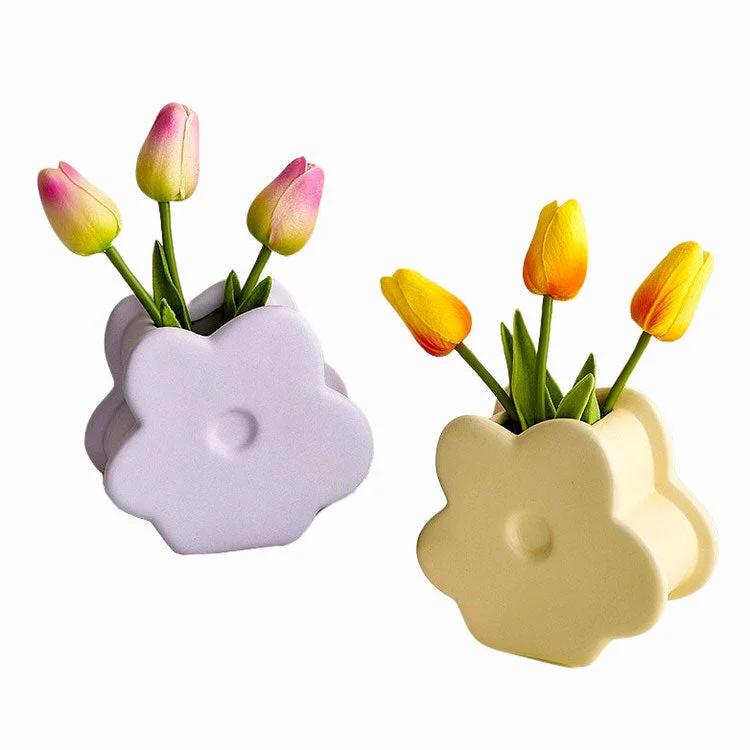
Created by the Kawaii Vibe editorial team. Our named style desks are editorial personas. Product details and availability can change.
Short answer: in a small space, pick the vase first, keep it small, and let the stems be about one and a half to two times the height of the vase. One vase with a few stems looks calm and planned. Five vases with one stem each can look like clutter. That one rule fixes most small-space flower problems.
This guide walks through shelves, desks, bedside tables and small dining tables. It covers how to pair stems with vase shapes, when fresh flowers are worth the upkeep, when faux makes more sense, and how to mix them. Everything here is styling advice, not a test report, so treat the numbers as starting points and adjust to your own room.
Along the way there are a few optional picks from the shop, like the Flower Vases collection. Use them only if they suit your space. A jar from your kitchen works for plenty of the ideas below.
Start With the Space, Not the Flowers
Before you think about stems, look at the spot. Is it a shelf with a low ceiling above it? A desk where your elbow swings past? A table you eat at? Each place has a different limit, and that limit decides your vase more than any trend does. A tall arrangement that looks lovely online can knock into a shelf above it or block your screen.
Grab a tape measure and check three things: the free height, the free width, and how close your hands or head get to the spot. Write them down on your phone. On a shelf, the height between boards is the cap for the whole arrangement, stems included. On a desk, the cap is usually your monitor line. On a table, it's whether you can still see the person across from you.
Then think about how often you'll touch it. A bedside table gets bumped by phones, glasses and sleepy hands. A high shelf gets left alone for weeks. Frequent contact calls for a heavier, wider base. Low-contact spots can take lighter or narrower pieces.
Last, decide on a mood. Soft and quiet, bright and playful, or a bit mixed? Pick one so your vase, stems and nearby objects all pull the same way. Browsing Home Decor afterwards is easier when you already know the mood you're after.
- Measure free height, width and bump risk
- Note the lowest thing overhead
- Choose one mood before shopping
- Match base weight to how often the spot gets touched
The Size Rule That Keeps Arrangements Tidy
The easiest guide is proportion. Aim for total height of roughly one and a half to two times the vase height. A 10 cm vase with stems reaching up to about 15 to 20 cm total looks balanced. Go much taller and it starts to look top heavy. Go much shorter and the flowers seem to sink into the vase. This is a styling guideline, not a hard law, so nudge it if your stems are bushy or very airy.
Width matters too. The flower heads should not stretch much wider than the vase is tall. A narrow neck holds stems upright and tight. A wide mouth lets them flop outward, which suits soft, loose looks but eats space on a crowded shelf.
Think in terms of the silhouetteThe overall shape an outfit creates, from fitted to loose and layered.. Imagine a triangle or a gentle oval around the whole thing. In small spaces, a slim oval is your friend because it takes up less sideways room. A wide fan shape needs breathing space on both sides.
A quick test: take a photo of the spot with the arrangement in place. If the flowers are the first thing you see and the vase is the second, the proportions are probably right. If the vase looks like a lump with a tuft on it, go shorter on the stems or choose a smaller vase.
- Total height about 1.5 to 2 times the vase
- Keep flower spread close to the vase height
- Slim oval shapes save sideways space
- Check the proportions with a quick photo
Shelves: Small Vases and Layered Heights
On a shelf, think in layers. One small vase with a few stems, one flat object like a book stack, and one tiny filler such as a trinket or candle. Three items at different heights read as styled. Six items at the same height read as crowded. Leave some empty shelf. The gaps are what make the vase look chosen.
Place the vase toward one side, not dead centre, and let a book or frame lean on the other. If the shelf has a back wall, keep stems a little away from it so they don't flatten. For a closed bookcase, a single stem in a slim vase tucked beside books works well because it adds colour without adding bulk.
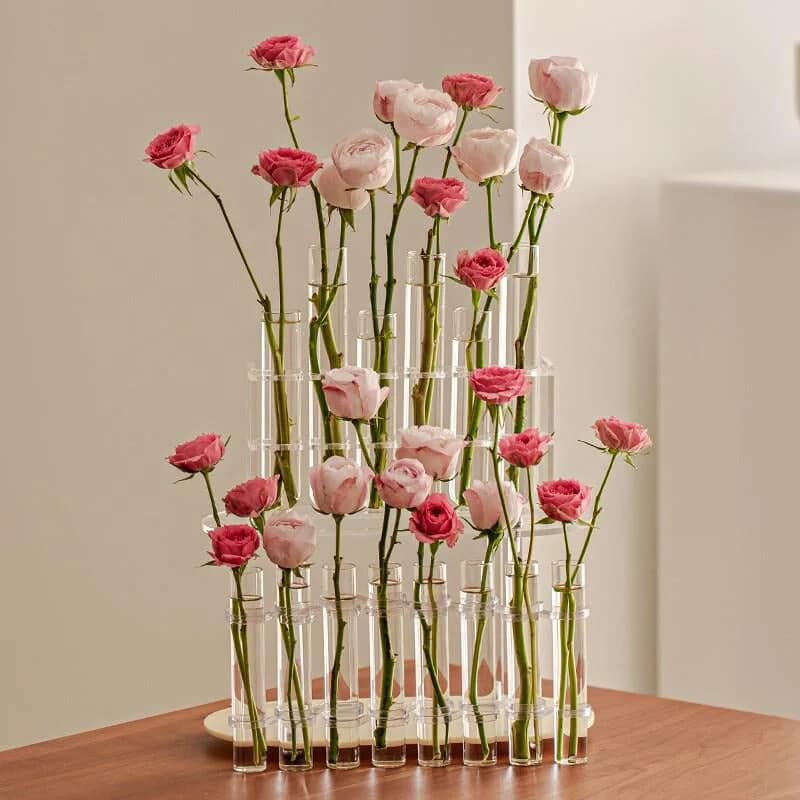
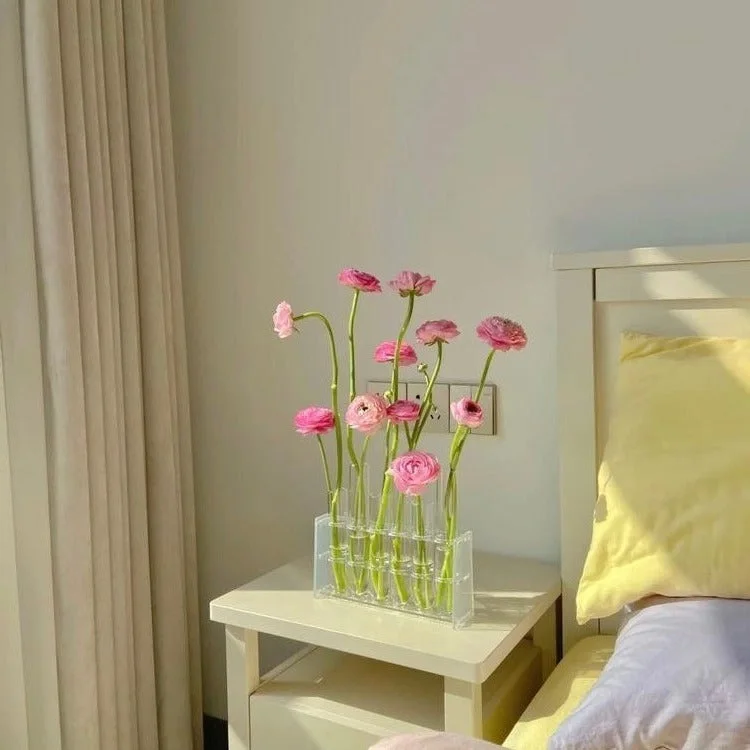
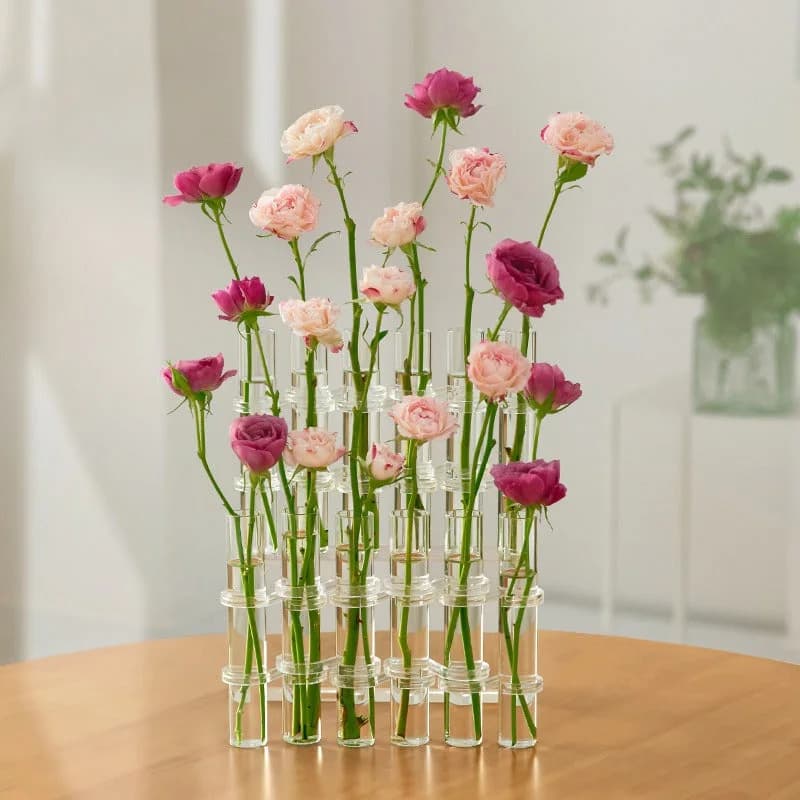
The Test Tube Flower Vase is a good fit here. It comes in options numbered 1 to 5 and a double layer bracket option, so you can choose how many tubes you want in a line. Single stems in small tubes suit narrow shelves, though check the listing for the exact dimensions before you plan your layout, since the page doesn't give sizes in the details I have.
If your shelf is already full, swap something out instead of adding. Take away a decorative object when a vase arrives. Your eye needs one clear focal spot per shelf.
- Use three layers: vase, flat stack, small filler
- Offset the vase rather than centring it
- Single stems suit narrow or full shelves
- Swap an item out instead of adding more
Desks: Low, Light and Out of the Way
A desk vase has to survive elbows, cables and a mug. Keep it low, with a stable base, and place it in a corner where your arm doesn't swing. A good size is one that stays below your monitor edge, so it never blocks your view. One to three stems is plenty.
Think about water risk. Fresh stems in a vase near a laptop mean a spill could be expensive. If your desk is crowded with electronics, faux stems or a tiny vase placed well away from the keyboard is the calmer choice. Many people keep the fresh flowers on a side shelf and put a faux sprig on the desk itself.
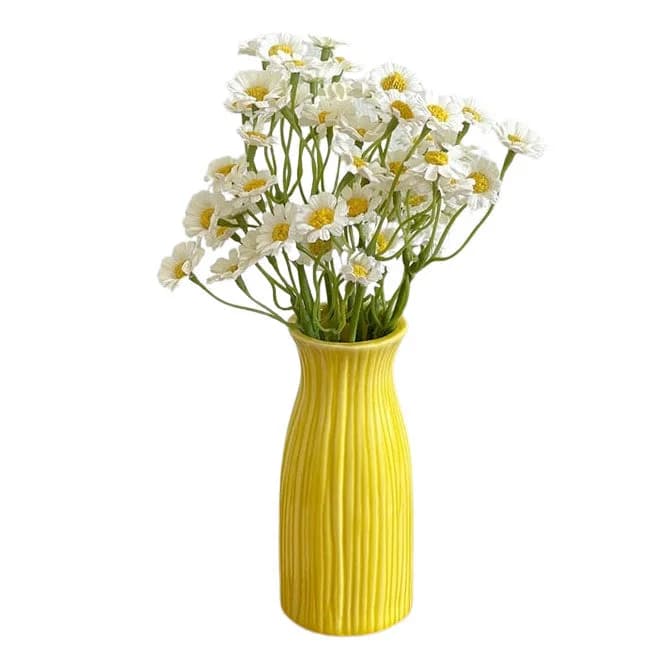
For a cosy desk setup, pair a small ceramic vase with a pastel notebook and a matching mug, and keep everything within two or three colours. The Minimalist Aesthetic Pastel Flower Vase is ceramic and comes in green, white, yellow, orange and pink, with numbered options 1, 2 and 3. The listing doesn't spell out what the numbers mean, so check the product page images before choosing one.
Finish by testing your reach. Sit down, do your normal typing and mouse movements for a minute, and see if anything gets nudged. If it does, move it six inches back.
- Stay below monitor height
- Keep liquids away from keyboards and chargers
- Use faux on the desk, fresh on a nearby shelf
- Test the spot by working normally for a minute
Bedside and Small Tables
Bedside tables are the tightest spots in most rooms. You need a lamp, a phone, maybe a glass of water. A vase here should be the smallest thing on the table or sit lower than the lamp. A single stem or a short bunch is enough, and a wide, steady base helps if you tend to bump things in the dark.
Scent is worth a thought. Strongly fragranced fresh flowers right by your pillow can be too much for some people. If you're unsure, put them across the room and keep a faux or unscented stem by the bed. That's a comfort call, and you know your own nose best.
For a small dining or coffee table, the rule is sightlines. Keep the whole arrangement below eye level when seated, which is often around 30 cm above the table surface, though it varies with chair and table height. A low, wide vase with short stems works better than a tall one that forces everyone to lean around it.
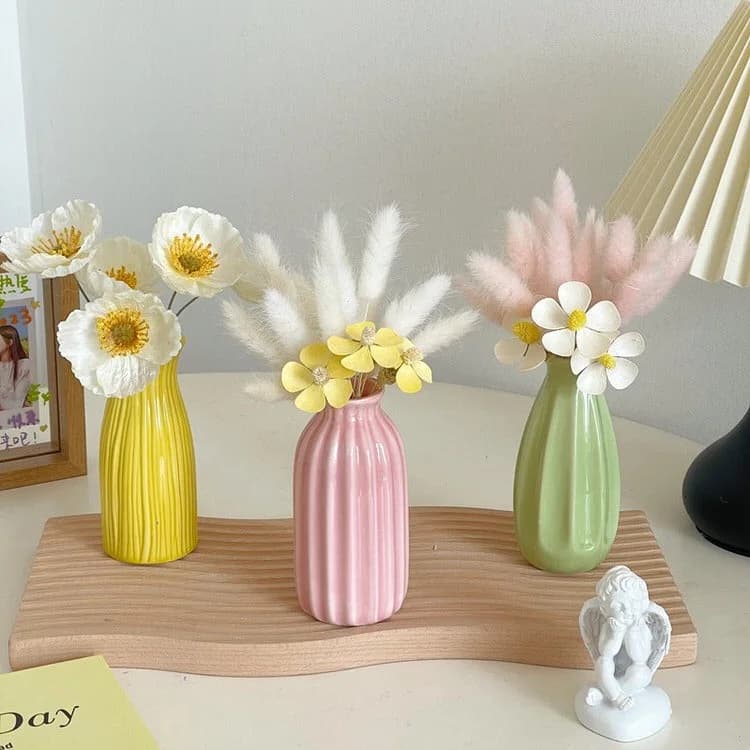
A soft pairing idea: a pastel vase with a few muted stems, a stack of two coasters and a candle on a tray. The tray gathers the objects into one unit, which makes a small table feel organised rather than busy.
- Keep the bedside vase below lamp height
- Consider scent before putting fresh blooms near your pillow
- Keep dining table pieces below seated eye level
- Use a tray to group objects into one cluster
Pairing Stems With Vase Shapes
Different vase shapes want different stems. A narrow neck suits single long stems or a few straight ones, like tulips or dried grasses. A wide mouth suits shorter, fuller stems that fan out. A very small vase suits tiny blooms or a single bud. If the stem is thick and the opening is narrow, it won't fit, so check before you buy.
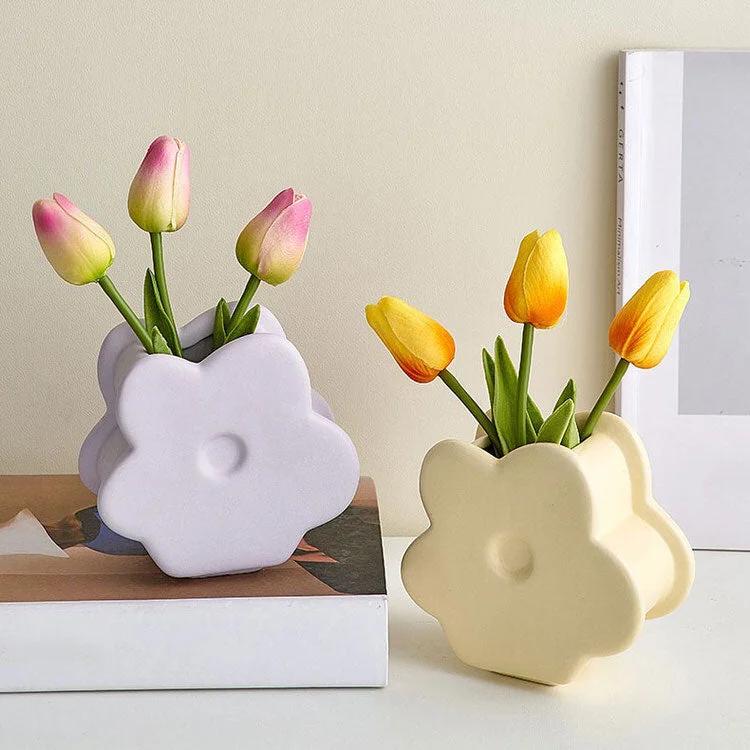
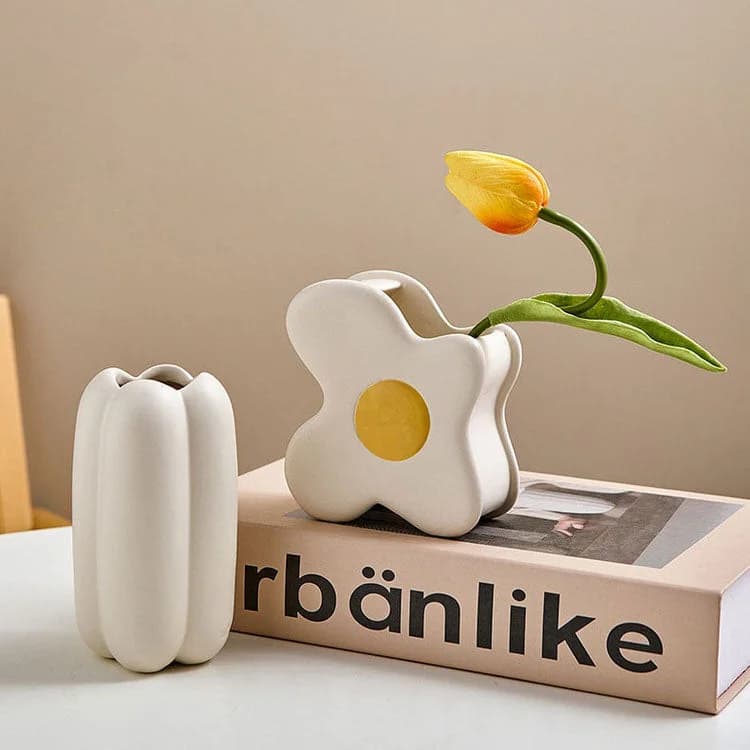
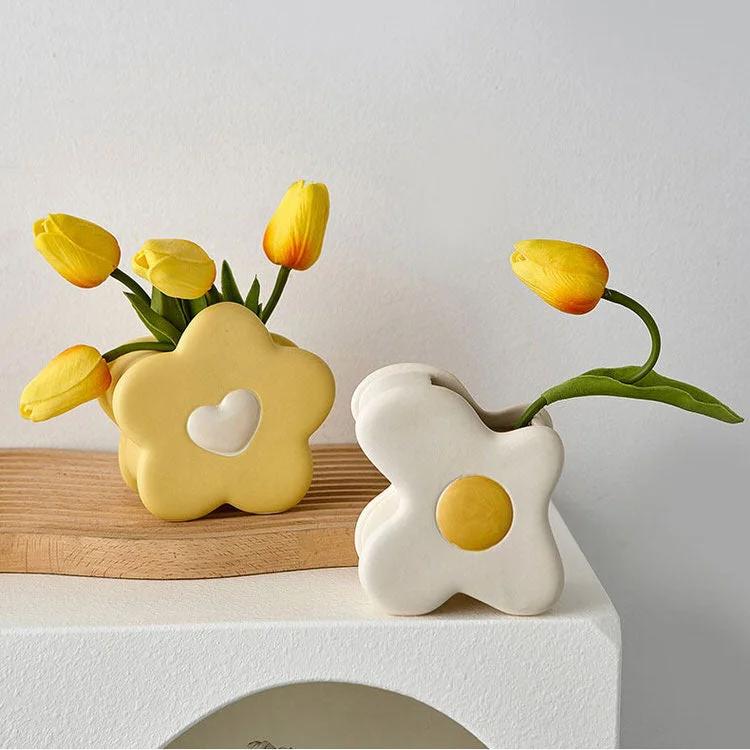
The Danish Pastel Ceramic Flower Vase comes in Tulip, Flower and Egg styles in white, purple and yellow (the Egg is listed in white). It's ceramic. The shapes give you ideas: a tulip-shaped vase echoes tulip stems, while an egg shape is soft and rounded and pairs well with a few loose, slightly wild stems.
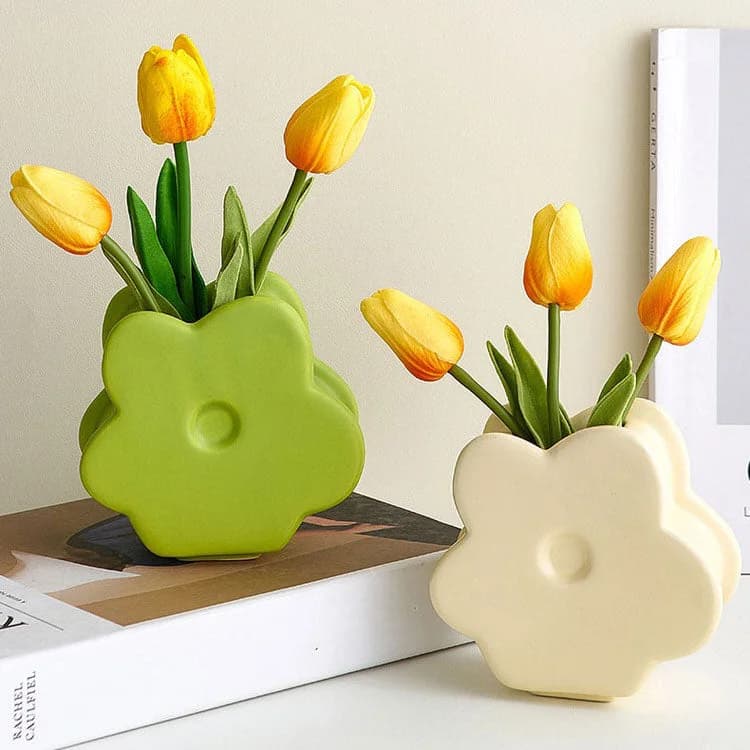
The Danish Pastel Flower Shaped Vase is also ceramic, in green, lavender and beige. A shaped vase already has personality, so keep the stems simple. One or two stems in a related colour is usually enough. If the vase is the star, the flowers are the supporting cast.
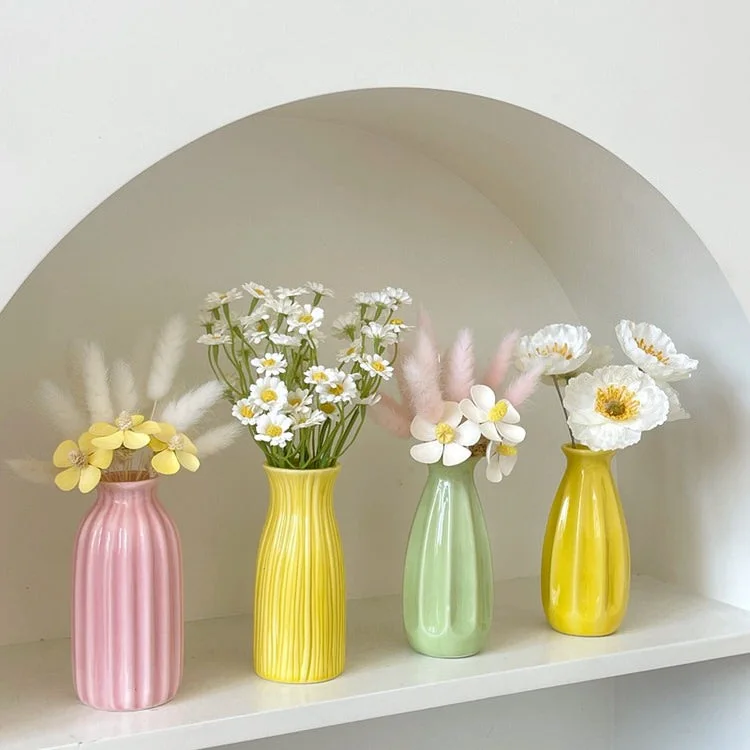
As a quick matching guide: solid pastel vase plus bold stems gives contrast; patterned or shaped vase plus plain stems gives calm. Pick one place to be loud and keep the rest quiet.
- Narrow neck: straight single stems
- Wide mouth: shorter, fuller stems
- Shaped vase: keep stems simple
- Loud vase or loud stems, not both

Glass Vases and Seeing the Stems
Glass changes the game because the stems and water show. That means you have to care about what's below the surface. Trim leaves that would sit underwater, keep the water clear, and cut stems short enough that the bottom looks neat. With faux stems, glass shows the wire or stem base, so it's a call on whether you like that look.
The Crumpled Paper Glass Flower Vase comes in Matte or Glossy and in sizes S and M. The crumpled texture gives the glass some interest, so a few simple stems usually suffice. Matte softens the view of the stems inside, which could help if you're using faux stems with visible bases. Glossy reflects more light and shows more detail.
Size S is the safer choice for desks and bedside tables, while M gives you a little more room for a fuller bunch on a shelf or table. The listing doesn't give measurements in the details here, so check the product page for dimensions before you commit.
If you want a clean look, use odd numbers of stems, like one, three or five, and cut them to slightly different heights. That small variation makes the bunch look natural instead of stiff.
- Trim leaves below the waterline
- Matte glass hides stem bases better
- Choose S for tight spots, M for fuller bunches
- Odd stem counts at varied heights
Fresh Flowers: What You Gain and What You Give
Fresh stems bring scent, movement and a changing look. They also make a room feel lived in. The tradeoff is upkeep: changing the water, trimming stems, and tossing them when they fade. If you enjoy that small ritual, it's lovely. If it feels like a chore, the flowers will end up sad on a shelf.
Fresh also suits small vases well because you only need a few stems. A single bunch can be split across two or three tiny vases, which spreads colour around a room for little effort. Pick sturdy types if you want them to last, and ask the florist or check care labels for specifics, since I can't promise how long any variety will hold up.
Be honest about your habits. If you travel often or forget plants, fresh stems may not suit you. If you pass the same spot every morning, they will. Placing them where you see them daily helps you remember to refresh the water.
Budget matters too. Buying a small bunch weekly adds up. Some people do fresh for a special week and faux the rest of the time, which keeps costs and effort down.
- Best for scent, movement and a lived-in feel
- Needs regular water changes and trimming
- Split one bunch across small vases
- Place it where you pass daily
Faux Stems: Making Them Look Good
Faux stems win on convenience. No water, no wilting, no allergy worries from pollen in many cases, though check your own sensitivities. They hold their shape in any spot, including dim corners and high shelves where you'd forget about fresh ones. For small spaces that rarely change, faux is a quiet, low-effort option.
The risk is a stiff, shiny look. Fix this by choosing stems with slight colour variation and matte finishes, and by bending them gently so they don't all point the same way. Cut or fold them to different heights. Dust them every so often with a soft cloth or a gentle puff of air so they don't look tired.
A heavier vase helps faux stems because they can be top heavy. Ceramic works well here, such as the Minimalist Aesthetic Pastel Flower Vase or the Danish Pastel pieces mentioned earlier. You can also add a little weight at the bottom, like clean pebbles, to keep a tall stem from tipping.
Keep faux away from direct, strong sun if you can, as colours can fade over time with some materials. That's a general care thought rather than a claim about any specific product.
- Choose matte finishes and slight colour variation
- Bend and stagger stem heights
- Dust occasionally
- Use a heavier vase or weight for stability
Mixing Fresh and Faux Without It Looking Odd
Mixing works when the two feel like part of one idea. Keep the colour family the same and make sure the faux pieces are the filler or background, while the fresh stems are the star. A faux leafy sprig plus two fresh blooms can look full and still be easy to maintain.
Another approach is to split by location. Faux stems live on the desk, high shelf and bedside. Fresh stems sit on the table where you'll see and refresh them. The vases can match across the room so the whole space feels connected, even though the stems differ.
If you want a fresh-and-faux mix in one vase, keep faux stems on the back or inner side, where their stiffness is least visible. Fresh stems go in front and at the edges, where their natural bend shows. Replace only the fresh ones when they fade, and the faux base stays put.
Watch for water with faux wire stems, since wet wire can rust or stain depending on the stem. Check the care notes if you buy them, and when in doubt, use a separate small container inside the vase for the water.
- Same colour family across fresh and faux
- Faux as filler, fresh as the star
- Split by location if blending feels fussy
- Keep faux stems out of water unless the care notes allow it
Colour, Texture and Room Mood
Choose vase colour based on what's behind and around it. A white vase against a light wall nearly disappears, which is lovely and quiet. A pink or yellow vase against that same wall stands out softly. Against a dark wall, light vases pop and dark vases blend in. Decide whether you want a focal point or a subtle accent.
Texture adds depth without adding clutter. Matte ceramic next to a glossy glass piece, a knit pillow or a smooth tray gives variety. If your room is already textured, with patterned bedding or lots of fabrics, a plain smooth vase is the calmer choice. The Aesthetic Room Decor collection is a handy place to find pieces that fit a soft, cohesive look.
If you like a floral theme, echo it lightly. The Indie Aesthetic Flower Pillows come in blue, purple, mint green and pink and could repeat your vase colour on a bed or chair. The Sunflowers Aesthetic Bedding Set is yellow, cotton, and comes in Twin, Full and Queen, so a yellow vase nearby would tie in. Keep one floral item as the main statement and the rest simple.
Do a squint test: step back, squint, and see if the colours blend or clash. If one thing jumps out in a bad way, swap it.
- Decide if the vase is a focal point or an accent
- Mix matte with glossy for depth
- Repeat a colour once or twice, not everywhere
- Do a squint test
Small Extras: Tubes, Glasses and Cute Details
If you're short on space, miniature options let you add flowers without taking over. Tube vases on a bracket can sit along a shelf edge or a narrow ledge, each holding one stem. The Test Tube Flower Vase has a double layer bracket option, which suggests a two-row layout, though check the listing images to see how it looks before planning.
If you want to echo a floral look beyond vases, small decorative fashion items or accessories can carry the palette across your room. For example, the Flower-Designed Asymmetric Aesthetic Glass comes in Pink, Yellow, and Green with an asymmetric floral frame design. Sitting it on a vanity tray or bedside dish keeps that playful, sculpted floral motif going without requiring any table space for extra water or stems.
For extra cuteness, browse the Kawaii Decorations collection for small figures, trinkets or ornaments to sit beside a vase. One small cute object next to a vase is charming. Three or four becomes a crowd.
Keep a tiny cloth and a small tray nearby so drips and dust don't build up. These small habits keep the little setups looking fresh.
- Tube vases for narrow ledges and single stems
- Carry floral motifs onto nearby vanity trays or accessories
- Add one cute object, not a crowd
- Keep a tray and cloth for drips and dust
Common Mistakes and How to Fix Them
The most common problem is a vase that's too big for the space. If everything feels crowded, swap for a smaller one before taking away other decor. Second is stems that are too long. Trim them or tuck them lower in the vase. Third is too many separate small vases scattered about, which makes a room look busy. Group them in one spot instead.
Another slip is ignoring stability. A tall stem in a light vase tips easily, especially near pets, kids or a busy hallway. Choose a heavier vase or add weight at the bottom. And don't put water vases near electronics or on delicate wood without a coaster or tray, as rings and spills happen.
Finally, don't buy online without checking the details. Look at the material, available options and size notes on the product page. When a listing doesn't give measurements, treat the photos as a guide and plan for a bit of flexibility in your layout. Browsing the Flower Vases collection with your measured space in mind keeps you from guessing.
- Downsize the vase before removing other decor
- Trim stems or tuck them lower
- Group small vases in one spot
- Protect surfaces with a coaster or tray
A Quick Checklist Before You Buy or Style
Here is a short run-through to use before you commit. Measure your spot, decide on fresh, faux or mixed, and choose a vase that fits the proportions. Think about how often you touch the spot, how close it is to electronics, and what the colours around it are doing. That handful of checks saves most returns and second-guessing.
Then plan the stems. Odd numbers, varied heights, and a total height around one and a half to two times the vase. Pick a single focal point per surface and keep other objects quiet. If you're adding a second vase, put it in a different room or well away from the first so each gets space.
Finally, give it a week. Live with the setup, notice what bugs you, and adjust. Maybe the vase needs to shift two inches, or the stems need trimming. Small tweaks matter more than a perfect first try. When you're ready for more ideas, the Home Decor collection is a good place to keep browsing for pieces that sit well beside your flowers.
Small spaces reward restraint. One good vase, a few well-chosen stems and a little breathing room will do more than a crowded display ever could.
- Measure height, width and bump risk
- Choose fresh, faux or mixed based on your habits
- Keep stems about 1.5 to 2 times the vase height
- Check product details for materials and options
- Live with it for a week, then adjust