
Created by the Kawaii Vibe editorial team. Our named style desks are editorial personas. Product details and availability can change.
Short answer: pick gel if you want smooth, bold lines and don't mind a little drying time. Pick fineliner if you love crisp, small handwriting and can handle some bleed on thin paper. Pick ballpoint if you write fast, lean your hand across the page, or use thin paper a lot. Most people end up wanting two of the three, not just one.
The cute part is easy. Pens shaped like carrots, cacti and bones are fun, but the writing part decides whether you reach for them in week three. A pen that skips, smears or ghosts through to the next page gets abandoned quickly, however adorable it looks.
This guide walks through what each pen type tends to do, how your handwriting and grip change things, and a ten-minute paper test you can do at your own desk. Where a product in our shop fits a specific job, we mention it as an option. We're a retailer, so we describe only what's listed and leave the rest for you to check on your own paper.
The quick answer by use case
Start with what you do most. For lecture notes where speed matters, ballpoint-style pens are the usual safe choice because the ink is thicker and tends to dry fast. For decorative journaling with headings and doodles, gel gives the boldest, most saturated lines. For tiny planner boxes and neat lists, fineliners give the sharpest detail.
If you do all three, don't hunt for one perfect pen. Build a small kit: one ballpoint for fast daily writing, one gel for headings and color, and one fineliner for details. Three pens cover nearly everything, and you can make each one cute.
One honest caveat: ink behavior depends on the specific pen and the specific paper. These are general tendencies, not guarantees. That's exactly why the home paper test later in this guide matters more than any rule of thumb.
- Fast class notes: ballpoint-style
- Bold headings and color: gel
- Small planner boxes: fineliner
- Thin or recycled paper: start with ballpoint and test the rest

How gel pens behave on the page
Gel ink is water-based but thick, which gives it that smooth, almost glide-on feel. Lines look rich and even, and you barely need pressure. That's a big plus if your hand tires quickly or you write long entries.
The trade-offs are drying time and smudging. A fresh gel line can drag under your palm, especially if you're left-handed or write in a hooked position. Wide tips can also deposit more ink than thin paper wants, which leads to show-through.
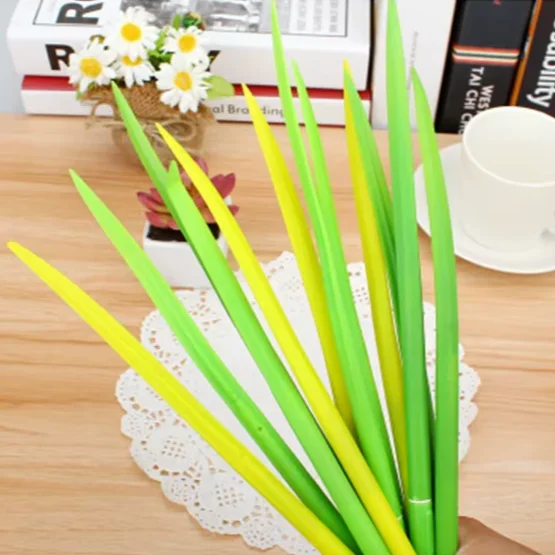
Gel pens are the natural pick for the playful end of journaling: title banners, color-coded days, little underlines. The cute designs mostly live here too. The Set of 10 Green Grass Pens is listed as a gel pen set with a tiny grass-inspired design, so it suits a nature-themed desk or a spring-colored journal spread. The Set of 6 Cactus Gel Pens is another gel pen pack option if you want a set with a sculpted desert-plant look.

How fineliners behave on the page
Fineliners use a fibre or plastic-style tip that gives a consistent thin line. They shine for small handwriting, tiny checkboxes, and detailed doodles. If your writing is neat and compact, a fineliner makes it look even neater.
The weak spots are bleed and tip wear. Water-based fineliner ink can soak into thin or soft paper and spread slightly, which makes the line look fuzzy and can mark the other side. Pressing hard also squashes the tip over time, so a light touch helps.
Use fineliners when paper is smooth and a bit heavier, like many planners and journals. If you're unsure, run the test below first. Also keep the cap on: tips dry out when left open, and a pen that dies early is a poor deal however pretty it is.
How ballpoints behave on the page
Ballpoint ink is oil-based and thick, so it sits on the surface rather than soaking in. That is why it usually has the least bleed-through and dries almost instantly. For thin paper, shared notebooks and quick lists, it's the calm, dependable option.
The downsides are feel and boldness. Ballpoints can need more pressure, the line is often less rich than gel, and some pens skip or leave small blobs. Pressing harder can also dent the next page, which is its own kind of ghosting.
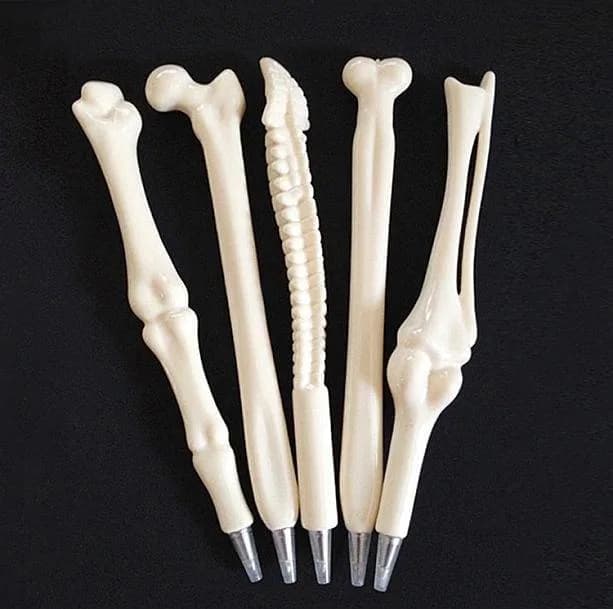
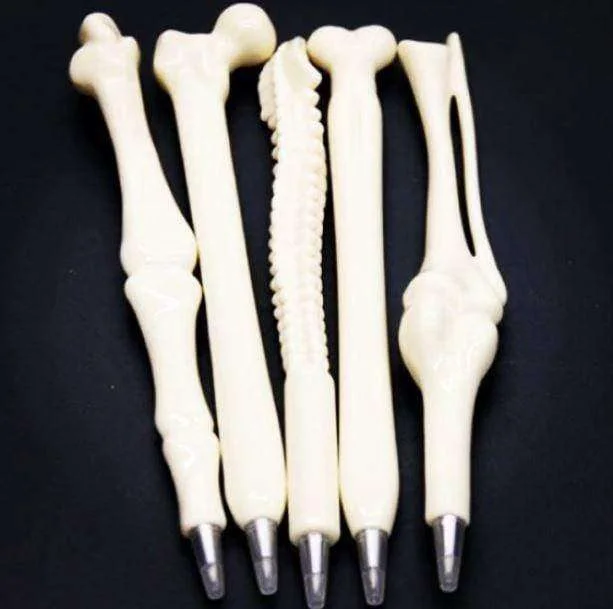
Cute ballpoint-style pens are good for everyday writing where you want the fun on the outside and reliability on the inside. The Set of 5 Bone Shape Pens is listed as a ballpoint-style novelty pen set with black ink, so it works for class notes, to-do lists and signing things, while adding a goofy shape to your desk.
Bleed-through, show-through and ghosting explained
These three get mixed up, but they're different problems. Bleed is when ink spreads sideways in the paper fibres, making a fuzzy edge. Show-through is when you can see the writing from the other side but nothing has soaked through. Ghosting is a faint shadow from heavy ink or pressure.
Why it matters: show-through is often fine, especially if you only write on one side. True bleed is more annoying because it ruins neat handwriting even on the front. Knowing which one you have tells you whether to change the pen or the paper.
Fixes are simple. Use a lighter touch, pick a finer tip, slide a spare sheet behind the page, or save the wet, juicy pens for heavier paper. Many people accept a little show-through on journal pages and simply leave the back blank. Decide your tolerance before you buy, not after.
- Bleed: fuzzy edges on the front
- Show-through: visible from the back, edges still crisp
- Ghosting: faint shadow, often from pressure or heavy ink
Smudging, handedness and drying time
Smudging is mostly about how long ink stays wet and where your hand travels. Right-handers pull their hand over fresh writing less often than left-handers or overwriters, who drag across lines as they go. If your pinky edge is often grey or colored by the end of a page, drying speed should rank high for you.
Habits help as well. Rest a clean scrap sheet under your hand, write top to bottom in short bursts, or turn your page as you go. For left-handed writers, a quick-dry pen for notes and a gel pen for slow, decorative pages is a sensible split.
Ballpoints generally dry fastest, then many fineliners, then gel, which can need a few seconds. But it varies pen to pen, which is why you should test it. A quick swipe test tells you far more than a label.
Matching pens to your handwriting
Small, tidy handwriting usually looks best with thinner lines, so fineliners or fine gel tips show off the shapes. Big, loopy handwriting is happy with bolder tips, and gel makes loops look lush. Fast, slanted scribble often does best with ballpoint, where the pen forgives speed.
Grip matters too. If you press hard, choose a ballpoint or a sturdy tip and expect some indenting. If you hold lightly, gel and fineliner glide well. Chunky novelty barrels can feel comfortable for some hands and awkward for others, so think about how long you write at a stretch.
A good habit is to write the same sentence in each pen, at your normal speed. Then look at it a day later. The one that still looks like your best handwriting is the one to buy more of.
The simple home paper test
You need the pens you're comparing, the paper you really use, and about ten minutes. Take one page and divide it into labeled boxes, one per pen. In each box, do the same five things, then wait and check.
Do these in each box: write a short sentence at normal speed, draw a tight scribble square, draw a long line, write a word and swipe it with a clean finger after five seconds, and rest the tip on the paper for two seconds to see the dot spread. Then flip the page and judge the back.
Score each pen from one to three on line quality, smudge, bleed and back-of-page. Add a note about how your hand felt. Whatever wins on your paper wins, regardless of pen type. This is also a useful check before filling a whole journal with a brand-new pen set.
- Write a sentence at normal speed
- Draw a dense scribble square
- Swipe a word after five seconds
- Hold the tip down for two seconds
- Check the back of the page the next day
Paper matters as much as the pen
Smooth, heavier paper usually handles gel and fineliner better. Thin, soft or recycled paper drinks ink and encourages bleed. Notebooks vary a lot, so a pen that looks great in a planner may behave differently in a cheap school notebook.
If you're stuck with thin paper, lean toward ballpoint-style pens and lighter pressure. If you love juicy gel, save it for your journal, and use something drier for class. It's fine to keep two notebooks for two moods.
Stickers can help too. A sticker over a patch of show-through, or a decorative label across a smudged corner, covers small mistakes neatly. Browse kawaii stickers if you like journals that look intentionally layered rather than perfectly clean.
Building a small cute pen kit
A balanced kit might be one ballpoint-style pen, one or two gel sets for color, and a fineliner if your paper allows. Keep it small enough to carry daily. Too many pens means most never get used.
Here's a sample combo. Use the bone-shape ballpoint-style pens for lists and notes, a gel set such as the grass or cactus pens for headings and highlights, and keep a fineliner for planner boxes. Ink color can follow a loose rule: black for body text, one or two colors for headings, and nothing else on the same page.
Proportion helps pages look tidy. Aim for mostly plain text, a bit of color on titles, and decoration in corners. If every line is rainbow, nothing stands out, and your notes get harder to read when revision time comes.
Fun novelty pens: how to judge them
Novelty pens are about personality, so judge them on both looks and writing. Check the listed pen type, the ink color, and how many come in a set. Where a listing doesn't say the ink type or tip size, don't assume. Treat it as unknown and test it yourself.
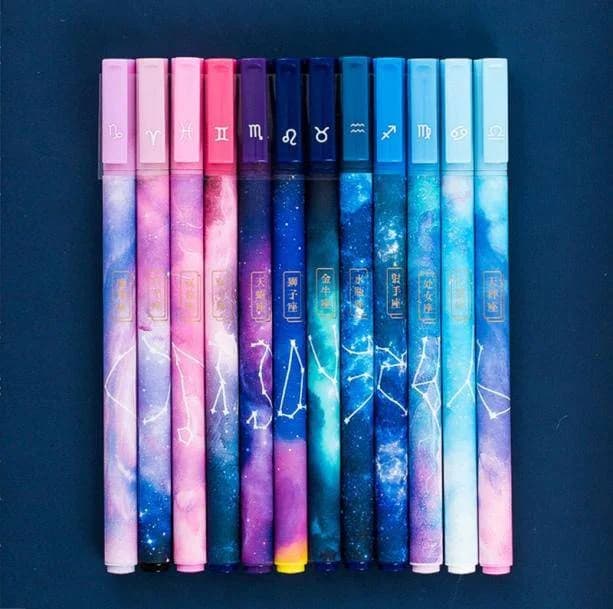
Some fun options in the shop include the Cosmic Galaxy Pens, good for a night-sky themed desk, the Set of 3 Carrot Pens, which suit a veggie-themed or garden-themed study corner, and the Novelty Syringe Pens, a quirky pick for people who like an offbeat desk. Listings give only limited details for these, so check the product page and then run the paper test.
Think about use. Chunky shapes may be better for desk writing than for a tiny pencil pocket. A shaped pen that's awkward in your hand is better as a display piece than a daily driver, and that is a perfectly good reason to own one.
Carrying and storing your pens
Good storage protects the tips and keeps the fun visible. Store capped pens flat or tip-down if the maker suggests it, and keep them out of hot places like a car dashboard. Heat can make some pens leak, so a warm bag in summer is worth thinking about wherever you live.
A pencil case sets the tone for the whole kit. The Cute Toothpaste Pencil Case is listed as vegan leather and about 29 x 10 cm, which is long enough for typical pens, though check your own longest pen against that size. It suits a bag with a playful bathroom-humor theme.
Keep a small spare: one backup ballpoint in your bag means a dead gel pen doesn't wreck a lecture. And if you shop for term time, browse aesthetic back to school stationery for matching notebooks and extras.
Common mistakes when buying cute pens
The biggest mistake is buying by look alone. A beautiful set with the wrong ink for your paper will sit unused. Second is buying huge multi-color sets before you know if you like the tip. Start with one set, test it, then expand.
Other traps: ignoring left-handed smudging, pressing too hard with fine tips, leaving caps off, and mixing too many colors on one page. Also watch for assuming a feature that isn't listed, like refills or waterproof ink. If the page doesn't say it, don't count on it.
Finally, don't throw away a pen that fails on one paper. It might be wonderful on another. Keep a drawer for the pens that suit decorative sheets, sticky notes or scrapbooking rather than notes.
Final checklist and where to browse
Before you buy, run through this list. It takes a minute and saves a lot of disappointment. Then, once your choice is clear, browse the full stationery collection or the aesthetic stationery edit for more pens, notebooks and desk bits.
Remember the short version: ballpoint-style for speed and thin paper, gel for bold color and comfort, fineliner for crisp detail on good paper. Add a kit of two or three, keep a simple color rule, and let the cute shapes be the bonus rather than the deciding factor.
Test on your own paper, wait a day, and trust what you see. That one habit beats any guide, including this one.
- What paper will I use most?
- Do I smudge, press hard or write fast?
- Is the pen type clearly listed?
- Have I tested bleed, smudge and the back of the page?
- Do I have a reliable backup pen?
- Is my color plan simple?


