Created by the Kawaii Vibe editorial team. Our named style desks are editorial personas. Product details and availability can change.
Choosing a bag for goblincore looks comes down to handling texture, silhouetteThe overall shape an outfit creates, from fitted to loose and layered. balance, and everyday utility. Because this subculture leans into textured corduroy, loose knitwear, heavy lug-sole boots, and relaxed layeringWearing pieces over or under one another to add depth, warmth or contrast., a purse or pack that works with sleek streetwear can disappear or snag awkwardly against bulky fabric folds. The goal is matching the structural volume of your carrier to the profile of your clothing while keeping your daily essentials accessible.
Getting the proportions right means looking closely at carry style, strap lengths, exterior hardware, and base depth. A bag that sits too high can bunch up an oversized chunky knit, while a strap that drops too low will bounce against wide-leg pants or bulky boot cuffs. In this guide, we map out exact outlines, body-line pairings, capacity checks, and styling configurations so you can pair your bag with your outfit without fighting excess fabric.
The Baseline Question: Structuring the Silhouette
The quickest way to decide on a bag shape is examining the visual center of your clothing. If your outfit is top-heavy, featuring thick layers like a slouchy pullover or multiple shirts, carrying a tiny rigid purse often looks disjointed. Conversely, an oversized, shapeless rucksack worn against a floor-length smock dress can flatten the look into an unstructured mass. You need intentional contrast: softened shapes against angular utility pieces, or firm geometric shapes against thick, draping knits.
When selecting pieces from the Goblincore Bags range, consider whether your garment silhouetteThe overall shape an outfit creates, from fitted to loose and layered. is predominantly boxy, fluid, or tiered. Fluid layers work best with structured carriers like framed satchels, saddle pouches, or rigid-bottom crossbody styles that maintain their form. Boxier outer layers, such as thick jackets or straight-cut bibs, pair smoothly with relaxed totes and soft-sided packs that yield against your hip as you move.
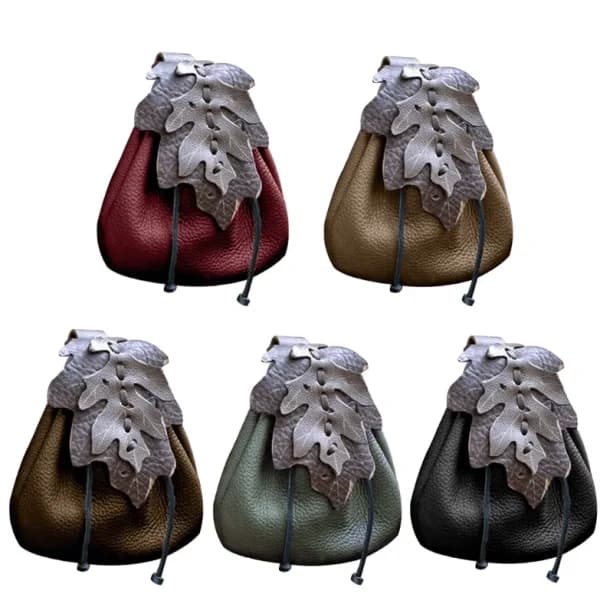
- Saddle bags and structured pouches break up loose, flowing midis and draping tops.
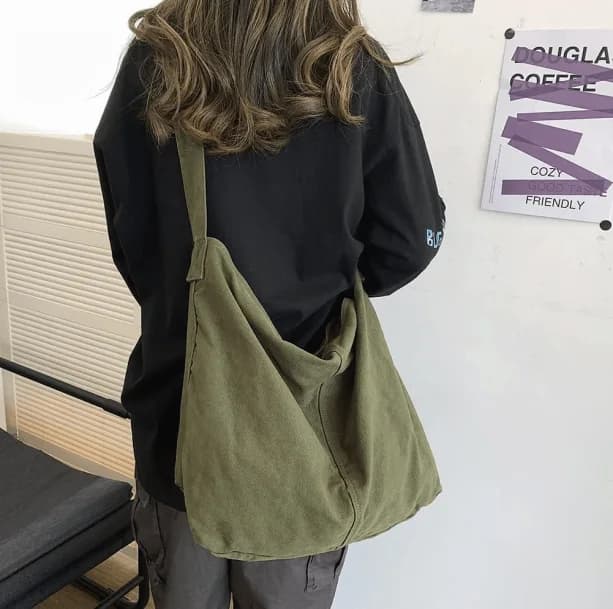
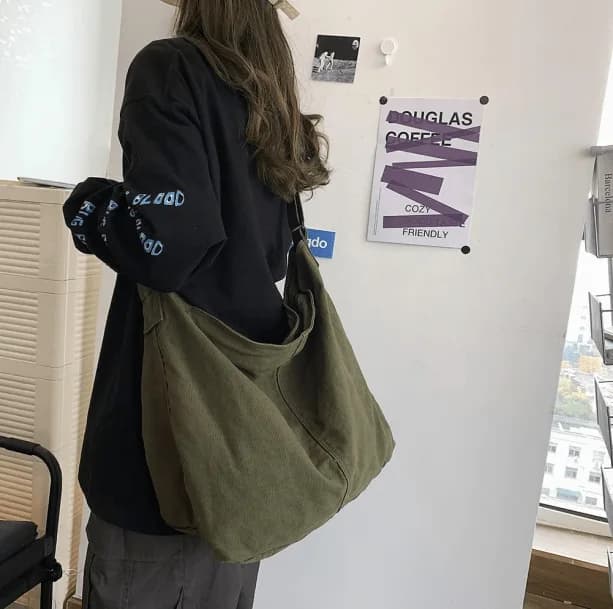
- Soft totes and canvas-style shoppers drape comfortably against stiff chore coats and heavy jackets.
- Compact crossbodies create a focal point over wide knits without adding shoulder bulk.

Evaluating Crossbody Bags Against Chunky Layers
Crossbody bags are an easy standard for street style, but they demand careful strap adjustment when worn over knits and thick outerwear. A strap pulling diagonally across an open jacket or a ribbed knit can pull collars sideways and bunch fabric uncomfortably across the chest. To make a crossbody sit cleanly, look for carriers with adjustable flat straps that distribute weight without slicing into layered shoulders.
For instance, pairing the Goblincore Bag with layered tops works smoothly because its compact PU leather form provides a definite anchor without swallowing the torso. If you wear this piece over a knit, position the strap so the base rests comfortably at high hip level rather than low on the thigh, preventing friction against textured trousers.
Color choice also changes how the strap cuts through the outfit. In a look anchored by earth tones, selecting this crossbody in Brown or Coffee keeps the diagonal line subtle. If you want the carrier to define your waistline against a darker silhouetteThe overall shape an outfit creates, from fitted to loose and layered., choosing Green or Red gives a distinct, purposeful break.
- Set strap drop to hit at the high hip to keep the bag clear of swinging coat hems.
- Opt for flat shoulder straps rather than narrow cords that bite into chunky knitwear.
- Select contrasting strap tones to carve out shape across voluminous sweaters.

Backpacks: Volume, Back-Panel Width, and Shoulder Ease
When carrying bulkier gear, study the breadth of the carrier against your shoulder line. Large packs with wide back panels can overwhelm narrower frames, especially when worn over thin tops. On the other hand, a backpack that is too small can look lost against heavy outerwear or wide-leg work pants. Exploring Goblincore Backpacks allows you to gauge dimensions so the bag complements your body frame rather than dominating it.
A major detail is how the shoulder straps rest over textured clothing. Broad, lightly padded straps stay in place far better across woolens and fleece than slippery, thin webbed straps. If you are layeringWearing pieces over or under one another to add depth, warmth or contrast. up for brisk walks, ensure the arm openings on the straps adjust wide enough to slide on without dragging your sleeves into tight bunches underneath your armpits.
A backpack also shifts your visual center backward. To maintain balance, make sure the front of your outfit features interesting lower-body details, like cuff roll-ups or substantial footwear, which grounds the bulk carried behind you.
Tote Bags: Drop Length, Base Depth, and Drape
Tote bags offer quick access and a relaxed shape, making them a common sight in everyday forest-inspired street styling. However, a tote that is too deep turns into an unorganized pit, while shallow shoulder straps make carrying it over thick sleeves impossible. When browsing Goblincore Tote Bags, pay close attention to the strap drop—the distance between the top edge of the bag and the highest point of the strap loop.
A strap drop of at least nine to ten inches is necessary if you intend to sling your tote over jackets or layered knits. A shorter drop forces you into carrying the bag purely by hand or tucked awkwardly in the crook of your elbow, which restricts movement. You also need to assess whether the bag has a flat bottom gusset. Flat-gusset totes stand up and hold their form, while flat envelope totes conform to your hip and lay flush against your body.
Flat totes work exceptionally well when you want to avoid visual bulk at the waist. They lie flat against wide-leg pants, allowing patterned tops and accessories to show without adding unneeded circumference.
- Check for a minimum nine-inch strap drop for comfortable shoulder carry over outerwear.
- Choose flat envelope styles for a low-profile drape that hugs the body.
- Opt for gusseted bases if you regularly carry insulated thermoses, sketchbooks, or lunch tins.
Pairing Bags with Overalls and Workwear Cuts
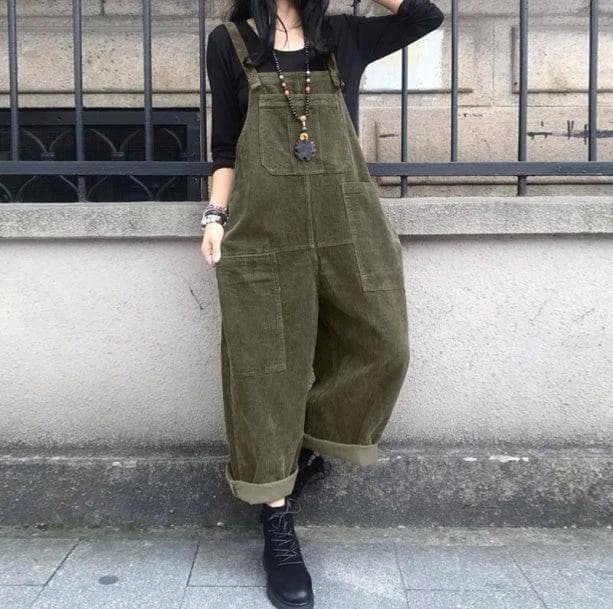
Heavy-duty workwear elements like bibs, patch pockets, and utility loops create built-in hardware that can compete with your carrier. The Goblincore Overalls, offered in corduroy and polyester blends in Green, Brown, and Black, already feature prominent front hardware and deep storage points. Draping a busy, multi-pocket sling directly over the chest bib clutters the torso.
When styling overalls, a handheld carrier, a structured backpack, or a low-slung single-strap tote is preferable to an across-the-chest rig. A backpack keeps the front bib completely clear, showcasing the vertical line of the suspender straps and front pocket detailing. If you prefer a shoulder bag, carry it on one side with the strap long enough that the bag hangs below the bib's waistline.
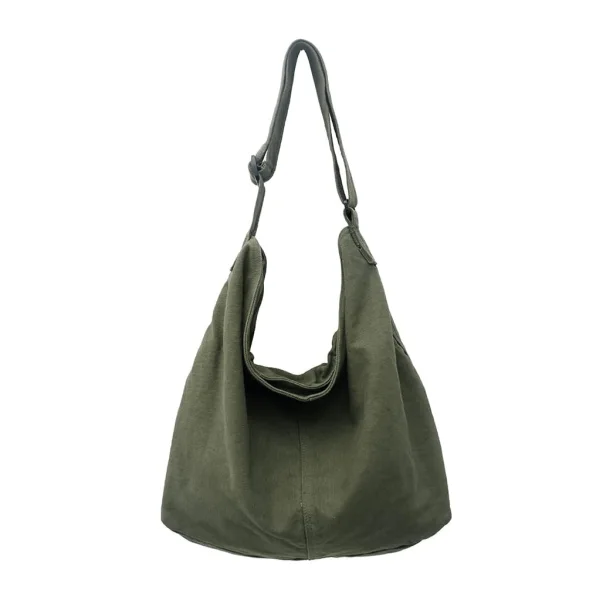
Fabric contrast is equally important here. Since these overalls bring distinct corduroy texture, pairing them with a smooth-finish pack or a contrasting canvas tote prevents the visual confusion of two heavily ribbed fabrics rubbing together.
- Keep the front bib clear by choosing backpacks or single-shoulder drops.
- Avoid overlapping external multi-pocket bags against utility chest pockets.
- Contrast smooth leather or flat canvas against the ridged texture of corduroy bibs.

Harmonizing Bags with Skirts and Airy Fairy Tops
Forest aesthetics frequently blend heavier, rugged elements with romantic, delicate shapes. When you pair an airy piece like the Goblincore Fairy Ruffles Top with the Goblincore Mini Skirt, your bag selection must not crush delicate hems or pull at ruffled necklines. A rough canvas utility bag or a pack with exposed hook-and-loop fasteners can easily catch and pull fine polyester stitching.
With this outfit, a compact, smooth-grained shoulder bag or a neatly structured micro-pack keeps the delicate details intact. The clean line of the mini skirt benefits from a carrier that terminates above the skirt hemline. If the bag falls past the bottom hem, it drags the visual focus down and cuts the vertical line of your legs.
Consider strap placement carefully around ruffled shoulders. A thin, smooth strap slips gently over airy sleeves without bunching up the fabric or flattening the silhouetteThe overall shape an outfit creates, from fitted to loose and layered. of the top. Keeping the bag's exterior free of coarse friction points protects fine fabrics over long days out.
- Keep base hemlines clear by positioning your carrier above the lower skirt edge.
- Select smooth bag exteriors to avoid snagging delicate ruffles and sheer trims.
- Use slim shoulder straps that slide easily over flared sleeve cuffs.


Layering Knits: Vests, Cardigans, and Bag Straps
Sleeveless knitwear offers excellent styling flexibility for transitional weather, but it requires mindful bag choices. The Goblincore Vest Sweater, made from a cotton and polyester blend and available in shades like Dark Brown, Green, and Red, introduces ribbing and thick borders around the armholes. Carrying a tight shoulder bag over a vest can yank the knit awkwardly across your torso.
To keep the lines of the vest crisp, pair it underneath an unstructured tote or use an asymmetrical crossbody hung loose. If you wear the vest over an untucked collared shirt, hanging a satchel right at the hip establishes a natural resting shelf that anchors the layered hems without pushing them out of place.
Color coordination between your knit vest and bag also defines your silhouetteThe overall shape an outfit creates, from fitted to loose and layered.. Matching a dark brown bag with a dark brown vest keeps your upper body looking unified, allowing light-colored shirts worn underneath to pop. Conversely, choosing a contrasting bag breaks up the torso, creating an intentional, blocky woodland profile.
- Hang crossbodies low enough to rest below the bottom ribbing of the vest.
- Match tones between your vest and carrier for a streamlined, continuous torso line.
- Avoid friction-heavy canvas straps directly against open-gauge knit textures.
Everyday Casual: T-Shirts and Graphic Prints
For low-key days centered around graphic tees, the bag should never obstruct the chest artwork. The Goblincore T-Shirt, featuring relaxed cotton styling with frog, mushroom, and forest motifs in White or Khaki, acts as the central focal point of an easy casual outfit. A standard crossbody strap running across the chest bisects the artwork and ruins the layout.
Instead, lean toward a tote carried on one shoulder, a handheld satchel, or a classic backpack from our broader Goblincore Clothes lineup. This leaves the front artwork unobstructed while maintaining complete freedom of movement. If you must wear a crossbody, lengthen the strap so the bag body hangs near the hip, and angle the strap over the far side of your shoulder away from the print.
Casual t-shirt styling also invites looser proportions elsewhere. A slouchy shopper bag pairs naturally with the relaxed fit of this tee, balancing loose-fitting pants or cuffed cutoffs without feeling rigid or overly formal.
- Avoid diagonal crossbody straps that split graphic tee prints in half.
- Choose single-shoulder canvas carriers to leave front graphics visible.
- Pair relaxed-fit t-shirts with softer, unstructured bag profiles for natural balance.
Integrating Small Accessories and Trims
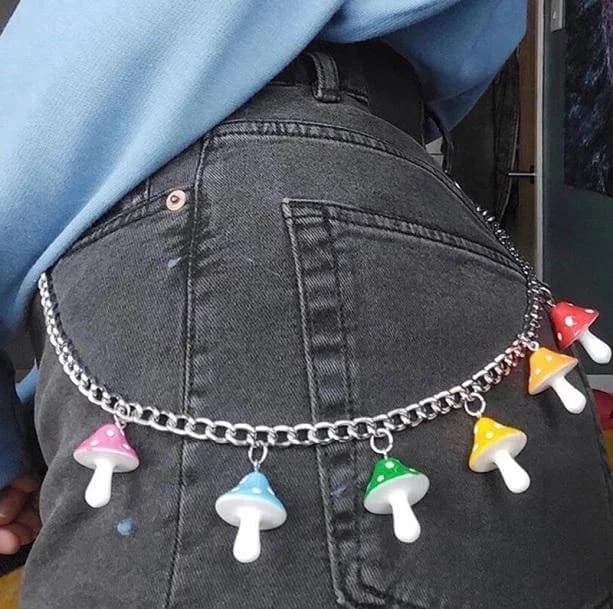
A cohesive street style look relies on intentional details distributed across your body rather than concentrated in one spot. When you add items from our Goblincore Accessories selection, consider how their textures and metals relate to your bag's hardware. Antique bronze, burnished brass, and matte metals sit comfortably together, while shiny chrome can look out of place against earthy styling.
Take an item like the Goblincore Bracelet. If you are carrying a hand-held tote or top-handle satchel, your wrists are constantly visible near the body of the bag. A natural-toned wrist piece echoes the rustic quality of a PU leather bag or canvas carrier, creating visual connection every time you reach into your pockets.
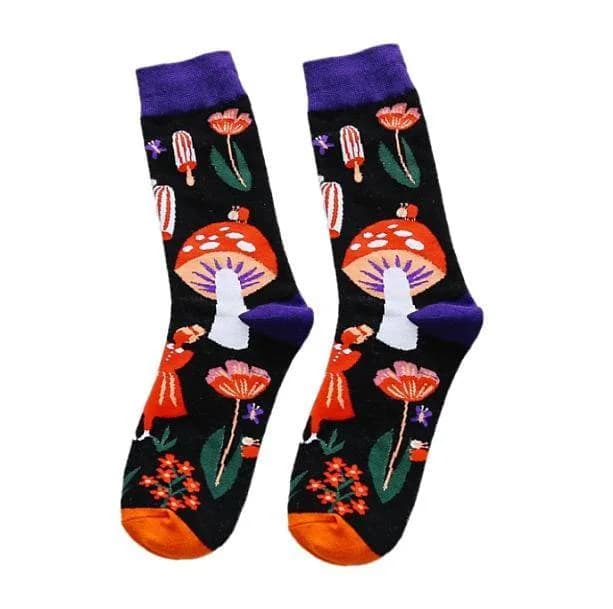
Lower on the body, look at the transition between footwear and bag color. Incorporating textured socks, such as Goblincore Socks, ties together heavy boots and high-sitting bags. Echoing tones—such as mossy greens or rust browns—between your ankles and your shoulder carrier establishes vertical symmetry without looking matching or staged.
- Match bag hardware finishes with rings, cuffs, and wrist accessories.
- Balance high-carried bags with textured socks or visible boot cuffs below.
- Distribute small accents across your hands, wrists, and pack straps evenly.
Capacity and Daily Carry: What Actually Fits
Before picking a bag based on silhouetteThe overall shape an outfit creates, from fitted to loose and layered. alone, you must consider your realistic daily load. Earthy streetwear often carries a functional, foraging-ready undertone, but carrying a half-empty massive pack looks just as awkward as stuffing a small pouch until its seams bulge. Categorizing bags by clear capacity bands prevents everyday frustration.
Compact carriers around one to two liters hold a phone, wallet, key bundle, lip balm, and perhaps a small pocketknife or trinket. If you step up to satchels and medium messengers in the four to eight-liter range, you easily accommodate a paperback book, an umbrella, an e-reader, and light tech. Large totes and rucksacks from ten to twenty liters are required if you routinely carry a water flask, spare knitwear, or a notebook.
Assess the rigidness of the bag base when calculating load. A bag made of soft cotton with no base inserts will sag downward into a teardrop shape under the weight of a metal bottle, distorting how it sits on your hip. If you carry heavy daily tools, choose a bag with a structured floor or reinforced stitching.
- Small pouches (1–2L): Phone, compact wallet, keys, and pocket sundries.
- Medium satchels (4–8L): Paperbacks, small water flasks, cosmetics, and chargers.
- Large packs and totes (10–20L): Extra knit layers, lunch containers, and full sketchbooks.
- Verify that the base construction can handle rigid, dense objects without sagging.
Weather Resistance and Outdoor Considerations
A forest-inspired street look often contends with changing outdoor weather, light drizzle, and muddy park paths. Canvas and cotton materials soak up moisture rapidly unless specifically treated, making them heavy and risking water damage to internal items. If you live in an area prone to regular drizzle, smooth PU leather or coated textiles offer a barrier against light splashes and damp benches.
Pay close attention to bag closures. Open-top totes without a zipper or snap closure leave your belongings exposed to sudden showers and damp air. For inclement weather, prioritize bags with full zip tracks or broad rain-shield flaps that fold completely over the main compartment opening.
Grounding your bag during outdoor stops is another practical consideration. Darker browns, deep olive greens, and black carriers hide soil marks and grass stains far better than cream or unbleached canvas. If you frequently set your bag on damp park grass, stone walls, or wooden benches, choose darker base materials that wipe clean easily.
- Select zippered main compartments or fold-over flaps for rain protection.
- Choose non-porous PU leather or treated synthetics over untreated cotton in wet climates.
- Stick to dark earth tones on the bottom panels to resist ground moisture and scuffs.
Proportions and Body-Line Placement
The exact spot where your bag sits against your body can change how tall or balanced your silhouetteThe overall shape an outfit creates, from fitted to loose and layered. appears. Bags that fall at your widest point—typically the mid-thigh or across the widest part of the hips—can broaden the silhouetteThe overall shape an outfit creates, from fitted to loose and layered., which might feel bottom-heavy when already wearing wide-leg trousers or heavy work skirts. Adjusting your strap drop so the top of the carrier touches the natural waist or upper hip preserves a longer visual leg line.
If you have a shorter torso, extra-long straps drag the eye downward and make layers look slightly oversized in an unintended way. Shortening the strap to wear a bag as a shoulder sling or chest-level pack helps keep the outfit compact and purposeful. For taller frames, standard shoulder straps can sometimes sit too high, bunching under the armpit; an adjustable strap that extends past 45 inches is ideal.
Test how the bag swings when you walk. A bag that stays anchored against your torso keeps your silhouetteThe overall shape an outfit creates, from fitted to loose and layered. neat, while one that swings wildly throws off the rhythm of loose clothing layers.
- Position bag bases at the upper hip to avoid exaggerating hip width.
- Shorten straps on small frames to lift visual weight toward the waist.
- Ensure crossbodies have ample strap extension to drape comfortably over wide shoulders.
Common Styling Pitfalls to Avoid
One common mistake when styling bags for this aesthetic is loading on too many disparate textures at once. When corduroy pants, a cable-knit sweater, a distressed canvas bag, and fringed leather trims meet in a single outfit, the look becomes chaotic. Let one or two textures take the lead while keeping the bag smooth or understated to give the eye a resting spot.
Another issue is strap tangling. Wearing a backpack over a coat that features shoulder epaulets, chest straps, or oversized toggles causes hardware to catch and bind every time you slip the bag off. If your outerwear has heavy surface hardware, switch to a hand-carried tote or a smooth crossbody that clears the collar area cleanly.
Finally, avoid carrying bags that are completely stark white or neon bright, unless intentionally used as an avant-garde contrast piece. Extremely crisp, clinical whites look disconnected against moss greens, clay browns, and weathered tones. Opt instead for oatmeal, ecru, khaki, or deep forest shades that share the same earthy temperature.
- Do not combine too many competing textured fabrics in one ensemble.
- Avoid shoulder packs on jackets with bulky epaulets or oversized chest toggles.
- Skip stark, clinical brights in favor of grounded, muted color paletteA small group of colors you repeat to make an outfit feel connected.s.
The Final Bag-Selection Checklist
Before making a final choice on your carrier, take a moment to walk through a practical review against your current wardrobe. Confirming how the bag handles your real essentials, your favourite layers, and typical daily weather ensures you end up with a piece that functions as well as it looks.
Begin by auditing the bags you already own to identify functional gaps. If your closet is full of giant canvas sacks that swallow keys and pens, a tidy, structured crossbody like the Goblincore Bag provides the organized, small-footprint contrast you are missing. If you only own tiny fashion purses, investing in a gusseted tote or a dependable backpack opens up space for longer outdoor walks and daily commuting.
Run through this quick five-point checklist before making your choice to ensure your new bag balances seamlessly with your forest-inspired outfits:
1. SilhouetteThe overall shape an outfit creates, from fitted to loose and layered. Balance: Does the bag provide structure against loose clothes, or softness against rigid workwear?
2. Strap Usability: Does the strap length adjust comfortably over your thickest knit vest or jacket?
3. Surface Safety: Is the bag exterior smooth enough to prevent snags on delicate tops or open knits?
4. Hardware Harmony: Do the buckles, zips, and rings match your existing jewelry and accessories?
5. Real Capacity: Can it carry your everyday essentials without bulging or losing its profile?