Created by the Kawaii Vibe editorial team. Our named style desks are editorial personas. Product details and availability can change.
Goblincore thrives on curiosity, earthy oddities, mossy tones, and small collected treasures, but wearing that look can get messy fast. When you pile on multiple cord necklaces, raw stones, textured charms, and heavy knits, chains knot together and pendants vanish under thick collars. LayeringWearing pieces over or under one another to add depth, warmth or contrast. jewelry in this aesthetic works best when each piece has clear physical breathing room instead of tangling into a ball at your collarbone.
Getting your look right comes down to matching chain lengths to specific shirt cuts, picking a metal palette that flatters your base clothing, and leaving open zones on your torso. Whether you prefer antique bronze, tarnished silver, or dark raw wire, organizing your pieces by weight and height keeps the outfit looking intentional rather than chaotic. This guide walks through exact neckline pairings, balancing mixed finishes, and distributing rings and charms so you stay comfortable all day.
1. The Problem with Cluttered Goblincore Layering
The biggest challenge with forest-inspired styling is that the clothing is already textured, loose, and heavy. Chunky ribbing, patch pockets, and rugged fabrics compete directly with detailed trinkets. When you drape three medium-length chains over a ribbed top, the pendants bunch together, slide into the knit channels, and catch on every loose loop of thread. Instead of looking like a thoughtful collector of woodland artifacts, the chest area ends up reading as a chaotic knot.
The fix is establishing clear vertical drop zones. You never want two focal charms resting at the exact same depth on your chest. Give each necklace an assignment: one hugs close to the hollow of the throat, one sits flat against the collarbone, and a third drops down toward the mid-ribcage. This keeps intricate details like beetle wings, acorn caps, or small quartz crystals distinct and visible, preventing fine chains from wrapping around each other when you lean forward or turn your head.
- Stagger drops by at least two inches between chain links.
- Pair delicate chains exclusively with smooth base fabrics to prevent snagging.
- Limit bulky statement charms to one per tier.
2. Finding Your Primary Metal Palette
Goblincore jewelry relies heavily on non-glossy, aged surface finishes. The most common choices are antiqued bronze, blackened or oxidized brass, matte copper, and tarnished sterling silver. Bright, ultra-shiny yellow gold often clashes with the earthy, grounded atmosphere of woodland styling because it reflects too much harsh light. Choosing a dominant metal tone simplifies putting an outfit together on busy mornings and ensures your overall look feels unified.
Warm metals like bronze and copper naturally complement mossy greens, burnt oranges, and warm bark browns. If your wardrobe leans heavily into cool stone grays, charcoal, and damp slate, antiqued silver and pewter offer a quieter contrast that feels grounded in misty riverbeds rather than sunny leaf piles. Look through your jewelry box and identify which metal appears most often, then use that metal as the anchor for roughly seventy percent of your visible accents.
- Antique bronze: soft, earthy warmth that blends with olive and forest greens.
- Tarnished silver: cool, moody contrast that pairs with charcoal, black, and slate.
- Oxidized copper: rustic undertone that complements mushroom taupe and rust.
3. How to Mix Metals Without Creating Visual Chaos
You do not have to commit to wearing a single metal from head to toe. Mixing metals creates an authentic, scavenged charm that fits the aesthetic naturally. The secret to mixing metals without looking disorganized is intentional repetition. If you put on a heavy bronze pendant, do not wear only silver rings and silver earrings; the bronze pendant will look like an accident. Instead, weave both finishes across different zones of your body.
A reliable ratio is the two-to-one approach. Select one primary metal for your largest pieces, like a wide belt buckle or a central pendant, and introduce the secondary metal in smaller, thinner items such as stacking bands or delicate earrings. When exploring curated Goblincore Jewelry, watch for pieces that already incorporate two-tone hardware or dark patinas, as these create an effortless bridge between mismatched rings and mismatched chains.
- Choose one dominant metal to cover about two-thirds of your accents.
- Disperse secondary metal accents across both hands and ears for balance.
- Avoid mixing high-shine polished chrome with rough, organic matte metals.
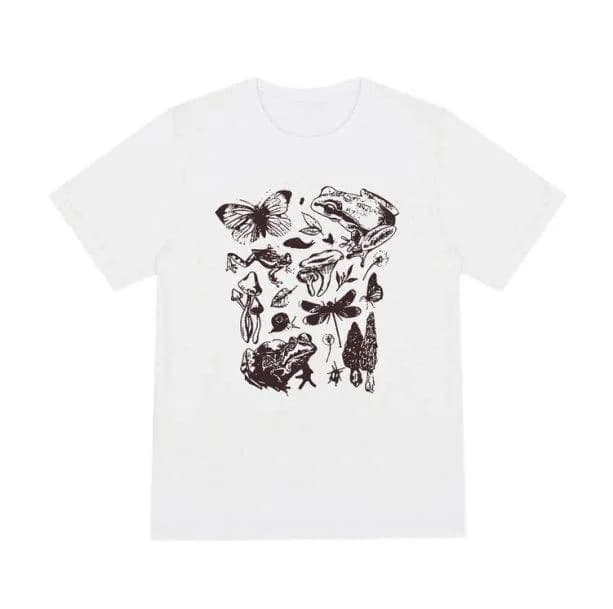
4. Styling Jewelry with Crewnecks and Graphic Tees
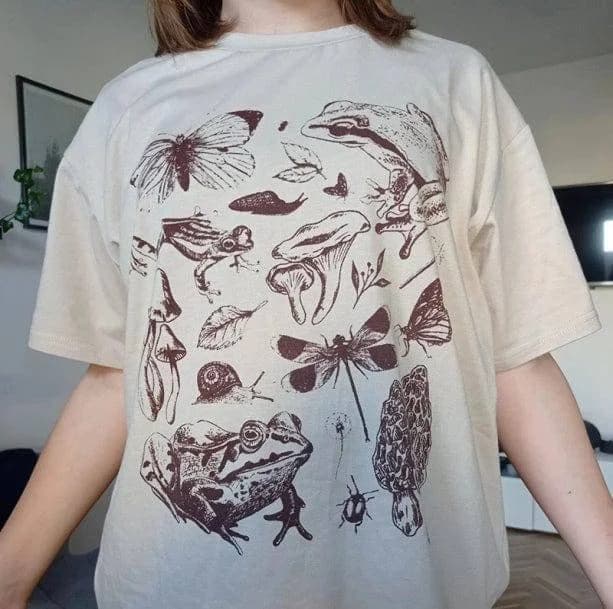
Crewneck shirts present a completely closed neckline, which gives you a flat fabric canvas to work with. When styling over graphics, standard medium chains often cut awkwardly across the art, hiding the image while getting lost in the print. For a relaxed piece like the Goblincore T-Shirt, you have two distinct approaches: keep the jewelry entirely above the collar line, or drop it well below the printed artwork.
The first option uses a close choker or a short sixteen-inch cord necklace that rests entirely on bare skin above the shirt band. This keeps your charms visible without conflicting with the front illustration. The second approach uses a long, twenty-eight to thirty-inch cord carrying a hefty pendant that hangs below the chest print, resting around the solar plexus. This gives both the graphic and the jewelry their own dedicated zones.
- Keep short chains tight to the neck so they never touch the ribbed collar.
- Select heavy, smooth pendants on long cords that drop cleanly below graphic prints.
- Tuck medium-length chains under the shirt and display just a tiny top charm.

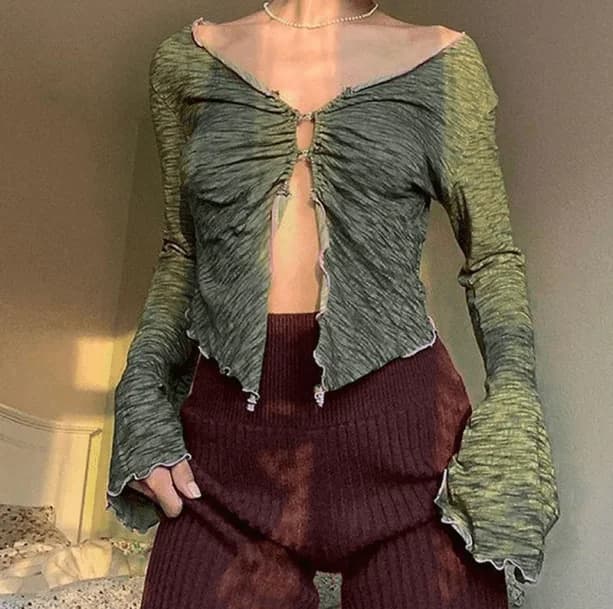
5. Balancing Open Ruffled Tops and Deep Necklines
Romantic, draped tops present the opposite challenge: lots of exposed skin framed by billowing hems and puckered seams. An airy piece like the Goblincore Fairy Ruffles Top brings a lot of fabric movement around the shoulders and bust. Piling on bulky, heavy cast-metal pieces against this kind of ruffled cut creates an uncomfortable clash in visual weight, making the garment look weighed down.
Light, flowing ruffles look best alongside airy arrangements. Use thin cable chains, tiny raw stone drops, or delicate pressed botanicals set in small bezels. Because the fabric already creates dramatic lines, keep the jewelry close to your throat. A delicate two-tier drop that mirrors the dip of the ruffled collar leaves plenty of open space, highlighting your neck and collarbones without fighting the soft folds of the fabric.
- Match delicate, gathered fabrics with lightweight chains and smaller charms.
- Follow the natural dip of the neckline rather than crossing over fabric edges.
- Avoid jagged prong settings that could pull threads in fine flutter sleeves.

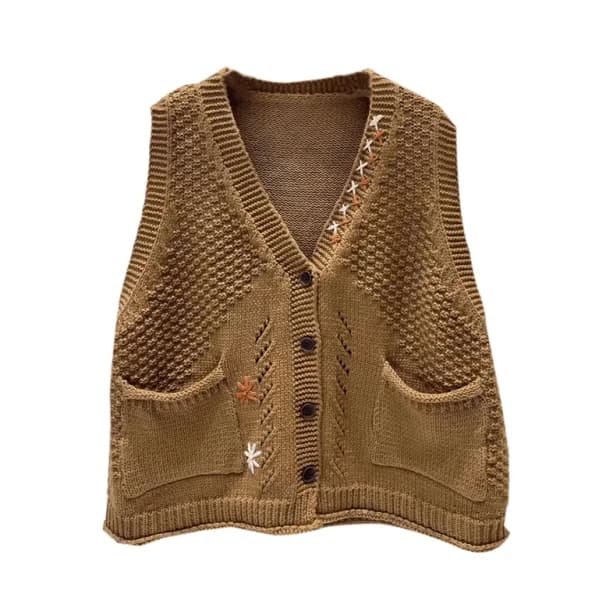
6. Conquering Thick Knits and Vest Sweaters
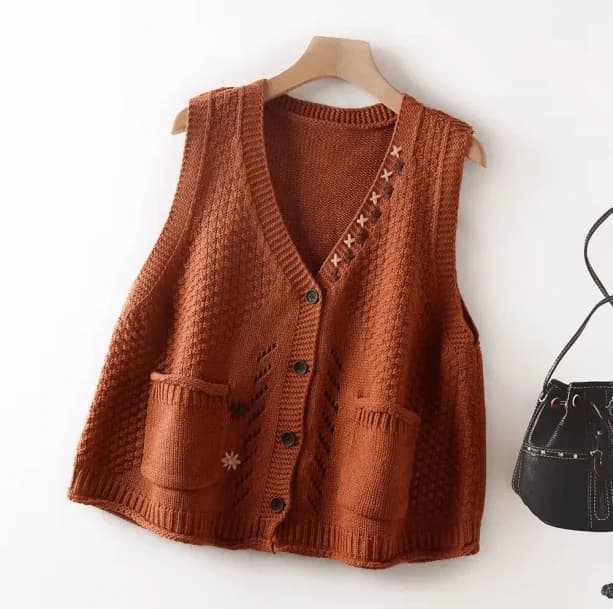
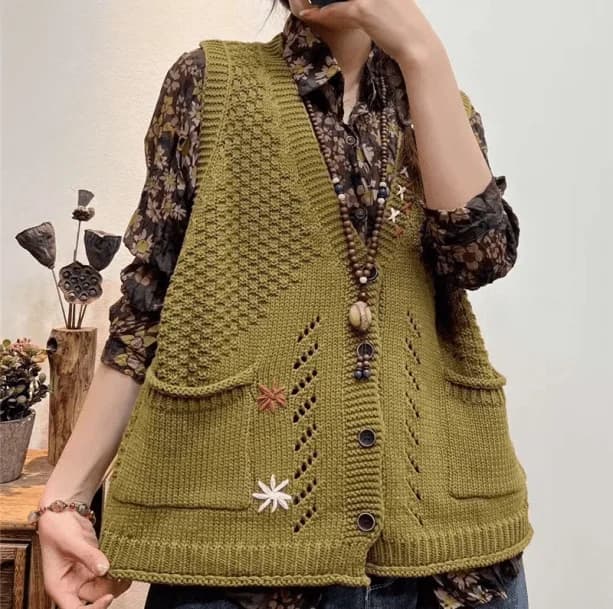
Chunky knits swallow fine jewelry whole. Delicate chains disappear into cable stitches, and fragile clasps snag on knit yarn, risking broken chains and ruined tops. If you are layeringWearing pieces over or under one another to add depth, warmth or contrast. with a boxy piece like the Goblincore Vest Sweater, your jewelry needs substantial physical weight and simple, snag-free surfaces. This is where heavy leather cords, thick link chains, and smooth river-stone or polished wood pendants shine.
Instead of fussing with delicate neck stacks over thick knitwear, shift your primary jewelry focus outward. Let the sweater vest frame your torso cleanly, and direct the eye toward your wrists, fingers, and ears instead. Statement ear drops frame the face above a warm knit, while bold finger stacks bring texture to your hands without interfering with the bulky yarn of your core layers.
- Opt for smooth, tumbled stones or cabochons rather than exposed sharp prongs.
- Use thick waxed cotton or braided leather cords over chunky wool and acrylic.
- Shift the visual weight to rings and earrings when wearing heavily textured vests.
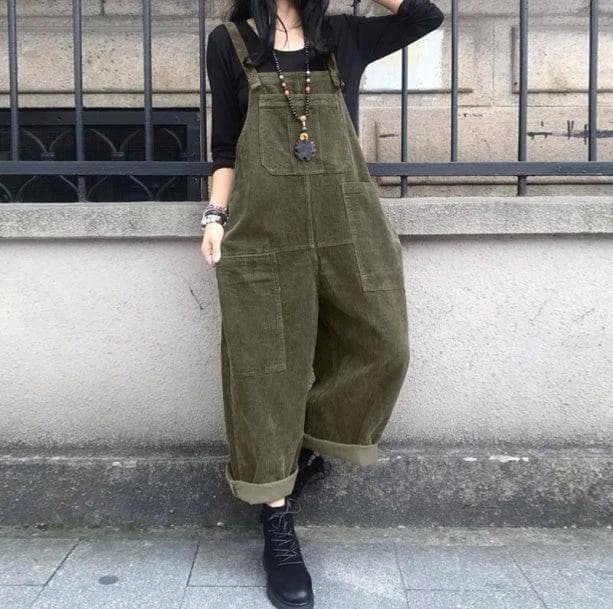
7. Bib Overalls and Utility Workwear Layering
Dungarees and utility pieces introduce sturdy hardware like buckles, heavy buttons, and thick shoulder straps right around the chest. When wearing Goblincore Overalls, placing a standard pendant necklace dead center often leads to awkward friction, as the piece swings and clangs against the central bib or slides behind the front pocket flap. Styling jewelry with workwear requires working around these functional details.
To layer successfully with bib fronts, anchor your necklace either short or asymmetrical. A sturdy choker made of velvet, macrame, or braided cord stays comfortably above the bib line. If you prefer longer pieces, pin a brooch or clip a pocket watch-style chain directly into the bib seam. This prevents tangled straps while nodding toward vintage practical wear. Coordinate the metal tone of your jewelry with the brass or bronze sliders on your straps for a cohesive finish.
- Keep chain pendants higher than the top stitch line of the chest bib.
- Match your accessory metals to the overall strap sliders and buttons.
- Use the utility bib pocket as an anchor for clip-on charms or small pocket pendants.

8. Framing the Face: Earring Lengths and Proportions
Earrings offer an easy way to express woodland whimsy because they never compete with shirt buttons or belt buckles. However, hair texture, scarves, and collar heights all dictate which drop length will actually show. Small forest stud earrings shaped like acorns or moss rosettes are great for everyday comfort, but they can easily disappear if you wear your hair down in loose, natural waves.
When you want a distinct, noticeable profile, reach for pieces from the Goblincore Earrings collection that feature hanging elements like bronze moths, wire-wrapped raw gems, or small brass cages. For example, a pair of dangling Goblincore Earrings provides sufficient vertical drop to clear your jawline, creating a visible focal point that stays distinct even when framed by thick outerwear or heavy knit hoods.
- Select studs when wearing high mock necks, cowls, or thick knit scarves.
- Use elongated drops to break up the horizontal line of wide collars and open necklines.
- Check that wire hooks have rubber stoppers to prevent snagging on loose sweater yarn.
9. Crafting Hand Stacks: Rings and Textures
Goblincore aesthetics celebrate working with your hands, foraging, and appreciating earthy textures. This makes ring stacking an essential component of the look. Instead of identical, ultra-thin bands, a woodland ring stack thrives on varying widths, hammer marks, branch motifs, and earthy stones. Spreading multiple shapes across different fingers tells a richer visual story than keeping all your rings on a single hand.
Explore items within Goblincore Rings to mix varied silhouetteThe overall shape an outfit creates, from fitted to loose and layered.s. A substantial band shaped like carved bark or twisted roots works well as a sturdy anchor on your pointer or middle finger. Complement it on adjacent fingers with simpler, unpolished metal bands or tiny bezel-set stones. Avoid overloading every single finger, as leaving your pinky or thumb bare gives your hands breathing room and lets the individual rings stand out.
- Anchor the stack with one wide, textured ring on a middle or index finger.
- Pair rough, organic branch bands with smooth, polished companion rings.
- Leave at least one finger unadorned on each hand to maintain natural balance.
10. Wristwear and Sleeve Pairings
Styling bracelets can be frustrating when dealing with changing seasons and shifting sleeve lengths. Long, ribbed cuffs hide delicate bangles, while wide bell sleeves can snag on protruding charm links. The golden rule for wristwear is pairing bracelet bulk inversely with sleeve volume. If your top has wide, gathered cuffs, keep your wrist accessories flat, streamlined, and snug against the skin.
When wearing rolled sleeves, short-sleeve tees, or sleeveless cuts, you have room for dimensional wrist pieces. A multi-strand piece like the Goblincore Bracelet creates rich texture all on its own without needing extra support. If you want to layer further, pair a beaded wrap with a flat leather strap or a plain brass cuff. Keep all the items snug enough that they stay placed on your forearm rather than sliding down into your palms while you move.
- Wear snug, low-profile cuffs under long ribbed sleeves to prevent catching.
- Stack mixed materials like leather, braided cord, and beads on bare forearms.
- Avoid dangling metal charms on wrists if you type at a desk for long stretches.
11. Lower-Body Accents: Chains, Charms, and Belts
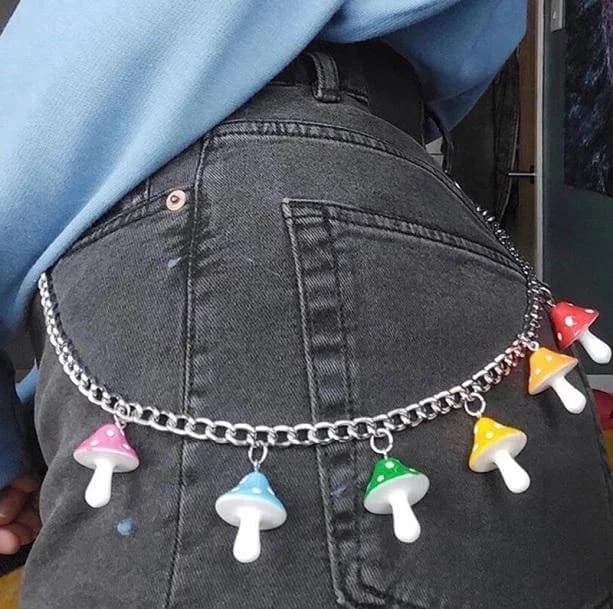
Jewelry does not have to stop at your waistline. Lower-body hardware provides a great bridge between your tops and footwear, especially when styling pieces like the Goblincore Mini Skirt. Adding an antiqued chain hooked from a belt loop to a side ring brings metallic texture downward, balancing out heavy boots and chunky legwear without cluttering your upper torso.
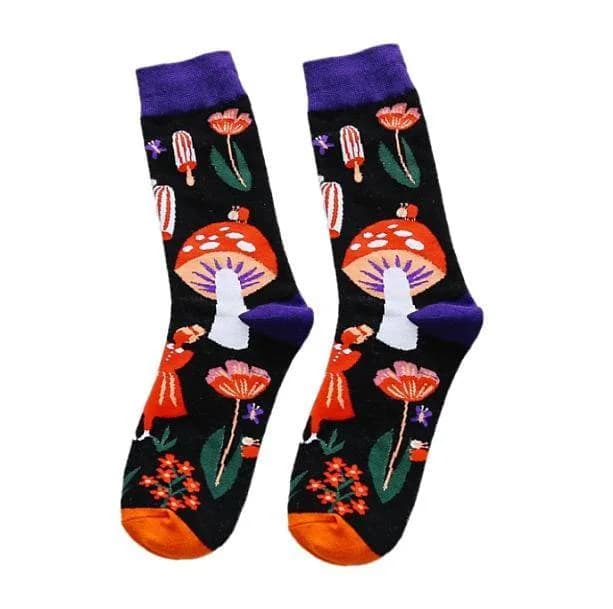
This lower-body styling is particularly useful when your top half is already visually busy with layered jackets, scarves, or backpacks. Attaching a small brass clip with a cluster of acorn or key charms to a belt loop adds subtle kinetic movement as you walk. Pairing these accents alongside rugged Goblincore Socks and worn leather footwear completes the grounded, practical look from head to toe.
- Hook decorative chains across front belt loops on skirts or corduroys.
- Attach functional utility clips or keys to add authentic everyday texture.
- Keep waist drops short enough that they don't whip your thighs as you walk.
12. Navigating Brooches, Clips, and Clothing Hardware
Brooches are often overlooked in modern casual wear, yet they are among the most versatile tools in alternative styling. Unlike necklaces, which hang loose and shift with every movement, a sturdy pin fastens directly to heavy fabric, staying exactly where you place it. They offer a secure way to introduce natural motifs—such as cast beetles, bronze fern fronds, or dried botanical resin frames—without cluttering your neck.
Place pins on thick fabric zones that can support their weight, such as the lapel of an unlined jacket, the bib corner of dungarees, or the front pocket of a corduroy overshirt. Beyond decorative appeal, brooches can functionally cinch an oversized neckline or secure a draped knit wrap across your shoulder. Brooches and decorative pins in Goblincore Accessories provide endless ways to customize plain outerwear without buying new garments.
- Pin heavy brooches to structured lapels or denim rather than fine jersey.
- Use sturdy safety pins with wire-wrapped beads to cinch loose necklines.
- Group pins in odd numbers—either one solo piece or a small cluster of three.
13. Goblincore vs. Cottagecore: Knowing the Difference
While both aesthetics share an affection for nature and vintage simplicity, their jewelry philosophies diverge significantly. Cottagecore leans toward pastoral romance: polished gold accents, dainty freshwater pearls, pastel floral enamels, and symmetrical, pristine finishes. Goblincore, by contrast, embraces the shadowy, damp forest floor: rough-cut stones, oxidized brass, insect motifs, bones, twisted roots, and visible aging.
When putting together complete Goblincore Clothes, bringing in too many delicate, hyper-polished elements can shift your outfit toward a cottagecore or fairycore mood. If you want to keep your look firmly rooted in goblincore, balance any delicate gemstone with rougher elements—such as oxidized wire, a weathered leather cord, or a tarnished bezel. This subtle contrast preserves the earthy, scavenged feel of your ensemble.
- Goblincore emphasizes decay, forest floors, moss, and weathered patinas.
- Cottagecore favors sunny gardens, polished pearls, and bright yellow gold.
- Combine delicate gems with dark cord or oxidized metals to ground the look.
14. The Practical Layering Checklist and Common Pitfalls
To make sure your jewelry feels effortless rather than overwhelming, run through a quick check before stepping out the door. The most frequent styling mistake is putting on too many statement items at once: wearing a chunky pendant, long drop earrings, a multi-charm bracelet, and a hand full of rings creates visual noise where nothing gets noticed. Pick one zone to serve as your centerpiece and keep the other zones understated.
Another common pitfall is ignoring how your pieces move throughout the day. Chains of identical weight will always wind together into a stubborn knot within an hour of walking. Always pair different chain textures and thicknesses together, and test your necklaces by leaning forward in front of a mirror. If they hang smoothly without catching on each other or tangling in your top, your layered outfit is balanced and ready for the day.
- Vary chain thicknesses: pair one rope chain with one flat link or smooth cord.
- Keep a three-finger gap between the hem of your necklace and your belt line.
- Test for snags: run your hands over your chest to ensure clasps won't catch knit loops.
- Remove one piece if your earrings, neck stack, and wristwear are all making noise.