Created by the Kawaii Vibe editorial team. Our named style desks are editorial personas. Product details and availability can change.
Balancing goblincore pants outfits usually comes down to managing visual weight. Because this look draws heavily on rugged textures, oversized cuts, relaxed leg openings, and slouchy layers, an outfit can quickly turn swampy in a way that feels messy instead of intentional. When your trousers are wide and thick, pairing them with an equally long and heavy tunic pulls the entire body downward, hiding your natural lines entirely.
Getting the silhouetteThe overall shape an outfit creates, from fitted to loose and layered. right does not mean you have to wear tight, restrictive clothes. The real trick is managing three core pivot points: your natural waistline, where your trousers break over your boots, and how you stagger your upper layers. By intentionally mixing cropped items, fitted undershirts, open workwear buttons, and textured trousers, you can lean into loose comfort while keeping your outfit crisp and structured.
Whether you are styling bulky corduroys, printed vintage bottoms, or heavy overalls, this guide breaks down the exact proportions that make goblincore work. We will walk through width ratios, cuffing choices, knit placements, and transitional weather solutions so you can assemble functional outfits with complete confidence.
The Core Equation: The Rule of Thirds in Earthcore Dressing
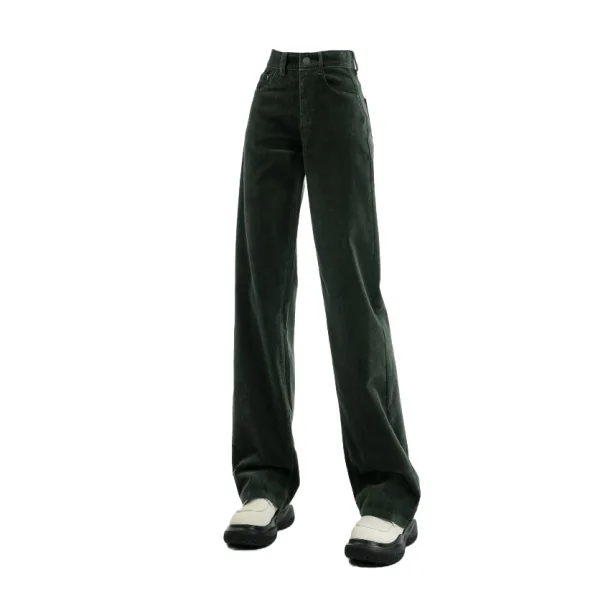
The easiest way to avoid looking swallowed by heavy fabrics is applying the classic rule of thirds. Rather than splitting your body evenly at the exact center (a 1:1 ratio where your top and bottom meet right across your hips), aim for either a 1:2 ratio or a 2:1 ratio. In practical outfit building, a 1:2 split means your upper torso takes up one-third of your overall vertical profile, while your legs and trousers create the remaining two-thirds. This draws the eye upward and gives wide trousers space to drape naturally without swamping your frame.
To achieve this 1:2 proportion with loose trousers, you need to define an anchor point at your natural waist. You can do this by tucking your base top fully into high-rise bottoms, tying a knot at the hem of an oversized tee, or wearing shorter silhouetteThe overall shape an outfit creates, from fitted to loose and layered.s. When your waistline is visibly set higher on the body, the eye reads wide-leg trousers as intentional volume rather than sloppy sizing. It lets you go as baggy as you want through the thighs and calves without sacrificing personal structure.
Conversely, a 2:1 split uses a long tunic or oversized duster coat paired with narrower or closely cropped pants. However, in nature-inspired styles where chunky, roomy trousers are the main event, the 1:2 proportion remains the most reliable baseline for daily wear. Keep this split in mind whenever you experiment with new silhouetteThe overall shape an outfit creates, from fitted to loose and layered.s.
- 1:2 Ratio: High-rise trousers paired with a tucked or cropped top to extend the lower visual line.
- 2:1 Ratio: Longline cardigans or smocks layered over straight-leg, rolled-ankle pants.
- Avoid 1:1 Splits: Square, hip-length heavy sweaters worn over wide pants without any tucking flatten your frame.
Tackling Wide-Leg Pants with Cropped and Tucked Tops
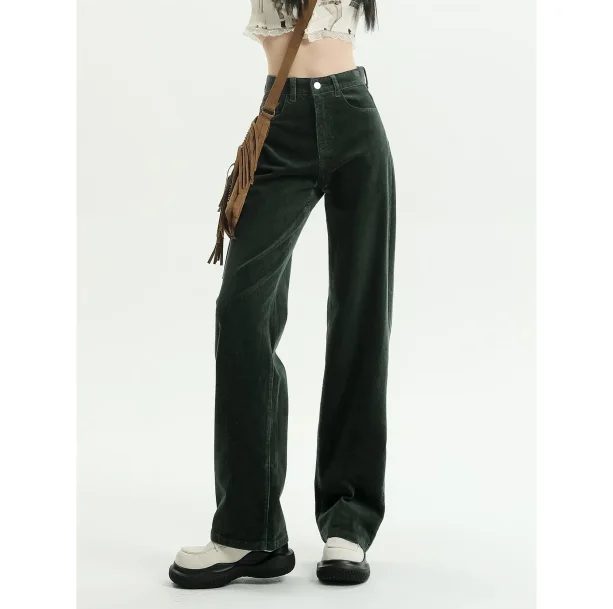
When working with slouchy or wide-cut trousers, controlling the volume at your ribs is key. If you are building an outfit around roomy pieces from our goblincore pants selection, pairing them directly with boxy, tunic-length sweatshirts often blurs your shape entirely. Instead, balance that generous lower width by anchoring your upper half with shorter cuts or secure tucks that let your trouser waistband remain visible.
A great way to test this contrast is matching wide corduroy bottoms with pieces from the goblincore crop tops lineup. A fitted or slightly boxy crop top that hits right above the waistband keeps your torso visually distinct while letting the heavy fabric of the pants do the talking. If exposed midriffs do not match the day's weather, you can layer a thin thermal base underneath or add an unbuttoned overshirt on top.
For pants with distinctive waistband details or belt loops, a standard French tuck (tucking just the front center hem while leaving the sides loose) keeps the relaxed goblin energy intact. It reveals enough of the waist rise to establish your proportions, while preserving the carefree drape along your hips and lower back.
- Contrast wide trouser legs with a fitted or rib-skimming upper hem.
- Use the front tuck for mid-weight shirts to hint at waist height without looking overly formal.
- Add a flat canvas or worn leather belt to define the transition point between top and bottom fabrics.
Styling High-Waisted Corduroys for Heavyweight Texture
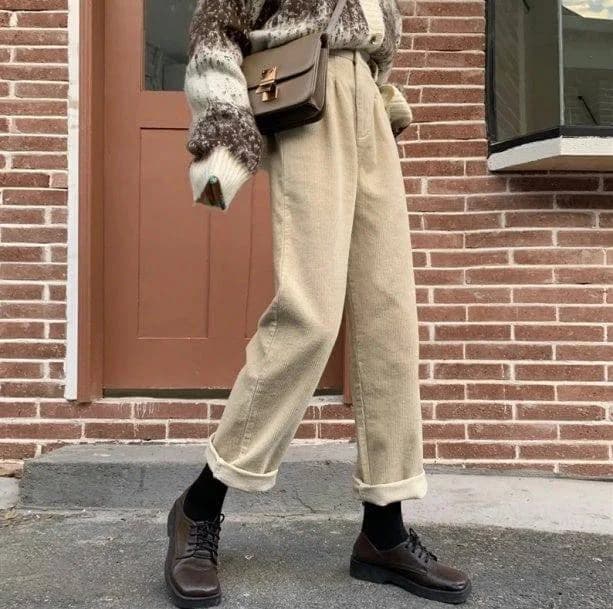
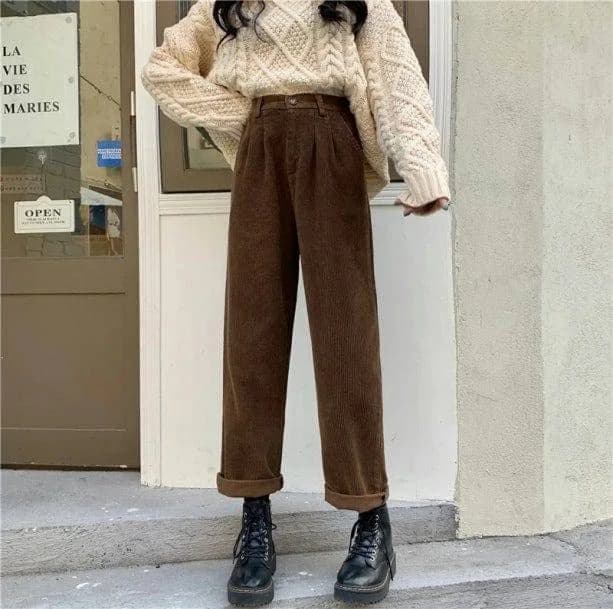
Corduroy is practically synonymous with forest-floor aesthetics due to its ribbed texture, durability, and natural matte finish. However, corduroy fabric holds inherent stiffness and thickness, which directly influences how the pants hang and move. A high-rise cut is especially useful here because it wraps securely around your torso before opening out into relaxed legs, naturally carving out a strong vertical line.
For instance, the High Waist Corduroy Pants (available in Green, Brown, and Army Green) use their high-rise structure to anchor your center. Because corduroy ribs catch natural light, these pants provide plenty of surface interest on their own. Styling them with a smooth cotton crewneck or a fine-gauge knit gives you an appealing contrast in textures, stopping your outfit from looking like a single flat wall of heavy fabric.
If you prefer a softer, slightly worn-in look, the Grandmacore Corduroy Pants (offered in Brown, Beige, Black, and Purple) provide another textured option for casual days. When wearing heavier cords, watch the hem break: let the fabric skim the top of your shoes or add a single wide roll. Leaving too much bunched corduroy pooling over your footwear can create an awkward, weighed-down anchor that distracts from your waistline.
- Pair ribbed corduroys with contrasting smooth textures like combed cotton, jersey, or lightweight linen.
- Rely on high waists to keep deep-pile fabrics organized and distinct against your upper layers.
- Opt for earthy shades like moss, beige, or walnut to maintain an authentic, mossy palette.

Solving the Hem Break: Boots, Cuffs, and Ankle Lengths
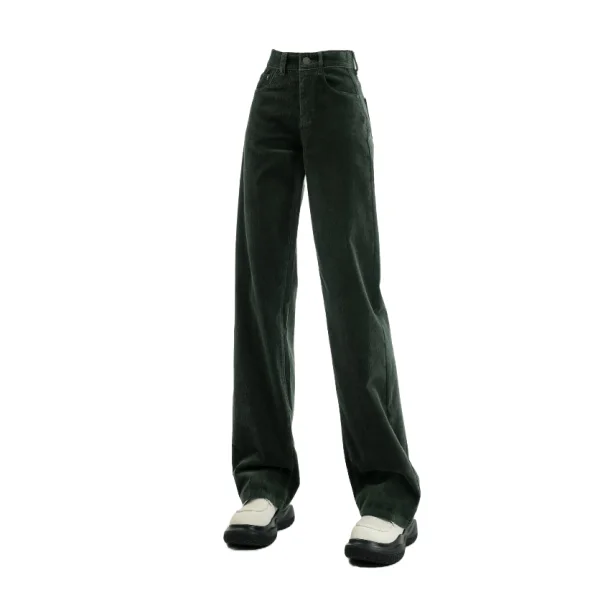
Where your trousers meet your footwear is the critical detail that determines whether a loose goblincore outfit feels effortless or genuinely unkempt. A full puddling hem that drags against wet pavement or forest paths quickly looks damaged and disrupts the flow of your clothes. Finding the right break—where the trouser cuff interacts with your boot shaft—keeps wide legs swinging freely and looking intentional.
There are three reliable hem styles for this aesthetic: the cropped ankle, the clean single break, and the utilitarian roll. A cropped ankle cut hits just above the ankle bone, which is ideal if you want to showcase chunky ribbed socks and vintage hiking boots. The single break occurs when the hem gently touches the upper ridge of your shoe, creating a subtle, clean fold in the front while hanging straight in the back.
The utilitarian roll is the easiest to adjust on the fly. Simply fold the bottom of your trousers upward once or twice to create a thick, two-inch cuff. This cuff adds weight to the bottom hem, which actually helps wide legs hang straighter while revealing dark leather work boots or patterned wool socks underneath. Avoid small, tidy pinrolls, as they contradict the relaxed, practical feel of woodland dressing.
- Cropped Hems: End 1 to 2 inches above the boot collar to reveal thick marled or ribbed socks.
- The Single Break: Skims the shoe laces with a slight fold; works best on straight-leg utility cuts.
- Utilitarian Cuffs: Broad, rough double-rolls that keep wide cuffs off wet soil while adding structural weight to the leg.
Layering Knits and Sweaters over Wide Pants
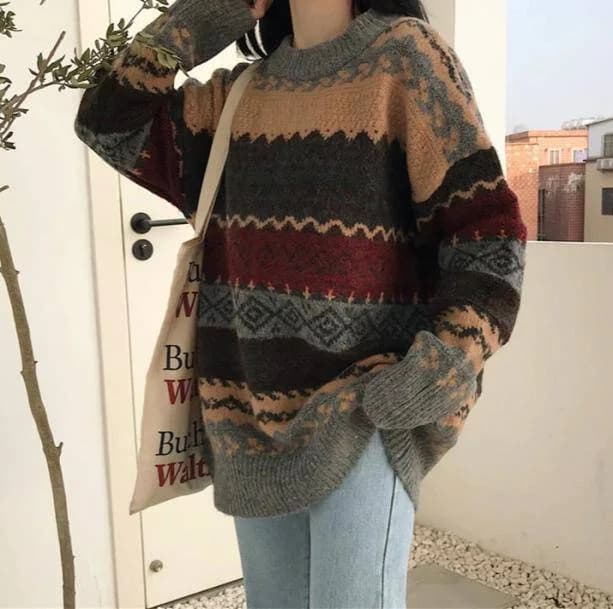
Knitted garments are a natural match for rugged bottoms, but pairing a thick, bulky sweater with relaxed pants can easily swallow your torso. The solution is using layered knits that break up your silhouetteThe overall shape an outfit creates, from fitted to loose and layered. horizontally and vertically. Instead of reaching for a massive, stiff pullover, turn to open cardigans, slotted vests, and varied hem lengths that introduce visual steps down your body.
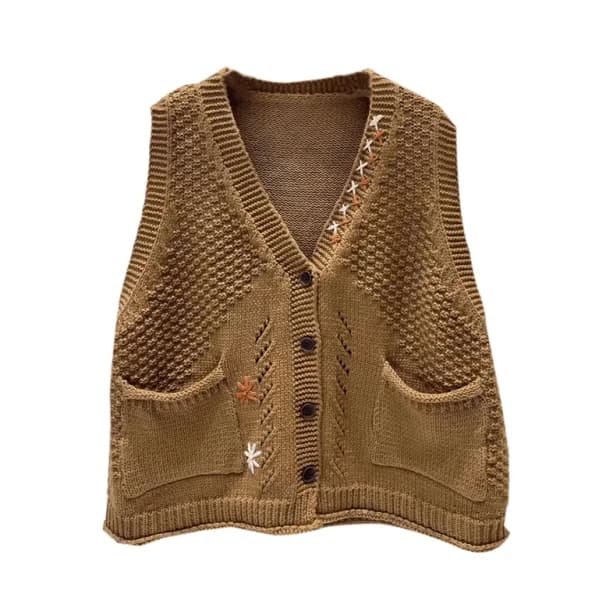
A standout piece for balancing proportions is the Goblincore Vest Sweater. Crafted from a cotton and polyester blend and available in Brown, Green, Black, Dark Brown, and Red across sizes up to 3XL, it serves as an ideal intermediate layer. LayeringWearing pieces over or under one another to add depth, warmth or contrast. this sleeveless knit over an untucked button-down shirt lets the crisp shirt hem and collar peek out at the top and bottom. This technique segments your torso without adding heavy bulk around your arms, creating a tailored, woodland-scholar look above wide trousers.
If you do prefer a full sweater, select models with side slits or drop-tail hems that allow you to tuck just the front edge into your belt loops. Leaving the back loose keeps your look casual while preventing the thick knit from visually pulling down your hips.
- Choose sweater vests to reduce sleeve bulk when styling wide, relaxed pants.
- Layer contrasting hem lengths: let a collared shirt extend two inches below a cropped knit vest.
- Use side-split pullovers to allow easy half-tucks into sturdy trouser waists.

Integrating Graphic Tees and Base Layers
A comfortable graphic t-shirt makes an exceptional everyday anchor, provided you mind where the hem rests against your bottoms. Baggy t-shirts worn completely loose over baggy pants can hide your posture entirely, turning your frame into an undefined rectangle. To make classic tees play nicely with roomy bottoms, you just need a few basic styling adjustments.
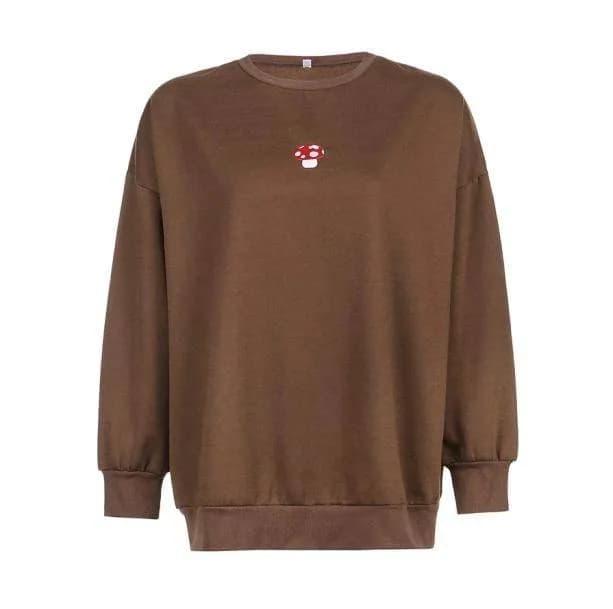
Our curated goblincore t-shirts collection offers a wide range of forest-inspired prints that pair naturally with textured pants. For instance, the Goblincore T-Shirt, cut from soft cotton in a relaxed fit with frog, mushroom, and forest graphics in White or Khaki, pairs seamlessly with high-rise corduroys. Tucking this shirt cleanly into your trousers and pulling out just a pinch of slack creates a lived-in look while keeping your leg line long.
Another smart styling move is knotting the t-shirt at the hip bone or rolling the sleeves twice. Cuffing your t-shirt sleeves narrows the visual width across your shoulders, which balances wider trousers. In cooler weather, layer a long-sleeved thermal or waffle-knit shirt underneath the tee; the contrasting sleeve tones create an interesting horizontal break that visually organizes the outfit.
- Cuff t-shirt sleeves twice to narrow the upper frame against wide-leg trousers.
- Tuck graphic tees fully into high-rise pants, then gently pull two inches of fabric loose to create a relaxed pouch.
- Add a contrast-color waffle thermal underneath short-sleeve tees for easy depth and warmth.


Styling Overalls: Navigating Full-Torso Volume
Overalls present a unique proportional challenge because their bib covers your entire torso, removing the traditional waist break altogether. If your overalls are cut with wide, straight legs, you are working with a single, uninterrupted column of fabric. The secret to keeping overalls balanced is styling the openings: the sides, the neckline, and the ankles.
The Goblincore Overalls, made from a textured polyester and corduroy blend in Green, Brown, and Black, offer a classic woodland canvas. Because corduroy overalls bring substantial volume, wearing a heavy, bulky sweater underneath can make your chest and hips feel crowded. Instead, choose a slim-fitting base top, like a fitted ribbed long-sleeve or a light mock-neck shirt, to cleanly define your shoulders and arms against the bib.
You can also adjust the bib straps to alter the vertical break. Loosening the straps slightly lowers the bib, creating a more relaxed, workwear drape across the hips, which works brilliantly with chunky boots. Leaving one strap unfastened introduces an asymmetrical diagonal line across your chest, breaking up the broad rectangle of fabric and adding an easygoing, collected-over-time character.
- Wear snug or fine-gauge base tops beneath corduroy bibs to avoid excess bunching along your ribs.
- Roll the pant cuffs generously above sturdy leather boots to break up the long vertical column of fabric.
- Try unbuttoning one side or dropping a shoulder strap to break up a broad, solid chest piece.
Patterned Vintage Trousers and Muted Pairings
While solid olive, brown, and khaki pants are foundational goblincore staples, patterned bottoms add delightful botanical texture to your wardrobe. The key to balancing printed trousers is managing visual competition. Because intricate prints draw the eye downward, your upper half needs clean, uncomplicated lines to prevent the outfit from feeling visually chaotic.
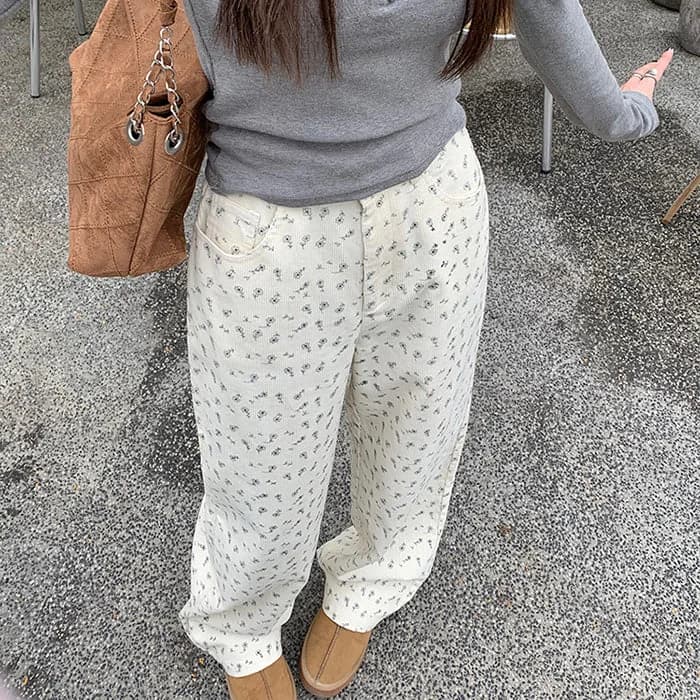
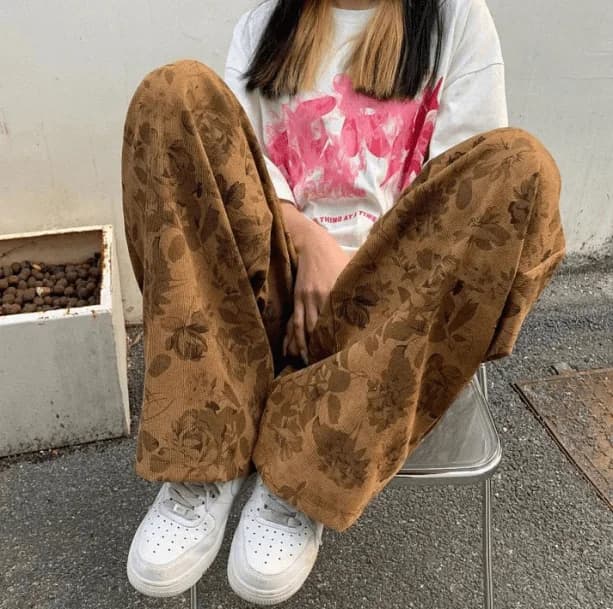
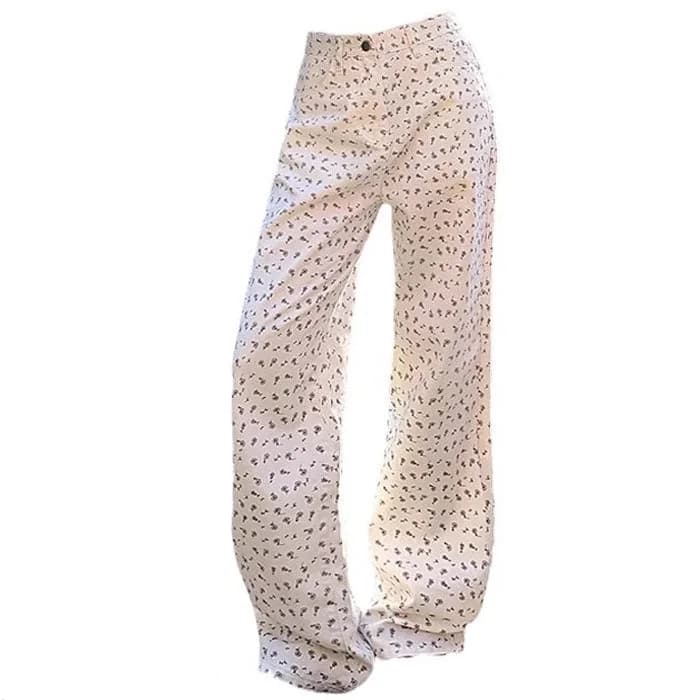
The Floral Print Vintage Pants, crafted from a flexible polyester-spandex blend in Brown and Black, illustrate this principle nicely. With their vintage botanical motifs, these pants act as the primary visual focus of your outfit. To keep proportions grounded, pair them with simple, monochrome tops selected from our broader goblincore tops catalog.
A solid moss-green henley, a fitted chocolate-brown tee, or a plain canvas overshirt will balance the botanical print without clashing. If you want to introduce layers, choose solid textures—like a rough-knit cardigan or a smooth canvas vest—in tones pulled directly from the trouser print. This anchors the playful print in earthy, practical utility.
- Pair detailed botanical or floral trousers with solid, unprinted tops.
- Pull secondary colors from the pant print (like cream, clay, or moss) for your upper layers.
- Keep footwear rugged and matte—such as oiled leather boots—to ground lightweight, printed fabrics.
Balancing Romantic and Ruffled Tops with Utilitarian Pants
One of the most charming goblin aesthetics pairs dreamy, delicate elements with rough, work-ready pieces. Juxtaposing romantic blouses with utilitarian trousers creates wonderful visual tension, keeping the outfit from tipping entirely into fantasy or entirely into chore wear. Getting this pairing right depends on balancing soft, flowing fabric against stiff, structured utility.
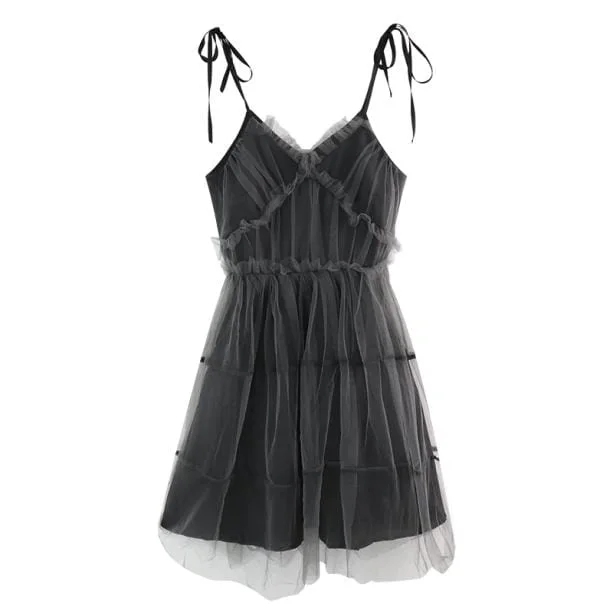
Consider the Goblincore Fairy Ruffles Top, crafted from lightweight polyester with delicate flowing details. If you pair a soft, ruffled top like this with equally light and drapey lounge pants, the outfit can lose all structure and look like sleepwear. But when you anchor it against heavyweight corduroys or structured carpenter trousers, the contrast looks intentional and grounded.
To maintain your proportions, tuck the ruffles cleanly into high-rise utility pants, or select a cropped blouse that sits neatly atop sturdy denim or canvas. Roll your heavy trouser cuffs, lace up some battered field boots, and throw a sturdy work canvas jacket over top. The mix of frayed frills and rugged fabric creates that perfect moss-gatherer charm without feeling flimsy.
- Tuck airy, ruffled blouses into thick, structured trousers to anchor flowing materials.
- Contrast lightweight top fabrics with heavyweight shoes like combat boots or lug-sole loafers.
- Layer a rugged field coat or canvas utility vest over delicate shirts for everyday practical warmth.
Managing Weather: Rainy Swamps and Winter Chills
Goblincore thrives in damp, overcast, autumnal weather, but damp environments quickly expose outfit flaws. Puddled pant legs act like wicks, soaking up moisture from wet grass and muddy trails. When bad weather rolls in, your styling choices need to prioritize water protection and sensible thermal balance.
During wet outings, ditch wide floor-length hems in favor of tapered silhouetteThe overall shape an outfit creates, from fitted to loose and layered.s or high rolls. Tucking wide-leg pants into tall, lace-up boots prevents wet hems while creating a functional utility shape reminiscent of vintage woodsmen. To pull this off cleanly, fold the excess leg fabric tightly against your calf before sliding your wool socks up over the pant hem, then lace your boots over top.
For colder conditions, remember that wide-leg corduroys allow plenty of room for thermal underwear underneath without binding. On top, build warmth through thin, staggered layers—such as a base thermal, followed by a graphic tee, an open flannel, and a wool chore coat. Staggering your layer lengths prevents bulky cold-weather outerwear from turning into a stiff, shapeless block.
- Use the military cuff fold: fold excess ankle fabric flat to the calf before pulling tall socks over trousers.
- Rely on the generous cut of wide-leg pants to conceal heavy thermal base layers underneath.
- Stagger cold-weather top hems (short vest over a medium shirt over a long thermal) to keep your silhouetteThe overall shape an outfit creates, from fitted to loose and layered. readable.

Skirt and Pant Layering: The Forest Skater Silhouette
LayeringWearing pieces over or under one another to add depth, warmth or contrast. skirts or kilts over pants is a beloved retro alternative technique that adds wonderful volume, movement, and practical warmth. This combination provides endless opportunities to experiment with mixed hem lengths, creating an intriguing silhouetteThe overall shape an outfit creates, from fitted to loose and layered. that feels right at home in a quirky woodland wardrobe.
You can introduce this layered depth by wearing the Goblincore Mini Skirt over straight-leg or slightly tapered trousers. Because the mini skirt hits around mid-thigh, it creates a crisp, clear break along the upper third of your body, while the pant legs extend straight down to your footwear. This adds dimension around the hips while preserving a clean, elongated leg line.
When attempting this combination, avoid wearing a wide, billowing skirt over equally voluminous, flared trousers, as the fabrics will fight for space and bunch around your knees. Stick to structured mini skirts over straight or slim-cut utility pants. Complete the outfit with a simple cropped top or a tucked sweater vest to keep the attention centered on your creative lower-half layeringWearing pieces over or under one another to add depth, warmth or contrast..
- Pair mini-length skirts over slim or straight-leg trousers to keep fabrics from bunching.
- Match color tones: wear a patterned skirt over neutral, dark trousers to create coherent depth.
- Keep upper layers relatively compact to balance the extra volume around your waist and thighs.
Common Proportional Pitfalls to Avoid
When styling earthcore clothing, it is easy to make a few common proportional missteps. The most frequent issue is matching an oversized, boxy, long-hemmed sweater with equally wide, puddled trousers. While this might feel wonderfully cozy at home, out in the world it removes all sense of posture, making movement clunky and swamping your natural frame entirely.
Another common pitfall is ignoring footwear volume. Wearing slim, featherlight canvas sneakers with heavy, wide-wale corduroys creates an unbalanced, top-heavy silhouetteThe overall shape an outfit creates, from fitted to loose and layered. where your feet appear to vanish beneath your cuffs. Sturdy trousers require footwear with matching physical presence—think lug-sole combat boots, thick-soled loafers, or chunky vintage hiking shoes.
Lastly, avoid wearing mid-rise loose trousers without any waist definition. When pants sit loosely on the hips and fall straight down without a belt, cuff, or tuck, your torso appears disproportionately long while your legs look shortened. Simply lifting the waistband to your natural waist or cinching with a sturdy belt immediately restores comfortable, harmonious proportions.
- Do not pair wide-leg bottoms with flimsy, paper-thin shoes; balance them with chunky soles.
- Avoid pairing tunic-length tops with wide trousers unless you cinch the waist with an outer belt.
- Never let oversized cuffs drag along muddy paths; roll them twice to protect the fabric and show off your boots.
Exploring the Broader Aesthetic Spectrum
Goblincore does not exist in a vacuum; it shares many stylistic themes with adjacent alternative movements like dark cottagecore, mori kei, and vintage workwear. Mori kei leans heavily into flowing, draped layers and soft linen textures, whereas classic cottagecore embraces pastoral whites, florals, and sunlit dresses. Goblincore stands out by grounding itself in practical, sturdy fabrics, deeper earth tones, and functional woodland utility.
If you enjoy the earthy palette of this style but crave cleaner lines, vintage workwear techniques offer a fantastic reference point. You can swap out loose witchy capes for structured canvas barn coats, or pair tailored corduroys with crisp cotton henleys. Exploring our expansive goblincore clothes library allows you to discover pieces that sit comfortably along this stylistic boundary.
By learning how each micro-style handles proportions—mori kei through cascading horizontal volume, cottagecore through romantic cinched waists, and goblincore through rugged, grounded utility—you gain full creative freedom. Mix and match these elements to tailor an everyday wardrobe that suits your personal sense of comfort and adventure.
- Mori Kei: Features extreme fabric volume, multiple frayed tiers, and lighter, mossy tones.
- Cottagecore: Centers on romantic fits, lighter pastels, and defined, cinched waists.
- Goblincore: Emphasizes practical durability, mud-ready boots, deep earth tones, and lived-in utility.
Your Outfit Building Checklist
Before heading out the door, take a moment to evaluate your outfit against this quick checklist. Balanced styling does not mean following rigid rules; it is simply about making sure your clothes feel comfortable, functional, and aligned with your personal vision for the day. Use these practical questions to troubleshoot your look in front of the mirror.
First, check your waist and torso: Is there a visible transition between your top and bottoms? If everything feels like a solid sheet of fabric, try tucking the front hem of your shirt, slipping on a belt, or throwing on an open knit vest. Next, check your ankle break: Are your trousers falling cleanly against your boots, or are they dragging and gathering dirt? A quick double roll easily fixes any awkward fabric pooling.
Finally, evaluate your texture balance. If your pants are heavy ribbed corduroy, did you add an interesting contrast with a smooth cotton graphic tee or a light knit? Balancing weights, finishes, and layers ensures you step out feeling cozy, practical, and uniquely yourself.
- Is my waistline anchored by a tuck, belt, or crop hem?
- Does my trouser hem sit cleanly on my boots without dragging along the ground?
- Are my footwear soles substantial enough to support the width of my pants?
- Did I mix textures (ribbed corduroy, soft knit, smooth cotton) to create visual depth?