Created by the Kawaii Vibe editorial team. Our named style desks are editorial personas. Product details and availability can change.
Balancing an outfit built around a skirt often comes down to managing visual weight, hemline drops, and waist placements. In natural, mossy aesthetics, skirts can range from structured utility cuts to airy, gathered pieces. Finding the right harmony means matching those shapes with tops that neither drown your frame nor feel disconnected from the overall grounded mood.
Footwear acts as the anchor for the entire look. If you pair a floaty, lightweight hem with paper-thin flats, the outfit can feel top-heavy once you start adding thick knitwear, bags, or layered shirts. Conversely, pairing heavy utility boots with an unstructured maxi skirt requires deliberate attention to where your waistband sits so you do not lose your natural shape under layers of fabric.
This guide outlines exact formulas to pair tops, manage waistbands, and choose shoes for different skirt profiles. Whether you are assembling a casual weekday outfit or a layered outfit for a woodland walk, understanding how these components interact makes putting together grounded outfits straightforward.
Understanding Silhouette Proportions in Earthy Outfits
Proportion in nature-inspired styles relies on counterbalancing loose shapes with structured anchors. When you wear an item with organic draping or ruffled hems, adding structure around your shoulders, waist, or feet keeps the look intentional rather than disheveled. If every item in an outfit is oversized and unstructured, the garments tend to collapse into one another, hiding the interesting textures you chose in the first place.
The easiest way to map your silhouetteThe overall shape an outfit creates, from fitted to loose and layered. is to apply the rule of thirds. A standard half-and-half split, where a long top cuts straight across the middle of a knee-length skirt, can visually compress your height. Instead, aim for a shorter top section with a longer lower half, or tuck your upper layer to create a clear division. This balance gives your legs room to breathe and allows layered footwear, such as ribbed socks folded over boot collars, to show clearly.
Texture also contributes directly to perceived volume. Heavy ribs, coarse weaves, and thick knits carry more visual weight than smooth cotton jersey or crisp polyester. When building your outfit, balance heavy textures on one half with lighter or smoother surfaces on the other so your frame maintains clean definition.
- Map your outfit in thirds rather than equal halves to prevent visual compression.
- Pair rough, tactile textures with smoother weaves to define separate garment pieces.
- Use structured hemlines or defined waistbands to give soft shapes an anchor point.
Balancing Mini Skirts with Structured and Oversized Tops
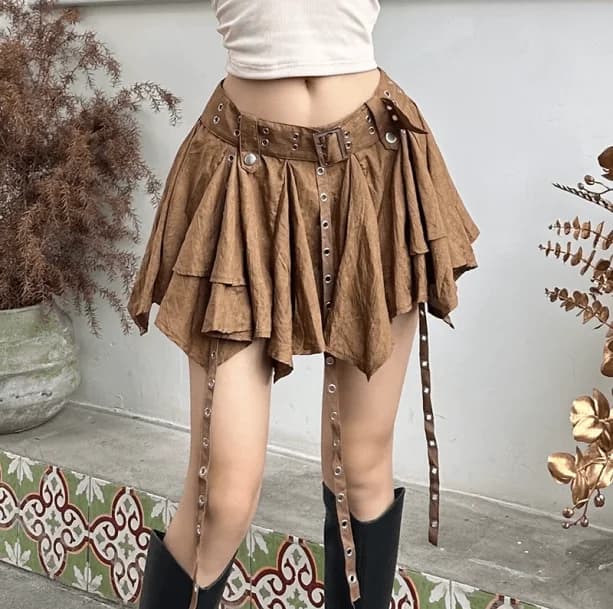
Short skirts offer plenty of room to experiment with top volume because your legs provide an immediate counterweight to bulkier garments. When working with shorter hems, pairing them with an oversized button-up, a boxy sweater, or a structured utility jacket creates an appealing contrast between broad shoulders and exposed leg line. This prevents the outfit from feeling too delicate while keeping you comfortable throughout the day.
If you choose a piece like the Goblincore Mini Skirt, which is made from polyester and features a compact cut, you can lean into wide-sleeve cardigans or relaxed knits. Because the skirt stays close to the body, a slouchy knit will drape naturally over the hips without bunching awkwardly. Alternatively, half-tucking an oversized flannel shirt gives you back coverage while clearly highlighting the front waistband.
For a touch more movement along the hem, the Forest Fairy Mini Skirt incorporates a cotton and polyester blend that brings a slightly softer drape. Try balancing this shape with a fitted mock-neck shirt underneath a boxy workwear overshirt. The fitted base layer keeps your upper torso neat, while the unbuttoned outer layer adds depth that matches the flare of the hemline.
- Offset shorter hemlines with boxy, relaxed, or wide-cut upper layers.
- Half-tuck oversized flannels to keep the front waistband visible while retaining drape.
- Layer a fitted base layer under an unbuttoned shirt for adjustable volume.


Managing Waistline Heights: High-Rise vs Mid-Rise
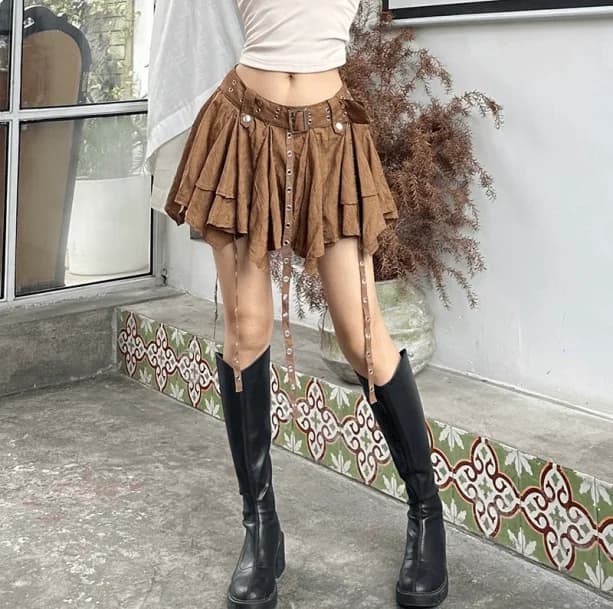
Where a skirt sits on your torso dictates how your tops should be finished. High-rise skirts sit at or just above your natural waist, creating a compact upper body space that benefits from cropped cuts, neat tucks, or thin layers. Mid-rise cuts rest closer to the hip bones, elongating the torso and pairing naturally with untucked tunics, relaxed jumpers, or wide utility belts that sit comfortably across the pelvis.
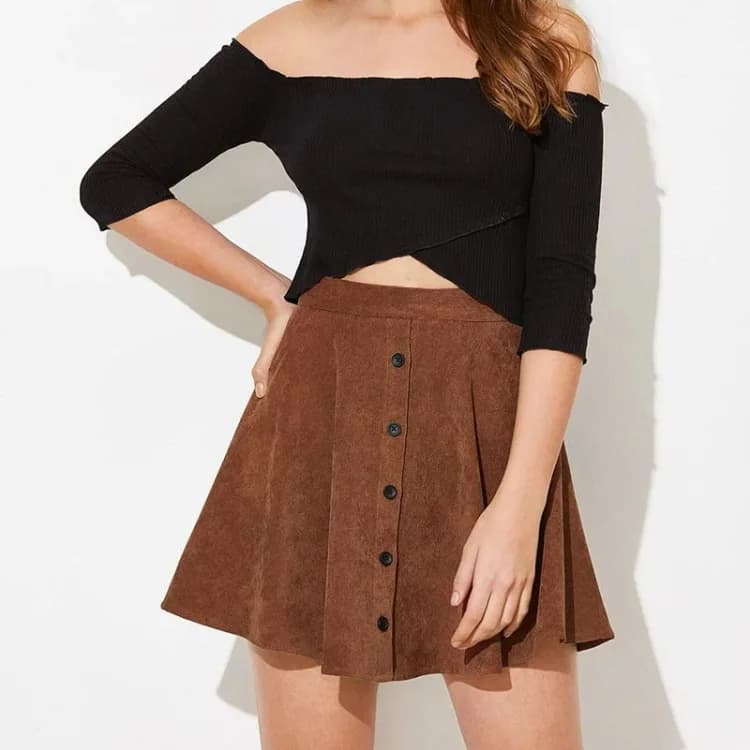
A structured choice like the Dark Academia Corduroy Skirt in polyester corduroy provides substantial fabric weight with its regular fit and colorways like Brown, Black, Khaki, and Purple. Because corduroy holds its shape firmly, high-waisted styling works best when you fully tuck a lightweight blouse or thin knit into the band. Forcing a thick sweater into this waistband can cause uncomfortable bunching, so opt for tops that end right at the waistband instead.
Mid-rise skirts allow for looser drape techniques. When wearing a skirt that rests on your hips, avoid crisp, rigid tucks that pull the fabric upward out of place. Instead, try a loose front tuck where only the center inch of your hem is secured, letting the sides drape downward naturally to meet your hip line smoothly.
- Choose thin knitwear or cropped tops for structured, high-waist skirts.
- Avoid full-tucking heavy knits into firm waistbands to prevent excess bulk.
- Let mid-rise skirts pair with relaxed hem lengths that skim the hip line.

Layering Knits and Sweaters Over Flared Hemlines
Flared hemlines require thoughtful top layeringWearing pieces over or under one another to add depth, warmth or contrast. so the flare looks intentional rather than pushed down by heavy outer fabric. If a sweater is too long and fits tightly around your hips, it will crush the volume of a flared skirt, creating an awkward balloon shape at mid-thigh. To prevent this, tops worn over flared skirts should either stop above the widest flare point or feature an open, unbuttoned front.
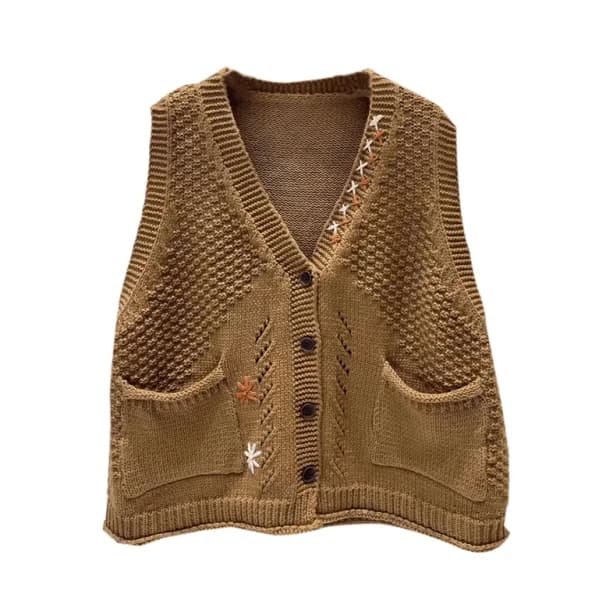
Vests are particularly effective for this balance because they warm your core without adding fabric volume around your arms and hips. The Goblincore Vest Sweater, offered in a cotton-polyester blend in shades like Brown, Green, Black, Dark Brown, and Red, works nicely over a collared shirt paired with a flared bottom. Its sleeveless cut reduces visual weight up top, allowing the flare beneath to move freely without competing with bulky sleeves.
When choosing long knits, look for side slits or high-low hems. Slits allow the front of the sweater to be tucked loosely while the back drapes downward, leaving the skirt room to flare naturally at the sides. If your knit lacks slits, you can achieve a similar effect by using a thin belt hidden underneath the sweater, pulling excess fabric up and letting it fold softly over the belt line.
- Keep sweater hems above the initial flare point to avoid crushing the skirt's shape.
- Use sleeveless vests to layer warmth without adding upper-arm and hip bulk.
- Look for side slits on longer knits to maintain full hem movement.

Styling Earthy T-Shirts for Casual Everyday Outfits
A casual graphic tee or raw-hem jersey shirt can easily ground an outfit, keeping it relaxed and wearable for low-key days. Finding the right connection between casual cotton tops and textured skirts comes down to neckline shape and graphic placement. Crew-neck tees provide a clean canvas for layeringWearing pieces over or under one another to add depth, warmth or contrast. necklaces or suspenders, while slightly scooped necklines leave space for collared undershirts.
Exploring options across goblincore t-shirts reveals how muted botanical prints, vintage illustrations, and mossy tones tie into textured skirts. If your skirt features a distinct pattern, like the cotton-polyester Japanese Style Plaid Skirt, select a tee that picks up one of the minor undertones from the plaid weave. This creates a cohesive color story without matching every tone identically.
Tying or knotting a t-shirt at the waist is another practical way to adjust proportions on the fly. If your skirt has a gathered or elasticated waist, rolling your t-shirt hem inward into an internal band or knotting it to the side keeps the waistband defined. This works especially well on warm days when you want a simple two-piece outfit that still looks deliberate.
- Pick t-shirts that reflect secondary colors found in patterned skirts.
- Use crew necklines as a foundation for layered cord necklaces or collared bases.
- Tuck or knot casual tees to keep your waistline clear when wearing gathered skirts.
Choosing Tops for Textured and Ruffled Skirts
When your skirt features tiers, gather points, or raw edges, your top needs to complement those details rather than fight them for attention. A skirt with abundant surface detail already commands focus, so adding an equally busy top with deep ruffles, wide flounces, and bold patterns can make the overall silhouetteThe overall shape an outfit creates, from fitted to loose and layered. feel cluttered. Clean lines up top provide a calm balance against dynamic lower hemlines.
The Ruffle Denim Skirt, crafted from cotton, pairs the rugged durability of denim with tiered ruffled edges. To balance the weight of the denim and the detail of the frills, pair it with a snug waffle-knit thermal, a fitted ribbed long-sleeve, or a simple buttoned Henley. The smooth, close-fitting texture of a thermal shirt grounds the flounce of the denim without adding competing volume around your waist.
If you prefer a lighter, more ethereal look, the polyester Vintage Fairycore Skirt offers an airy counterpoint. Because this piece moves gently with every step, you can pair it with a structured canvas vest or a fitted denim jacket. Putting a rugged top layer over a delicate fabric creates an engaging contrast that highlights the distinctive nature of both garments.
- Anchor ruffled lower tiers with fitted, plain-textured tops like waffle knits.
- Pair heavy fabrics like ruffled denim with sleek, body-skimming long-sleeves.
- Contrast delicate, airy skirt materials with structured utility jackets or vests.
Footwear Profiles: Boots, Platforms, and Oxford Shoes
Shoes define how your outfit connects to the ground. In earthy aesthetics, footwear typically carries visual presence through thick soles, rugged leather finishes, or pronounced tread patterns. Pairing a delicate skirt with paper-thin canvas shoes can leave an outfit feeling unfinished, whereas sturdy soles lend a practical, grounded feel to the entire silhouetteThe overall shape an outfit creates, from fitted to loose and layered..
Lace-up combat boots and hiking-style footwear provide immediate balance to knee-length and mini hemlines. The vertical line created by boot shafts hugs the calf, providing visual structure that matches boxy tops or heavy knits. If you are wearing ankle boots, ensure the shaft terminates at a flattering point just above the ankle bone to maintain leg line continuity, especially when worn bare-legged or with sheer tights.
Platform Oxfords and brogues offer an excellent low-cut alternative when tall boots feel too heavy. Their thick lug soles maintain the grounded aesthetic while leaving the ankle exposed. This makes them ideal for transitional weather, allowing you to showcase textured socks, ribbed cuffs, or patterned tights that bridge the gap between your hem and your shoes.
- Select lug-soled or platform footwear to ground lighter skirt hemlines.
- Use lace-up boot shafts to bring structured lines to flowing skirts.
- Rely on thick-soled Oxfords for an earthy look that keeps ankles free.
Sock, Tight, and Legwear Combinations
Legwear serves both practical warmth needs and aesthetic balancing roles. Bare legs between an earthy skirt and dark boots can create a stark, harsh break in color, particularly in cooler conditions. Introducing textured legwear softens this transition, creating a gradual shift in tone and texture that ties your upper and lower halves together smoothly.
Opaque ribbed tights in shades like olive, charcoal, chocolate brown, or plum offer an excellent base under skirts from our wider goblincore clothes range. To add depth, layer slouchy, knit boot socks over the tights, allowing an inch or two of ribbed fabric to peek over the boot collar. This small detail breaks up the solid expanse of legwear and adds functional cushioning for your ankles.
Fishnets, torn knits, and patterned open-weave tights also fit neatly into woodland outfits when styled carefully. Pairing distressed legwear with a clean, structured skirt prevents the outfit from looking overly messy. Ensure the waistband of your tights sits smoothly beneath your skirt's waistband to avoid uncomfortable rolling or pressure lines across your midsection during wear.
- Layer chunky knit socks over tights to soften the line between boots and legs.
- Choose earth-toned tights to bridge gaps between hemlines and dark footwear.
- Ensure tights sit comfortably flat under skirt bands to prevent pinching.
Maxi and Midi Skirts: Taming Length and Volume
Longer skirts bring sweeping visual lines, but they also introduce substantial fabric volume that can easily overwhelm smaller frames. When working with midi and maxi cuts, managing where the eye travels from shoulder to ankle is key. A continuous column of fabric needs either distinct horizontal anchor points, such as a belt, or an exposed neckline to keep the overall look open and balanced.
The Mystic Moss Aesthetic Skirt, made from polyester, offers an earthy color story that shines in longer or gathered styling. To prevent a midi or maxi piece from feeling bottom-heavy, pair it with tops that keep the upper body streamlined. A fitted turtleneck or a cropped utility button-up works wonderfully here, establishing clear proportions before the skirt fabric sweeps down toward the shoes.
Footwear with longer skirts should peek through cleanly rather than getting caught in the hem. Choose boots with a smooth outer surface or a clean toe cap so the fabric glides over them as you walk. If a maxi skirt brushes the top of your foot, a low-profile platform boot lifts the hem off the damp ground while maintaining the sturdy silhouetteThe overall shape an outfit creates, from fitted to loose and layered. you want.
- Streamline your upper body with fitted cuts when wearing long, sweeping skirts.
- Opt for smooth toe profiles on boots so long hems do not snag while walking.
- Use a slight platform sole to elevate long skirts safely away from floor dampness.
Layering for Variable Weather and Changing Seasons
Building an outfit that adapts to changing temperatures means thinking in modular layers that can be shed or added without breaking the outfit's balance. A skirt that looks balanced with an open overshirt might lose its shape if you throw a bulky coat over it without considering how the lengths interact. Coordinating hem lengths across all your layers keeps your silhouetteThe overall shape an outfit creates, from fitted to loose and layered. cohesive.
When adding outerwear, aim for one of two length formulas: significantly shorter than the skirt, or roughly matching the skirt hem. A cropped denim or canvas jacket that hits at the waistband accentuates your proportions and lets the skirt take center stage. Alternatively, a long duster coat that finishes within an inch or two of your skirt hem creates a unified, elongated line that blocks cold breezes effectively.
For in-between layers, explore the varied textures in goblincore tops. A button-up flannel worn open over a fitted tee provides easy temperature control. If the day warms up, tie the flannel around your waist—this adds casual, functional texture to your hips while defining your silhouetteThe overall shape an outfit creates, from fitted to loose and layered., all without needing to carry the garment in a bag.
- Keep jacket hemlines either clearly cropped at the waist or aligned with the skirt hem.
- Use unbuttoned flannels and cardigans as versatile, removable mid-layers.
- Tie spare long-sleeved layers around the waist to add practical texture on warmer days.
Contrasting Delicate Skirts with Rugged Workwear
One of the most compelling styling techniques involves placing rugged, utilitarian workwear pieces against soft, romantic garments. When an outfit consists solely of delicate items, it can read as fragile or costume-like. Injecting heavy-duty fabrics like canvas, coarse denim, or rough twill immediately grounds the softer elements, creating a practical, lived-in feel.
Try pairing a floaty, soft-toned skirt from the goblincore skirts collection with a heavy chore coat featuring oversized pockets and metal buttons. The utilitarian pocket placement and sturdy stitching of the jacket contrast with the gentle sway of the skirt hem. Complete this pairing with scuffed leather lace-up boots to mirror the jacket's durable character.
Accessories can bridge the gap between these two worlds. A heavy leather belt with brass hardware worn over a soft skirt reinforces the utilitarian theme. Similarly, choosing canvas cross-body bags or satchels keeps the look practical and ready for daily errands while allowing the gentle details of your skirt to stand out cleanly against the tough exterior.
- Pair soft, airy skirts with utilitarian chore jackets for practical balance.
- Use heavy leather belts and brass hardware to add weight to lightweight fabrics.
- Select durable canvas accessories to ground delicate styling elements.
Short Hemline Proportions: Styling Mini Cuts
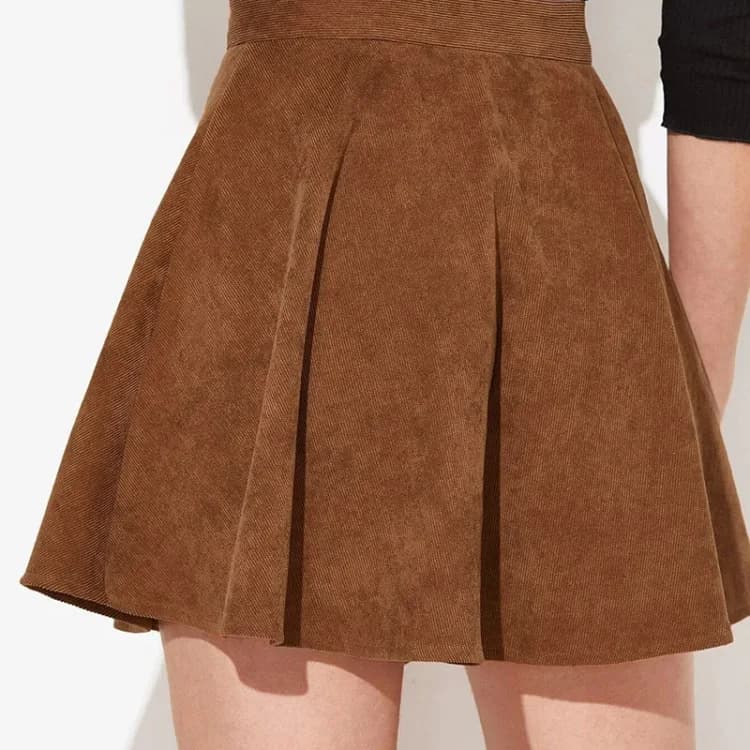
Mini cuts present a distinct styling challenge in forest-inspired wardrobes, where heavy textures and layered bulk are common. If you wear a short skirt with a tight, bare top and minimal shoes, the earthy aesthetic can feel lost. To retain that grounded woodland character, mini cuts require deliberate volume, texture, and clever shoe choices.
Browsing goblincore mini skirts highlights pieces that can be styled year-round with the right layeringWearing pieces over or under one another to add depth, warmth or contrast. formulas. When the temperature drops, pairing a short hem with thick wool-blend tights and knee-high lace-up boots provides excellent warmth while balancing the short hemline. The tall boots visually shorten the exposed leg space, creating a dense, adventurous look suited for outdoors.
On top, lean into relaxed proportions. A dropped-shoulder knit sweater that finishes an inch above the skirt hem allows just enough fabric to peek out beneath, creating a cozy layered look. Alternatively, tucking a loose utility shirt into the mini skirt and adding suspenders brings vintage workwear character that feels entirely at home in casual settings.
- Balance short hemlines with knee-high boots or tall layered socks.
- Pair mini skirts with relaxed, dropped-shoulder knits for a cozy silhouetteThe overall shape an outfit creates, from fitted to loose and layered..
- Add suspenders or utility belts to bring workwear detail to short cuts.
Common Outfit Imbalances and Practical Fixes
Even well-chosen pieces can occasionally look off when combined. A frequent mistake is pairing an oversized, tunic-length top with a full, voluminous midi skirt without defining the waist. This combination creates a wide, shapeless silhouetteThe overall shape an outfit creates, from fitted to loose and layered. that obscures your natural frame. To fix this, simply use a French tuck to anchor the front of the top into the waistband, immediately restoring your proportions.
Another common problem is shoe-hemline crowding. When the top of a boot shaft hits the exact same level as a midi skirt hem, the two fabrics fight for space, causing the skirt to catch or fold awkwardly over the boot collar. To resolve this, choose boots that are either tall enough to disappear cleanly underneath the skirt hem, or low enough to leave at least two to three inches of visible leg or tight fabric.
Finally, watch out for competing focal points. If you wear a skirt with heavy patchwork, intricate lace, and bright embroidery, pairing it with a complex patterned top and embellished boots can feel overwhelming. Select one hero piece per outfit—if the skirt carries intense detail, let your top and footwear remain textured but neutral in pattern to give that piece space to breathe.
- French-tuck tunic tops when wearing full skirts to restore torso definition.
- Ensure boot collars either sit well below the hem or disappear fully underneath.
- Allow heavily detailed skirts to shine by pairing them with subtle, textured tops.

Quick Outfit Formulation Checklist
Before heading out the door, running through a fast checklist ensures your skirt outfit is balanced, comfortable, and functional for your day. Taking thirty seconds to assess your proportions in a mirror can highlight small adjustments—like loosening a tuck or adding a textured sock cuff—that transform a good outfit into a great one.
First, check your waistband positioning and top interaction. Does the hem of your top sit comfortably without bunching or twisting across your skirt band? If your top is tucked, ensure there is enough slack for you to sit, bend, and move naturally without pulling the skirt out of place. If it is untucked, confirm that your silhouetteThe overall shape an outfit creates, from fitted to loose and layered. maintains a clear balance of proportions rather than cutting you in half.
Next, evaluate your footwear and legwear transition. Walk a few steps to verify that your skirt hem does not cling or catch on your boot hardware, buckles, or sock cuffs. Finally, assess your temperature flexibility: ensure you have a removable layer that works with the outfit whether worn open, buttoned up, or tied around your waist.
- Confirm your top allows full freedom of movement without twisting the waistband.
- Check that skirt hemlines move freely over boot hardware without catching.
- Verify that layered outerwear complements the skirt length when worn open or closed.
- Ensure sock or tight transitions provide smooth visual balance at the ankle.