Created by the Kawaii Vibe editorial team. Our named style desks are editorial personas. Product details and availability can change.
Choosing accessories for a vintage-inspired wardrobe can quickly become overwhelming when every piece carries charm, texture, and character. When you want to capture the gentle charm of this aesthetic without looking like you stepped out in costume, the clearest styling path is to pick a single hero accessory first. Once you commit to that one focal point, everything else falls naturally into a supporting role, giving your outfit breathing room and purpose.
This guide bypasses general aesthetic definitions and focuses strictly on answering how to build balanced, functional outfits anchored by intentional pieces. Whether your starting point is a detailed shoulder tote, a pair of textured leg coverings, or an embroidered layer, you will learn how to anchor your silhouetteThe overall shape an outfit creates, from fitted to loose and layered., regulate proportions, and curate complementary accents across different weather conditions.
1. The One-Anchor Rule: Defining Your Hero Item
The fastest way to avoid a cluttered look is committing to a primary visual anchor before adding secondary layers. A focal point in an outfit demands attention either through rich texture, contrast, distinct pattern, or central placement. When you decide whether your bag, your neckwear, your legwear, or your headwear takes center stage, your remaining choices become easy eliminations rather than complicated guesses.
Start by looking through your collection of Grandmacore Accessories and identifying which item carries the most character. If you select a tapestry bag with intricate stitching, that bag is your undisputed hero. Piling on embroidered collars, patterned hair scarves, and statement jewelry on top of that bag creates competition for the eye. Keeping supporting pieces minimal allows the craftsmanship and character of your chosen anchor to shine clearly.
Personal styling works best when you set visual boundaries. A good guideline is to assign points to your outfit pieces: give your anchor three points, and allow yourself only two additional one-point items, such as a plain ring or quiet socks. This framework prevents unintended clutter and ensures your silhouetteThe overall shape an outfit creates, from fitted to loose and layered. feels curated, intentional, and comfortable for daily wear.
- Identify the strongest visual element: texture, bold embroidery, or high-contrast color.
- Assign that item as your anchor and keep surrounding items visually quiet.
- Limit contrasting accents to two smaller supporting pieces to maintain balance.
2. Anchoring with Statement Legwear
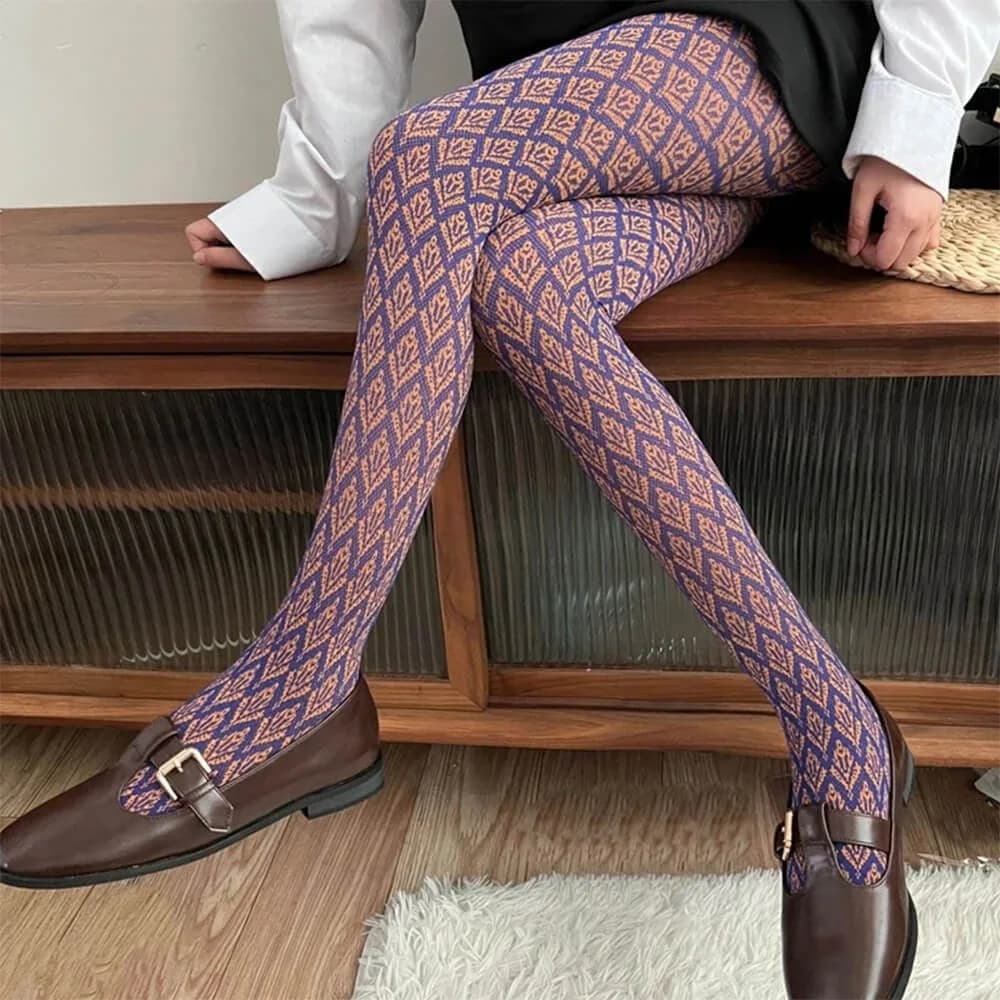
Legwear can easily serve as the main focal point of a grandmacore outfit, particularly when you pair textured or saturated tights with simple skirts and dresses. Choosing expressive legwear allows you to ground your look while keeping your torso and upper body lightweight and streamlined, which is especially useful during transitional seasons.
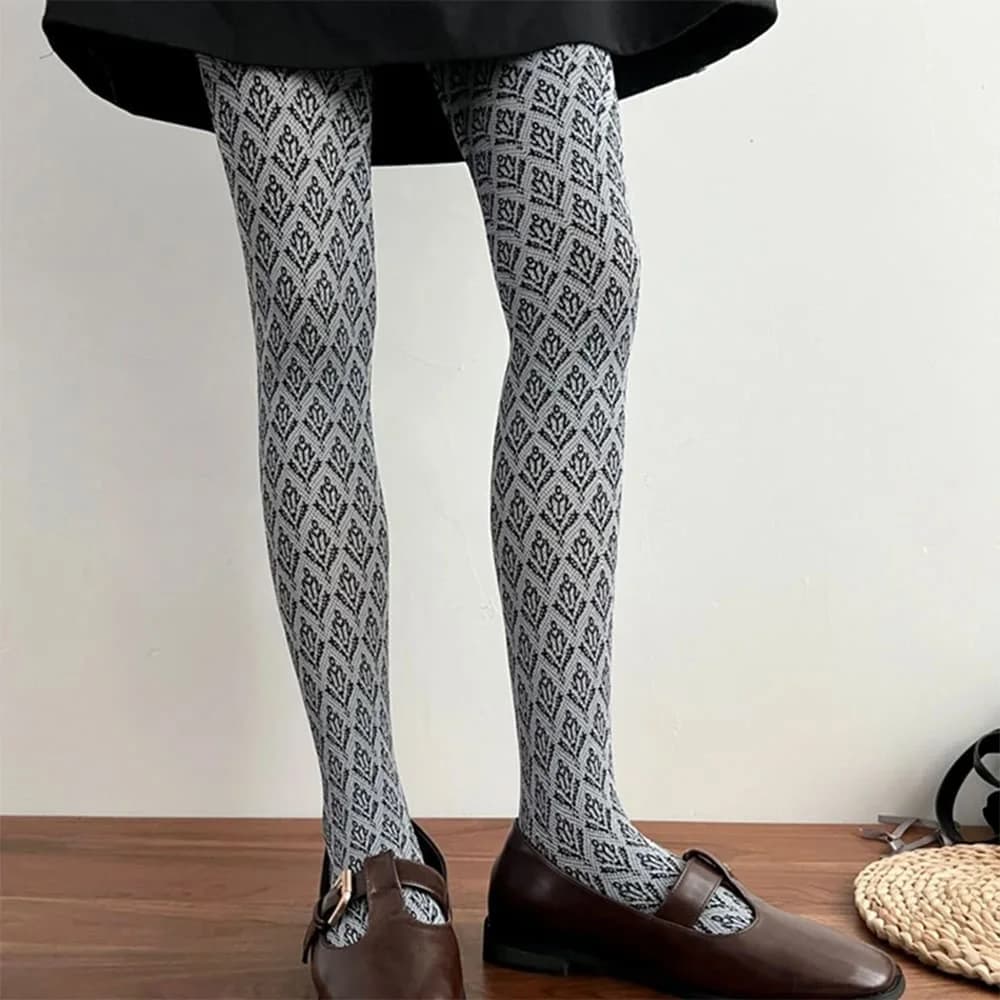
For example, our Grandmacore Aesthetic Tights come in nylon with color options like Purple, Purple/orange, Brown, Blue, White, Dark Grey, and Light Grey in a Standart size. If you pick a vibrant option like Purple/orange or rich Blue, those tights become your undisputed centerpiece. The best way to balance such a distinctive tone is to keep your footwear matte and neutral, using simple loafers or worn-in lace-up boots in dark brown or black.
When your tights carry the visual weight, avoid pairing them with patterned skirts that clash in scale. Instead, frame your legwear with solid neutral hems—such as unbleached linen, chocolate corduroy, or washed denim—so the eye registers the color or weave of your legs without sensory overload.
- Pick tights in distinct shades like Purple/orange or rich Blue as your outfit's base.
- Anchor bright legwear with solid, matte leather or canvas footwear.
- Keep skirt and hem hemlines simple and unpatterned to avoid pattern competition.

3. Framing the Upper Body with Cardigans and Collars
When you want your upper body to carry the main accent, structured knitwear or detailed shirt collars offer natural visual anchors. LayeringWearing pieces over or under one another to add depth, warmth or contrast. allows you to control how much pattern is visible at any given moment, making it adaptable for indoor and outdoor temperature shifts throughout the day.
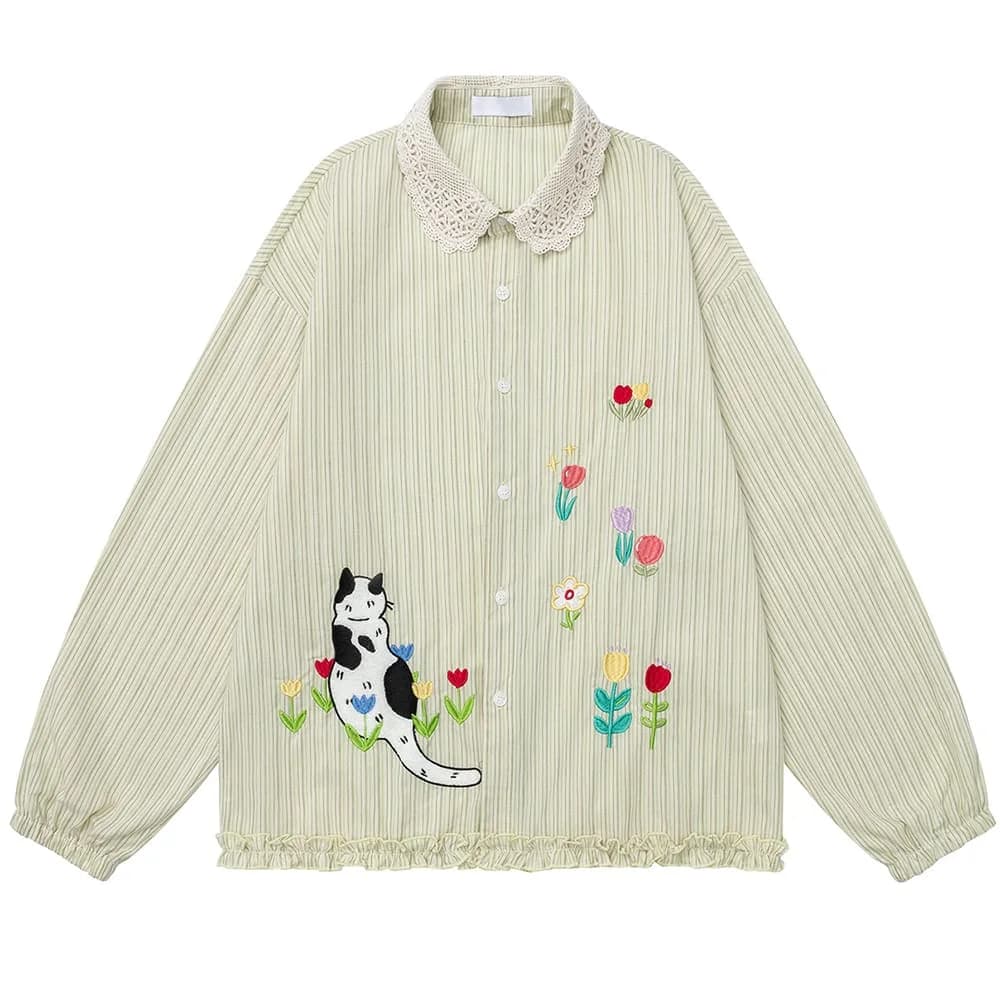
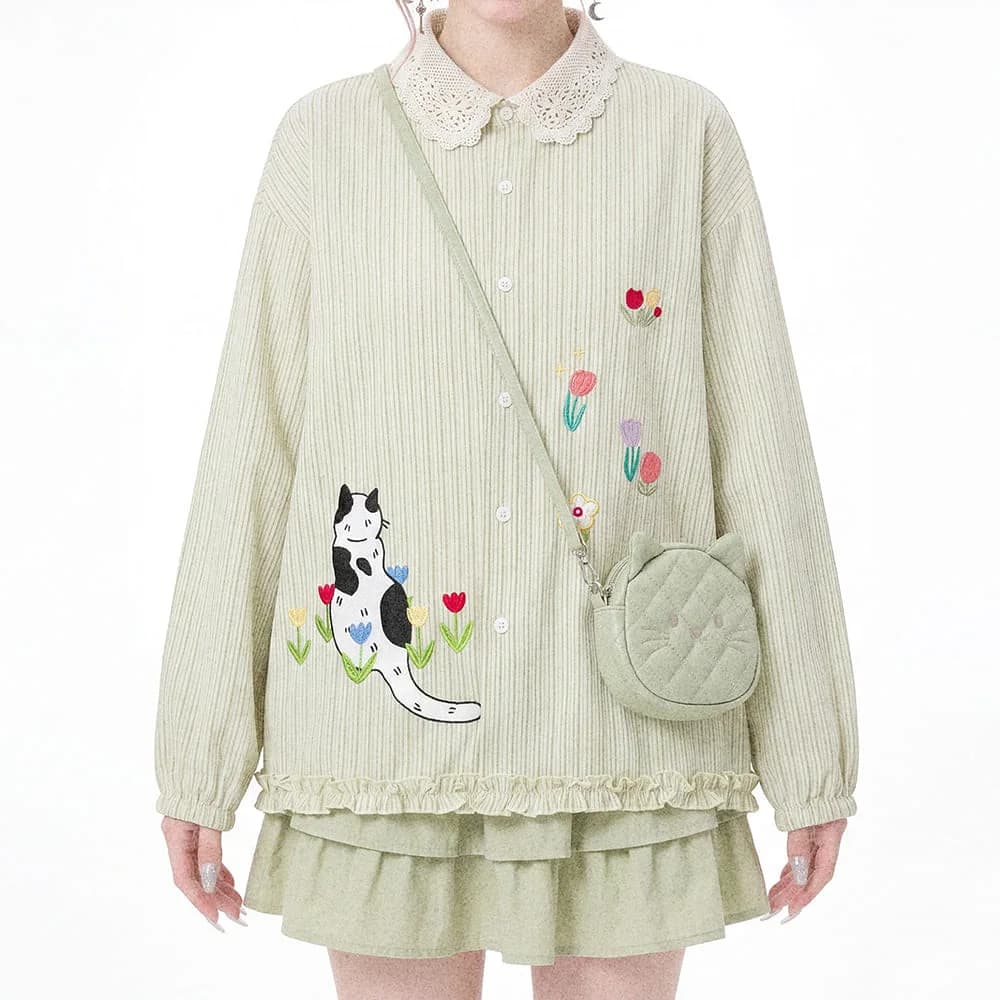
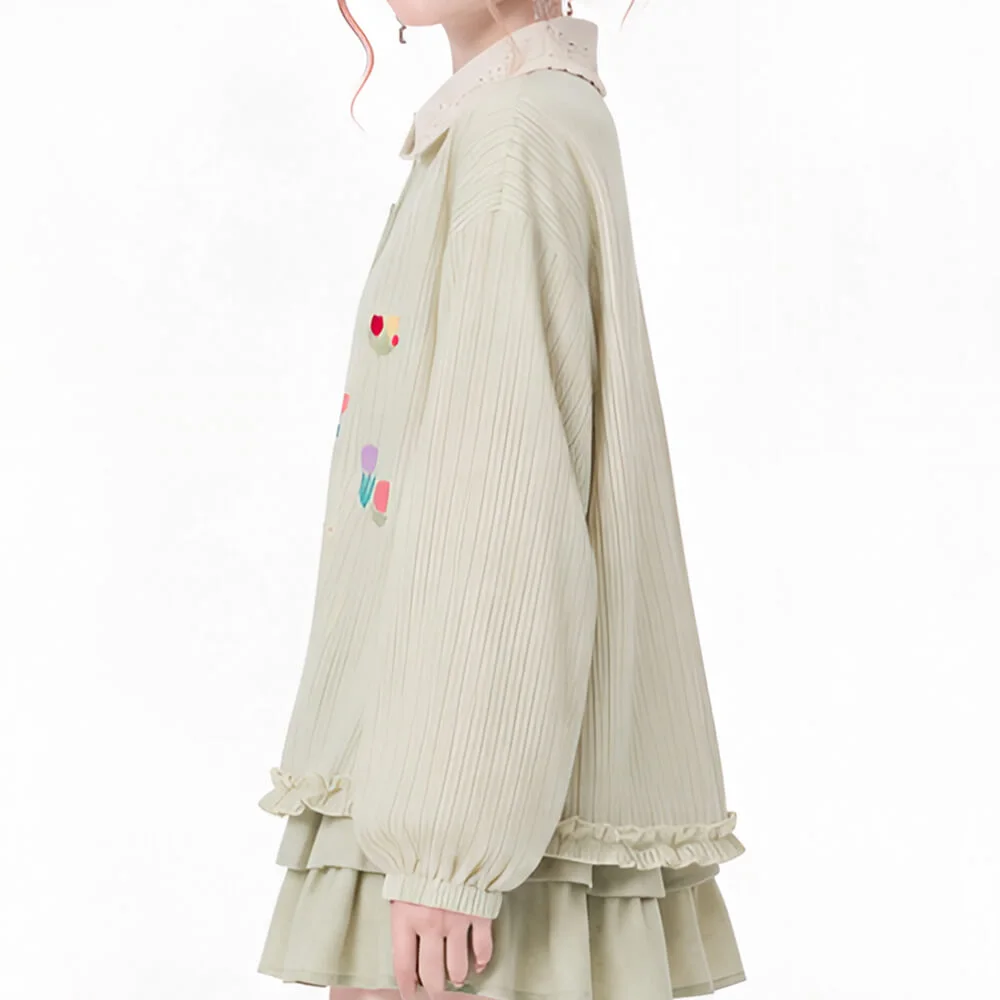
If you prefer subtle, sweet detailing, consider the Green Cottagecore Cat & Flower Embroidery Shirt. Made from a cotton and polyester blend in sizes S through XL, its green tone and chest embroidery serve as an intentional focal point when worn under an unadorned vest or simple cardigan. Because the embroidery sits close to the collarbone, it draws the gaze upward toward your face.
To maintain balance when the shirt collar is your anchor, minimize jewelry around your neck. Skip bulky scarves and heavy necklaces; instead, pair the shirt with plain silver or antique-brass studs. This technique lets the thread work stand out cleanly while the rest of your garments provide a cozy, cohesive backdrop.
- Use an embroidered shirt collar to lift the focal point toward your neckline.
- Pair detailed collars with plain V-neck or crewneck knits to frame the embroidery.
- Avoid competing necklaces when your top already features detailed collar embroidery.
4. Choosing Knitwear as Your Focal Piece
Cozy knitwear is a pillar of vintage-inspired dressing, but an oversized, patterned cardigan will easily dominate your silhouetteThe overall shape an outfit creates, from fitted to loose and layered.. When a cardigan serves as your focal piece, your accessories should play a purely secondary, supportive role rather than competing for dominance.
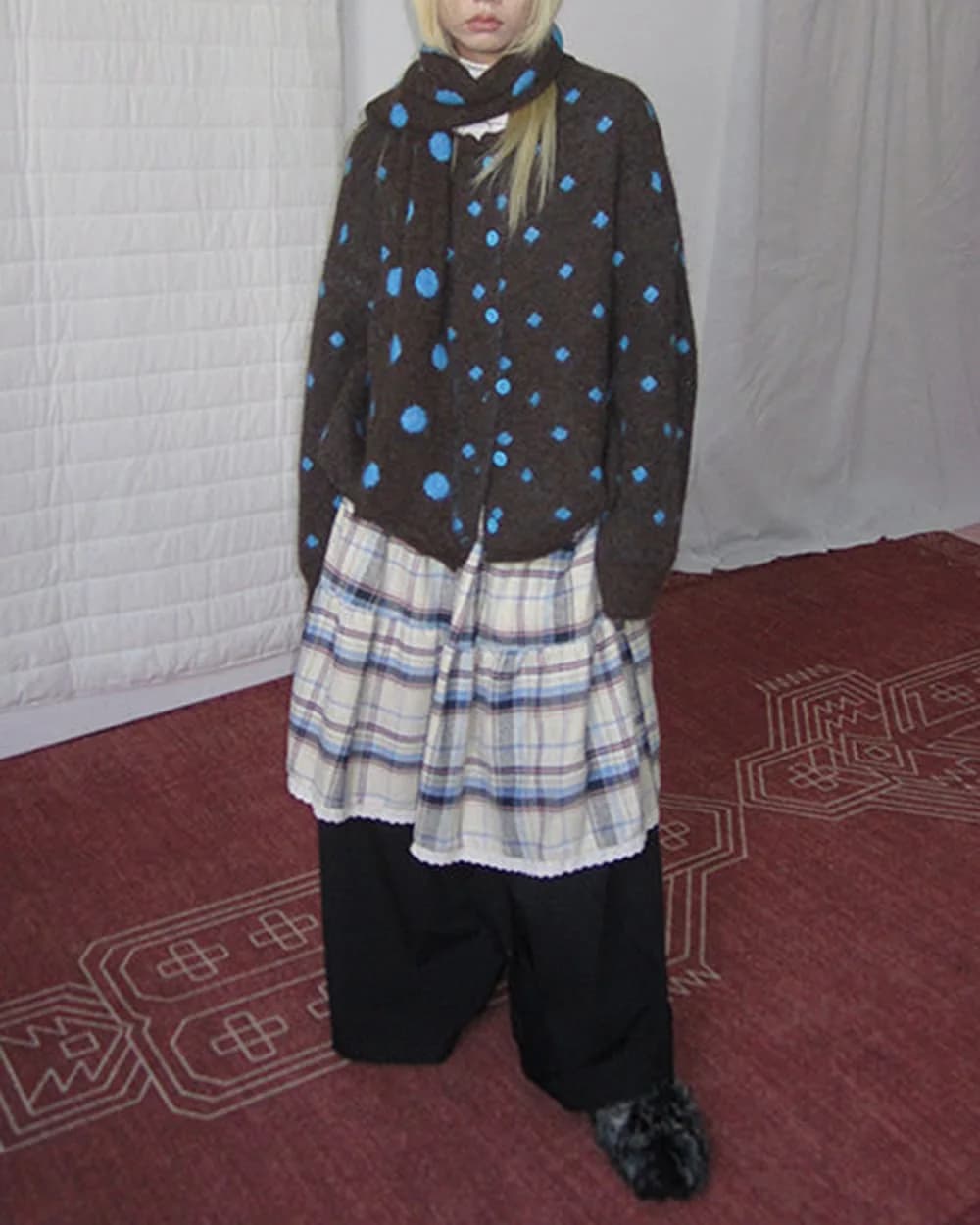
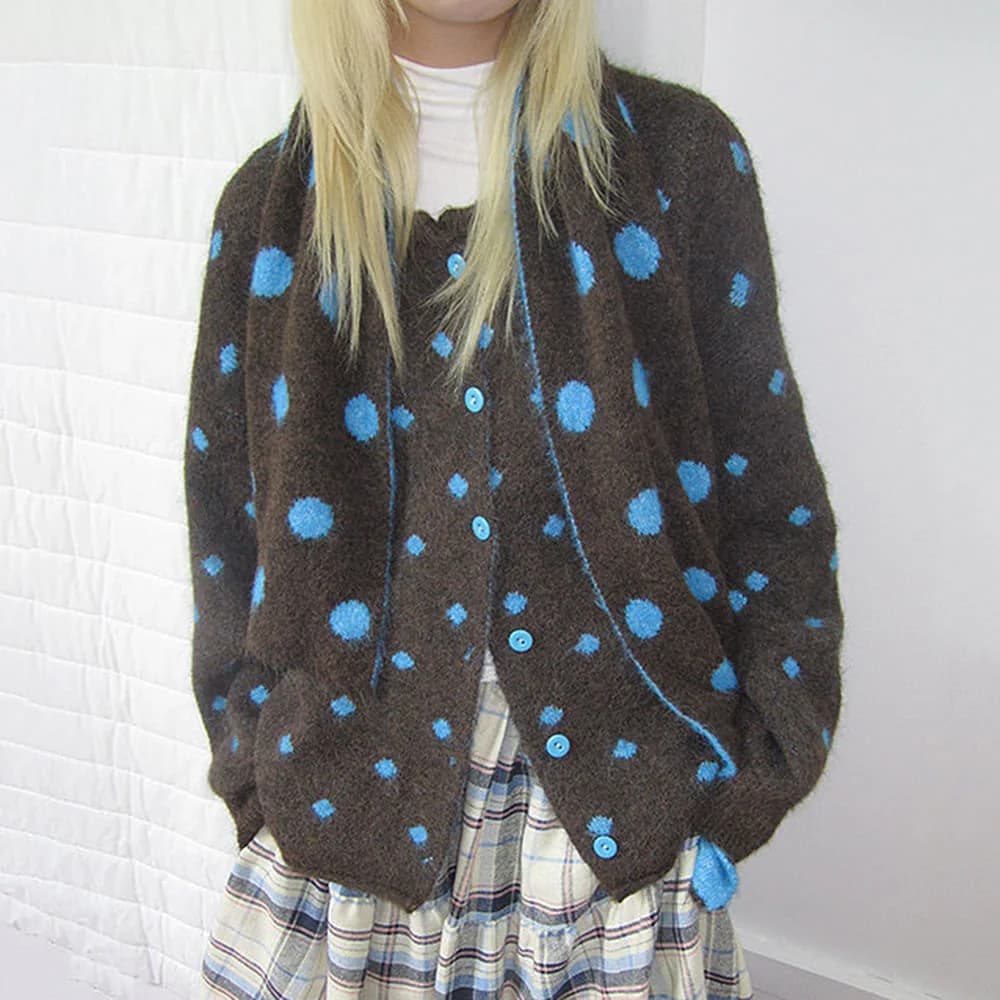
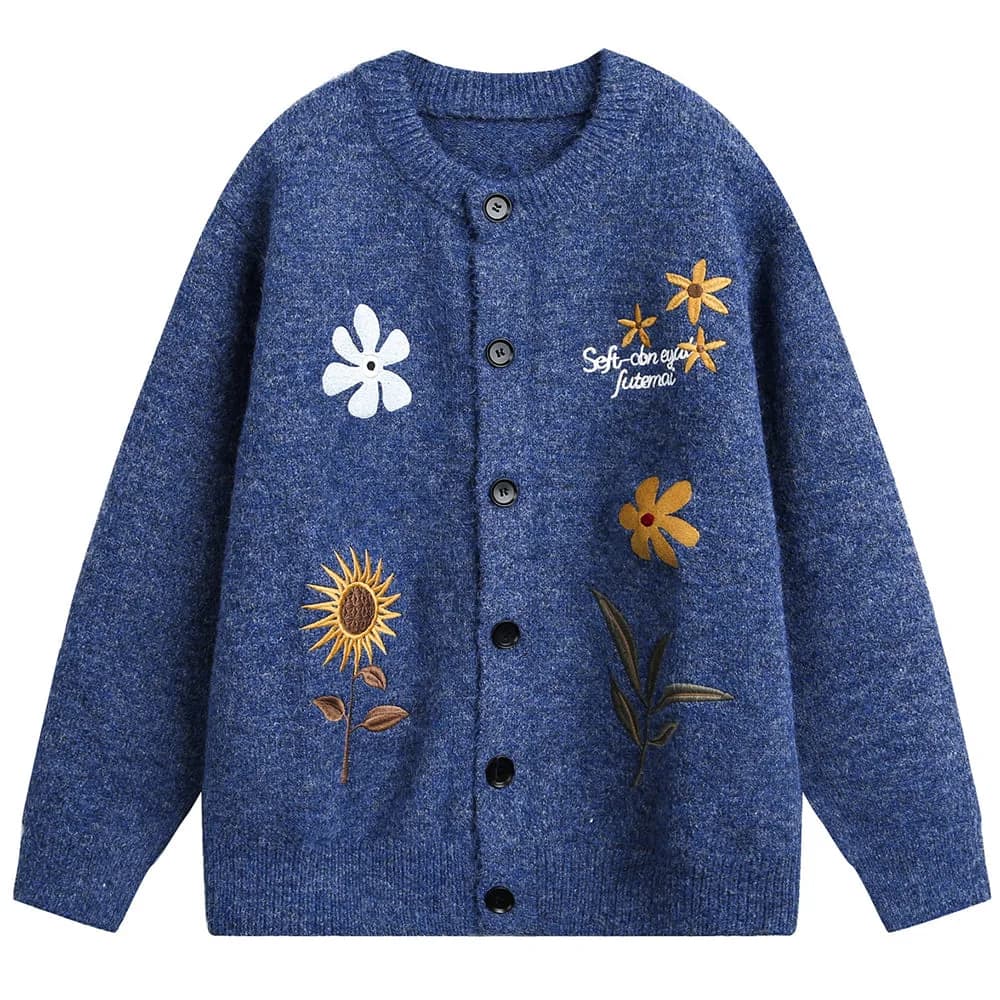
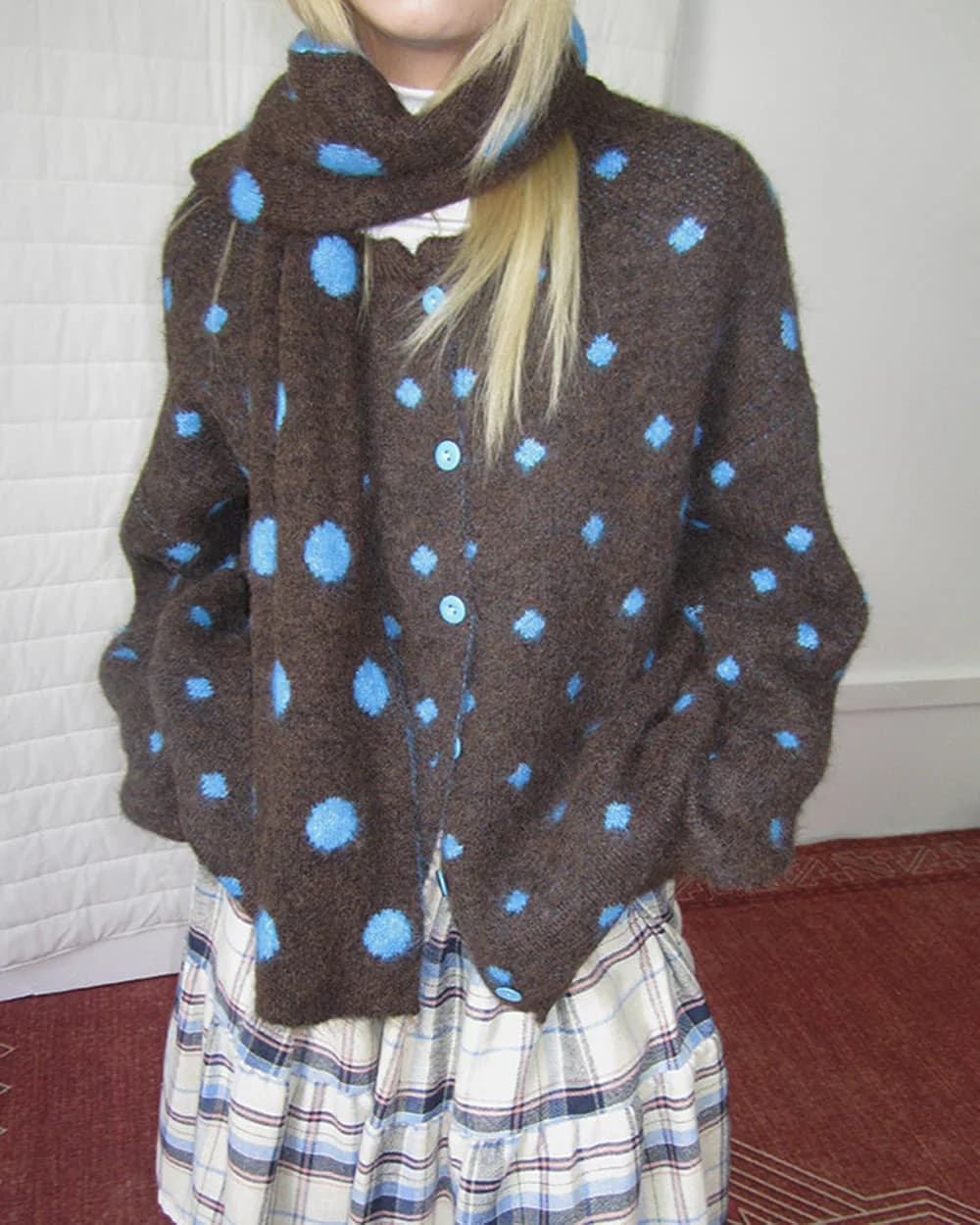
Consider a design like the Coffee Break Polka Dot Cardigan, crafted from polyester in a rich Brown Free Size cut. Its pattern and relaxed drape make it an instant hero piece. In contrast, the Cottagecore Embroidery Knit Cardigan, made of acrylic and available in Blue, Grey, and White across sizes M to XXL, provides an entirely different focal energy with floral accents along the knit.
When styling knitwear like the Apple Embroidery Grey Cardigan (acrylic, sizes M to XL) or the patterned Lemon Chalet Pattern Cardigan (acrylic in Blue/yellow, sizes M to XL), avoid carrying patterned canvas bags or wearing bold printed scarves. Pair these lively knits with simple bottoms from our broader collection of Grandmacore Clothes to let the stitchery and motifs remain the star of the outfit.
- Let textured or embroidered cardigans serve as your primary outer layer anchor.
- Select smooth, untextured basics underneath to keep the knit pattern prominent.
- Pair prominent knits with quiet, unadorned accessories like simple leather satchels.
5. Grounding Outfits with Everyday Footwear and Socks
Focusing your styling on feet and ankles is a classic way to add personality without feeling overdressed. Visible socks peeking out above shoe collars create a gentle, grounded rhythm that works well for casual daily routines, walking, or relaxed study sessions.
Our dedicated range of Grandmacore Socks provides plenty of choices, from ribbed neutrals to subtle floral knits. If you choose socks with visible lace trims, cable knits, or earthy tones, treat that ankle section as your primary styling area. Keep your hemline cropped just enough—roughly two to three inches above the shoe collar—so the socks are visible without dragging or bunching awkwardly.
To prevent the lower half of your body from looking heavy, match the tone of your shoes to an undertone found in your socks. If your socks feature cream and ochre tones, light brown oxfords or neutral trainers complement them seamlessly. This thoughtful coordination creates a continuous visual line down your legs while keeping your accessory focus intact.
- Choose textured or patterned socks as your casual, low-key focal point.
- Ensure pants or skirts fall slightly above the shoe collar to display the sock texture cleanly.
- Coordinate footwear colors with secondary threads inside the sock knit.
6. Selecting Bags That Carry the Story
Bags are one of the most practical everyday items, making them a natural choice for an outfit anchor. Because a bag moves with you and rests against your hip or forearm, it sits right at the visual center of your posture and immediately influences how your outfit reads.
Explore our curated Grandmacore Bags to find styles ranging from canvas totes with botanical screen prints to structured faux-leather satchels and tapestry purses. If you choose an intricately embroidered tapestry tote as your anchor, treat your remaining pieces as quiet frames. Pair it with a plain monochrome coat or an unpatterned corduroy pinafore.
The pitfall here is overloading your carryall with excess charms, keychains, and scarves when the bag itself is already ornate. If the bag features detailed fabric, keep the hardware and handles uncluttered. Let the silhouetteThe overall shape an outfit creates, from fitted to loose and layered., texture, and pattern of the bag do all the talking as you navigate your day.
- Select a distinct tapestry, canvas, or structured satchel as your mobile focal point.
- Rest the bag against a neutral garment layer so the pattern reads clearly.
- Avoid clipping excessive trinkets onto an already patterned or textured bag.
7. Tech Accessories: Subtle Charm for Modern Life
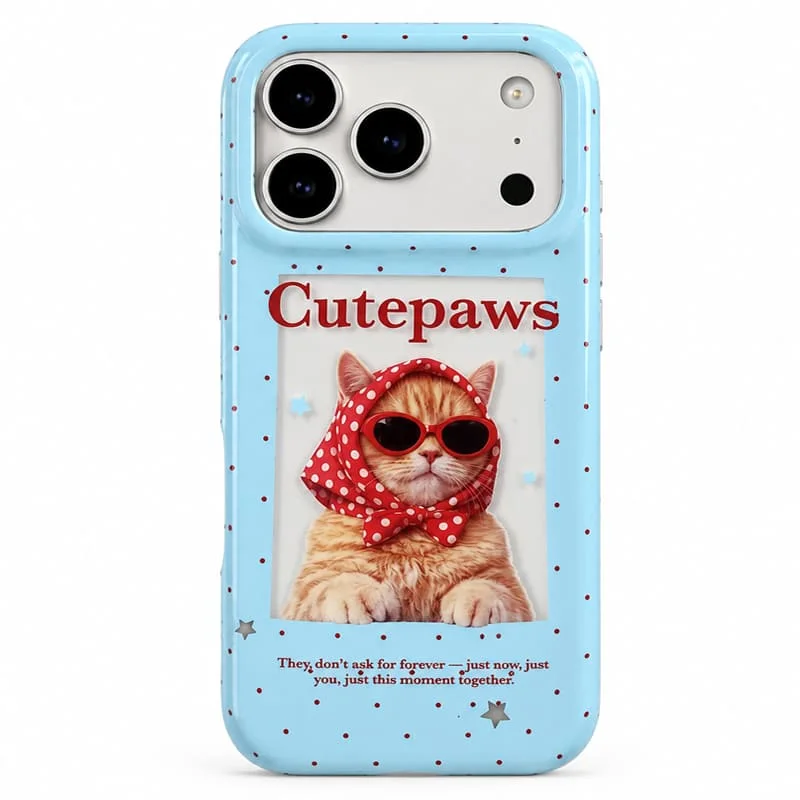
Modern living requires everyday tech, but sleek, clinical smartphones can sometimes clash with a cozy, handcrafted look. You can turn your daily tech into a charming styling element simply by selecting a phone case with vintage botanical or retro illustration themes.
By browsing our Grandmacore Phone Cases, you can find cases that blend technology with nostalgic charm. A case featuring soft wildflowers, garden creatures, or pressed-petal art functions like a mini pocket accessory that ties your overall aesthetic together whenever your phone rests on a desk or cafe table.
Because a phone case is small and portable, it works exceptionally well as a secondary accessory rather than a heavy anchor. Alternatively, on minimal days when you wear a plain sweater and denim, a botanical phone case can serve as your single, delightful pop of personality without any fuss.
- Use a themed phone case to soften the modern appearance of your digital devices.
- Coordinate the case palette with your primary outfit tone for cohesive daily carry.
- Rely on your phone case as a minimal accent on casual, no-accessory days.
8. Balancing Printed Bottoms with Understated Accents
A patterned skirt or pair of trousers alters how you must approach accessorizing. When your lower half commands immediate visual interest, your accessories need to harmonize with the garment rather than introducing competing narratives.
For instance, the Black White Polka Dot Gingham Maxi Skirt, made from lightweight polyester in a Grey option (sizes S through XXL), introduces structured geometric rhythm to your outfit. Because the skirt features an all-over print, treating an accessory as a second loud pattern creates visual discord.
Instead, anchor the skirt with understated accents: a smooth leather belt with an antiqued buckle, plain knit socks, and a solid tote. If you wish to incorporate our Grandmacore Aesthetic Tights beneath a maxi skirt like this, select subtle tones like Dark Grey, Light Grey, or Brown. This provides gentle color support that peeks through as you walk without disrupting the skirt's print.
- Treat all-over printed skirts as the primary outfit driver.
- Select solid, monochrome accessories that echo one tone from the skirt's pattern.
- Use neutral tights under long hems for subtle, peek-a-boo depth.
9. Proportions, Scale, and Visual Weight
Achieving harmony in vintage-inspired dressing often comes down to managing visual scale. Pairing very small, delicate accessories with heavy, chunky clothing causes the accessories to get lost. Conversely, massive accessories can easily overwhelm lightweight, breezy fabrics.
If you are wearing an expansive layer like our Oversized Cat Print Jacket (polyester, Brown, sizes M to XL), a tiny, dainty hair ribbon will disappear against the roomy silhouetteThe overall shape an outfit creates, from fitted to loose and layered.. An oversized jacket calls for accessories with matching presence—such as a substantial cross-body bag, thick ribbed socks, or a medium-gauge knitted scarf.
Conversely, when styling a fine-knit blouse or a lightweight cotton dress, pair it with smaller, lighter accents. Delicate wire-rim glasses, a slender leather watch band, or a simple fabric hair scrunchie will harmonize far better than bulky, heavy winter hardware.
- Match the physical visual weight of your accessories to the weight of your clothing.
- Balance oversized outerwear with structured bags and thicker sock knits.
- Reserve delicate jewelry and lightweight ribbons for fine fabrics and fitted tops.
10. Color Harmony: Analogous vs. High Contrast
Choosing how colors interact between your anchor piece and supporting accessories is key to creating a cohesive outfit. You generally have two styling paths: an analogous approach, which uses neighboring tones on the color wheel, or a high-contrast approach, which creates distinct visual boundaries.
An analogous palette feels calm, gentle, and cohesive. If your focal piece is a forest green cardigan, you might style it with sage socks, an olive canvas bag, and warm cream layers underneath. This approach keeps the outfit relaxed and soft, allowing subtle differences in texture to provide visual depth without high-energy color clashes.
A high-contrast approach, on the other hand, directs clear attention to your anchor. Wearing an all-cream or oatmeal base outfit paired with our Grandmacore Aesthetic Tights in Purple instantly establishes the tights as the focal point. To make high contrast work, ensure your neutral base remains completely plain so the contrasting shade does not compete with other loud elements.
- Use analogous, tone-on-tone shades for an easygoing, naturally blended aesthetic.
- Employ high contrast only when you want one standalone piece to dominate visually.
- Ground contrasting accents with neutral foundational garments like cream, taupe, or grey.
11. Weather Adaptability: Layering for Warm and Cool Climates
Accessories must function comfortably across varied climates. Whether you are navigating a wet autumn afternoon or a warm, sunny spring morning, your accessory choices should enhance your comfort rather than just decorate your outfit.
In cool or damp conditions, prioritize functional warmth. Combine thick acrylic knits like the Cottagecore Embroidery Knit Cardigan with opaque tights, sturdy boots, and a roomy tote that can stow an extra layer if temperatures shift. The texture of wool-blend or knit accessories adds tactile charm that naturally suits cold-weather layeringWearing pieces over or under one another to add depth, warmth or contrast..
For warm or temperate days, pivot to breathable, lightweight accents. Swap thick tights for breathable ankle socks, and exchange heavy satchels for unlined cotton bags. You can still showcase personality through smaller, sweat-friendly accents like wooden hair clips, vintage-style watches, or an embroidered cotton shirt worn open over a breezy camisole.
- Rely on textured knitwear, dense tights, and closed boots during colder seasons.
- Transition to lightweight canvas totes and breathable ankle socks in warm weather.
- Choose functional accessories that make adjusting to changing temperatures seamless.
12. Curating Hardware and Metallic Finishes
Metal hardware is an often-overlooked detail that can either unify or disrupt your accessory arrangement. Buckles, zippers, bag clasps, and jewelry all carry a metallic finish that should feel intentional within your overall look.
In grandmacore styling, antiqued finishes generally feel far more organic than high-shine, modern chrome. Look for accessories featuring brushed brass, antique bronze, matte copper, or oxidized silver. These softer finishes carry a gentle, lived-in quality that complements vintage textiles, corduroy, and knitwear.
While you do not need all your metals to match perfectly, keeping their tones within the same warmth spectrum helps create visual flow. If your bag features warm brass grommets, lean into amber, tortoiseshell, or antique gold hair pins and rings. This subtle alignment ties disparate pieces together quietly.
- Prioritize antique bronze, brushed brass, and oxidized silver over ultra-glossy chrome.
- Keep hardware tones within similar warm or cool temperature families.
- Let gentle metal finishes complement your knitwear rather than commanding attention.
13. Styling Pitfalls: Avoiding the Costumey Look
One common challenge when styling vintage-inspired aesthetics is avoiding a costume-like appearance. This usually happens when an outfit features too many literal vintage tropes at once—such as floral prints, wire-rimmed glasses, lace trims, knitted shawls, and tapestry bags all piled on together.
To keep your outfit contemporary, wearable, and grounded, pair vintage-inspired pieces with modern wardrobe staples. If you wear an ornate piece like the Lemon Chalet Pattern Cardigan, balance it with straightforward, clean-cut modern jeans and classic trainers. This creates an appealing contrast between nostalgic charm and everyday ease.
Another common misstep is neglecting fit and fabric drape. Nostalgic garments should feel comfortable and relaxed, not stiff, ill-fitting, or restrictive. Make sure your layers allow for full range of motion, and avoid layeringWearing pieces over or under one another to add depth, warmth or contrast. heavy accessory pieces that tug on delicate shirt fabrics or pull collar lines out of shape.
- Balance vintage-inspired statement pieces with clean, contemporary wardrobe basics.
- Avoid stacking more than two overtly nostalgic items in a single daily look.
- Ensure clothing drape remains natural and comfortable without heavy accessories weighing it down.
14. The Practical Edit: Your Pre-Walkout Checklist
Before you head out the door, take thirty seconds to review your accessory choices in a full-length mirror. A quick, objective evaluation ensures your focal piece stands out while your supporting layers remain functional and balanced.
Begin by checking your silhouetteThe overall shape an outfit creates, from fitted to loose and layered. from top to bottom. Can you instantly name the single focal point of your outfit? If your eye bounces erratically between your hat, your bag, your patterned tights, and a bright cardigan, remove one or two items until the visual hierarchy feels calm and intentional.
Finally, double-check your physical comfort and mobility. Make sure your bag sits securely without sliding off your shoulder, your socks stay up comfortably inside your footwear, and your chosen layers suit the day's weather. A well-edited outfit looks effortless precisely because it is practical to wear throughout your entire routine.
- Verify that one primary focal point is instantly identifiable in the mirror.
- Remove any competing accessory that clutters your overall visual balance.
- Confirm all pieces are physically comfortable, weather-appropriate, and secure for movement.