Created by the Kawaii Vibe editorial team. Our named style desks are editorial personas. Product details and availability can change.
Wearing grandmacore cardigans comes down to managing volume, texture, and neckline geometry. Rather than simply throwing a heavy knit over a basic tee, an intentional vintage-inspired look uses precise button placement, contrasting collar shapes, and structured bottom layers. Whether you are dealing with a thick novelty embroidery piece or a relaxed drop-shoulder knit, the way you fasten and layer your cardigan determines whether your outfit looks thoughtful or swallowed by fabric.
This guide bypasses vague aesthetic definitions to answer everyday styling and shopping questions directly. We break down the mechanical balance of high versus low buttoning, how to match hem lengths to skirts or trousers, and ways to layer collars without awkward bunching. You will find specific formulas showing how to integrate pieces like embroidered knits, pleated bottoms, and woven tops across varying temperatures.
Use these techniques to compare knitwear weights, assess sleeve cuts, and curate your wardrobe without guessing how a heavy knit will behave over your existing shirts.
The Mechanics of Buttoning: High, Middle, and Low Placements
The way you fasten a cardigan reshapes your entire silhouetteThe overall shape an outfit creates, from fitted to loose and layered.. When you button every single closure from collar to waistband, you create a flat, boxy column that reads very traditional and modest. While this can look charming with a Peter Pan collar peeking out, it can also compress your torso visually. If you want a more dynamic shape, buttoning only the center one or two closures allows the hem to flare outward into an inverted V.
Leaving the top two buttons undone creates a natural V-neckline that elongates the neck and gives breathing room to collared shirts, turtlenecks, or pendant necklaces. Conversely, buttoning only the very top button and letting the rest hang loose creates a cape-like silhouetteThe overall shape an outfit creates, from fitted to loose and layered.. This works especially well over flared midi dresses or wide-leg corduroy pants, as the cardigan frames your outfit without adding bulk across the stomach. When styling pieces from our wider Grandmacore Clothes selection, testing these three button variations in the mirror will quickly show you which closure height complements your frame.
This inverted V mimics the drape of an A-line skirt and immediately reveals your waistband, preventing heavy wool or acrylic from burying your natural waistline.
- All buttons fastened: Produces a structured, straight-cut vintage look best suited for slim trousers.
- Middle buttons only: Creates an inverted V at the hem to highlight your waist and match flared skirts.
- Top button only: Delivers a swing-coat drape that accommodates fuller gathered skirts without crushing fabric.
Balancing Chunky Knits Against Structured Bottoms
A common issue with grandmacore knitwear is silhouetteThe overall shape an outfit creates, from fitted to loose and layered. collapse, which happens when a voluminous, slouchy knit is paired with equally shapeless, soft bottoms. Heavy ribbing and novelty yarn need visual resistance. Pairing a thick cardigan with structured woven garments—such as rigid cotton drill, twill, or corduroy—anchors the knit and gives the outfit architectural definition. Tailored trousers with front pleats or a high-rise waistband create a clean contrast against the soft, irregular texture of hand-knit or cable-stitch patterns.
If you are browsing our Grandmacore Pants range, look for straight-leg or gently tapered cuts that hold their own line beneath an oversized knit. Tucking a thin base layer into structured trousers and wearing the knit open at the front preserves leg length while giving you all the comfort of an oversized piece. Avoid matching heavily brushed, loose cardigans with floppy, thin loungewear fabrics unless you plan to define your waist with a stiff leather belt or structural apron.
- Pair cable or novelty knits with stiff cotton twill, corduroy, or heavy wool pants.
- Tuck your under-layer to show a clear waistband, offsetting slouchy drop-shoulder seams.
- Avoid clingy jersey bottoms that collapse under the visual and physical weight of heavy knits.
Layering Collars: Peter Pan, Pointed, and Ruffle Dynamics
The interaction between your cardigan’s neckline and the collar of your base shirt sets the tone for your upper body. Round-neck cardigans look best when layered over flat, rounded Peter Pan collars that can rest flat across the knit's ribbed collar band. If you are wearing a V-neck cardigan, broad pointed collars or high pie-crust ruffles fill the open triangular chest space effectively, preventing the bare-neck look that can sometimes feel mismatched with heavy yarn.
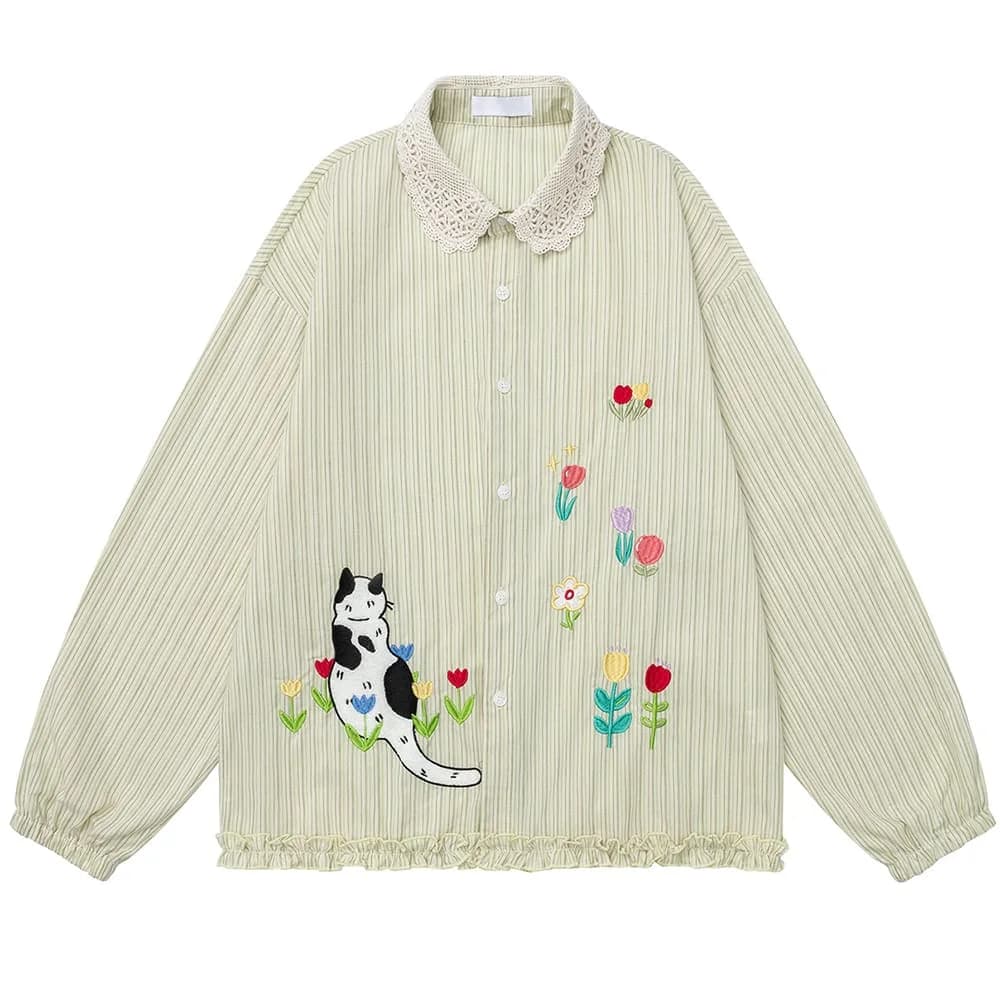
A great option for collar layeringWearing pieces over or under one another to add depth, warmth or contrast. is the Green Cottagecore Cat & Flower Embroidery Shirt, constructed from a cotton and polyester blend. Its pointed embroidered collar can be pulled out over the neckline of a plain or lightly textured cardigan, instantly anchoring an animal or botanical theme without adding excessive bulk around the chest. When layeringWearing pieces over or under one another to add depth, warmth or contrast., always pull the collar points cleanly outside the knit rather than letting them crumple half-inside the neckline, which disrupts the tidy vintage look.
Managing Cardigan Length with Maxi and Midi Skirts
Pairing cardigans with skirts requires careful attention to hemline proportions. A longline cardigan that hits past the mid-thigh can visually drag down a maxi skirt, making the wearer look shorter than they are. As a standard styling rule, pair cropped or waist-length cardigans with midis and maxis. When the knit stops at the natural waist or just above the hips, it leaves the entire flowing length of the skirt unobstructed, producing an elongated, balanced column.
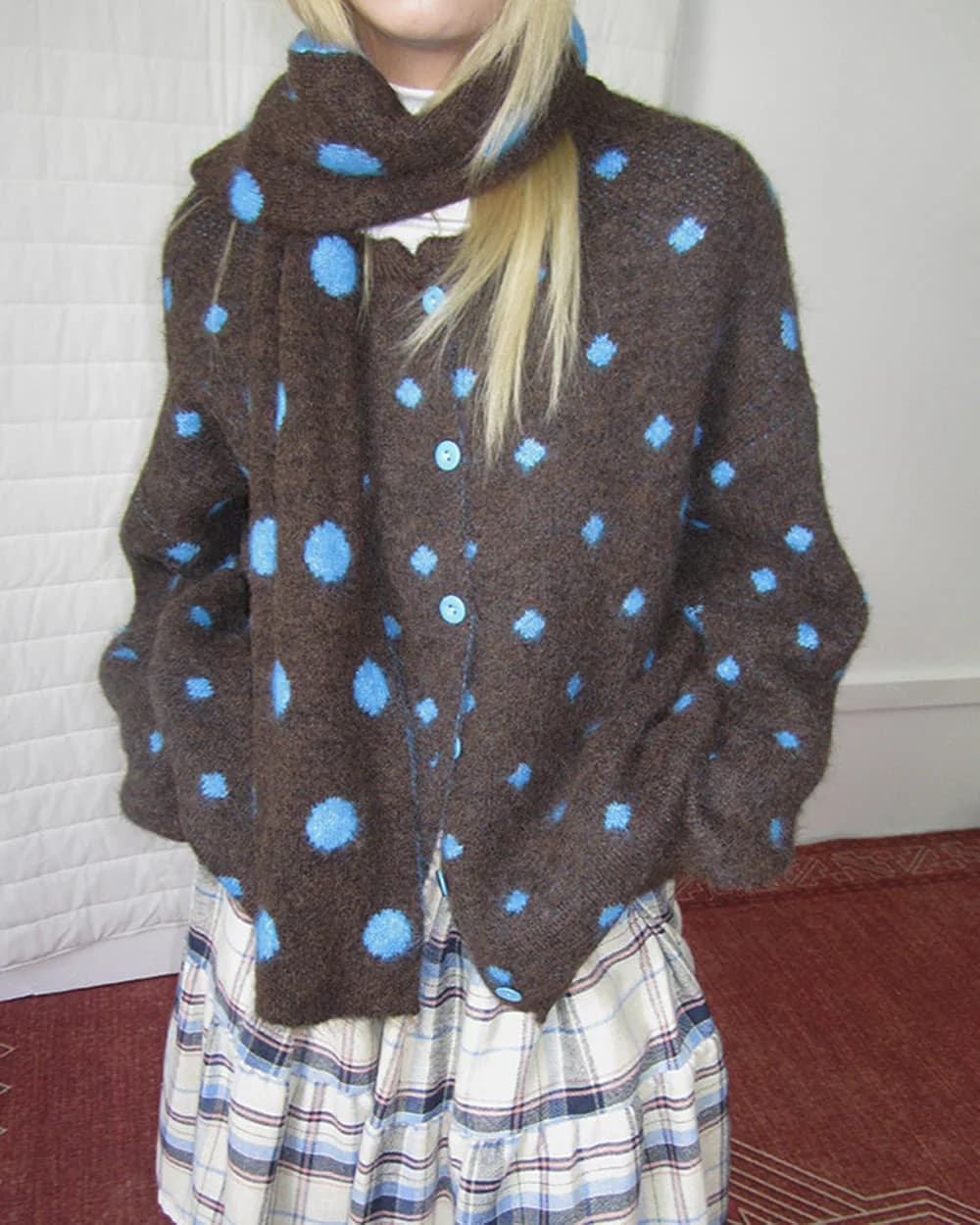
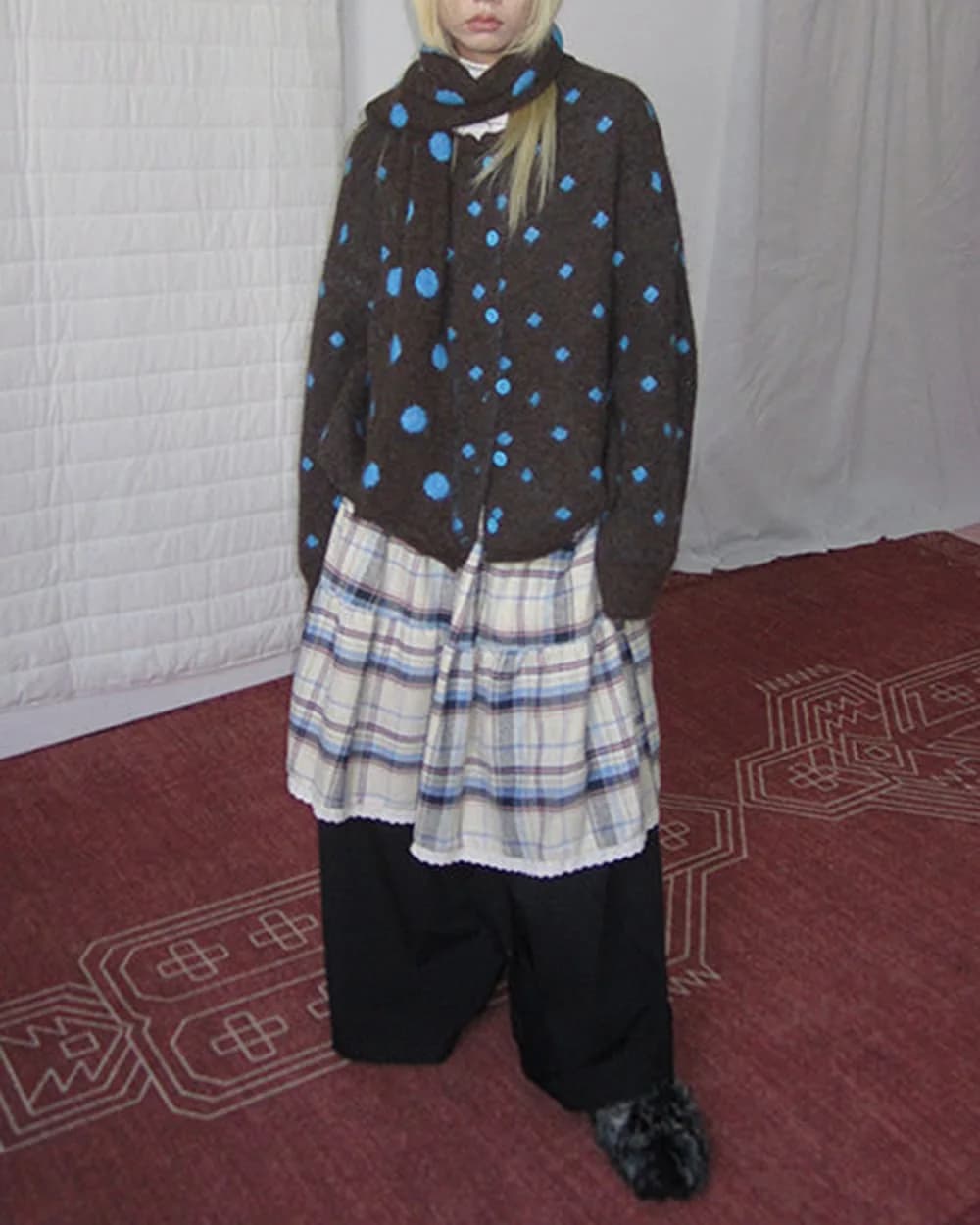
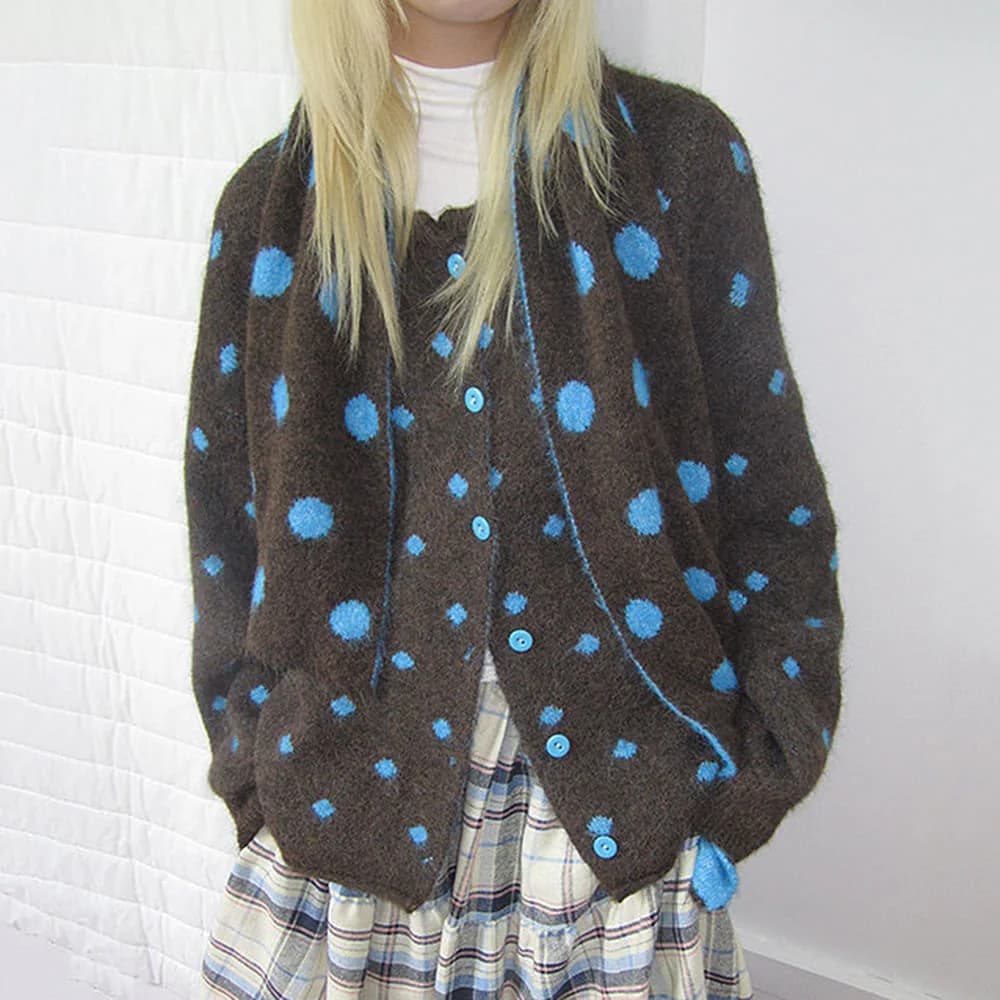
When styling items from our Grandmacore Skirts collection, you can balance wider skirt hems by cinching or half-tucking your knit. For instance, pairing a flared skirt with the Coffee Break Polka Dot Cardigan in brown polyester creates an earthy, relaxed silhouetteThe overall shape an outfit creates, from fitted to loose and layered.. Because this piece features a relaxed drape, you can fasten the center buttons and let the lower hem spread softly over the gathers of your skirt, creating an effortless transition from knit to woven fabric.
Botanical and Fruit Embroidery: Styling Patterned Pieces
Cardigans with detailed needlework, fruit motifs, or floral vines should act as the visual centerpiece of an ensemble. When an item features dense dimensional elements like apples, daisies, or leaves, surrounding it with competing plaids or animal prints can cause visual chaos. The most effective approach is to pull one secondary color from the embroidery thread and echo it in your trousers, socks, or hair accessories while keeping your primary layers neutral.
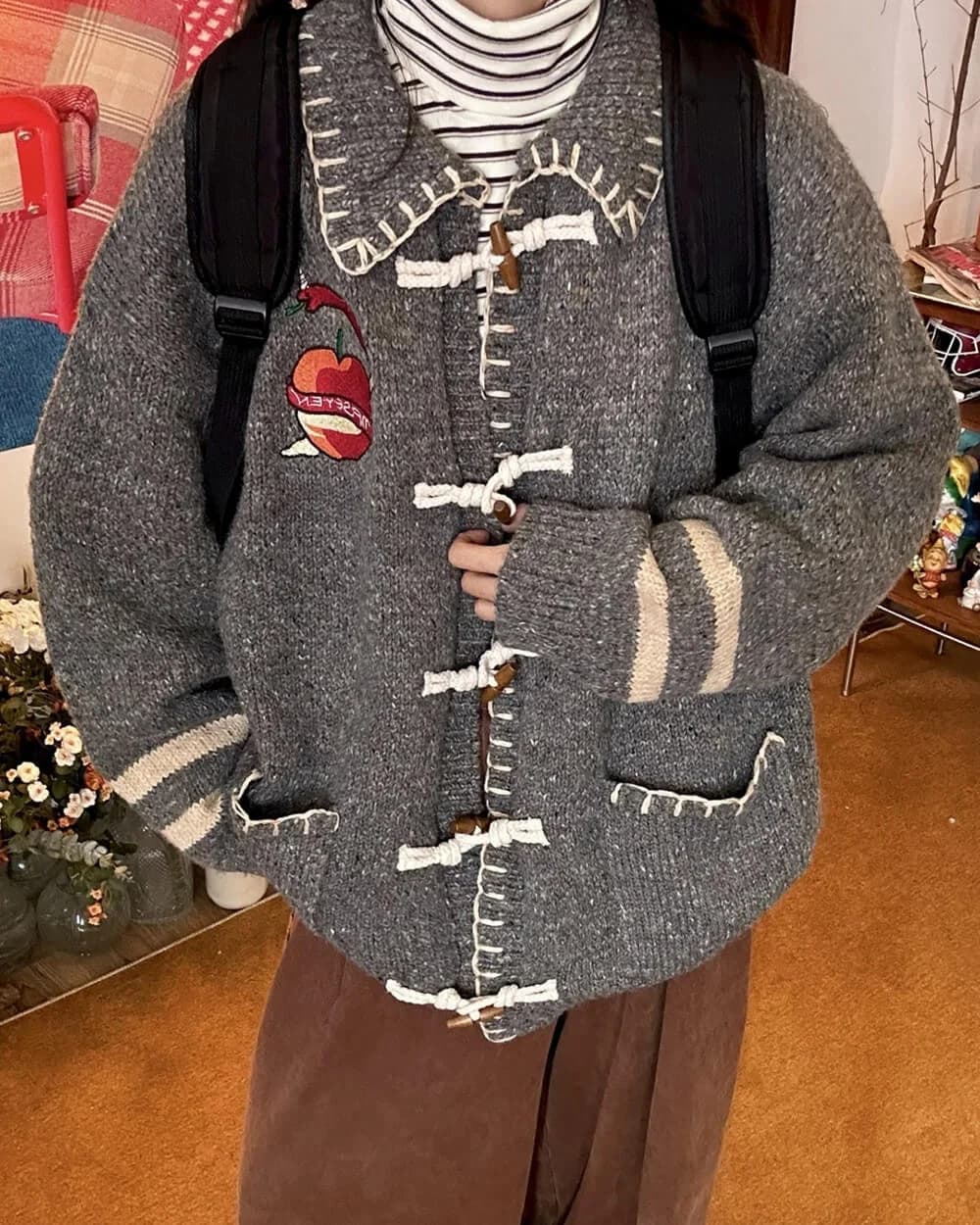
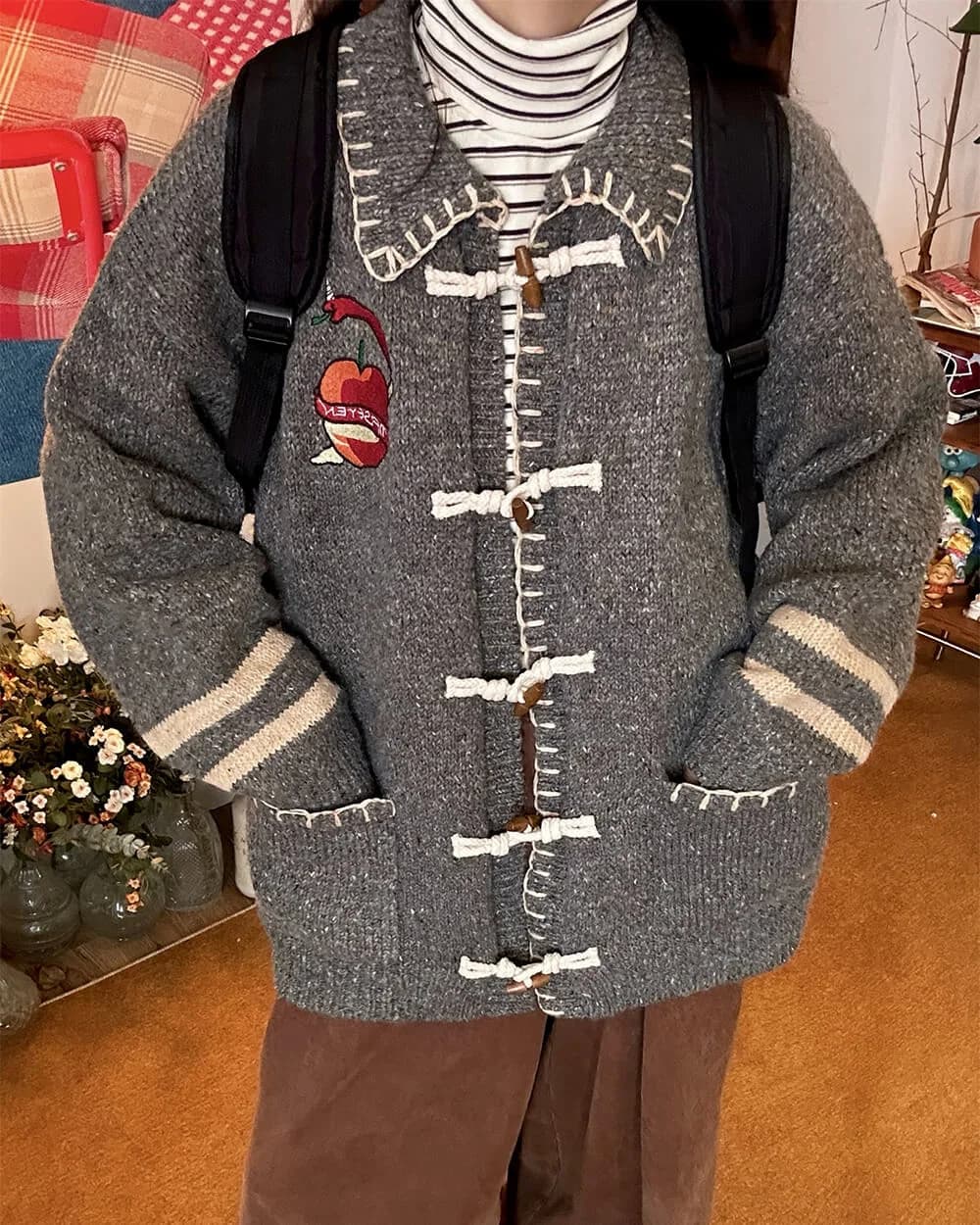
Consider the Apple Embroidery Grey Cardigan, made of soft acrylic knit in grey. The bright red and green fruit accents stand out against the heathered base. You can style this piece open over an off-white cotton blouse, paired with dark forest green trousers that match the embroidered leaves. Choosing solid woven separates ensures the tactile embroidery remains the focus of the outfit rather than getting lost in a clash of prints.
- Pick one accent color from the embroidery threads to mirror in your base layer or accessories.
- Keep large-surface garments neutral to give textured embroidery visual breathing room.
- Avoid high-contrast patterned bottoms when wearing cardigans with all-over fruit or flower motifs.

Sleeve Volume: Balloon, Raglan, and Drop-Shoulder Cuts
Sleeve construction dictates how comfortably a cardigan layers over base tops and beneath winter coats. Drop-shoulder cardigans have lower armholes that easily slide over loose blouses, peasant sleeves, and ruffled shirts without pinching the underarms. However, these relaxed sleeves can bunch uncomfortably if you try to pull a slim, tailored trench coat or wool overcoat over them. For heavy cold-weather layeringWearing pieces over or under one another to add depth, warmth or contrast., raglan or set-in sleeves offer a closer fit around the armpit that slides easily into outerwear sleeves.
Balloon sleeves present a different styling dynamic: they concentrate visual fullness at the forearm and wrist. If your cardigan has substantial balloon cuffs, keep your lower half streamlined with tailored straight pants or an A-line skirt that stays close to the hips. Pushing balloon cuffs slightly up toward the mid-forearm is also a practical styling trick; it breaks up the volume and reveals your wrists, making oversized knits feel intentional and lighter on petite frames.
Texture Clashing: Combining Knits, Corduroy, Gingham, and Lace
Grandmacore style thrives on rich, tactile surfaces rather than flat modern synthetics. A compelling outfit brings together three to four distinct textures: dry cable knits, soft ribbed corduroy, crisp woven checks, and delicate lace trim. The key to successful texture mixing is keeping the color paletteA small group of colors you repeat to make an outfit feel connected. grounded in muted, earthy tones—such as moss, oatmeal, rust, and slate—so the contrasting finishes enrich each other rather than fighting for attention.
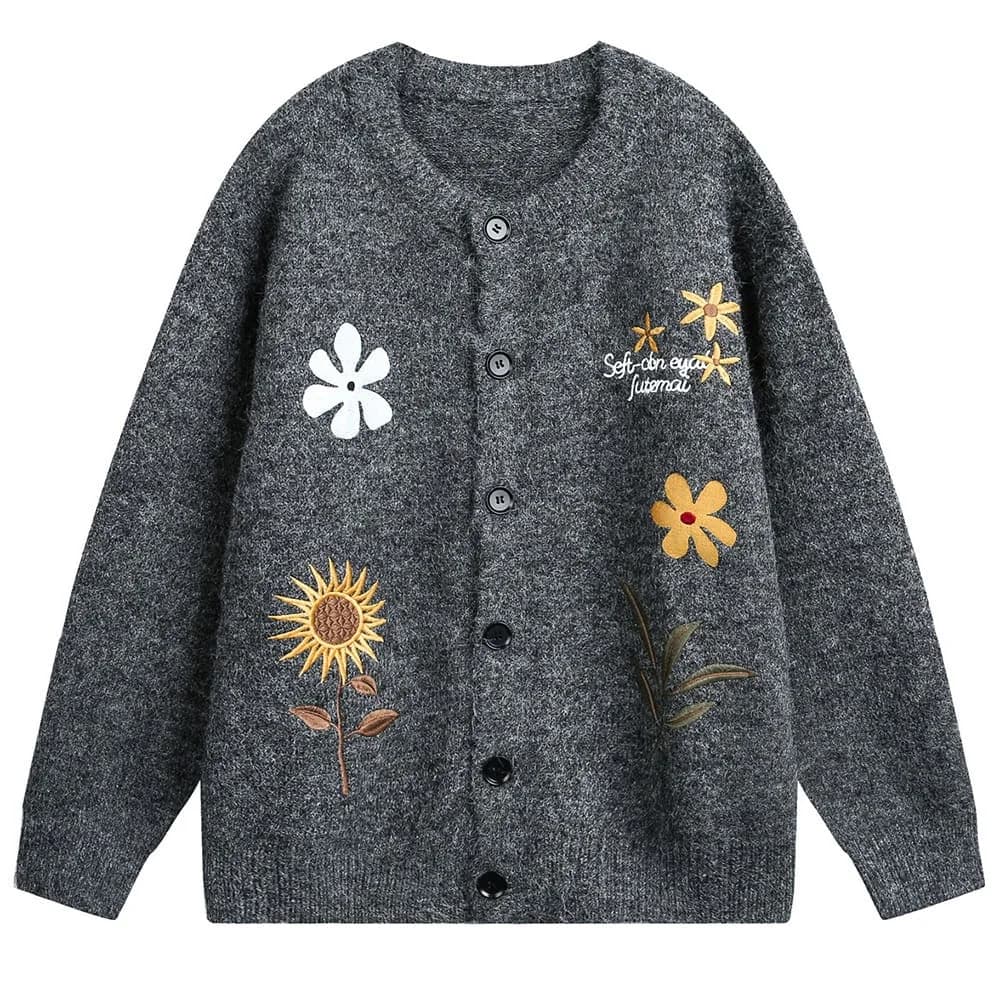
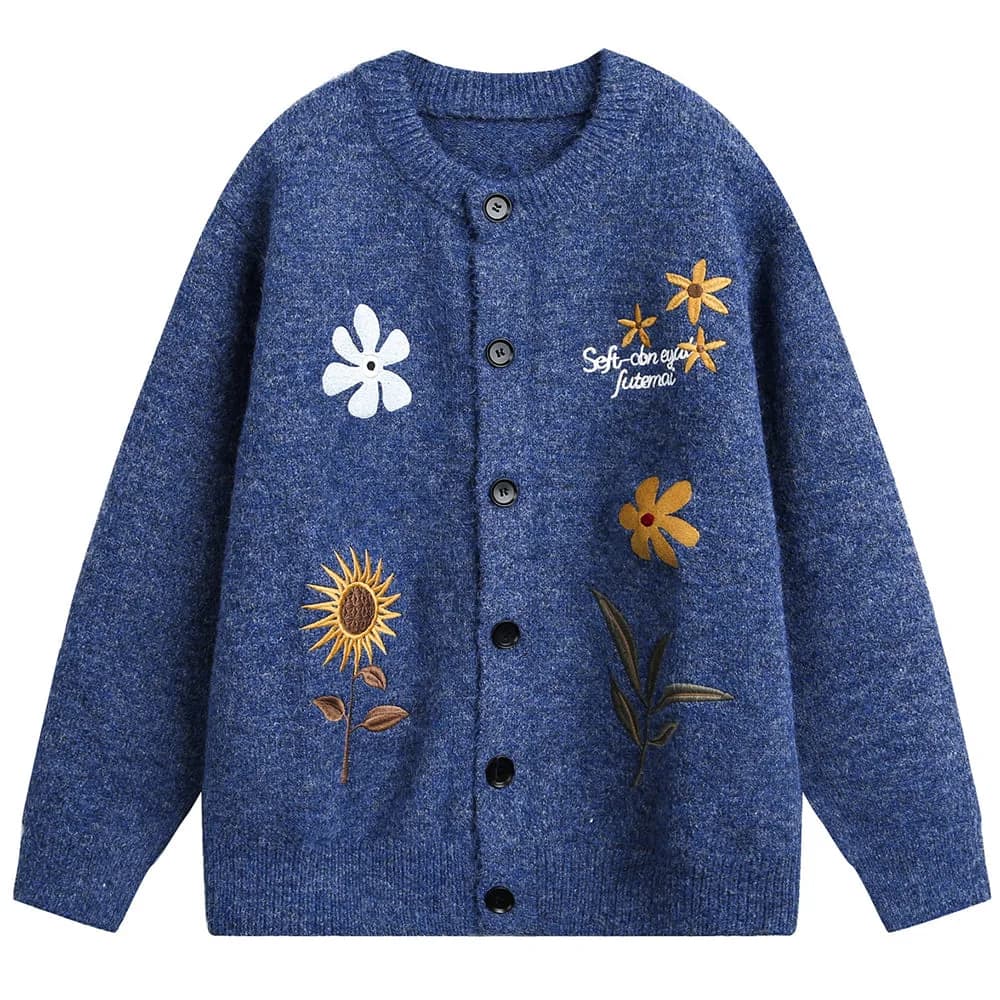
A classic outfit formula pairs the Cottagecore Embroidery Knit Cardigan in acrylic (available in blue, grey, and white) with the Black White Polka Dot Gingham Maxi Skirt in polyester. The soft surface of the floral knit creates a playful visual dialogue with the geometric gingham pattern of the skirt. To complete the look, add a lace-trimmed cotton undershirt to peek out at the wrists and neckline, giving you a richly textured outfit that feels collected over time.
Cardigans as Tops: Tucking and Half-Buttoning Strategies
Wearing a cardigan as a standalone top is a versatile styling trick that cuts out the bulk of an under-shirt. To achieve this cleanly, the cardigan needs a moderate V-neck or crew neck that does not plunge too low when buttoned. A fitted or medium-weight knit works best here, as extremely heavy cable knits tend to bunch aggressively at the stomach when tucked into pants or skirts.
Try fastening all buttons except the lowest one, then loosely french-tucking the front edge of the cardigan into high-waist trousers while letting the back drape freely. Alternatively, you can fold the lower ribbed hem upward and inward, securing it against the waistband of your bottom layer or within a snug camisole. This blouson effect gives you the appearance of a cropped sweater while keeping the functional button front visible, creating a tailored silhouetteThe overall shape an outfit creates, from fitted to loose and layered. that pairs smoothly with fluid maxi skirts.
Navigating Color Palettes: Moss, Oatmeal, Slate, and Ochre
Grandmacore knitwear generally leans into nostalgic, nature-derived color paletteA small group of colors you repeat to make an outfit feel connected.s. While bright primary colors can feel somewhat harsh against antique styling, muted shades like sage, moss, slate grey, heather oatmeal, and warm ochre blend smoothly. If you gravitate toward colorful novelty knits, look for pieces that balance brighter tones with grounding neutrals.
The Lemon Chalet Pattern Cardigan, knit from acrylic in a blue and yellow colorway, offers a charming example of balanced color blocking. The cheerful yellow lemon motifs are anchored by cool blue tones, making it easy to style over navy trousers, washed blue denim, or a simple cream linen dress. When assembling an outfit around a patterned knit, limit your total outfit palette to three harmonious shades to maintain a cohesive, heritage-inspired look.
- Anchor bright novelty tones (mustard, lemon, cherry) with rich base neutrals like slate, navy, or cream.
- Stick to a three-color rule per outfit to prevent cozy layeringWearing pieces over or under one another to add depth, warmth or contrast. from looking cluttered.
- Look for heathered or marled yarns, which add subtle tonal variation to plain-stitch cardigans.
When to Choose a Cardigan Versus a Pullover Sweater
Deciding between an open-front cardigan and a closed pullover sweater depends on how much temperature adaptability and visual layeringWearing pieces over or under one another to add depth, warmth or contrast. you want. Pullovers create a seamless, uninterrupted front panel that highlights large chest graphics, heavy all-over cables, or relaxed drop collars. They offer maximum warmth by sealing out drafts, but they leave fewer options for displaying intricate blouse collars or decorative waistbands.
Cardigans, on the other hand, act as framing garments. They give you the flexibility to open the front to display an embroidered shirt, cinch your waist with a belt, or strip down to a lighter layer when moving indoors. If you prefer the uninterrupted warmth of a closed knit, explore our Grandmacore Sweaters selection. If you want adaptable layeringWearing pieces over or under one another to add depth, warmth or contrast. that easily shifts between warm afternoons and chilly evenings, a piece from our dedicated Grandmacore Cardigans collection provides far greater versatility.
Outerwear Alternatives: Zip Jumpers and Fleece Jackets
While traditional button-down cardigans are central to the grandmacore wardrobe, alternative layeringWearing pieces over or under one another to add depth, warmth or contrast. pieces like zip knits and fleece jackets offer a sportier, practical spin on vintage rural aesthetics. Half-zip and full-zip jumpers provide adjustable neck coverage without fussing with buttons, making them great utility pieces for outdoor gardening, country walks, or breezy transitional days.
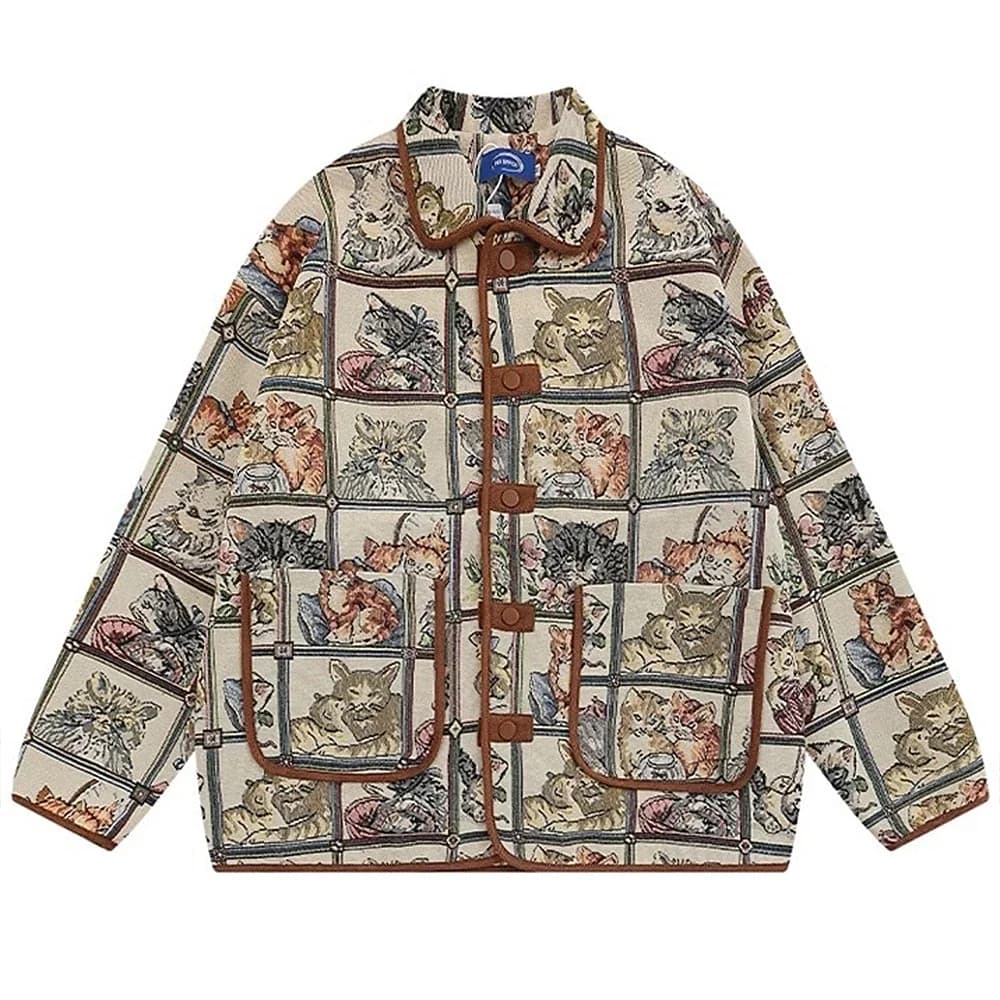
For a rugged heritage feel, the Grandpa Style Cable Knit Zip Jumper in polyester combines traditional cable texturing with a functional zip collar, available in blue, beige, and black. If you lean toward softer fleece textures, the Oversized Cat Print Jacket in brown polyester delivers maximum coziness and a charming feline motif that complements loose corduroys. Keeping a mix of buttoned cardigans and zip-up outerwear ensures your wardrobe handles casual outdoor errands just as comfortably as quiet indoor reading.
Transitional Styling for Fluctuating Weather
Cardigans are inherently transitional pieces, offering functional warmth across shifting seasons. During cool mornings that turn into mild afternoons, a cardigan can be worn fully buttoned over a simple camisole, then unbuttoned and draped loosely over your shoulders as temperatures climb. Draping a knit over your shoulders with the sleeves tied loosely across your chest adds an effortless, vintage scholarly touch while keeping your hands free.
When temperatures drop further, your cardigan becomes an insulating mid-layer rather than outerwear. Layer a thin cotton turtleneck beneath an embroidered acrylic cardigan, then top the ensemble with an oversized wool trench or duffle coat. Acrylic and polyester knits dry quickly and provide dependable warmth without the extreme heaviness of pure wool, making them practical choices for damp spring or autumn weather across variable climates.
Footwear and Accessories to Complete the Look
Footwear grounds a grandmacore outfit, preventing oversized knits from looking like sleepwear. Delicate running sneakers or sharp stilettos often clash with the homespun, tactile weight of cable knits and embroidered cardigans. Instead, pair your knitwear with footwear featuring substance and vintage character, such as leather brogues, T-strap Mary Janes, lace-up roper boots, or clogs.
Visible socks play an essential supporting role. Roll or scrunch chunky ribbed cotton socks just above the rim of an ankle boot or Mary Jane shoe to bridge the visual gap between your skirt hem and footwear. Complete the look with functional accessories like canvas tote bags, wire-rimmed glasses, woven wicker baskets, or knitted berets. These practical, tactile touches echo the craftsmanship of your cardigan, tying your entire ensemble together naturally.
- Choose grounded, heritage footwear like brogues, lace-up leather boots, or chunky Mary Janes.
- Wear scrunched ribbed or patterned socks to fill the gap between midi hems and low-cut shoes.
- Add practical accessories like canvas totes or knit berets rather than sleek, modern hardware bags.
Grandmacore Cardigan Shopping and Styling Checklist
Before purchasing a new cardigan or styling an outfit for the day, running through a quick mental checklist will help you avoid common fit and proportion mistakes. Ensure that the cardigan's shoulder seam aligns with the intended aesthetic: drop-shoulder seams should fall cleanly down the upper arm without pulling across the back, while set-in sleeves should rest square on your shoulder point. Check the button spacing to ensure the placket does not pull or gape across your bust line when fully closed.
Lastly, assess the weight balance of your full outfit. If your cardigan is heavy and thick, balance it with grounded shoes and structured bottoms rather than thin, shapeless pieces. Use this checklist as your final styling review whenever you build an outfit around vintage-inspired knitwear.
- Neckline clearance: Ensure your under-layer collar sits flat or extends neatly outside the cardigan placket.
- Placket tension: Check that buttons fasten smoothly without pulling fabric horizontal across the chest.
- Hemline balance: Pair longline cardigans with straight pants, and cropped or waist-length knits with voluminous skirts.
- Fabric variety: Mix at least three distinct textures (e.g., knit, corduroy, cotton poplin, leather) in a single look.
- Care consideration: Confirm material composition to ensure it matches your maintenance and layeringWearing pieces over or under one another to add depth, warmth or contrast. preferences.