Created by the Kawaii Vibe editorial team. Our named style desks are editorial personas. Product details and availability can change.
Building comfortable grandmacore pants outfits usually comes down to solving a simple mechanical problem: wide cuts, pleated fabrics, and heavy knitwear can easily collapse into a shapeless column if you do not manage your proportions. Because this look emphasizes relaxed cuts, vintage motifs, and soft utility, styling trousers requires thoughtful handling of hems, waistband visibility, and layer lengths.
Rather than treating these garments like standard tailored slacks, you want to approach them as foundational texture pieces. Getting the balance right means pairing roomy leg shapes with the right shoe drop, anchoring midsections without forcing tight fits, and framing your outer knits so your silhouetteThe overall shape an outfit creates, from fitted to loose and layered. feels intentional and easy to wear all day.
This guide breaks down specific garment formulas, hem lengths, layeringWearing pieces over or under one another to add depth, warmth or contrast. tiers, and visual anchor points. By focusing on how garments sit against one another, you can construct versatile outfits that work across changing climates and everyday routines.
The Golden Proportion: Anchoring Wide Trousers with Structured Shoulders
The most common challenge with vintage-inspired trousers is managing horizontal volume. When your pants feature deep pleats, relaxed thighs, and straight or wide legs, wearing a floppy, undefined top can make your entire frame feel weighed down. To offset leg fullness, look to your upper body anchors: collar points, shoulder seams, and neckline geometry. A shirt with a defined collar creates a clean, crisp focal point that draws the eye upward, giving the relaxed volume below a clear reason to exist.
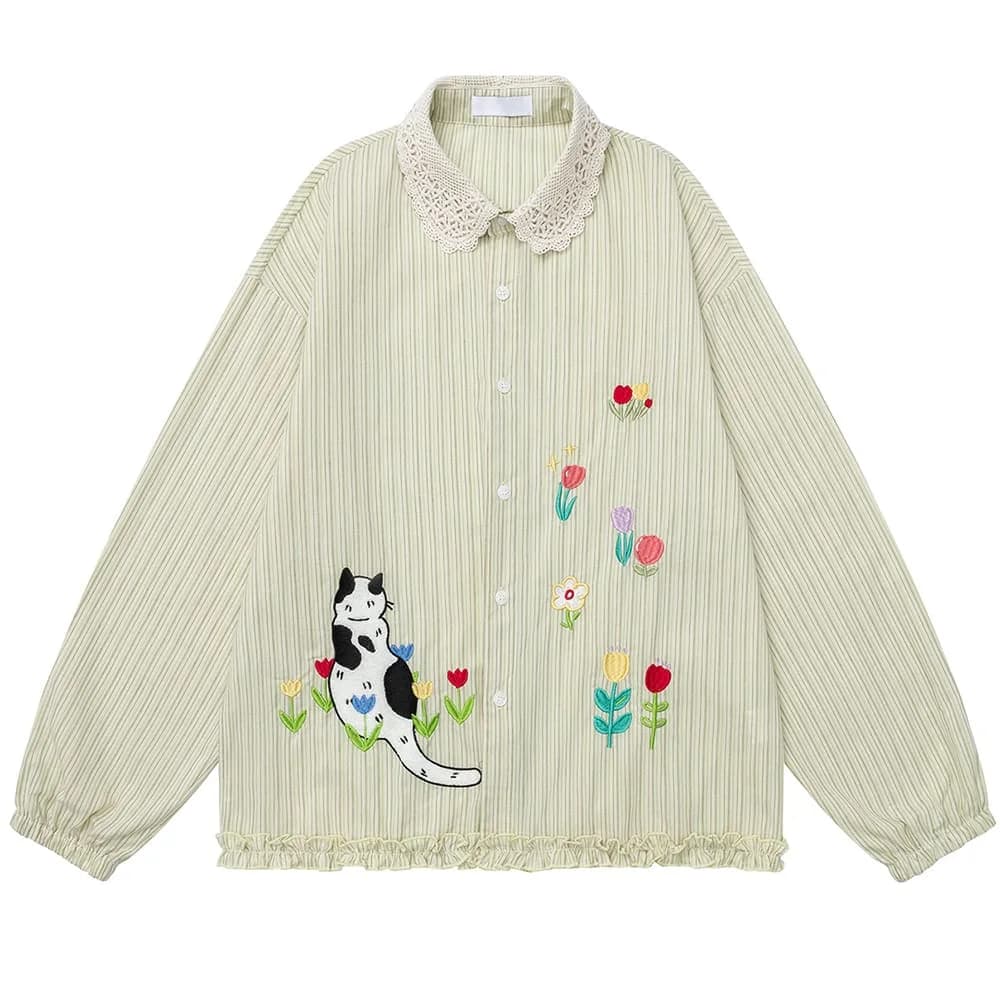
A practical starting point is pairing tailored, relaxed-cut bottoms with a distinct collared button-down. For instance, tucking the Green Cottagecore Cat & Flower Embroidery Shirt into high-rise trousers immediately creates a stable vertical axis. Because that shirt features a structured collar and front button placket in a cotton and polyester blend, it introduces a clean line at the neck that grounds the soft drape of pleated trousers.
When planning this silhouetteThe overall shape an outfit creates, from fitted to loose and layered., keep shoulder seams sitting right on or just beyond your natural shoulder line. Dropped shoulders can work nicely, but only if the collar band remains firm enough to keep your neck area framed. This prevents comfortable trouser cuts from reading as pyjama bottoms.
- Keep upper collar lines crisp to offset relaxed fabric pooling around knees and calves.
- Align waistband position with natural movement lines so shirt tucks stay stable through the day.
- Choose structured neckline details like contrast embroidery or pointed collars to anchor open jackets.

Hem Drops, Floor Breaks, and Footwear Clearance
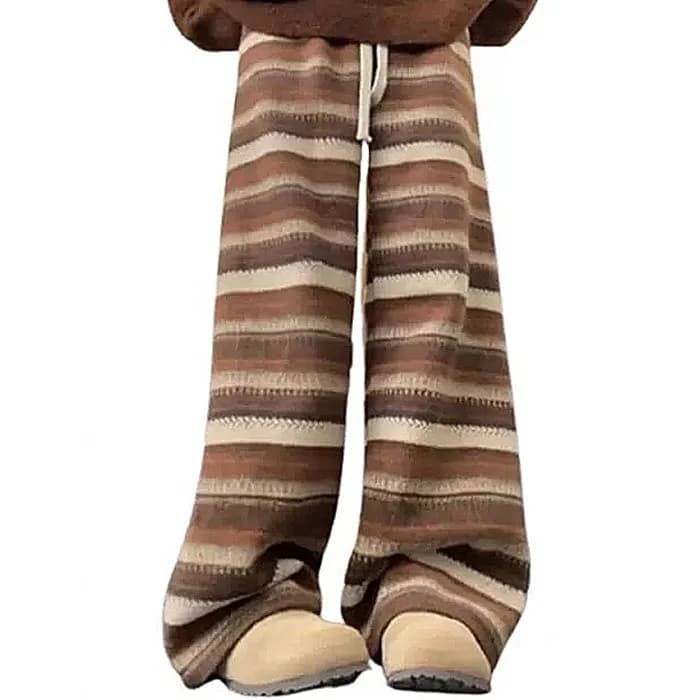
How your trousers hit your shoes dictates whether an outfit reads as tidy vintage or accidentally oversized. In grandmacore styling, hems generally fall into two categories: a slight break that rests lightly on the top of the shoe, or an intentional ankle crop that reveals socks and footwear collars. Full breaks that fold multiple times over the foot can create unnecessary bulk that throws off wide-leg lines.
If you want a classic drape with minimal stacking, consider the 80's Grandma Pants in Brown. Made from smooth polyester, these brown trousers fall in a clean straight drape that looks best when hemmed or worn to drop just over the vamp of an Oxford shoe or the bridge of a leather loafer. The medium-weight polyester has enough glide to resist bunching, keeping the vertical line smooth as you walk.
For ankle-skimming cuts, ensure the hem sits about one to two inches above the ankle bone. This creates an open gap that you can fill with ribbed wool, crochet, or patterned socks, turning the transition between trouser cuff and walking shoe into an expressive styling moment rather than a messy fabric bundle.
- Single breaks pair best with chunky-soled shoes like derbies, brogues, and clog mules.
- Cropped hems require sturdy, textured socks to avoid jarring skin exposures in cooler temperatures.
- Steer clear of double-stacking hems over narrow sneakers, which can cause the fabric to drag and wear out.
Managing Outerwear Length: The Three Key Jacket Zones
When layeringWearing pieces over or under one another to add depth, warmth or contrast. over wide trousers, your outer garment length determines your visual center of gravity. There are three dependable outerwear lengths to work with: high-hip cropped, mid-thigh car coat length, and calf-grazing duster length. Mid-hip cuts that end right at the widest point of the pelvis tend to be the trickiest because they cut across the hips horizontally right where wide trousers expand.
A high-hip layer creates a flattering two-thirds to one-third body proportion. By ending just at the top of your trouser waistband, it lets the long, flowing leg line extend downwards without interruption. This works especially well with high-waisted options found throughout our wider Grandmacore Pants selection, where waistband pleating and button details deserve center stage.
Alternatively, if you prefer longer coats, go fully past the knee. A calf-length coat creates a streamlined vertical outer frame that encases the trousers, letting wide legs swing naturally at the hem without disturbing your upper-body balance. Reserve the mid-thigh length for garments with deep side slits that allow your hands to access trouser pockets effortlessly.
Balancing Pattern Scales Across Pants and Layering Knits
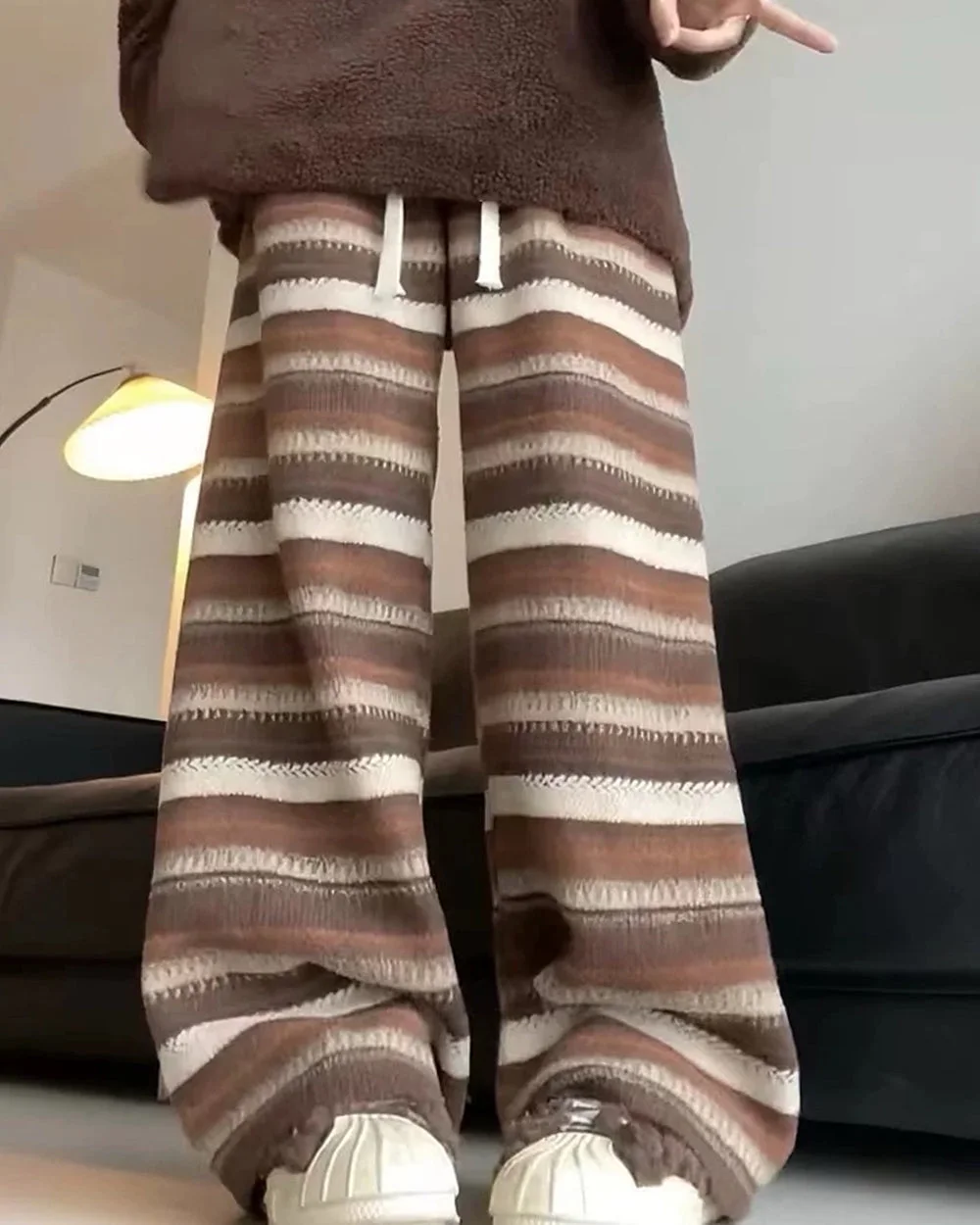
Grandmacore is celebrated for its narrative prints, from tapestries and micro-florals to plaids and cross-stitch motifs. When your trousers carry a bold visual motif, the easiest way to prevent visual chaos is by managing print scale and contrast. If your pants feature an active, multi-toned pattern, your secondary and tertiary layers should pull directly from one of the quieter background tones.
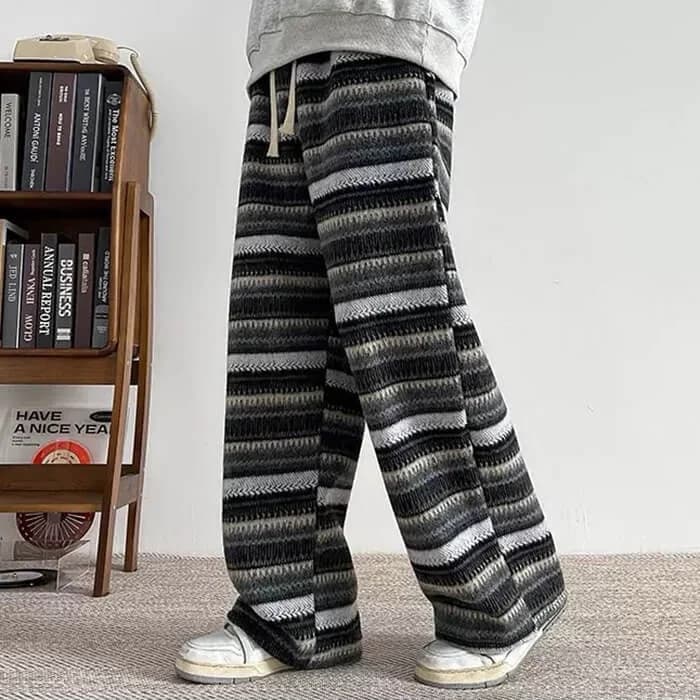
Take the Grandma Aesthetic Patterned Pants as a clear example. Because these polyester trousers feature an eye-catching, multi-colored pattern, pairing them with an equally chaotic patterned knit can cause both pieces to compete for attention. Instead, match them with a solid top in an earthy green, warm cream, or deep mustard pulled directly from the trousers' print palette.
If you do want to mix prints, pair distinct scales rather than similar ones. A small-scale micro-gingham shirt collar peeking out over a wide-scale patterned pant leg creates pleasant contrast, whereas two medium-scale abstract patterns placed side-by-side often blur together into a confusing wash of color.
- Pick one anchor pattern per outfit to serve as the dominant visual storyteller.
- Extract secondary tones from multi-colored trousers to guide your cardigan and sock choices.
- Maintain flat, matte knitwear textures above patterned bottoms to let the trouser motif stand out.

Tuck Techniques: Full Tuck, Half-Tuck, and Untucked Proportions
Deciding how to tuck your shirt or lightweight knit completely alters how your trousers sit on your hips. A full tuck works best when trousers have an elasticized back with a flat front panel, or traditional tailored button closures. It creates a crisp, cinched waistline that establishes an immediate vintage silhouetteThe overall shape an outfit creates, from fitted to loose and layered., letting high-rise pleats drop smoothly toward the floor.
The French or half-tuck is helpful when dealing with thicker mid-layer sweaters that would create too much lumpiness if tucked all the way around. By securing only the front three inches of your sweater hem into the waistband and letting the sides drape loosely, you preserve a visible waist point while keeping comfortable back coverage. This works naturally with styles from our Grandmacore Sweaters range.
Going fully untucked requires careful attention to your top's hem length. If a sweater falls straight past the hips without tapering, it can swallow wide trousers entirely. Look for ribbed sweater hems that gently pull in toward the body, resting naturally near the hip bone so the top does not hang like a shapeless tunic.
Cardigan Volumes: Chunky Yarns vs. Drapey Leg Silhouettes
Cardigans are a cornerstone of grandmacore dressing, but thick gauge yarns behave differently against woven trousers than fine gauge knits do. A heavyweight cable-knit or bubble-stitch cardigan brings substantial physical bulk to your upper half. To keep this looking balanced, your trousers must have sufficient leg width to provide visual weight at the bottom of the outfit.
When styling a wide, neutral trouser like the 80's Grandma Pants in Black, you have a blank slate capable of balancing dense knit textures. The smooth black polyester fabric offers a sleek vertical drape that holds its own under chunky knitwear without adding bulky friction. You can contrast this minimalist base with a decorative knit like the Apple Embroidery Grey Cardigan, an acrylic button-up piece whose whimsical motifs sit neatly across the chest.
Keep cardigan buttoning habits in mind: buttoning every fastener all the way down can create a stiff box shape over trousers. Instead, fasten just the middle two buttons. This creates an inverted 'V' opening at the hem that reveals your trouser waistband, letting wide-leg trousers move freely without pulling against the cardigan knit.
- Fasten mid-chest cardigan buttons to allow natural leg swing through the bottom hem opening.
- Balance dense acrylic or wool yarn weights with straight or wide-cut trousers rather than skin-tight fits.
- Roll cardigan cuffs once to expose shirt sleeves or wrists, preventing oversized knits from looking sloppy.

Collars, Yokes, and Plackets: Guiding the Eye Upward
Because grandmacore trousers tend to sit high and wide, upper garments should feature deliberate focal points that guide the eye upward toward your face. Details like rounded Peter Pan collars, delicate yoke embroidery, and decorative buttons give vintage-leaning outfits character and charm. These elements prevent comfortable pants from feeling like an afterthought.
LayeringWearing pieces over or under one another to add depth, warmth or contrast. a collared blouse under a novelty sweater or a piece from our Grandmacore Cardigans catalog instantly elevates simple trousers. Letting an embroidered collar spill out over a crewneck or V-neck cardigan frames your face nicely and introduces varied fabric textures right up around your neckline.
Pay attention to collar scales when pairing them with wide trousers. Very narrow, modern point collars can look insubstantial against billowing wide-leg trousers. Broader rounded collars, scalloped trims, or collars featuring cat and botanical embroidery offer the visual weight needed to counterbalance generous trouser cuts.

Midweight Layering: Incorporating Polka Dots and Whimsical Motifs
Whimsical knit patterns add warmth and playful vintage appeal to everyday trousers. When styling garments with distinct character motifs, the surrounding pieces should support rather than compete with that focal piece. The key is coordinating texture weights so your knit layers do not bunch awkwardly over the waistband of your pants.
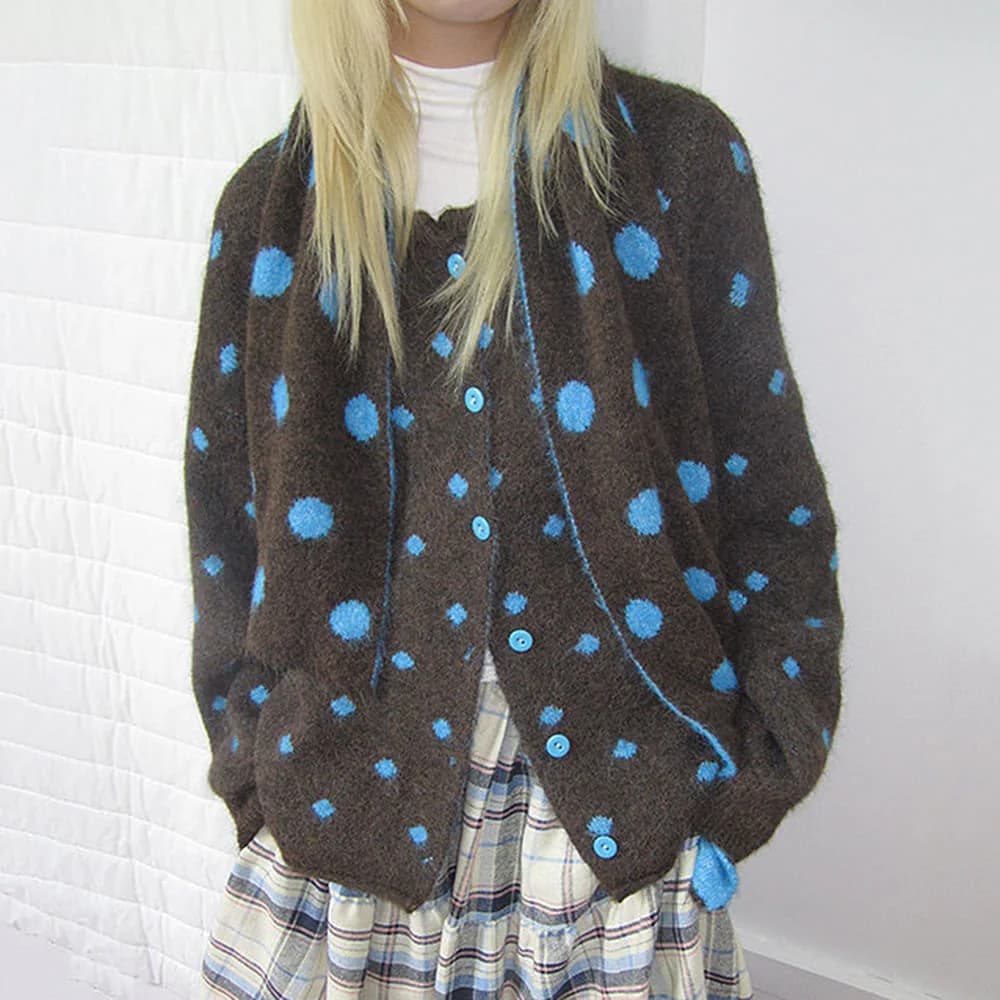
A practical option for transitional days is the Coffee Break Polka Dot Cardigan. Cut in an easy Free Size fit from polyester knit, its brown ground and polka dot pattern bring gentle retro personality to relaxed outfits. Paired over high-waisted brown or tan trousers, it forms a cohesive, tonal earth-tone base that looks thoughtful while remaining soft and unrestrictive.
To balance this boxy cardigan shape, wear a fitted tank or a tucked cotton tee underneath. Leaving the cardigan unbuttoned creates two clean vertical lines down your torso, visually lengthening your frame and allowing high-waisted trousers to do their leg-lengthening work.
- Use open cardigan fronts to create vertical panels that lengthen your silhouetteThe overall shape an outfit creates, from fitted to loose and layered..
- Keep base layer tees simple when wearing polka dot or novelty cardigans over pleated bottoms.
- Match cardigan button materials (like faux-wood or tortoiseshell) to trouser belt buckles for subtle cohesion.
Comparing Trousers and Maxi Skirts in the Grandmacore Wardrobe
Many grandmacore enthusiasts bounce between relaxed trousers and sweeping skirts. While both offer breathable comfort and retro styling possibilities, they interact with tops and layers in fundamentally different ways. Understanding these differences helps you decide which silhouetteThe overall shape an outfit creates, from fitted to loose and layered. best fits your day.
A piece like the Black White Polka Dot Gingham Maxi Skirt in grey polyester pools volume continuously from waist to hem. This uninterrupted triangular drape allows you to wear slightly longer, looser knit tops without breaking your vertical line. Trousers, by contrast, split that fabric volume into two distinct columns at the crotch line, which requires closer attention to inseam drape and waistband placement.
If you love the ease of skirts but want the mobility of pants, wide-cut trousers from our curated Grandmacore Clothes section give you the visual sweep of an A-line skirt with the practical utility of trousers. Choose wide trousers for windy days, bike commuting, or active routines, and turn to items in our Grandmacore Skirts collection when you want full swish and easy layeringWearing pieces over or under one another to add depth, warmth or contrast..
Color Temperature and Earth Tones: Grounding Your Palette
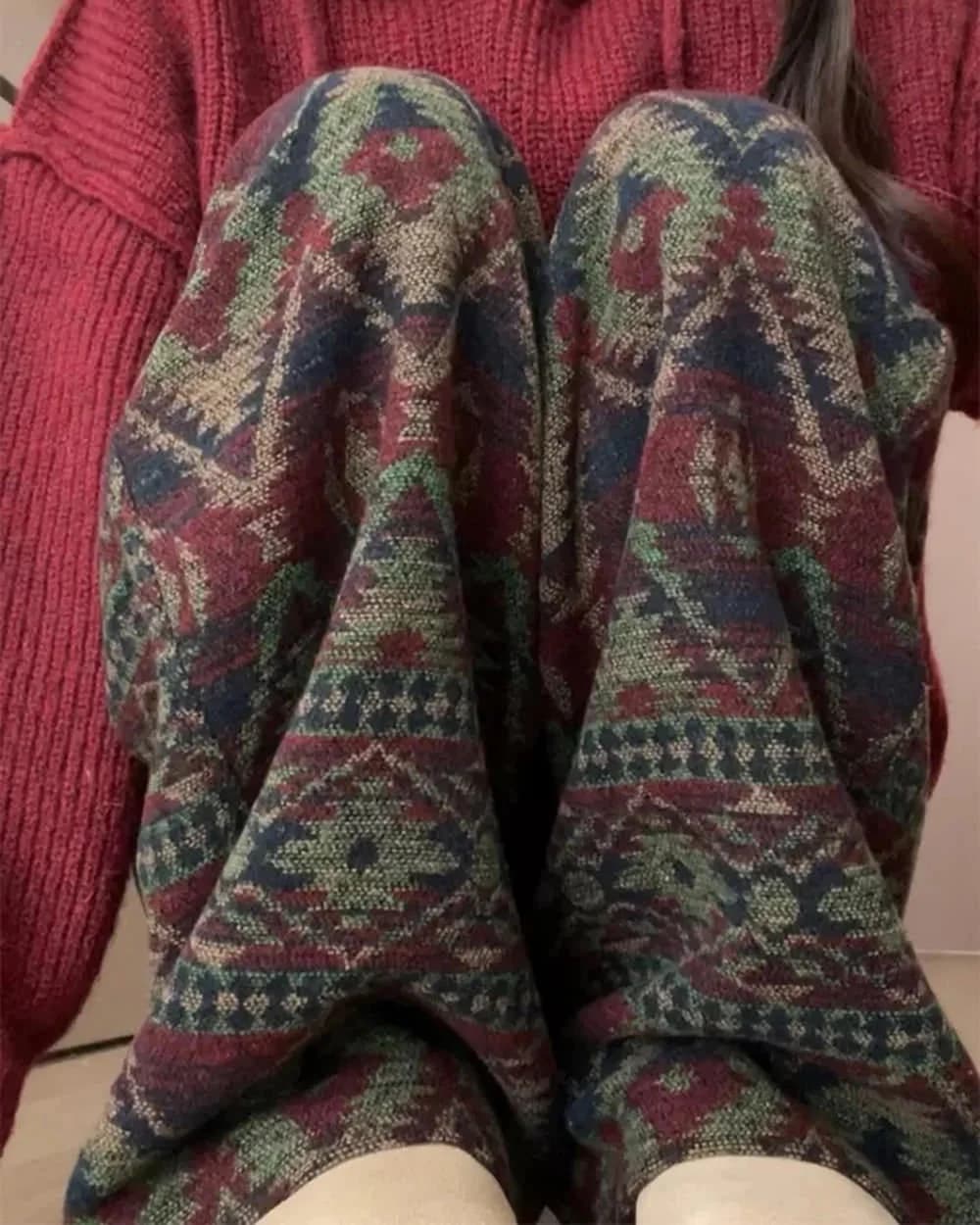
Grandmacore palettes rely heavily on grounded, garden-inspired shades: olive green, muddy taupe, warm walnut, faded mustard, and dusty slate. The way you distribute these shades across your body influences how heavy or light your trousers feel. As a general rule, darker or denser earth tones on the bottom half create a rooted visual foundation.
Pairing dark brown trousers with soft sage or buttercream knitwear gives your silhouetteThe overall shape an outfit creates, from fitted to loose and layered. a grounded, natural taper. The deeper shade absorbs light and grounds the lower half, while the lighter top brings brightness toward your face. Inverting this—wearing pale cream pants with a heavy espresso sweater—can work too, but requires careful hem tailoring to avoid looking bottom-heavy.
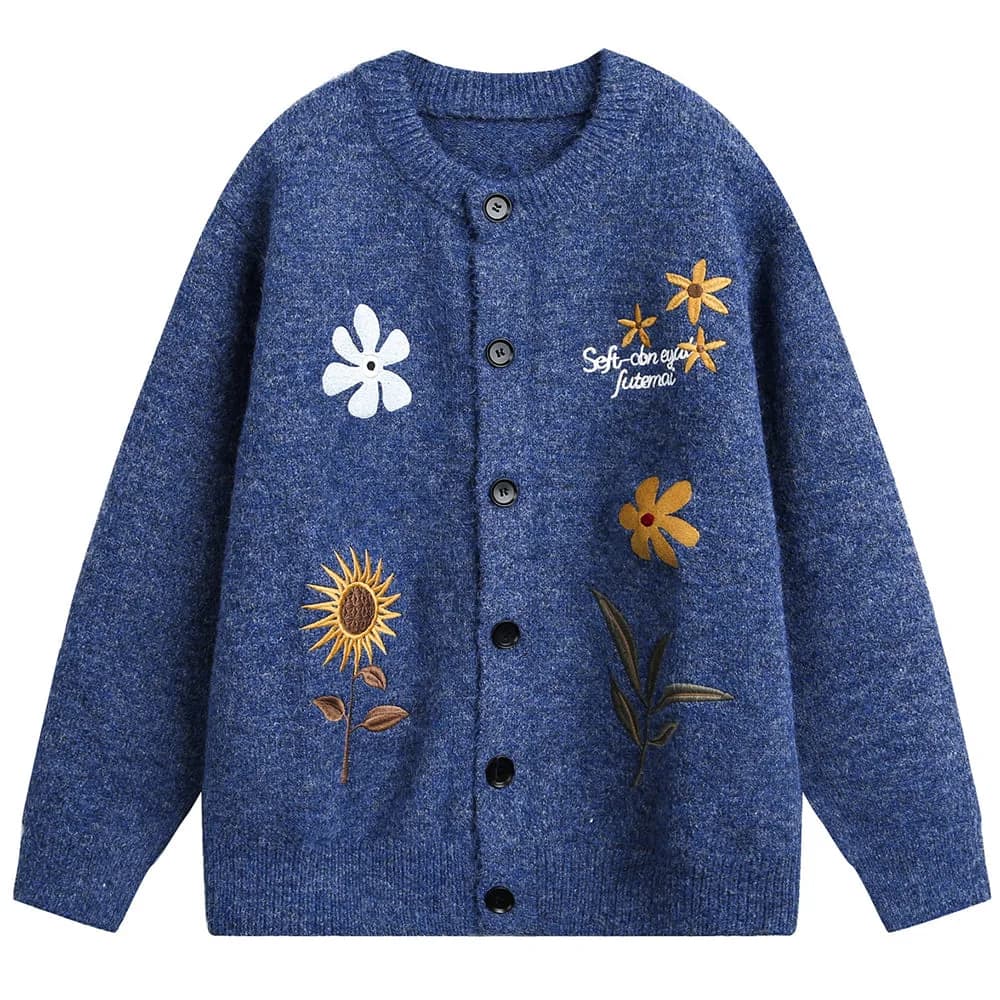
If you want to introduce gentle pastel tones like soft cornflower blue or gentle lilac, balance them with warm neutrals rather than stark optical white. A soft blue knit, like the Cottagecore Embroidery Knit Cardigan in acrylic, sits comfortably alongside dark brown, slate grey, or black trousers. Its delicate embroidery across the chest ties the rustic palette together without visual discord.
- Anchor light-colored tops with deeper, earthy bottoms like walnut brown, forest green, or charcoal.
- Avoid stark clinical whites; opt for oatmeal, cream, or antique ecru to maintain vintage warmth.
- Repeat one accent color from your top embroidery in your socks or hair ribbon for balanced rhythm.
Fabric Weight Transitions: Dressing for Shifting Seasons
Adapting grandmacore pants outfits to changing seasons is all about breathable layeringWearing pieces over or under one another to add depth, warmth or contrast.. Because many vintage-inspired trousers are crafted from smooth polyester blends, they act as effective wind barriers while remaining lightweight. In colder months, you can comfortably wear thermal leggings or ribbed tights underneath without adding exterior bulk.
During transitional autumn and spring weather, pair your trousers with breathable cotton-blend shirts, topping them with an open acrylic cardigan that can be easily shed as temperatures climb. This multi-layered approach gives you flexibility during cool mornings and warmer afternoons without sacrificing your overall aesthetic.
In warmer summer months, swap out heavy cardigans for short-sleeve camp shirts or lightweight linen vests worn over high-waisted pleated slacks. Rolling your trouser cuffs once or twice increases ankle ventilation, letting cool breezes circulate while keeping that relaxed vintage silhouetteThe overall shape an outfit creates, from fitted to loose and layered. intact.
Footwear Selection: Bridging the Gap Between Trouser Hems and Floors
Footwear choice makes or breaks a grandmacore pants outfit. The roomy leg openings of classic trousers require a shoe with enough presence to prevent the fabric from completely engulfing your feet. Ultra-slim ballet flats or minimalist canvas sneakers can disappear under wide hems, creating an awkward, floating trouser effect.
Instead, choose footwear with a substantial welt, rounded toe, or moderate platform. Classic leather bluchers, T-strap Mary Janes with lug soles, sturdy Chelsea boots, and leather clogs all provide the solid base wide hems need. The rounded toe box peeks out gracefully from wide legs, creating an authentic vintage finish.
Match your sock choices to the footwear-hem interface. When wearing cropped trousers with lace-up Oxford shoes, let an inch of textured knit sock show. Cable-knit wool socks in oatmeal, moss green, or mustard yellow bridge the gap between trouser and shoe, adding rich texture while keeping ankles comfortable.
- Choose rounded or square-toe shoes to ensure the toe box stays visible past wide pant cuffs.
- Opt for lug soles or stacked low heels to give wide trouser legs a solid, confident anchor.
- Use textured wool or ribbed cotton socks to fill the gap above Oxford shoes on cropped trouser cuts.
Troubleshooting Common Fit and Silhouette Pitfalls
Even carefully selected outfits can occasionally feel off in the mirror. The most frequent issue is the 'boxy block' effect, which happens when an oversized, drop-shoulder sweater hangs straight down over wide, unpleated trousers. If you find yourself in this situation, you do not need to change clothes entirely—small adjustments can quickly restore balance.
First, check your waist definition. You do not need a tight belt; simply front-tucking a small portion of your sweater or unbuttoning your cardigan from the navel down will instantly restore your leg lines. Second, examine your wrist and neck openings. Pushing your cardigan sleeves up to your mid-forearms or unbuttoning your top collar button reveals skin or lighter base layers, which breaks up heavy blocks of fabric.
Another common pitfall is hem pooling caused by mismatched shoe heights. If your trousers puddle around your arches, do not let them drag along wet pavements. Use a simple cuff turn or add a thicker insole to your shoes to lift the hem slightly, preserving a clean break and protecting your garments from premature wear.

The Grandmacore Pants Outfit Checklist
Before stepping out the door, running through a quick mental checklist ensures every element of your outfit works in harmony. Grandmacore style thrives on intentional coziness, and double-checking your proportions gives you all-day comfort without sacrificing your personal aesthetic.
Take a quick glance from head to toe in a full-length mirror. Ensure that your neckline details, knitwear drape, waistband placement, and hem break all play nicely together rather than fighting for dominance. When your silhouetteThe overall shape an outfit creates, from fitted to loose and layered. feels balanced, you can move through your day with ease, warmth, and vintage charm.
Keep this simple checklist handy whenever you assemble a new trouser outfit from your wardrobe:
- Upper anchor: Is there a visible collar, neck trim, or jewelry point drawing the eye upward?
- Waist balance: Can you see the waistband line, or does an unbuttoned cardigan open to show waist height?
- Hem clearance: Does the trouser cuff break lightly on your shoe without dragging under your heel?
- Footwear weight: Does the shoe shape have enough presence to anchor the trouser width?
- Texture contrast: Are smooth woven trousers paired with chunky, open-gauge, or embroidered knitwear?