Created by the Kawaii Vibe editorial team. Our named style desks are editorial personas. Product details and availability can change.
Grandmacore knitwear works best when treated as an adaptable outer layer rather than a standalone piece hidden away under a heavy coat. The aesthetic leans on vintage textures, roomy stitches, embroidered details, and gentle home-spun charm, which makes layeringWearing pieces over or under one another to add depth, warmth or contrast. both practical and expressive. Rather than trying to slim down an intentionally boxy knit, the goal is balancing volume with purposeful base layers, tidy collars, and grounded bottoms.
Whether you want to build everyday outfits for brisk mornings, keep things breezy for mild afternoons, or adapt vintage-style pieces to your natural frame, smart layeringWearing pieces over or under one another to add depth, warmth or contrast. keeps knitwear from feeling overwhelming. By coordinating proportions, weight, and hem lengths, you can build outfits that feel comfortable and thoughtfully put together.
This guide breaks down specific garment combinations, climate swaps, silhouetteThe overall shape an outfit creates, from fitted to loose and layered. adjustments, and styling pitfalls. You will find actionable ways to combine knit pullovers and cardigans with crisp underlayers, flowing skirts, and relaxed trousers for year-round wear.
The Baseline Silhouette: Balancing Volume and Structure
The traditional grandmacore knit tends to feature dropped shoulders, thick yarns, and a boxy waistline. If you pair that bulk with equally unstructured base layers and shoes, the outfit easily loses all definition. A reliable foundation starts by introducing one structured element right at the neckline or ankle to anchor the softer textures of the knit.
A classic method is layeringWearing pieces over or under one another to add depth, warmth or contrast. an embroidered button-up underneath a roomy knit pullover. The crisp structure of a folded collar gives the neck visual framing, while a slightly rigid hemline peeking out below prevents the sweater from floating loosely. Choosing fitted inner sleeves also avoids awkward bunching beneath dense knit sleeves, ensuring you can move your arms without constant adjusting.
For the lower half, sturdy textures create an intentional contrast with squishy wool or acrylic textures. When you explore the broader Grandmacore Clothes selection, you will notice that relaxed shapes work best when grounded by firm waistbands, cuffed hems, or heavy-soled loafers that counterbalance the upper body volume.
- Keep inner sleeves fitted to prevent lumpy forearm friction inside thick knitwear.
- Let a structured collar peek above the neckline to give visual shape to broad shoulders.
- Anchor slouchy torso shapes with straight, structured hems below.
Crew Necks and Collared Base Layers
Crew neck pullovers are among the most versatile grandmacore items, but they can occasionally feel flat if worn entirely on their own. Adding a woven layer underneath transforms the sweater into an outfit with depth. The trick is selecting a collar that holds its own shape against the weight of a ribbed sweater rim without bunching up around your collarbones.
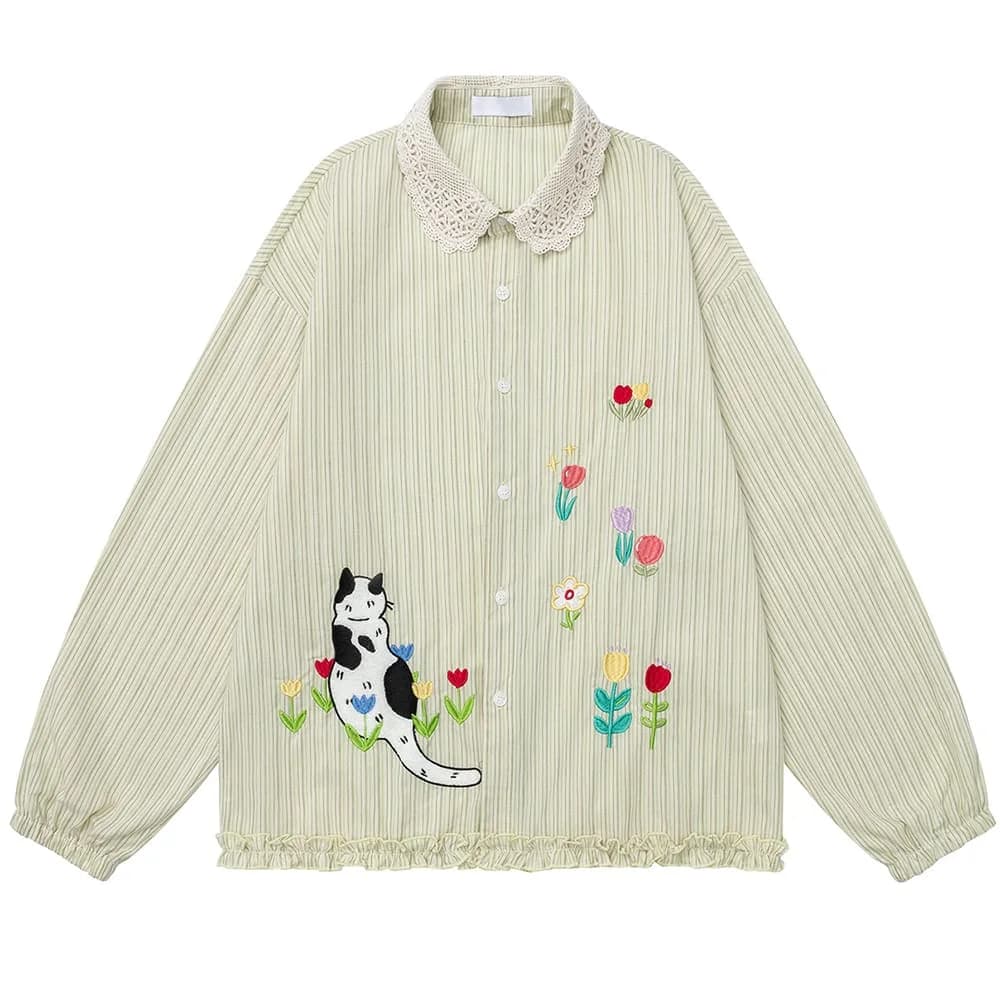
Try pairing a medium-weight crew pullover with the Green Cottagecore Cat & Flower Embroidery Shirt, made from a cotton and polyester blend. The structured collar and embroidered details sit above the crew neckline, adding personality while keeping the fabric flat against the chest. Tucking the shirt tail in while letting the sweater hem fall loose creates a balanced layered edge.
Make sure the inner shirt neckline is not wider than the sweater itself. If the shirt collar sags beneath the knit ribbing, the layeringWearing pieces over or under one another to add depth, warmth or contrast. looks unintentional. Keep the button placket fastened to at least the second button from the top to ensure the collar points stand upright.
- Opt for cotton-poly woven blends that stay crisp without requiring stiff starch.
- Button high enough that collar points rest over the knit ribbing rather than collapsing inward.
- Smooth down front plackets before pulling the sweater over your head to avoid mid-torso ridges.
Styling Relaxed Cardigans Over Midi Skirts
Cardigans allow you to break up horizontal blocks of color by creating an open vertical line down your torso. Pairing a loose cardigan with a flowy skirt offers movement while maintaining the cozy warmth central to this style. The critical proportion here is where the sweater hem meets the skirt waistline.
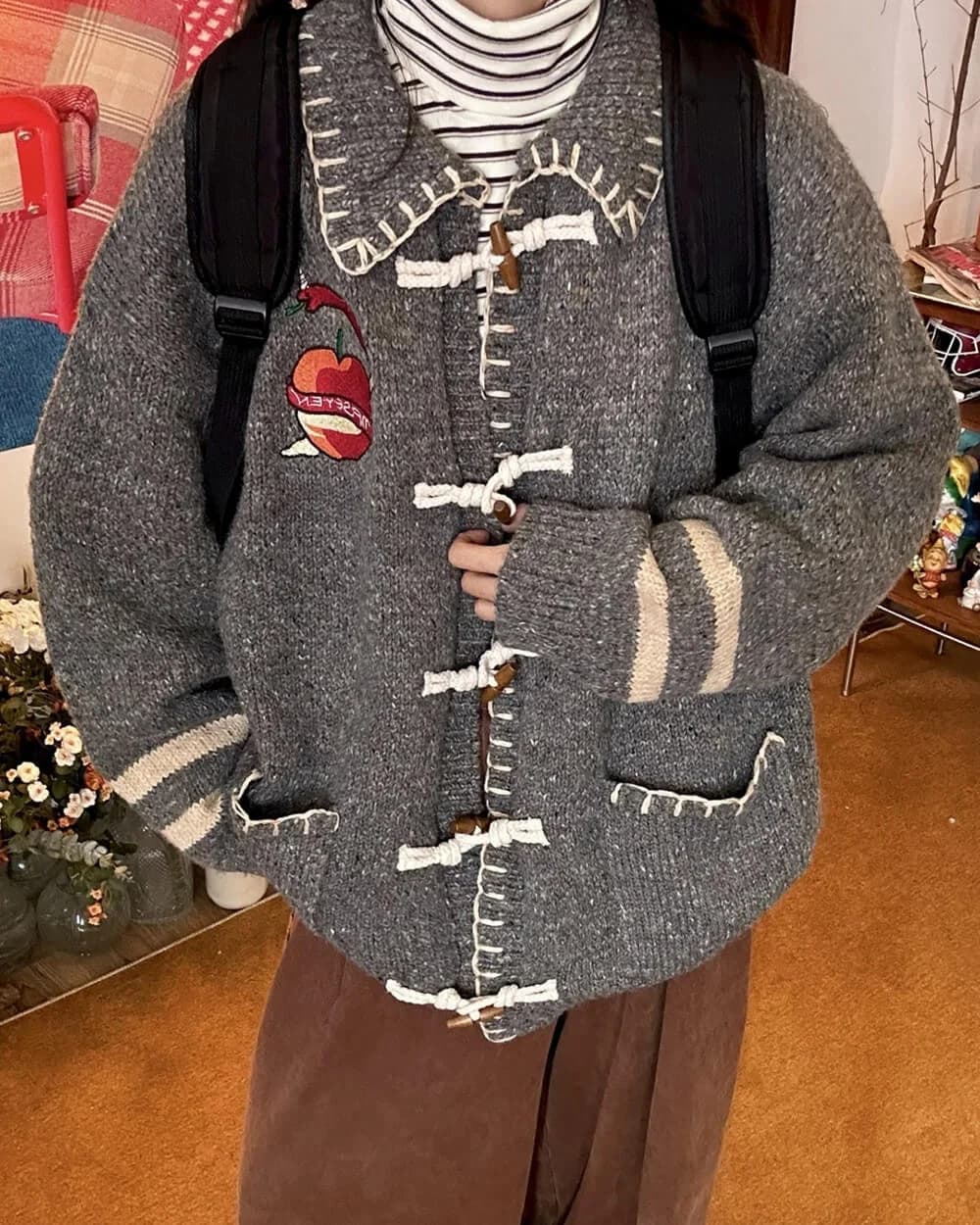
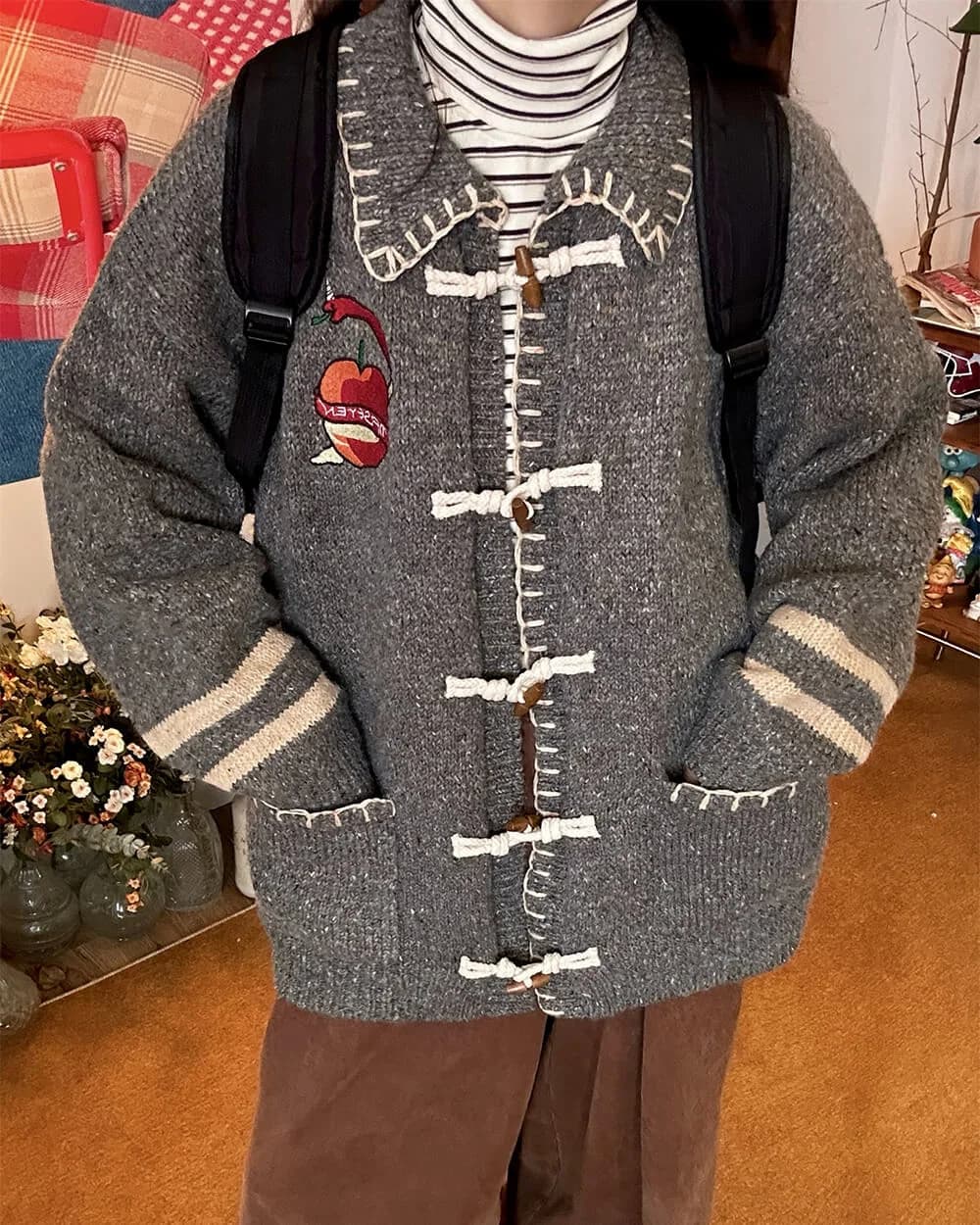
When working with mid-length knits, leave the bottom two buttons undone. This creates an inverted V-shape that reveals the high waist of the skirt, extending the visual line of your legs. For instance, throwing the acrylic-knit Apple Embroidery Grey Cardigan over a tucked plain tee and the Black White Polka Dot Gingham Maxi Skirt in lightweight polyester adds charming fruit accents while keeping the lower half airy and fluid.
Be cautious with heavy knit hems that land directly across the widest point of a pleated skirt. If a cardigan is too long and buttoned all the way down, it crushes the natural drape of the skirt fabric. Leaving the knit open allows the pattern of the skirt to show clearly while walking.
- Unbutton the lowest buttons to create an inverted V that highlights the skirt waistband.
- Pair heavier textured knits like acrylic ribs with lightweight polyester skirts to balance fabric weights.
- Ensure the skirt hem falls at least mid-calf to prevent the cardigan from visually shortening you.


Quarter-Zips and Mock Necks for Colder Climates
When the temperature drops, a zip-up jumper serves as both an insulating mid-layer and a functional outerwear alternative. The zipper gives you control over thermal comfort: zip it to the chin in biting winds, or unzip it wide across the chest when stepping into heated indoor spaces.
A piece like the Grandpa Style Cable Knit Zip Jumper, crafted from polyester in blue, beige, or black, works well layered over a fitted thermal mock neck or a thin turtleneck. The metal zipper contrasts with the chunky cable pattern, while the inner high neck provides wind protection without requiring a bulky scarf that might clutter the chest.
To prevent this look from reading like generic skiwear, pair the jumper with tailored bottom pieces. Check through dedicated Grandmacore Sweaters to identify knits with vintage stitch variations like honeycomb or moss stitch, which bring handmade authenticity to an otherwise sporty zip construction.
- Layer a close-fitting ribbed mock neck underneath to prevent neck chafing from zip hardware.
- Keep the base layer in a contrasting neutral to highlight the open collar shape.
- Choose cable knit designs that retain structure even when unzipped halfway.

Pattern Clashing and Botanical Cardigans
Grandmacore style loves mismatched prints, garden motifs, and kitchen-table nostalgia. However, combining patterned sweaters with printed bottoms requires deliberate restraint in scale so the elements support rather than fight each other.
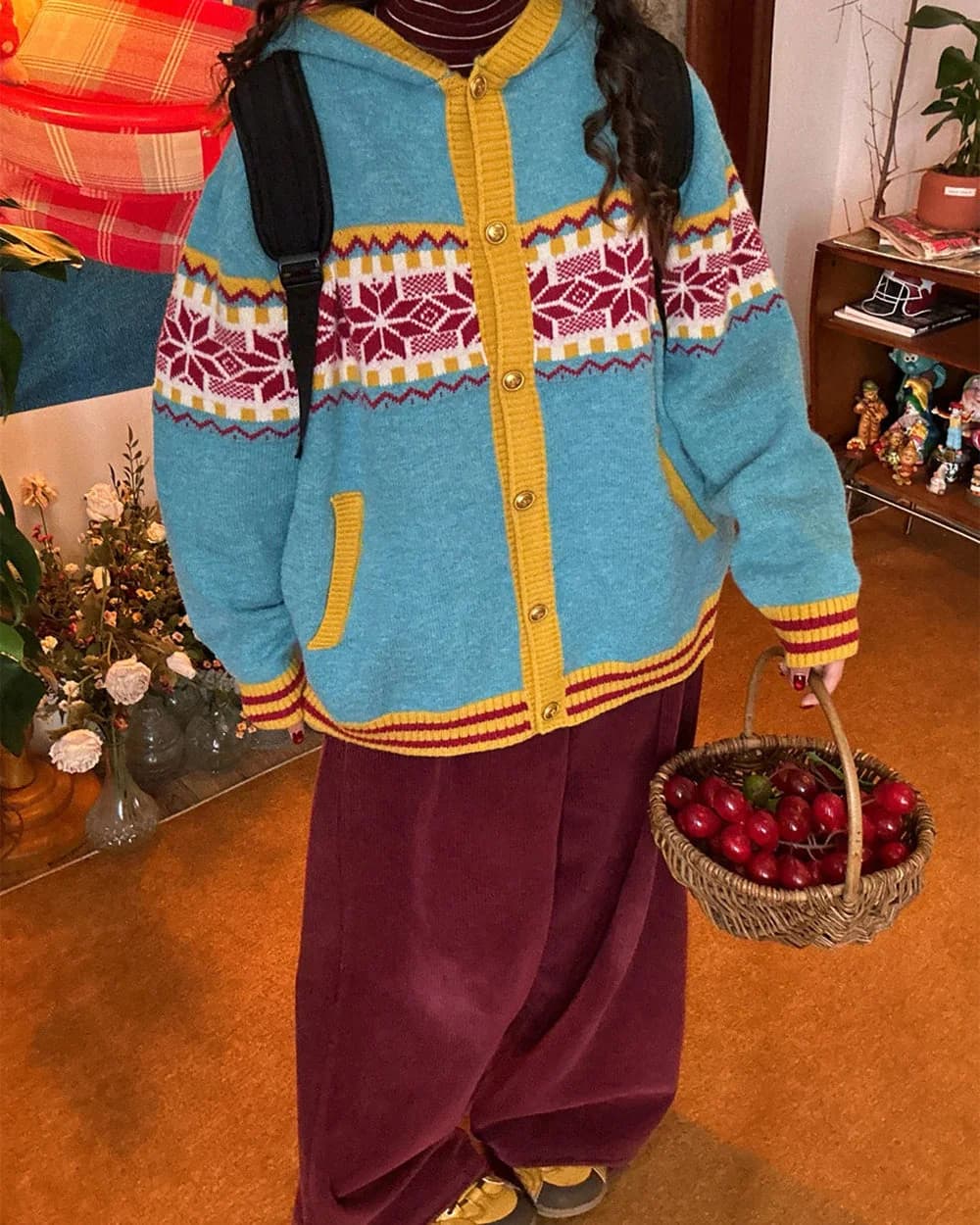
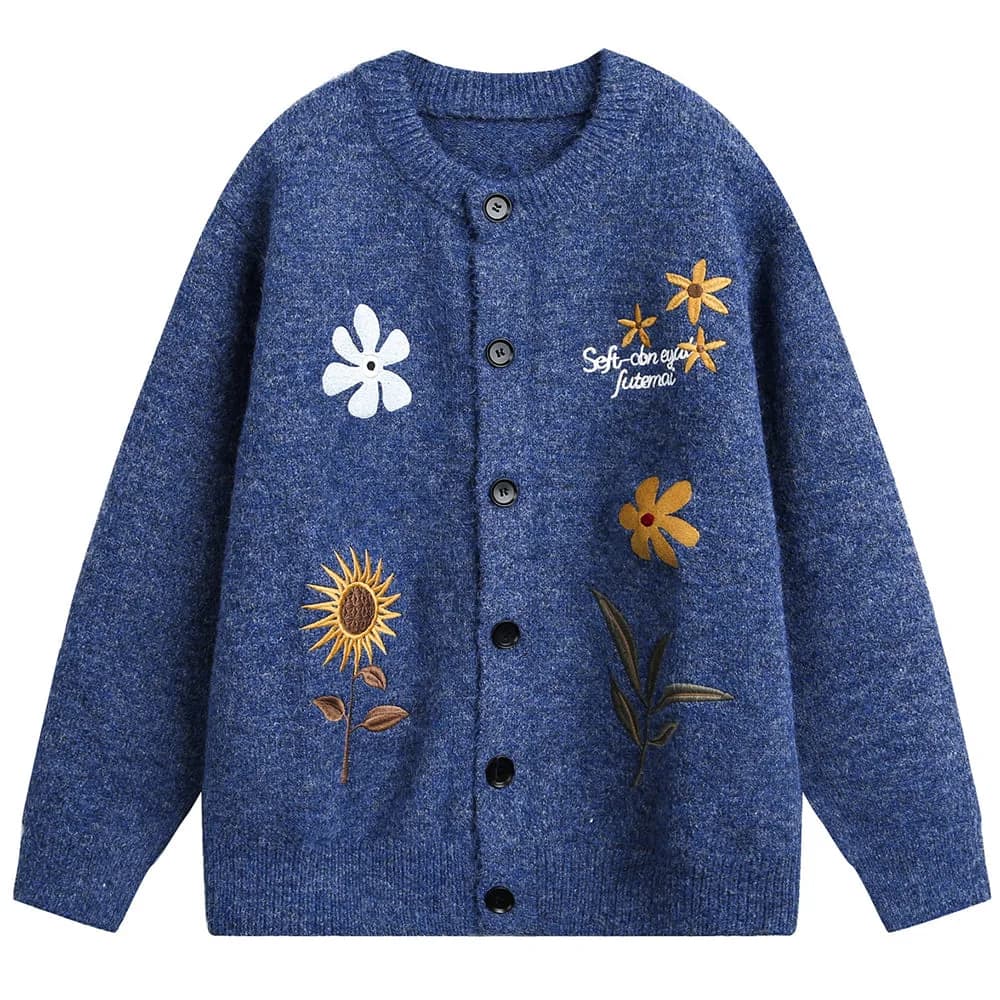
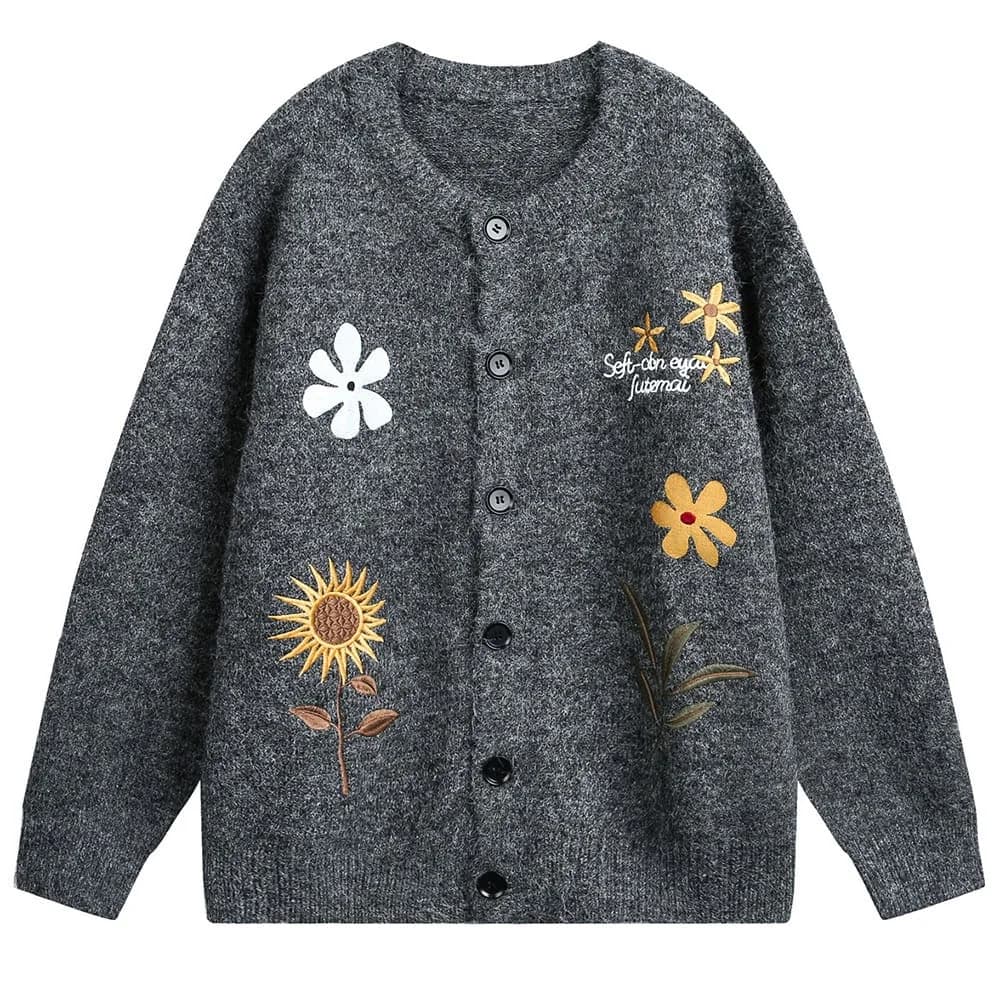
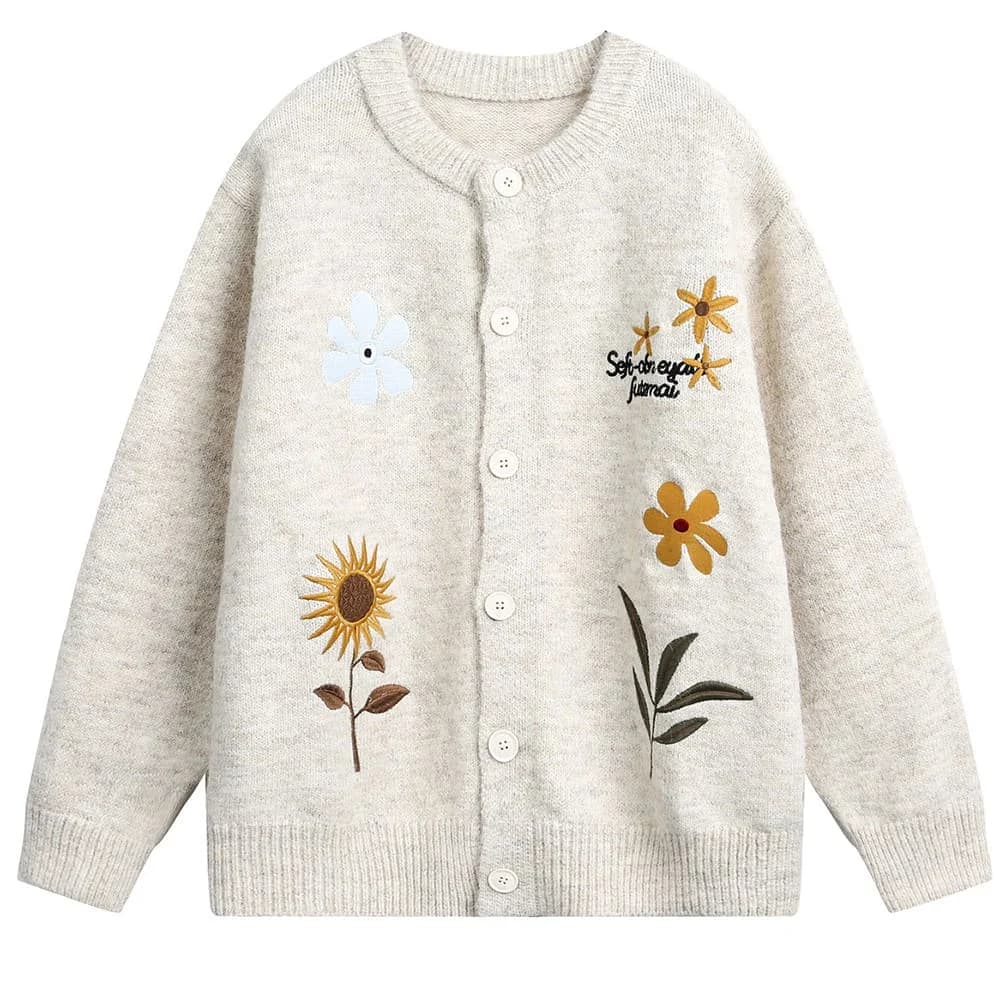
If you are wearing an embroidered top layer like the Cottagecore Embroidery Knit Cardigan in acrylic, which features botanical stitching, keep your lower base layer in a quieter, uniform pattern or solid tone. Alternatively, if your cardigan features an all-over repeating layout like the Lemon Chalet Pattern Cardigan with its blue and yellow palette, combine it with a micro-print gingham or a plain twill base rather than competing large florals.
A safe rule for mixing patterns is pairing one pictorial motif (like fruit, cats, or flowers) with one geometric motif (such as fine checks, windowpanes, or stripes). Ensure they share at least one underlying color, such as cream, sage, or navy, to tie the pieces together into a unified story.
- Match one background shade between your knitwear and bottom layer for cohesiveness.
- Combine one illustrative design with one clean geometric print rather than two busy pictures.
- Anchor multiple colors with simple canvas shoes or unadorned leather boots.
Navigating Petites: Avoiding the Swallowed-Whole Effect
Petite frames often run into trouble with oversized grandmacore knits because long sleeves and drop waists can visually shorten legs. You do not need to avoid relaxed knits entirely; you just need to manage where the horizontal breaks fall on your body.
One dependable approach is the front tuck, or French tuck. Instead of tucking a thick sweater entirely into your waistband—which creates a bulky ring around your midsection—tuck just two inches of the front center hem into high-rise bottoms. Then, fold the side hem gently upward. This exposes the belt line, instantly re-establishing leg length while letting the cozy back drape remain loose.
Sleeve cuffs are another critical detail. Rolling or pushing oversized sleeves up toward the mid-forearm exposes the thinnest point of your arm, breaking up the continuous mass of yarn. Choosing slightly cropped boxy cuts from the Grandmacore Cardigans lineup offers instant proportion balance without requiring complicated tucking tricks.
- Use a two-inch front tuck to show off high-waisted bottoms without midriff bulk.
- Push long sleeves up to the three-quarter mark to reveal wrists and add definition.
- Seek boxy knits with shorter body lengths that naturally sit at the hip bone.
Flattering Wider Shoulders and Fuller Busts
Heavily textured knits add volume by design, which can make those with broader shoulders or fuller busts feel top-heavy if the neckline is not managed properly. Strategic layeringWearing pieces over or under one another to add depth, warmth or contrast. creates vertical space that naturally balances upper torso width.
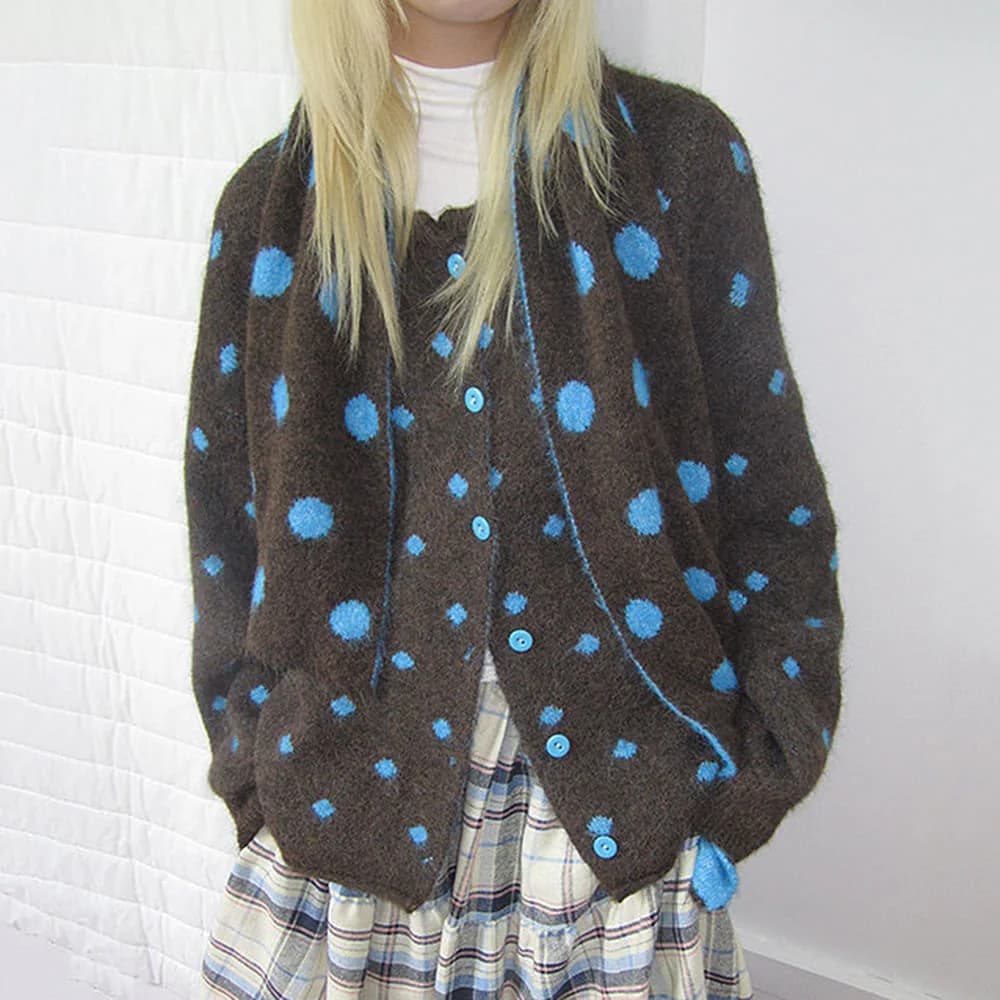
Deep V-neck cardigans are exceptionally helpful here. A piece like the Coffee Break Polka Dot Cardigan in brown polyester creates an elongated V that draws the eye down toward the center of the torso. Wearing it buttoned halfway over a scooped or square-neck camisole leaves the collarbones open, avoiding the dense, unbroken wall of fabric that high crew necks can create.
Avoid stiff, ruffled inner collars that add extra bulk right beside the jawline. Instead, lean toward soft, flat-point collars or simple round necks in thin modal or cotton. Let the cardigan hang straight along your sides rather than pulling it tight across the chest, which keeps the vertical drape intact.
- Select deep V-necklines to break up chest width and draw lines downward.
- Skip exaggerated neck ruffles that crowd the chin when wearing thick knits.
- Wear cardigans unbuttoned over dark, fitted camisoles to create slimming vertical side borders.
Layering for Mild and Humid Spring Climates
Sweater weather is not exclusive to freezing winter days. In many regions, spring brings damp, fluctuating conditions where heavy wool is suffocating, but a bare shirt feels too chilly. LayeringWearing pieces over or under one another to add depth, warmth or contrast. for these transition periods requires lightweight materials and open-knit weaves.
Cardigans made from airy acrylic or fine-gauge synthetic yarns are ideal for mild days because they offer drape without trapping heavy humidity. Wear an open cardigan over a sleeveless cotton tank top or a slip dress. This allows you to slide the knit off your shoulders and carry it loosely over your arm when the sun emerges, without feeling underdressed.
Pair these lighter knits with breathable skirts from the Grandmacore Skirts range. A lightweight midi or maxi made of airy polyester or linen blends moves with the breeze, keeping your legs cool while the sweater protects your arms from crisp morning gusts.
- Choose loose, open gauges rather than dense, boiled-wool styles for mild days.
- Layer over sleeveless base tops so shedding the knit keeps you completely comfortable.
- Select light, swishy skirts that allow lower-body air circulation.
Midwinter Thermal Stacking Without the Bulk
True winter layeringWearing pieces over or under one another to add depth, warmth or contrast. requires stacking multiple thin layers rather than throwing one massive sweater over bare skin. Direct contact between coarse knitwear and your body creates air gaps where warmth escapes, while a fitted thermal base locks heat close to your core.
Start with a seamless, fitted base layer made of modal, bamboo, or silk-weight thermal weave. Over that, add a button-up shirt for collar detail, followed by your favorite chunky sweater. If you need outdoor protection against wind, top the combination with a structured shell like the Oversized Cat Print Jacket in polyester. The jacket breaks the wind, while the knit beneath traps the warmth.
Ensure your outerwear armholes are cut deep enough to accommodate sweater sleeves. If you force a cable knit into a tight, tailored jacket sleeve, the arm binds at the elbow, cutting off circulation and restricting movement. Oversized boxy jackets are the natural choice for layeringWearing pieces over or under one another to add depth, warmth or contrast. over grandmacore knits.
- Stack two thin base layers beneath a knit rather than one suffocatingly thick piece.
- Check that outerwear armholes are cut wide enough to prevent underarm bunching.
- Rely on windproof outerwear shells to protect breathable open-knit sweaters.
Pairing Sweaters with Tailored and Corduroy Trousers
While skirts are common in grandmacore outfits, trousers offer a grounded, academic twist on the style. The tactile contrast between a fuzzy sweater and textured pants—like ribbed corduroy, wool flannel, or heavy twill—feels authentically vintage and highly practical for daily wear.
When styling bulky sweaters with trousers, pay close attention to the hip line. If you wear an oversized pullover over wide-leg trousers, the entire outfit can look like a wide rectangle. You can solve this by pairing loose sweaters with tapered pants, or pairing wide trousers with a sweater that is cropped or neatly tucked at the front.
Browse through the Grandmacore Pants collection to find trousers with pleated fronts or sturdy high waists. A pair of pleated, straight-leg trousers in olive, brown, or charcoal grounds a colorful cardigan, giving it an understated, everyday library feel rather than a costume appearance.
- Pair wide-leg trousers with cropped or tucked knits to define your natural waist.
- Use straight or tapered corduroy pants to counterbalance wide, oversized sweater bodies.
- Coordinate earthy trouser tones (olive, chocolate, rust) with neutral cream or grey knits.
Dresses Under Sweaters: Transforming Summer Wardrobes
You can extend the lifespan of warm-weather dresses well into autumn and winter simply by using grandmacore sweaters as transformation pieces. Throwing a sweater over a dress instantly turns the skirt portion into a functional separate.
To pull a crew neck pullover over a dress without looking frumpy, employ the belt-tuck technique. Fasten a slim belt over your dress at your natural waist, pull the sweater on over it, and tuck the sweater hem up and into the belt from underneath. The sweater folds down over the belt, concealing it while holding the knit precisely at your waistline.
Cardigans can be styled over dresses without any belts at all. Simply button the middle two buttons of a relaxed cardigan over a tiered midi dress, allowing the dress neckline and lower tiers to flow freely. This adds warmth to light cotton dresses while keeping the romantic silhouetteThe overall shape an outfit creates, from fitted to loose and layered. intact.
- Use a skinny belt over a dress to fold and hold crew sweaters at hip level.
- Leave the top and bottom buttons of cardigans open to reveal dress details.
- Ensure the dress fabric is smooth enough so knitwear doesn't cling awkwardly to it.

Common Grandmacore Layering Mistakes to Avoid
The line between effortlessly cozy and genuinely uncomfortable usually comes down to small fabric frictions and mismatched proportions. One of the most frequent mistakes is layeringWearing pieces over or under one another to add depth, warmth or contrast. two garments made of stiff, clinging materials that catch on one another every time you take a step.
Avoid pairing loose acrylic knits with heavily static-prone nylon slips unless you treat them with anti-static spray or wear a smooth cotton barrier between them. Clinging fabric ruins the gentle drape of your garments and causes skirts to ride up your legs awkwardly.
Another common pitfall is over-layeringWearing pieces over or under one another to add depth, warmth or contrast. accessories alongside complex sweaters. Grandmacore knits often carry heavy cable textures, embroidered flowers, or novelty buttons. Adding chunky statement scarves, multiple brooches, and heavy knit beanies on top of a busy sweater creates visual chaos. Let the sweater remain the focal point of your upper body.
- Never layer two synthetic static-prone garments directly against each other.
- Limit extra neck accessories when wearing sweaters with intricate collars or embroidery.
- Check the side profile in a mirror to ensure knits are not sticking out rigidly at the back.
Care and Maintenance of Layered Knits
Because layered sweaters make contact with button plackets, metal zippers, and textured underlayers, they are vulnerable to snagging and friction pilling. Taking simple maintenance steps keeps vintage-style knits looking fresh season after season.
Always button up your cardigans and close any zippers before storing or washing them. A loose metal zipper from a jumper can easily catch on an open-knit cardigan in the laundry, pulling threads loose. When washing acrylic or blended knitwear, turn the pieces inside out and use a mesh wash bag on a gentle cycle to reduce surface friction.
De-pilling is an essential habit for anyone who wears layered knits. Underarm zones and side seams naturally rub against your base shirts and jacket linings. Run a simple manual fabric comb or electric lint shaver across these high-friction areas once a month to remove fuzz balls without damaging the knit structure.
- Zip and button all garments prior to washing to prevent snagging loose yarn.
- Wash knitwear inside mesh laundry bags on cold, delicate cycles.
- De-pill high-friction underarm areas regularly with a sweater comb.
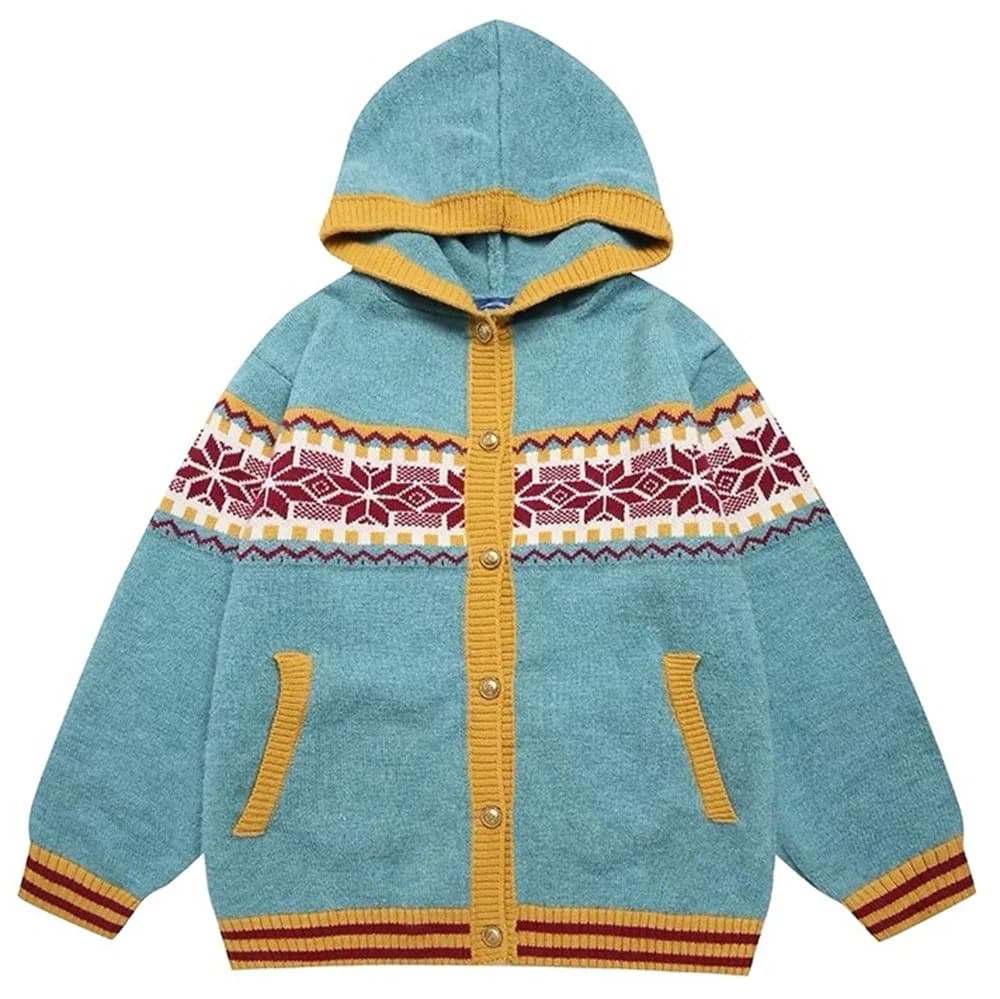
The Practical Grandmacore Layering Checklist
Before walking out the door, running through a quick mental checklist ensures your layered outfit delivers both visual balance and practical physical comfort throughout the day. A well-assembled outfit should move with you naturally without constant tugging or hitching.
Start at the neck: does your base collar sit neatly, and can you turn your head without fabric catching under your chin? Check your midsection: if you used a tuck, is the fabric distributed evenly around your sides, or is it bunching in the front? Finally, check your hem interactions to make sure your skirt or trousers provide a clean line beneath the sweater.
Thermal adaptability is the final test. Ask yourself if you can remove your primary sweater easily if the room heats up, without ruining the outfit underneath. If your base layer looks complete on its own, your grandmacore layered look is a functional success.
- Base layer check: Is the inner shirt presentable if the sweater needs to come off?
- Friction check: Do the sleeves move freely without dragging the underlayer up?
- Proportion check: Does the outfit show at least one clean anchor point at the collar, waist, or ankle?