
Created by the Kawaii Vibe editorial team. Our named style desks are editorial personas. Product details and availability can change.
Choosing a bag to accompany a green outfit usually breaks down at two points: scale and tonal weight. Green is an assertive visual color family, stretching from sharp lime to muted sage and deep forest pines. When your clothing features varying shades of green, choosing the wrong bag shape or volume can make an ensemble feel either bottom-heavy, overly cluttered, or visually flat. The goal is to select an accessory that serves both your daily carry requirements and balances the cut of your garments.
To build an outfit that feels deliberate, you need to assess the primary silhouetteThe overall shape an outfit creates, from fitted to loose and layered. of your clothes first, identify the carrying capacity you actually require for the day, and then select a bag structure that either complements or sharpens those lines. This guide breaks down the core principles of shape, proportions, shade matching, and practical volume so you can make confident styling decisions.
1. The Core Decision: Matching Bag Shape to Garment Silhouette
When planning an outfit around green pieces, the architectural line of your bag dictates where eyes rest first. Fluid garments like flowing dresses, flared trousers, or soft knits look best paired with bags that offer clean, defined lines. If your base layer is soft and drapey, a structured rectangular shoulder bag or a geometric mini crossbody adds visual stability. Conversely, if your outfit is already sharp—tailored trousers, stiff denim, or structured collared layers—a slightly curved crescent bag or a soft nylon tote softens the overall appearance without competing with the tailoring.
Consider how garments move throughout the day. Wearing boxy tops or heavy knitwear requires a bag that does not get lost underneath thick fabric folds. If you throw on an oversized layer like the Vintage Forest Green Sweatshirt, pairing it with an ultralight, paper-thin fabric pouch will look mismatched and overwhelmed. A bag with firm seams, defined corners, or a distinct cylindrical or rectangular profile holds its ground against dense fleece or ribbed knits.
Before you grab any accessory, look in a full-length mirror and trace the outer perimeter of your clothes. If the line is entirely rounded, introduce a crisp edge with your bag. If your clothing is rigid and sharp, choose a bag with curved contours to keep the silhouetteThe overall shape an outfit creates, from fitted to loose and layered. approachable and dynamic.
- Structured bags anchor fluid fabrics like mesh, satin, and soft knits.
- Curved or slouched silhouetteThe overall shape an outfit creates, from fitted to loose and layered.s balance stiff denim, cargo textures, and tailoring.
- Heavyweight tops require bags with enough body to avoid disappearing into folds.


2. Finding the Right Scale: Balancing Visual Volume
Scale is about how the physical footprint of your bag compares to your body frame and the width of your clothing. Carrying an oversized tote while wearing a slim mini dress can drown the outfit, shifting focus entirely onto the accessory rather than the cohesive styling. On the other hand, a micro pouch paired with wide-leg cargo pants and a chunky jacket can look like an afterthought rather than a functional accessory.
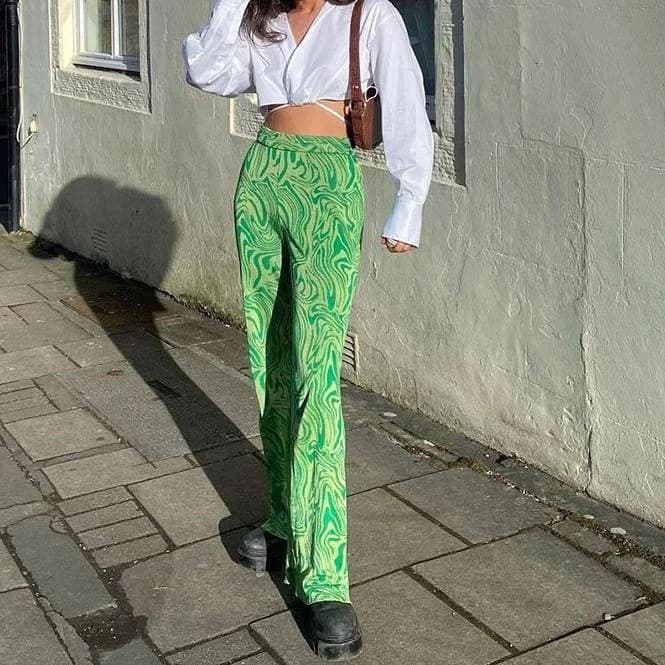
Look at horizontal proportions across your torso and hips. If you are styling broader bottoms such as the Straight Leg Green Y2K Pants, your lower half already carries significant visual width. A medium shoulder bag that rests right at the waistline creates a balanced bridge between your upper body and the wide pant legs. Placing a bulky backpack directly on the lower back can exaggerate hip width, whereas a compact bag resting near the ribs keeps the eye traveling upward.
To keep proportions harmonious, assess the visual center of gravity of your outfit. When your clothing features dramatic volume on top or bottom, select bags from the Green Aesthetic Bags collection that stay within medium dimensions, letting the garment lines lead the styling.
- Micro bags work best with streamlined silhouetteThe overall shape an outfit creates, from fitted to loose and layered.s and minimal layeringWearing pieces over or under one another to add depth, warmth or contrast..
- Wide pants benefit from bags resting higher on the torso to balance lower-body weight.
- Oversized totes pair smoothly with straight-leg cuts and long outerwear.
3. Everyday Carrying Capacities: What Actually Fits
Style decisions fall flat if your chosen bag cannot carry your daily essentials. Before deciding on shape, group your items into realistic daily carry categories. A micro or mini bag generally accommodates a phone, cardholder, lip balm, and house keys. A medium crossbody or shoulder bag handles those items plus sunglasses, a compact power bank, small hand cream, and daily medication. Large totes and backpacks support laptops, water bottles, notebooks, and an extra layer.
Selecting a bag that is physically packed to capacity distorts its silhouetteThe overall shape an outfit creates, from fitted to loose and layered.. A sleek rectangular bag that bulges at the seams looks messy and risks damaging zippers or seams. If your day demands a tablet, portable charger, and headphones, look directly into Green Aesthetic Backpacks rather than trying to compress everything into a structured mini purse. A dedicated backpack holds its shape cleanly under practical weight while distributing strain across both shoulders.
Aligning internal capacity with your routine prevents midday outfit frustration. Reserve compact accessories for minimal outings, and lean into roomy, dedicated utility bags when commuting, studying, or traveling.
- Micro format: Smartphone, keys, flat card case, lip tint.
- Mid-size shoulder format: Small wallet, cosmetics pouch, power bank, compact umbrella.
- Full backpack/tote format: 13-inch laptop, water bottle, planner, light jacket.
4. Navigating the Green Spectrum: Monochromatic vs. Contrast
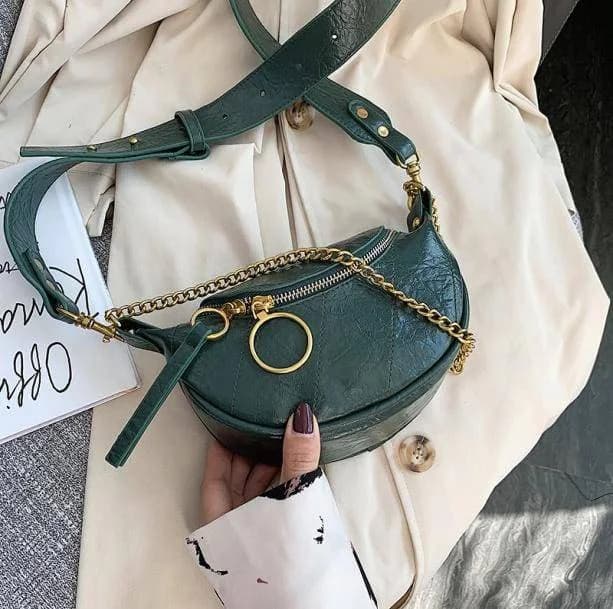
One of the biggest hurdles when styling green outfits is avoiding unintended shade clashes. Green contains cool tones like mint, emerald, and forest, as well as warm tones like olive, moss, and chartreuse. Mixing warm-yellow greens with cool-blue greens can sometimes read disjointed if not mediated properly. You do not need an exact dye match between your bag and clothing, but you do need intentional harmony.
When building a tonal look around a piece like the Mystic Moss Aesthetic Skirt, look at the undertone of the moss green. Pairing it with a bag in a darker pine or deeper olive builds depth without competing with the skirt. Monochromatic styling works best when you combine distinct materials—such as pairing smooth leather textures with woven skirts or ribbed knits—so the outfit maintains dimension rather than flattening out into a solid block of color.
If you prefer contrast over tonal matching, use your bag as an anchor. Deep forest bags ground vivid neon tops, while light sage bags lift dark bottle-green outerwear. Exploring options in Green Aesthetic Clothes gives you a clear sense of how various tones live together in a single wardrobe.
- Match undertones: Keep warm olives with earth tones; pair emeralds with cool greens.
- Mix textures to prevent same-shade matching from looking flat.
- Use dark forest tones as a grounding neutral for brighter green garments.

5. The Academic Silhouette: Pleats, Knits, and Satchels
The collegiate and preppy corner of green aesthetic fashion relies heavily on structured garments, checks, and layered knitwear. In these outfits, the ideal bag balances traditional tailoring with daily practicality. Boxy satchels, structured mini backpacks, and structured crossbodies complement the clean lines of pleated skirts, collared shirts, and argyle patterns.
Consider styling the Green Plaid Preppy Sweater over a crisp collared shirt and tennis skirt. Because the sweater features a distinct geometric pattern, your bag choice should avoid overly complex surface prints. A smooth, structured satchel or a rigid shoulder bag in deep hunter green or rich brown provides an orderly counterweight to the sweater’s pattern. The clean seams of the bag reinforce the preppy aesthetic without creating visual chaos.
When layeringWearing pieces over or under one another to add depth, warmth or contrast. with heavier campus-style knitwear, pay attention to strap drop length. A shoulder strap that is too short can pinch tightly against thick knit sleeves, distorting the shoulder line. Choose a bag with an adjustable cross strap or a hand-held top handle to let your layered knitwear drape naturally.
- Pair patterned knitwear with smooth, solid-color bag surfaces.
- Ensure shoulder straps accommodate thick sweater sleeves comfortably.
- Structured satchels and boxy mini backpacks reinforce collegiate proportions.

6. Casual Streetwear: Hoodies, Cargoes, and Sling Bags
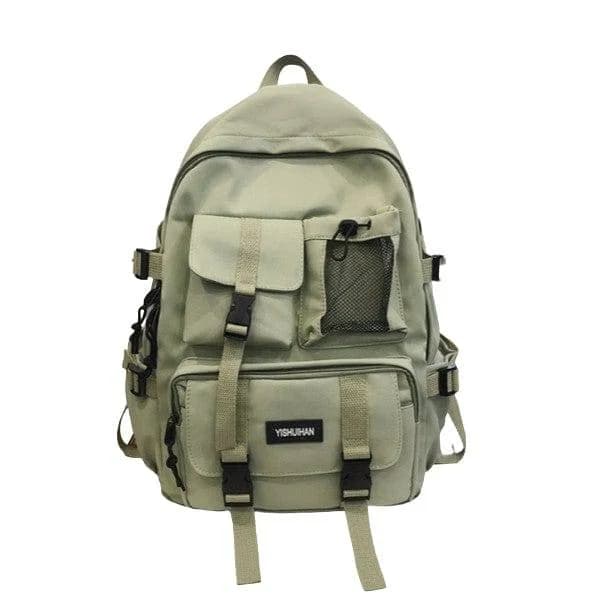
Casual street fashion prioritizes movement, comfort, and utilitarian details. When your outfit centers on relaxed garments, traditional formal handbags can feel disconnected. Instead, modern nylon shoulder bags, utilitarian sling packs, and multi-pocket crossbodies fit naturally alongside skate shoes, denim, and oversized tops.
Take a vivid, high-energy piece like the Neon Sweatshirt Green. Because neon commands immediate attention, pairing it with an overly delicate handbag creates an odd contrast in styling energy. A black or dark olive technical sling bag, worn high across the chest, cuts through the bright sweatshirt and adds visual utility. This placement breaks up the wide expanse of neon across the chest while keeping your hands free.
Wide-leg pants also influence bag choice in casual settings. Relaxed pants need accessories that feel durable and laid-back. Check out the wider range of Green Aesthetic Tops to see how pairing loose cuts with hands-free crossbodies or canvas totes creates an effortless weekend uniform.
- Technical sling bags break up the broad surface of oversized sweatshirts.
- Hands-free crossbodies pair naturally with relaxed skate pants and sneakers.
- Durable canvas and nylon textures complement streetwear garments.
7. Sleek Night-Out Styling: Mini Bags and Compact Shoulder Purses
Evening and social settings call for tighter silhouetteThe overall shape an outfit creates, from fitted to loose and layered.s, refined textures, and minimal carry loads. When heading out for dinner or social events, large utility totes and bulky backpacks overwhelm party outfits. A compact mini bag or a sleek 90s-style shoulder baguette keeps the silhouetteThe overall shape an outfit creates, from fitted to loose and layered. sharp and unobtrusive.
If your outfit features a body-skimming piece like the Green Floral Bodycon Dress, the bag must not disrupt the sleek profile. A micro shoulder purse worn tucked neatly under the arm keeps the focus on the lines of the dress. Long, heavy crossbody straps that cut across the bust line can bunch up lightweight dress fabrics and interrupt the clean flow of floral prints. A top-handle mini bag carried in hand is another great option that avoids friction against delicate dress fabrics.
Keep hardware in mind for evening styling. Small metallic clasps, dainty chains, or subtle buckle details can tie into earrings and rings from your Green Aesthetic Accessories collection, bringing the look together seamlessly.
- Under-arm baguette bags preserve the clean lines of fitted dresses.
- Crossbody straps that cut diagonally across prints can disrupt dress silhouetteThe overall shape an outfit creates, from fitted to loose and layered.s.
- Minimal hardware on evening bags prevents snagging on stretch fabrics.

8. Y2K Revival: Asymmetrical Lines and Petite Hardware
The Y2K revival emphasizes playful proportions, low-rise waists, asymmetric cuts, and tactile hardware. Outfits styled within this trend frequently feature flared silhouetteThe overall shape an outfit creates, from fitted to loose and layered.s, contrast stitching, and graphic baby tees. Bags matching this energy should embrace distinct 2000s cues: curved moon silhouetteThe overall shape an outfit creates, from fitted to loose and layered.s, elongated baguette straps, exposed cargo pockets, and visible silver buckles.
When wearing the Green Moth Sleeveless Top paired with low-rise bottoms, a short-strap shoulder bag that sits right at the ribcage creates that classic retro spacing. The cropped cut of the top leaves space at the waist, and a compact bag resting high under the arm draws attention to your outfit’s layered proportions without crowding your hip line.
Look for bags that introduce playful textures, such as nylon, faux crocodile embossing, or multiple zip compartments. These tactile surfaces match the youthful, energetic tone of graphic tops and low-slung denim without feeling overly formal.
- Baguette bags resting high under the arm flatter cropped and sleeveless tops.
- Exterior pockets and buckle details complement early-2000s nostalgia.
- Asymmetric bag shapes create visual movement alongside casual separates.
9. The Scholar and Vintage Look: Rich Earth Tones and Sturdy Packs
Academia and vintage-inspired green aesthetics lean heavily on muted woodland tones, corduroy, tweed, and layered outerwear. In these outfits, your bag needs to look durable and classic. Faux leather satchels, roll-top canvas backpacks, and structured courier bags are natural fits for this aesthetic.
Styling the Green Academia Sweater with pleated trousers or a wool-blend skirt calls for a bag with heritage character. A deep moss or rich forest backpack provides authentic utility while honoring the literary tone of the outfit. Rather than choosing sporty nylon with plastic clips, opt for canvas or matte faux leather featuring metal buckles or magnetic snap straps to preserve the vintage feel.
Consider how the bag wears over your shoulders when layeringWearing pieces over or under one another to add depth, warmth or contrast. under heavier coats. Sturdy, padded backpack straps sit comfortably over thick sweater knits without slipping off slick outerwear fabrics, making them an ideal choice for full days out.
- Choose matte canvas or faux leather to match academic textures.
- Avoid high-gloss finishes and sporty plastic hardware in vintage ensembles.
- Structured satchels and backpacks offer functional space for notebooks and devices.
10. Strap Length and Placement: Controlling Body Proportions
Where a bag lands against your body dictates where people look. The strap length alters your perceived proportions just as much as the rise of your pants or the hemline of your skirt. A bag resting on your widest point will draw attention there, while a bag resting higher elongates the lower half of your body.
A crossbody bag adjusted to hit exactly at the hip bone can visually cut your torso in half and make your legs appear shorter, especially when wearing mid-rise bottoms. Shortening the strap so the bag rests snugly against your lower ribcage or upper waist lifts the eye upward and makes your legs appear longer. This is particularly effective when pairing bags with longer trousers or maxi skirts.
Handheld options, such as top-handle bags, redirect focus toward your calves and shoes. If your outfit features distinctive footwear, carrying a bag low in hand creates a cohesive lower-half frame. Test your strap adjustments in front of a mirror whenever you switch footwear heights.
- Ribcage placement visually lengthens legs and keeps bags secure.
- Hip-level placement adds visual width to the hip and upper thigh area.
- Top-handle bags draw visual focus downward toward footwear and hems.
11. Weather, Commuting, and Material Practicality
Your local climate and daily commute should heavily influence the materials you choose. Wet weather, public transit, and walking long distances require bags that can handle the elements without staining or ruining your clothes. Water-resistant nylon, treated canvas, and smooth faux leather clean easily and protect your belongings from rain and spills.
In rainy weather, pairing an oversized green knit with a soft, untreated suede bag can lead to disaster, as damp knitwear can transfer dye onto porous bag surfaces, or wet suede can bleed onto light green tops. Instead, choose smooth, coated finishes that shed raindrops. If you commute through crowded subway cars or buses, bags featuring full zip closures or secure fold-over flaps protect your essentials better than open tote bags.
Cold weather also changes how you carry your bag. Puffy winter parkas make shoulder bags slip easily off the arm. In icy or rainy seasons, an adjustable crossbody strap worn under or firmly over your outer layer ensures your bag stays securely in place.
- Smooth synthetic materials wipe dry and resist rainy weather.
- Avoid untreated suede when wearing wet-weather layers to prevent dye transfer.
- Full zip closures offer essential protection on crowded public transit.

12. Common Styling Pitfalls to Avoid
When building green aesthetic outfits, a few easy mistakes can throw off an otherwise great look. The first pitfall is hardware competition. If your bag features heavy gold-toned chains, but your jewelry, belt buckles, and shoe accents are cool silver, the metal mix can look haphazard. Aim to align your metal finishes across your accessories for a polished presentation.
Another common error is over-matching every single accessory. Wearing a forest green top, forest green pants, a forest green bag, and matching green shoes creates a monotone uniform rather than a nuanced outfit. Break up the shades: if your outfit features rich forest tones, try an accessory in pale celadon, deep espresso, or muted stone to give the eye a resting point.
Finally, avoid carrying overloaded micro bags. Forcing wallets, lipsticks, and phones into an undersized pouch warps the seams and makes the accessory look strained. When your daily carry exceeds mini capacity, embrace a mid-sized shoulder bag or structured backpack instead.
- Mismatching hardware metals creates unintended visual friction.
- Exact color matching from head to toe can flatten out your silhouetteThe overall shape an outfit creates, from fitted to loose and layered..
- Overstuffing small bags ruins their clean structural shape.
13. Bag Selection Checklist Before You Head Out
Before stepping out the door, take thirty seconds to run through a quick styling checklist. This ensures your outfit looks cohesive, feels comfortable, and carries everything you need for the day ahead without unexpected hassles.
First, check your scale: does your bag hold its own against the volume of your clothes, or is it getting lost under thick fabrics? Second, check strap comfort: can you move your arms freely, or does the bag slip off your shoulder when layered over your top? Third, assess practical volume: do you have room to zip the bag smoothly without forcing the seams?
Running through these simple visual and practical tests ensures your accessories feel like a natural extension of your personal style rather than an inconvenient burden.
- Visual balance: Does the bag size complement your garment thickness?
- Hardware match: Do the clasps and buckles align with your jewelry?
- Capacity check: Does the bag close flat without bulging?
- Mobility: Can you walk, sit, and reach comfortably with the strap in place?
14. Building a Versatile Green Aesthetic Bag Capsule
If you want to simplify your everyday routine, building a small three-bag capsule covers virtually any green aesthetic outfit you put together. Rather than collecting dozens of trend-specific bags, focusing on three core silhouetteThe overall shape an outfit creates, from fitted to loose and layered.s ensures you are ready for school, work, casual weekends, and nights out.
Start with a structured mid-size crossbody in a neutral olive or deep forest. This bag handles daily errands, pairs effortlessly with jeans and sweaters, and offers enough storage for standard everyday essentials. Second, invest in a structured collegiate or utility backpack—such as those found in our Green Aesthetic Backpacks collection—for work days, campus commutes, and carrying electronics.
Complete the trio with an under-arm baguette or top-handle mini purse in a clean, polished finish. This piece handles evening events, dinners, and parties when you only need keys, cards, and lipstick. With these three styles in your rotation, you will always have the right scale, shape, and storage ready to complement your green aesthetic wardrobe.
- Core daily piece: Mid-size neutral olive or forest crossbody bag.
- Work/study anchor: Structured canvas or faux leather green backpack.
- Evening choice: Compact 90s shoulder baguette or mini top-handle purse.