Created by the Kawaii Vibe editorial team. Our named style desks are editorial personas. Product details and availability can change.
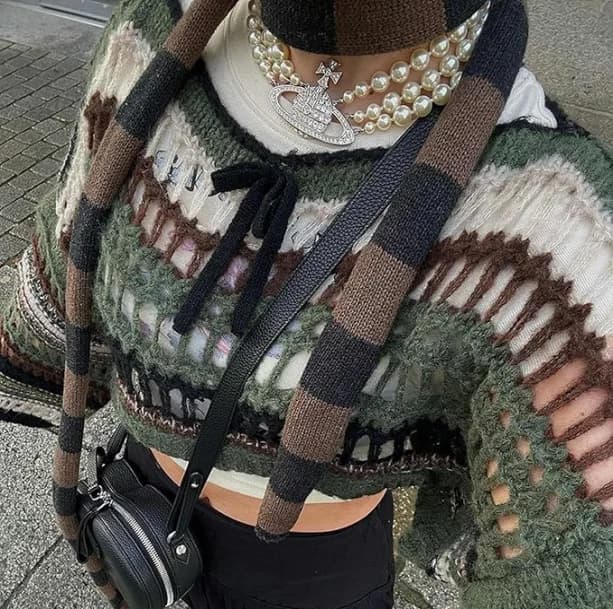
Green brings an earthy, calming freshness to everyday outfits, whether you gravitate toward sage tones, muted moss, deep forest, or punchy chartreuse. LayeringWearing pieces over or under one another to add depth, warmth or contrast. with green knitwear lets you experiment with contrasting textures, collared undershirts, and structured outerwear without losing the clean shape of your overall outfit. The key is coordinating weights, hemlines, and necklines so you never end up swimming in excess fabric or feeling stiff throughout the day.
Instead of relying on rigid rules, good layeringWearing pieces over or under one another to add depth, warmth or contrast. comes down to understanding garment density and line placement. A loose knit over wide trousers creates an entirely different visual weight than a cropped pullover worn over a fitted midi skirt or tailored bottoms. When you pick knit pieces from our broader edit of green aesthetic clothes, you gain a versatile color base that pairs naturally with denim, neutrals, leather textures, and crisp woven cottons.
This guide outlines specific methods to style and balance green knits across various climates, body proportions, and lifestyle needs. You will find clear styling blueprints, tips for combining specific garments, practical checkpoints before you step out the door, and direct links to help you find the right knitwear pieces for your wardrobe.
Solving the Bulk Problem: Understanding Fabric Weight and Gauge
When building a layered look around green knitwear, thickness is the first detail to evaluate. Chunky cable knits, ribbed wool-blends, and loosely woven synthetics behave very differently when placed under a coat or over a base layer. If your sweater has a heavy yarn gauge, adding a thick flannel or a padded vest underneath will immediately bunch around the armpits and restrict your arm mobility.
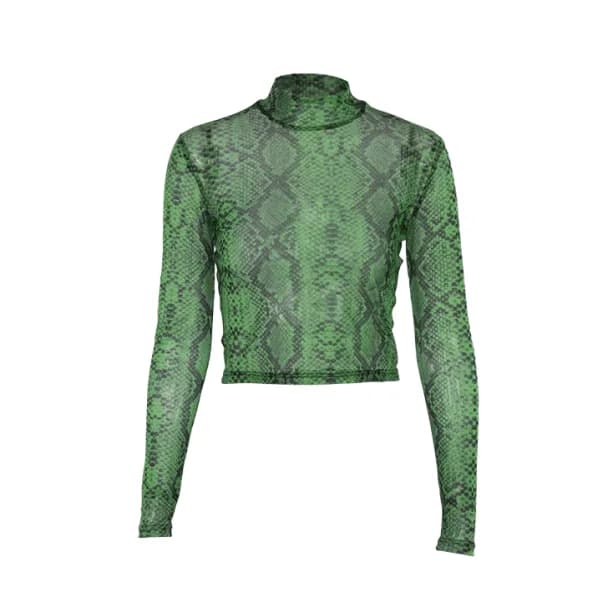
For smooth, comfortable layeringWearing pieces over or under one another to add depth, warmth or contrast., keep your base layer as low-profile as possible. Lightweight cotton camisoles, ribbed tanks, and thin microfiber tees lie flush against your skin, providing thermal warmth without adding physical volume beneath your knit. A great example of a streamlined base is the Green Moth Sleeveless Top, which features a slim, stretchy cotton, polyester, and elastane blend that stays smooth under looser pullovers.
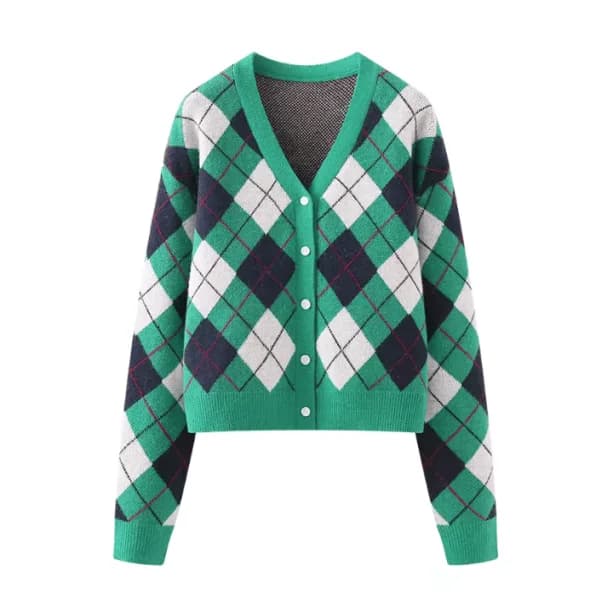
When shopping for specific pullovers, look directly at the listed materials and fiber blends. Garments like the Green Plaid Preppy Sweater combine cotton and acrylic, offering mid-weight warmth that holds its shape nicely while remaining pliable enough to sit comfortably beneath utility jackets or tailored blazers without pinching.


Balancing Proportions: Managing Volume and Hemlines
A common struggle with aesthetic sweaters is managing volume so you do not lose your frame entirely. If you wear an oversized, boxy green knit over wide-leg bottoms without adjusting the lines, the eye moves straight down without noticing your proportions. Balance is created by playing with contrasting dimensions—pairing wide cuts with narrower shapes, or using partial tucks to mark the natural waist.
If you prefer roomy tops, anchor them with fitted or straight-leg bottoms to create visual stability. Pairing a slouchy knit with straight-line trousers maintains clean lines down your legs, giving the top half permission to be intentionally relaxed. Using a front-tuck (or French tuck) into the waistband exposes your belt line and prevents the knit from pooling across your hips.
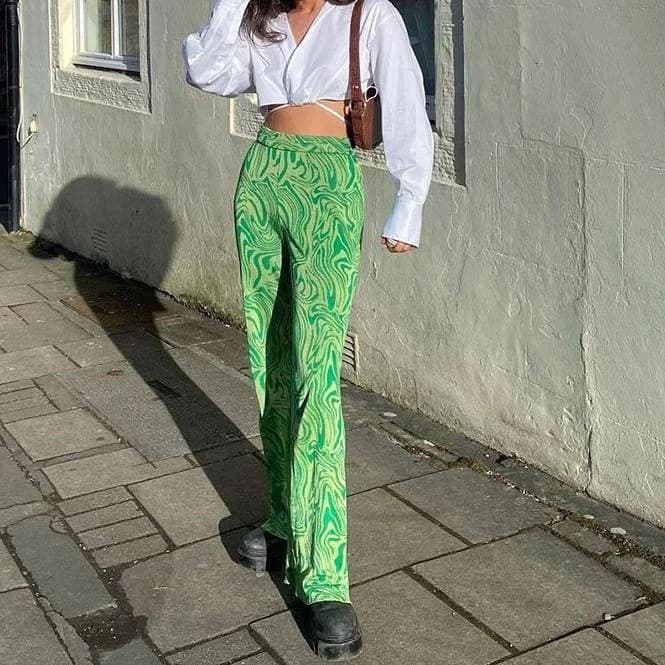
Conversely, if you choose relaxed, puddle-hem trousers like the Straight Leg Green Y2K Pants, pair them with knits that stop cleanly at the waistband or can be neatly folded upward. This prevents your outfit from dragging downward and ensures each piece has room to stand out without competing for space.
Base Layers: Choosing the Right Under-Knit Foundations
Base layers serve two practical purposes: they keep your outer knits fresher for longer between washes and protect your skin from scratchier yarns. When layeringWearing pieces over or under one another to add depth, warmth or contrast. under green knitwear, the neckline of your base dictates whether your outfit feels casual, structured, or romantic. A crewneck tee brings an easy streetwear feel, while a pointed woven collar introduces academic neatness.
For tops worn completely under your sweater, look across everyday staples in our green aesthetic t-shirts range to pick colors that complement your outer layer. If your sweater is olive or sage, an ivory or cream base softens the palette, whereas charcoal or deep black gives forest greens a moodier, grounded edge.
Make sure the sleeve length of your base layer either stops well short of your wrist or extends just past your sweater cuff intentionally. A base sleeve that constantly rides halfway up your forearm creates uncomfortable bunching throughout the day. Smooth, synthetic-blend long sleeves or sleeveless stretch tops are the most fuss-free choices beneath snug-fitting sleeves.
Collared Layering: Collar Types and Neckline Pairings
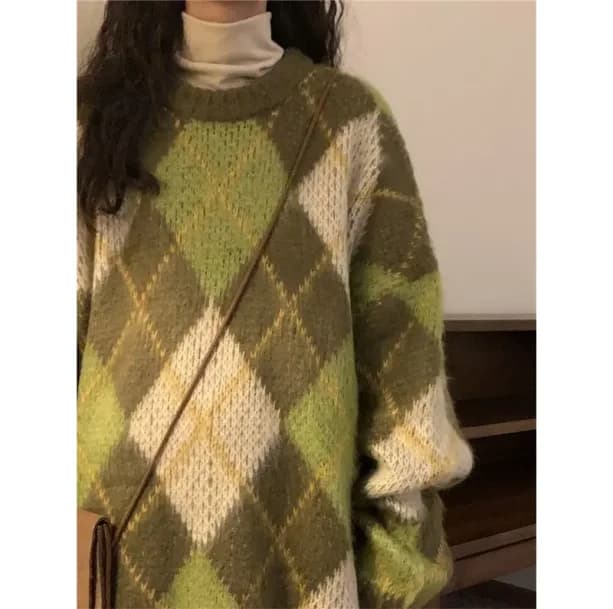
LayeringWearing pieces over or under one another to add depth, warmth or contrast. a collared shirt under a pullover is a dependable aesthetic combination, but neckline matching requires care. Crewneck knits hold pointed cotton collars firmly in place against the chest, creating a tailored, collegiate look. If your sweater has a deeper V-neck, broader collars or spread collars balance the open chest area without slipping beneath the knit's edge.
The Green Academia Sweater, crafted from a polyester and cotton blend, is built for this exact styling approach. Its graphic neckline and relaxed silhouetteThe overall shape an outfit creates, from fitted to loose and layered. allow poplin button-downs to peek out cleanly at both the throat and hem. Keeping your under-collar ironed or pressed ensures it stays upright rather than collapsing under the weight of the knit.
Avoid pairing heavy denim or flannel collared shirts under slim-gauge knits, as the button placket will create an uneven ridge down your front. Instead, choose crisp cotton poplin, lightweight linen blends, or silky rayous that drape flat against your torso under the sweater's fabric.
Styling with Bottoms: Trousers, Denims, and Tailored Fits
The bottoms you select establish the overall tone of your green knit outfit. Traditional blue denim offers a reliable, low-contrast backdrop that lets soft sage and olive shades feel effortless. If you lean toward darker forest greens, washed black denim or ecru workwear pants provide a striking, purposeful contrast that looks thoughtfully assembled.
For an edgy, early-2000s street look, style a slouchier knit with structured cargos or colored jeans. The Straight Leg Green Y2K Pants provide clean vertical lines that work especially well when worn with slightly cropped or mid-length green pullovers, keeping your silhouetteThe overall shape an outfit creates, from fitted to loose and layered. structured rather than sloppy.
Tailored trousers in camel, charcoal, or houndstooth patterns introduce textural variety alongside smooth or ribbed knit surfaces. If your bottoms have decorative pleats or a structured waistband, tuck only the front center of your sweater into the zip fly area, allowing the sides and back to drape naturally over your hips.
Skirt Combinations: Lengths, Textures, and Hem Balances
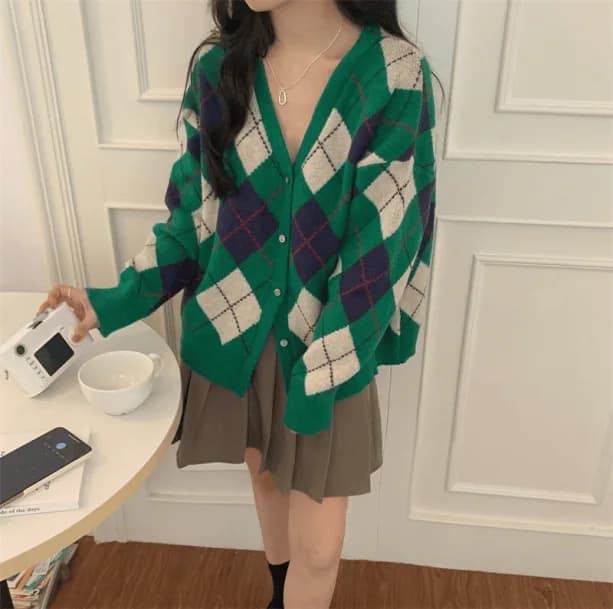
Pairing green sweaters with skirts offers endless styling variety, but hemline relationships require attention. When pairing an oversized pullover with a pleated mini skirt, aim for two to three inches of the skirt hem to show beneath the sweater. This creates a playful, layered effect without looking like you forgot your bottoms entirely.
For midi and maxi lengths, fluid fabrics provide a graceful contrast to heavy knit textures. You can tuck a mid-weight sweater into the waistband of the polyester Mystic Moss Aesthetic Skirt and finish the look with ankle boots. The flowy drape of the skirt offsets the bulk of the knit, maintaining an elegant, elongated line.
When the weather cools down, balance your skirt outfits with textured tights or knee-high socks. Semi-sheer black tights add depth beneath rich emerald knits, while ribbed cream socks scrunched over loafers bring a cozy, relaxed charm to sage and mint pullovers.
Sweaters Over Dresses: Transforming One-Pieces into Dynamic Sets
Throwing a pullover over a dress is one of the most functional styling hacks in your wardrobe, turning summer dresses into year-round outfits. Slip dresses and form-fitting midis work best because they eliminate excess fabric around your hips, giving your sweater a smooth canvas to sit against.
To execute this cleanly, layer a cropped or boxy knit directly over a fitted silhouetteThe overall shape an outfit creates, from fitted to loose and layered. such as the Green Floral Bodycon Dress. Because the dress fits closely in polyester, the sweater will drape naturally over the waistline without awkward lumps or bunched fabric underneath.
If your sweater is too long to hit at your natural waist, use the belt trick: fasten a thin, discreet belt around your waist over the dress, pull your sweater down over it, and tuck the sweater hem up and into the belt band. This lets you custom-crop any green pullover to the exact height you prefer.
Sweatshirt and Casual Knit Layering: Laid-Back Street Style
Not every aesthetic look relies on delicate knitwear; heavier cotton-blend sweatshirts bring a distinct streetwear energy to green palettes. Crewneck sweatshirts with graphic details or vintage washes look best when layered over longer t-shirts or paired with contrasting utility pieces.
A versatile option for relaxed days is the Vintage Forest Green Sweatshirt, which offers a classic cotton-polyester construction and a deep tone that pairs easily with neutral bottoms. To create depth, let a white t-shirt hem peek out 1 to 2 inches below the sweatshirt's ribbed bottom band, breaking up the transition to your trousers.
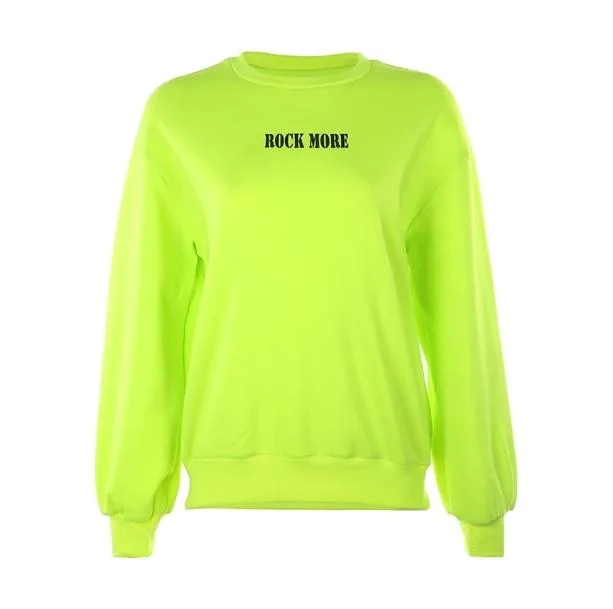
For high-visibility styling, bold options like the Neon Sweatshirt Green make a dramatic statement on their own. Because neon draws the eye immediately, balance the rest of the outfit with subdued charcoal joggers, black denim, or neutral sneakers so the top remains the central focus.

Cool Weather Strategy: Outerwear, Coats, and Weatherproof Layers
As temperatures plunge, your green sweater transforms from your outermost layer into your primary insulating mid-layer. The secret to comfortable cold-weather layeringWearing pieces over or under one another to add depth, warmth or contrast. is ensuring your outerwear armholes and sleeves are cut generously enough to accommodate knitwear without binding across your shoulders.
A dense knit, such as the Green Plaid Preppy Sweater, layers smoothly under relaxed wool trench coats, oversized bomber jackets, or boxy puffer vests. Earthy green shades harmonize naturally with camel wool, chocolate brown leather, and matte black outer shells, creating rich color depth in winter outfits.
When selecting winter accessories, choose scarves and beanies that either mirror the green tone of your sweater or introduce a warm neutral. Soft oatmeal, heather grey, and warm cream scarves prevent heavy dark winter coats from overpowering soft moss or sage knits underneath.
Warm-Weather Adaptations: Lightweight Knits and Shoulder Drapes
Aesthetic sweaters are not reserved solely for cold climates; they are equally useful for transitional weather and air-conditioned interiors. During warmer months, carrying a lightweight knit lets you adapt quickly to changing temperatures throughout the day without cluttering your outfit.
One of the most practical warm-weather techniques is draping a green knit diagonally across your chest or tying it loosely over your shoulders. Worn over simple sleeveless foundations, this adds immediate color and texture to your outfit without adding unwanted body heat. Pair it with pieces from our green aesthetic tops collection for an easy, layered look that takes seconds to adjust.
For mild evenings, wear your sweater loosely unbuttoned if it is a cardigan, or choose an open-weave knit that allows air circulation. Loose stitches in cotton or rayon blends keep you comfortable in warm breezes while providing light coverage against dropping evening temperatures.
Color Harmony and Palette Matching with Green Knits
Green functions surprisingly well as a versatile neutral when you understand tone pairing. Muted greens—such as olive, eucalyptus, and sage—pair seamlessly with warm browns, taupe, denim blues, and creamy off-whites. Rich jewel tones like emerald and pine look crisp against sharp white, charcoal, and deep navy.
When building an outfit, decide whether your green knit is the hero statement or a grounding element. Bright shades like chartreuse or lime work best when surrounded by quiet, minimalist neutrals that do not fight for visual priority. Earthy forest greens, by contrast, look great when layered with textured tans and corduroy fabrics.
If you enjoy tone-on-tone dressing, combine different values of green within the same outfit. Wear a light sage base top underneath a forest green pullover, anchored by mossy trousers. The key to successful monochrome styling is varying the textures—mixing smooth knit, brushed fleece, and woven cotton so the outfit has depth.
Accessorizing and Desk Styling: Bringing the Aesthetic Together
Aesthetic outfits extend into your daily environment, accessories, and the small details you carry. The jewelry you pair with green knitwear shifts its character: warm gold chains bring out the rich undertones in olive and moss knits, while polished silver jewelry lends a cool, contemporary finish to mint and pine green.
Bags and footwear also shape how casual your sweater feels. Canvas messenger bags and chunky retro sneakers lean into casual university styling, while a structured mini shoulder bag and leather loafers refine the outfit for casual workplaces or study sessions. Hair accessories like tortoiseshell claw clips or dark green scrunchies tie the look together effortlessly.
For those who love curating their creative spaces to match their personal style, subtle desk decor can echo your favorite wardrobe tones. Keeping sweet accents around your study space—like soft pieces from our green aesthetic plushies selection—creates a cozy, coordinated visual mood that mirrors your everyday outfit palette.
Common Layering Pitfalls and How to Avoid Them
The most frequent layeringWearing pieces over or under one another to add depth, warmth or contrast. error is ignoring hemline tension. When you wear a long, un-tucked knit over a stiff, flared skirt, the sweater pulls tight against the skirt's fabric, causing it to ride up and distort your silhouetteThe overall shape an outfit creates, from fitted to loose and layered.. Always ensure your outer sweater either hangs completely free past the widest point of your skirt or rests neatly above it at your waistline.
Another mistake is neglecting collar and cuff harmony. If your collared shirt underneath has small, limp collar points, they will warp and curl beneath the neckband of a thick crewneck. Make sure your shirt collar is structured enough to stand its ground, or choose a collarless henley or crew base instead to avoid untidy ruffling.
Lastly, watch out for static cling and fabric friction. LayeringWearing pieces over or under one another to add depth, warmth or contrast. a polyester knit over a sheer synthetic blouse can generate static that makes garments stick awkwardly to your skin. A light misting of static spray, a touch of unscented body lotion on your legs, or choosing natural cotton base layers keeps your garments sliding past each other smoothly.

Your Practical Green Sweater Layering Checklist
First, test your mobility by raising your arms and checking that your base layer does not pull out of place or bind uncomfortably under your armpits. Second, look in a full-length mirror to check your proportions: if your knit is long and boxy, confirm that your bottoms provide sufficient structure or that your waistline is defined by a subtle tuck.
Finally, check your temperature flexibility. Can you easily remove your sweater if your commute gets warm, leaving an under-layer that works as a complete outfit on its own? When you are ready to find your next favorite layer, browse our dedicated green aesthetic sweaters collection to pick the right weight, fit, and tone for your daily rotation.
Before heading out, run through this quick checklist to ensure your layered outfit is balanced, comfortable, and functional for your day ahead:
- Check sleeve and armpit clearance to ensure zero bunching.
- Confirm collar points lie flat against the sweater neckline.
- Balance top volume with structured or straight-leg bottoms.
- Verify that base layers look intentional if the sweater is removed.
- Coordinate jewelry tones: gold for olive/moss, silver for mint/pine.