

Created by the Kawaii Vibe editorial team. Our named style desks are editorial personas. Product details and availability can change.
The quick answer: grunge outfits for guys work when the shape is loose but not shapeless, the layers are doing real jobs, and everything looks like it has been worn a hundred times. Think a faded graphic tee, an open flannel or hoodie over it, straight or flared denim with a bit of stack at the hem, and chunky sneakers. Messy on purpose, comfortable in practice.
The trap is treating grunge as a costume. Holes everywhere and a pre-ripped everything pile-on tends to look staged. The lived-in feeling comes from fit, texture and colour that has softened, not from damage. This guide walks through each of those, then gives you outfit formulas you can adapt to class, work and nights out.
Everything below is written for men and masc dressers, but the rules are about proportion, so use whatever suits your body. We are a retailer, not a maker, so where we mention items from the shop they are optional suggestions, not requirements.
Start With the Silhouette: Loose Up Top or Loose Below, Rarely Both
The most common grunge mistake is going baggy on every piece at once. When the tee, the overshirt and the trousers are all oversized, you lose your shape and look like you borrowed someone else's wardrobe. Pick one area to be roomy and keep the other a little more controlled.
A quick check in the mirror: you should still see where your shoulders end and where your legs start. If everything hangs off one point, go down a size on one piece.
Option one: a roomy top with straighter, slimmer trousers. Option two: a fitted or regular tee with a big open layer on top and wide or flared legs below. Both read as grunge because the contrast looks deliberate.
- Shoulder seams should sit at or just past your shoulder bone, not halfway down your arm.
- Tee length should land around mid-zip to crotch, long enough to look relaxed, short enough not to swallow your hips.
- Sleeves can cover the wrist bone but should not hide your hands.

The Layering Logic: Base, Middle, Outer
Layers in grunge are not decoration. Each one has a job, and that is why the look feels natural rather than piled on. The base is something soft against the skin, usually a tee or a thin long sleeve. The middle adds texture or warmth, like a flannel, knit or hoodie. The outer is the shape-maker, such as a worn jacket or a hooded zip-up.
Keep the thickness increasing as you go out. A thin tee under a mid-weight shirt under a heavier jacket sits smoothly. Flip it and you get bulky lumps at the arms.
Vary the lengths too. A tee that peeks an inch below a shirt hem, which in turn peeks below a jacket, gives that staggered line that grunge is known for. Two inches is plenty; any more looks like a mistake.
- Base: cotton tee, thermal, or thin long sleeve.
- Middle: open flannel, cardigan, or a hoodie worn under a jacket.
- Outer: hooded jacket, denim, or a loose overshirt left unbuttoned.
Fabrics That Look Worn-In Instead of Worn-Out
Texture does most of the work. Cotton jersey that has softened, brushed flannel, mid-weight denim and fleece-lined fabrics all take on that relaxed, slightly slumped look. Stiff, shiny or very crisp fabrics fight the style, which is why a dress shirt rarely works unless it is wrinkled and worn open.
Mixing textures matters more than mixing colours. Try a soft cotton tee against rougher denim, then add a knit or fleece layer. Three textures in one outfit is a good target.
Blends are fine. Many graphic tees are cotton and polyester together, which tends to hold a print well, and polyester outerwear is common for hooded jackets. Check the product page for the material listed instead of guessing, and remember that fabric content alone will not tell you how heavy something feels.
- Look for matte finishes over glossy ones.
- Soft drape beats stiff structure for tops.
- Denim should have some weight so it hangs straight.
Getting the Colour Right: Faded, Muted, Moody
Grunge colour is washed-out, not bright. Think charcoal, faded black, off-white, forest green, burgundy, mustard and dusty blue. A single warm accent, like rust or a burnt orange, stops a black-and-grey outfit from feeling flat.
A reliable formula is two neutrals plus one accent. For instance, faded black trousers, a grey hoodie, and an orange graphic tee peeking out. The accent only needs to show in one spot.
Avoid pairing jet black with crisp white head to toe. It looks sharp, which is the opposite of what you are after. Swap the white for cream or light grey, and swap deep black for charcoal or a washed black.
- Neutral 1: black or charcoal.
- Neutral 2: grey, off-white or denim blue.
- Accent: orange, burgundy, olive or mustard, used once.

Tops and Graphics: Choosing a Tee That Does Something
A graphic tee is the easiest way to set the tone. Skulls, hearts, scratchy illustrations and washed-out prints suit the look better than glossy logos. The print should feel a bit rough, not like a product ad.
The Grunge Skeleton Heart Print T-Shirt is a good example of an item that could sit at the base of an outfit. It comes in Dark Grey and Orange, in sizes S to XL, and is listed as a cotton and polyester blend. Dark Grey works as the quiet option under a flannel; Orange works as your single accent colour.
Sizing tip: if you want the relaxed fit, take your normal size and check the shop's size information before going up. Going up a full size can change the length more than the width, so look at the proportions rather than the label.
For more tops and full looks, the grunge clothes collection is a good place to compare cuts side by side.
Hoodies and Hooded Jackets: The Workhorse Layer
A hoodie is the easiest grunge middle layer. Worn under an open jacket, the hood sits at the collar and adds bulk in the right spot. Worn alone, it pairs with flared or straight denim. Go for muted colours, and let the fabric look soft rather than stiff.
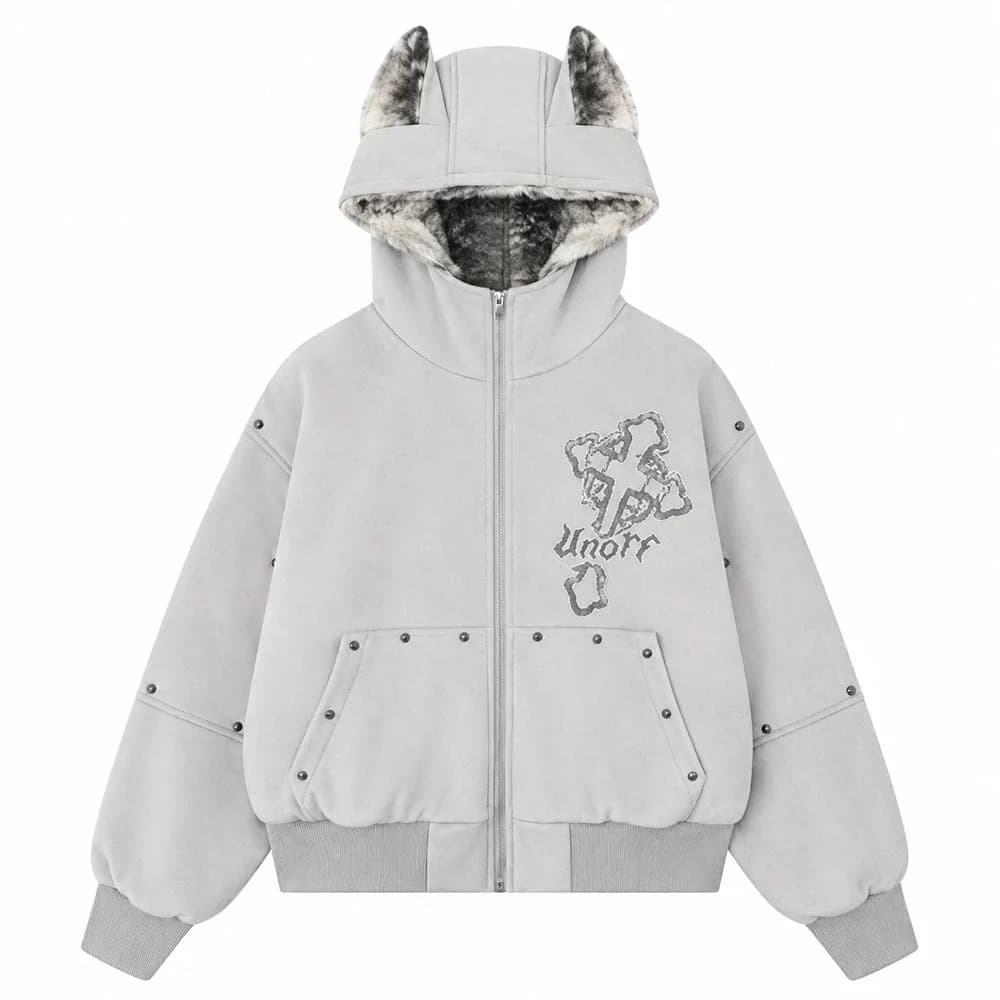
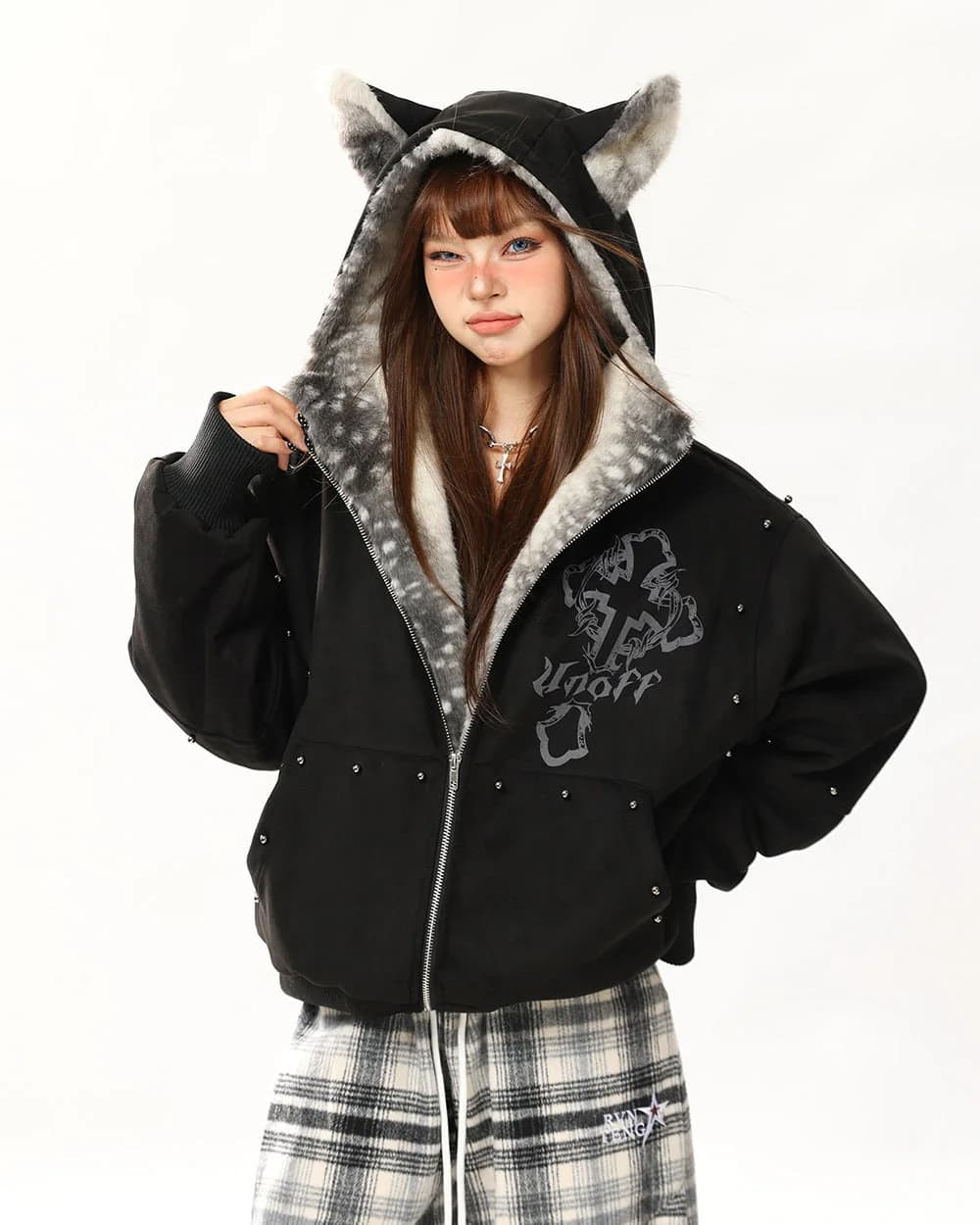
If you want an outer layer with some personality, the Fawn Ear Grunge Hooded Jacket is one optional pick. It is listed in Black and Grey, sizes S to XL, in polyester. The ear detail is playful, so keep the rest of the outfit plain: a simple tee, dark jeans and sneakers let it be the statement.
To compare options, browse the full hoodies collection and pay attention to length, hem width and whether the hood sits flat or stands up. Flat hoods layer better under jackets.
- Under a jacket: choose a thinner hoodie.
- On its own: choose a heavier one that holds its shape.
- Neutral colours give you more outfit combinations.


Bottoms: Jeans, Flares and Pants That Hang Right
The hem decides the whole outfit. Trousers should either break gently on top of your shoe or stack slightly at the ankle. Dragging fabric under your heel looks sloppy in a bad way and wears out quickly.
Flared jeans bring a 90s-meets-70s shape that works well with chunky shoes, since the flare covers some of the shoe and balances the sole. The Grunge Aesthetic Flared Jeans are listed in blue denim, sizes S, M and L. Try them with a fitted tee and an oversized layer on top so the flare is the loose element.
If flares are not your thing, the pants collection has other shapes to compare. Straight and wide cuts both work. Just keep the rise comfortable, because a rise that digs in will ruin the slouchy feel.
Check the product photos, listed sizes and any fit notes on the listing where provided, and compare with jeans you already own rather than guessing measurements.

Shoes: Where Grunge Gets Its Weight
Shoes should look used. Chunky sneakers, worn skate styles and boots all sit well with loose trousers. A thick sole balances wide legs and gives the outfit a grounded feel. Clean white sneakers can work, but scuff them a little or choose off-white to avoid a showroom look.
Browse the sneakers collection with the hem in mind. If your trousers are wide, you need a sole with some volume. If they are straight, a lower profile is fine.
Socks are a quiet detail. Slightly slouched crew socks show when trousers rise as you walk, so pick colours that match the outfit, not bright white unless you want contrast.
Three Outfit Formulas: Class, Work and Nights Out
Class: a Dark Grey graphic tee, an open flannel or hoodie, straight or flared jeans, chunky sneakers, and a backpack. It is comfortable for long days and easy to adjust as the room warms up or cools down. Add a beanie only if the weather suits it.
Work (relaxed or creative workplaces): a plain tee or thin knit in charcoal, an unbuttoned overshirt or tidy cardigan, dark straight pants, and clean but not spotless shoes. Skip visible rips and keep graphics subtle. You keep the mood through texture and colour, not through damage. Check your dress code first.
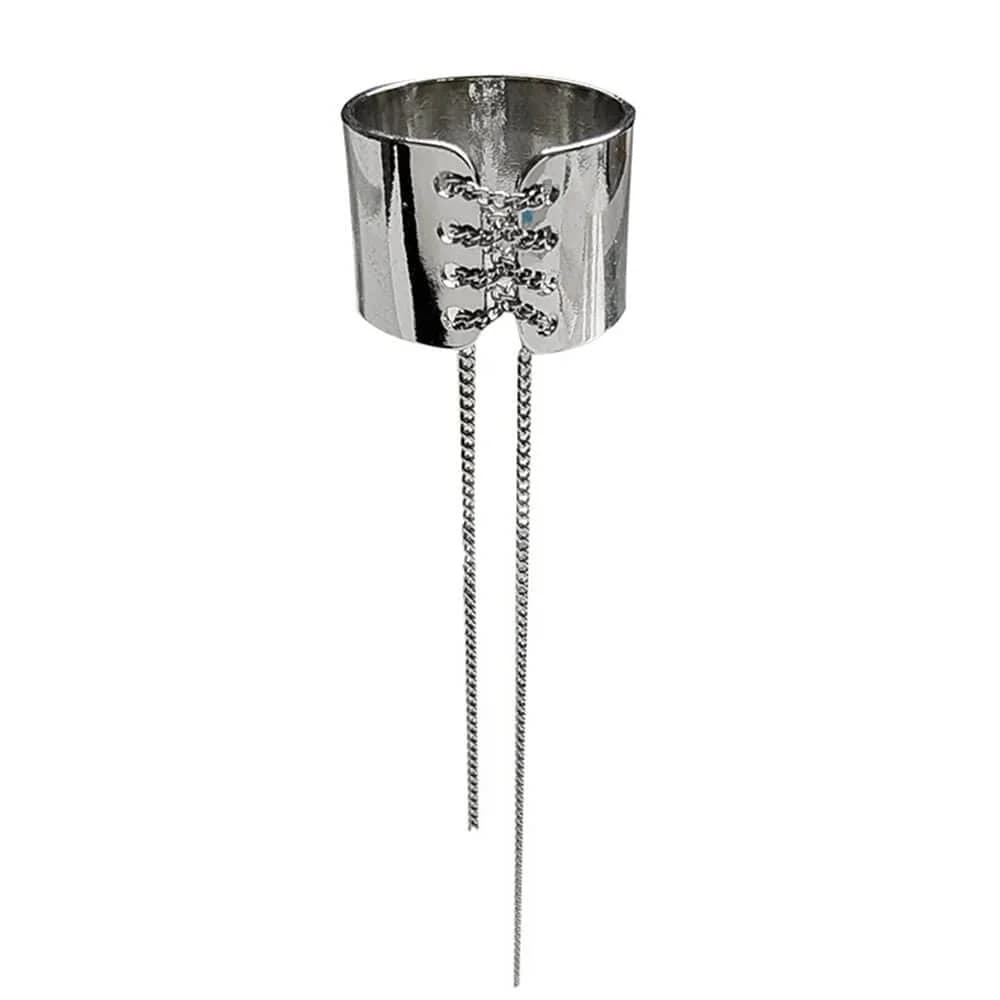
Night out: a black or orange graphic tee, a hooded jacket on top, dark flared jeans, and boots or chunky sneakers. Add one metal accessory. The Grunge Lace-Up Ring is listed in silver with an adjustable size and could be that single detail.
Browse more complete looks in the wider grunge collection if you want to start from a different piece and build outward.
- Class: tee, flannel, straight jeans, sneakers.
- Work: knit, overshirt, dark pants, simple shoes.
- Night: graphic tee, hooded jacket, flares, one ring.
Accessories, Pitfalls and a Final Checklist
Keep accessories few and a bit rough: a ring, a chain, a beanie, a canvas bag. Pick one or two. A pile of jewelry reads as styled, not lived-in.
Common pitfalls: everything oversized at once, bright new-looking colours, too many rips, shiny fabrics, and trousers that drag on the floor. Another one is copying a celebrity or band look piece for piece. Use those looks as inspiration for shape and mood, then build from what you own.
Before you leave the house, run this checklist:
- Is only one area really loose, or is the whole outfit shapeless?
- Do the layers get thicker from the inside out?
- Are there at least two textures?
- Is the palette two neutrals plus one accent?
- Does the hem sit on the shoe without dragging?
- Are accessories limited to one or two?
- Does the outfit suit where you are going and the weather where you are?
A Worked Example: Building One Outfit From a Single Piece
Formulas are easier to trust when you see the decisions made in order. Say you start with a pair of flared blue jeans, because the leg shape is the loudest thing you own. That choice settles the rest: the flare is the loose element, so the top half stays more controlled.
Step one is the base. A regular-fit tee in faded black or dark grey, sitting around the hip. Step two is the middle layer. Because the legs are wide, you can afford a roomy open flannel in a muted green or burgundy, but only if it is thinner than the outer layer you plan to add. Step three is the shoe. A flare needs a sole with some volume, so a chunky sneaker from the sneakers collection fits better than a flat, slim pair.
Now check it against the mirror test. Shoulders visible, waist visible, flare hitting the top of the shoe. If the flannel feels too big, skip the outer jacket and let it be the top layer. Fewer pieces often look more convincing than a full stack.
Finally, add the accent. The green flannel and blue denim are already doing the colour work, so keep the tee neutral and finish with one small detail such as a ring or a beanie. The result is a complete look from one starting point, with each choice responding to the one before it.
Fit Fixes When Your Build Makes Proportions Tricky
Standard advice assumes an average frame, and plenty of people are not. The principle stays the same: keep one area roomy and one controlled, then adjust where the volume sits.
If you are tall and lean, longer layers work in your favour. An open flannel that hangs past the hip adds width without looking sloppy, and stacked hems at the ankle show off your leg length. Avoid tees that ride up when you move, since the gap between top and waistband breaks the relaxed line.
If you are broader through the shoulders or chest, choose fabrics with drape over stiff ones, and go for regular fit rather than extra-large so the garment does not tent outward. A darker top layer over a lighter tee creates a vertical line that reads cleanly.
If you are shorter, watch the hem. Excess fabric pooling over the shoe shortens the leg. Let trousers sit just on top of the shoe, and keep jackets from passing mid-hip. Browse the pants collection with leg opening in mind, and favour straight cuts if flares feel overwhelming.
- Tall: lean into longer overshirts and ankle stack.
- Broad: regular-fit tees, drapey layers, darker outer piece.
- Shorter: trim the hem, keep jackets at or above mid-hip.
Swap Logic: Dressing the Same Outfit Up or Down
Rather than owning separate wardrobes for different settings, change two or three pieces and keep the rest. This keeps the style consistent and your budget sensible.
To go from class to work, swap the graphic tee for a plain one, replace ripped or heavily faded denim with darker straight pants, and button the overshirt halfway. The silhouetteThe overall shape an outfit creates, from fitted to loose and layered. stays, but the noise level drops.
To go from work to a night out, do the reverse: bring back the graphic, switch to a hooded layer from the hoodies collection, and trade tidy shoes for chunkier ones. A darker palette also helps, since low light makes muted colours look richer.
To go from a night out to a cold day, keep the hooded piece as your middle layer and add a heavier outer on top. Thicker goes outward, as always.
Pick the one element that carries the mood, usually the tee or the shoes, and let everything else be flexible around it.
Quick Decision Guide Before You Buy Anything New
Grunge works best when new pieces fill gaps rather than duplicate what you have. Before adding to your cart, run through these questions. Anything that fails two or more is probably a skip.
If you want to see what exists in a category before deciding, the main grunge clothes collection and the broader grunge collection let you compare shapes and colours side by side.
- Does it work with at least three things you already own?
- Is the colour muted enough to sit with your neutrals?
- Does it add a texture your outfits are missing?
- Will it fill a layer slot (base, middle, outer) you are short on?
- Is the shape different from your loosest piece, so you can balance proportions?
- Can you wear it in two settings, such as class and a night out?


