

Created by the Kawaii Vibe editorial team. Our named style desks are editorial personas. Product details and availability can change.
Quick answer: grunge is loose, layered and worn-in. Punk is sharper, tighter and louder. If your outfit looks like it was pulled off a bedroom floor and still works, that's grunge. If it looks like it was assembled with intent and a bit of aggression, that's punk. The best grunge punk outfits for women take one side as the base and borrow two or three pieces from the other.
This guide breaks down the differences by silhouetteThe overall shape an outfit creates, from fitted to loose and layered., fabric and attitude, then gives you outfit formulas you can copy and adapt. Nothing here depends on a particular climate or time of year, so there are layeringWearing pieces over or under one another to add depth, warmth or contrast. notes for both warmer and cooler days.
Product mentions are optional suggestions from our own shelves, not requirements. The point is to understand the logic so you can mix it with whatever you already own.
The fast answer: how to tell them apart
Look at the outline first. Grunge tends to be slouchy: big knits, long layers, relaxed denim, shirts hanging open. Punk tends to be cut closer or more angular: short skirts, fitted tops, straight or tight legs, hardware at the edges.
A useful test: remove one accessory. If the outfit falls apart, it was punk-led, because the details carry it. If it still looks fine, it was grunge-led, because the shape carries it.
Then check the mood. Grunge is tired and casual, like you didn't try. Punk is deliberate, like you tried and want people to notice. Neither is better, but mixing them works best when you know which mood is leading.
- Grunge: loose, layered, faded, soft, a bit messy
- Punk: fitted or sharp, high contrast, hardware, a bit confrontational
- Mixed: one relaxed base plus a few pointed details
Silhouette: where the shapes split
Grunge likes volume on top and ease below. Think an oversized hooded layer over a slip or tee, with relaxed or flared legs. The outline is a bit shapeless on purpose, and the waist often disappears.
Punk likes definition. A cinched waist, a short hem, a defined shoulder or a tight leg gives you edges. Even when punk is oversized, it usually has one sharp line, like a belt pulled tight over a big top.
The hybrid move is to pick one area to be loose and one to be defined. Loose jacket, defined waist. Baggy bottom, fitted top. Two loose pieces gives you grunge, two fitted pieces gives you punk, and one of each is where the mix lives.

Fabric and finish: soft and worn versus hard and shiny
Grunge fabrics are soft and look lived in: faded denim, jersey, knits, flannel-type textures, anything that looks washed many times. Distress is a feature, but it should look like wear, not decoration.
Punk fabrics are harder or shinier: faux leather, mesh, studded trims, ripped black items, metal hardware. Black dominates, and the finish is meant to catch the eye.
When you mix, keep one soft surface and one hard one in the same outfit. Soft jersey with a studded belt works. Faux leather with satin and lace and denim and mesh all at once gets noisy fast.
Attitude and color: the part clothes can't fully fix
Grunge attitude is understated. Colors are muted: washed black, faded blue, grey, olive, dull red. Nothing should look new or too coordinated.
Punk attitude is high contrast. Black against white, black against red, bare skin against heavy boots. Coordination is fine as long as it looks aggressive rather than polished.
For a blend, keep the palette tight, two or three colors, and let texture do the talking. Black, grey and one faded blue is an easy start. Adding a single hit of white or red is the quickest way to push toward punk.
Outfit 1: soft grunge base with punk edges
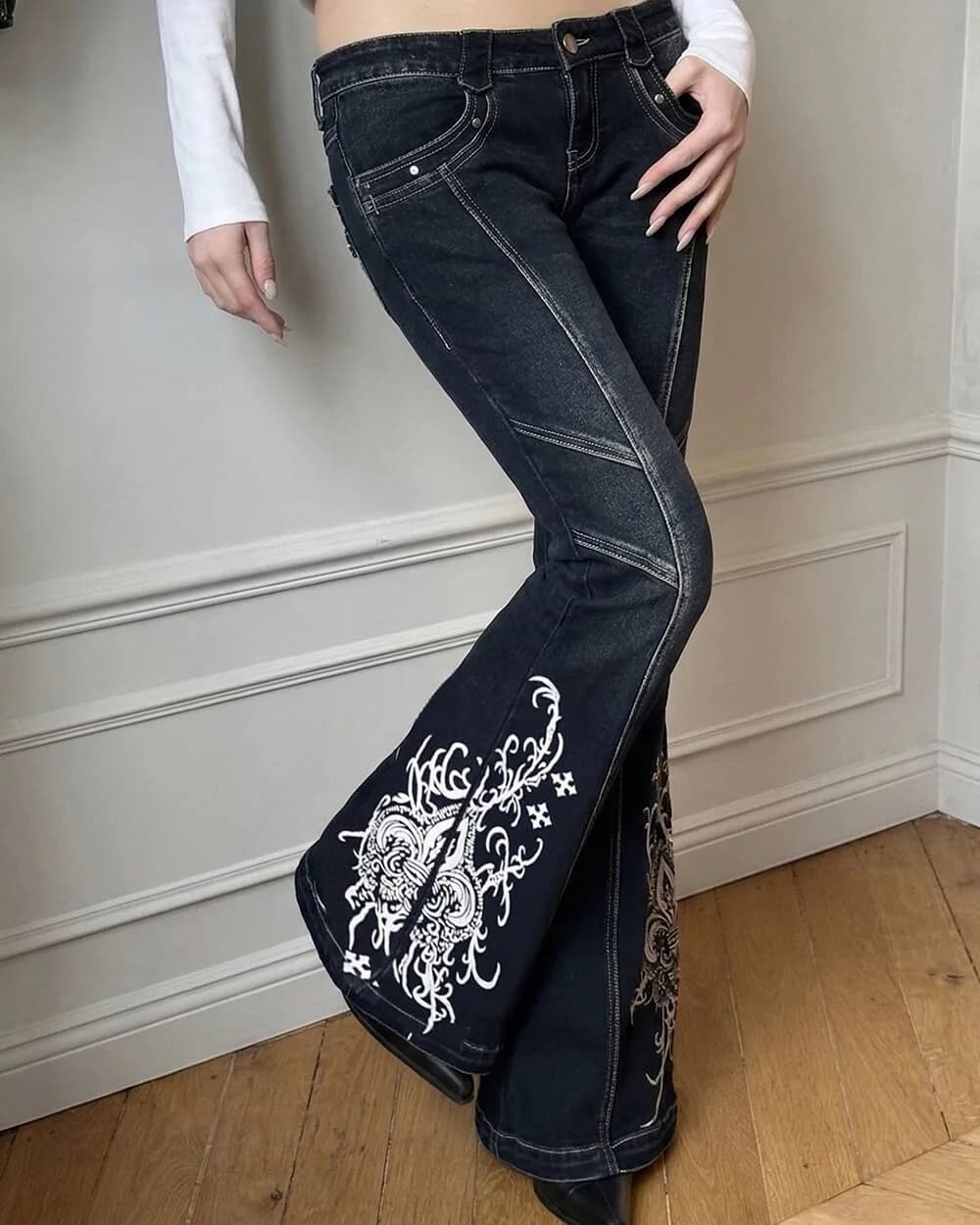
Start with the Grunge Aesthetic Flared Jeans, a blue denim pair offered in S, M and L. The flare gives you that relaxed grunge lower half. Add a plain fitted tee or a simple black top, then a loose layer over it.
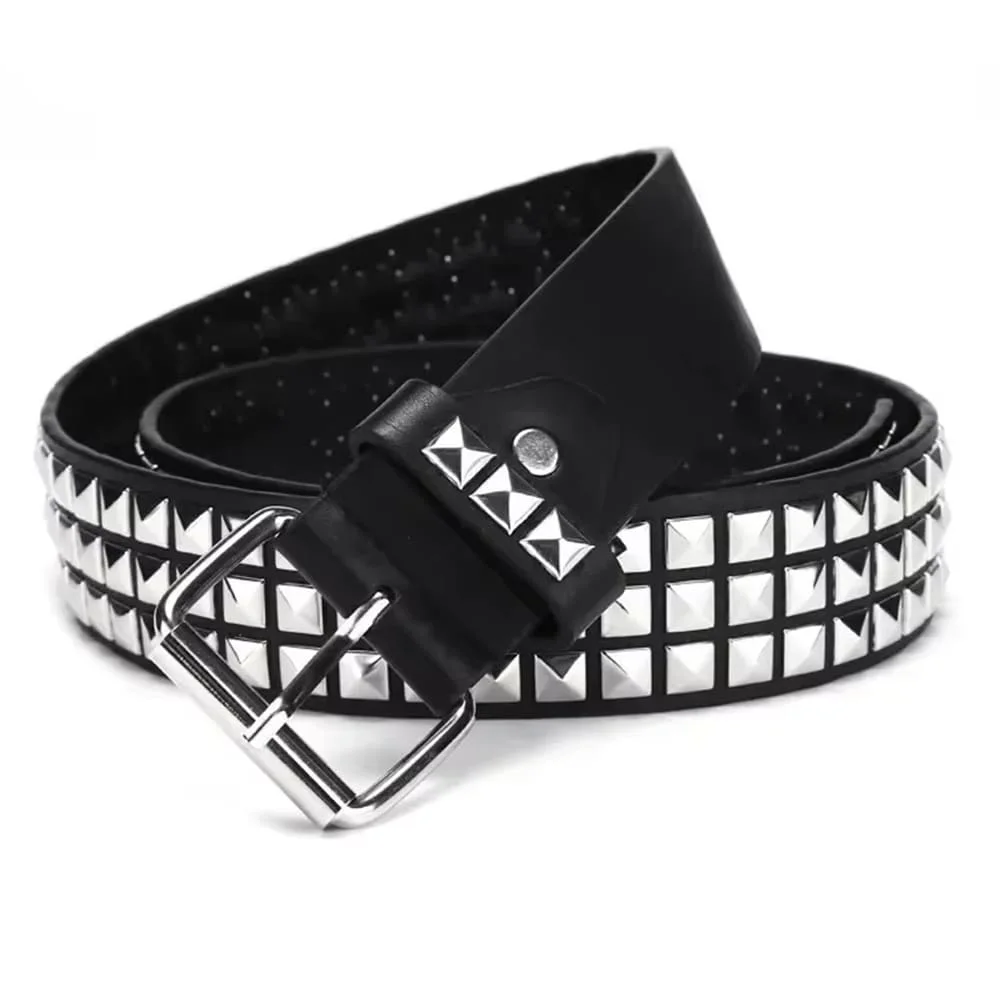
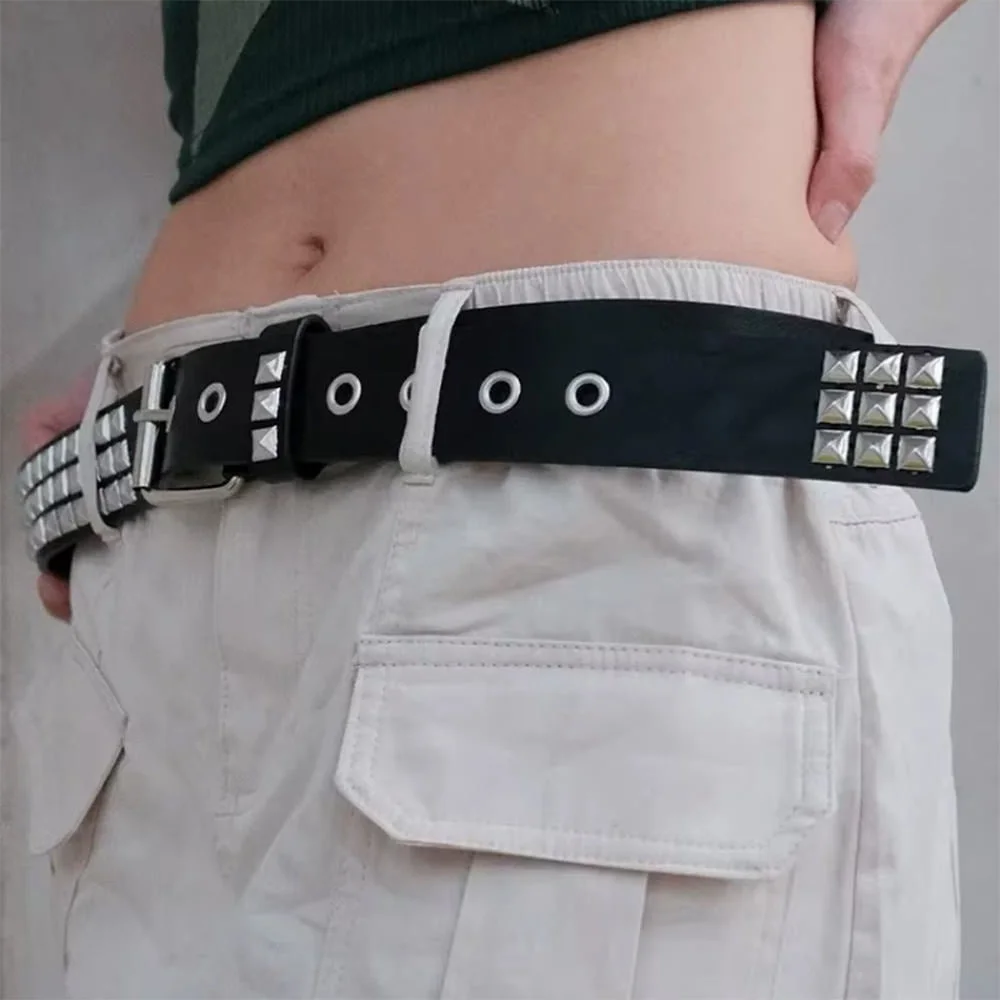
For the punk edge, add the Skater Girl Punk Rock Pyramid Stud Belt, a vegan leather belt in black, standard size. Wear it at your natural waist so it defines the shape under a loose top. The jeans stay soft, the belt makes it deliberate.
Finish with boots from the boots collection. A flared hem looks best when it sits over the top of the boot so the shape isn't broken up. Check the length of your jeans against your boot height before committing.
Outfit 2: punk-led with a corset top
Here the fitted piece leads. Browse the corset tops and choose one in black. Pair it with a short skirt from the skirts collection, where pleated and denim minis both sit in the punk zone.
To pull it back toward grunge, add one slouchy piece: an open oversized layer over the shoulders, or loose, faded ripped-style layers. The contrast between structured top and slouchy cover is the whole trick.
Proportion tip: when the top is fitted and the skirt is short, keep the shoes heavy. Boots balance the bare legs and stop the outfit looking top-light.

Outfit 3: dress, tights and a hood
The Grunge Sleaze Distressed Kiss Dress is polyester, white, and offered in S, M and L. A light dress with distressing sits right on the line between grunge and punk, because the fabric is delicate but the finish is rough.
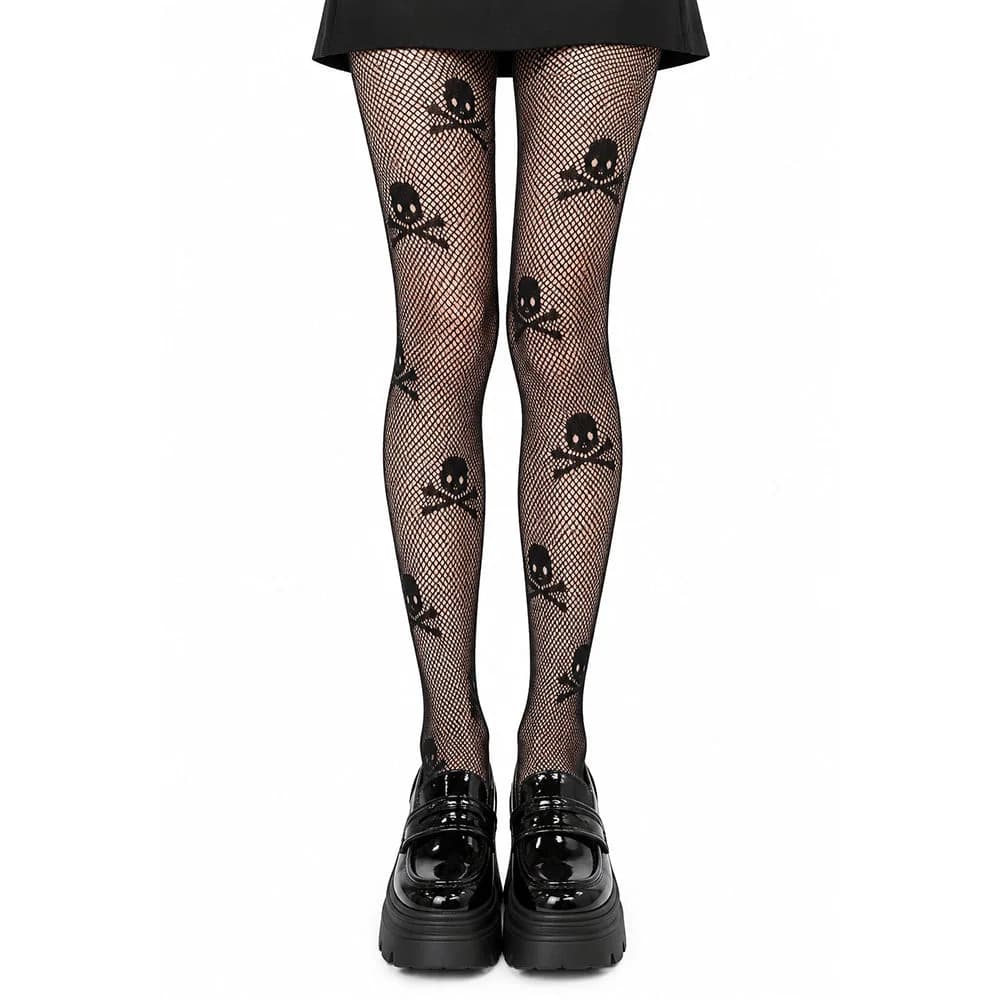
Layer the Grunge Skull Fishnet Tights underneath. They're nylon, black, one standard size. The pattern adds the punk contrast against a pale dress. If the print is too busy for you, a plain pair of dark tights is a quieter route.
Add the Fawn Ear Grunge Hooded Jacket, polyester in black or grey, S to XL. It's the soft, slouchy layer that keeps the whole thing from becoming costume. Size up if you want it properly oversized.

Footwear: boots versus flats
Boots are the obvious grunge-punk shoe, and the boots collection is the place to compare heights and soles. A chunkier sole pushes punk, a flatter worn-looking boot leans grunge.
Flats are the underrated option. The Grunge Sleaze Studded Ballet Flats are black vegan leather with studs, and the listing notes they run small, so read the sizing information before ordering. Sizes run EU35 to EU42. They suit skirts and dresses when boots feel too heavy.
How to choose: boots for flared jeans and long layers, flats for short hems and lighter outfits. Don't wear studded flats with a heavily studded belt unless you want hardware to be the whole story.
Small accessories that tip the balance
Accessories decide which side wins. A stud belt reads punk. A hair claw reads casual, more grunge. Wearing one of each is the cleanest way to mix.
The Grunge Buckle Hair Claw is black acrylic, one size, and works for a messy half-up style that keeps the grunge undone look. The Grunge Lace-Up Ring comes in a silver tone and is adjustable, offering a small detail that adds an edge without competing with the rest.
Rule of thumb: three visible accessories at most. Belt, one ring, hair piece. After that it starts to look like a pile rather than a choice.
Layering for warmer and cooler days
LayeringWearing pieces over or under one another to add depth, warmth or contrast. is the shared language of both styles, so you can adjust easily. On warmer days, wear the hooded layer tied at the waist or open over a single top, and choose a lighter bottom like a skirt. Skip the tights or go for sheer ones.
On cooler days, build up: tee, fitted top, then the loose outer layer, with tights under skirts and boots to finish. Keep the heaviest piece loose and the base fitted so you don't lose your shape.
Browse the wider grunge clothes collection and the grunge collection for extra layers and basics. Choose by fabric weight, not just look, so you can adjust through the day.
Pitfalls that make mixes look off
The most common problem is too many statements. A corset top, studded belt, fishnets, studded flats and a heavy ring all together has no focus. Pick a lead piece and let the rest support it.
Another is mismatched wear levels. A brand-new crisp piece next to something faded can look accidental. If you want that worn look, keep the faded item as the base and the clean piece as the accent.
Also watch fit on the pieces with listed notes. Check the sizing information on each product page, especially the flats that run small, and compare the S, M, L ranges against a garment you already own since many listings lack a dedicated size chart.
Quick checklist before you leave the house
Run through this before you go out. It takes under a minute and catches most mix-ups.
- One loose piece and one defined piece?
- Two or three colors at most?
- One soft fabric and one hard finish?
- Shoes match the hem length (boots for flares, flats for minis)?
- No more than three visible accessories?
- Is one side clearly leading, grunge or punk?
- Sizes checked against each product page before ordering?
A worked example: fixing one outfit step by step
Say you start with black skinny jeans, a fitted black tee, a studded belt and chunky boots. That is punk all the way through: every piece is close to the body, every piece is dark, and the hardware is doing the talking. It is clean but one-note, and it is not a mix yet.
Step one is to change one of the fitted pieces to a loose one. Swap the tee for an oversized washed-out knit or a hooded layer that hangs past the hip. Now the top is grunge and the legs are punk, which is already a deliberate blend. Keep the belt, but wear it over the outer layer so the waist shows up again.
Step two is to soften one hard surface. If the boots are glossy and heavy, you can leave them, but the jeans or the knit should look faded rather than jet black. Washed black or grey against true black gives you the worn-in feel without losing the sharp outline.
Step three is to stop. Count what is left: one oversized layer, one belt, boots. That is three decisions, and it reads as intentional. Adding fishnets, a choker and a bag with hardware would push it back into noise.
The same process works in reverse. Start with a grunge outfit of flared jeans, a baggy tee and a flannel-style shirt. Add one sharp element, such as a tight belt or a pair of heavy boots, and change nothing else. One edge is usually enough.
Five combinations to try with the collections
These are formulas rather than fixed shopping lists. Swap in whatever you already own that fits the description.
Combination one: a black corset top from the corset tops under an open, faded oversized layer, with relaxed flared jeans. The top defines the waist, the jeans and layer give volume, and the palette stays at black, grey and one blue.
Combination two: a denim or pleated mini from the skirts collection, a plain loose tee tucked at the front only, and boots with a thick sole. The skirt is the sharp line, the tee is the relaxed part, and the boots stop the legs looking exposed next to the heavy shoes.
Combination three: a long, slouchy knit worn as a dress-length layer over bike-style shorts or opaque tights, with flat boots. This is grunge-led, so add one punk detail only, like a tight belt over the knit.
Combination four: a fitted black top, a long maxi skirt and a loose open shirt. The long skirt is unexpected in punk, but the fitted top and dark palette keep it sharp. Choose boots rather than flats here so the hem has something to land on.
Combination five: all black with texture variety. Mesh under a soft jersey top, a faux leather element at the waist, and faded black bottoms. It works because the colors match while the surfaces differ, which is the easiest way to make a monochrome outfit look considered.

Decision checklist: which side should lead today?
Mixing is easier if you decide the lead before getting dressed. Use the questions below to pick a direction, then build around it.
Think about the setting. A crowded gig or night out suits punk-led outfits, because fitted pieces move well and hardware catches light. A long day of errands, studying or sitting around suits grunge-led outfits, because loose layers are comfortable and forgiving.
Think about how much attention you want. If you would rather blend in, lead with grunge and add a single sharp accessory. If you want to be noticed, lead with punk and add one soft, faded layer so it does not feel like a uniform.
Think about what you already have. If your wardrobe is mostly oversized knits and denim, you are grunge-based and need one or two pointed pieces. If it is mostly black, fitted and shiny, you are punk-based and need one or two worn-in, relaxed pieces. Buying the opposite of what you have is more useful than buying more of the same.
If you are shopping, the grunge clothes collection is a sensible place to look for relaxed bases, and the grunge collection helps when you want extra layers to balance fitted pieces.
- Busy night out: punk-led, one soft layer
- Long casual day: grunge-led, one sharp accessory
- Want to be noticed: fitted top or short hem, heavy shoes
- Want to blend in: loose layers, muted colors, one detail
- Wardrobe is all loose: add a corset top, tight belt or mini
- Wardrobe is all fitted: add a washed knit, flared denim or oversized layer
Troubleshooting outfits that almost work
If an outfit feels wrong but you cannot say why, check these common causes before changing everything.
It looks like a costume. This usually means every piece comes from the same extreme: all studs, all ripped, all black and shiny. Replace one item with something plain and worn. A simple faded tee does more for credibility than another accessory.
It looks sloppy rather than grunge. Grunge is relaxed, but it still has a shape. If every piece is oversized and nothing sits at the waist or shoulders, the outfit has no structure. Tuck in the front of one top, add a belt, or choose one fitted layer.
It looks stiff rather than punk. Punk loses its edge when everything is perfectly matched and pressed. Roll a sleeve, leave a layer open, or pick one piece that is slightly faded, and the outfit relaxes without losing its sharpness.
The bottom half feels heavy. A corset top, mini skirt and big boots can look bottom-weighted if the boots are very chunky. Add a longer open layer on top to carry the volume upward, or choose a slimmer boot.
The top half feels heavy. A big hooded layer with a fitted bottom can swallow the upper body. Open the layer, push the sleeves up, or add a defined waist so the outline returns.
When in doubt, take off the last thing you added. Most outfits improve by one piece, and the piece you added last is usually the one that tipped the balance.


