
Created by the Kawaii Vibe editorial team. Our named style desks are editorial personas. Product details and availability can change.
A hoodie should fit the way you decided it would before you clicked buy. If you want a clean, close look, the shoulder seam sits near the edge of your shoulder bone and the hem lands at your hip. If you want oversized, the seam drops a few inches down your arm, the sleeves run past your wrist and the hem sits lower on your body. Both are right. The problem starts when you grab a size by accident and get a fit you never chose.
This guide shows you how to pick on purpose. We use three measurements, shoulder drop, sleeve and length, because they tell you more than the letters S to XL. You will need a soft tape, a hoodie you already love, and about ten minutes.
We are a retailer, not a manufacturer, so we will not invent exact garment dimensions. Wherever a number matters, check the size information on the product page and compare it with your own best-fitting hoodie. That one comparison does most of the work.
The Short Answer: Decide the Fit First, Then the Size
Before you look at sizes, pick one of three targets: fitted, relaxed or deliberately oversized. Fitted means the shoulder seam sits on the shoulder edge, the sleeve ends at the wrist bone and the hem lands at the belt line. Relaxed means the seam sits about a thumb's width off the shoulder, with the sleeve covering the wrist slightly. Oversized means the seam falls well down the upper arm, the cuffs reach the knuckles when you let your arms hang, and the hem covers the hip.
Most sizing regret comes from skipping this step. People buy their usual size in a hoodie cut to be oversized and feel it is huge, or they size up in a regular cut and end up with a sloppy shape with none of the intent. The cut matters as much as the size. A hoodie described as oversized is already designed with a dropped shoulder and extra width, so your normal size will usually give the oversized look without going up.
A good rule: if the product is described as oversized, start with your normal size. If it is a standard hoodie and you want that slouchy feel, go up one size and then check the three measurements in the next sections. Going up two sizes tends to push the shoulders and hem past the point where the look reads as chosen.
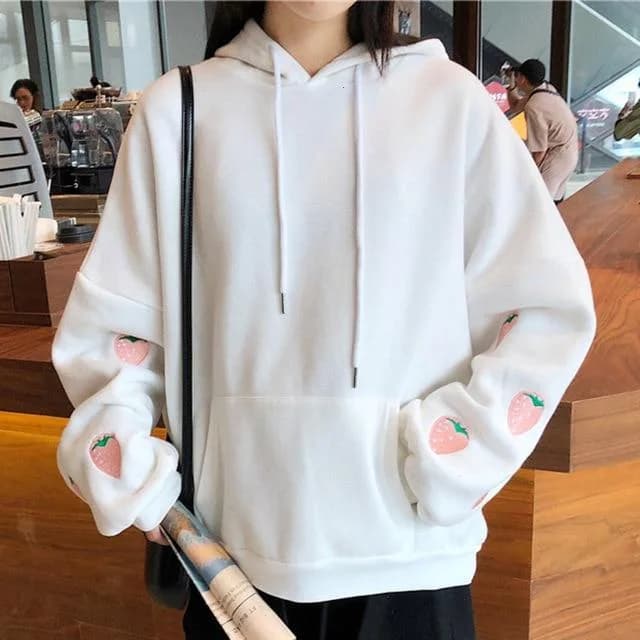
Shoulder Drop: The Measurement That Tells You Everything
Shoulder drop is the distance between the edge of your real shoulder and where the hoodie's shoulder seam lands. It is the clearest sign of an oversized fit. On a fitted hoodie there is almost none. On a relaxed one it is small. On an oversized hoodie the seam hangs partway down the upper arm, and that droop is what makes the shape look relaxed rather than just big.
To measure, put on your best-fitting hoodie, stand straight, and use the tape to measure from the bony edge of your shoulder to the seam. Write it down. Then do the same on any hoodie you own that feels too baggy and one that feels too tight. You now have a personal range. If a hoodie you love has a small drop and you want more, you know to size up or choose a cut that is designed with a dropped shoulder.
Watch out for drop that is too extreme. When the seam reaches the elbow, the sleeves become short in practice, because the fabric is pulled up the arm. If you are on the shorter side, a very deep drop can swallow you. If you are tall or broad, you may need a bigger size just to get a drop that looks deliberate. Shoulder drop also shifts how a hoodie sits with a jacket or coat over it, which we cover later.
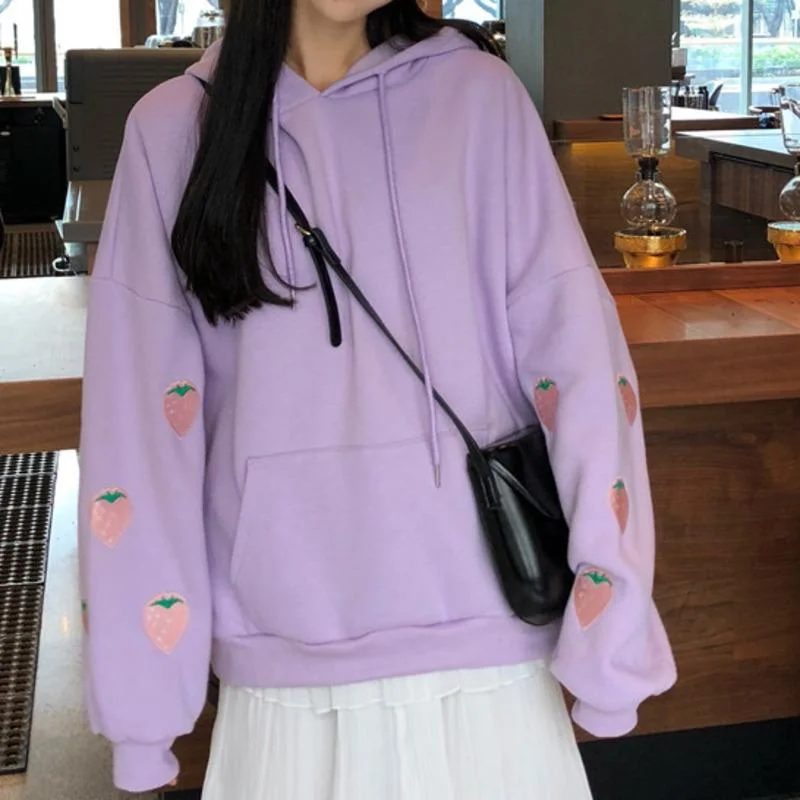
Sleeve Length: Where the Cuffs Should Land
Sleeve length changes the whole feel of a hoodie. With a dropped shoulder, the sleeve starts lower, so the cuff ends up shorter than you expect. A hoodie that looks long on a size chart can still leave your wrists bare. Check the sleeve measurement against your arm, not just the label.
Here are three cuff positions to aim for. Wrist bone is clean and neat. Base of the thumb gives the classic cozy look. Knuckles or past is the sweater-paws style, which works when you want a softer, playful shape. For the paws look, make sure the cuff has some stretch or ribbing so it holds when you push the sleeves up. A cuff that is too loose will slide down and get in your way while you type or eat.
To measure your own needed length, run the tape from the center back of your neck across the shoulder and down to where you want the cuff to land, with your arm slightly bent. Compare that with the size information on the product page if it is given. If it is not, compare to a hoodie you own. Pitfall: if you have long arms, size up for sleeve length, but check that the body does not become too wide.
If you have shorter arms, expect to push the sleeves up, which is easy to do with ribbed cuffs and looks intentional.

Body Length: Hip, Mid-Thigh or Cropped
Hem placement decides how the hoodie sits with your bottoms. A hem at the belt line is neat and works with high-waisted trousers. A hem at the hip covers the top of your jeans and is the most common oversized choice. A hem at mid-thigh turns the hoodie into a short dress or a layer over leggings, which is great at home and for easy outings.
Measure from the base of your neck at the back down to where you want the hem. Then compare with your hoodie. If you are petite, extra length can chop your legs visually. Help yourself by wearing a fitted bottom, such as slim jeans or leggings, and by keeping shoes simple. If you are tall, you may find regular hoodies ride up when you lift your arms, so a longer body in a larger size can be more comfortable than a shorter one.
A useful trick is the arm-up test. Raise both arms overhead and see how far the hem lifts. A good oversized hoodie keeps covering your waistband. If it exposes your stomach, the body is too short for how you move. Also check the hem band. A ribbed hem gives a gentle blouse effect, while a straight hem hangs more squarely. The shape you choose affects how the hoodie plays with your proportions.
Width and Chest: Boxy vs Drapey
Width is the part people forget. A hoodie can pass the shoulder and length tests and still feel wrong because of how much fabric is around your chest. Boxy shapes stand away from the body and hold their outline. Drapey ones fall and cling slightly, which suits softer fabrics. Neither is better, but they feel different in motion.
To check width, lay your best-fitting hoodie flat, measure straight across from underarm seam to underarm seam, and note the number. Compare it with the product page if the width is listed. For an oversized look, you want a bit more than you would for a relaxed one, enough that you could pull the fabric out from your chest by a few inches without strain.
Pitfalls: if you have a larger bust or midsection, go by chest width rather than letter size, and consider the plus ranges, which are cut with more room in the body. Our Plus Size collection is a good place to compare options if standard ranges feel snug. If you have a narrow frame, extra width can make a hoodie look like a tent. In that case, keep the shoulder drop moderate and let the length do the oversized work. A cinched waistband bottom or a tucked-in front corner can also give shape without losing the slouch.
Sizing Up, Sizing Down or Staying Put
Use a simple decision table in your head. If the hoodie is cut oversized and you want that look, stay with your normal size. If you want it extra slouchy, go up one. If the hoodie is a standard cut and you want oversized, go up one, and two only if you are between sizes and want a really big shape. If you want it neat, stay in your size or go down only when the brand cut runs wide.
Size down only when you have checked width and shoulder drop. Dropping a size in an oversized hoodie can give a relaxed rather than an oversized fit, which suits you if you tend to feel swamped. This is also the move when you plan to layer under a coat, since too much bulk gets uncomfortable.
Think about fabric too. A thicker hoodie takes up more room and feels bigger than a thin one of the same measurements. Cotton and polyester blends, like those listed on some of our pieces, can hold shape differently from softer, loose-knit options. We do not list fabric weight, so if that matters to you, compare the look of the product photos and keep your return options in mind. When in doubt between two sizes, choose by the measurement that matters most to you, usually shoulder drop or sleeve length.
Oversized Picks to Compare by Size Range
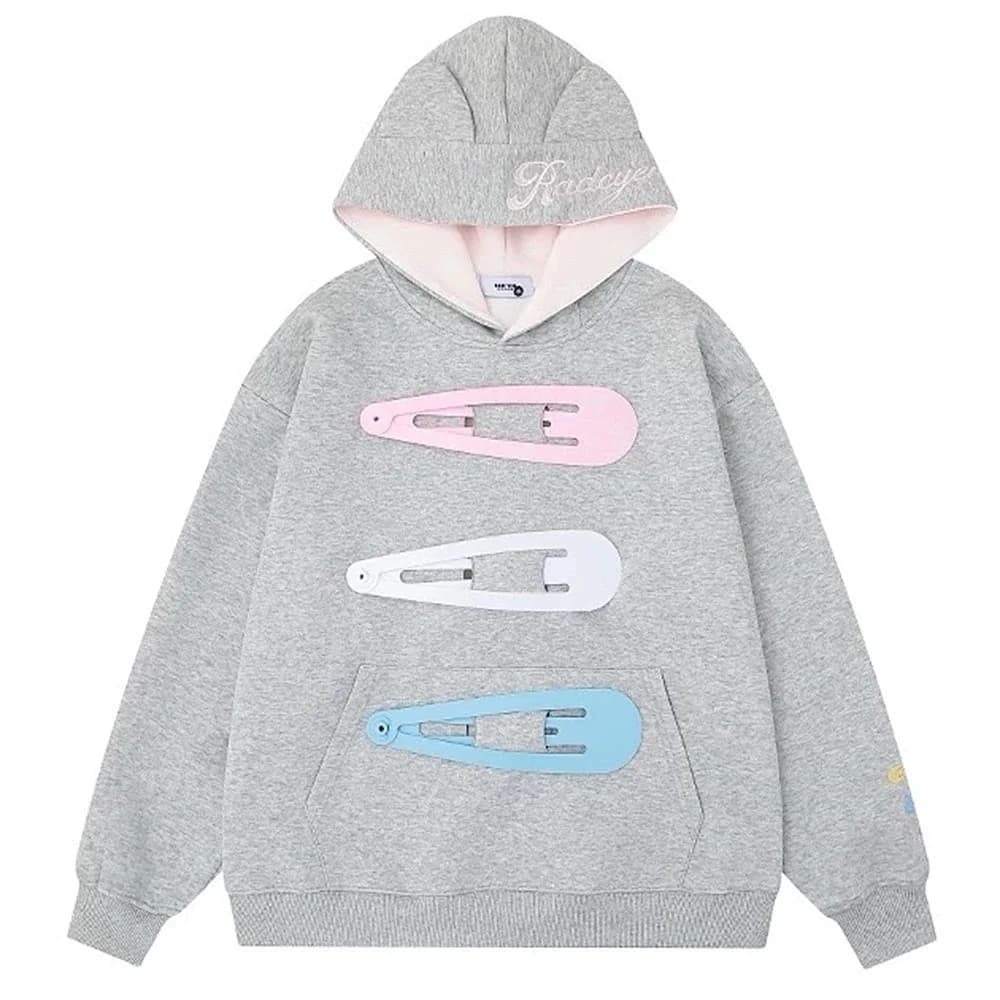
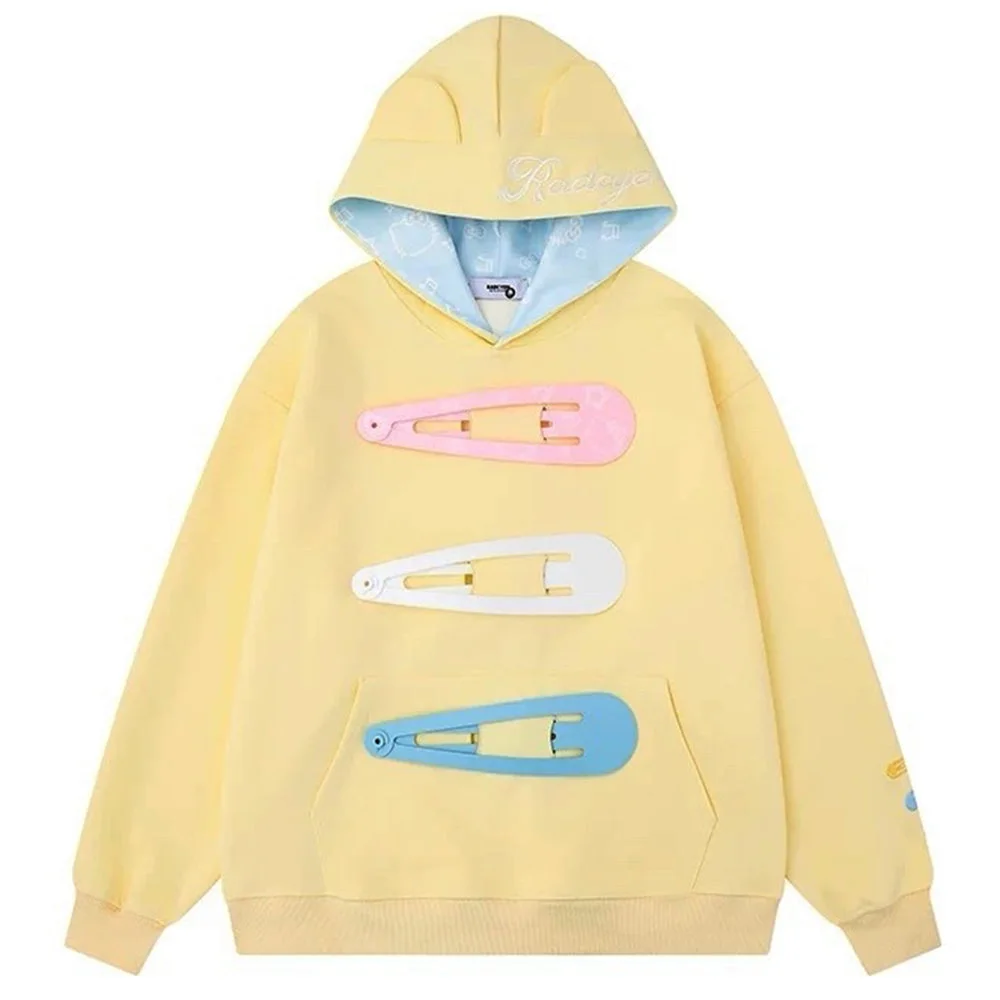
Here are specific options to put the sizing method to work. The Oversized Stawberry Kawaii Hoodie comes in Pink and White and in M to XXL, so it suits people who want a dropped-shoulder shape with some room at the top end. The Snap Clip Oversized Hoodie covers S to XL in Black, Grey, Yellow and Pink, and is listed as polyester and cotton, which makes it a straightforward pick if you are at the smaller end and want a true oversized shape.
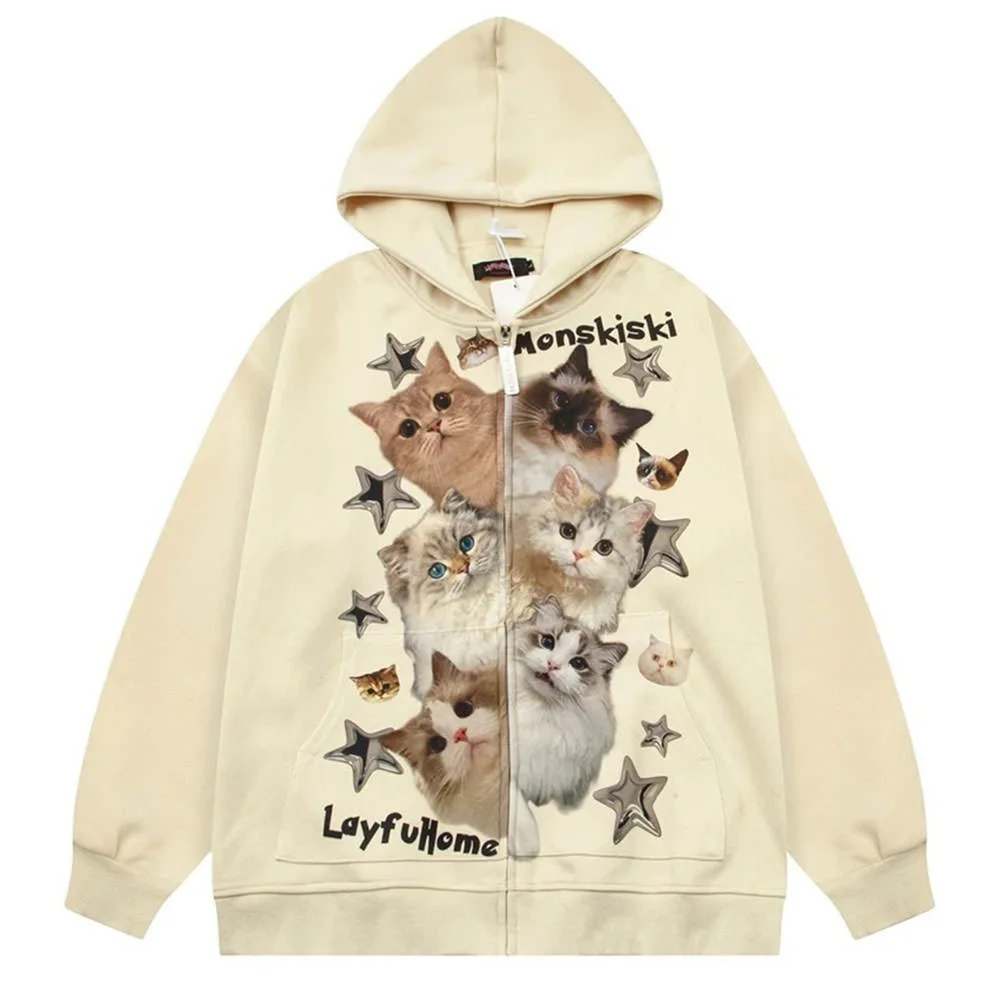
For softer, pastel-friendly looks, the Kitten Print Oversized Hoodie is offered in Beige and Black from M to XL. The Cat Squad Oversized Hoodie has the same size run in Beige, Black and White. Both are listed as cotton and polyester. If you are an S, note that these start at M, which means an M will already be a size up for you and the shoulder drop will be deeper.
To compare, line up three things on each product page: the size run, the cut description and the photos on a model. Look at where the seam sits in the photos and where the hem falls compared with the model's hip. Then compare with your own measurements. This is faster than reading every description and keeps you from buying purely on color.

Outfit One: The Slouchy Daytime Look
Start with an oversized hoodie in a soft color, such as the Beige Kitten Print Oversized Hoodie. Pair it with slim straight jeans or leggings, and white trainers. The reason it works is balance: a big top with a slimmer bottom keeps the silhouetteThe overall shape an outfit creates, from fitted to loose and layered. readable. The hem lands at the hip, the cuffs reach the base of your thumb, and the hood sits relaxed at the back of the neck.
To adapt it, swap the jeans for a pleated mini skirt and thick socks if you like a cute contrast, and keep the hoodie's hem longer than the skirt so it looks like you are wearing a hoodie dress with details. For cooler days, add a short puffer or a denim jacket. Because the shoulder drop is deep, choose a jacket cut a size larger across the shoulders, or leave it open and let it sit on top rather than squeezing the sleeves.
Pitfalls: avoid wide-leg jeans with a long oversized hoodie unless you can tuck a part of the front, otherwise everything is wide and you lose your shape. Also keep accessories small. A mini shoulder bag worn across the body sits better than a bulky tote that pushes up the fabric.

Outfit Two: Cropped Proportion with Wide Legs
If you love wide-leg trousers or cargo pants, you need a hoodie that stops at the waist or high hip. A smaller size in an oversized cut can do this, or a hoodie with a shorter hem. The Butterfly Hoodie is offered in S, M and L, which makes it a natural pick for this idea if you prefer a smaller range. The Kawaii Frog Hoodie runs S to XL and gives a playful face to the look.
Why it works: volume on the bottom needs a more contained top, otherwise the whole outfit has no waist. Choose your normal size in a relaxed cut, keep the shoulder drop moderate and let the hem sit at the belt line. Add chunky shoes to ground the width of the trousers.
For adaptation, tuck the front hem into the waistband for a half-tuck, which creates the line of a cropped hoodie even when the length is longer. Weather-wise, this works in any climate. Wear a long-sleeve tee underneath when it is cold, and a light tank under it when it is warm, pushing sleeves up to the elbow. Since we do not list garment lengths for each piece, check the model photos and compare with your own hoodie before deciding.

Outfit Three: Statement Hoodie, Quiet Everything Else
When the hoodie has a loud design, keep the rest of the outfit calm. The Kawaii Bunny Hoodie is offered in Blue, Black, Pink, White and Purple, sized S to XXL, which is a broad range to play with. Pair it with plain black or denim bottoms, simple socks and shoes with little detail. The hoodie is the focus, and the fit does the styling.
This is also where size choice affects how the graphic looks. In a larger size, a print moves lower and wider, and can sag at the chest. In a smaller size it sits higher and reads cleaner. If the artwork matters to you, look at where it sits on the model and think about whether a bigger size will move it somewhere you do not want. Placement near the chest suits a relaxed fit, while a looser oversized fit changes how the artwork sits across your frame.
For something with a bit more structure, the Zipper Pocket Emoji Hoodie comes in M to 2XL and options A and B, featuring a zipper pocket detail on the design. While it is a pullover rather than an open zip front, the distinct pocket detail breaks up the visual space across an oversized body. If you want more ideas in this lane, browse the Aesthetic Hoodies collection for different graphic styles to compare against your measurements.
Layering: Making Room Without Losing the Shape
LayeringWearing pieces over or under one another to add depth, warmth or contrast. changes how you should size. A hoodie worn over a thick knit or under a coat needs room in the sleeves and shoulders. A hoodie worn alone can be closer. Decide how you will wear it most often, then size for that case. If you will mostly wear it over a tee, trust your measurements. If you will often wear it over a shirt with collar or sleeves, go for a bit more width.
Under a jacket, the hood is the trouble spot. A thick hood bunches at the neck and pushes the collar up. Options: lay the hood flat outside the jacket, or choose a jacket with a wide collar. Check that the hoodie sleeves do not ride up inside the jacket sleeves. Jackets with a drop shoulder pair best with oversized hoodies. Fitted jackets tend to compress the sleeve and make it uncomfortable.
On warm days, treat the hoodie as an outer layer over a thin top and take it off easily. Because we avoid assuming seasons, simply match your layers to the temperature around you. In all cases, avoid heavy layeringWearing pieces over or under one another to add depth, warmth or contrast. on both top and bottom. One bulky layer and one slimmer layer will keep your outfit from feeling overwhelming.
Fit Notes for Different Bodies and Heights
Bodies vary, and the same hoodie sits differently on each. If you are petite, focus on shoulder drop and length. A moderate drop and a hip-length hem stop the hoodie from covering your frame. Fold the cuffs once if they are too long, which gives the cozy look while keeping your hands free. If you are tall, check the sleeve and body length first, and do not be afraid to size up for the extra inches.
If you carry more weight around the middle or chest, look for cuts with a straight, roomy body and a hem that does not squeeze. Hoodies with a stretchy ribbed band tend to hug, which some people love and others do not. Try the arm-up and sit-down tests to see how the hem behaves. The Plus Size collection and the larger ends of the size ranges give you more fabric to work with, and the Hoodies & Sweatshirts collection lets you compare cuts across different styles.
If you have broad shoulders, an oversized cut in your normal size may still look close at the shoulder. That is fine, but if you want visible drop, go up one. If your shoulders are narrow, the opposite can happen, and the seam may fall off the arm. Choose your normal size and accept a bit less drop. The aim is a look that feels like you, not one that matches a pattern.
Your Pre-Purchase Checklist and Return-Proofing
Run this checklist before you order. First, decide the fit: fitted, relaxed or oversized. Second, measure your best-fitting hoodie for shoulder drop, sleeve and length. Third, compare with the product page size information and model photos. Fourth, check the size run, since some pieces only start at M or only reach L. Fifth, think about layers and which bottoms you will wear most.
Sixth, choose the size by your priority measurement, and if you are between two, pick the one that suits how you will actually wear it. Seventh, when the hoodie arrives, try it with your usual tee and bottoms, do the arm-up test, and sit down and move around. Check your store's return policy page for specifics, because we do not assume terms here. Keep tags on until you are sure.
If you want to keep browsing, the main Hoodies collection is the widest place to compare cuts and colors side by side. Once you know your numbers, shopping becomes quick: you scan for the size run, glance at the photos and know within a minute whether a hoodie will land the way you want. That is what oversized on purpose really means.
- Pick your target fit before choosing a size.
- Measure shoulder drop, sleeve and body length on a hoodie you already like.
- Check the size run and model photos on each product page.
- Test with arms up, sitting down and with your usual layers.
- Keep tags on until you are happy with the fit.


