
Created by the Kawaii Vibe editorial team. Our named style desks are editorial personas. Product details and availability can change.
Short answer: measure the wall space you actually want to fill, then aim for a tapestry that covers roughly half to two thirds of the width of the furniture beneath it. Over a bed, that usually means going wider than you think. Over a desk, it means going smaller and keeping it out of your eyeline.
A wall tapestry is one of the easiest ways to change a room without painting or drilling a dozen holes. It is also easy to get wrong. Too small and it looks like a dishtowel. Too big and it swallows the room. Fabric that looks lovely online can crease, sag or glare under a lamp.
This guide walks through measuring, sizing, fabric questions, mounting, and layouts for beds, desks and awkward corners. Where it helps, I point to specific designs from the shop as optional ideas. Check each product page for the real size and details before you buy, because not every listing states them.
Start with a tape measure, not a design
Before you fall for a print, measure three things: the width of the wall section you want to cover, the height from the top of your furniture to the ceiling, and the width of the furniture itself. Write them down in one place. Guessing from memory is how people end up with a tapestry that stops short of the headboard on both sides.
Then decide what the tapestry is for. Is it the star of the room, a backdrop behind a bed, or a small accent over a desk? A statement piece can fill most of a wall. A backdrop should frame the furniture. An accent should leave breathing room. The job decides the size, and the size narrows the designs.
Finally, look at what is on the wall already. Light switches, sockets, windows, sloped ceilings and door swings all steal space. Mark the usable area with painter's tape or sticky notes. Stand back and look at the rectangle for a day. If it still feels right after a day, you have your target size.
- Measure wall width and height in the same unit, cm or inches, and stay with it
- Note furniture width, then ceiling height
- Mark sockets, switches and vents
- Tape out the rectangle and live with it for a day

The size rule that works above a bed
Above a bed, a good starting point is a tapestry about two thirds the width of the bed, and wider is fine if you like a cozy, wrapped-in look. A double bed is wider than many people picture, so measure the headboard rather than trusting the label on the mattress. If the tapestry is narrower than the headboard, it can look lost.
Height matters too. Leave a gap of roughly 15 to 30 cm (6 to 12 in) between the top of the headboard and the bottom edge of the tapestry, or let it hang down behind the headboard if you want a layered feel. Either works. What does not work is a hovering gap of half a metre, which makes the piece look like it floated away.
If your tapestry is landscape-shaped and your bed is wide, centre it on the bed, not on the wall. Many bedrooms have a bed pushed off-centre, and a wall-centred tapestry will look crooked even when it is technically level. Always centre on the thing underneath.
The size rule that works above a desk
Desks are different. You sit close, you look at a screen, and the wall behind you often shows up on video calls. Here a tapestry should be smaller than the desk width, or it should hang higher so the lower edge clears your monitor with space to spare. Think of it as a frame for your setup, not a curtain.
A landscape piece behind a monitor can get busy fast. Busy patterns behind a screen tire the eye, and they look chaotic on camera. If your desk faces the wall, choose calmer imagery or keep the tapestry off to one side so it reads as decor rather than a distraction.
The listing for the Golden Teacher Wall Tapestry lists dimensions of 95*73 cm (37.4*28.7 in). That is a useful size to picture over a compact desk, since it is smaller than many bed-sized pieces. Hold a sheet of paper or card cut to those dimensions against your wall to see how it feels.


What the listed sizes tell you (and what they don't)
Many of our tapestry listings say "One size" without giving dimensions in the options. That is not a problem, but it means you should check the product page for measurements and, if none are shown, ask before you buy rather than assuming. I will not guess numbers for you, and you should not guess either.
Where a size is given, such as the 95*73 cm (37.4*28.7 in) on the Golden Teacher design, use it directly. Cut newspaper or wrapping paper to that size and tape it up. This costs nothing and tells you more than any mockup. Stand at the door, at the bed and at the desk to check it from the angles you will really see.
One more habit: compare the stated size to your tape-measure notes with a little margin. A tapestry that is exactly the width of your gap leaves no room for hems, pins or slight sag. Leave a few centimetres on each side unless you want a deliberate wall-to-wall look.
- Check the product page for dimensions before ordering
- Make a paper template at the stated size
- View it from door, bed and desk
- Allow a small margin for edges and sag
Fabric questions to ask before you buy
Fabric changes how a tapestry hangs, how it catches light and how it handles a quick tidy. Some of our listings do not state a material, so I will not name one for them. If the page does not say, treat it as unknown and ask customer support if it matters to you, for example if you have allergies or want to know about washing.
In general, lighter fabrics drape softly and can ripple when pinned only at the top. Stiffer or heavier ones hang flatter but need stronger fixings. Thin fabric can show the wall colour through it, which matters if you have a dark wall and a pale design. Hold a sample or a similar cloth up to your wall to see what shows through.
Also think about care. A tapestry in a bedroom collects dust, and one near a desk may pick up kitchen or snack smells. Check any care notes on the page and follow them. Without them, a gentle shake outside or a soft vacuum brush is a cautious choice, though a care label is always better advice than mine.
Light, colour and wall shade
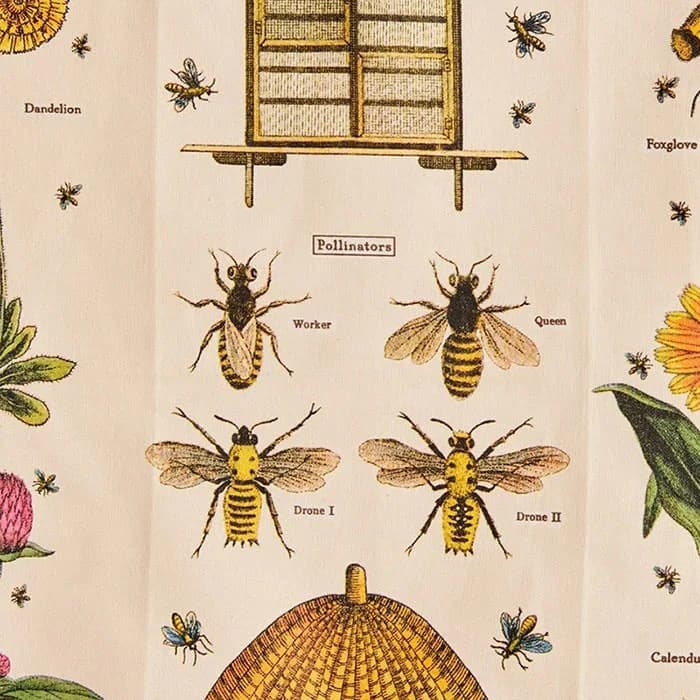
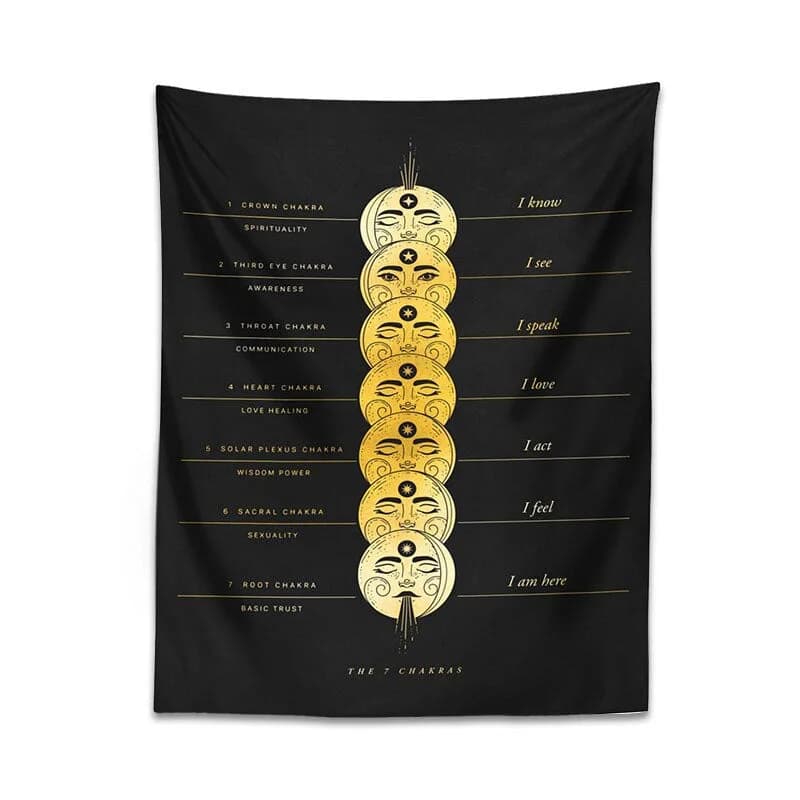
The same tapestry looks different on a white wall, a dark wall and a textured one. Pale designs like the Bees & Honey Wall Tapestry in beige tend to blend into cream walls and stand out on deeper ones. Darker designs such as the Chakra Wall Tapestry in black can look dramatic on light walls but may disappear against navy or charcoal.
Think about the light too. A window opposite the tapestry can wash it out in the day and a warm lamp can change the colours at night. Fairy lights add sparkle but also shine glare on shiny fabric. Test with the lights you will really use.
If your room already has a strong colour, choose a tapestry that shares one shade with it, such as a green in your bedding or a warm tone in your lamp. That single link makes the piece feel chosen rather than added. Two or three colours repeated across the room look calm; six look like a jumble.
Mounting options compared
There are a few easy ways to hang a tapestry. Pushpins or small nails are quick but leave holes. Adhesive hooks and removable strips are kinder to rental walls, though you should check their weight limits and your wall paint before trusting them. A wooden dowel or rod along the top gives the straightest, cleanest hang and spreads weight evenly.
If you rent, check your lease and test any adhesive on a hidden patch first. Some paints peel with tape. Do not assume a product is safe for your wall; read the packaging, and if in doubt, pick a method that leaves tiny holes over one that risks stripping paint.
For a taut, flat look, fix the top and the bottom corners. For a relaxed drape, fix the top only and let the fabric fall. Hanging only the corners can pull the edges into scallops, so add a middle fixing on wider pieces.
- Pins or tacks: quick, tiny holes
- Removable hooks or strips: check weight and paint
- Dowel or rod: cleanest hang for wide pieces
- Add a mid-point fixing on wide tapestries
Layout idea: a calm bed backdrop
For a restful bedroom, pick one tapestry, centre it over the headboard, and keep everything else quiet. The Bees & Honey Wall Tapestry in beige suits soft neutral bedding, a wooden bedside table and a warm lamp. The idea is to repeat its warm tones in one or two small items, like a honey-coloured cushion, instead of buying a full matching set.
Keep the proportions simple: tapestry about two thirds the bed width, a hand's width above the headboard, and bedside lamps below its lower edge so they do not poke into the image. If your lamps are tall, move them to the side or use a wall light.
Browse the Aesthetic Bedroom collection for cushions and small extras once the tapestry is decided. Choosing the big piece first and the little things second saves you from buying items that fight each other.
Layout idea: a moody, witchy corner
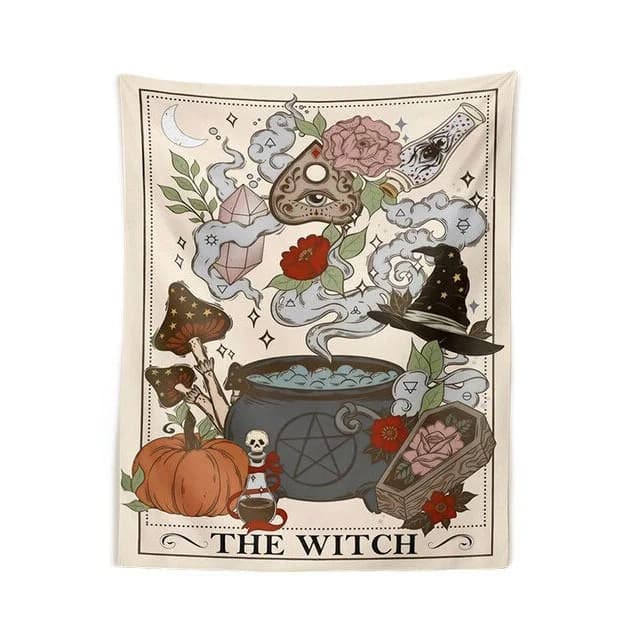
If you like a darker look, the The Witch Wall Tapestry or the Green Witch Wall Tapestry in black give you a strong focal point. They work well behind a reading chair, a bed with dark bedding, or a shelf with candles that are safely placed away from the fabric.
Keep any flame well away from textiles. Battery tea lights or a small lamp give the same glow without the worry. Put plants or a stack of books at the base of the wall to ground the tapestry, and leave a gap between the wall hanging and any heat source.
Let the tapestry be the only big pattern. If your rug, curtains and bedding are all patterned too, the wall piece loses its impact. Plain textures like linen, knit or cotton in two or three muted shades will make the artwork stand out.
Layout idea: plants, frogs and playful desks
For a lighter, funny corner, the Trust Me Frog Wall Tapestry suits a desk or gaming nook where you want personality without a serious mood. Hang it off-centre on the wall beside your monitor so it is visible on camera without sitting directly behind your head.
The Plant Mom Aesthetic Trees Wall Tapestry pairs naturally with real plants. Place a trailing plant on a shelf next to it, not in front of it, so leaves do not hide the print. Use real plants of different heights to echo the tree shapes.
If your desk is small, keep other decor minimal: a mug, a lamp, one frame. The tapestry carries the personality. Browse Aesthetic Room Decor for small desk pieces once the wall is done.
Layout idea: celestial and spiritual themes
Designs like The Moon Wall Tapestry and the Chakra Wall Tapestry suit meditation corners, yoga mats or low reading spaces. Hang them lower than usual, so the centre of the image sits near eye level when you sit on the floor or on a low bed.
That is the key trick: hang art for where your eyes will be. In a sitting-on-the-floor space, eye level might be around 100 cm (about 40 in) from the floor, while standing eye level is higher. Measure your own and centre the piece on that.
Keep the area simple. A cushion, a small side table and soft light are enough. Too many objects dilute the calm that these designs are meant to create. If you want to add more decor, pick items in one or two colours from the tapestry.
Mixing tapestries with posters and shelves
You can combine a tapestry with posters, but give them space. Leave a clear border of wall around the tapestry, or place posters on a different wall. Crowding frames right up against fabric makes both look messy. The Wall Tapestry & Posters collection is handy if you want to compare formats in one place.
If you want a gallery feel, treat the tapestry as the largest piece and arrange smaller items around it with equal gaps, such as 5 to 8 cm between pieces. Keep the heaviest or darkest item lowest, which grounds the arrangement.
Shelves in front of a tapestry can work, but fabric behind shelves can bunch or bulge. If you plan to do this, make sure the tapestry is fixed firmly and flat, and think twice about heavy items that could snag or pull the fabric.
Common mistakes and quick fixes
The usual mistakes are simple. Buying too small is the big one, followed by hanging too high, centring on the wall instead of the furniture, and ignoring what shows through thin fabric. Another is picking a busy print for a busy room, so nothing stands out.
Fixes are cheap. If it is too small, add a runner of plain fabric or a row of small frames either side. If it is too high, lower the fixings and re-hang. If it sags, add a mid-point fixing or a dowel. If it shows the wall colour, hang a plain sheet or lining behind it, checking that it is safe and secure.
If you are not sure at all, start with a smaller piece in an area you can easily change, and see how you feel in a week. The Home Decor collection has other pieces if you decide a tapestry is not the right fit for that wall.

Your final checklist
Run through this list before you click buy. It takes five minutes and prevents most returns. Keep your notes with you when you open the product page so you can compare numbers rather than guess.
Once you have chosen, hang it, step back, and adjust. A tapestry is forgiving: a few centimetres up or down can change the whole look. Enjoy the process, and take your time with the final placement.
If a measurement is missing from the page, ask first. If the material is not stated, do not assume anything about care or feel. Treat the tapestry as a decoration, hang it safely, and keep it away from heat and flame.
- Wall width, height and furniture width measured
- Paper template taped up and viewed from key spots
- Size on the product page checked, or support asked
- Material and care noted, or confirmed as unknown
- Mounting method suits your wall and lease
- Centred on the furniture, not just the wall
- Heat, flame and glare kept away from the fabric
- Colours linked to one or two items in the room


