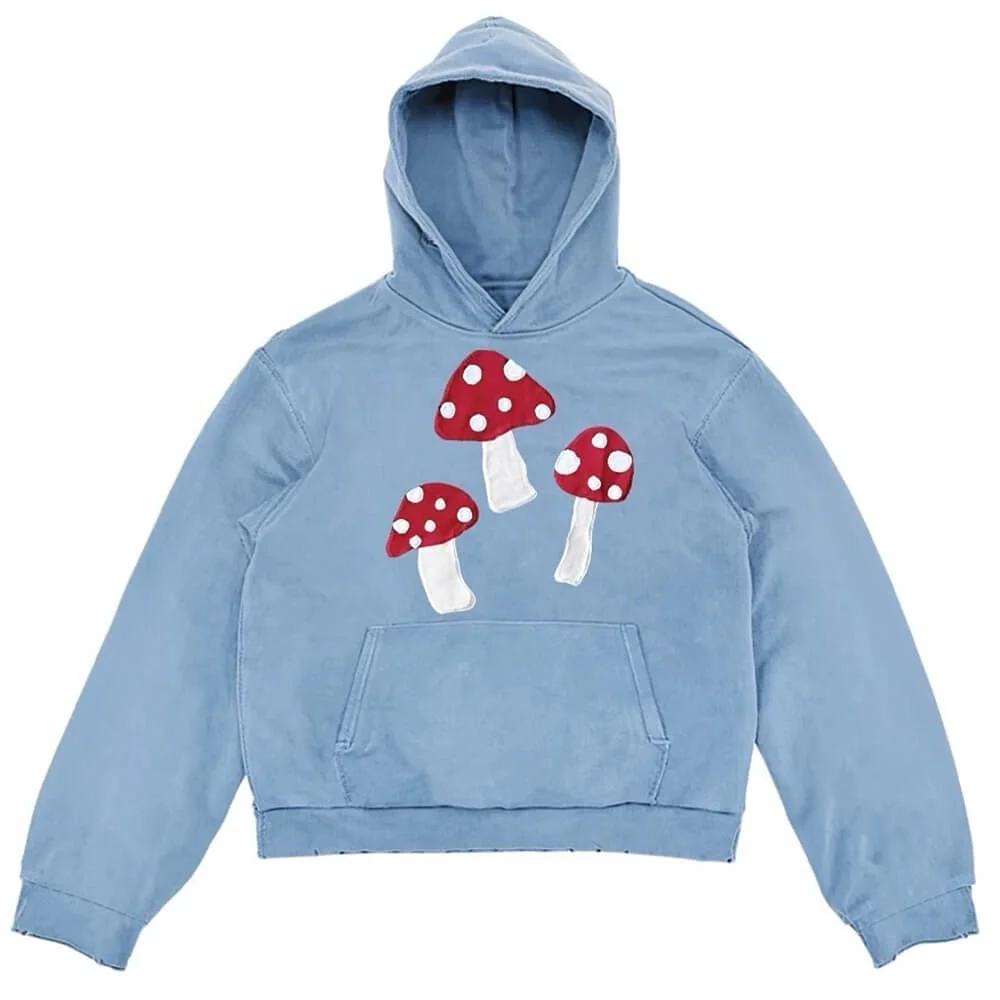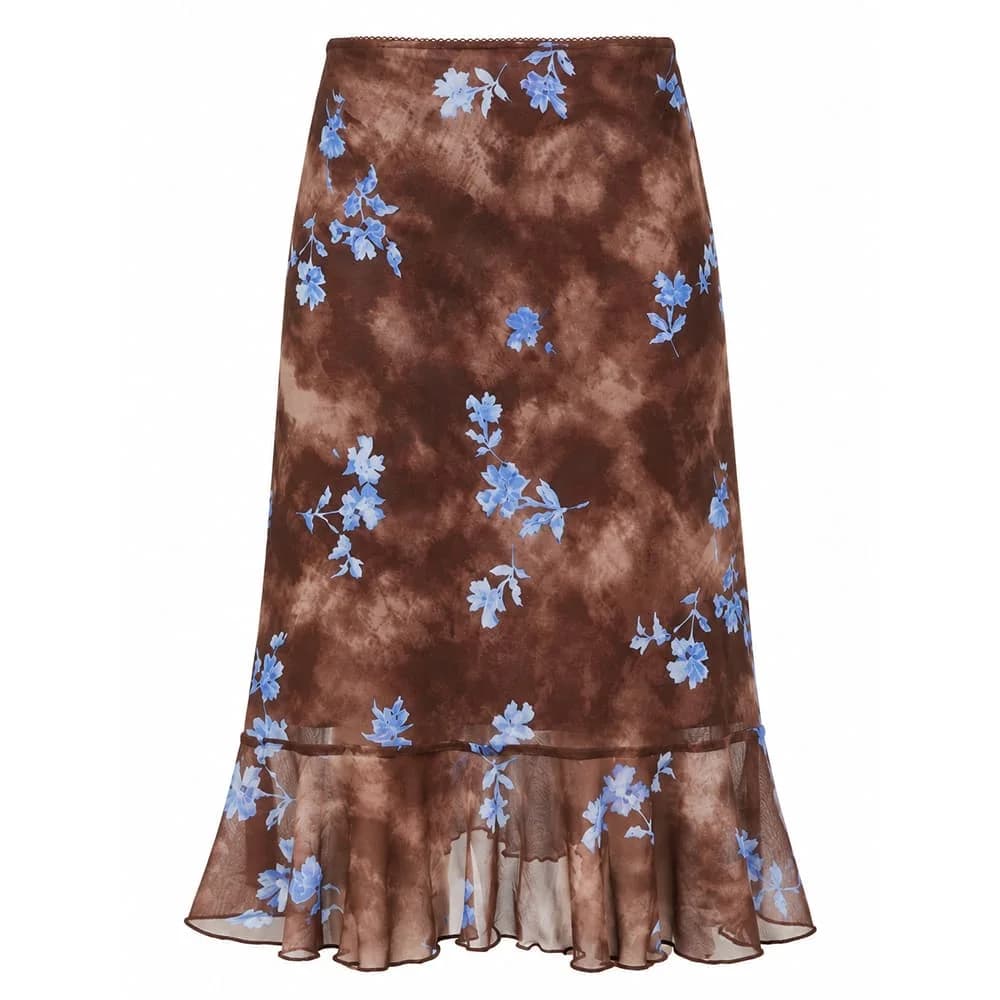

Created by the Kawaii Vibe editorial team. Our named style desks are editorial personas. Product details and availability can change.
Styling an indie hoodie comes down to managing visual weight. Because these fleece pieces usually feature relaxed cuts, dropped shoulders, and generous kangaroo pockets, throwing one on without considering the lower half can leave an outfit feeling shapeless or top-heavy. Getting the look right means balancing the bulk up top with intentional lines below, whether that involves cropped hemlines, stacked wide-leg trousers, or structured mini skirts.
The easiest way to make a casual fleece look deliberate is through layeringWearing pieces over or under one another to add depth, warmth or contrast. and texture contrasts. Peeking an oversized graphic collar over a pullover, sliding an extra-long sleeve under a rolled cuff, or contrasting plush cotton with stiff denim immediately transforms loungewear into a styled outfit. When you understand where your hems land and how each layer hits, you can build comfortable, expressive looks that feel curated rather than thrown together.
In this guide, we break down hem placement, under-layeringWearing pieces over or under one another to add depth, warmth or contrast. tricks, silhouetteThe overall shape an outfit creates, from fitted to loose and layered. balancing acts, and footwear choices. We also look at how to adapt these combinations across changing weather and how to pick the right base pieces from our indie collections to anchor your wardrobe.
1. Dialing in Your Base Silhouette: The Golden Ratio of Slouch
The cornerstone of styling any piece from our indie hoodies edit is managing how the volume on top interacts with your leg line. A heavy, slouchy pullover inherently drags the eye downward if the rest of the outfit lacks a defined anchor. To create balance, you generally want to work in thirds: either pairing an elongated torso with a visible short hemline below, or balancing an oversized upper block with substantial, structured leg shapes.
When you wear a baggy hoodie with slim leggings, the contrast can feel disconnected or top-heavy. Instead, aim for intentional shapes. Pairing a slouchy fleece with structured denim balances the volume through the entire vertical frame. If you want a wide-on-wide silhouetteThe overall shape an outfit creates, from fitted to loose and layered., make sure your hoodie hem hits right around the hip bone rather than past mid-thigh, keeping your natural proportions visible without cutting your height in half.
Another approach relies on shortening the hoodie line visually. Tucking the ribbed hem loosely up into a bralette or folding it under creates a faux-cropped cut. This simple adjustment shifts the eye upward, giving high-waisted bottoms room to show their hardware, stitching, and waistbands without getting swallowed by excess fleece.
2. Layering Underneath: Playing with Peeking Collars and Hems
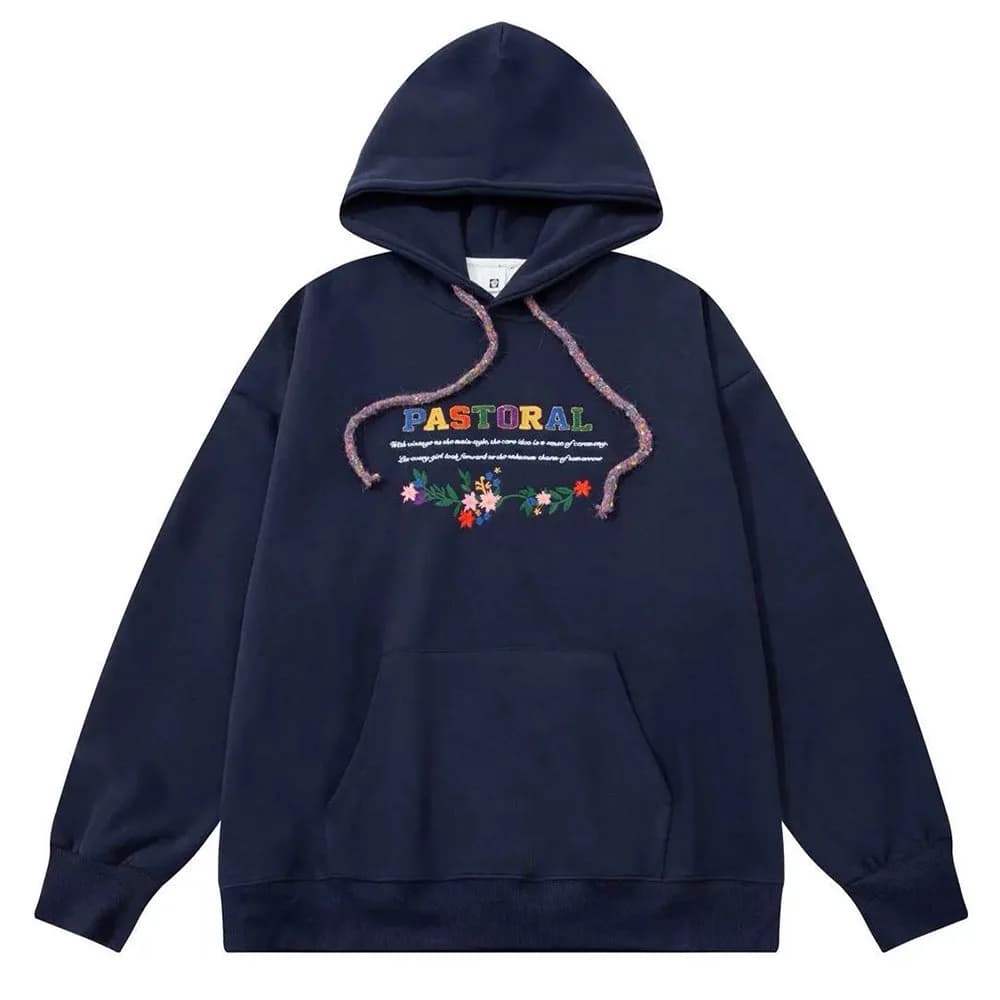
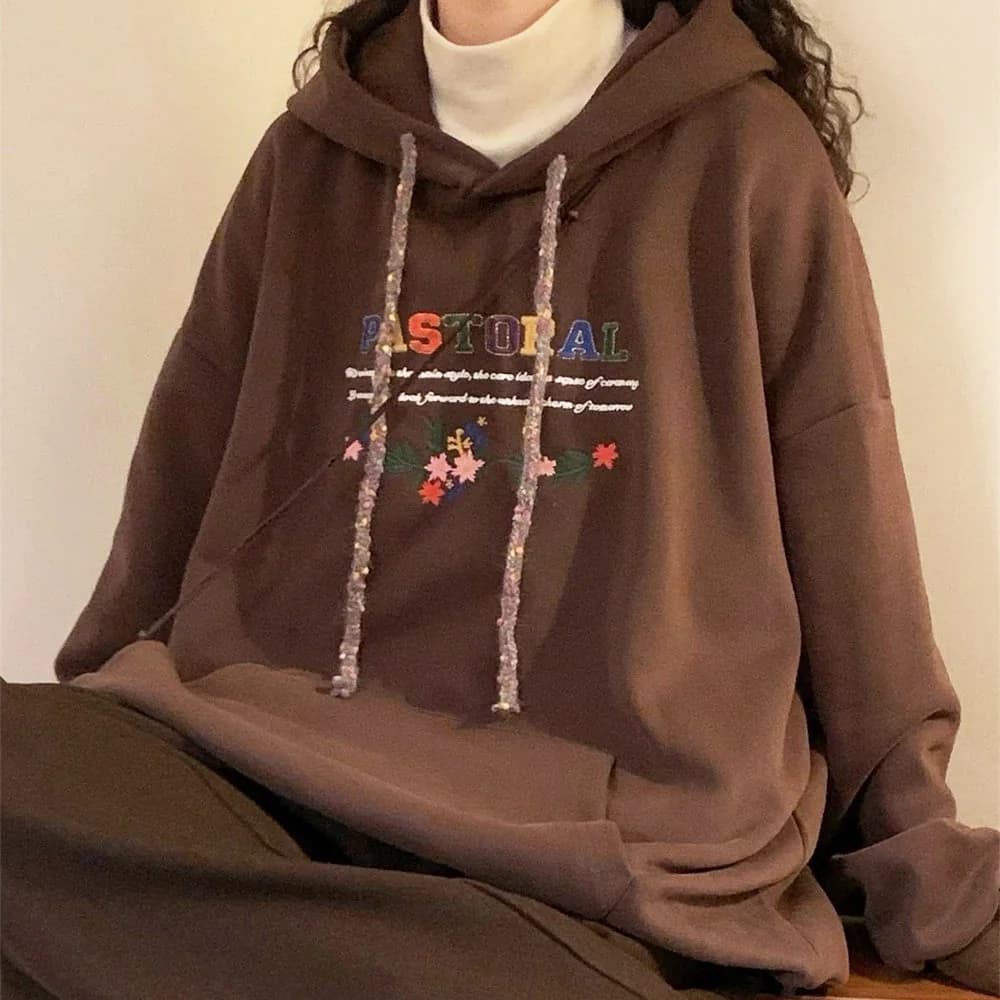
LayeringWearing pieces over or under one another to add depth, warmth or contrast. beneath a hoodie is one of the quickest ways to add depth and retro indie character. Rather than wearing a simple tank that hides entirely, select pieces from our indie tops collection featuring contrast collars, rings, or distinct graphics that sit proudly above the hoodie neckline. A high crewneck or a structured polo collar peeking out from an open hoodie neck frames your face and makes the fleece look planned.
Hemlines can also interact below the hoodie ribbing. If your hoodie has a snugger waistband, letting a longer tee hang two to three inches below it adds a broken horizontal line. The Indie Kid Star Striped Long Tee, made from a cotton and polyester blend in green, works nicely under darker fleece layers, letting its striped hem peek out along the hip. This double-hem effect softens sharp transitions between a heavy sweatshirt and plain trousers.
Sleeves provide another opportunity for contrast. Pushing a hoodie cuff up to the mid-forearm lets longer, fitted undershirt sleeves show through, adding texture and pattern to what would otherwise be a block of solid fleece. This technique is especially useful during transitional seasons when you want visual interest without adding heavy outerwear.

3. Balancing Wide-Leg Denim with Heavy Pullovers
Wide-leg and relaxed denim are central to the indie wardrobe, but combining wide trousers with a wide hoodie requires careful hem control. If the hoodie falls completely flat over wide hips and wide pants, you lose all shape. The trick is to introduce structure at the waist or let the trouser fabric pool neatly over shoes to ground the weight.
A solid combination involves pairing a boxy pullover with the Indie Kid Baggy Jeans, cut from classic blue denim and available in sizes M to XL. Because these jeans carry noticeable volume from hip to ankle, they hold their own against oversized fleece without flattening out. Keep the hoodie hem folded under or slightly bunched above the front pockets to maintain a clear waist marker.
To bring subtle print into this denim foundation, you can also swap classic washes for the Indie Kid Mushroom Print Jeans. These blue denim jeans add graphic detailing along the legs, which pulls visual attention downward and rewards the eye, stopping the outfit from feeling like a monochrome cascade of fabric.


4. The Cropped Hoodie and High-Rise Bottom Formula
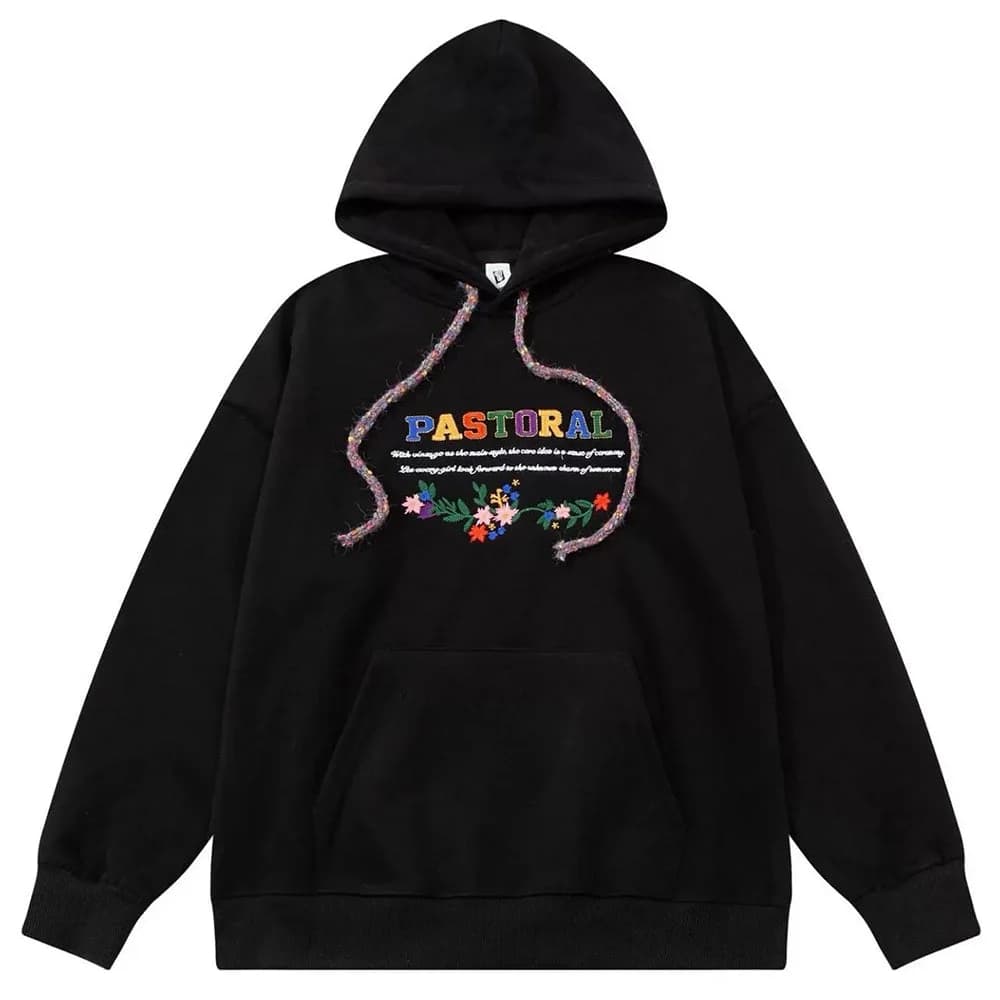
Cropped hoodies solve proportion challenges instantly by eliminating fabric bunching around the lower belly and hips. When the hem ends naturally between the natural waist and the navel, your lower body line automatically looks elongated. This cut is ideal for pairing with high-waisted skirts, utility trousers, or relaxed shorts.
You can also layer lightweight options underneath cropped cuts to experiment with varied vertical levels. Try wearing one of our indie crop tops underneath an open-front or loose-fit cropped hoodie; this lets you strip off the top layer when temperatures rise while maintaining the same high-waisted proportion. The hem of the crop top creates a tidy boundary right above your waistband.
If you are working with an uncropped hoodie that you want to shorten, use the internal fold method. Folding the elastic ribbing inward twice allows the fabric to sit securely against your ribcage without permanently altering the garment, turning any standard piece from our wider indie clothes selection into an adaptable cropped staple on the fly.
5. Textural Contrasts: Pairing Fleecy Knits with Puffer Textures
A common styling error is mixing too many pieces of identical cotton jersey, which can make an ensemble look like indoor sleepwear. Mixing contrasting textures—such as fleece, quilted nylon, ribbed knits, and rugged denim—gives the outfit tactile dimension that feels curated and dynamic.
For a playful silhouetteThe overall shape an outfit creates, from fitted to loose and layered., combine a soft pullover with the Indie Kid Puffer Mini Skirt. This polyester skirt comes in green, brown, beige, and grey across sizes S, M, and L, offering a sleek, padded contrast to brushed fleece. Because the skirt has a structured, buoyant shape, an oversized hoodie draped over it creates a deliberate high-low volume play that works particularly well with tights and chunky boots.
If you prefer a zipped outer layer over a hoodie foundation, you can experiment with the Indie Kid Fuzzy Plaid Zip Up Sweater. Made from polyester and available in white, purple, and green, this textured zip-up works as a tactile mid-layer or jacket alternative, contrasting its fuzzy finish against smooth jersey tops beneath.

6. Warm-Weather Styling: Hoodies with Shorts and Light Layers
Hoodies are not reserved strictly for freezing weather. In mild or coastal climates, pairing a cozy top layer with lightweight shorts delivers that relaxed indie skate look while keeping you cool. The key here is hem relation: the hoodie should either stop well above the short hem or match it almost evenly for a breezy look.
A strong base piece for this setup is the Indie Kid Plaid Summer Shorts. Crafted from cotton and polyester in a bright blue plaid, these shorts bring lightweight breathability to casual outfits. When worn with an unzipped or pushed-up hoodie, the plaid pattern introduces contrast against a plain fleece surface, grounding the look with summer-friendly energy.
For daytime outings where the morning starts chilly and warms up by afternoon, keep an option from our indie t-shirts range underneath. This allows you to take off the hoodie and sling it across your chest or knot it over your shoulders as an accessory, letting the graphic tee take center stage while keeping your hands free.
7. Sleeve Dynamics: Longline Undershirts and Layering Tricks
Sleeve proportions dramatically alter how heavy a hoodie feels on your frame. If your sleeves fall limp past your fingertips, the entire outfit can look inadvertently ill-fitting. Intentionally styling your cuffs—whether rolled, scrunched, or layered—gives structure to the silhouetteThe overall shape an outfit creates, from fitted to loose and layered..
One reliable approach is sliding the Indie Liminal Cat Striped Long Sleeve Top underneath your hoodie. Produced in yellow polyester, its striped sleeves can extend an inch or two beyond pushed-back hoodie cuffs. This peek of bright pattern breaks up broad blocks of sleeve fabric, drawing the eye toward hand movements and accessories like rings or cuffs.
Alternatively, choose fitted graphic pieces like the Indie Butterfly Print Long Sleeve Top. Made from a cotton and polyester blend and available in white and black, this piece works cleanly under loose hoodies. You can pull the printed cuffs down while pushing the fleece sleeves to your elbows, creating a layered, spliced effect reminiscent of early-2000s indie outfits.
8. Footwear Anchors: Preventing the Floating Hoodie Effect
Footwear choices make or break oversized outfits. Because hoodies add volume to your upper third, flimsy or overly low-profile flat shoes can cause the bottom of your outfit to look light and unfinished. Grounding the look requires shoes that have enough visual weight to counterbalance the fleece.
Chunky platform sneakers, lug-sole loafers, and rugged ankle boots are standard pairing choices for indie fits. When you wear substantial footwear, the drape of wide-leg denim or the exposed leg line beneath a mini skirt looks intentional and structurally anchored. The shoe gives the eye a solid base to land on, completing the vertical silhouetteThe overall shape an outfit creates, from fitted to loose and layered. cleanly.
If you are wearing cropped trousers or shorts, adding mid-calf ribbed socks helps smooth the transition between bare skin and chunky footwear. Scrunching your socks down near the shoe collar creates a relaxed ripple that echoes the soft folds of your hoodie sleeves, tying the top and bottom halves of your look together.
9. Hood Placement, Necklines, and Outer Layering
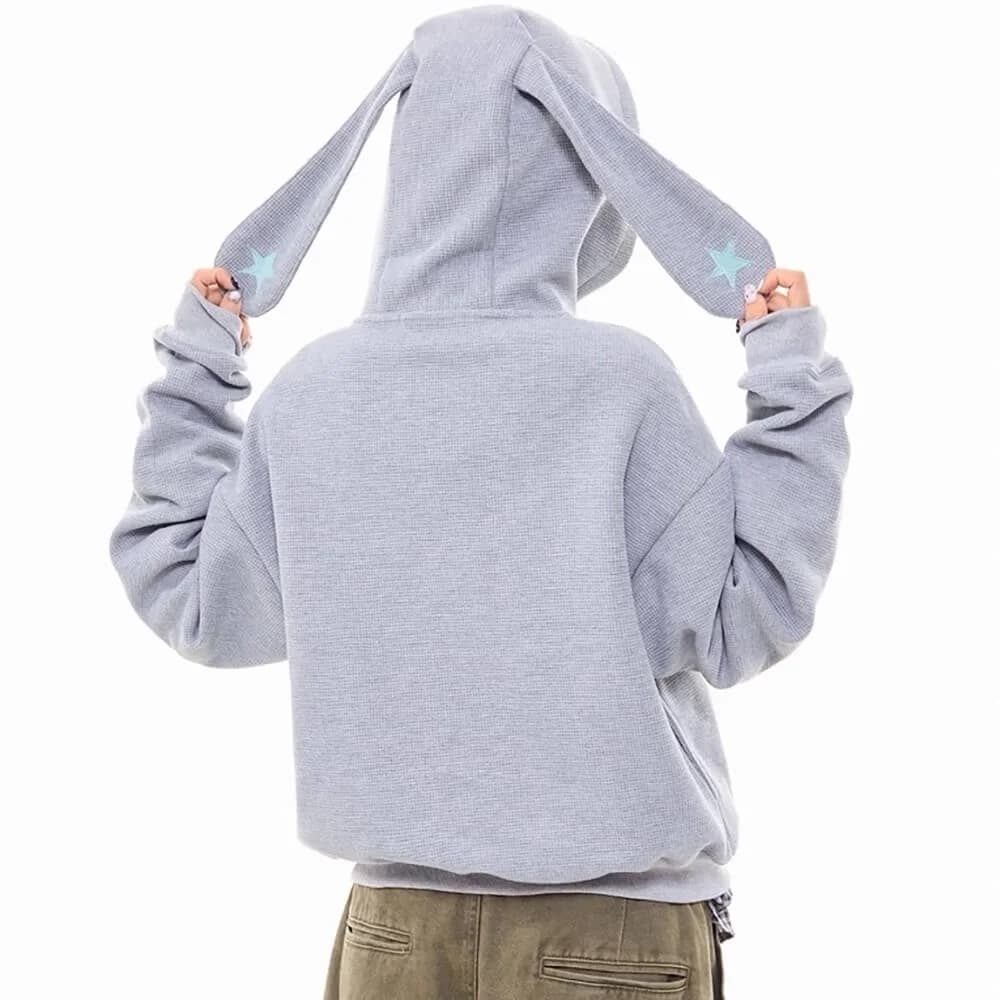
How the hood itself rests on your shoulders impacts your neckline profile. A thick hood that collapses inward can swallow your neck, while a well-positioned hood frames your head and adds crisp lines to your collarbone area. When styling, always pull the hood fabric out flat across the back so it sits open.
LayeringWearing pieces over or under one another to add depth, warmth or contrast. a jacket over a hoodie requires checking armhole and collar depth. Stiff chore coats, oversized denim jackets, or boxy bomber jackets offer the easiest fit over fleece. Make sure to pull the hood completely over the jacket collar rather than squishing it inside, which prevents an awkward neck bulge and maintains a clean frame around your jawline.
If your hoodie has drawstrings, resist the urge to pull them tight unless you are facing heavy wind. Letting the strings hang straight down emphasizes vertical lines along your chest, balancing the horizontal bulk of a front kangaroo pocket and elongating your upper body.
10. Choosing Between Zip-Ups and Pullovers: Styling Decision Points
Deciding between a zip-up hoodie and a pullover comes down to how much outfit versatility you need throughout the day. While both share fleece warmth and casual roots, they serve fundamentally different styling roles in an indie wardrobe.
Pullovers offer a cleaner, unbroken surface that highlights front graphics or provides a steady backdrop for statement bottoms. They hold their shape reliably and create that signature rounded slouch. However, pullovers limit daytime temperature adjustments and conceal whatever base layer you are wearing underneath.
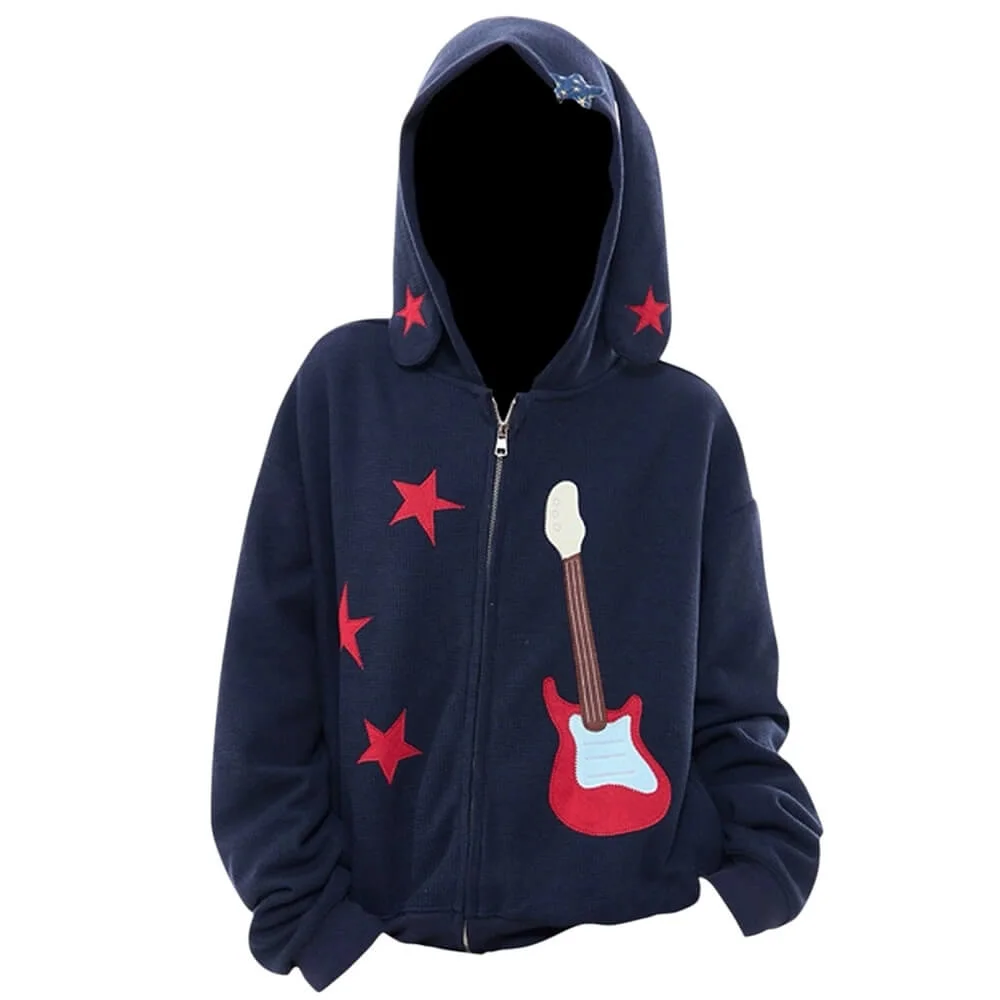
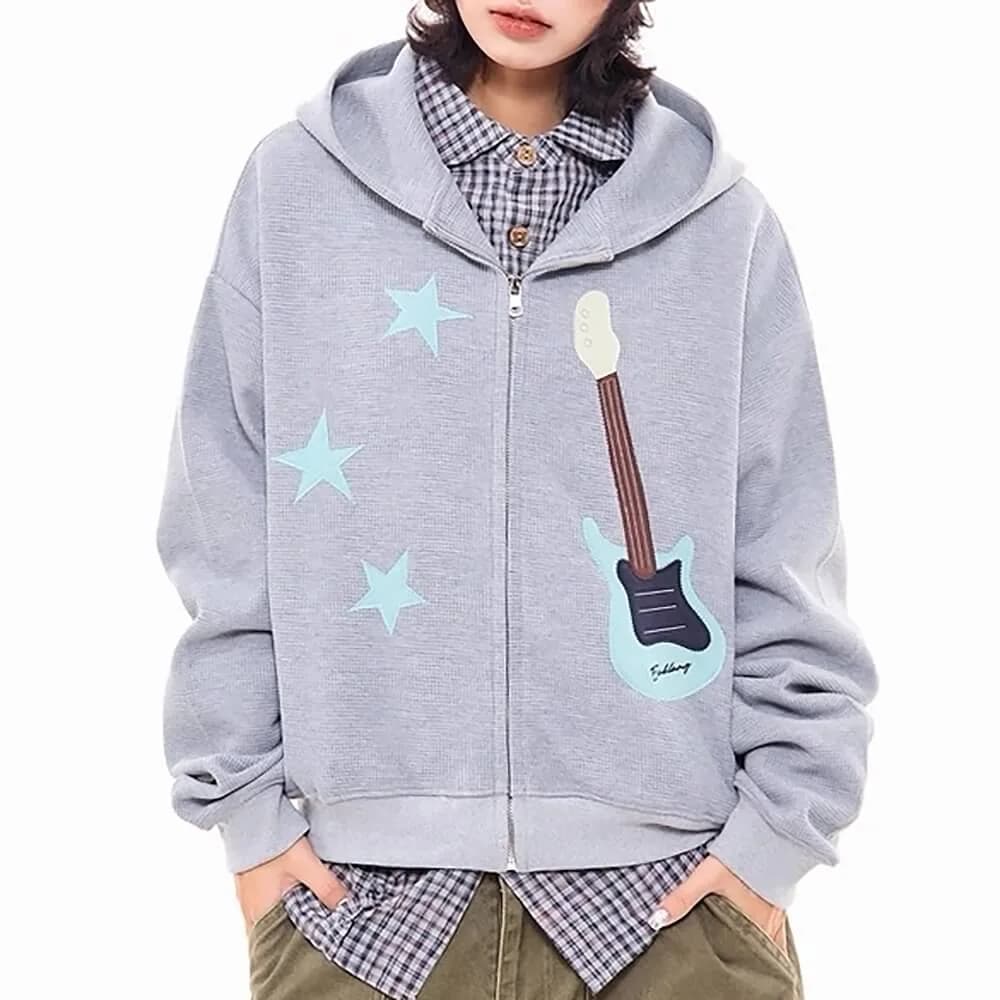
Zip-up hoodies, on the other hand, function essentially as lightweight jackets. An open zip reveals your undershirt, creating a vertical stripe of contrasting color down your center that slims and lengthens your torso. You can also half-zip them from the bottom or top to reveal high-waisted hardware or showcase layered necklines from our wider collection.
- Pullovers: best for strong graphic focal points and consistent, cozy volume.
- Pullovers: ideal for French tucks into wide-leg denim.
- Zip-ups: perfect for displaying patterned under-layers and graphic t-shirts.
- Zip-ups: easier to modify during fluctuating temperatures throughout the day.
11. Color and Graphic Balance: Solid vs. Pattern-Heavy Fits
When building an indie outfit, deciding where your color and print moments live stops pieces from fighting for attention. An indie hoodie often features expressive graphics, saturated dyes, or vintage washes, so the rest of the outfit should either complement that shade or let it stand out as the hero piece.
If your hoodie is loud, patterned, or heavily branded, team it with neutral, grounding staples like washed denim or plain cargo trousers. Conversely, if your hoodie is a muted earth tone, heather grey, or soft pastel, use your bottoms or undershirts to introduce energy. Pairing a solid fleece with printed jeans or a vibrant striped undershirt creates a focal point lower on the body.
Pay attention to color temperature as well. Cool greys, washed blacks, and muted blues pair effortlessly together for a low-contrast look, while earthy greens, warm tans, and mustard yellows create a sun-faded thrifted feel. Limiting each outfit to two core shades plus a neutral background keeps the overall mix easy on the eyes.
12. Weather Adaptations: From Damp Chills to Sunny Afternoons
An indie hoodie is naturally adaptable across climates, but staying comfortable requires matching your layer weights to the forecast. In damp, colder climates, fleece absorbs moisture quickly, meaning a water-resistant shell or windbreaker worn over your hoodie is essential for staying dry.
For cold, crisp weather, treat your hoodie as the insulating mid-layer. Slide a breathable cotton-blend tee beneath it, pull the fleece over, and top it with a structured trench, oversized puffer, or denim jacket. This sandwich technique traps warm air close to the core while letting you shed outer layers as you step indoors.
In warmer, sunny climates where temperatures drop in the evening, the hoodie becomes an accessory during peak daylight hours. Knotting the sleeves diagonally across your chest like a sling keeps your hands free, adds dynamic diagonal lines to your plain t-shirt and shorts, and keeps warmth within reach the moment the sun dips.
13. Common Hoodie Styling Pitfalls to Avoid
Even the most comfortable hoodie can feel unflattering if you run into common proportion traps. Being aware of these missteps helps you build outfits with confidence and avoid that swallowed-by-fabric feeling.
One frequent mistake is neglecting the bottom cuff. When a hoodie waistband grips tightly around the thighs or hips, it can balloon out at the belly, creating awkward bulges. To fix this, tuck the ribbing under to hit your natural waistline, or gently stretch the bottom hem to allow it to hang straight down.
Another common error is pairing an oversized hoodie with shoes that lack visual weight. Canvas flats or low-profile running shoes can make an oversized silhouetteThe overall shape an outfit creates, from fitted to loose and layered. look top-heavy. Switching to chunky trainers, platform boots, or heavy soles creates balanced weight from your shoulders down to your feet.
- Avoid tight waistbands that cinch your hips and bubble the fabric above.
- Do not let an oversized hoodie hang mid-thigh over completely loose pants without a waist tuck.
- Skip ultra-thin footwear that leaves the bottom of your outfit looking visually light.
- Avoid stuffing thick hoods inside stiff jacket collars; always drape the hood over the top.

14. The Indie Hoodie Proportions Checklist
Before heading out the door, running through a quick mental checklist ensures your outfit looks balanced, deliberate, and comfortable. Checking your proportions only takes a few seconds and makes an immediate difference in how put-together your fleece feels.
Start at the top by checking your hood drape and collar reveals. Make sure your undershirt is sitting neatly, your hood is smoothed flat across your back, and any drawstrings are hanging evenly. Next, inspect your midsection: confirm that your waistband or hip line is clearly defined, whether through a soft tuck, a cropped cut, or a peek of undershirt.
Finally, look at the transition from your trousers or skirt down to your footwear. Ensure your hems interact cleanly with your shoes without turning into an untamed puddle of fabric, and verify that your footwear provides enough visual weight to anchor your upper layer securely.
- Hood: laying flat against the back, framing the neck cleanly.
- Collar / Neck: under-layer collar peeking through neatly if layered.
- Waistline: hem either folded under, cropped, or contrasted with an under-layer.
- Pockets: kangaroo pocket sitting flat without excess bunching.
- Bottoms: denim or skirt balancing the upper body volume.
- Footwear: substantial, platform, or chunky shoes grounding the overall frame.