Created by the Kawaii Vibe editorial team. Our named style desks are editorial personas. Product details and availability can change.
Balancing an indie skirt outfit comes down to managing contrasting shapes, fabric weights, and focal points. When you pair an unconventional skirt with a top that fights its hemline, the overall look feels cluttered rather than intentional. The secret is knowing where your eye should rest, whether that is on a distinct drop-waist seam, a textured hem, or a chunky set of boots anchoring the base.
Instead of treating skirts as standalone statement items, think of them as the midpoint between your upper body layers and your footwear. Getting the proportions right means adjusting top volume against skirt flare, and selecting shoes that counterbalance the visual weight of your hem.
In this guide, we break down specific silhouetteThe overall shape an outfit creates, from fitted to loose and layered. combinations, waist placements, shoe pairings, and layeringWearing pieces over or under one another to add depth, warmth or contrast. strategies. Whether you are assembling a casual everyday outfit or refining an offbeat aesthetic, these practical formulas help you style your pieces with consistent ease.
1. The Geometry of Hemlines and Upper Silhouettes
Building balanced indie skirt outfits begins with the baseline rule of volume opposition. If a skirt features voluminous gathers, pleats, or ruffles, pairing it with an equally wide, unshaped top can swallow your frame. Conversely, wearing a tight top with a tight pencil-cut mini often strips away the relaxed, artful character central to indie styling.
A reliable starting point is matching fitted or semi-tapered upper layers to flared lower cuts, or choosing oversized, slouchy tops to drape over compact, straight skirts. When styling wide skirts, a cropped or tucked upper garment maintains an identifiable anchor point around your midsection, preventing the fabrics from blending into one formless block.
If you prefer wearing loose shapes on top and bottom simultaneously, rely on visual breaks. Exposing a bit of collarbone, rolling up sleeves, or letting a slim underlayer peek out below a hem gives the eye a point of contrast. This structural balance keeps your clothing looking thoughtfully styled rather than haphazardly thrown together.
- Oversized top + straight mini skirt: Creates a casual, relaxed look anchored by clean lower lines.
- Fitted top + pleated or ruffled skirt: Preserves waist definition while letting skirt movement take focus.
- Boxy crop + high-rise skirt: Establishes clear horizontal proportion breaks without requiring complex layeringWearing pieces over or under one another to add depth, warmth or contrast..
2. Finding the Right Waistline Height
Waistline placement dictates how the rest of your garments sit against your torso and legs. High-rise skirts shorten the perceived torso and elongate the lower half, which pairs naturally with cropped knits or baby tees. Mid-rise fits provide an effortless everyday look, landing naturally around your hips and welcoming casual tucks. Low-rise cuts lean heavily into late-90s and early-2000s indie aesthetics, extending the torso while shifting visual interest lower down.
When deciding where your waistband should land, consider the length of your tops. For instance, pairing a long-line graphic tee with a high-waisted skirt often results in excess fabric bunched around your midsection if you try to tuck it in. Instead, pair high rises with tops designed to stop just at or above the waistband.
For lower-slung cuts, let your tops drape softly over the waistband or use a fitted top that finishes right at the hip bone. You can explore a broad range of cuts and silhouetteThe overall shape an outfit creates, from fitted to loose and layered.s within our curated Indie Skirts selection to find the waist rise that best matches your preferred tops.
3. Balancing Mini Skirts with Long-Sleeve Tops
Mini skirts naturally emphasize the legs, which gives you room to introduce substantial fabric coverage across the arms and shoulders. This combination creates an immediate visual harmony: the lightweight or short lower half keeps high-neck or long-sleeve tops from feeling suffocating, while the extra fabric up top grounds the exposure below.
Consider pairing a straight or boxy mini with a relaxed long-sleeve knit or jersey. The Indie Butterfly Print Long Sleeve Top, available in white or black cotton and polyester, provides light wrist coverage with graphic interest that contrasts clean, minimal skirts. Its classic sleeve length helps balance out abbreviated hemlines without adding bulk.
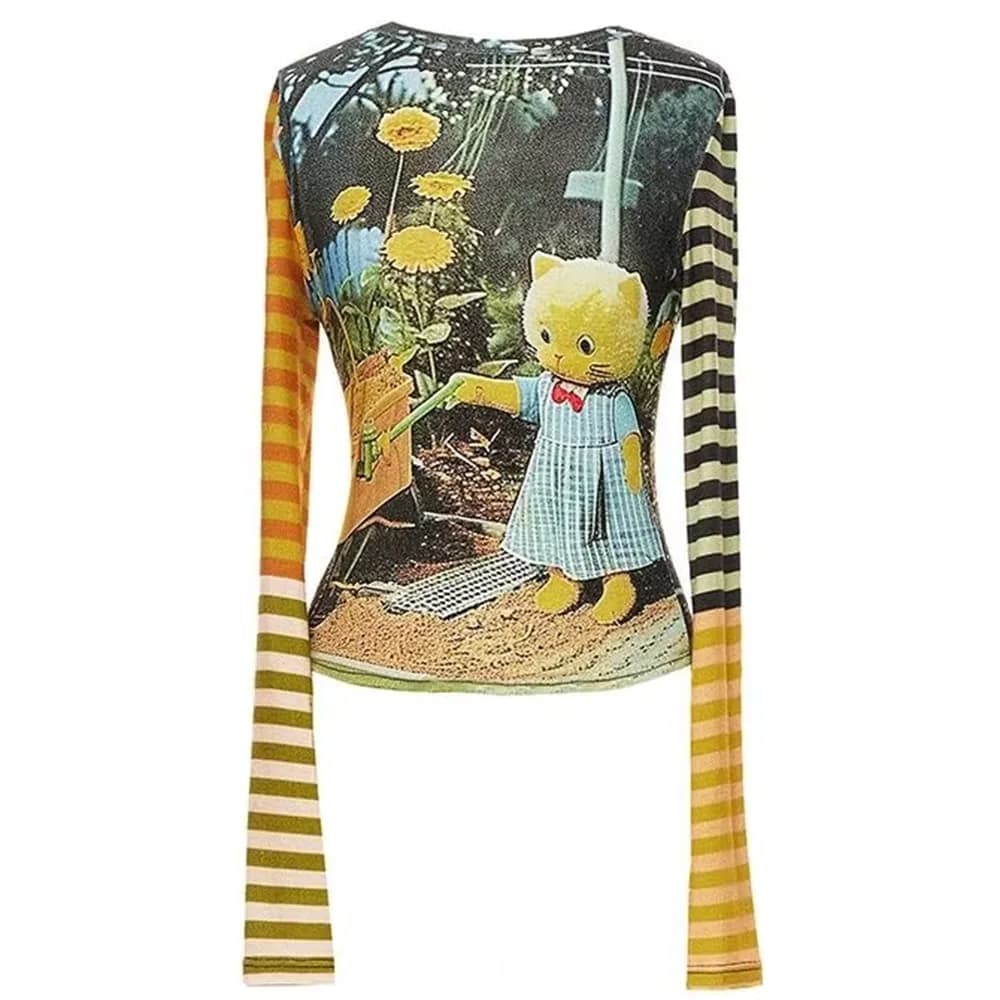
Alternatively, a horizontally striped knit like the yellow polyester Indie Liminal Cat Striped Long Sleeve Top brings a relaxed casual note to plain mini skirts. The horizontal sleeve stripes draw the eye outward across the shoulders, countering vertical leg lines and giving your entire outfit a grounded, lived-in feel.

4. Styling Quilted and Structured Puffer Skirts
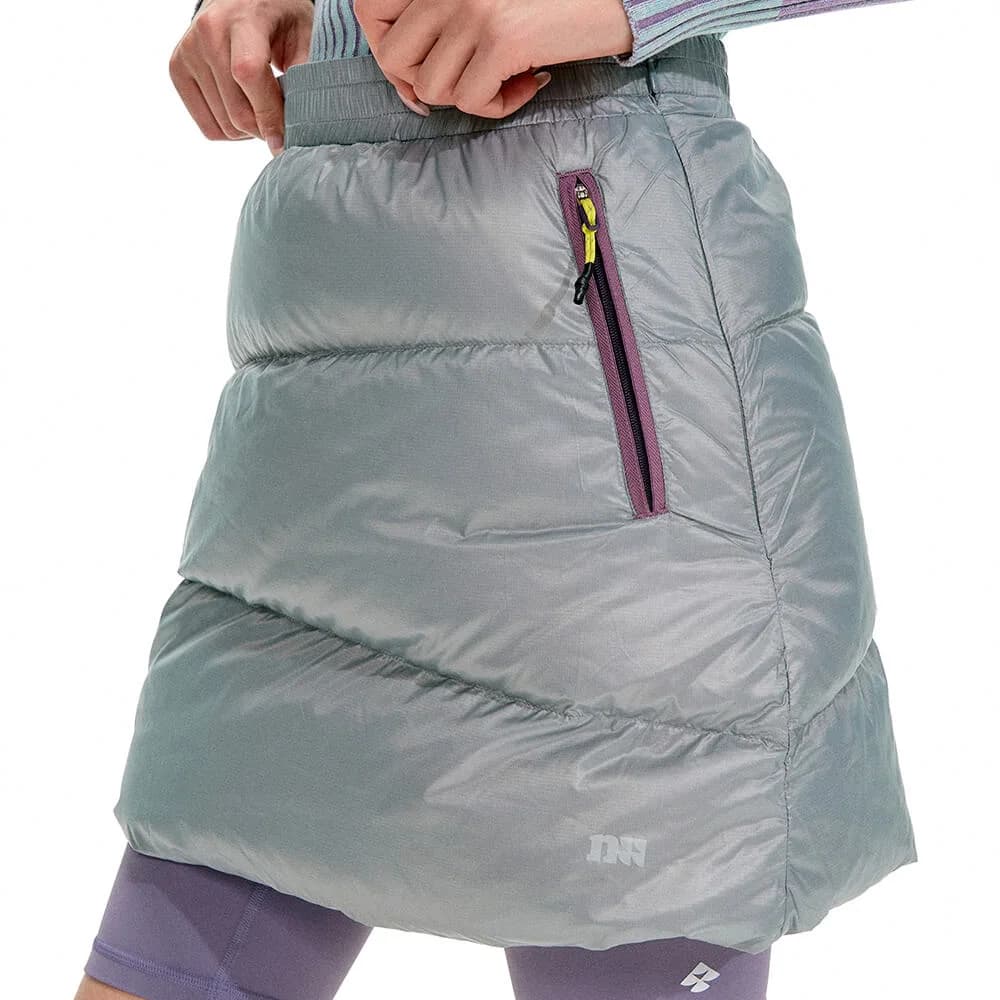
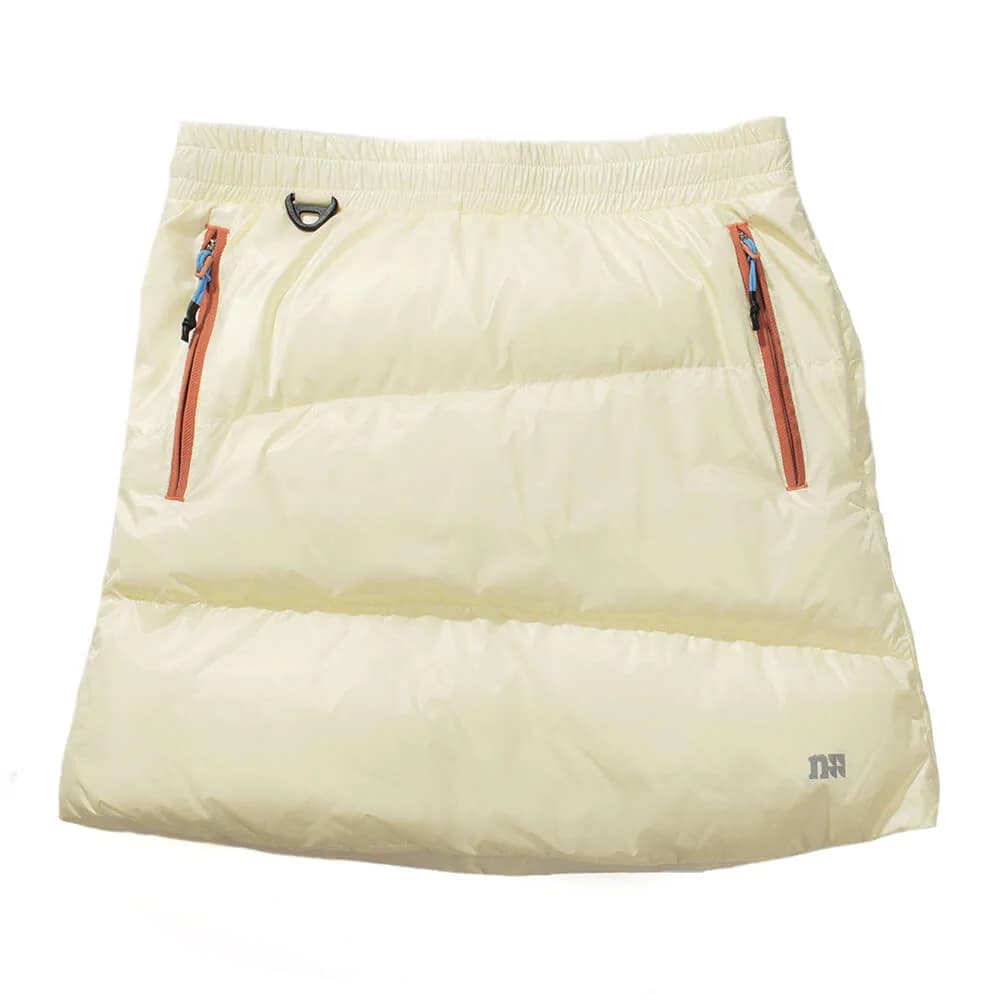
Padded and quilted fabrics introduce unique physical volume that typical cotton or rayon skirts lack. Because these skirts hold their own shape rather than draping softly, they require deliberate pairing strategies so the midsection does not appear bulky.
The polyester Indie Kid Puffer Mini Skirt, offered in green, brown, beige, and grey, presents distinct quilting that adds substantial texture. To balance this structured bulk, keep your base layers lean. A fitted ribbed turtleneck or a snug baby tee balances out the firm profile of the padded shell.
When layeringWearing pieces over or under one another to add depth, warmth or contrast. over a structured puffer skirt, choose outerwear that either ends right at the waistband or falls well past the skirt hem. Mid-length jackets that stop at the exact same point as the skirt hem create an awkward horizontal block. Sticking to contrast—either cropped outerwear or a full-length duster coat—preserves clean visual lines.
- Tops: Ribbed henleys, compact mock-neck tops, or slim baby tees.
- Footwear: Chunky lug-sole shoes or combat boots that match the skirt's visual weight.
- Outerwear: Waist-length boxy track jackets or long open cardigans.

5. Pleated Skirt Proportions and Everyday Movement
Pleated skirts carry built-in kinetic movement and vertical structure. Knife pleats, accordion folds, and tennis-style box pleats all guide the eye vertically, offering a crisp texture that pairs well with informal tops like cardigans, band tees, and boxy pullovers.
When shopping for dynamic movement, check the focused range of Indie Pleated Skirts to decide between stiff schoolcore-inspired pleats and looser micro-pleats. Crisp, rigid pleats support oversized sweaters tucked gently at the front, while fluid pleats collapse nicely under longer vintage blazers.
To keep a pleated skirt outfit grounded, pair it with structured shoes. Oxford shoes, loafers with ribbed crew socks, or flat ankle boots counter the light, fluttering motion of pleats. Avoid shoes that are overly dainty unless you are explicitly balancing them with an oversized, distressed jacket on top.
6. Ruffled Hemlines and Cottage-Indie Textures
Ruffled and tiered skirts bring soft, organic silhouetteThe overall shape an outfit creates, from fitted to loose and layered.s into an indie wardrobe. These hemlines add horizontal interest near the bottom edge of the garment, which requires thoughtful top selection to prevent the outfit from looking bottom-heavy.
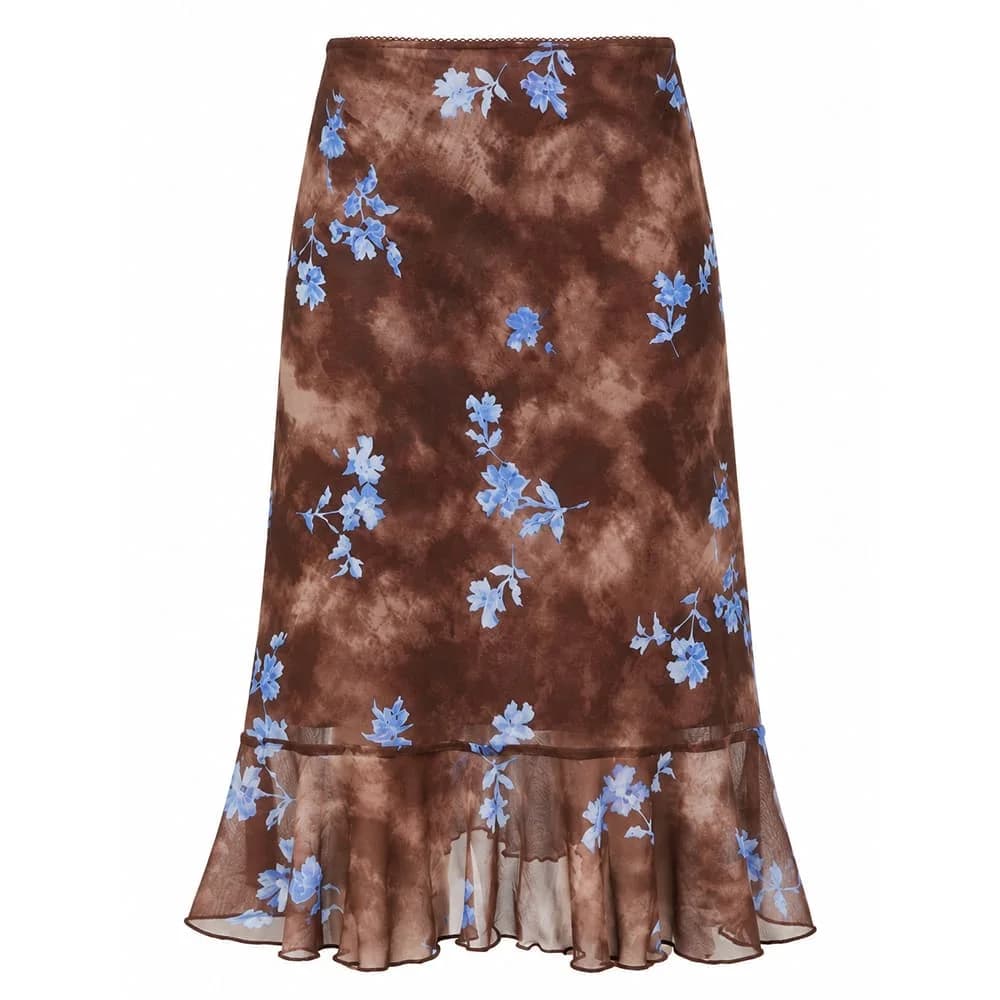
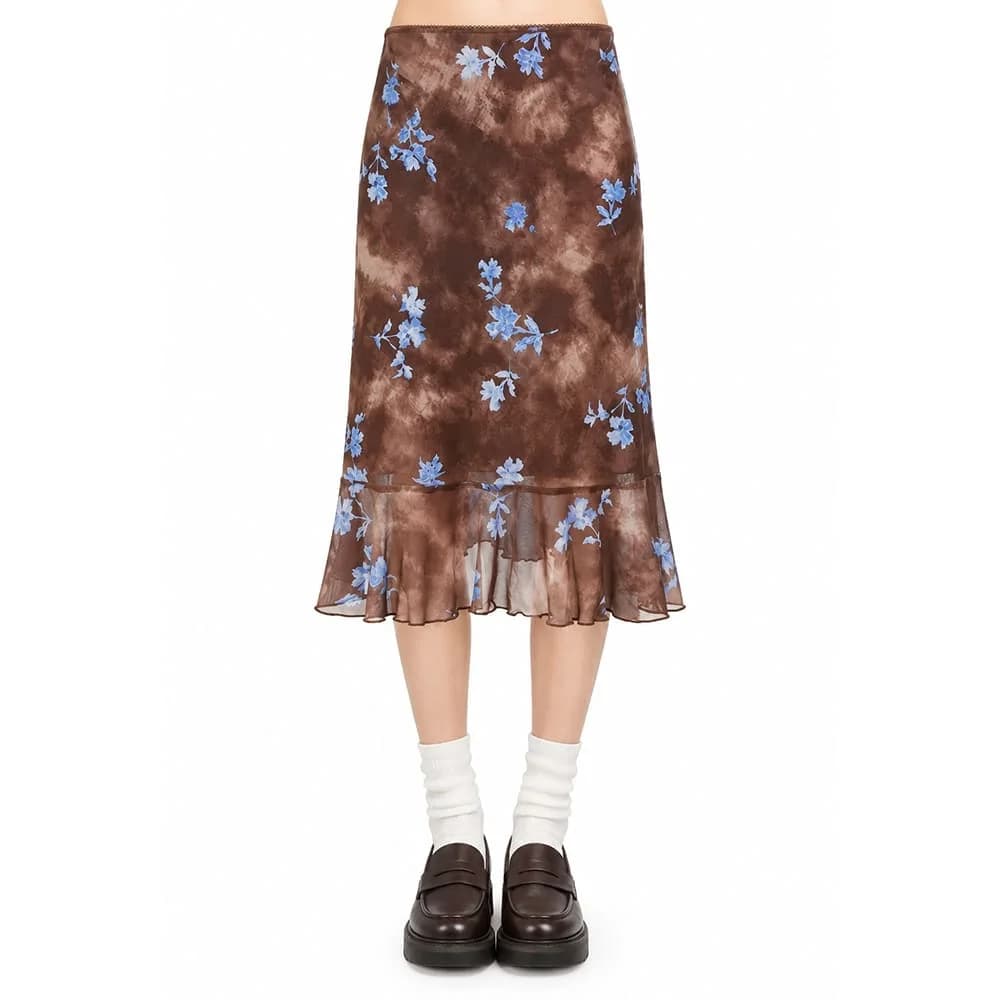
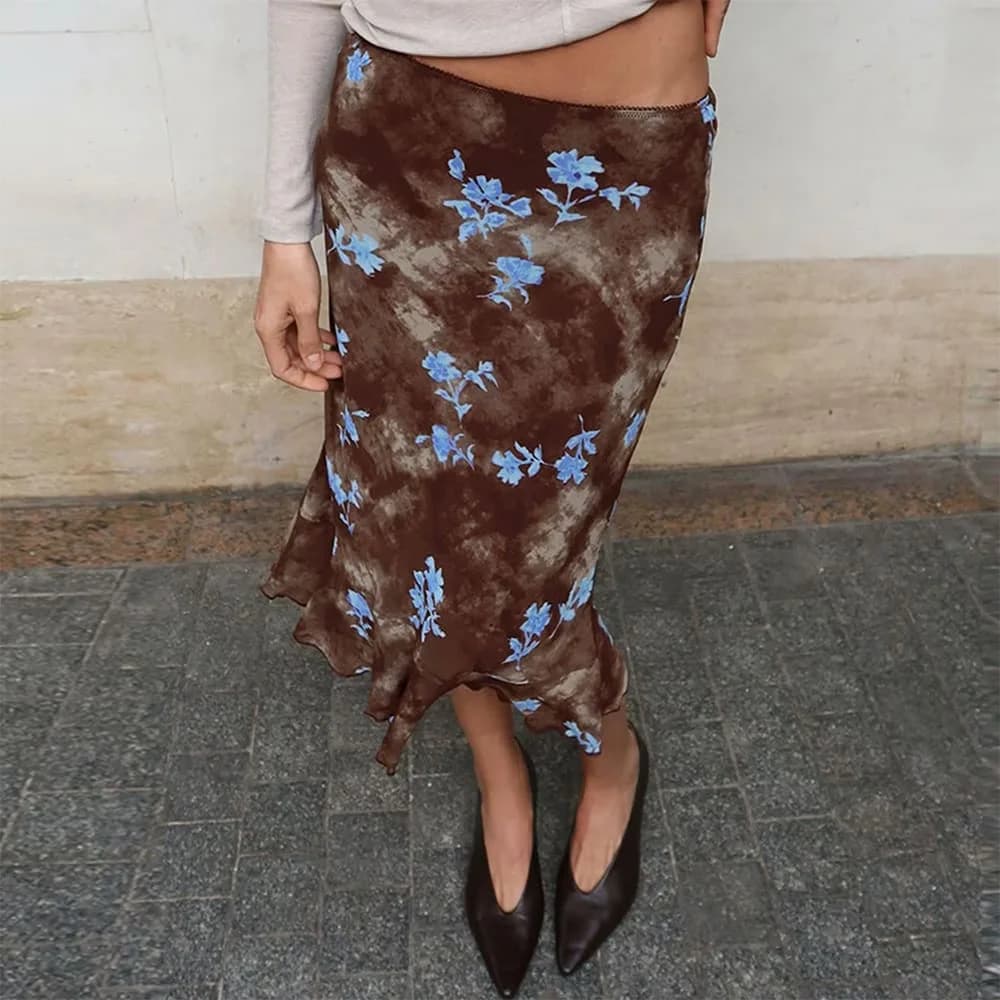
The Fairycore Blue Floral Ruffle Skirt, cut from polyester in a brown colorway, provides layered tiers that drape naturally. Because the ruffle detail draws attention down to the hemline, an open neckline up top—such as a square neck, scoop neck, or unbuttoned cardigan—creates a flattering visual counterweight.
Pairing romantic ruffles with tougher textures also prevents the outfit from skewing overly sweet. Try wearing a ruffled skirt with a broken-in denim vest, an oversized distressed pullover, or heavy utility boots. The friction between delicate tiering and rugged fabric is an essential styling hallmark of indie aesthetics.
7. Co-Ords and Matching Sets Made Simple
Co-ordinated sets take the guesswork out of color matching and fabric harmony, but they still require styling intention to keep them from looking like a uniform. A matching top and skirt creates an immediate vertical column of color, giving you a cohesive canvas for accessories and outerwear.
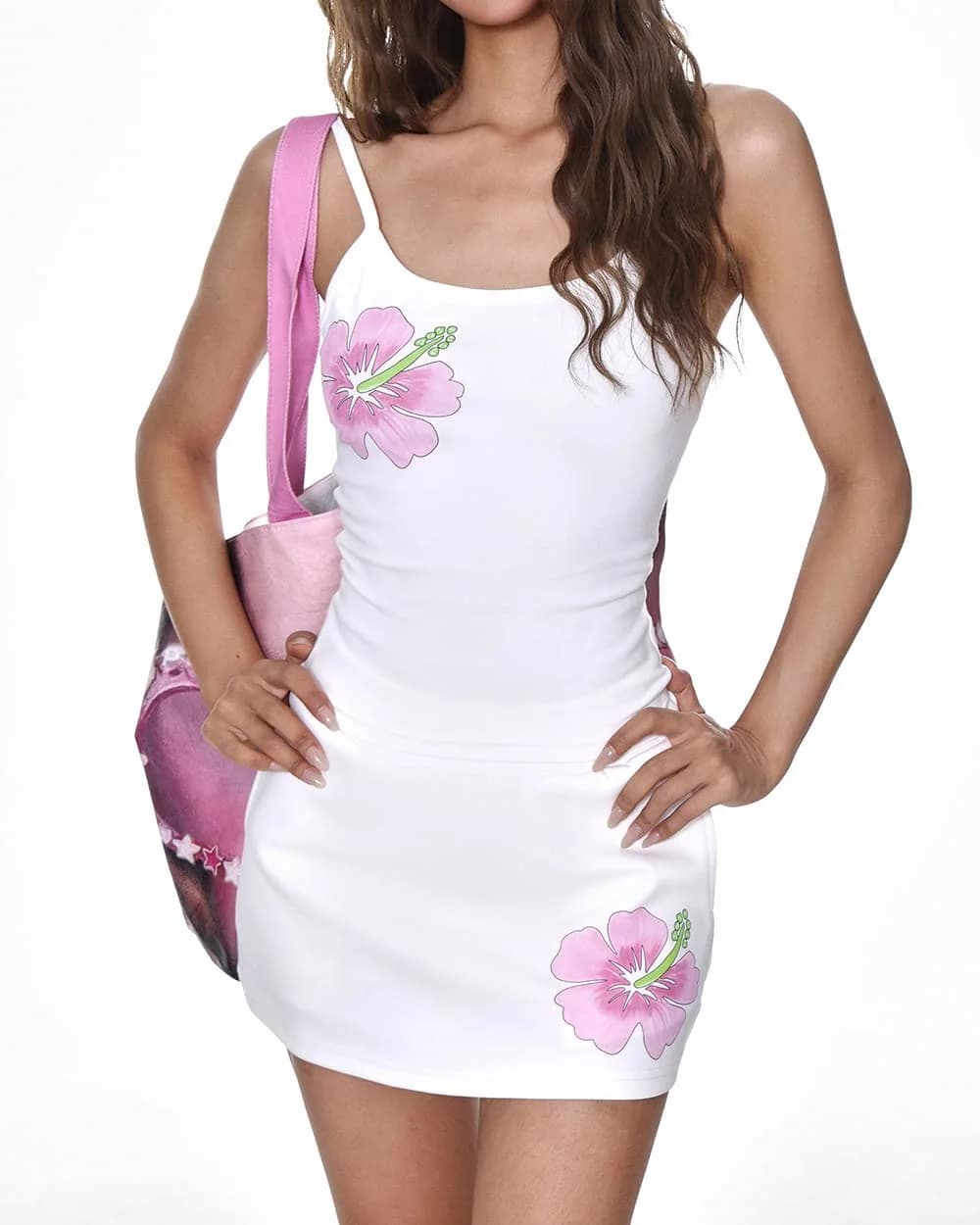
The polyester Hibiscus Flower Top & Skirt Co-Ord, available as individual pieces or together in a full set, creates a bold graphic pattern across both upper and lower halves. When wearing both pieces simultaneously, break up the continuous print using solid accessories like a dark canvas cross-body bag, a neutral belt, or a solid chore jacket.
You can also split the set to create new silhouetteThe overall shape an outfit creates, from fitted to loose and layered.s. Pair the hibiscus skirt with an oversized solid sweatshirt to temper the pattern, or wear the floral top tucked into high-rise denim. Exploring separate pairings ensures you get maximum utility out of coordinated garments across different occasions.
8. Footwear Balancing: From Mary Janes to Heavy Boots
Footwear serves as the visual foundation for any skirt outfit. The shoes you select establish whether a look reads as playful, grunge-leaning, or deliberately utilitarian. Changing only the shoes can completely alter the proportion balance of identical tops and skirts.
Mary Janes, whether flat or block-heeled, introduce a delicate retro feel. To keep them balanced against casual indie mini skirts, pair them with slouchy crew socks or patterned tights to fill the visual gap around the ankles. Without socks, low-cut shoes can occasionally leave short skirts looking top-heavy if you are wearing a bulky sweater.
On the other end of the spectrum, heavy combat boots and chunky lug soles add downward weight that balances oversized hoodies and bulky jackets. If your top layer is heavy, your footwear should carry equal visual solidity so your skirt does not look lost between conflicting weights.
- Mary Janes: Best paired with textured crew socks, ruffled ankle socks, or sheer tights.
- Platform Loafers: Ground pleated and A-line skirts with structured, academic charm.
- Combat Boots: Balance oversized tops, thick knitwear, and quilted skirts effortlessly.
- Canvas Low-Tops: Provide an understated, casual finish for warm-weather floral skirts.
9. The Tucking Spectrum: Full, French, and Untucked
How you treat the hem of your top alters your outfit's waistline definition instantly. The full tuck, the French tuck (front tuck), and the relaxed untucked approach each create a distinct line, giving you control over torso-to-leg proportions without changing your clothes.
A full tuck works best with high-waisted A-line cuts and pleated skirts. Tucking a fitted t-shirt or fine-knit long sleeve cleanly into your waistband emphasizes the narrowest point of your torso, letting the skirt flare out naturally. To keep things neat, choose tops with smooth cotton or polyester blends that do not bunch under the waistband.
A French tuck—gathering just the front center of your top into the skirt while letting the sides and back hang loose—offers an effortless midpoint. This method works well with mid-weight sweaters and relaxed tees, revealing the waistband while keeping the hip line casual. Leaving tops entirely untucked requires a conscious check on lengths: ensure your top finishes either distinctly above your hips or covers the skirt waistband completely for an oversized drape.
10. Layering Tops with Outerwear and Knit Knots
As temperatures shift, layeringWearing pieces over or under one another to add depth, warmth or contrast. over an indie skirt outfit requires balancing multiple hem lengths at once. The relationship between your inner top, your skirt waistband, and your jacket hem determines whether the outfit looks cohesive or disorganized.
A reliable rule of thumb is the rule of thirds. A cropped cardigan that hits your natural waist divides the body into one-third upper and two-thirds lower, creating a pleasing line with midi or mini skirts. An open longline knit that falls past your skirt hem creates vertical framing, drawing the eye up and down and softening horizontal breaks.
You can also incorporate distinct layers from our broader Indie Tops collection, such as button-up overshirts or lightweight knits tied loosely across the shoulders. Tying a knit sweater diagonally across your torso adds asymmetry and texture without adding fabric bulk around your hips.
11. Weather Adaptations: Tights, Socks, and Layering Weights
Transitioning skirts across seasons comes down to smart legwear choices and balanced fabric weights. Lightweight cotton or polyester skirts can easily transition into cooler months when grounded with appropriate thermal layers beneath.
Sheer patterned tights—such as micro-polka dots, fishnets, or subtle floral motifs—add depth to simple skirt outfits while offering mild coverage during temperate spring or autumn days. In colder conditions, switch to opaque ribbed tights in charcoal, forest green, or classic black. Pairing dark tights with dark footwear creates an unbroken lower line that balances thick winter coats.
During warmer months, swap tights for folded socks. Ankle-height socks worn with low sneakers or platform shoes introduce a casual athletic touch that suits breezy days. Pay attention to fabric weights: pairing a tissue-thin summer skirt with a heavy shearling coat often looks disconnected, whereas pairing that same skirt with a medium-weight cardigan feels seasonally cohesive.
12. Styling Tops Designed as Layering Pieces
Some tops are built with unique proportions that invite unconventional pairing strategies. Oversized longline tees, for example, can be styled either over or tucked beneath skirts depending on the desired silhouetteThe overall shape an outfit creates, from fitted to loose and layered..
The Indie Kid Star Striped Long Tee, made from a cotton and polyester blend in green, presents a longer hem that extends past standard waistlines. Wearing this long tee loosely over a straight mini skirt lets just an inch or two of the skirt hem peek out, transforming the skirt into a textured border.
Alternatively, you can knot the side of a longer tee to bring the hem back up to your waist, or tuck it into wider styles found within Indie Mini Skirts. Adjusting longline tops in this way allows you to shift from an unstructured streetwear look to a defined waistline in seconds.

13. Skirt Alternatives and Outfit Cross-Pollination
Understanding skirt proportions also sharpens how you style alternative lower-body pieces. The same balance rules governing pleated minis and floral tiers apply directly to indie-style shorts and novelty trousers, making it easy to cross-pollinate your wardrobe.
For example, wide-leg shorts like the cotton-polyester Indie Kid Plaid Summer Shorts in blue mimic the silhouetteThe overall shape an outfit creates, from fitted to loose and layered. of a pleated mini skirt. Styling them with a tucked baby tee and platform sneakers creates the exact same balanced proportion you would expect from a classic skirt outfit, but with the casual utility of shorts.
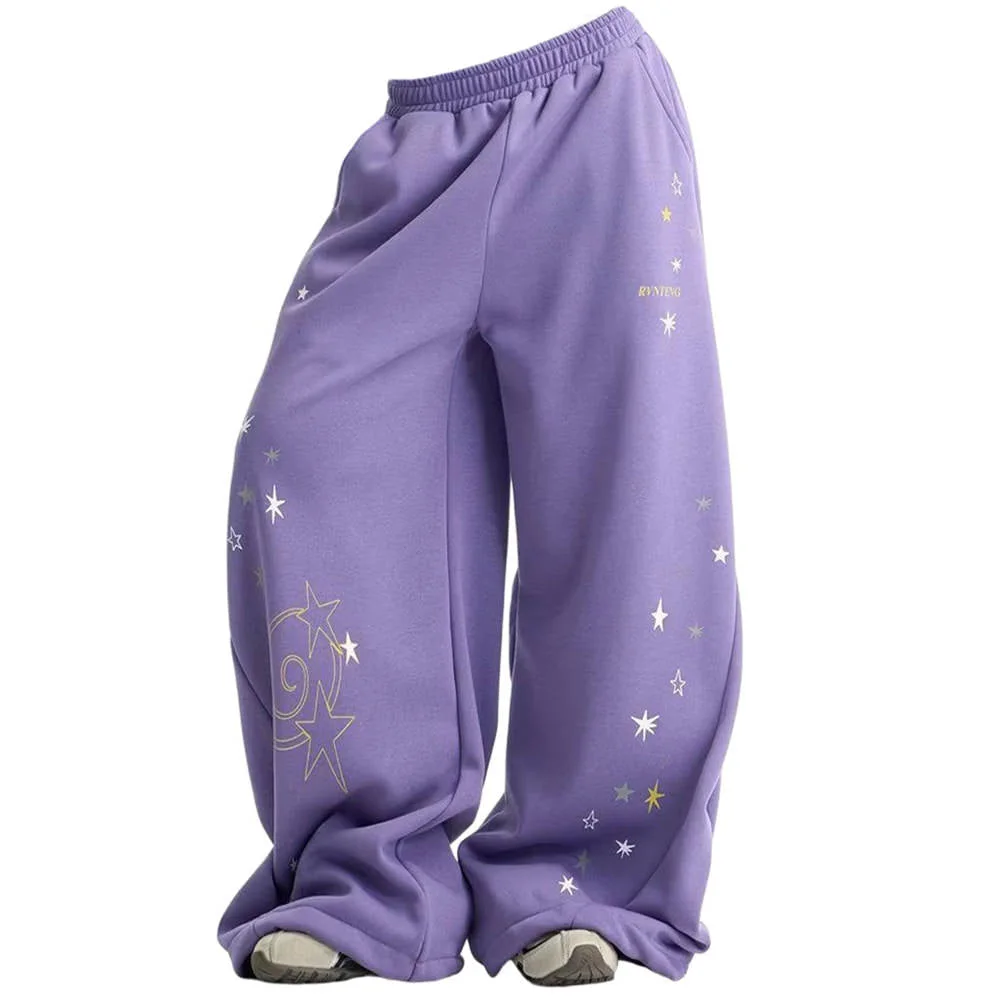
Similarly, novelty denim like the Indie Kid Mushroom Print Jeans follows the balance logic of patterned skirts. When styling bold prints on your lower half, anchor the outfit with solid, complementary tops and footwear so the patterns remain the clear focal point. Exploring the wider assortment of Indie Clothes helps you apply these proportion principles across all your daily outfits.
- Plaid shorts: Function visually like A-line minis; style with fitted tops and chunky footwear.
- Printed jeans: Treat them like statement patterned skirts by balancing them with muted upper layers.
- Layered styling: Rotate identical tops between skirts and trousers to test proportion flexibility.
14. The Indie Skirt Outfit Balance Checklist
Before heading out, run through a quick proportion check to ensure your outfit elements work together smoothly. Evaluating waist height, texture contrast, and shoe volume takes only a few seconds and prevents mid-day outfit frustration.
Start by checking your waistband visibility. If you are wearing an oversized top over a skirt, ensure the skirt hem extends far enough to be clearly seen, or use a French tuck to reveal your waistline. Next, check your footwear weight: if your upper body is bundled in heavy knits or structured jackets, make sure your shoes have enough substance to anchor the bottom.
Finally, assess texture balance. Pairing smooth polyester, structured denim, ribbed knits, and rugged leather creates depth. When garments offer varying tactile finishes, your outfit reads as creative and curated rather than plain. Use the checklist below as a dependable reference point whenever you pull together a new look.
- Waistline Check: Is the waistline deliberately highlighted, softly suggested, or intentionally hidden?
- Volume Balance: If the skirt is flared, is the top streamlined? If the top is oversized, is the skirt grounded?
- Footwear Anchor: Do your shoes carry enough visual weight to match your top layer?
- Texture Mix: Are you combining at least two distinct fabrics (e.g., ribbed knit + smooth polyester)?
- Movement: Can you walk, sit, and move naturally without the skirt waistband twisting or riding up?