Created by the Kawaii Vibe editorial team. Our named style desks are editorial personas. Product details and availability can change.
Short answer: you can usually fix an itchy sweater by doing two things. Check the fiber label before you buy, and put a thin, smooth layer between the knit and your skin. Neither step is complicated, and together they save a lot of sweaters from being worn once and abandoned.
This guide is for anyone who loves the look of chunky, textured, colorful knits but gets prickly, hot or annoyed wearing them. We'll cover what the label really tells you, a simple hands-on test, which base layers work and why, and how to build outfits so the scratchy spots are covered.
One note up front: I'm Jules from The Outfit Desk, and this is styling advice from an editorial desk, not a medical opinion. If your skin reacts badly to fabrics, a pharmacist or doctor is the right person to ask. Everything here is about everyday comfort and choosing smarter.
The quick answer: label first, layer second
Before anything else, turn the sweater over and find the care label. The fiber percentages tell you more about itch than the color, the price or the word "soft" in a product title. Then decide what will sit between the knit and you: a thin long sleeve top, a tank, or a close-fitting mock neck.
That is the whole system. A knit you are unsure about becomes wearable with a smooth base layer under it, and a knit you have checked by label and touch often needs very little help at all. The combination matters because each step catches what the other misses. A good label can still feel rough if the yarn is loosely spun, and a rough sweater can be fine over a long sleeve top that covers your arms and neck.
If you are browsing, start with the main Sweaters collection and open a few pages side by side. Look for fiber details in the descriptions, and when something is missing, treat it as a question to answer before you buy rather than a guess to make. Then pick the base layer you already own that would work under it. If you have nothing suitable, a plain long sleeve from the women's long sleeve tops range is the easiest gap to fill.
- Check the label for fiber names and percentages
- Run a quick touch test on a soft part of your skin
- Plan one thin base layer for arms, neck or both
- Keep the return details handy if you are unsure
Why knits itch in the first place
Itch is mostly about texture, not about wool being "bad." A common explanation is that coarser fibers have stiff ends that poke out of the yarn and press against skin. Finer fibers bend more easily, so they tend to feel gentler. Yarn construction matters too. A loosely spun, fuzzy yarn sheds tiny ends everywhere, while a tightly spun one keeps them tucked in.
Heat plays a part as well. A thick knit can make you warm, and when you get warm and a bit damp, the same sweater can suddenly feel itchier than it did in the shop. Friction adds to it. Seams, cuffs, collars and the underarm area rub constantly, so those are the places people notice first.
What this means for you: you are not looking for one magic fiber. You are looking for a combination of fine fibers, a smooth yarn, a comfortable amount of warmth and fewer contact points. Fuzzy, hairy-looking textures and heavy loose gauges are the most likely to bother you, and neat flat knits are usually calmer. You can still wear the fuzzy ones. You just plan them with more coverage underneath, which the later sections explain.
How to read a fiber label
The care label lists fibers in order from highest percentage to lowest, usually as a percent next to each name. Read the top two. If the first fiber is something you already know you tolerate, a small amount of a rougher fiber further down the list may not bother you. If the first fiber is the problem, the rest rarely rescues it.
Pay attention to the vague words. "Wool" alone does not tell you whether it is fine or coarse. "Blend" is not a fiber. "Soft touch" is a marketing phrase, not a material. If a listing does not show fiber content at all, that is a gap, not a good sign. For the products mentioned in this guide, the information I have does not list a material, so check each product page and any label details before you assume anything about how it will feel.
Also look at the care instructions. Hand wash only usually points to more delicate or natural fibers. Machine washable often suggests sturdier or blended yarn, though it is not a guarantee of softness. Use the label as one clue among several, then confirm with your hands and your base layer plan.
- Read the first two fibers listed
- Treat unnamed "blends" as a question
- No fiber info means ask or skip
- Care symbols hint at how delicate the yarn is
A plain-English fiber cheat sheet
Here is how people generally describe common knit fibers. These are broad tendencies, not promises, because yarn quality varies a lot. Regular wool can range from comfortable to scratchy. Merino is usually described as finer and softer. Lambswool is often described as gentler than standard wool but can still feel prickly to some people. Cashmere is known for softness but the quality varies widely.
Mohair and angora-style yarns are the fuzzy ones. They give that hazy, cloud-like look and can feel itchy for many wearers, so they pair best with full coverage underneath. On the non-animal side, cotton knits feel smooth and cool but can be heavy and stretch out. Acrylic and other synthetic yarns can feel soft, though they sometimes trap heat and build static. Viscose-type fibers often feel silky and drape nicely.
Your own history is the best guide. Think about the sweaters you have worn happily and check what they were made of. Then use that as your baseline. A person who loves their old cotton cardigan and hates one scratchy wool jumper has learned something useful, even without a lab test. Write the fibers down in your phone notes so you can compare next time.
The touch test that actually works
Your fingertips are not the best judge, because they are tougher than the skin that will wear the sweater. Instead, rub the knit gently along the inside of your wrist or the side of your neck for a few seconds. Those spots are more sensitive and closer to what a collar or cuff will feel like. If you are shopping online, do this the moment the parcel arrives, before you cut off any tags.
Do a second check by pressing the fabric against your forearm and holding it for a minute. Itch from some knits builds slowly, so a quick stroke can fool you. Then try the sweater on over the base layer you plan to wear and move around. Raise your arms, bend your elbows and turn your head. Notice whether the neckline, cuffs or hem still touch bare skin.
Keep the fabric condition in mind. A brand new knit can feel different after a gentle wash according to its care label, and some fuzz sheds early on. Do not count on it, though. If it feels clearly rough at the start, plan for a base layer or send it back following the retailer's return rules. Do not talk yourself into it because the color is cute.
- Test on inner wrist or side of neck
- Hold it against skin for a full minute
- Try it on with your base layer, then move
- Check neckline, cuffs and hem specifically

Choosing a thin base layer
A good base layer is thin, smooth and close-fitting, so it does not bunch under the sweater. Think of a snug long sleeve tee, a lightweight mock neck, or a plain tank. The goal is to cover the skin the knit would otherwise touch, without adding bulk or heat. A base layer that is too loose will ride up and wrinkle, which can feel as annoying as the itch.
Pick the coverage to match the problem. If your arms are the issue, go long sleeve. If the neck is the problem, a mock neck or higher crew neck helps most. If it is mostly the torso, a tank or fitted tee does the job. For full coverage, a long sleeve mock neck handles all three. Browse the women's long sleeve tops collection for plain, thin options in colors that disappear under knitwear or peek out on purpose.
Color helps. A base layer in a shade near your skin tone or near the sweater will vanish at the neck and cuffs. A contrasting one shows up as a deliberate detail. Either works, so decide whether you want it hidden or visible. If you only own white, test it under lighter or open-weave knits first, because dark yarns can show through or cast shadows the other way.
What your base layer should be made of
Smooth and breathable is the goal. Cotton jersey is the easy, widely available choice, it feels familiar and handles a bit of sweat. Fabrics with a silky feel, such as modal or viscose-type jersey, often slide well against a knit, which reduces friction and helps the sweater glide instead of grab. Check labels, as with the sweater itself.
Thin synthetic tops can work, but they can also feel clammy if you run warm, and some cling and cause static against wool-like knits. If you choose one, try it on with the sweater at home for an hour before wearing it out. Avoid base layers with rough seams, scratchy tags or thick lace trim at the neck and cuffs, since they simply move the irritation somewhere else.
Fit matters as much as fabric. A base layer that is snug but not tight stays put. Sleeves should reach your wrist bones so the cuff of the sweater lands on fabric, not skin. Length should tuck or sit just below the sweater hem so it does not peek out unevenly, unless you like that look. Keep two or three of the same style in rotation so one is always clean on a sweater day.
- Smooth jersey slides against knits better than textured fabric
- Skip bulky seams, lace and stiff tags
- Sleeves to the wrist bone for full cuff cover
- Run warm? Try the combination indoors first
Necklines, cuffs and hems: where itch hides
Most complaints come from three places: the neck, the wrists and the waist band. A crew neck sits on the most sensitive skin, so it deserves a mock neck or a base layer with a similar neckline. V-necks show more skin and put the edge of the knit against your collarbones. A tank or camisole under them can feel fine, though a visible base layer neckline needs to look intentional.
Cuffs are easy to fix. Pull your base layer sleeve so it reaches the base of your thumb or just over the wrist, then let the sweater cuff rest on top. If the sweater sleeves are long, you can push them up a little, which also keeps wool away from the sensitive inner wrist. For hems, a longer base layer tucked into trousers or a skirt stops a rough hem from scraping your waist.
If you are sorting through styles, the Jumpers & Sweaters collection is a good place to compare necklines side by side. Open a few and decide which ones suit your coverage needs, rather than buying a gorgeous knit with a neckline you know bothers you. A pretty color does not fix a collar that scratches all day.
Outfit idea: chunky color knit over a long sleeve top
Start with a bold knit like the Color Explosion Sweater, which comes in Yellow, Rose, Blue, Green and Pink in one size. Wear it over a fitted, thin long sleeve top in a quiet color. For a bright sweater, a cream or soft gray base keeps the look fresh, and the sleeves peeking at the wrist give your skin a buffer.
Bottoms: straight or wide-leg jeans balance the volume on top, and a pleated midi skirt works if you want a softer look. Because the product is listed as one size, think about proportion before you order. If the sweater runs roomy, keep the lower half fitted. If you like a slouchy shape, tuck the base layer in and let the knit sit over the waistband. Check the product page for measurements and fabric details, since I do not have fiber information for it.
Weather: this works in cool or cold conditions, depending on how thick the knit turns out to be. If you warm up easily, choose the thinnest base layer you own and swap to a short sleeve tee with a lightweight wrist cover if needed. Add sneakers or boots and a small bag to keep the focus on the color. The base layer carries the comfort so the sweater can carry the personality.
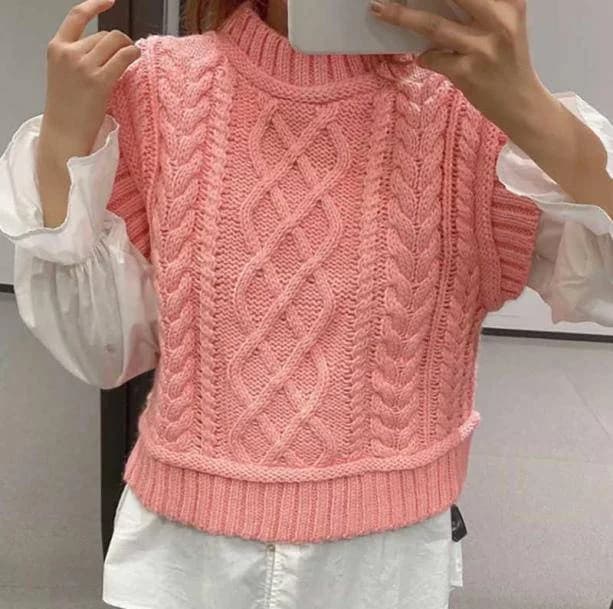

Outfit idea: sleeveless knits layered for coverage
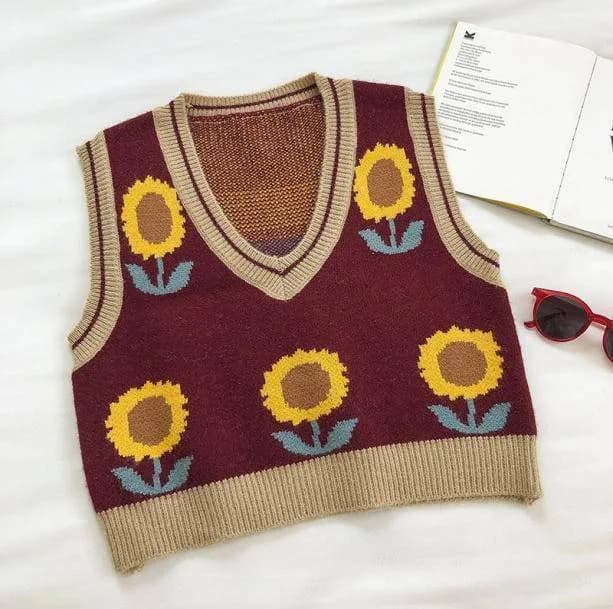
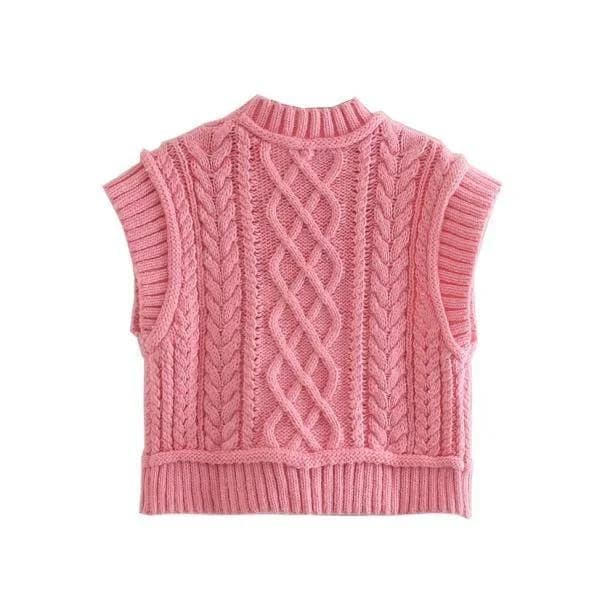
Sleeveless sweaters are a gift for itch-prone wearers, because they cut down the contact area. The Pink Sleeveless Sweater is offered in S, M and L, and the Vintage Flower Sleeveless Sweater comes in Black, Red and Apricot in one size. Both work as a layeringWearing pieces over or under one another to add depth, warmth or contrast. piece over a long sleeve top or a mock neck, so your arms and neck stay on soft fabric.
Try the pink one over a white long sleeve tee with straight trousers and loafers, or over a collared shirt with a pleated skirt for a school-uniform feel. With the floral one, keep the base layer plain: a black mock neck under the Black version looks sharp, while a cream top under Red or Apricot keeps it sweet. Leave the shirt collar out for a neat edge, or tuck it in for a cleaner line.
The tradeoff is that armholes can rub at the underarm if they are cut tight, so check how the opening sits on you and wear a base layer that covers that area. Sleeveless knits also give more flexibility across temperatures, since you can swap the shirt underneath from thin to thicker. Look at each product page for details on length and fit before choosing your size.

Outfit idea: vintage and artsy knits with a calm base
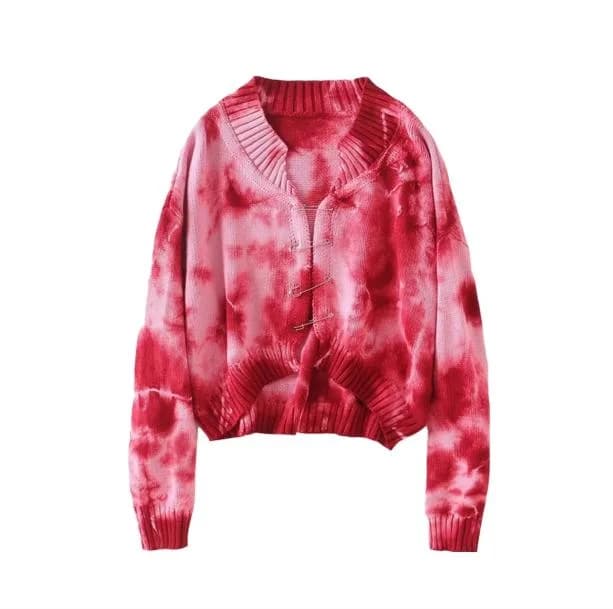
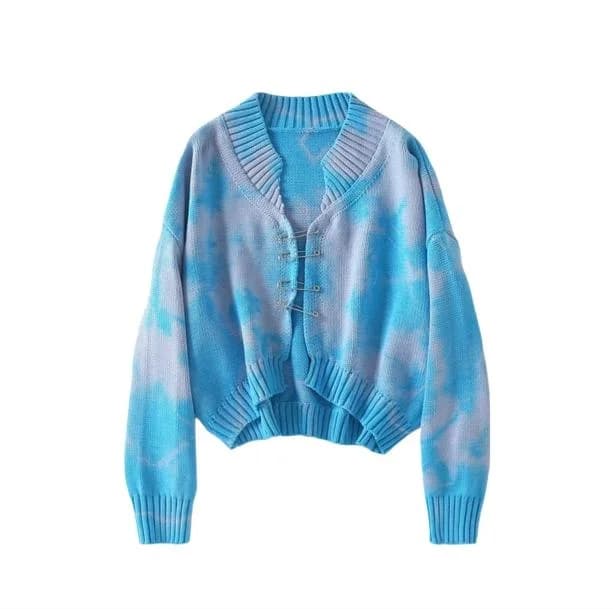
Patterned knits do the talking, so let the base layer stay quiet. The Vintage Contrast Sweater and the Artistic Soul Sweater are both listed as one size and shown as pictured. Pick a base layer that matches one of the quieter colors in the pattern. That way, the cuffs and collar look planned instead of random.
For the Vintage Contrast Sweater, try a thin mock neck in a shade pulled from the pattern, plus dark jeans and boots. For the Artistic Soul Sweater, a plain white or black long sleeve underneath keeps the image clean, with a simple skirt or trousers below. Skip a second pattern, since stripes or prints under a busy knit fight each other and look messy at the neckline.
If you prefer a calmer palette, the Aesthetic Khaki Sweater in S, M and L is easier to match: a cream or white thin base layer lets it sit like a neutral. For anything in the Aesthetic Sweaters collection, the same rule applies. Decide on one star item per outfit, and give the base layer a supporting role. And since I cannot confirm the fabric on these, check the product pages before you decide how much coverage you need.

Soft pastels and cute knits: getting the proportions right
Cute, graphic knits like the Soft Kitty Sweater and the Sunset Sweater, both offered in S, M and L, shine when the proportions are balanced. A roomy knit with a thin, fitted base layer and slim or straight bottoms looks intentional. A roomy knit with a roomy base layer and wide pants makes you disappear into fabric.
Try the Soft Kitty Sweater with a light, long sleeve top in white or pale pink, high-waisted jeans and white sneakers. For the Sunset Sweater, a cream or warm neutral base lets the colors glow, and denim or a dark skirt grounds it. Sleeves can be pushed up a little to show the base layer, which also breaks up a bulky silhouetteThe overall shape an outfit creates, from fitted to loose and layered..
Size is a comfort decision here. If a knit already bothers you, going up a size to get airflow does not reduce the scratch, it just creates more fabric sliding around. Pick the size you would normally wear, check the product page for fit notes, and use the base layer to manage feel. A snug base layer under a slightly loose sweater is a reliable pairing, because the two layers move independently and the knit does not drag on skin.
Wearing and washing: small habits that help
Follow the care label exactly. Different yarns need different care, and I will not guess at what yours needs. In general, washing as the label says and letting the knit rest flat to dry avoids stretching. Some people find a new knit feels better after its first proper wash, but results depend on the yarn, so treat that as a possibility, not a promise.
Wear habits matter too. Do not wear one sweater on consecutive long days if it starts to feel irritating, because rubbing builds up. Take it off when you get indoors and warm, then put it back on over a lighter layer when you go out again. Carry a thin cardigan or a spare long sleeve if you get overheated and want to switch quickly.
Keep a lint roller and a fabric comb or shaver on hand, since pilling and loose fuzz can feel prickly on the base layer too. Store knits folded rather than hanging, so shoulders do not stretch and distort. If a sweater only works with a specific base layer, keep that top with it in the same drawer. It turns getting dressed into a two-second job.
- Follow the care label word for word
- Rotate sweaters so one does not take all the rubbing
- Remove it indoors if you overheat
- Fold knits to keep their shape
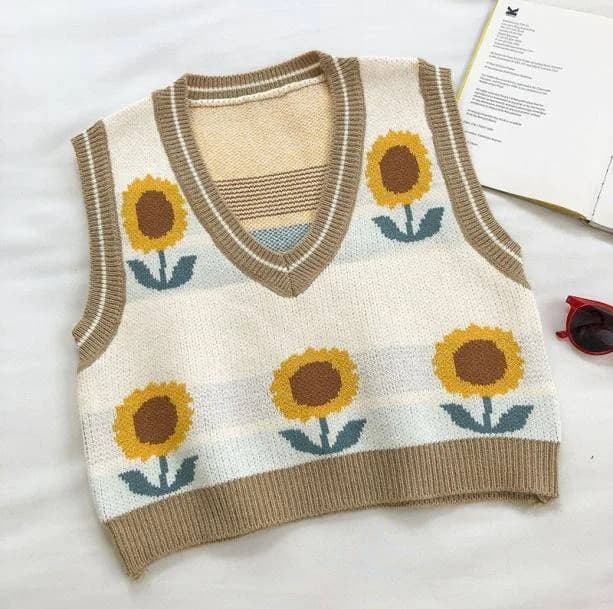
Pitfalls and a quick buying checklist
The classic mistakes: buying on color alone, assuming a high price means soft, using a baggy base layer, skipping the neckline check, and ignoring missing fiber info. Another one is trying the sweater on over a thick hoodie in the fitting room, then wearing it over a thin tee at home and wondering why it feels different. Test it the way you will actually wear it.
Here is a checklist to run before you hit checkout. Read the fiber label or product details, and if there is no fabric information, ask or choose another piece. Decide what base layer you already own that fits underneath. Check the neckline against your sensitive spots. Look at the size options, and remember some pieces are listed as one size only. Review the return policy so you can send it back if it fails the touch test.
If you want to keep exploring, the Sweaters collection, the Aesthetic Sweaters collection and the Jumpers & Sweaters collection give you plenty to compare. Pair any pick with a plain top from the long sleeve tops range. The best itchy sweater fix is usually not one big change but a few small, boring ones that add up to knitwear you actually reach for.
- Fiber label read and understood
- Touch test done on wrist or neck
- Base layer chosen for neck, arms and waist
- Size and fit notes checked on the product page
- Return details saved before wearing