Created by the Kawaii Vibe editorial team. Our named style desks are editorial personas. Product details and availability can change.
Quick answer: for a cold commute, pick a kawaii beanie that sits snug over your ears, leaves your hair a plan that survives a bus ride, and gives your coat one clear colour to answer. Keep the beanie as the playful part, let the coat and scarf stay calm, and you will look put together instead of busy.
This guide is about the practical side. We cover fit, hair, coat colours, scarves, bags, socks and the small annoyances of getting on and off trains. We are a retailer, not a maker, so we only describe what the listings tell us, and where a detail like fabric is not listed, we say so and suggest you check the product page.
Everything here adapts to wherever you live. Cold arrives in different months in different places, so think in terms of how cold your day actually feels, not a calendar date.
The Short Answer: One Playful Piece, Two Calm Ones
If you only remember one rule, make it this: choose one loud item and let two others be quiet. On a cold commute the beanie is the natural loud item because it sits near your face, which is where people look first. Your coat and scarf then act as the frame.
In practice that looks like a graphic beanie, a coat in a solid shade, and a scarf in a tone that already appears somewhere in the other two. You do not need to match exactly. Just make sure nothing else is competing for attention at the same height.
You can browse the whole range of kawaii beanies to see what graphic styles are available before you decide which colour family to build around.
This also keeps getting dressed fast. When you are leaving in the dark, you want a formula you can run without thinking. Beanie first, coat second, scarf last, and a quick mirror check that only one thing is shouting.
Getting the Fit Right Before You Think About Style
A beanie that looks cute at home can be miserable on a platform if it slides up or leaves your ears cold. Fit comes first. The listed beanies here come in one size, so you cannot size up or down. That means you should think about your own head, your hair volume and how you like to wear a hat.
Try it on the way you would actually wear it. Some people like a beanie pulled down low over the ears, others prefer a slouchier back. Both work, but the low version is warmer and the slouchy version is more forgiving over thick hair. Decide which you need on your coldest day and test that.
Watch for the headband line. If the edge sits on the middle of your forehead it can feel tight after an hour, and if it sits too far back your ears are exposed. Aim for the edge just above the eyebrows, tilted slightly higher at the back.
If a listing does not state stretch or fabric, do not assume. Read the product page, and check the return terms before buying if you are unsure how it will feel.
- Edge roughly above the eyebrows, ears covered
- Try it with your real hairstyle, not bare hair
- Decide low-and-snug or slouchy before buying
- Check the product page for any fabric details
Hair Plans That Survive a Beanie
Hair is the part people forget. A beanie flattens the crown, pushes fringe around and can leave static behind. The easiest fix is to plan your hair for the hat instead of fighting it.
For long hair, a loose low ponytail or two low braids sit under the back of the beanie without a bump. A high ponytail will push the hat up and break the fit. If you prefer hair down, tuck the sides behind your ears first, then put the beanie on, then pull the front pieces out gently.
For short hair or a bob, the beanie does most of the work. Pull a little hair forward at the temples so the edge looks soft, and leave the nape alone. For curls and thick textured hair, a slouchier fit gives volume room, and you may prefer to wear the beanie a bit further back so you are not crushing your curl pattern.
Fringe is the real test. Either sweep it to the side before the hat goes on, or pull it down over the edge for a cute peeking look. Pick one and stick with it so you are not adjusting on the train.
Pairing a Beanie with Coat Colours
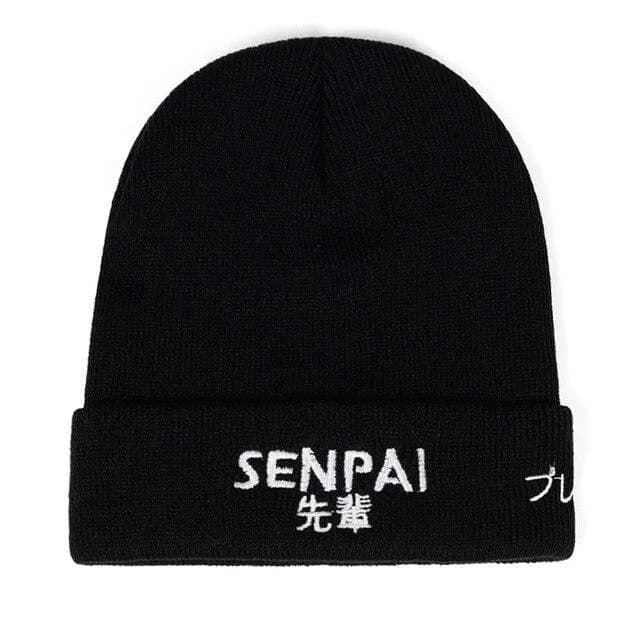
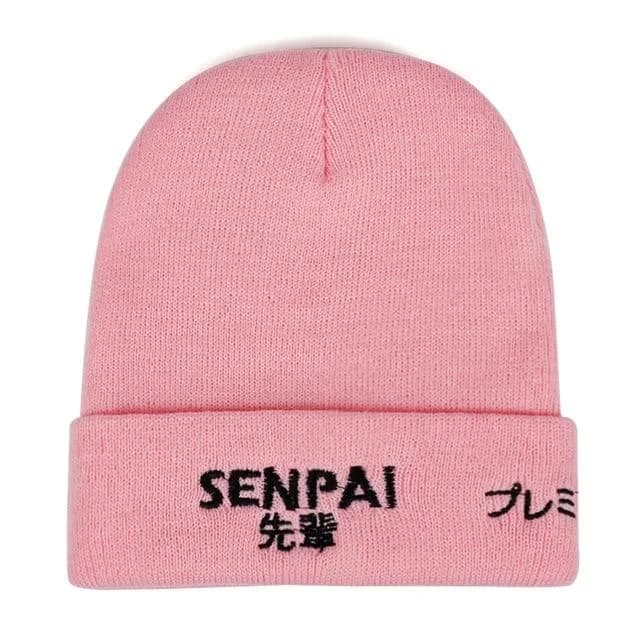
Start with the coat because it is the biggest block of colour. Then choose the beanie as the accent. A black coat is the most flexible: any beanie works, so you can use the pink Senpai Beanie for contrast or the black version for a sleek, low-key look.
A neutral coat in camel, grey or cream pairs well with a black or grey beanie if you want calm, or a pink one if you want a soft sweet look. Navy and forest coats feel richer with a lighter accent, so a pink or light grey hat stands out nicely against them.
If your coat is already bright, red or pastel for example, keep the beanie in a neutral. Two saturated colours at head and torso height fight each other. A black or grey hat steadies the whole outfit.
You can compare options in the coats and jackets collection and check which solid shades you already own, since matching to your existing wardrobe saves money.
- Black coat: any beanie, choose by mood
- Camel, cream or grey coat: black, grey or soft pink beanie
- Navy or green coat: lighter accent beanie
- Bright coat: neutral beanie

Scarves: Bridging the Hat and the Coat
The scarf sits between the beanie and the coat, so it is your bridge. If the hat and coat clash a little, a scarf in a shared tone can calm things down. If they already match, the scarf can stay plain.
A simple method: pull one colour from the beanie and one from the coat, and choose a scarf that contains either. With a black Senpai Beanie and a camel coat, a cream or grey scarf works. With a pink beanie and a black coat, a scarf in a pale neutral or a matching soft pink keeps the line clean.
Mind the bulk. A thick scarf under a snug beanie and a coat collar can feel like a lot around your neck. Wrap it once loosely and tuck the ends inside your coat, which keeps your neck covered and avoids dangling ends in a crowded carriage.
Patterns are fine if the beanie is plain, but avoid a patterned scarf with a graphic beanie. That is two busy items at once, and it tends to look cluttered.

Choosing by Beanie Personality
The three beanies in our current picks each lean a different way, so choose by the mood you want. The Senpai Beanie comes in pink and black. It suits you if you like a playful, anime-flavoured accent that still works with ordinary coats.
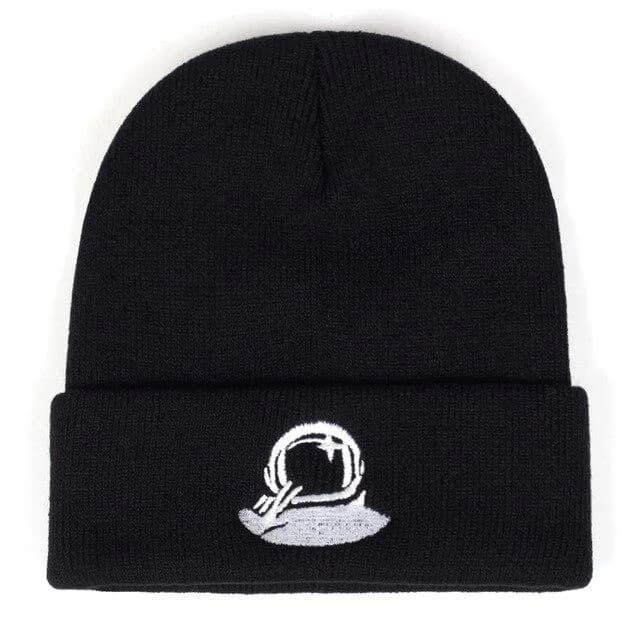
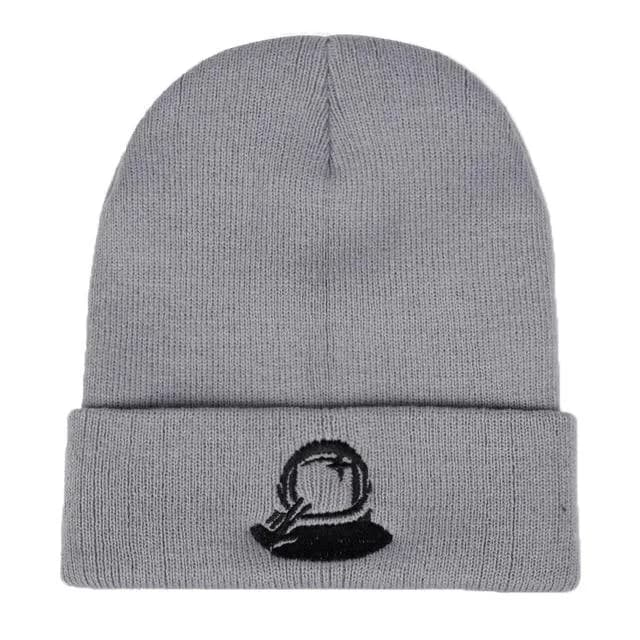
The Spaceman Beanie is listed in gray and black. Those shades make it easy to wear with almost any coat colour, which is useful if your wardrobe is mostly neutral and you want a small quirky detail without a colour clash.
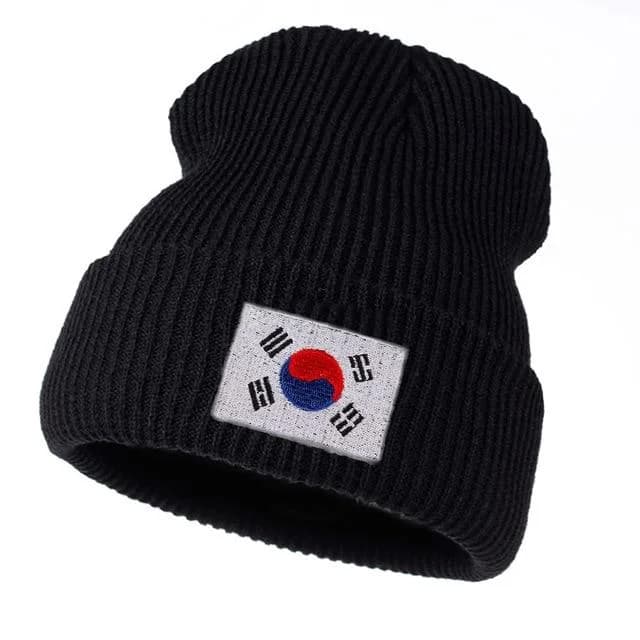
The South Korean Flag Beanie is offered in a single pictured design, so check the product photos for exactly how it looks. It makes sense if you want a clear graphic statement, and it is best paired with a plain dark coat and a plain scarf so the design is the focus.
Whatever you pick, look at the listing images and read the description. We only know what is shown, so we do not promise extra features like lining or thickness.

Three Commute Outfits You Can Copy
Outfit one: black Senpai Beanie, a long grey coat, a cream scarf, black trousers and boots. The hat is the only graphic item. The cream scarf lifts the face, and the grey coat keeps it soft. This works on long walks to the station because everything is easy to layer.
Outfit two: pink Senpai Beanie with a black puffer-style jacket from outerwear, a light grey scarf and dark jeans. The pink stands out against the black, the scarf calms the transition, and the outfit reads sweet but not childish.
Outfit three: gray Spaceman Beanie, a camel coat, a navy scarf and straight jeans. It is a grown-up palette with one quirky detail. If it is very cold, swap the camel coat for a thicker option and keep the same colour ideas.
Each of these uses a three-colour limit: hat, coat, scarf. Shoes and bag should sit inside that same palette, so you are not adding a fourth idea.
Proportions: Hat, Collar and Hood
Proportion decides whether a beanie looks neat or lumpy. Think about the space between the hat and your coat collar. A high collar and a slouchy beanie can create one big block around your head, so choose either a snug hat with a big collar, or a slouchier hat with a lower collar.
Hoods are the tricky bit. If your coat has a hood, a beanie underneath will bunch it. On a wet day you may want the hood up over the beanie, which works best with a snug fit. On a dry day, let the hood sit flat behind your neck and the beanie stays visible.
Check the coat shoulders too. Structured, boxy coats look best with a beanie worn a little higher and back, which balances the width. A slim long coat can handle a lower, snugger beanie.
Do a side mirror check. If the hat, scarf and collar all stack to the same height, rearrange so one of them drops.
Weather Notes: Wet, Windy and Properly Cold
Different cold needs different choices. In wind, a snug low fit matters most because a loose beanie lets air in around the ears. In damp conditions, check whether you can carry a spare, since a wet hat gets uncomfortable quickly.
In deep cold, think layers on every part of you, not just the hat. A scarf over the lower face, a coat that closes high and warm socks all add up. We do not make specific warmth claims for the beanies because fabric details are not supplied on the listings, so read each page for what is stated.
On milder cold days, the beanie is mostly a style item, so you can go slouchier and lighter on the scarf. This is also when pastel pairings look best.
Remember that cold is relative to where you live. Use how the day feels, not the month, to decide how many layers to wear.
Socks: The Hidden Playful Layer
If you want a kawaii touch that does not compete with the hat, put it at your ankles. Socks show only a little under trousers, so they are a safe way to add a second cute item without breaking the one-loud-piece rule. Browse the full kawaii socks range.
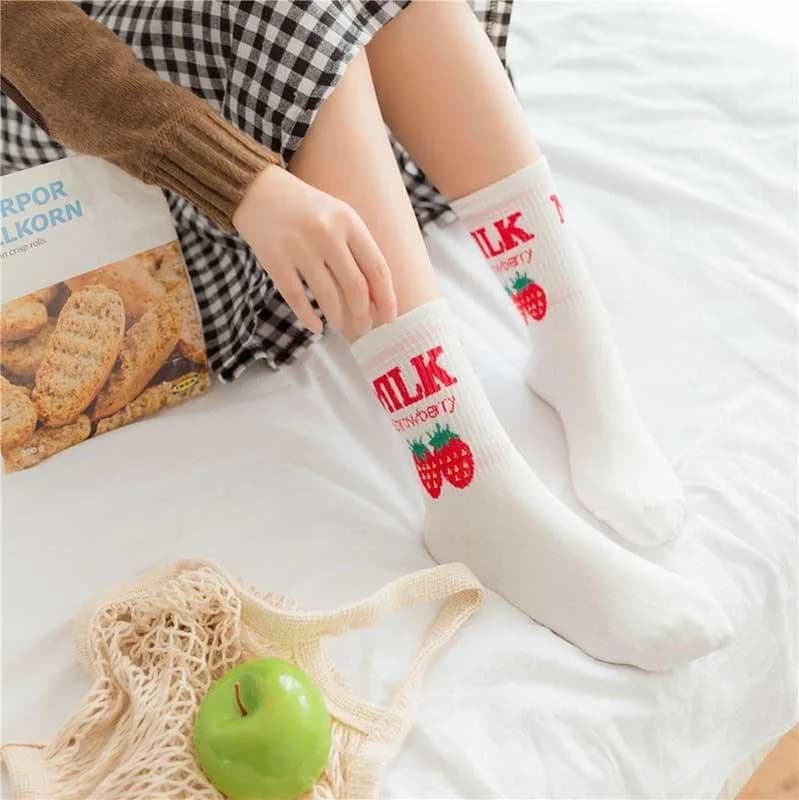
The Kawaii Strawberry Milk Socks come in white, pink, blue, yellow and white/blue, so you can echo a pink beanie or soften a black outfit. The Kawaii Checkered Socks are listed in white, black, red and blue, which are easier to pair with plain coats.
For something more graphic, the Kawaii Unicorn Socks and Kawaii Flower Socks offer numbered options, so check the photos for each design. All listed socks are one size.
Keep it balanced: if the beanie is graphic, choose simple socks. If the beanie is plain, you can go bolder with the socks.
Bags, Gloves and Small Add-Ons
Once the hat, coat and scarf are set, the small items should follow the same three-colour limit. A black or neutral bag works with nearly everything. If you want a pop of colour, repeat the beanie colour in one small thing, like a keyring or glove cuff, rather than adding a new colour.
Gloves are best in the coat colour or the scarf colour. Odd bright gloves can look random next to a graphic hat. If you use a phone constantly on the commute, check whether your gloves work with touchscreens before relying on them.
Bag straps matter more than people think. A thick strap across a bulky coat can push your scarf up toward your chin and your hat back. Switch to a shoulder carry or a backpack with wide straps if you notice this.
Accessories are also where you can use what you already own. You do not need to buy a new set to make one beanie work.
How to Compare Options Before Buying
When two beanies look good, compare them on practical points. First, colour: does it work with the coats you actually wear most? A hat that only suits one coat gets worn less. Second, design: do you want it to be the centre of the outfit or a quiet detail?
Third, read the listing. Look at the colour options, the size line and the photos. The beanies here are one size, and material is not listed in the supplied details, so check the product page and ask support if a specific detail matters to you, such as itchiness or thickness.
Fourth, think about how often you will wear it. A black or gray one gets worn most days, while a bright statement design may be a weekend favourite. Neither is wrong, but be honest about your routine.
If you are building a whole winter set, look at the outerwear collection at the same time, so the coat and hat are chosen together.
Common Mistakes to Avoid
The most common mistake is stacking too many playful items. A graphic beanie, a patterned scarf, bold socks and a loud bag all at once makes the outfit hard to read. Pick the hero and tone the rest down.
Another is ignoring hair. A beautiful hat that flattens a fringe into a mess can make you take it off on the train, defeating the point. Plan your hair for the hat, as covered earlier.
People also forget indoor life. A commute includes warm carriages and offices. A beanie you cannot take off neatly leaves hat hair. Carry a small clip or a hair tie, and keep a mini brush in your bag.
Finally, avoid buying on a single photo without checking the options. Some listings say as pictured, which means what you see is what you get, so look closely at the image before ordering.
- Too many playful items at once
- Ignoring hair under the hat
- Forgetting warm indoor spaces
- Skipping the listing details
Final Checklist Before You Head Out
Here is a quick routine you can run each morning. It takes under a minute once you have done it a few times, and it catches most of the problems we covered.
Start with fit: ears covered, edge above the eyebrows, nothing pinching. Then hair: ponytail low, fringe decided, no bump pushing the hat up. Then colour: hat, coat and scarf in three tones at most, with only one playful item.
Check the coat collar and hood so nothing is bunching, and tuck your scarf ends in. Add gloves and a bag that follow the palette. If you want a bit more fun, let your socks carry it.
If you are still building the set, start with one beanie from the kawaii beanie collection, check it against your best coat, and add pieces slowly. A small, well-matched set beats a big pile that does not go together.
- Ears covered, edge above eyebrows
- Hair planned for the hat
- Three colours at most
- Collar, hood and scarf tucked
- Bag and gloves follow the palette
- Socks carry any extra cute detail