Created by the Kawaii Vibe editorial team. Our named style desks are editorial personas. Product details and availability can change.
Short answer: pick one big anchor, one or two supporting shapes, and one small oddball. On a bed that might be two squares at the back, a bolster in front, and one animal-shaped cushion off to the side. On a sofa it is usually one animal per end and squares in between. That formula works for most rooms and you can bend it from there.
This guide gives you formulas you can copy, ways to group colour so a pile of cute things still looks calm, and the mistakes that make a bed feel crowded or a sofa feel unusable. Everything here is about arranging what you own or are thinking of buying, so you can compare options without guessing.
A quick note on measurements: sizes are only quoted where a product listing gives them. For anything else, measure your own bed or sofa and hold a tape up against it before you decide. Our kawaii pillow collection is a good place to browse shapes once you know what role each one needs to play.
The three-role rule: anchor, support, accent
Every good pile has three jobs covered. The anchor is the biggest piece and sets the shape of the whole arrangement. The supporting pieces repeat a colour or a form from the anchor so the eye reads them as a set. The accent is the small, silly one that makes people smile. If you can point to each job in your pile, it will almost always look intentional.
Anchors are usually large squares or a long bolster, because they sit flat against a headboard or sofa back. Supporting pieces can be smaller squares, rounds or a second bolster. Accents are where animal shapes shine: a cat paw, a little kitten, a floppy bunny. You do not need all three roles filled by separate items, but you do need to know which is which.
A simple test: squint at the pile. If one thing jumps out, that is your accent and it should be small. If nothing stands out, you have no anchor and the pile feels like a heap. If three things fight for attention, demote two of them to supporting roles by moving them to the edges or swapping their colours for something quieter.
- Anchor: biggest, plainest, sits at the back
- Support: repeats a colour or form, sits in the middle
- Accent: smallest or silliest, sits at the front or side
- Squint test: one thing should win, not three

Counting pillows: how many is enough
For a bed, odd numbers tend to look relaxed and even numbers look tidy. Three to five decorative pieces is a comfortable range on a standard bed before the sleeping pillows. Past that, you start moving a mountain every night, and that is the point where most people give up and the bed stays unmade. Be honest about how much effort you will put in each morning.
For a sofa, count by seats rather than by the sofa as a whole. A two-seater handles about three pieces. A three-seater handles four or five. Leave at least one seat spot completely clear so someone can actually sit, and keep the arms either empty or home to one soft piece.
If you are unsure, start small and add. It is much easier to buy one more accent than to rehome three you never use. Build the anchor and supporting set first, live with it for a week, and then decide whether the room wants a cute animal to finish it off.
Formula one: the classic bed layout
Back row: two matching squares, standing upright against the headboard. Middle row: one bolster laid horizontally in front of them, centred. Front: one animal-shaped piece, off-centre, leaning on the bolster. That is five items if you count the sleeping pillows as the back row, or three decorative ones on top of your normal pillows.
Why it works: the matching squares create a calm backdrop, the bolster gives a clean horizontal line that steps the height down, and the off-centre animal breaks the symmetry just enough to feel playful rather than stiff. Stepping heights from tall to short is what makes a pile read as layered and not as clutter.
Adapt it by swapping the bolster for a third square if you do not own one, or by pushing the animal to the very corner for a tidier look. If your bed has no headboard, lean the back row against the wall and add a fold of blanket in front so it does not slide. A soft throw like those in our kawaii blanket collection can sit across the foot and echo one colour from the pile.
Formula two: the sofa corner
Sofas ask for a different approach because people lean on them. Put your largest soft piece in the corner where someone is most likely to sit sideways. Add one square at the other end, angled slightly. Place one small animal on the arm or in the gap between. The middle seat stays clear.
The reason this works is function first. Back cushions need support, so the big piece belongs where a spine actually goes. The small animal lives where it will not be sat on, such as the arm, so it does not get squashed every evening. Pieces with limbs, ears or tails look best when they have somewhere to rest instead of being pinned under someone.
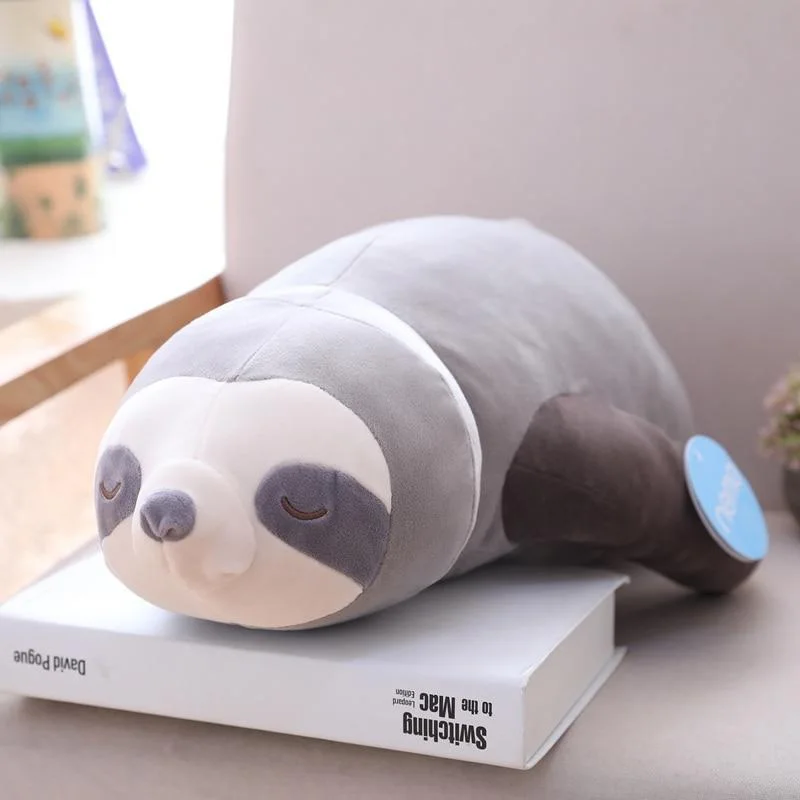
If you share the sofa, give each end its own mini arrangement and keep the middle neutral. That way two people do not fight over the same cushion. For a big, hugging-size piece, a plush like the Kawaii Sloth Plushie, listed in 65cm, 80cm and 100cm, could serve as the sofa anchor in a corner, with the listed size chosen to match how much seat you are willing to give up.
Using animal-shaped pieces as accents
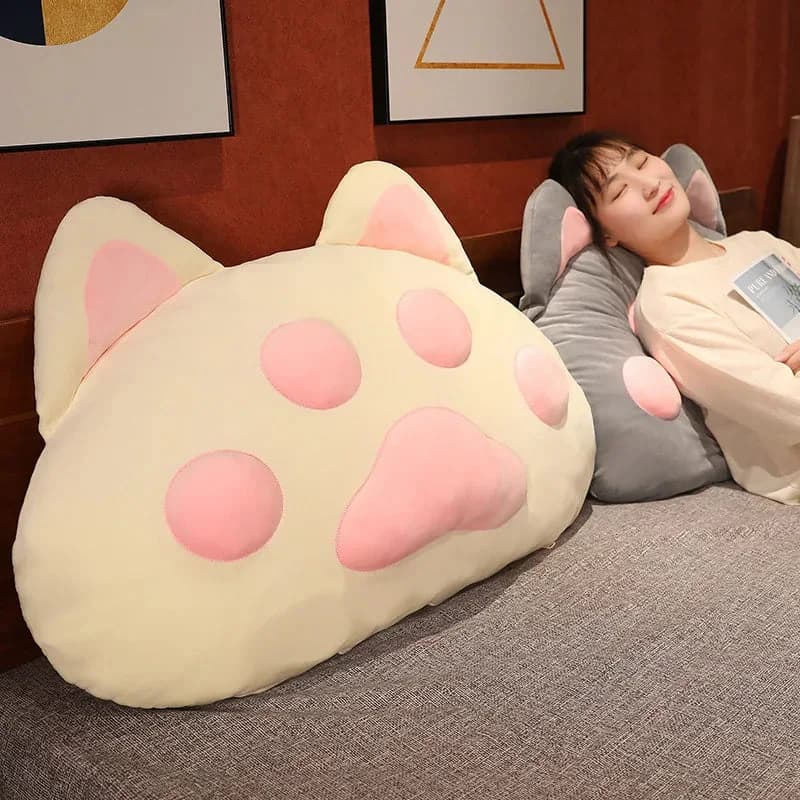
Animal shapes carry a lot of personality, so treat them like jewellery: one or two statement pieces, not a whole display case. The easiest way to place them is to match their outline to the job. A rounded animal like a kitten or bunny nests happily against a bolster. A long, floppy shape drapes over a corner or arm. A flat, shaped cushion sits in front of squares like a badge.
Think about the face. Faces draw the eye, so point them toward the room, not into the wall. Turn the head slightly rather than straight on, which looks more natural and less like a toy shop shelf. If the pile has two faces, angle them toward each other or toward the middle, so they feel like a pair.
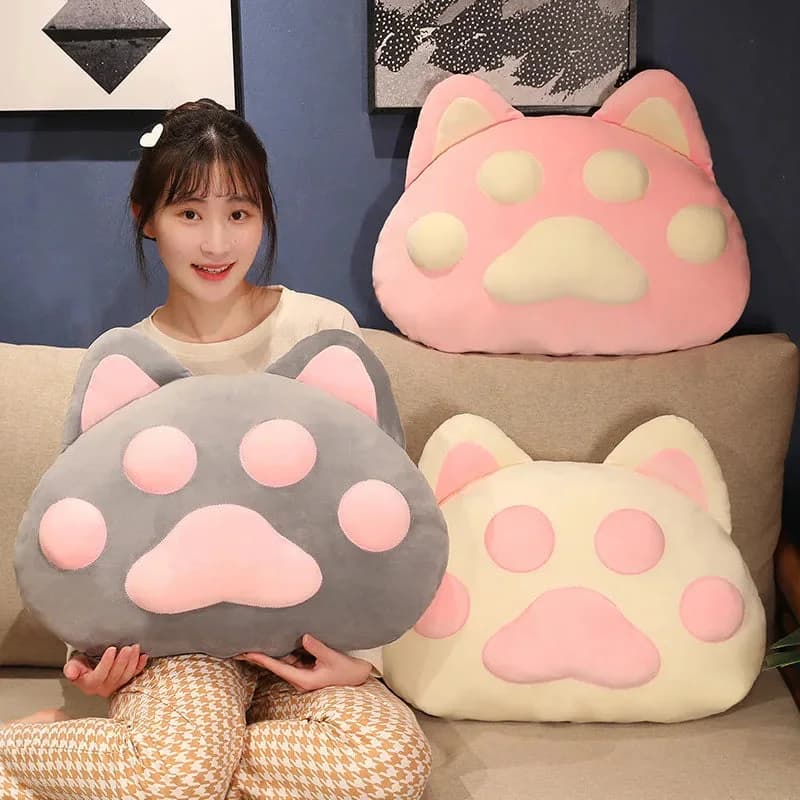
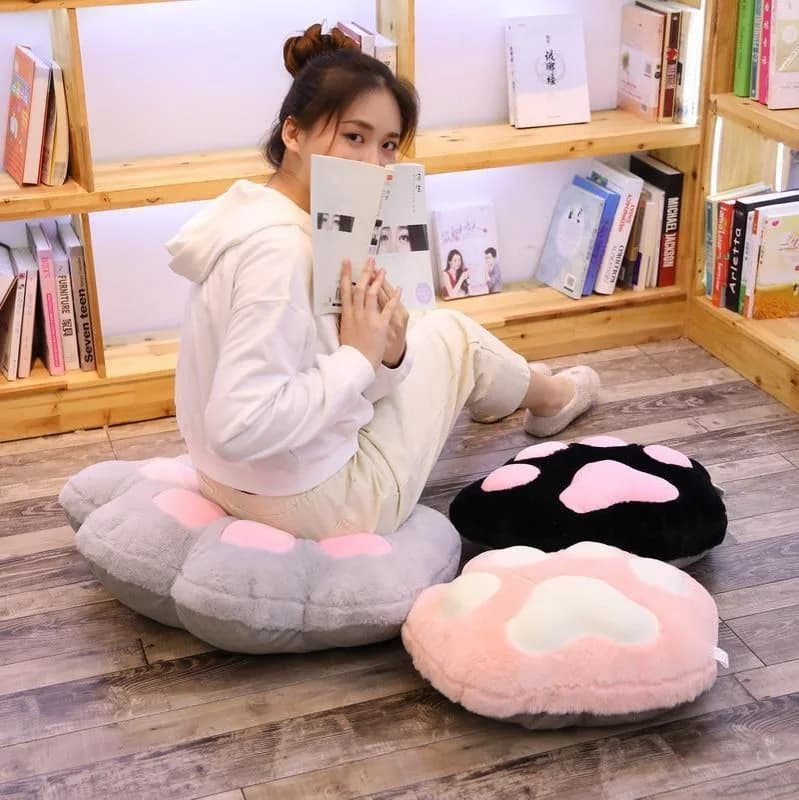
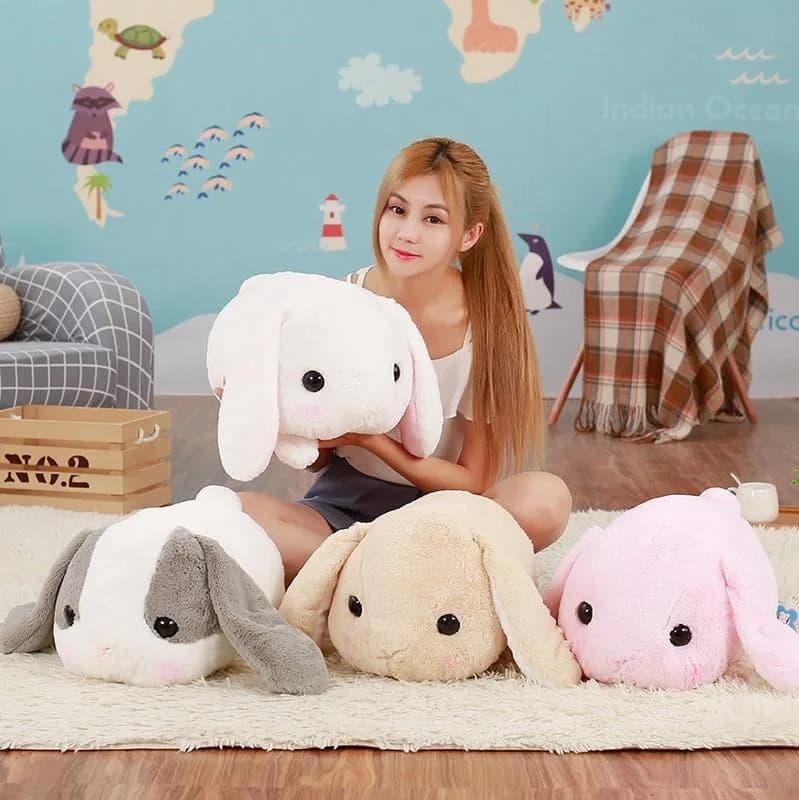
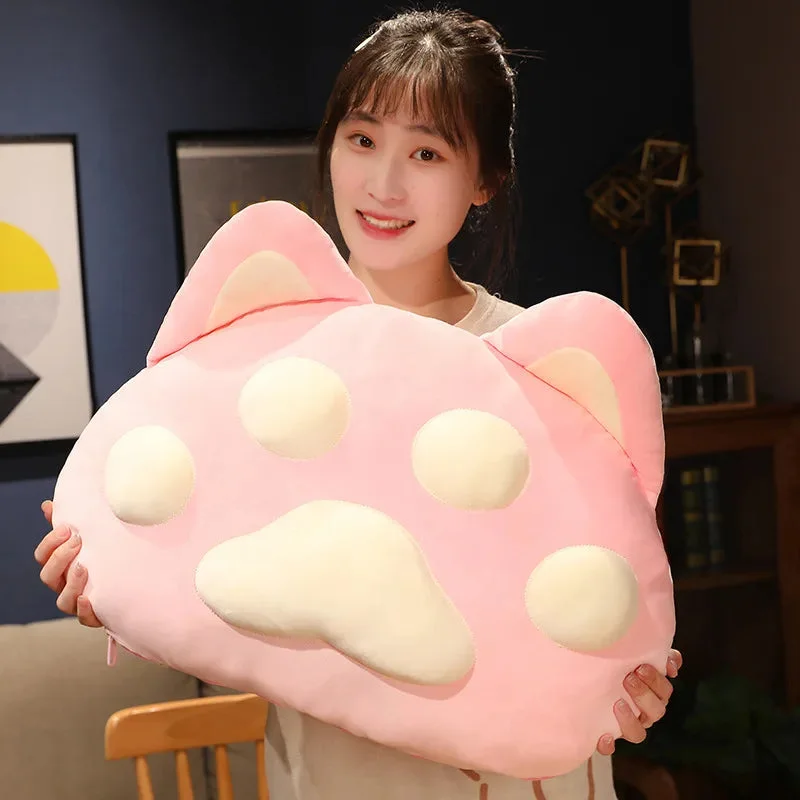
Items such as the Kawaii Cat Paw Pillow Plush, listed in S and M sizes and in Gray, Black, White and Brown, are a good example of a quirky accent: a shape that is clearly cute but quiet in colour. The Kawaii Floppy Bunny Plushie, listed in Grey, Tan, White and Pink, suits a front-of-pile spot where the ears can flop over a bolster.

Working with squares and bolsters
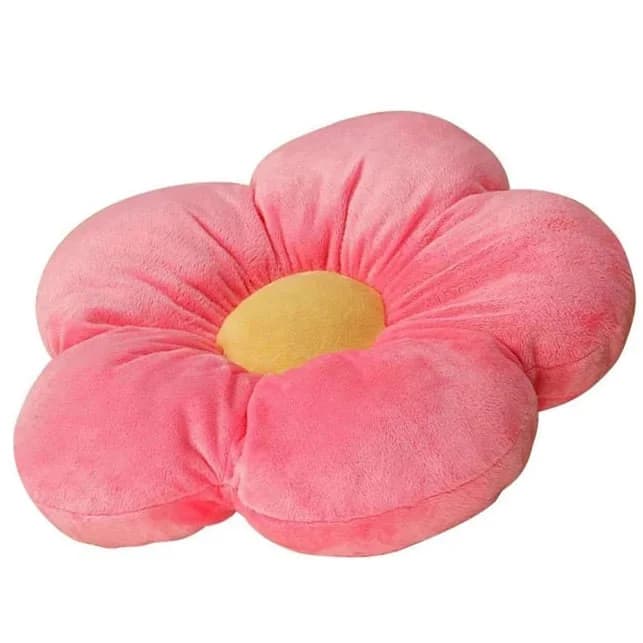
Squares are the workhorse. They fill space, support backs and give you a clean surface to pair with busier shapes. Keep them in pairs, or in a set of three at different sizes, and let one of them be plain. A bolster is the opposite: long, low, and usually a single statement for the front or the neck end of a bed.
Mixing sizes matters more than mixing patterns. A large square at the back, a medium one in front and a small one on top creates a natural staircase. If every square is the same size, the pile looks like a shop display. Even a slight difference reads as relaxed.
Placement tip for bolsters: lay them across the width of the bed or the length of a sofa seat, not upright. Standing a bolster on its end tends to look top-heavy and it falls over. If you want a bolster on a sofa arm, tuck it into the corner so the arm holds it in place. For more ideas on the overall room mood, our home decor collection has pieces that can sit beside the pile, such as items for a nightstand or shelf.
Colour grouping that keeps it calm
The simplest method is the two-plus-one rule. Pick two main colours that appear in most of your pillows, then add one small pop. For example, cream and grey as the base, with a single pink piece as the pop. The pop should be the animal or the smallest square, not the biggest item.
Group by temperature if you want a softer feel. Warm pieces such as orange, tan and pink sit well together, and cool pieces such as grey, blue and white sit well together. Mixing a warm accent into a cool pile, or the other way round, gives a gentle contrast without clashing.
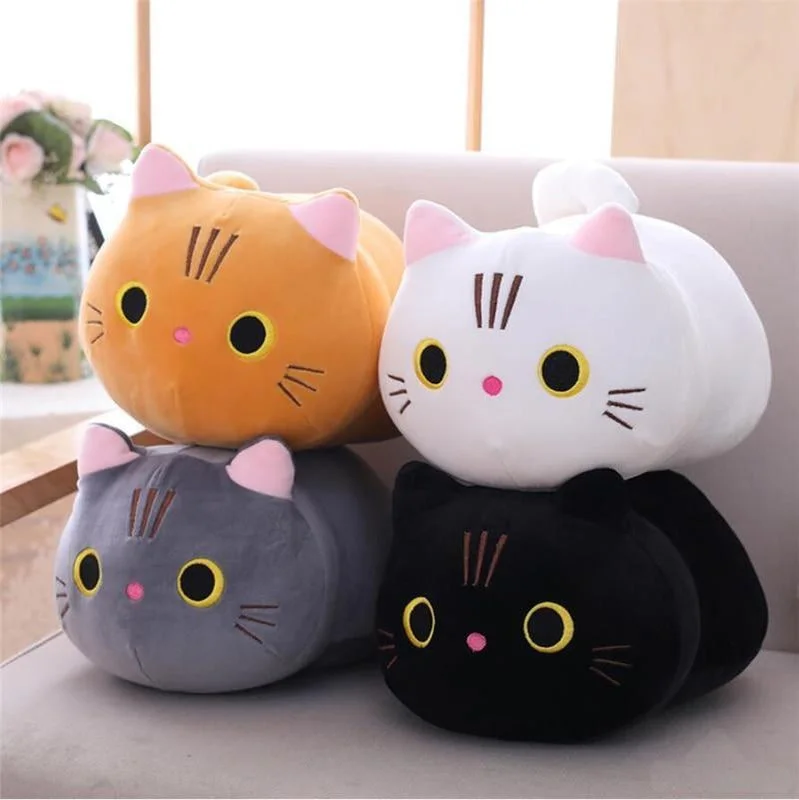
Use repetition. If your animal is orange, put a tiny bit of orange somewhere else, like a stripe on a blanket or a trim on a square. That echo ties the pile together. The Kawaii Kitten Plush is listed in Orange, Gray, Black and White across 25 cm, 35 cm and 50 cm sizes, so you can choose a colour that matches or deliberately contrasts with the rest of your set.
- Two main colours plus one pop
- Keep the pop small and near the front
- Group warm with warm, cool with cool
- Repeat the accent colour once elsewhere
Pastel, neutral and bold palettes
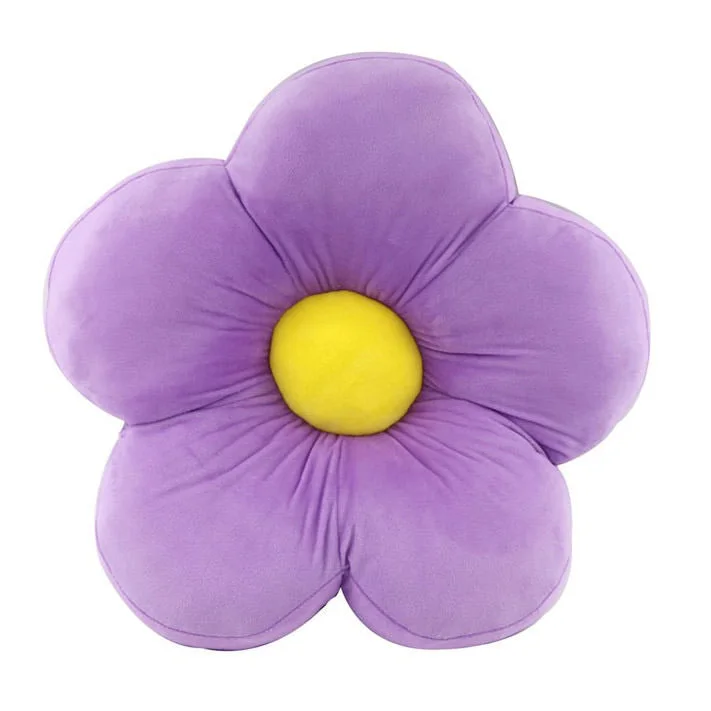
Pastel palettes are the classic kawaii route, and they are forgiving as long as the tones share a similar softness. Pale pink, soft blue and cream blend easily. The risk is that everything fades into one blob, so add one slightly deeper piece, such as a grey or a darker pink, to give the eye a place to land.
Neutral palettes suit people who like cute shapes but want a calm room. White, grey, black and tan let the animal silhouetteThe overall shape an outfit creates, from fitted to loose and layered.s do the talking. Texture then becomes your variety: a smooth square beside a fluffy plush adds interest without any extra colour. This is where black and grey animal options really earn their place.
Bold palettes work when you limit them. Choose one saturated colour, say blue, and let it appear two or three times at different sizes, with everything else neutral. The Kawaii Dinosaur Plushie, listed in blue or pink at 30cm, 40cm and 50cm, shows how one strong colour can be the single loud note in an otherwise quiet pile.
Scale and proportion by furniture type
Match the size of your largest piece to the furniture. On a single bed, a huge plush can swallow the whole top, so go medium. On a larger bed, a tiny animal can disappear, so go up a size. A good rule of thumb: the biggest decorative piece should be no wider than roughly a third of the headboard or sofa back, so there is breathing room.
Check listed sizes carefully. Some products give a single length in centimetres, and that may be the length of the body, not the width when seated. Hold a tape measure or a piece of string at that length against your bed to see how it will really sit. Do not assume it matches a standard square cushion.
For compact spaces like a daybed or a small two-seater, use fewer, smaller pieces and let one do the work. The Kawaii Shiba Inu Plush, listed at 40cm and 50cm in Black, Gray and Yellow, is an example of a mid-size shape you could compare against your furniture before choosing the size.
Texture and softness layering
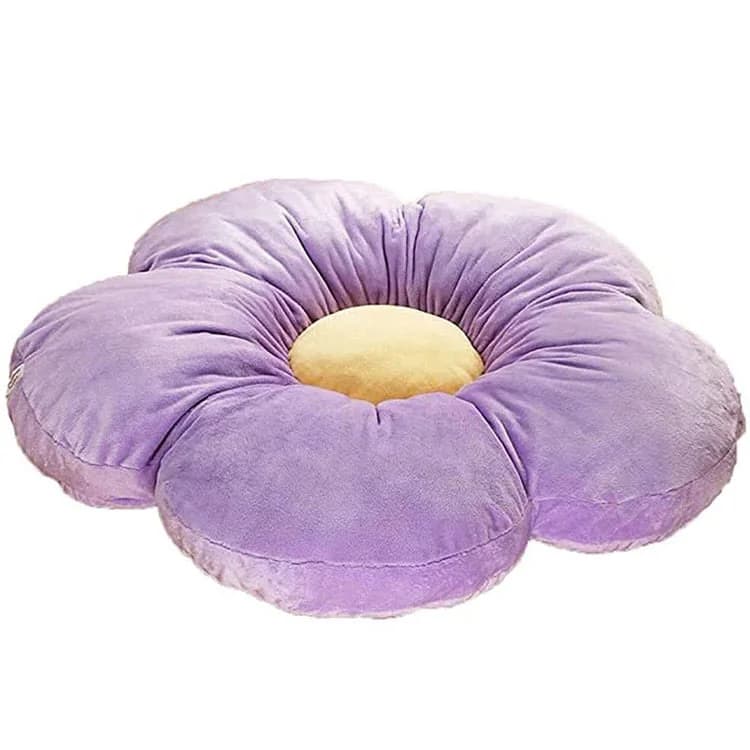
Shape and colour get most of the attention, but texture is what makes a pile feel inviting. Pair something smooth with something plush and something woven or knitted. Three textures in one pile is plenty. More than that and the surfaces compete.
Think about how you use the space. A bed pile gets touched with bare skin and faces, so you may prefer the softest items closest to the front. A sofa pile gets leaned on, so firmer pieces should be at the back where support matters. Put the squishy animal where it will be hugged, not where it will be a backrest.
If the material is not stated on a product page, do not assume. Check the description, and if it does not say, ask before you buy, especially if you are sensitive to certain fabrics. Pair plush with a throw from the kawaii blankets range if you want an extra layer that matches your palette.
Keeping it livable: nightly and daily routines
A pretty pile that you strip off every night is a chore. Decide where the decorative pieces go when you sleep. A basket, a chair or a shelf all work. The best setup is one where moving everything takes under a minute, so choose pieces that are easy to grab and do not need careful re-stacking.
On sofas, pick a default arrangement and a quick reset. After a movie night, everything ends up on the floor, and you want to be able to put it back with two or three moves. That is another reason to keep to the three-role rule: you remember where each piece goes.
Rotate occasionally. Swapping one accent every few weeks keeps the room fresh without buying a lot. A kawaii plushie that lives on a shelf for a while can come down to the bed for a change, and a bed accent can retire to the sofa.
Small spaces, kids' rooms and shared rooms
In a small room, shape variety matters more than quantity. One bolster, one square and one animal can make a tiny bed look finished. Anything extra becomes clutter you have to climb over. Use the wall as storage with a hanging organiser or a shelf for the extras.
In a shared or student room, keep the pile simple and use colour to mark whose side is whose. One person gets the cool tones, the other the warm, and the middle stays neutral. That gives both people a say without a messy mix.
For adult rooms with a lot of cute items, anchor the look with plain bedding so the shapes pop. The Kawaii Pink Piggy Plushie, listed as pictured in one option, is a good example of a single, simple, round-ish accent that works well as the only pink piece in a mostly neutral setup.
Common mistakes and quick fixes
The first mistake is matching everything too closely. Five identical pillows look like a hotel. Change the size or texture of at least two. The second is too many accents. If three animals sit on one bed, none of them stands out. Move two to a shelf or a chair.
The third mistake is ignoring the back row. If the squares at the back are lumpy or flat, the whole pile sags. Fluff them each day and keep them upright. The fourth is forgetting comfort: a decorative bolster that is too firm or too big will end up on the floor every night.
Finally, do not buy for a photo. Think about where each piece lives, how you will clean it, and whether you actually like touching it. Check care instructions on the product page and follow them. If they are not listed, ask before you wash anything.
- Do not match all pieces exactly
- One or two accents, not four
- Fluff the back row
- Choose comfort over looks for items you touch
A quick buying and arranging checklist
Before you buy, measure your bed or sofa and write down the width of the headboard or back. Decide your anchor, your support pieces and your accent. Choose two main colours and one pop. Check listed sizes and options, and compare them to your measurements rather than guessing.
When it arrives, lay everything out on the floor first. Try the classic bed formula or the sofa corner formula. Take a photo on your phone, because it shows you balance problems that your eyes skip. Adjust one thing at a time, then leave it for a day.
If you want to explore more, the kawaii pillows and home decor pages are good starting points, and the plushies range is where to look for animal accents. The goal is a pile you enjoy using, not a display you are afraid to touch.
- Measure the bed or sofa first
- Pick anchor, support and accent
- Two colours plus one pop
- Check each listed size and colour option
- Lay it out on the floor before placing
- Leave one sofa seat clear
- Plan where pieces go at night