
Created by the Kawaii Vibe editorial team. Our named style desks are editorial personas. Product details and availability can change.
The quick answer: wear a slim, snug long sleeve underneath and a boxier short sleeve tee on top, and let about two to three inches of the under layer show at the hem or the sleeve. Pick two colors that sit close together or share one tone, and you have an outfit that looks planned.
LayeringWearing pieces over or under one another to add depth, warmth or contrast. this way is practical. The long sleeve covers your arms when it's cool, the tee adds a bit of warmth through your core, and if the day heats up you can push the sleeves up or knot the tee. You never carry a jacket you don't need.
This guide goes through color, sleeve, hem, fit, fabric, shoes, bottoms and care, with specific combinations you can copy. Where it helps, I've pointed to pieces from the shop as optional ideas, not requirements. Your own wardrobe will probably cover most of it.
I've kept the advice general on weather. Think in terms of cool, mild and warm days rather than months, since that works wherever you live.
The basic formula in one minute
Start with a long sleeve that fits close to your arms and torso. Put a short sleeve tee over it that is a little looser and a little shorter. That size gap is what makes the two layers read as separate pieces and not a messy lump.
Then check three things. The under layer should show at the wrist, so the cuff isn't swallowed. It should show at the hem or at least not be hidden entirely. And the two tops should differ in either color, texture or pattern, because two identical solids just look like one thick shirt.
From there everything else is adjusting. Swap the colors, change the tee length, push the sleeves, and you get a dozen outfits from the same two items.
If you only remember one rule, make it this: one layer plain, one layer interesting. A striped long sleeve under a plain tee, or a plain long sleeve under a graphic tee. When both are busy, the outfit gets noisy fast.
Choosing the long sleeve base
The base layer does the quiet work, so pick it for fit before print. Look for sleeves that reach the wrist bone without bunching, a body that doesn't flare, and a neckline that sits lower than the tee's neckline so you don't get a double collar choking your neck.
Fabric matters because the tee will rub against it all day. Cotton blends tend to slide less and feel steadier. Very slippery knits can ride up under a tee and twist around your ribs. When you're shopping, check the material listed on the product page and look for what's actually stated, such as cotton and polyester blends.
For a clean starting point, browse women's long sleeve tops and compare cuffs and necklines before you look at color. A raglan style, for example the Campus Secrets Raglan Long Sleeve, has seams running diagonally from the neck, which can sit flatter under a tee than a heavy set-in shoulder. It comes in navy blue, brown and green, in sizes M to 2XL.
Avoid thick ribbing, big ruffles or bulky shoulders on the base, unless you want that to be the feature.

Choosing the short sleeve tee on top
The top tee should be easy to move in and a touch roomier than the base. A regular or slightly boxy fit works well. If the tee is tighter than the long sleeve, the sleeves underneath will push through and show lumps at the upper arm.
Sleeve length on the tee decides how much of the base shows. A short, cap-like sleeve leaves lots of the long sleeve visible and looks lighter. A longer tee sleeve that reaches mid-upper arm covers more and feels more tidy and plain.
Neckline is the other detail. A crew neck tee over a crew neck long sleeve gets crowded around the collar. Try a wider or scoop neck on the tee, or a base with a henley placket or a lower neckline, so both collars have space.
For tee options, look through tops and t-shirts, and if you like slogans, graphics or a softer mood, aesthetic tops and t-shirts has more personality. Choose one graphic and let the long sleeve stay quiet.
Color combinations that rarely go wrong
Tonal pairs are the easiest. Wear a light version and a dark version of the same color: pale blue under navy, cream under brown, light grey under charcoal. The outfit looks coordinated without trying.
Neutral plus one accent also works well. Put a black or white long sleeve under a colored tee, or a colored long sleeve under a white tee. The neutral calms things down, and the single color carries the look.
Contrast pairs are bolder. Black under white is crisp and a little punky. Brown under pale pink is soft. Navy under yellow is sporty. If you're unsure, hold the two tops together before leaving the house and ask whether your eye knows where to go first.
Here are a few to try:
Pitfalls: avoid two mid-tone colors that are close but not matching, like olive and khaki green. They tend to look like a mistake, not a choice.
- Cream long sleeve with a brown tee
- Navy long sleeve with a white or pale grey tee
- Black long sleeve with a red or pink tee
- Green long sleeve with a cream tee
- Grey long sleeve with a black graphic tee
Stripes under solids (and the reverse)
Stripes are the most dependable base for layeringWearing pieces over or under one another to add depth, warmth or contrast. because they show at the sleeves and hem as a clear band, which makes the layeringWearing pieces over or under one another to add depth, warmth or contrast. look intentional. Put a striped long sleeve under a plain tee and you have an outfit before you add anything else.
A good option is the Relaxed Girl Striped Long Sleeve T-Shirt, listed in red, brown, green and black/white, in sizes M and L. The black/white version under a solid tee is the safest start, while the red or green asks for a neutral on top.
If you like a sportier look, the Patchwork Rugby Striped Long Sleeve Top is listed in yellow with Free Size. Its stripes are the feature, so a plain white, black or grey tee over it works best.
The reverse, a striped tee over a plain long sleeve, works too, but the stripes now cover your torso, so keep the base the same color as one stripe. Don't wear two different stripe widths together, since they can clash visually.


Sleeve play: pushing, rolling and matching lengths
How the sleeves sit changes the look more than people expect. A long sleeve that ends exactly at the wrist under a short tee sleeve looks neat. A long sleeve that is too long and pools over your hand looks sloppy unless you meant to have thumbs peeking out of it.
If the cuffs are long, you can push them up to the forearm for a casual feel. This works best on stretchy fabrics that grip. On stiff ones it can slide back down within minutes, so test it before you commit.
Pay attention to where the tee sleeve ends compared with where the base sleeve starts to look different. A visible stripe or print on the upper arm of the base can be hidden by a longer tee sleeve, which is useful if the upper arm print is loud.
A final trick is raglan or contrast sleeves. A top with colored sleeves, like a campus-style raglan, gives you a built-in color block under the tee, so you only need the tee to be a solid shade that matches one color.
Hem lengths and how much should show
There are three hem arrangements. In the first, the tee is shorter than the base and the long sleeve hangs out below by two or three inches. This is the classic layered look and it works with high-waisted bottoms and loose trousers.
In the second, both hems match or nearly match. This looks sleek and minimal, but it only works if the two colors are clearly different, otherwise the layers merge.
In the third, the tee is longer than the base. This is less common, and it can look like you forgot something, so use it only when the base is cropped on purpose. A cropped base under a long tee can look neat if the tee has a clean, straight hem.
Proportion tip: if your tee ends at the hip, let the base peek out slightly, but avoid hems ending at the widest part of your hip with a different color, as it draws the eye there. If you'd rather not, tuck the front of the tee in and leave the base loose, or the reverse. A half tuck gives the shape a defined waist.

Fabric and texture pairings
Mixing textures makes a simple pair of tops feel more finished. A smooth cotton tee over a ribbed or waffle long sleeve, for example, shows depth without adding color.
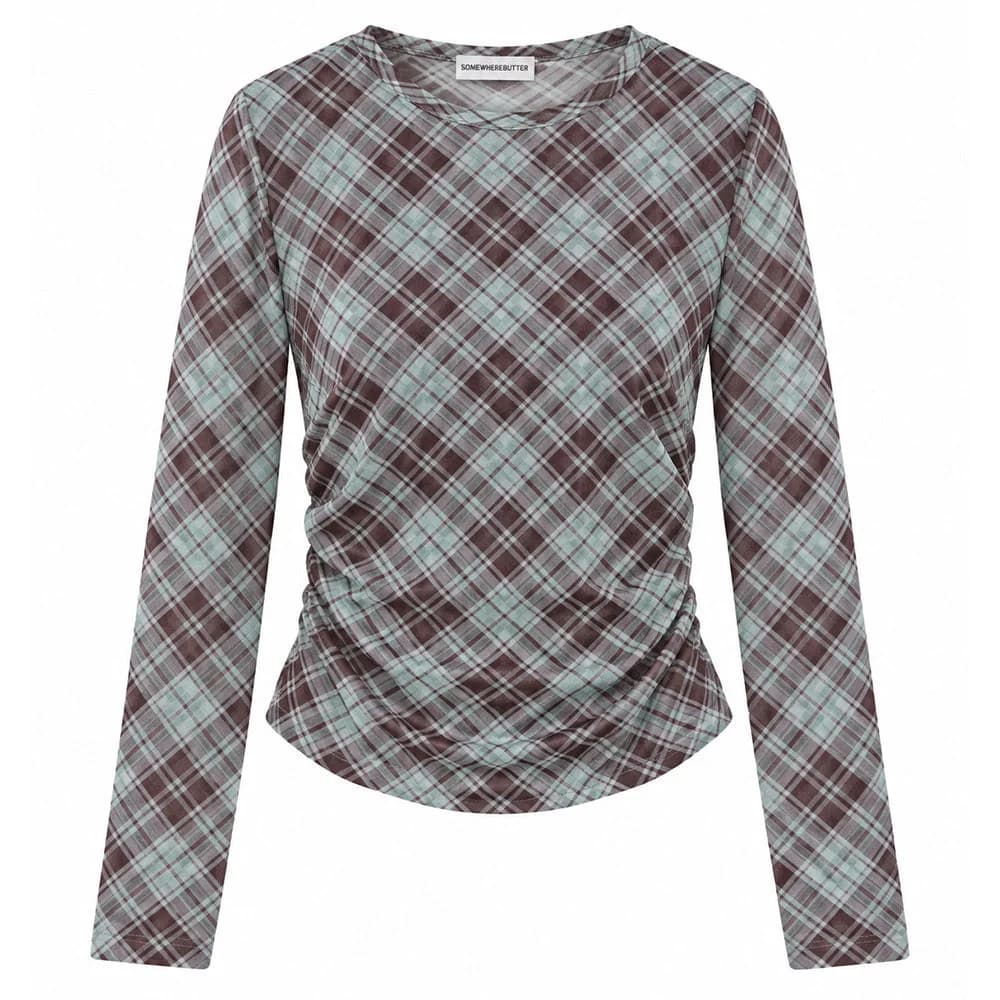
Mesh and sheer layers are a special case. A sheer long sleeve under a solid tee gives you pattern and coverage while staying light. The Diagonal Plaid Long Sleeve Mesh Top is listed in blue/brown and black, in sizes S to XL, and made of polyester. Worn under a plain tee, the plaid shows at the arms and the hem, a good fit for grungy styling.
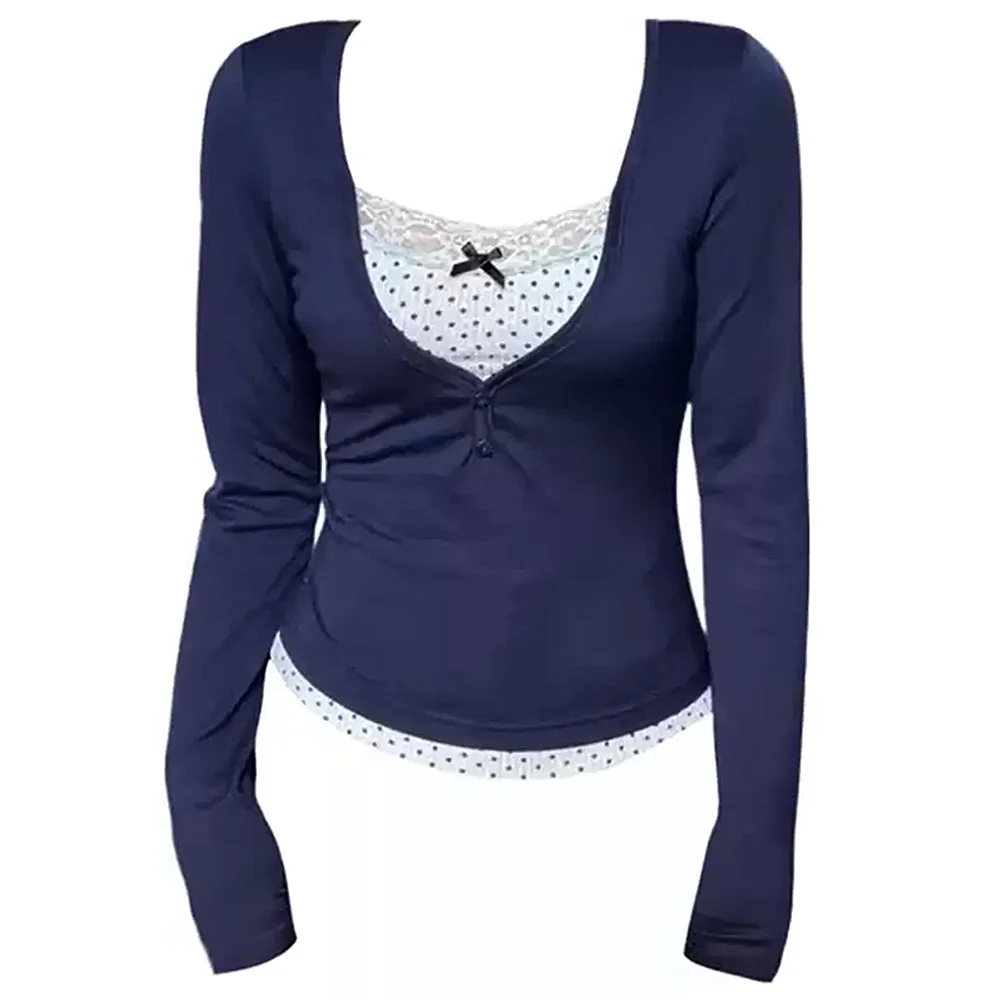
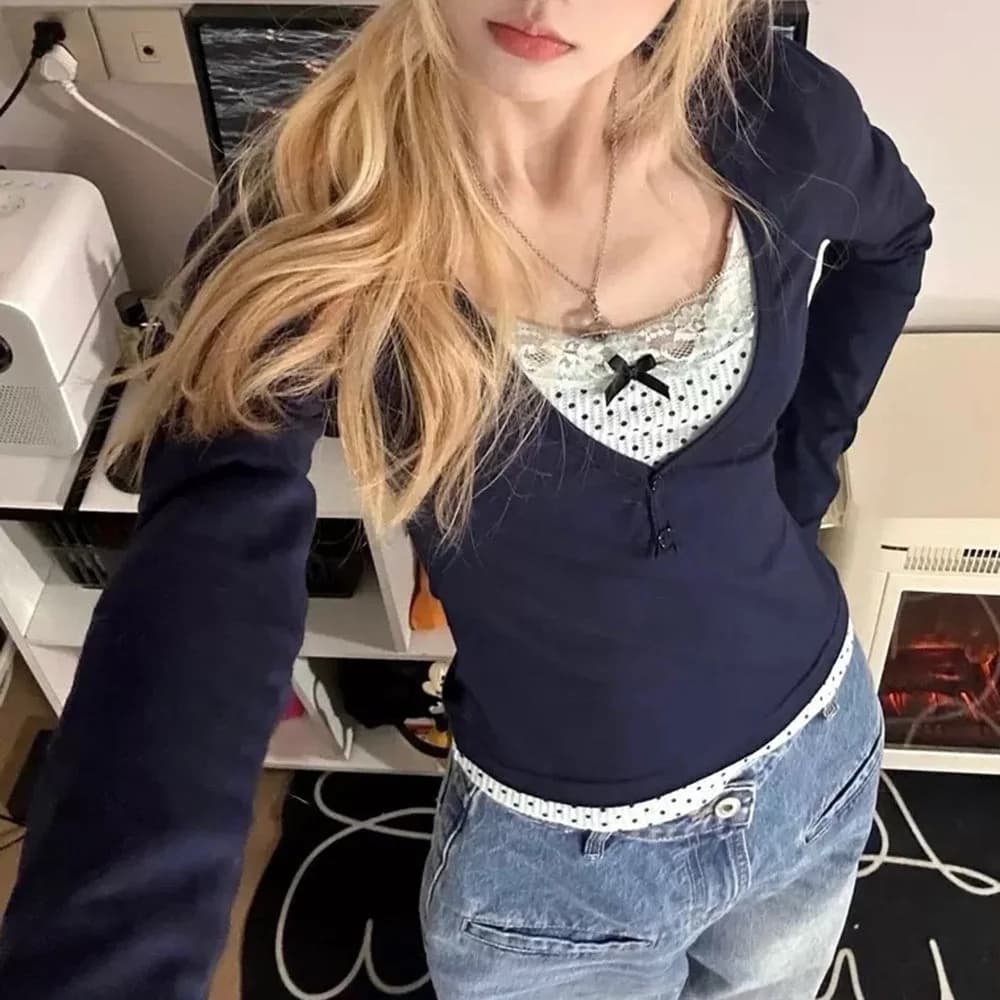
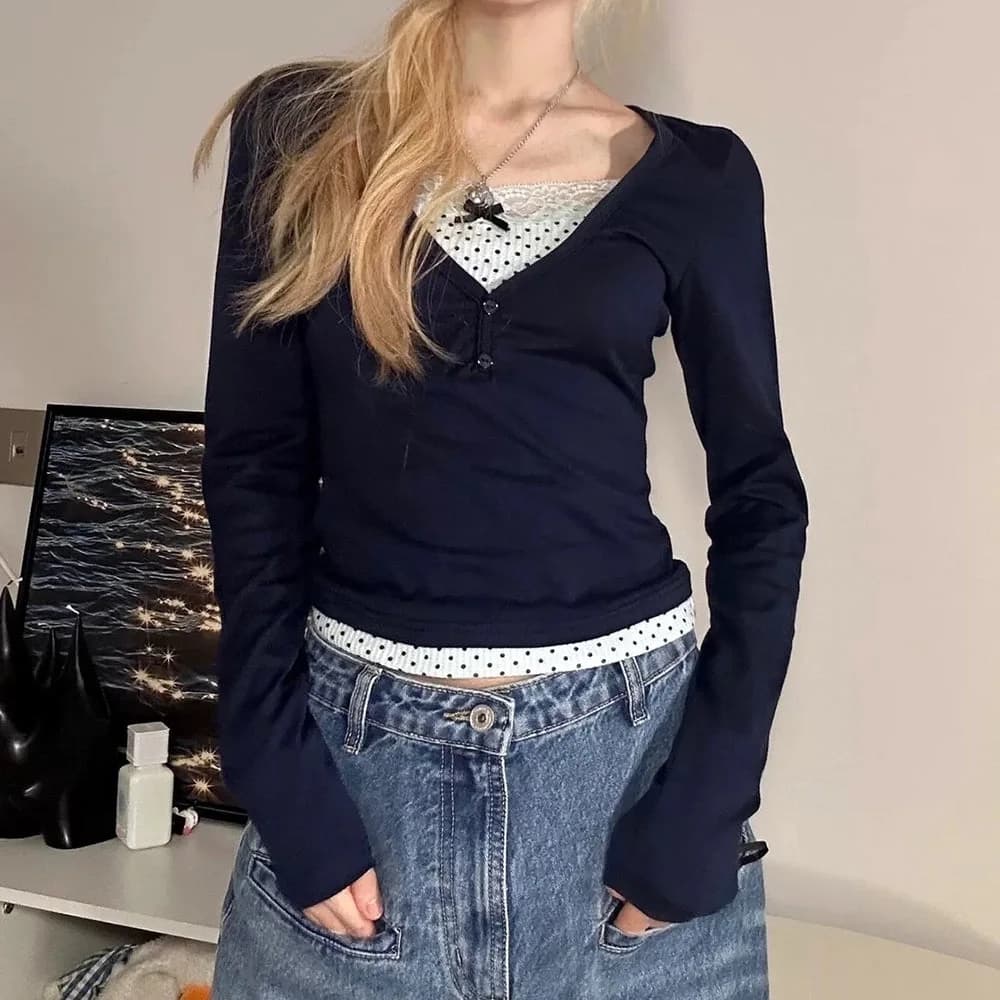
For something frillier, the Coquette Girl Layered Long Sleeve Top comes in blue in S, M and L, with polyester and cotton listed. Since it's already layered in design, I'd put a simple tee over it only if the product's shape allows, and otherwise wear it alone. Check the photos on the page before buying.
Pitfall: avoid pairing two fabrics that both cling. Two stretchy layers can show every seam. Mix one stretchy piece with one that has a bit more structure.
Grunge-leaning combinations
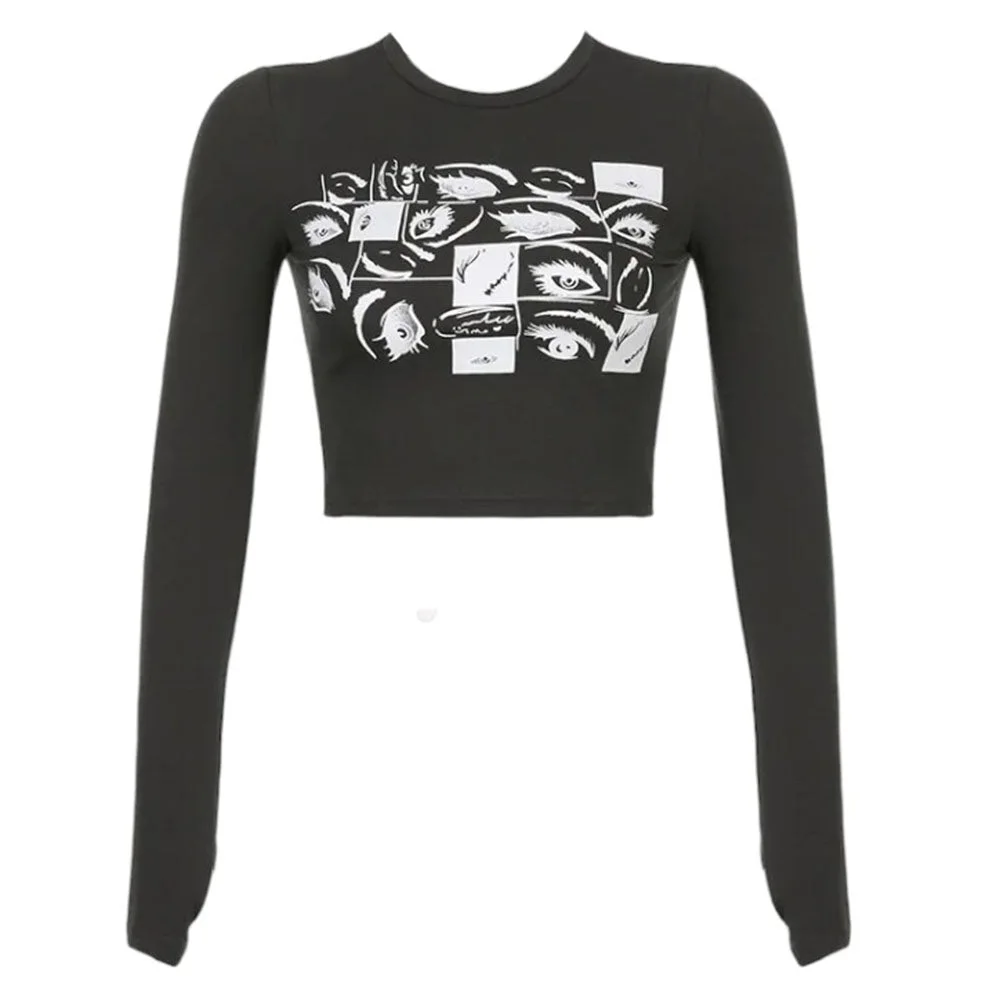
The layered tee has deep roots in grunge-style dressing, and it's easy to lean that way. Start with a faded or dark long sleeve, then add a worn-looking band-style or graphic tee on top, with slightly oversized fit.
Colors that fit this mood are black, charcoal, deep brown, forest green and burgundy. Use a muted palette, then add a single texture like mesh or plaid. Browse the grunge clothes collection for more pieces with that mood.
One outfit to copy: a black mesh plaid long sleeve, a washed grey tee, baggy dark jeans and chunky boots. Another: a brown long sleeve with a black tee, cargo trousers and trainers.
Keep the tee a bit big, and let the sleeves of the base hang just past the wrist. Don't add too many accessories. A chain or a simple ring is enough. The point is a lived-in feel, not a costume, so if every piece is distressed, tone down one or two.
Soft, cute and retro combinations
If grunge isn't your thing, layered tees work just as well in a softer mood. Think pastel and cream long sleeves with a plain baby tee or a graphic tee in a friendly color.
The 2000s Striped Henley Long Sleeve Top is listed in pink, navy, grey and brown, in Free Size, with cotton and polyester. The henley placket gives the neckline some room, so a scoop-neck tee over it has less competition. Try the pink one under a white tee, or the navy under a pale one.
For a playful mood, the Playful Kitten Brown Long Sleeve Top comes in brown in sizes S to XL, made of polyester. Because the print is the focus, I'd keep the tee plain and short, so the print shows at the arms or hem, depending on the design. Check the product page for where the graphic sits.
Pair these with a pleated skirt, light-wash jeans or soft cargo trousers, and keep shoes simple, like sneakers or flats.
Dealing with shifting temperatures
The best part of this outfit is how adjustable it is. On a cool morning, wear both layers fully. When it warms up, push the base sleeves up, or if the base is light enough, take it off and keep just the tee.
This only works if the tee can stand on its own, so choose one you'd happily wear alone. Likewise, the long sleeve should look fine alone, in case you remove the tee in a cold room.
For colder days, add a third layer: an open overshirt, a zip hoodie or a jacket. The tee-over-long-sleeve combo then sits underneath without bulk. For hotter days, pick thinner fabrics and a looser base so air can move.
Be careful with rain or wind. A thin top layer won't block either, so carry a light outer layer if the forecast is uncertain. Also keep in mind that offices and public transport can swing hot and cold, and the layered outfit lets you cope without a bag full of extras. Check the weather where you are, not a calendar.
Bottoms, shoes and accessories
Layered tops add volume on top, so balance them below. If your top half is baggy, wear straighter or fitted bottoms, like straight jeans or leggings. If you want baggy bottoms too, keep one part clearly tailored, such as a fitted base layer.
Skirts work well: a mini or midi skirt with a layered tee gives a mix of cute and casual. Shorts work in mild weather, especially with the long sleeve doing the arm coverage. Cargo trousers fit the grunge mood.
Shoes follow the mood. Chunky boots for grunge, canvas sneakers for school-style looks, ballet flats or loafers for a softer one. Socks that peek out can echo a color from the base layer, which links the outfit together.
Accessories should be light. A necklace can sit over the tee or hang under it. Shoulder bags can rub on layered fabric, so a crossbody strap over a thin tee may wrinkle it. A cap or beanie works if your colors are already settled, and simple earrings or a watch add a finishing touch without more bulk.
Common mistakes and how to fix them
The first mistake is bulk at the arms. If the tee sleeve is tight, the base sleeve bunches under it. Fix this by sizing up the tee or choosing a smoother base with thinner sleeves.
The second is color mud. Two similar mid-tones just look dull. Fix it by adding contrast with a lighter or darker layer, or switch one to a neutral.
The third is neckline clutter. Two high necks stacked create a tight ring. Choose a wider tee neck, or a base with a lower collar or a henley placket.
The fourth is a hem that rides up. A slippery base can twist under the tee. Tuck the base into your waistband first, then pull the tee over it, or pick a base with more grip.
The fifth is overdoing patterns. Two prints should differ in scale, with one big and one small, or you should swap one for a solid. If you aren't sure, take a photo in the mirror, since it often shows what your eye has missed.

Care, fit checks and a final checklist
Layered outfits mean more washing, so read care labels on each item. Wash dark and light layers separately at first, since new dyes may run. I can't say how any particular item will behave, so check the product page details and the label that arrives with it.
Before buying, check the size options. Some pieces are listed in a size range, like S to L, while others are Free Size, so compare against a top you already own and like. Don't assume Free Size will fit the same as your usual size.
Use this checklist before you leave the house:
If most boxes are ticked, you're ready. If not, change one thing, usually color or hem, and look again.
- Base layer is snugger than the tee
- Cuffs end at the wrist, not over the hand
- Two necklines have room and don't crowd
- One layer is plain, one is interesting
- Colors are tonal, neutral or clearly contrasting
- A few inches of base show at the hem, or the hems are deliberately matched
- Both tops look fine on their own
- Bottoms and shoes balance the volume on top


