Created by the Kawaii Vibe editorial team. Our named style desks are editorial personas. Product details and availability can change.
Short answer: a maxi skirt works on a shorter frame when you control three things. The waist sits high enough to show your leg line, the hem lands just above the floor in the shoes you will actually wear, and the top stays short or fitted enough that the skirt is the only big shape in the outfit.
Most of the trouble people have with long skirts is not the skirt. It is one of those three things being slightly off. A hem that pools, a waistband that sits too low, or a long loose top on top of a long loose skirt will make anyone look shorter, whatever their height.
This guide goes through each rule with real outfit combinations, a few checks you can do at home, and places where a specific piece from the shop could help. Nothing here needs a tailor, though a hem tweak is mentioned where it makes sense. Use what suits you and ignore the rest.
Heights and proportions vary a lot, so treat the numbers and placements below as starting points you adjust in the mirror, not fixed measurements.
The Three-Part Rule in Plain English
Think of a maxi outfit as three zones: the top, the waist, and the hem. On a shorter frame, each zone has a job. The top should end near or just below your natural waist so your torso does not eat into your leg length. The waist should sit where it creates a clear break. The hem should show a sliver of shoe or ankle so the eye reads a leg underneath all that fabric.
When all three agree, a long skirt looks deliberate and elongating. When one fights the others, it looks like the skirt is wearing you. A long top over a low waist over a pooling hem is the classic version: three things all pulling the eye downward and hiding every line.
You do not need to fix everything at once. If you only change one thing, change the waist, because it moves the whole outfit. Raise the waistband or tuck and crop the top, and the proportions often sort themselves out. Hem and shoes are the fine tuning after that.
A quick mirror test helps. Stand back, squint, and look for where the outfit divides. If the biggest chunk of the picture is skirt, you are probably fine as long as the top is small. If the picture splits into two equal halves at your hip, move the break upward.
Waist Placement and Rise: Where the Band Should Sit
Rise is the distance from crotch to waistband, and on a skirt it decides how much of your body counts as leg. A higher rise, sitting at or just above your natural waist, makes the skirt start sooner and gives the visual effect of longer legs. That is why a high-waisted shape is the safest starting point for maxi skirt outfits on petite frames.
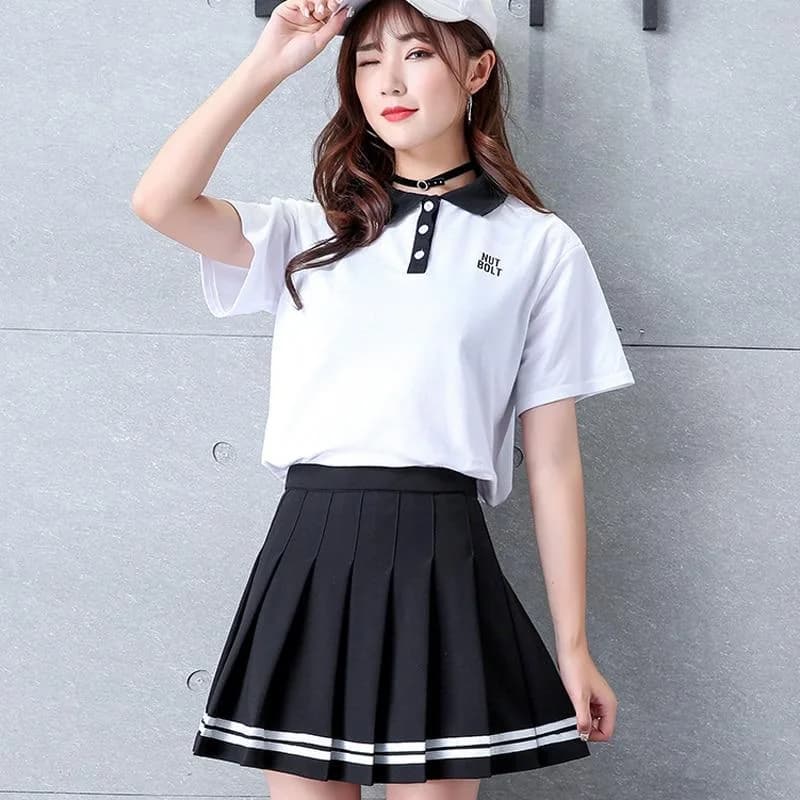
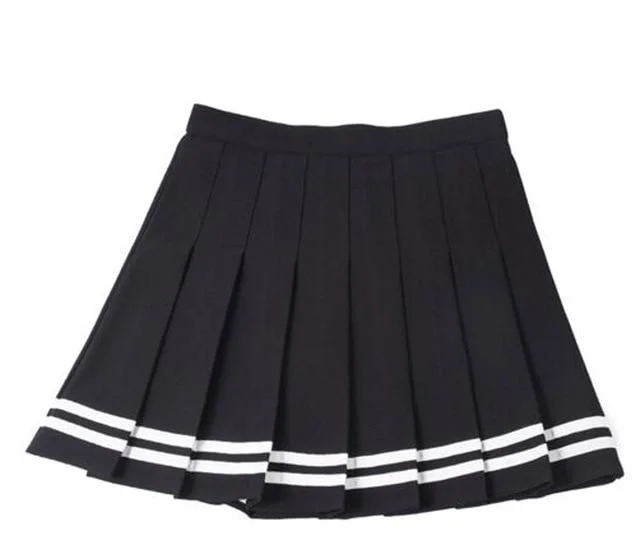
A good example of how waistline sets proportions is the High Waist Pleated Skirts, listed in pink, black, white and blue with sizes from S to XXL. While this piece features an above-the-knee cheerleader cut rather than a maxi length, its high-waist styling demonstrates the exact same principle: pair it with a fitted tee or a short knit tucked in, and the high band defines your visual waistline clearly. Always check product descriptions carefully for hem measurements before ordering.
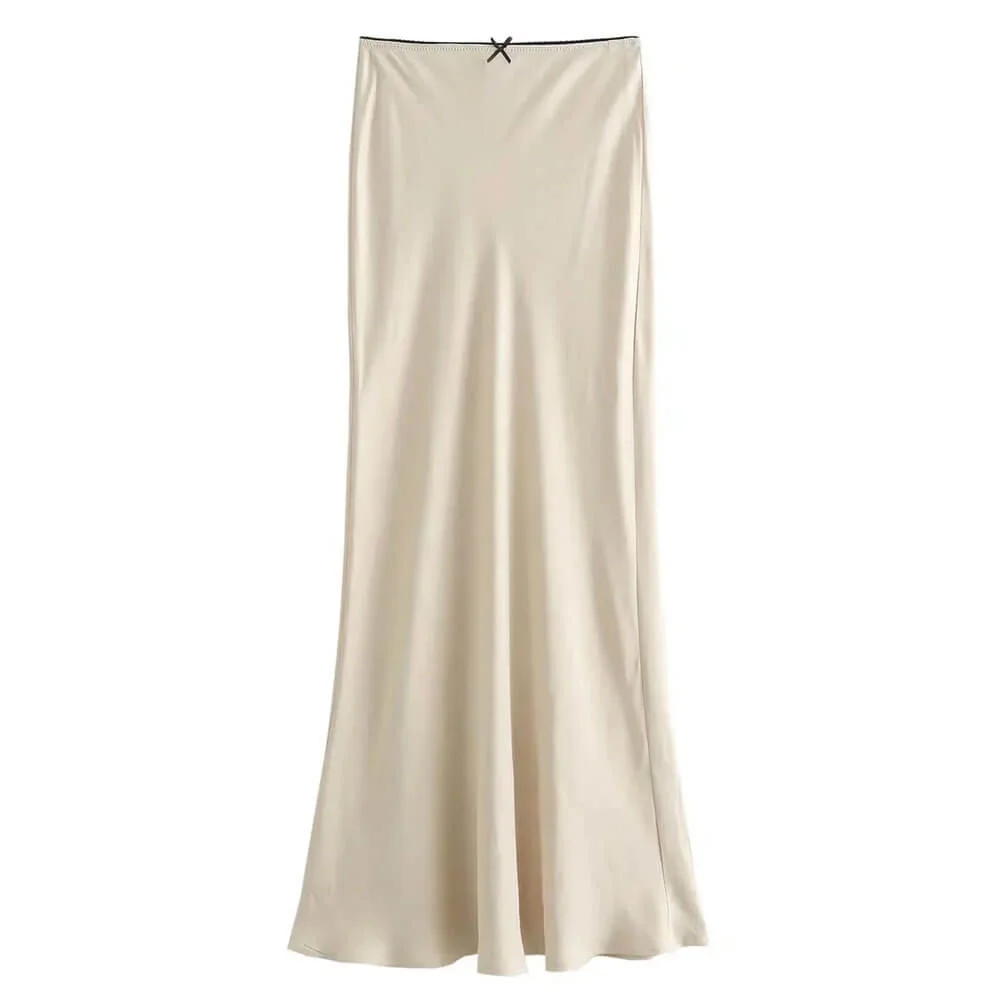
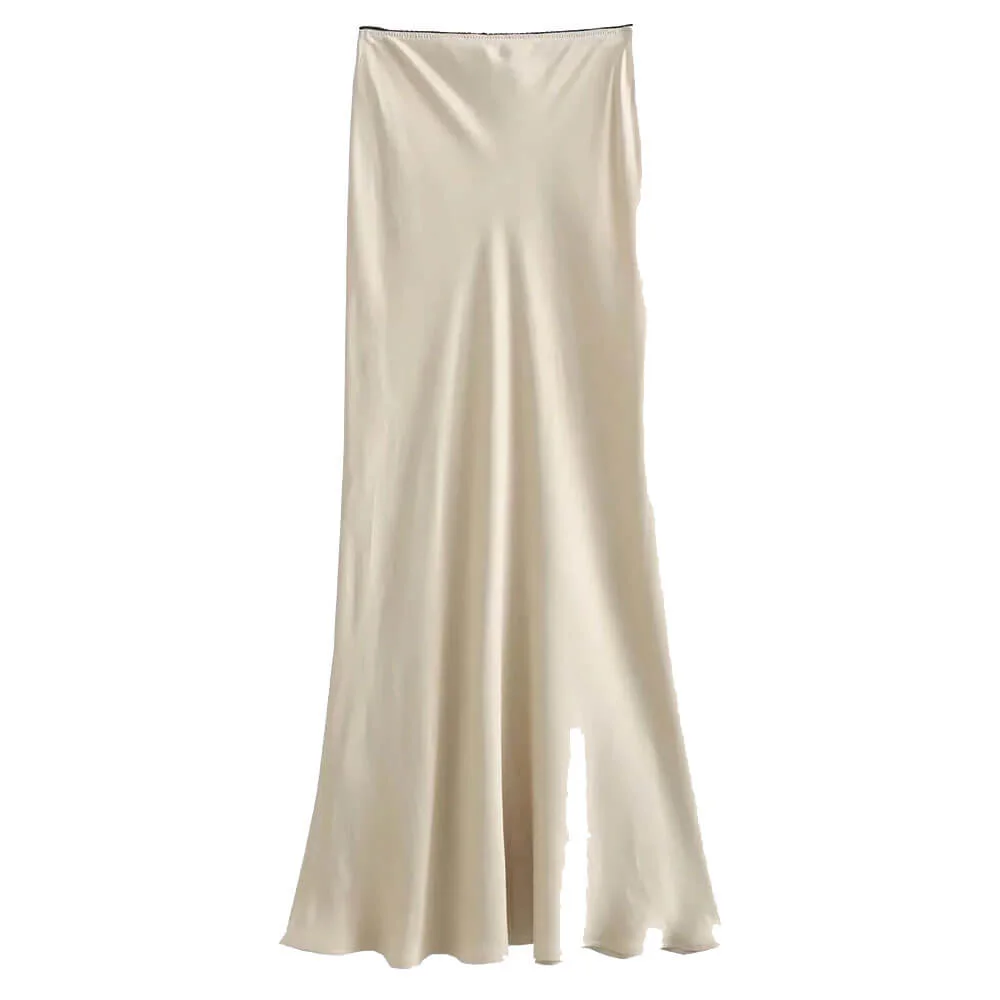
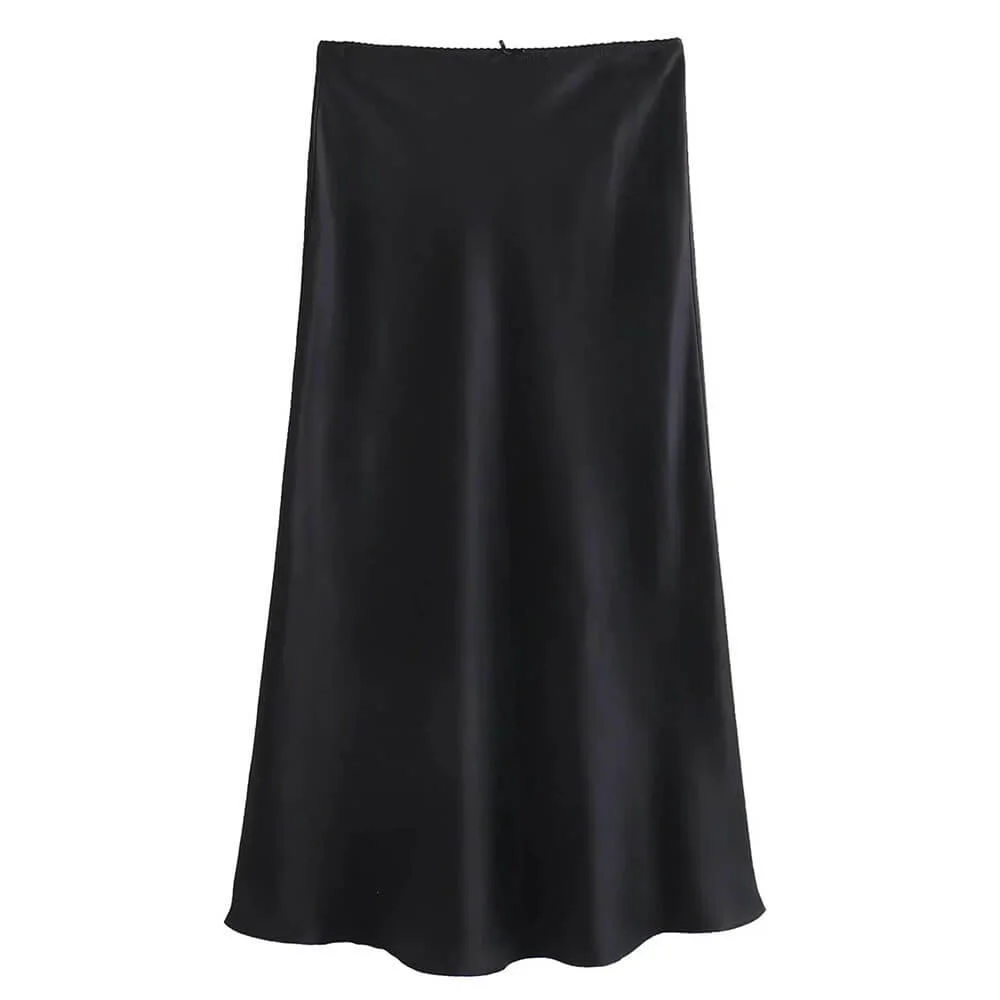
Low-rise is not banned, it just needs more care. The Low Waist Satin Maxi Skirt in beige or black (XS to L, polyester) sits on the hips by design. To make that work on a shorter frame, keep the top clearly cropped so a strip of midriff or a short fitted hem shows, and avoid anything that falls past the waistband. The low band lengthens the skirt, so the hem matters even more.
If you are between the two, a mid rise with a tucked top behaves like a high rise. Tucking is a free way to move the visual waist up.

Hem Length Checks Before You Commit
The ideal maxi hem for a shorter frame skims the top of your shoe or ankle bone, with a little air between fabric and floor. Anything that touches the ground adds weight at the bottom and shortens you. Anything dragging under the heel will also fray, which is a practical reason to check it.
Do the check in the shoes you plan to wear, not barefoot. Stand straight, look in a full-length mirror, and see whether you can spot the front of your shoe. Then walk a few steps and sit down, because a hem that looks fine standing can bunch when you move. If you are choosing between a few skirts, put the shoes on first and compare each in turn.
Always read the product page for length details, and if a length is not listed, assume you cannot tell from the photo, since models vary in height. Photos can mislead because the same skirt looks completely different on a taller person.
If a skirt is slightly too long, you have options. Wear a thicker platform, pull the waistband up and fold it once if the design allows, or get a simple hem taken up. Hemming a plain tiered or gathered skirt is usually a small job, but pleated or patterned pieces are fiddlier, so ask a tailor first.
Cropped Tops That Balance the Volume
A long, full skirt is a lot of fabric, so the top should be the quiet part. Cropped tees, fitted baby tees, short cardigans and slim ribbed tanks all end near the waistband and keep your torso proportion tidy. The aim is a clear line where top meets skirt, not an overlap of two big shapes.
Browse the tops collection and look for hems that finish at or above the hip bone. Fitted works better than boxy for most petite maxi outfits, although a slightly boxy crop can still work if it clearly ends at the waist. Look at the sleeves too: long, wide sleeves add bulk exactly where you want less of it.
Outfit idea: a white fitted crop top, the black high waist pleated skirt, and chunky boots. Everything is simple, so the pleats carry the interest. Another: a short cardigan buttoned over a tank with a satin maxi, which gives softness up top without length.
If you love oversized tops, tuck the front only, a half tuck, and keep the hem short enough that you can still see the waistband. It borrows the casual shape without hiding your waist.
Platform Shoes: Gaining Height Without Fuss
A platform adds visible height and also fixes hem problems, because the skirt can be longer without pooling. A few centimetres under the heel changes how a maxi falls, so always decide on shoes before you decide on length.
The platform boots collection is the place to look. For a long skirt, a chunky sole balances the volume of fabric, while a dainty heel can look lost beneath it. Pick a boot that has enough presence to anchor the hem, and check the shaft height so the boot top does not create an awkward extra line under the skirt.
A useful combination is a fitted black top, a floral or plaid maxi, and a dark platform boot. The dark shoe grounds the print and the thick sole gives you lift. In warm weather, a platform sandal does the same job if you have one, though that is outside this shop list.
Comfort matters. A tall platform you cannot walk in will make you shuffle, and a shuffle makes a long hem drag. Try them around the house with the skirt on before wearing them out.
Prints and Scale: Choosing Patterns That Fit Your Frame
Pattern scale changes how big a skirt feels. Very large prints can overwhelm a shorter frame, while small and medium prints tend to sit more calmly. This is a tendency, not a law, and bold prints can look great if the rest of the outfit is plain.
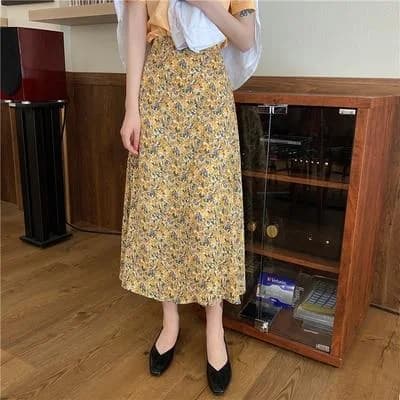
The Vintage Floral Maxi Skirts come in red and yellow (S to L). Florals are forgiving because the pattern breaks up a large area of fabric. Pair with a solid fitted top that picks up one colour from the print. The Black White Polka Dot Gingham Maxi Skirt is in grey, polyester, S to XXL, and is a good choice if you like a graphic look; keep the top plain so two patterns do not compete.
Vertical lines and pleats tend to lengthen, while heavy horizontal bands can cut you into sections. If you try a plaid, like the Preppy Colorful Plaid Maxi Skirt in multicolour (S to 4XL), look at where the pattern lines cross your hips and keep the top simple.
Check the product images and read descriptions for how the fabric is described, and avoid assuming drape or stretch that is not listed.


Satin, Ruffles and Other Fabrics That Add Bulk
Fabric decides how a skirt hangs. Satin-type polyester falls smoothly and follows the body, which can look sleek and long on a shorter frame, as long as the waist is placed well. The Cow Print Satin Maxi Skirt in brown (S to M and L, polyester) is a fun version: the print is bold, so pair it with a plain fitted top and neutral boots.
Ruffles and tiers add volume, and volume is where short frames can feel swamped. The Cottagecore Floral Ruffle Maxi Skirt in blue (S to L, polyester) leans romantic. To keep it balanced, choose a slim, cropped top, define the waist, and let the ruffle be the only detail. Skip puffed sleeves and frills on top, because two ruffled areas stack up.
When comparing skirts, hold the fabric in your mind: does it fall straight, flare out or gather? Straight and softly flared shapes are the easiest. Heavily tiered ones need a higher waist and a shorter top.
If a listing does not mention lining or stretch, do not assume either. Look at the details provided and choose a size using that information.
Layering Without Losing Your Shape
Layers are where proportions usually go wrong. Long coats over long skirts create two parallel verticals that cancel out your legs. The safer approach is to layer short over long: a cropped jacket, a short cardigan or a waist-length knit over the skirt.
In cooler weather, add a fitted knit and a cropped jacket, and keep the hem just above the boot. Opaque tights or leggings under the skirt add warmth without adding bulk at the hem. In warmer weather, a single light top does the job and the skirt itself provides coverage.
If you want a longer outer layer, make it a clearly different length from the skirt. A jacket that ends mid-thigh with a skirt that falls to the ankle gives a visible step, which reads as intentional. A coat ending just above the skirt hem looks like a layered mess.
Scarves and bags matter too. A long cross-body bag strap can cut across your waist and break the line; a small shoulder bag sits better. Keep belts thin, and wear them at the narrowest part of your waist.
Three Complete Outfits to Copy and Adapt
Outfit one, everyday: the high waist pleated skirt in black, a white fitted crop tee, and platform boots. The pleats add movement, the tee keeps the top slim, and the high band gives a clean, clear waist break above the boots. Swap the tee for a thin knit when it cools down.
Outfit two, soft and floral: the cottagecore floral ruffle skirt in blue, a snug ribbed tank or short cardigan, and a small bag. Keep jewellery simple. If the hem is long, borrow a chunkier boot from the platform boots range to lift it.
Outfit three, a bit edgier: the Cow Print Satin Maxi Skirt in brown (polyester, S to L) with a black fitted top and dark boots. The bold print grounds the outfit while the sleek fabric keeps volume manageable. Layer a short jacket if you want more edge.
Each outfit uses the same logic: short fitted top, defined waist, grounded shoes. Change the colours and prints freely, but keep that structure and the proportions stay friendly.
How to Compare Skirts Before You Buy
Start with the waist. Is it high, mid or low, and is it elasticated or fitted? Then look at the length information and compare it to where you want the hem to fall in your shoes. Then check fabric, print scale and how much volume the shape has.
Check the sizing details on each page rather than relying on your usual size from memory. Brands cut differently, and sizes often lack a standard chart across listings, so compare garment measurements with a skirt you already own. If you are between sizes, think about whether you want the waist snug or relaxed, and whether you plan to tuck tops in.
Browse the full skirts collection and the pleated, denim, mini and maxi edit side by side. Sometimes a midi in the same style gives the same look with less hem to manage, which is worth considering if long lengths keep fighting you.
Make a short list of two or three, then decide using the outfit you would wear them in. A skirt that only works with one top and one pair of shoes is less useful than one that works with several.
Common Mistakes and Quick Fixes
Mistake one: the hem touches the floor. Fix by switching to a thicker sole, pulling the waist higher or getting it shortened. Mistake two: the top is long and loose. Fix by tucking, knotting or swapping to a cropped version.
Mistake three: the waist is hidden. A big knit hanging over the band hides where your leg starts. Show the waist even slightly, with a tuck or a short top. Mistake four: matching everything in one colour block from neck to ankle without a break. Monochrome can lengthen, but only if the shape is slim, so add a contrast belt or shoe if it feels heavy.
Mistake five: ignoring how you move. Try stairs, sitting and walking quickly. A skirt that only looks good standing still will annoy you in real life.
Small adjustments often help more than replacing the whole outfit. Safety pins on the inside, a hem tape, or a belt loop can change how a skirt behaves without changing the skirt itself.
Weather and Season Adjustments
Rather than tying looks to a month, think in temperature. When it is hot, choose lighter fabric, a fitted crop top and an open or lighter platform, and let the skirt provide airflow. Check the product description for any lining details and do not assume them.
In mild weather, a short cardigan or cropped jacket and boots with the hem just above them is the easiest formula. When it is cold, add opaque tights, a fitted knit and a cropped coat, and keep the skirt hem clear of wet pavement, since a long hem soaks up water quickly.
Rain is the big enemy of maxi hems. If the forecast is wet, wear a slightly higher platform or hold the fabric up when crossing puddles. Satin-type fabrics may show water marks, so check care instructions on the product page.
Wind matters for light skirts too. A heavier fabric or a pleated shape stays put better than a floaty one, and a bit of weight at the hem can save you from constant adjusting.

Final Checklist Before You Leave the House
Run through this list in front of the mirror, in the shoes you are wearing. It takes less than a minute and catches nearly every proportion problem.
If something fails, change one thing only and look again. Usually it is the top length or the waist, and the fix is a tuck or a different shoe.
Keep notes on what works for you: which waist height, which hem, which sole. Next time you shop, you will know exactly what to look for and can skip the guesswork.
- Waist sits at or above your natural waist, or the top is clearly cropped
- Hem shows a bit of shoe or ankle and does not touch the floor
- Top ends near the waistband and is fitted or short
- Only one big shape in the outfit, usually the skirt
- Shoes have enough presence to anchor the hem
- You can walk, sit and climb stairs without the hem catching
- Print scale feels calm against your frame
- You checked the product page for sizes, fabric and length details