Created by the Kawaii Vibe editorial team. Our named style desks are editorial personas. Product details and availability can change.
LayeringWearing pieces over or under one another to add depth, warmth or contrast. knitwear can feel tricky when you want warmth without drowning in thick fabric. Nautical knit designs usually rely on bold horizontal lines, crisp contrasting collars, or sailor-style necklines, which draw direct attention across the upper body. When you add outerwear, collared undershirts, or mid-layers into the mix, those distinctive details can either sharpen your look or create awkward bunching.
Getting the balance right comes down to understanding how fabric weights, hem positions, and necklines interact with your frame. Instead of treating every knit piece the same way, breaking down individual elements helps you build comfortable daily outfits for brisk coastal walks, unpredictable transitional days, or warm afternoons.
In this guide, we focus on concrete layeringWearing pieces over or under one another to add depth, warmth or contrast. combinations using core maritime staples. We will examine how to frame different builds, transition through variable weather, troubleshoot common fit issues, and build versatile modular outfits without second-guessing your proportions.
Answering the Core Question: How to Layer Nautical Sweaters Cleanly
To layer a marine-style knit cleanly, your base piece must fit closer to your skin than your knitwear, while your outer shell needs enough room around the armholes to avoid pulling across your chest. If you start with a traditional striped top or crewneck, the simplest formula pairs a fitted cotton t-shirt underneath and an unbuttoned utility overshirt on top. This creates two distinct vertical panels down your torso, breaking up wide horizontal lines and preventing fabric from bunching under your arms.
When choosing your knit, look closely at where the shoulders hit and how deep the arm openings are. A piece with dropped shoulders gives you generous clearance for layered button-downs, while a set-in sleeve requires lighter, sleeker undergarments. Exploring the wider assortment of Nautical Sweaters allows you to spot variations in gauge, crew depths, and ribbed borders before deciding which base layers fit underneath without adding lumpiness.
A practical option for everyday rotation is the classic Nautical Sweater, which is made from polyester and comes in both Black and Red color options across sizes S to 2XL. If you pick the red version, pair it over a neutral collared shirt to let the vibrant tone anchor your outfit, or wear the black variant beneath a lightweight denim jacket for structured contrast.
- Keep inner layers closer to your skin to stop underarm bunching.
- Use open outer layers like chore coats or utility jackets to create vertical balance against wide stripes.
- Check sleeve seams: dropped shoulders accommodate thicker shirts, while set-in sleeves demand fitted tees.


Contrasting the Coastal Theme Across Tops and Outer Layers
Navigating ocean-inspired fashion means knowing when to choose knitwear versus tailored woven items. While the general universe of Nautical Clothes includes structured trench coats, linen trousers, and tailored double-breasted blazers, knitwear acts as the tactile mid-point that softens rigid garments. A heavy coat provides crisp lines, whereas a knit brings texture and drape into the outfit.
When assembling an outfit, consider whether your sweater functions as the main visual highlight or as a supporting layer. If you wear an ornate maritime blazer with brass buttons, a bulky cable knit beneath it will restrict your mobility. Instead, reserve structured tailored coats for fine-gauge sweaters, and wear chunky fisherman-style knits under unstructured parkas or fleece-lined vests where roominess is already built into the cut.
Understanding these trade-offs keeps you from wearing competing statement pieces. By letting either your outerwear or your knit take center stage, you avoid the costume effect and build a practical, grounded outfit tailored for daily street wear.
Base Layer Foundations: Preventing Bulk Under Structured Knits
Every clean layered outfit begins right against the skin. If your base layer is made of stiff cotton or oversized jersey, it will twist, wrinkle, and bunch under your sweater, producing strange lumps across your midsection and chest. To establish a smooth base, choose fitted microfiber undershirts, sleeveless tanks, or streamlined cropped foundations that stay anchored throughout movement.
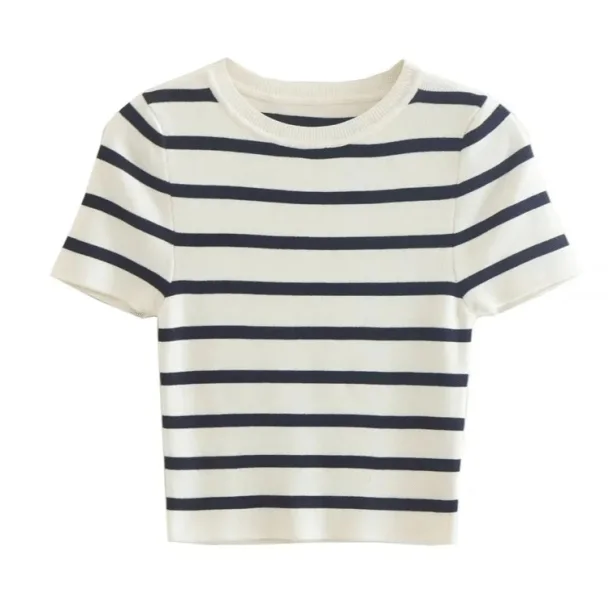
For mild weather, combining a cropped underlayer with an open or loose knit lets you manage heat without carrying heavy fabric. A tailored piece like the Nautical Crop Top, cut from polyester in sizes S to M and L, provides a compact base that ends neatly at the natural waistline. This prevents excess hem material from spilling out or gathering into ridges beneath your knitwear.
If you prefer collared shirts beneath your knits, focus on neckband tension and collar spread. A collar that is too wide will flatten awkwardly beneath a crewneck collar, while a soft pointed collar tucks neatly into the neck ribbing. Smooth out the placket before pulling your knit over your head to keep the front seam flat.
- Select seamless or microfiber tanks to prevent visible ridges across the chest.
- Choose cropped undergarments to eliminate excess fabric bunching at the hips.
- Align your collar style: soft point collars tuck smoothly inside knit crews, while stiff spreads work better with open V-necks.
Sleeveless Knits as the Ultimate Mid-Layer Workhorse
Sleeveless knits solve the problem of restricted arm movement while keeping your core warm. Standard sweaters can feel binding when squeezed into winter parkas, but a vest keeps your shoulders free. You can throw a knit vest over crisp button-downs, sheer mesh long-sleeves, or plain round-neck tops without stretching out your coat sleeves.
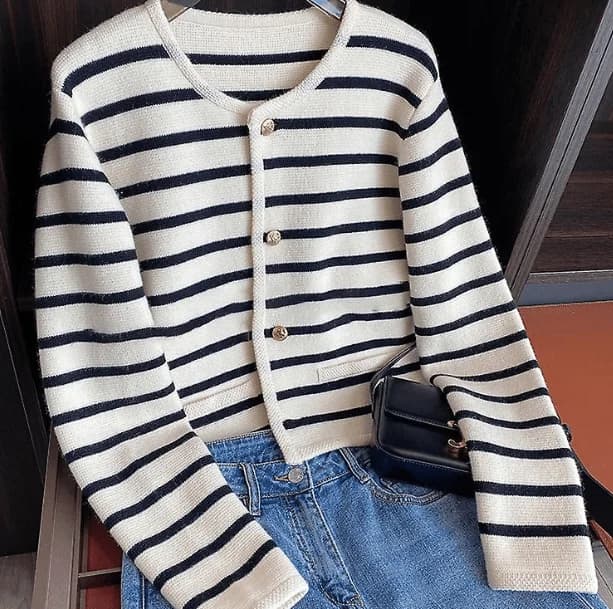
A specific example designed for this exact purpose is the Nautical Vest Sweater, produced in polyester and offered in sizes S, M, and L as pictured. Because it lacks sleeves, you can pair it easily over long-sleeve poplin shirts or ribbed mock necks, framing the shirt sleeves while adding warmth across your chest. This approach leaves your arms nimble for carrying shoulder bags or cycling around the city.
To balance the silhouetteThe overall shape an outfit creates, from fitted to loose and layered., pair a structured vest with slightly wider bottoms. A sleeveless piece narrows your upper half visually, so wearing slim trousers can sometimes make the outfit look top-heavy. Adding balanced volume below ground the look cleanly and complements the structured lines of the vest.
- Wear sleeveless vests over crisp shirts to stay warm without bulky sleeves.
- Combine the sleeveless knit with wide-leg bottoms to balance proportions.
- Adjust the base layer color to let the vest patterns stand out.

Adapting Stripe Placement and Hemlines for Petite Frames
Petite frames often struggle with standard maritime knits because heavy, horizontal stripes running all the way down to the hem can cut visual verticality. If a long, chunky sweater covers the hip line entirely, it tends to make legs look shorter than they are. The answer is not avoiding stripes altogether, but paying close attention to where the bands start and where the hem stops.
Look for knits that have solid shoulders with stripes beginning across the mid-chest, or pieces with ribbed, cropped hems that hit directly at the top of your hip bone. Pairing your knit with bottoms from the curated Nautical Pants collection gives you proportional options like high-rise trousers, which lengthen the leg line right from the waistband.
Another reliable styling choice is the partial or French tuck. By tucking just one inch of the sweater front into your waistband while letting the back drape naturally, you define your waistline without bunching up fabric inside your pants. This simple shift retains the cozy feel of an oversized knit while preserving clean visual height.
Styling Sweaters for Taller and Longer-Torso Builds
For taller individuals or those with longer torsos, standard-cut sweaters can occasionally end at an awkward spot, hovering midway down the hips and throwing off the natural balance of your outfit. When a sweater sits midway across your hips, it breaks up your torso in an ungrounded way. The objective here is using intentional layeringWearing pieces over or under one another to add depth, warmth or contrast. to divide the frame into crisp thirds.
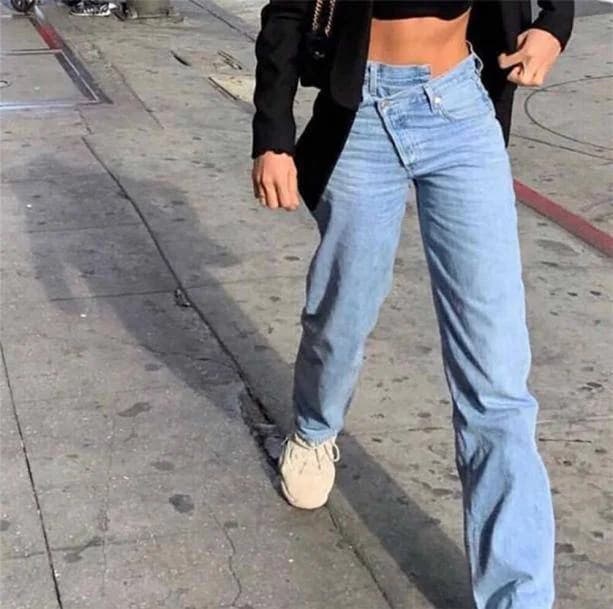
Start by playing with extending hems beneath your knitwear. A longer curved-hem shirt peeking two inches beneath a textured sweater adds visual depth, creating a clear transition down to your trousers. To complement this extended vertical line, pair your top half with dynamic denim such as the Irregular Front High Waist Jeans, which come in sizes S to 2XL. The staggered front closure adds visual interest right at the midline, keeping your layered items from looking flat.
Outerwear length also plays a critical role for taller builds. Mid-thigh car coats or relaxed dusters frame the sweater beautifully, creating long parallel lines on either side of your torso. Avoid outerwear that terminates at the exact same millimeter as your knit sweater hem, as matching hem lengths creates an artificial, blocky horizontal cut.
Managing Broad Shoulders and Flatter Chests: Neckline Dynamics
Broad shoulders and flatter chest profiles interact uniquely with sailor collars, boat necks, and traditional crew designs. A wide boat neck (bateau) naturally draws eyes outward to the shoulder tips, which can exaggerate broad shoulders if that is not your desired effect. Conversely, a deep V-neck creates an immediate downward angle that visually elongates the neck.
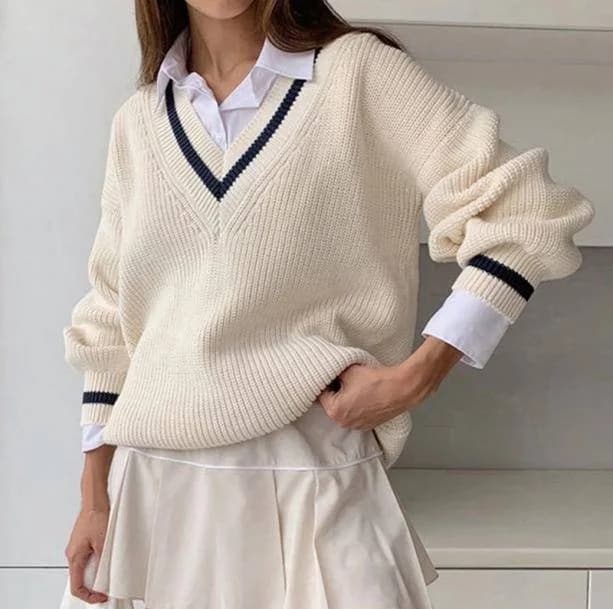
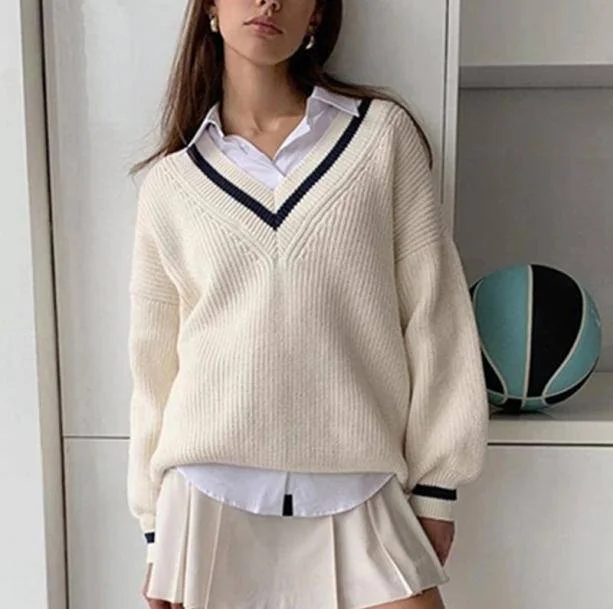
A great piece for introducing downward angles is the Old Money Aesthetic V Neck Sweater, crafted in polyester and available in sizes S, M, and L as pictured. The pronounced V-neckline leads the eye downward, breaking across broad shoulder lines and making room for collared undershirts or delicate neck chains. It sits naturally against the chest without pulling or creating hollow pockets of fabric.
If you prefer crewnecks, break up the horizontal line across your collarbone by layeringWearing pieces over or under one another to add depth, warmth or contrast. a dark overshirt left completely open down the front, or wear a lightweight scarf draped straight down without wrapping it around your neck. These long downward strokes counteract broad horizontal panels and keep your chest profile balanced.

Curvier Frames and Full Busts: Balancing Ribbed Bands and Textures
Knitwear with tight, heavy ribbed waistbands can sometimes ride up on curvier frames and full busts, creating unwanted fabric bunching above the stomach. When a sweater grips firmly at the hip while sitting snug across the bust, the midsection can balloon out when you move, walk, or sit down.
To solve this, look for side-split hems, relaxed straight drops, or lightweight fabric blends that drape rather than bunch. Steer away from thick horizontal stripes that stretch across the apex of the bust; instead, opt for sweaters where stripes sit lower on the body or are separated by solid color blocks. Pair these looser knit cuts with well-fitting high-rise bottoms like the Cross Waist Jeans, offered in sizes S through 2XL, which provide comfortable waist definition and smooth out the transition from knitwear to pants.
Another practical trick is unbuttoning or unzipping the collar slightly if your knit features a polo placket or half-zip. Opening the neck even two inches relieves tension across the upper chest, allowing the knit fabric to hang naturally along the sides of your body without tenting outward.
- Choose side-split or relaxed straight hems rather than tight ribbed waistbands that ride upward.
- Use a slight open placket or half-zip to reduce visual tension across the bust.
- Pair loose, fluid knits with crossover or high-rise waists to keep your middle profile defined.
Warm-Weather Transitions: Coastal Evenings and Breezy Days
Nautical knits are not reserved solely for cold climates; they are essential for transitional seasons, coastal ocean breezes, and summer evenings when temperatures drop rapidly after sunset. For warm afternoons, layeringWearing pieces over or under one another to add depth, warmth or contrast. must stay lightweight and breathable, prioritizing items you can easily remove or drape over your shoulders.
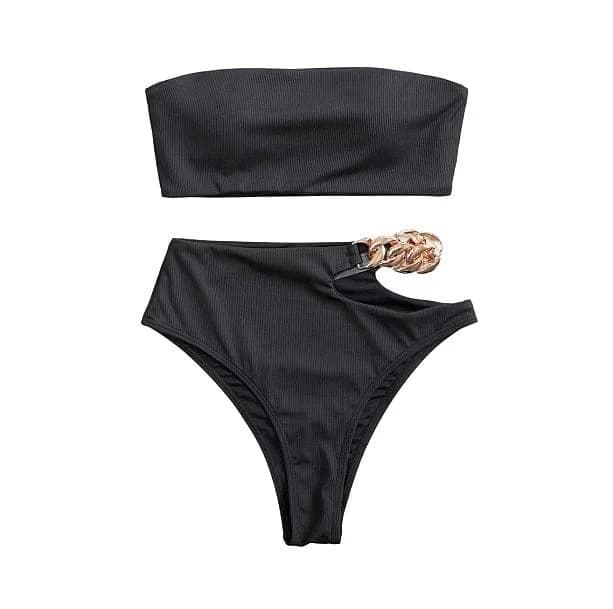
A fun approach for beach outings is layeringWearing pieces over or under one another to add depth, warmth or contrast. an open-weave or slightly oversized knit over swimwear. You can wear the knit over the Aesthetic Bikini With Chain, which is available in Black and White across sizes S, M, and L, pairing it with denim or linen cut-offs from the Nautical Shorts section. This setup lets you transition from the water to a casual boardwalk lunch simply by slipping the sweater over your swimsuit.
During sunny daytime hours, drape the sweater across your shoulders and loosely tie the sleeves over your collarbone. This vintage coastal look is also intensely practical: it keeps your hands free, protects your neck from light breezes, and gives you an immediate layer to slip into the moment the sun dips below the horizon.
- Layer loose knits over swimwear for effortless transitions from beach to boardwalk.
- Drape the sweater across shoulders during the day for easy carrying and quick warmth.
- Pair light knits with tailored shorts to keep cool while staying prepared for sudden breezes.
Cold-Weather Encapsulation: Retaining Warmth Without Stifling Movement
When winter sets in, maritime knits need to integrate seamlessly beneath insulated outerwear. The key challenge during cold months is retaining body heat while preventing the stiff, immobilized feeling that happens when heavy layers fight for space. If your base layer, knitwear, and coat all feature thick sleeves, bending your elbows or turning your neck becomes a chore.
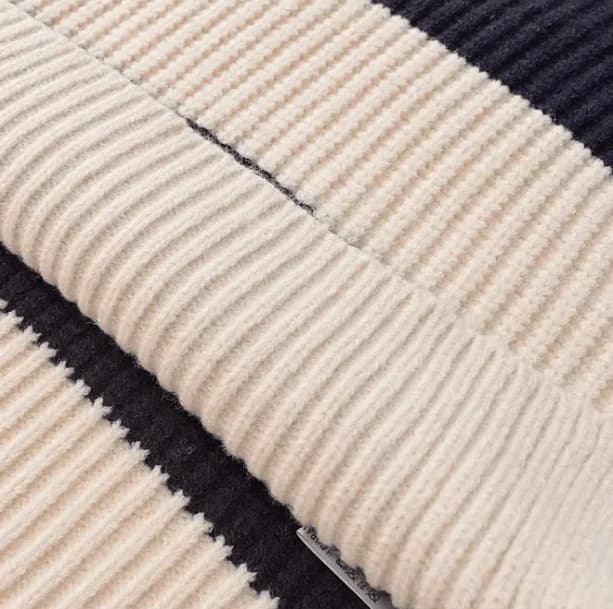
To master cold layeringWearing pieces over or under one another to add depth, warmth or contrast., make your base layer thin yet heat-trapping, like thermal silk or fine merino wool. Over this base, add your nautical sweater, ensuring the shoulders sit flat without dragging. Finish the outfit with an oversized wool coat, duffle coat, or parka with wide raglan sleeves. Raglan cuts remove the traditional shoulder seam, giving your knit layers the room they need to rest smoothly against your frame.
Be mindful of glove cuffs and watch bands as well. Chunky sweater cuffs can crowd under snug coat sleeves, letting cold drafts in. Fold your sweater cuffs back once to create a clean break, allowing your outer coat sleeve to slide over your wrist easily and lock in warmth without pushing fabric back up your arm.
Feminine Layering: Styling Knits Over Dresses and Skirts
Pairing knits over dresses is an easy way to extend the life of your warm-weather wardrobe into cooler months. When you drop a structured nautical sweater over a lightweight, flowy dress, the contrast between soft fabric and cozy knitwear adds immediate texture to your outfit. The main consideration here is defining where your waist sits beneath the loose sweater.
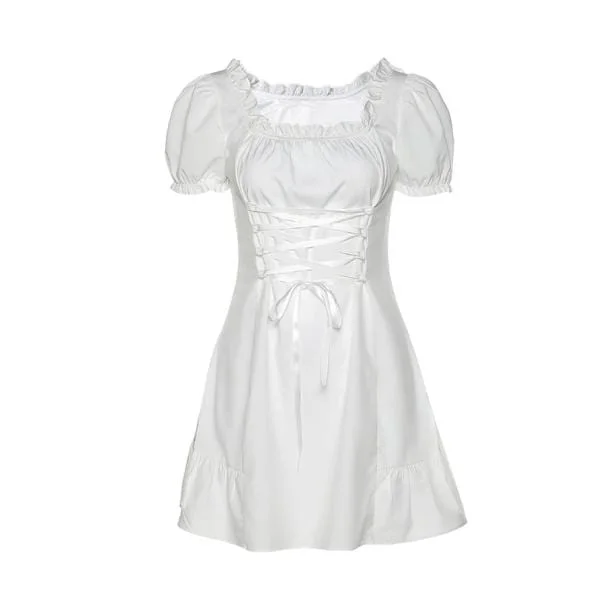
A charming combination pairs a dark or striped knit over the Innocent White Dress, offered in sizes S, M, and L as pictured. The crisp, clean white fabric fluttering beneath the hem of a dark navy or black knit produces an eye-catching maritime contrast. To keep the sweater from hanging like a shapeless box over the dress, use the hidden belt trick: fasten a thin belt around your waist over the dress, pull the sweater down, and tuck the bottom hem upward into the belt to create a cropped, blouse-like drape.
Alternatively, choose a button-front cardigan sweater and leave the bottom three buttons undone. This naturally splits the knit fabric right at your natural waistline, allowing the skirt of the dress to flare out freely while preserving clean proportions from all angles.

Smart Pairings with Alternative Maritime Tops
LayeringWearing pieces over or under one another to add depth, warmth or contrast. is not just about placing items under or over a sweater; you can also layer alternative tops under cardigans, open zip knits, or lightweight vests. Mixing different cuts from the dedicated Nautical Tops collection gives your everyday wardrobe plenty of modular versatility throughout the week.
Consider layeringWearing pieces over or under one another to add depth, warmth or contrast. a square-neck sailor shirt or a striped henley under an open, unbuttoned cable-knit cardigan. The square neckline stays visible beneath the open cardigan, framing your collarbones and adding a touch of classic maritime style. Make sure the patterns do not clash: if your top has dense, narrow stripes, keep the outer knit solid, or vice versa, so the patterns do not compete for attention.
Fabric weights must also align. Avoid wearing a paper-thin silk top beneath an abrasive, heavy-gauge raw wool knit, as the rough wool can abrade and wear down delicate fabrics. Instead, match textures sensibly: choose sturdy cotton shirts under dense knits, and reserve fine-gauge cardigans for delicate or airy tops.
Layering Pitfalls: What to Avoid When Combining Knits
Even well-planned layered outfits can look cluttered if small technical details get overlooked. One common mistake is combining multiple thick collars around your neck. Wearing a stiff turtleneck under a tight crewneck sweater, then adding a high-zip jacket on top, builds a crowded fabric wall around your throat that is uncomfortable and visually messy.
Another pitfall is letting ribbed undershirts or patterned t-shirts show through open-knit or lighter-colored sweaters. Always check your outfit under bright morning light before leaving the house. If you are wearing a white or cream knit, opt for heather gray or nude undergarments rather than stark white, as pure white undergarments show through knit loops much more visibly.
Finally, avoid pairing an oversized, slouchy sweater with oversized, slouchy sweatpants without any tailoring in between. When both halves of your outfit lack structure, the look quickly loses intentionality. Anchor loose knitwear with tailored jeans, structured trousers, or neatly pinned hems to keep your silhouetteThe overall shape an outfit creates, from fitted to loose and layered. purposeful and sharp.
- Do not stack multiple thick collars; mix open collars with low-profile crew underlayers.
- Never wear bright white undergarments beneath cream or off-white knits; use heather gray or skin tones instead.
- Avoid combining oversized slouchy tops with wide, shapeless bottoms without a defined waist point.
Practical Layering Checklist for Everyday Wear
Before stepping out the door in your layered marine outfit, take thirty seconds to review this practical checklist in front of a full-length mirror. Checking your hem alignment, collar spread, and freedom of motion ahead of time saves you from tugging and adjusting your clothes all day long.
First, lift your arms straight out to your sides and back down. If your sweater pulls your undergarments uncomfortably upward or binds tightly under your armpits, your base layer is likely too loose or the sweater armholes are cut too high. Adjust your inner hems so they sit flat against your skin. Next, look at your profile in the mirror to make sure your knitwear is not tenting outward awkwardly over your waistband.
Once your silhouetteThe overall shape an outfit creates, from fitted to loose and layered. looks smooth, confirm that your layers match the expected weather. Make sure you can easily remove your outer jacket or sweater without disrupting the rest of your outfit if you step into a warm cafe or heated train. Building these versatile, self-sufficient layers ensures you stay comfortable, confident, and perfectly balanced wherever your day takes you.
- Lift your arms to check for pulling, bunching, or binding under the shoulders.
- Verify that the front and back hems hang evenly without ballooning across the waist.
- Ensure each layer looks good on its own so you can adapt comfortably to changing temperatures.