Created by the Kawaii Vibe editorial team. Our named style desks are editorial personas. Product details and availability can change.
Finding the right footwear for a stripped-back wardrobe often comes down to where your trouser cuffs rest against your shoes. When an outfit relies on unpretentious staples, the intersection between your hem and your footwear carries the visual weight of the entire look. If the break is too long, crisp casual lines can look unintentional; if the hem is cropped awkwardly high, chunky footwear can look ungrounded.
Balancing normcore outfits means coordinating silhouetteThe overall shape an outfit creates, from fitted to loose and layered. thickness, sole height, and trouser drape. Whether you gravitate toward flat lace-ups, substantial rubber soles, or clean ankle profiles, understanding how the leg opening falls around the ankle allows your foundational basics to look balanced throughout daily routines.
In this guide, we break down hem breaks, sole thickness, fabric weights, and color pairings so you can build dependable outfits using straightforward items. We will look at distinct cuts from straight-leg denim to relaxed sweats, helping you choose the right shoes for your daily rotation.
Understanding the Four Core Hem Breaks with Everyday Footwear
A hem break refers to the fold or bend created in trouser fabric when the bottom of the leg rests on the top of your shoe. In minimalist, functional dressing, the break determines whether an outfit looks intentional and structured or haphazard and pooling. The full break happens when fabric pools generously around the shoe collar, forming deep horizontal folds. This look demands a shoe with presence; lightweight or thin plimsolls disappear completely under a full break, making feet appear tiny while trousers look messy.
The half break creates a single, soft fold where the cuff meets the bridge of the footwear. It works smoothly across everyday trainers and derby-inspired profiles, offering enough mobility without swallowing the top line of the shoe. A quarter break features only a gentle contact point between hem and shoe, keeping the ankle clean and letting the entire vamp remain visible.
The no-break look ends right at or slightly above the ankle collar, exposing socks or bare ankles entirely. While cropped cuts work neatly with low-profile canvas styles, pairing them with substantial soles creates a strong visual anchor. Matching the break to the shoe volume is the primary calculation when sorting through footwear options in our Normcore Shoes range.
- Full break: Best paired with wide-leg pants and heavy-soled profiles that do not collapse under fabric weight.
- Half break: The standard for regular straight trousers and everyday walking sneakers.
- Quarter break: Highlights the clean top line of flat shoes, classic lace-ups, and structured loafers.
- No break: Showcases footwear structure and sock accents, working well with tapered chinos and cropped denim.
Pairing Low-Profile Shoes with Cropped and Tapered Hems
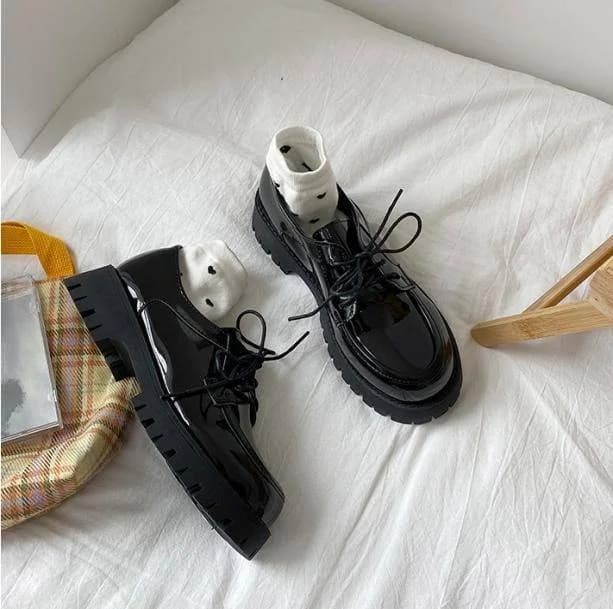
Low-profile shoes feature slim outsoles, minimal tongue padding, and a close fit around the bridge of the foot. When pairing these slim options with trousers, cropped hems and tapered cuts provide the cleanest visual frame. A tapered leg gently narrows toward the ankle, keeping excess volume away from the thin sole so your feet do not look dwarfed by billowing fabric.
If you are wearing cropped trousers that finish one to two inches above the ankle bone, a low-profile lace-up maintains a lightweight aesthetic. This combination leaves space between the cuff and the collar, creating breathing room that suits mild weather. In cooler conditions, simple ribbed crew socks in off-white, charcoal, or heather gray can bridge the gap without disrupting the muted palette of the look.
Avoid pairing very slim lace-ups with heavy, puddle-hem carpenter trousers. The excess fabric creates dragging edges that wear down underfoot, while the delicate shoe profile gets buried beneath the hem. For everyday basics that complement neat lower halves, browse through Normcore Tops to find relaxed cotton layers that echo clean lines.
Balancing Chunky Soles and Platforms with Wide-Leg Pants
Footwear with exaggerated outsoles, platform construction, or deep lug treads provides the counterweight required for wide-leg silhouetteThe overall shape an outfit creates, from fitted to loose and layered.s. When trousers feature a wide leg opening—often twenty centimeters or wider across the cuff—a thin shoe is swallowed by the fabric sweep. Chunky soles lift the cuff off the pavement, allowing relaxed denim and twill to drape smoothly rather than collecting in messy folds under the heel.
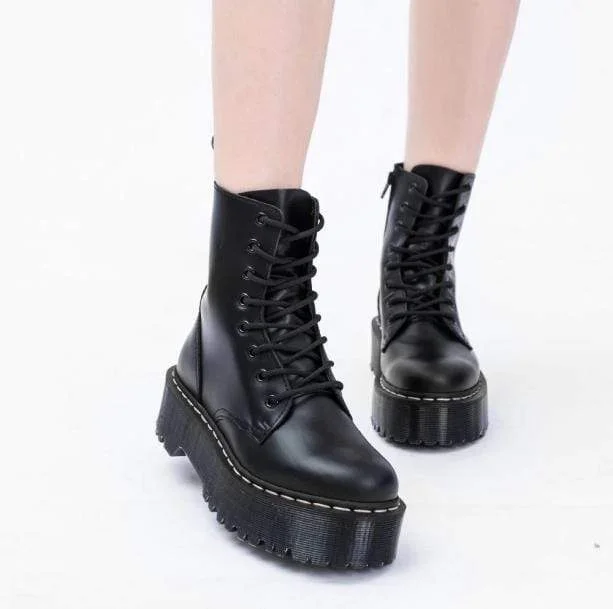
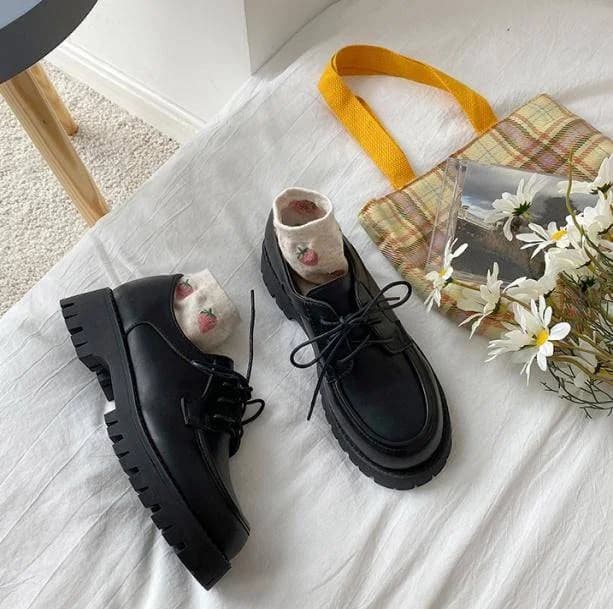
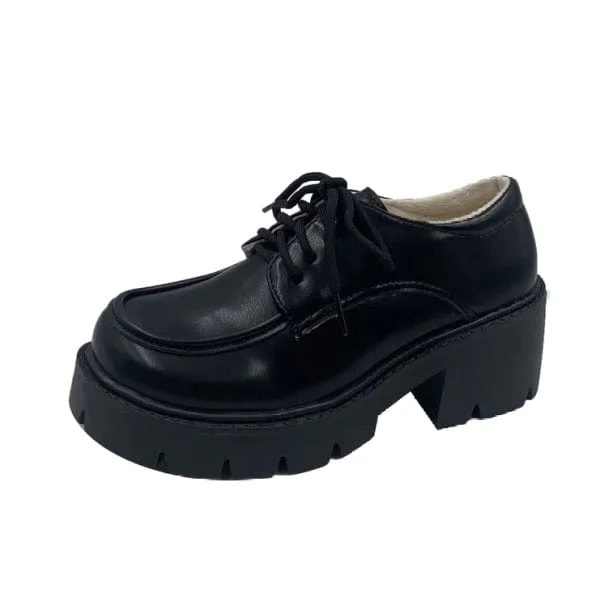
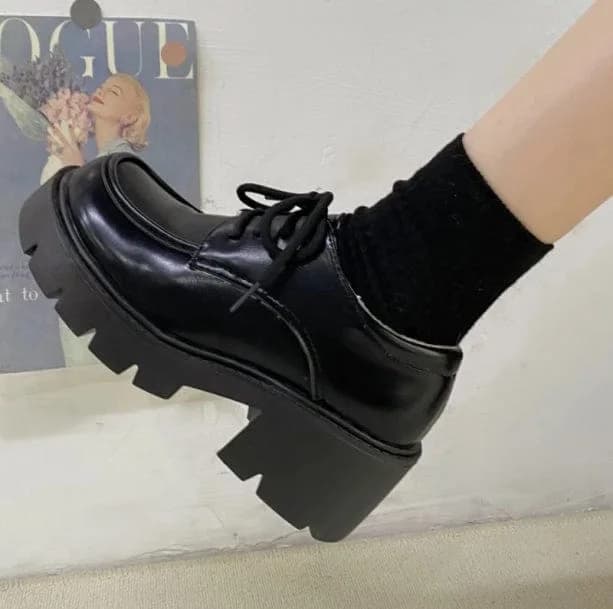
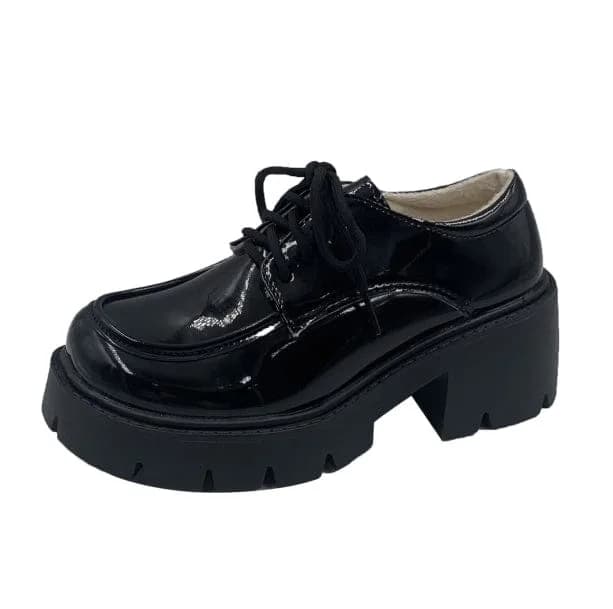
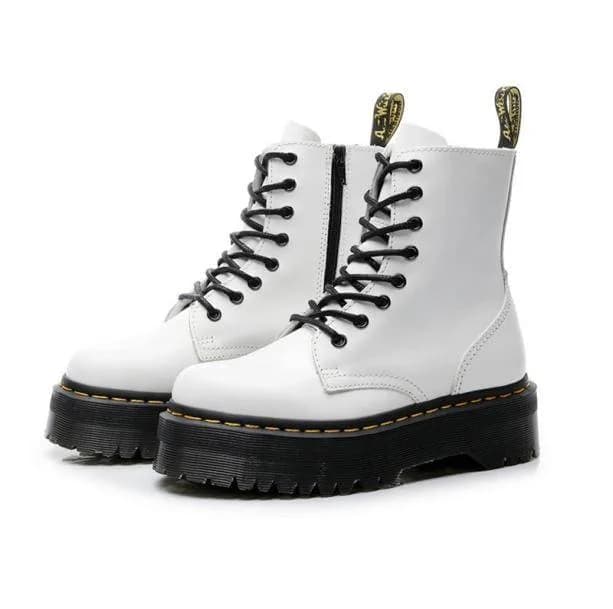
The College Platform Shoes, which feature a PU leather upper, durable rubber outsole, and round toe shape in lace-up Matte or Bright finishes, provide the necessary base volume to anchor sweeping hems. Because the durable rubber sole adds visible height and thickness, relaxed trousers fall naturally over the upper without dragging behind your stride.
When styling wide hems over thick soles, check that the front hem rests gently across the lace cage while the back cuff clears the ground by at least half an inch. This keeps the hem clean in wet weather while maintaining a relaxed, grounded posture throughout the day. LayeringWearing pieces over or under one another to add depth, warmth or contrast. an oversized jacket on top balances the visual heft of the platform underneath.
Everyday Uniform Loafers and Tailored Casual Hems
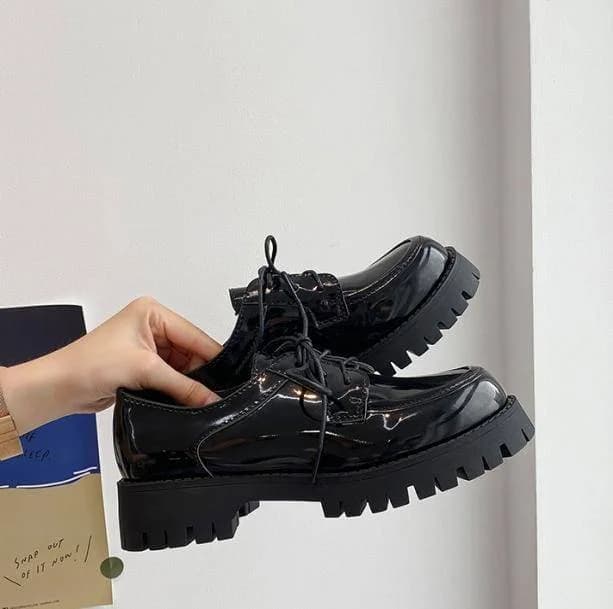
School-uniform-inspired footwear and tailored casual lace-ups introduce neat lines to unpretentious daily outfits. Styles like the College Uniform Shoes, made with a PU upper and insole in Black Matte or Black Sequins options, bridge the gap between tailored dress cues and utilitarian daily wear. These structured silhouetteThe overall shape an outfit creates, from fitted to loose and layered.s work best with trousers that hold a gentle crease or feature a defined cuff.
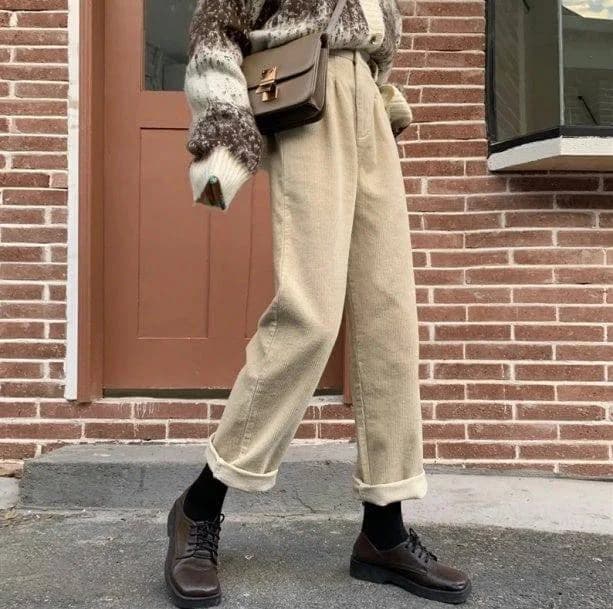
To highlight the structured vamp of a uniform-style shoe, aim for a quarter break or a fixed turn-up hem. If your pants are standard straight-leg chinos, a double turn-up cuff lifts the hem to brush the top seam of the shoe collar, preventing fabric from bunching over the tongue. This highlights the clean construction of the shoe while keeping the styling effortless.
Pairing uniform shoes with casual trousers also creates an engaging balance of textures. Matte black finishes look balanced against raw denim, heavy drill canvas, or textured wool blends. For tops, pairing these tailored shoes with an easy knit like the Aesthetic Khaki Sweater keeps the outfit relaxed rather than formal, maintaining an approachable aesthetic for campus or office days.

Straight-Leg Denim Breaks and Sturdy Footwear
Straight-leg jeans represent the core of modular everyday dressing, falling vertically from hip to hem without narrowing or widening. To coordinate straight denim with sturdy shoes, you must manage fabric stiffness. Unlike stretchy synthetic blends, rigid cotton denim forms firmer folds when resting on footwear, which alters how the break behaves when you walk.
The Normcore Jeans, constructed from a blend of polyester and spandex, offer flexibility that drapes more easily over footwear collars than heavy non-stretch raw denim. Because of this built-in stretch, the cuff forms soft, fluid breaks over substantial footwear, allowing for a relaxed half break without stiff, awkward bunching around the lower calf.
When selecting footwear for straight-leg cuts, choose shoes that offer a moderate toe box. Needle-sharp toes or paper-thin running shoes create disjointed proportions, while rounded toes and flat combat soles match the visual width of the leg. This cohesive base links your lower body seamlessly into broader wardrobes built from Normcore Clothes.
- Aim for a gentle half break that drapes comfortably across the front shoe tongue.
- Use a single loose cuff roll if the inseam is slightly too long for low-top shoes.
- Avoid high-volume flares unless the shoe possesses a wide platform to ground the look.

Integrating Ankle Boots with Cuffed and Rolled Trousers
Ankle boots require a different hem strategy than low-cut shoes because the boot shaft extends several inches above the ankle bone. If you pull a narrow pant hem over a structured boot shaft, the fabric often catches on the collar, bunching into an awkward ridge. Alternatively, tucking regular trousers inside a boot collar can produce an unintended military feel that clashes with everyday basics.
The most reliable solution is a controlled cuff that rests exactly at the top of the boot shaft. Roll the cuff upward once or twice until the bottom edge hovers just above the leather rim. This allows the clean leather ankle line to remain visible while the trouser leg retains its natural, vertical drape. It also eliminates friction, letting your trousers swing freely as you walk.
When building cold-weather outfits around boots, explore our dedicated Normcore Boots selection to match your favorite shafts to tailored cuffs. Pairing these sturdy foundations with a heavy outer layer, such as the Normcore Jean Jacket in cotton-polyester blends ranging from Army Green to Light Blue, establishes a balanced, practical balance from collar to heel.
Sweatpants, Joggers, and Athletic Loungewear Footwear Choices
Athletic bottoms require deliberate shoe pairing to avoid looking like you just left gym practice. Elasticated cuffs, ribbed jogger ankles, and fleece hems pull tight around the ankle, creating an abrupt end to the leg line. If you wear an ultra-streamlined modern running shoe, the outfit can lean purely athletic rather than thoughtfully understated.
To give loungewear an intentional everyday feel, pair cuffed sweats with retro-inspired court trainers or solid platform lace-ups. The wider base of a rounded shoe balances the tapered elastic cuff of the sweatpants. Letting white sports socks scrunch slightly above the shoe collar fills the narrow gap between the elastic hem and the shoe collar, creating a seamless, vintage-inspired casual look.
Up top, keep the silhouetteThe overall shape an outfit creates, from fitted to loose and layered. relaxed and comfortable with the Normcore Sweatshirt, constructed from cotton and polyester in White or Black. If you prefer a hood, the Normcore Hoodie offers a spacious polyester build in twelve distinct colors, including Apricot, Khaki, and Navy Blue. These roomy fleece layers balance the chunkier footwear below.
Proportions: Matching Upper Layer Volume to Shoe Footprints
A common styling misstep is focusing entirely on the hem while neglecting upper-body volume. Footwear acts as the visual anchor of an outfit; if your top layers are massively oversized while your shoes are slim and delicate, your frame can appear top-heavy. Conversely, wearing heavy platforms with a skin-tight top can make footwear look overly bulky.
When wearing expansive outerwear—like an unbuttoned denim jacket over a boxy fleece—choose shoes with adequate visual weight. Thick cup soles, rugged lug treads, or wide rounded toes counter the broad shoulders and loose chest measurements of relaxed tops. This balance keeps the overall silhouetteThe overall shape an outfit creates, from fitted to loose and layered. grounded and cohesive.
For milder days when you choose a single base layer like the one-size cotton-polyester Normcore T-Shirt, you have greater flexibility. Because the torso profile is clean and simple, both slim low-tops and moderate platform shoes sit comfortably beneath straight trousers without fighting the upper body for visual dominance. Check our broader catalog of Normcore Hoodies when you want to plan heavier top layers that mirror the weight of chunkier soles.
Monochrome vs. High-Contrast Shoe Pairings
Color relationships between your footwear and pant hems fundamentally alter how leg length is perceived. A monochrome pairing—such as black shoes with black straight-leg trousers—creates an unbroken vertical line. This visually extends the lower body, making it a reliable styling strategy if you prefer wide cuts without shortening your frame.
In contrast, high-contrast combinations, such as bright white trainers paired with dark raw denim or black trousers, draw attention straight to the ankles. This high-contrast break emphasizes the cuff and shoe shape. If your hem is uneven, frayed, or pooling awkwardly, high-contrast shoes make those details immediately visible. Reserve crisp white footwear for clean hems with a precise half break or a neat roll.
Neutral color bridges are also effective. Tones like apricot, taupe, olive, and navy provide subtle separation without harsh divides. If you wear khaki or olive trousers, brown leather or off-white canvas shoes offer gentle variation that aligns naturally with utilitarian daily dressing.
Seasonal Adaptations: Managing Wet Weather and Temperature Shifts
Weather conditions dictate hem management just as much as aesthetic preferences. Rain, sleet, and slush will quickly ruin long, dragging hems. If you prefer a full break with wide trousers, wet pavement turns the back hem into a sponge. During rainy days, swapping to footwear with elevated rubber soles or platform bases keeps fabric away from puddles.
Water-resistant synthetic uppers, like the PU construction of the College Platform Shoes, are practical choices for damp city streets because they wipe clean easily compared to porous suede or lightweight canvas. Pairing durable outsoles with a quick single roll on your trouser cuffs prevents fabric hems from soaking up surface water.
In warmer climates, breathable canvas shoes paired with ankle-skimming linen or cotton trousers create airflow without requiring complex styling. Avoid heavy leather boots during high heat, as stiff uppers look visually heavy against lightweight summer cottons. Align your shoe materials with the season to maintain all-day comfort.
- Wet conditions: Opt for platform soles or lug boots; cuff trousers slightly above the ground line.
- Damp upkeep: Choose wipe-clean PU or treated leather over untreated suede and open mesh.
- Warm weather: Switch to breathable low-profile lace-ups with no-break cropped hems.
Comparing Materials: Canvas, PU, Leather, and Suede Footwear
The material of your shoes dictates how they age, how they drape against trouser cuffs, and how they perform across different environments. Canvas is breathable and lightweight, making it a classic choice for low-profile casual wear, but it offers zero water resistance and softens quickly over time, losing its crisp shape against heavy denim.
Polyurethane (PU) alternatives, such as those featured on our uniform shoes and platform lace-ups, provide clean structural lines that resist moisture and keep their silhouetteThe overall shape an outfit creates, from fitted to loose and layered. intact over long periods. PU finishes hold their shape well, preventing the shoe from collapsing when pressed by heavy trouser breaks. They also offer a uniform color finish that complements unembellished basics.
Full-grain leather and suede introduce organic texture to minimalist wardrobes. While leather patinas with wear and molds to foot contours, suede requires protective sprays to prevent moisture spotting. When pairing textures, match rougher fabrics like heavy twill or raw denim with matte leather or canvas, while smooth trousers sit comfortably over clean PU or polished surfaces.

Common Footwear and Hem Mistakes to Avoid
One frequent error in everyday styling is the unintended dragging hem. While an intentional oversized pool can look relaxed, allowing fabric to slip beneath the heel ruins trouser cuffs and creates an unkempt silhouetteThe overall shape an outfit creates, from fitted to loose and layered.. If your pants are too long for flat shoes, take the time to roll them, alter them, or swap to a shoe with an elevated outsole.
Another common pitfall is the sock gap mismatch. When wearing cropped trousers with low-cut shoes, the space between the hem and the shoe collar draws immediate focus. Wearing worn-out athletic socks with faded logos disrupts the clean simplicity of a minimal outfit. Opt instead for solid, unbranded crew socks or clean invisible liners depending on the season.
Finally, avoid pairing delicate dress footwear with rugged, utility-heavy bottoms. Sleek, paper-thin leather soles clash with carpenter pants, loose cargo pockets, and heavyweight loopback fleece. Balance utilitarian trousers with footwear that features grounding, durable sole construction.
- Dragging heels: Never let trouser cuffs fold beneath the bottom of the heel.
- Mismatched sock branding: Avoid bold athletic logos that clash with minimal staples.
- Proportion imbalance: Do not pair delicate, paper-thin soles with bulky cargo pants or heavy jackets.
Building a Three-Shoe Capsule for Everyday Outfits
You do not need a closet full of footwear to maintain balanced everyday outfits. A functional three-pair rotation covers virtually every casual scenario, weather shift, and hem variation while remaining true to minimal styling principles. By selecting versatile foundations, you can effortlessly pair shoes with jeans, trousers, and loungewear.
First, secure a clean everyday low-top sneaker in white, gray, or neutral canvas for cropped trousers, shorts, and light summer pieces. Second, invest in a sturdy platform or chunky lace-up, such as the College Platform Shoes, to anchor wide-leg denim, relaxed trousers, and heavyweight fleece tops. This pair handles wide hems and protects your cuffs from street grit.
Third, round out your wardrobe with a structured option like the College Uniform Shoes or an ankle boot from our Normcore Boots selection. This third option handles transitional weather, office-casual environments, and tailored chinos with ease, completing a versatile rotation built on functional simplicity.
Daily Styling and Hem Alignment Checklist
Before stepping out the door, take a moment to evaluate how your trousers interact with your shoes. A quick mirror check ensures your proportions are deliberate, comfortable, and suited to the day's walking demands. Minor adjustments like a single cuff roll can instantly refine an outfit's overall presentation.
Review this straightforward checklist whenever you assemble a new combination of trousers, tops, and footwear from your wardrobe. Keeping these practical guidelines in mind will help your everyday outfits look cohesive, comfortable, and effortlessly balanced.
- Check the rear hem: Ensure trouser fabric rests at least half an inch above the ground when standing.
- Assess the break: Verify that wide pants sit over chunky soles and slim trousers clear low profiles.
- Balance upper volume: Confirm that heavy hoodies or jackets are grounded by shoes with sufficient visual weight.
- Inspect the sock line: Ensure your socks complement the trouser-to-shoe gap without distracting branding.
- Weather check: Select wipe-clean materials or elevated soles when rain or damp streets are forecast.