Created by the Kawaii Vibe editorial team. Our named style desks are editorial personas. Product details and availability can change.
Building a balanced outfit comes down to restraint. When styling classic accents, the most common misstep is trying to wear every heritage piece at the same time: heavy pearls, an ornate timepiece, structured hair ribbons, and a bold belt. Instead of looking refined, the overall outfit ends up crowded, and none of the individual pieces receive the attention they deserve.
The simplest way to create a polished visual balance is to pick one single focal point and treat everything else as quiet support. Whether you want a sculptural pair of earrings to draw focus up toward your face or a wide belt to anchor your waistline, deciding your primary piece first makes every subsequent styling decision straightforward.
In this guide, we break down how to isolate your hero item, match secondary textures without creating visual clash, adapt your styling for varied settings, and construct dependable outfits using curated essentials.
The Anchor Rule: Selecting Your Primary Accessory First
The foundation of this approach relies on a clear hierarchy. Before putting on any jewelry or cinching a belt, pick the single item you want people to notice first. This piece acts as your visual anchor. If you choose an eye-catching item from our Old Money Jewelry range, such as an ornate cocktail band or a multi-strand necklace, that item instantly claims the primary tier. Everything else you wear must sit in the background to avoid visual competition.
When everything screams for attention, nothing stands out. A look featuring oversized drop earrings, layered necklaces, a stacked wrist, and a bold hair bow looks chaotic rather than composed. By declaring your anchor early, you establish boundaries. The rest of your additions should feel almost invisible on first glance, serving only to frame your hero piece.
Deciding on your anchor also depends heavily on what you plan to do throughout the day. If you are sitting across a table for dinner or a meeting, placing your focal point near the face or neckline makes sense. If you are walking around during a weekend gathering, an architectural belt or structured bag might be a much more noticeable, natural centerpiece.
- Choose one primary focal zone: neckline, ears, wrists, waist, or hair.
- Limit secondary items to minimalist, low-profile designs that echo subtle tones.
- Leave at least one adjacent zone completely bare to create breathing room.
Earrings as the Anchor: Framing the Face and Neckline
When you designate earrings as your focal point, your entire upper silhouetteThe overall shape an outfit creates, from fitted to loose and layered. shifts to direct eyes upward. Selecting a dramatic set from the Old Money Earrings collection means your neckline and collar need to provide a clean, uncluttered canvas. Drop pearls, chunky polished hoops, or vintage-inspired geometric studs work best when they do not have to compete with busy patterns or thick collars.
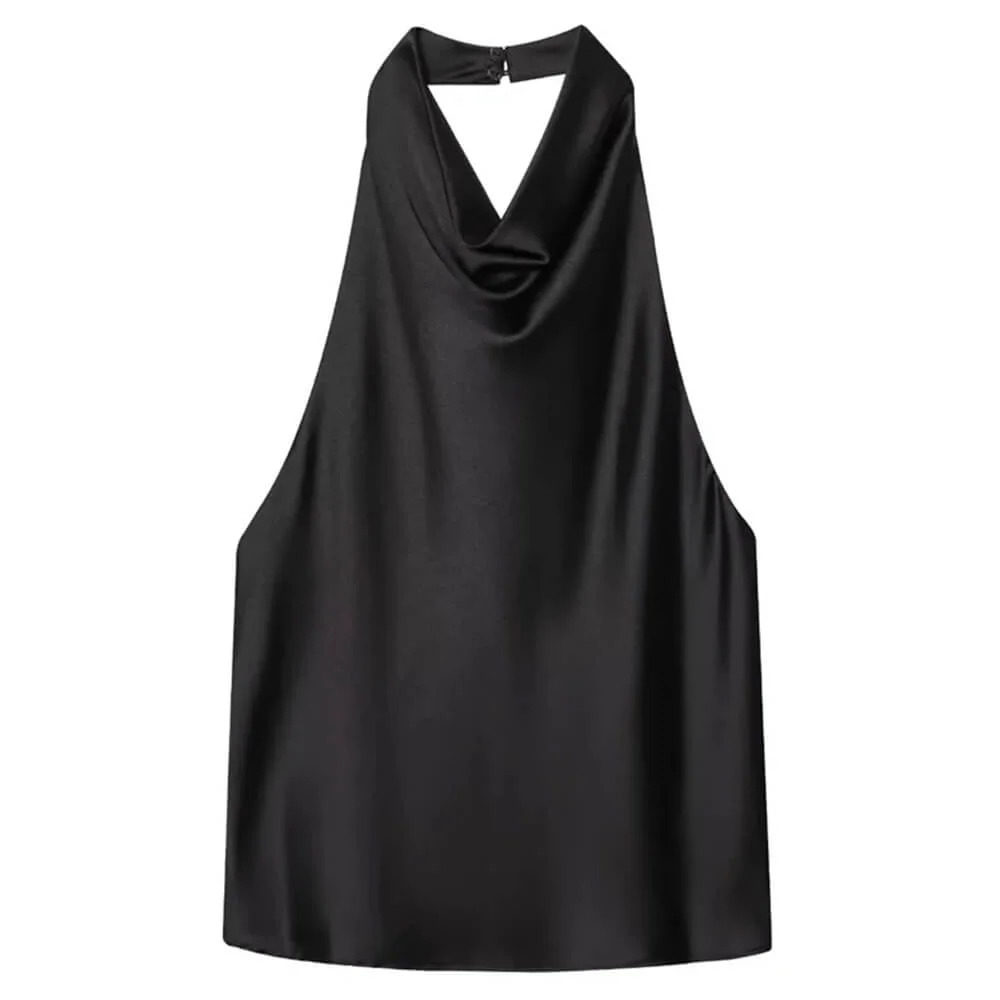
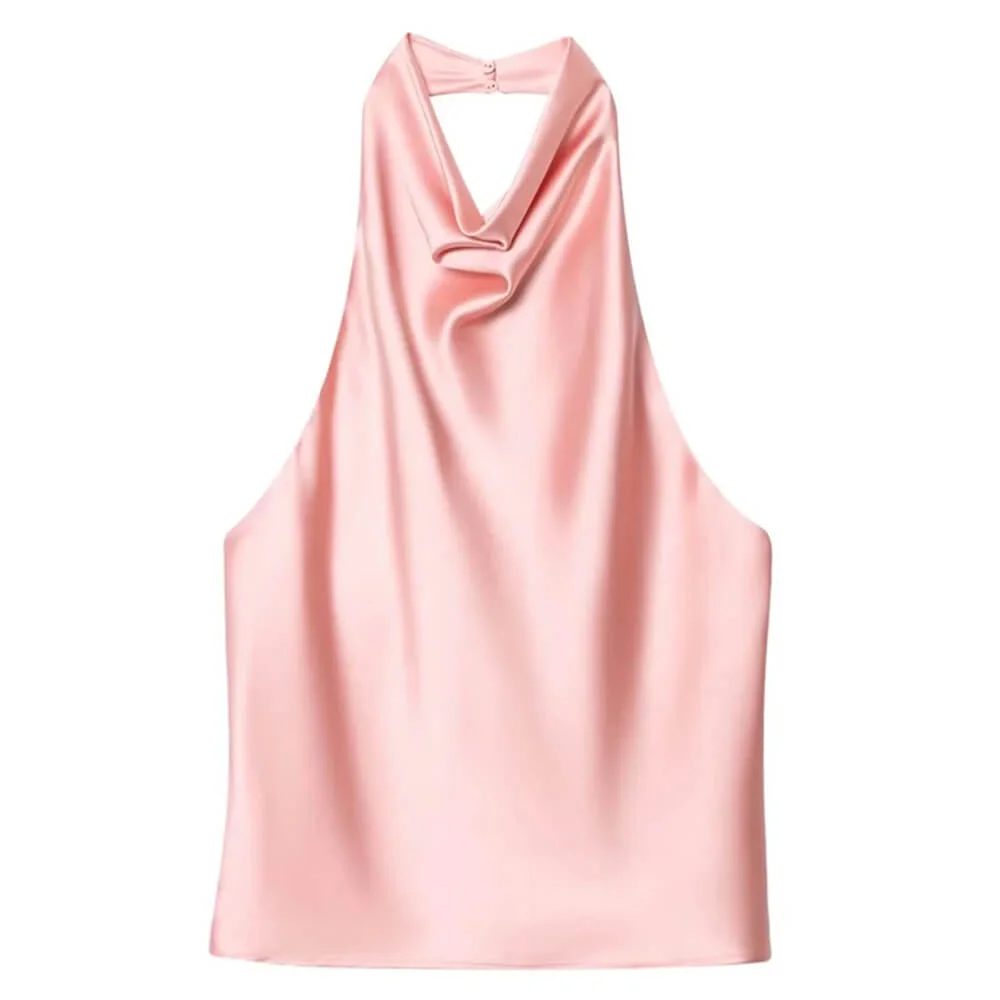
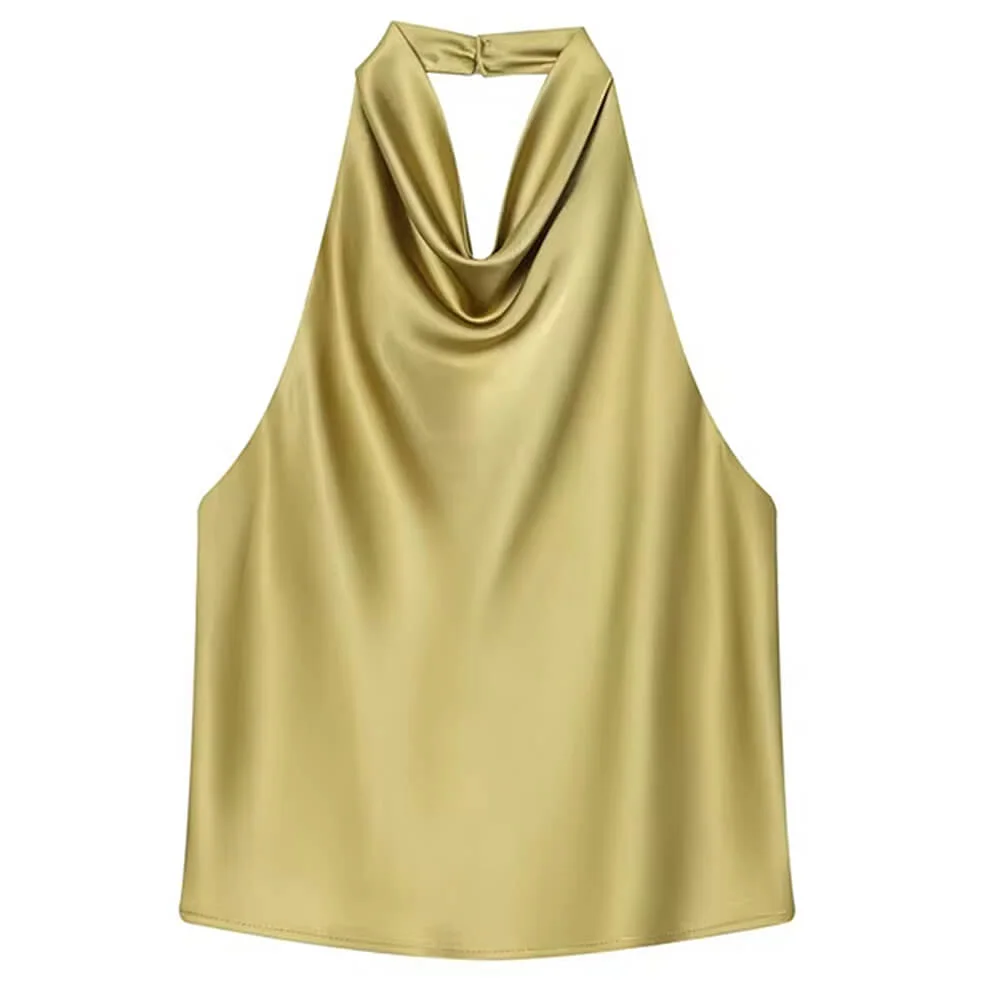
To make statement earrings work effortlessly, pair them with understated necklines like a clean boatneck, an open square cut, or a simple crew neck. For example, if you wear a high-sheen top like the Old Money Satin Halter Top, which features an open shoulder cut and distinct neck strap, an intricate earring will draw the eye right to your jawline. In this setup, adding a necklace would clutter the throat area, so leaving the neck bare is the cleanest styling choice.
Your hair styling also plays a direct role here. Sweeping hair back into a low chignon or a sleek low ponytail allows your earrings to catch light without tangling into stray strands. If you leave your hair down, tuck one side behind an ear to create an intentional reveal that lets the earring serve its decorative purpose.
- Skip the necklace entirely when your earrings feature prominent stones, drops, or wide hoops.
- Pair statement earrings with open necklines or structured halter collars to keep the clavicle clear.
- Use low-profile hair ties or pins that blend directly into your natural hair color.
Balancing the Wrist: Watches, Bangles, and Clean Cuffs
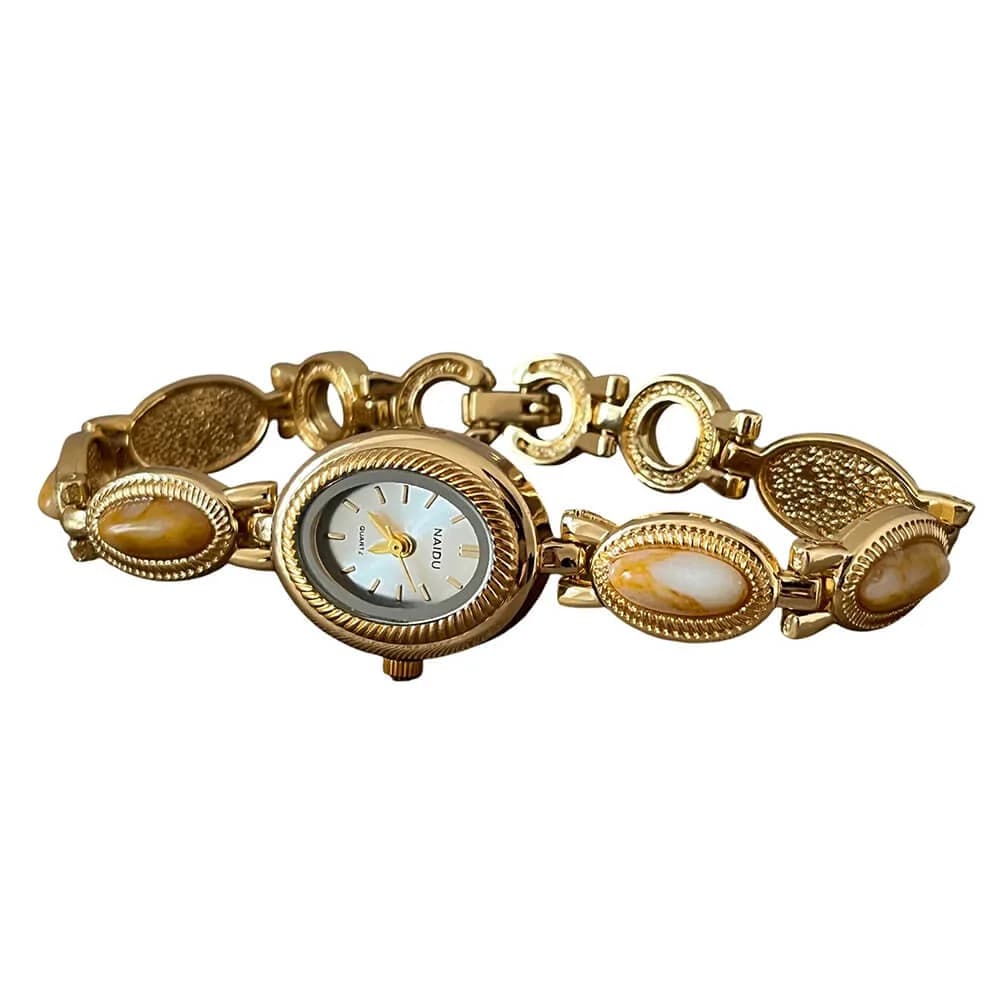
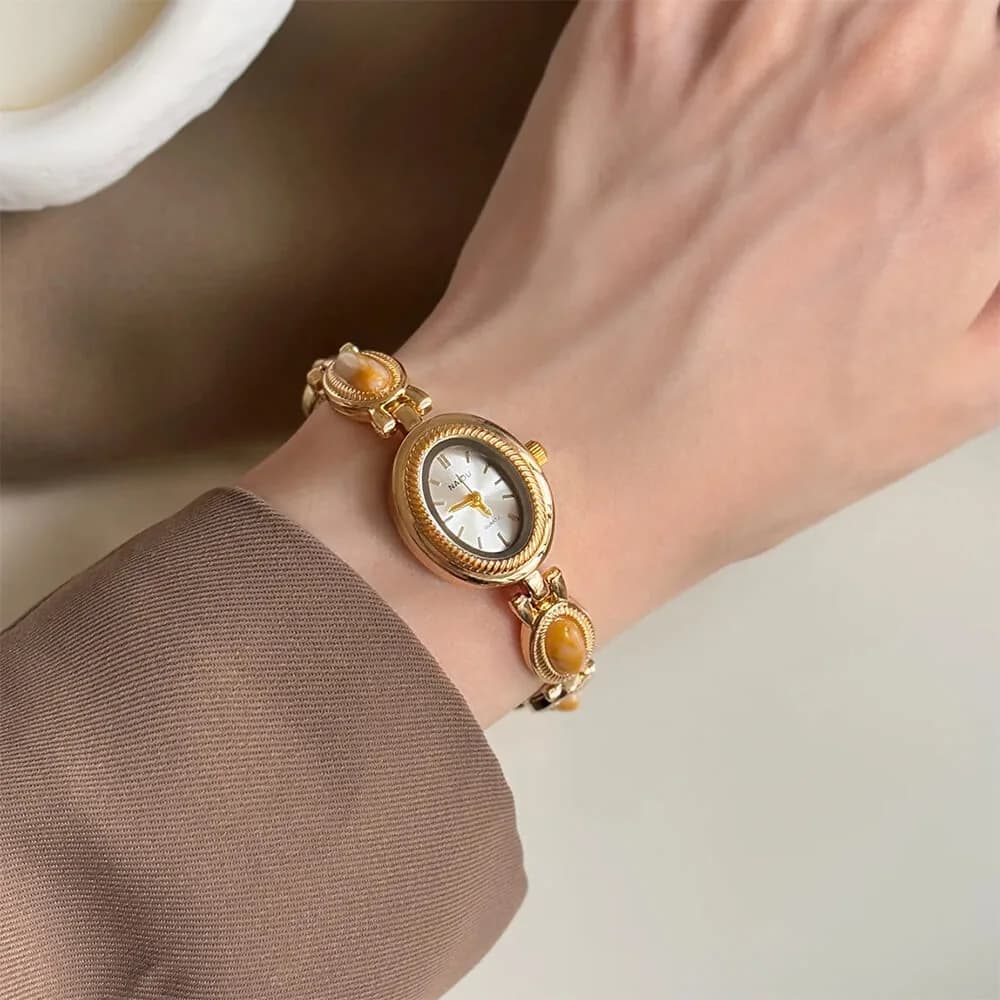
Directing the focal point to your wrist offers an understated, practical way to anchor an outfit. A thoughtful timepiece or structured bracelet projects quiet confidence without demanding constant spotlight. The Old Money Aesthetic Watch Bracelet, crafted from zinc alloy and available in Green, Yellow, and Pink dial accents, serves as an ideal example of a self-contained focal accessory that brings both color and metallic structure to your wrist.
When the wrist is your primary focus, sleeve length becomes the defining design detail. Sleeves that finish just above the wrist bone, three-quarter cuts, or neatly folded French cuffs provide the exact clearance needed to display the piece naturally. Pushing sleeves up haphazardly can look messy, so consider garment structure before deciding on a prominent wrist item.
Keep the opposite hand relatively bare to maintain balance. You might add a plain, slender band or a single flat ring, but avoid heavy stacking on both arms. If your watch features a green or yellow face, let that tone exist without forcing every other garment to match it identically. Subtle metallic cohesion across your hardware is plenty to tie the look together.
- Ensure sleeve hems fall clear of your wrist piece to prevent awkward bunching.
- Avoid wearing thick rings on the same hand as a primary watch or cuff.
- Let colored dials stand alone against neutral fabric backgrounds like cream, navy, or slate.

Waist-Centric Styling: Belts That Define the Silhouette
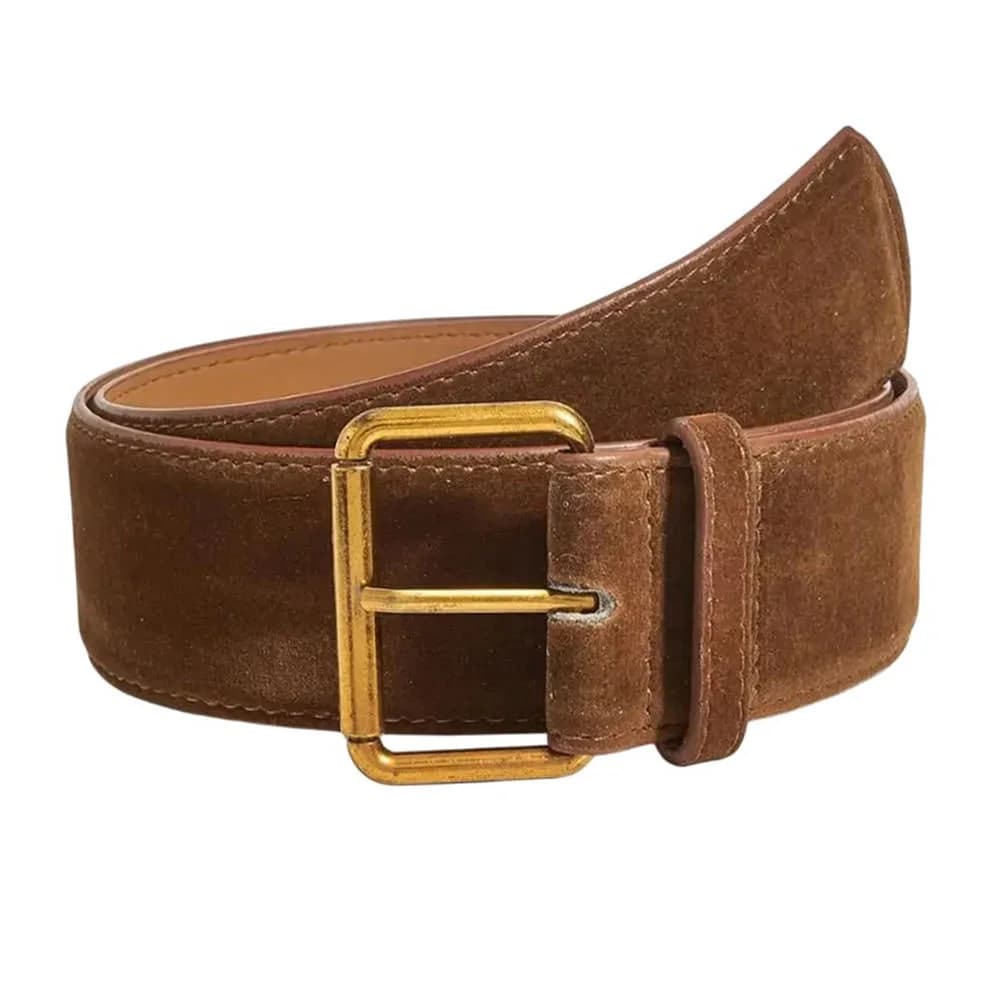
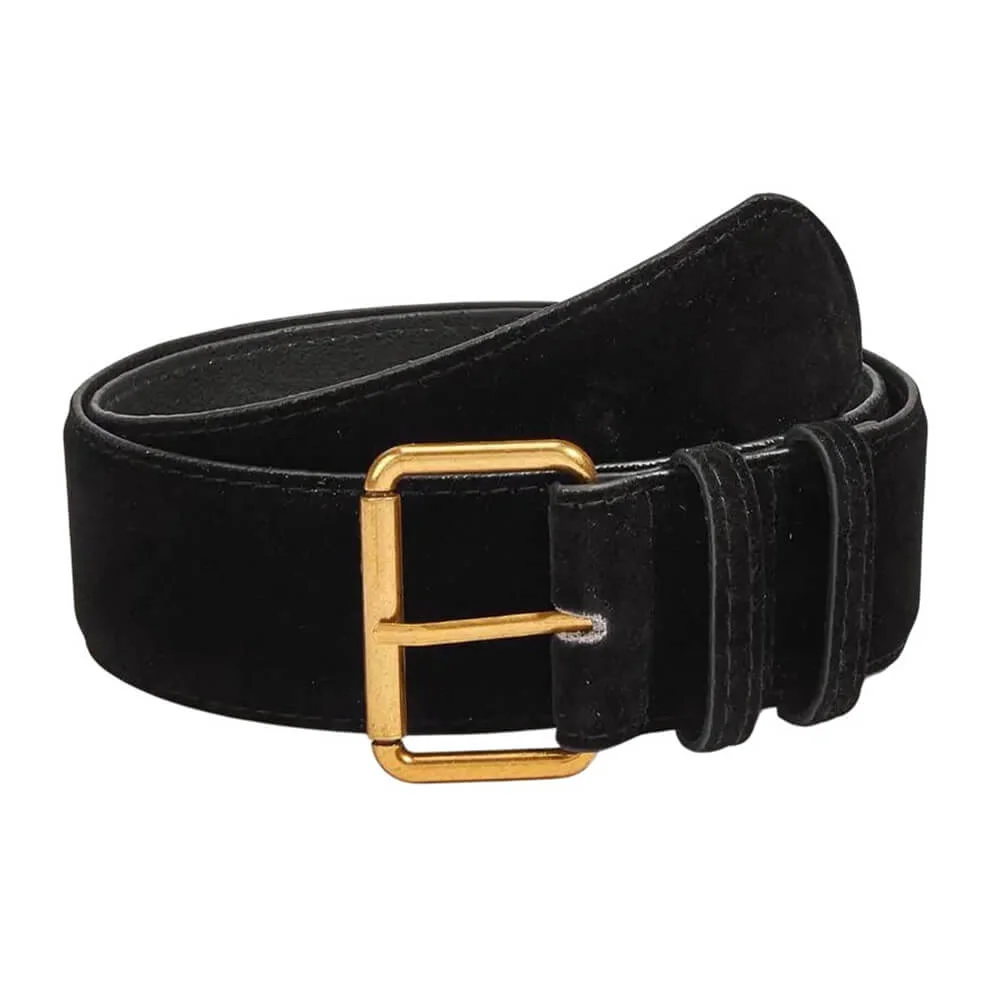
A statement belt completely alters how garments hang, shifting focus squarely to the center of your body. When choosing a piece like the Old Money Suede Wide Belt, made from vegan suede in Red, Brown, or Black, the belt acts as both a structural boundary and a textural contrast. Because a wide belt occupies significant visual real estate, jewelry around your neck and wrists should stay minimal.
Belts work best when they create an intentional break between contrasting textures or provide structure to relaxed silhouetteThe overall shape an outfit creates, from fitted to loose and layered.s. Cinching a wide belt over a lightweight dress or a knit sweater instantly defines proportions. If you style a fluid bottom like the Old Money Satin Mini Skirt in White or Black, a matte belt grounds the fluid shine of the polyester satin, turning a simple skirt into an intentional ensemble.
Be cautious with buckle detailing. A wide belt already delivers clear structure through its width and material; it does not need high-contrast monogramming or heavy rhinestones. Stick to classic brushed or polished hardware that quietly complements your footwear or bag clasp rather than screaming for attention.
- Use matte textures like suede to contrast against smooth, fluid garments.
- Position the belt at your natural waist rather than resting low on the hips for classic proportions.
- Keep upper-body jewelry limited to small, flat studs when cinching the waist heavily.


Hair Accents as the Hero: Ribbons, Clips, and Headbands
Placing your focal point in your hair brings a soft, vintage charm to an outfit, but it requires restraint everywhere else. Exploring the Old Money Hair Accessories section reveals structured bows, tortoiseshell barrettes, and velvet headbands. These items naturally sit at the highest point of your silhouetteThe overall shape an outfit creates, from fitted to loose and layered., meaning they will be one of the first things anyone sees.
If you choose a substantial velvet headband or an elongated hair ribbon, keep your earrings minimal or skip them entirely. Wearing large hoops or dangling crystal earrings directly beneath an ornate hairpiece crowds the sides of your face, creating visual noise that distracts from your facial features. A pair of tiny gold beads or simple pearl studs is more than enough support.
Texture pairing matters just as much up top. A plush velvet or smooth grosgrain ribbon contrasts nicely against relaxed, natural hair textures. If your outfit already features heavy tailoring, a neat hair clip softens the overall mood without dropping the outfit's neat standards.
- Choose either a prominent hairpiece or prominent earrings, never both at once.
- Match hair accessory materials to the mood of the season, opting for tortoiseshell in warm weather and velvet in cooler months.
- Ensure hair accessories sit securely so you avoid adjusting them repeatedly throughout the day.
Statement Rings: Hands as the Decorative Focal Zone
Styling around a statement ring requires an eye for proportion and negative spaceAn uncluttered area that gives the rest of a design room to stand out.. A piece like the Old Money Crystal Statement Ring, which features an adjustable band in Gold or Silver options, draws immediate interest toward your gestures and hands. Because hands are constantly in motion, a prominent ring commands plenty of attention on its own.
When a ring serves as your hero, keep the rest of your fingers unadorned. Stacking multiple bands across four fingers dilutes the impact of an intricate crystal piece, shifting the vibe toward bohemian layeringWearing pieces over or under one another to add depth, warmth or contrast. rather than clean minimalism. Let the statement ring sit solitary on your index or ring finger, giving the metalwork and stones room to stand out.
Pay close attention to your manicure and wristwear when highlighting hands. A clean, neutral nail polish or bare, buffed nail provides the quietest background for sparkling crystals or polished metals. If you wear a bracelet on the same arm, choose a thin, delicate wire band that sits well back from the hand.
- Wear your primary ring alone on the hand to maximize its visual prominence.
- Opt for short, neatly shaped nails in neutral tones to prevent color clashes.
- Avoid carrying heavily embellished clutches that fight against your hand jewelry.
Subtle Secondary Pieces: How to Support Without Competing
Once your anchor is set, selecting supporting pieces requires a disciplined eye. Supporting accessories should never look like they are trying to steal the show; their only job is to tie the look together. If your hero is a piece from our main Old Money Accessories line, such as a rich suede belt, your secondary choices might simply be tiny sleeper earrings and a thin leather cardholder.
To evaluate whether a secondary item belongs, look at its surface area and reflectivity. High-shine polished finishes, multifaceted gemstones, and wide surface areas naturally pull focus. Therefore, secondary items should feature matte finishes, slim profiles, or recessed settings. If your main piece is gold, your supporting metal should ideally align in warmth, though subtle mixed metals can work if the secondary piece is tiny enough.
Ask yourself what happens if you remove the secondary item. If removing it makes the outfit feel incomplete, it belongs. If removing it makes your hero piece look clearer, crisper, and more intentional, leave the secondary piece in your jewelry box.
- Select secondary items that are at least half the visual size of your anchor piece.
- Maintain consistent metal undertones between primary and secondary pieces to preserve harmony.
- If in doubt, remove one supporting accessory before walking out the door.
Garment Foundations: Canvas vs. Statement Clothing
Accessories cannot be styled in a vacuum; they interact directly with the clothing beneath them. To let an accessory truly anchor your look, your clothing must function as a clean canvas. Exploring the wider assortment of Old Money Clothes offers plenty of options, from crisp linen sets to tailored knitwear, that provide calm backgrounds for structured accents.
If your garment already has intense visual interest, like the Old Money Style Tweed Jacket in its vibrant Red Cotton and Polyester weave, the jacket itself becomes the primary focal point of your entire outfit. In that scenario, your accessories must immediately step down into secondary roles. Adding an ornate brooch, layered necklaces, and large earrings over a textured red tweed jacket will overwhelm the eye.
Conversely, when your garment is simple and monochrome, such as the Old Money Yacht Club Dress in clean White polyester, the dress acts as an open gallery wall. Here, you have total freedom to introduce a bold focal accent, whether that is a dark suede belt at the waist or a vivid watch bracelet on your arm.
- Treat textured, patterned, or bright clothing as the hero piece, scaling accessories down.
- Use neutral monochrome garments when you want an accessory to take center stage.
- Match the weight of your fabrics to your accessories: heavy wool pairs with bold leather; light satin pairs with delicate chains.
Proportion and Placement: Managing Visual Weight
Visual balance relies on how weight is distributed across your body. If all your accessories sit above your collarbones—say, a headband, drop earrings, and a neck scarf—your silhouetteThe overall shape an outfit creates, from fitted to loose and layered. becomes top-heavy, drawing attention abruptly upward. Distributing points of interest thoughtfully creates a smooth line that lets the eye travel naturally.
Consider the vertical spacing between items. If your anchor piece sits at your waist, like a structured belt over the Old Money Asymmetric Mini Skort, your secondary accents should be placed far enough away to avoid crowding. A pair of modest ear studs balances the belt by creating a gentle upper counterweight without competing for dominance.
Scale is equally critical. Petite frames can easily be overwhelmed by massive cuffs or overly wide headbands, while taller or broader silhouetteThe overall shape an outfit creates, from fitted to loose and layered.s might make tiny delicate pendants disappear. Look in a full-length mirror rather than a small vanity mirror to check how your accessories relate to your complete body proportions.
- Check your full-length reflection to ensure visual weight does not cluster in one quadrant.
- Balance a prominent lower accessory (like a belt or shoe buckle) with a tiny upper accent.
- Adjust the physical size of your accessories to complement your natural bone structure.
Adapting to Settings: Casual Days to Formal Evenings
An accessory formula that looks refined at an outdoor daytime polo match or garden lunch can easily feel insufficient at an evening dinner, and vice versa. Adjusting your focal point based on lighting and setting ensures you never look overdressed or out of place. Natural sunlight highlights textures like leather, linen, and horn, while indoor evening lighting favors polished metals and reflective crystals.
For daytime errands or casual lunches, keep your focal point grounded and practical. A structured hair bow or a clean leather watch bracelet brings polish to relaxed separates without looking fussy. You can wear a simple cotton tee and trousers, letting the single hair piece elevate the casual base into something intentional.
In the evening, swap the tactile anchor for a light-catching one. A cocktail ring like the Old Money Crystal Statement Ring or a pair of sculptural drop earrings comes alive under warm indoor lamps or candlelight. Because evening light softens contrasts, you can afford slightly more reflective surfaces on your hero item while keeping your clothing sleek and dark.
- Rely on rich, matte textures (suede, tortoiseshell, grosgrain) for daytime engagements.
- Shift toward reflective stones and high-polish metals for evening events under low light.
- Ensure your hero accessory matches the practical demands of the venue.
Climate and Comfort: Functional Accessory Planning
Weather directly affects how accessories sit against your body and garments. In humid, warm environments, heavy metal bangles can feel sticky against the skin, and tight headbands can cause discomfort. Lightweight hair ribbons, single open cuffs, or delicate earrings are far more comfortable choices when the temperature rises, keeping hair off your neck while adding interest.
During cooler months, accessories must contend with bulky outerwear, scarves, and gloves. Long pendant necklaces often get tangled in knit sweaters or trapped under coat lapels, making them impractical anchors. Instead, shift your focal point to pieces that sit securely outside your layers, such as a substantial ring worn after removing gloves, or structured earrings that frame your face above a heavy wool turtleneck.
Fabric friction is another hidden factor. Fine silk and satin garments can snag on intricate jewelry claws or sharp belt edges. When wearing delicate woven fabrics, opt for smooth bezel-set stones, rounded watch cases, and soft suede accessories to protect your clothing from accidental pulls.
- Avoid chain necklaces that catch on chunky wool knits or coat zippers during winter.
- Choose sweat-resistant materials and open silhouetteThe overall shape an outfit creates, from fitted to loose and layered.s during warm, humid weather.
- Inspect ring prongs and bracelet clasps for rough edges before pairing with fine satin or knitwear.
Comparing Your Options: Selecting the Right Piece
When shopping for your next key accessory, comparing options side-by-side prevents redundant purchases. Instead of buying three pairs of nearly identical gold hoops, evaluate pieces based on shape, surface texture, and visual density. Look across the curated catalog of Old Money Accessories to identify distinct gaps in your current collection.
Ask yourself which category your wardrobe currently lacks: do you need an architectural piece to define loose silhouetteThe overall shape an outfit creates, from fitted to loose and layered.s, or do you need an upper-body accent to bring interest to basic crew-neck knits? If your closet is filled with minimalist dresses, a versatile waist cincher like the Old Money Suede Wide Belt will give you far more styling mileage than another delicate pendant.
Evaluate versatility across multiple outfits. A hero piece should be able to anchor at least three entirely different looks in your closet. If an accessory only matches one specific dress, it is an occasional novelty rather than a reliable styling anchor.
- Audit your existing accessories to ensure you are not duplicating shapes or metals.
- Prioritize items that can effortlessly transform basic, everyday monochrome basics.
- Choose versatile, neutral shades (black, brown, gold, silver) before investing in bold colorways.
Common Styling Pitfalls and How to Correct Them
The most frequent pitfall in classic styling is the 'matched set' trap. Wearing earrings, a necklace, a bracelet, and a ring that all feature the exact same stone, metal carving, and motif can look stiff and dated rather than effortless. True old money aesthetic styling relies on a collected, inherited sensibility where pieces complement one another through harmony rather than rigid matching.
Another common error is ignoring scale conflicts. Pairing an oversized, heavy resin headband with large geometric earrings creates an intense battle around the face, overwhelming your natural features. The fix is simple: demote one piece immediately. Swap the large earrings for micro studs, or replace the heavy headband with a slim metal pin.
Finally, avoid treating logos or conspicuous branding as your focal point. The core of this aesthetic is discreet quality and clean silhouetteThe overall shape an outfit creates, from fitted to loose and layered. construction. Relying on oversized designer emblems cheapens the quiet atmosphere you are trying to build. Let texture, cut, and subtle metal finishes do the talking.
- Never wear a completely matching four-piece jewelry suite simultaneously.
- Demote one item immediately if two accessories are fighting for space in the same zone.
- Steer clear of visible brand stamps, loud monograms, and novelty shapes.
The Outfit Assembly Checklist
Before heading out, run through a quick diagnostic check to ensure your accessory hierarchy remains intact. Stand back from your mirror, take in your complete silhouetteThe overall shape an outfit creates, from fitted to loose and layered. from head to toe, and verify that your eyes settle naturally on your intended anchor piece without darting erratically across multiple competing items.
Check that your chosen metals harmonize in temperature, even if they are not identical. Warm golds sit beautifully alongside rich browns, greens, and creams, while silver complements crisp blacks, whites, and cool slates. Ensure that functional elements, such as purse straps or shoe hardware, do not clash jarringly with your jewelry metalwork.
Finally, test your physical comfort. An accessory that requires constant adjustment, pinches your head, or slides awkwardly down your arm will ruin your composure. Confidence and ease are central to this aesthetic, so if an accessory feels awkward or fussy, leave it behind and rely on clean simplicity.
- Identify your single focal point instantly in a full-length reflection.
- Confirm that all secondary pieces sit quietly in the background without clashing.
- Ensure your accessories allow effortless, comfortable movement throughout your day.